Archive for the ‘Albums’ Category

Chapter 22 Records – 4th of December 2021

Christopher Nosnibor

Dawn After Dark first emerged in the second wave of goth in the late 80s, at the point where goth intersected with indie and straight-ahead rock to create something altogether more digestible for the masses than the dark, shadowy stylings of the like of The Sisters of Mercy and The March Violets (and this isn’t the time for the goth / not goth debate here, and no-one needs to hear my position on it: I’m going for the short cuts to provide context, nothing more).

The Birmingham-based act were pretty active during this time, playing in the region of 150 UK shows as headliners and support to acts including Balaam And The Angel, Wolfsbane, Fields Of The Nephilim, and Living Colour, and releasing 3 12” singles on Chapter 22 (the label that also launched The Mission in ’86 and released their first two singles, ‘Serpent’s Kiss’ and ‘Garden of Delight’) before calling it a day in 1991. 30 years on, they’ve finally delivered their debut album, and as the title suggests, its emergence is something like a phoenix from the ashes, since they’ve lain dormant all this time save for a one-off show in their hometown in September 2019.

Those three singles – ‘Maximum Overdrive’, ‘Crystal High’, and ‘The Groove’ are all featured here, albeit rerecorded using post-millennium technology and mastering, slotting in nicely alongside seven previously unreleased songs. It’s ‘Maximum Overdrive; that kick-starts the 11-track collection and is pure Cult, which is no shock given the original as performed by a band who sported long hair, leather jackets and bandanas back in the day. This version is much more polished and much more dense than the original, and you get a sense that this was how they always wanted it to sound. It’s less manic, smoother, but it still basks in rock ‘n’ roll excess and wild solos flame all over.

I’ve always filed DAD alongside the likes of Rose of Avalanche, although it’s fair to say they’ve always had a rather harder edge, and this is pressed to the fore on their long-delayed debut album, to the point that on reflection they’re more ones to file alongside The Cult and Zodiac Mindwarp now (only without the preposterous excess of the Bradford hard rockers).

‘The Day the World and I Parted Company’ brings more gritty riffery, and sounds like Sonic Temple era Cult with a hint of The Mission thanks to the twisting guitar lines and all the hammer-on descending runs. It’s enhanced by some overloading chug in the rhythm department, although there’s an expansive psychedelic workout in the mid-section.

Apart from slower, more anthemic stabs like ‘When Will You Come Home to Me’, they focus on the bold rock riffing, and you can’t exactly criticise a late 80s rock band for sounding like a late 80s rock band – and yes, that is the sound of New Dawn Rising, a title that perfectly captures their history and belatedness of their debut. It’s like they’ve never been away, apart from the fact that they’re back sounding crisp, and dense and more 2021, in terms of production if not songs.

It’s a solid, ballsy, gut kicking debut that packs in back-to-back slabs of the kind of rock they supposedly don’t make any more… only, of course, they very much do.

AA

Dawn After Dark artwork 1

Panarus Productions – 3rd December 2021

Christopher Nosnibor

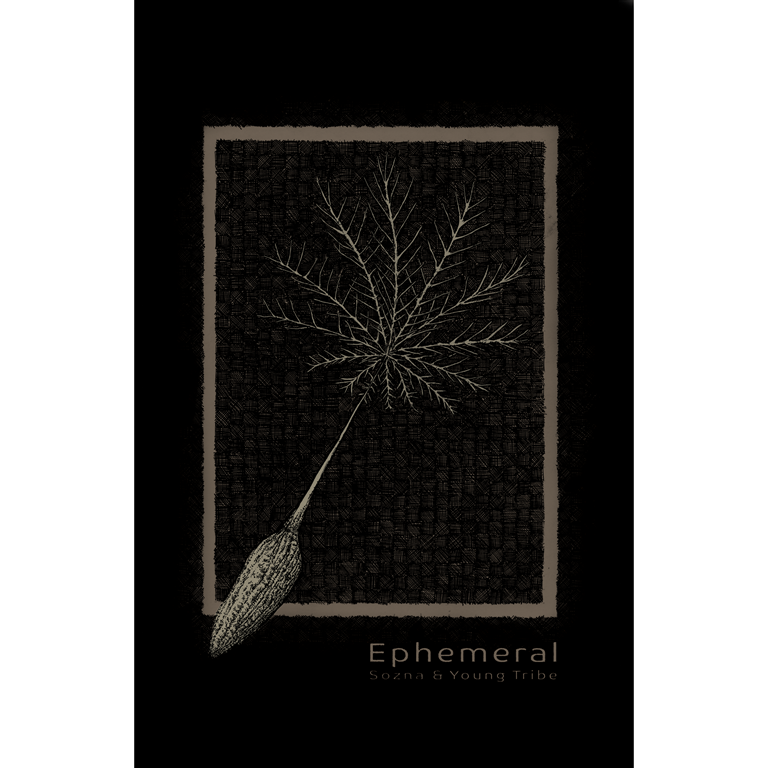
It’s a challenge faced by many artists, and many try but fail to capture the fleeting moments that pass before we even see them. They’re sometimes visual, sometimes auditory, sometimes emotional, and sometimes a combination of all three, like an instant where the lighting is so rare or perfect and you feel a fleeting pang of something inside that you can’t even pinpoint… there is a soundtrack to that somewhere, but it’s so fleeting, intangible, there is simply no way you can grasp it, no way to capture it.

This is where we convene with Sozna and Young Tribe, whose biographical details are sparse but likely irrelevant. Because as the title intimates, nothing is fixed, and details are not important; what matters is chasing the mood of the moment, which is like catching air in a fishing net. It’s a common notion within the spheres of ambience, and more often than not manifests as gentle, ethereal works, with mellifluous trails of vapour drifting softly in attempts to convey the wistfulness of fleeting intangibility.

Where Ephemeral stands out is not only in its heavy use of field recordings and material lifted from various sources – snippets of voices, building work, street sounds – to create a layered collage that quite literally captures and combines fleeting moments and assembles them in a kind of patchwork, bit its darkness and weight. Everything overlaps to crowd the mind, as construction work and idle chatter overlap.

‘Subincision’ is a swampy murk of swirling dark ambient electronica withy rumbling, thunderous grumbles and ominous overtones. Following that, ‘Gods From Saturn’ is particularly dense; part space-age abstraction with hints of Krautrock, [art dark ambient, it’s not a sigh of reminiscence about that brief moment of ecstasy, but the gut-pulling nag of anguish that comes from recalling that social wrong step, that embarrassing misspeak, the sinking feeling of that wrong choice or bad decision. These emotions too are fleeting and ephemeral, and in many ways a more common kind of ephemera. The title track is dark and punishing, a gloomy chant and thud from the depths of a cavernous cave; it’s oppressive and somewhat scary, with monasterial moans and elongated shadows droning and rising. It’s eerie, creepy, and other-worldly. You may feel a pang of fear, but it, like everything else, passes in no time. There is no permanence; everything happens, and exists, in but a moment.

Every moment is just that; a moment, and it’s gone before you realise it. The highs may often prove more memorable and feel more protracted in comparison to the highs and the alrights, but in terms of the period of their existence, all is equal. Sozna and Young Tribe explore this space, and delve courageously into the lows, the throughs, the darker spaces, the moments of discomfort, shame, and embarrassment which are but fleeting which often haunt us forever. Ephemeral grips the corners of fleeting discomfort, the lower reaches of the intestine, and pokes the points of nagging discomfort from fleeting moments which linger there. In doing so, they inch closer to creating art that reflects life.

AA

cover

31st October 2021

Christopher Nosnibor

The liner notes for this new outing from Vexillary proffer a rhetorical question that sounds like the start of a semi-intellectual joke: ‘What do you get when you mix a long winter with a pandemic of a lifetime and a bunch of synths lying around? The cabin fever stemming from an endless lockdown and the resulting mental demise? According to Vexillary, the perfect backdrop for a sonic self-portrait documenting one’s brush with madness.’

It’s probably fair to say that many of us have lost the plot top varying extents and in differing ways over the last couple of years, and we’ve all struggled in various ways, be it from lockdown isolation, bereavement, monetary worries, the pressure of confinement, being physically vulnerable, or scared for the future, or returning to ‘normality’ – and while anything resembling the normality we knew back in 2019 feels like a lifetime away if ever, simply resuming social interaction brings with it for many a tidal wave of anxiety.

No doubt the cabin fever that prompted the evolution of Full Frontal Lunacy will be relatable for many, myself included. Despite the comparative luxury of a back yard bit enough so sit out in and even to accommodate a paddling pool for a family of three to manage working from home and home schooling, things felt a bit claustrophobic at times, and there were many living in inner city environments and high-rise accommodation with many more people and considerably less space.

But what of the title? Full frontal carries the connotations of exposure, more in a movie / porn context than anything. That is precisely where Vexillary is coming from, of course. Social media has provided the platform where everyone airs all their grievances and let it all hang out, for better or for worse, and for many, among the food porn and actual porn, misery porn and trauma porn has been a source of entertainment since the world lost the plot and spiralled into pandemic psychosis. Full Frontal Lunacy is effectively the musical equivalent of getting your cock out on a global platform, with all things mental health and more out there on display for all to see. Trouble is, for many, it’s probably less embarrassing to get your cock out than to discuss your feeling, and so it’s a bold move, but one that sets an example and sends a message that it’s not only ok to confront these things, but vital that we share them.

It’s perhaps no surprise that the album is dominated by themes of confinement, torture, and mania, manifesting in various forms, and compressed concisely into eight slabs of dense dark, industrial-strength disco. Driven by big beats and booming bass, this is a banger in the obvious sense, although those basslines snake and grind , and the vocals are submerged in reverb or otherwise heavily treated. The ‘Scorched Mix’ of ‘Burnt Leather’ is dark and stark, sleazy and tense. The title track sounds like an outtake from Ministry’s Twitch; agitated electro cranked up and gnarly, with pulverising percussion all the way.

‘The Descent’ is dark, deep, hypnotic and follows the signature styling of repetitive motifs; ‘Absinthe Minded’ speaks – albeit not entirely coherently, conveying a mood more than a message – of self-medication, addlement and struggling through, pushing onwards toward the spacey dance of closer ‘Exit the Void’, which brings hints of Depeche Mode to the dark dance party.

Full Frontal Lunacy has a coherence and stylistic unity, but also feel like a work that’s both exploratory and urgent. It’s not an easy album, but it’s a good one.

AA

a2995884962_10

Nim Brut – 19th November 2021

Christopher Nosnibor

The hardest battles are those against yourself: they’re perpetually self-defeating and at the same time impossible to win. A duelling duality creates the core dynamic of Rejection Ops. The Leeds-based duo’s bio describes them as ‘a drummer and bass-and-electronics player who sound like each is trying to outdo the other at driving audiences from the room’, presenting a scene of duality and conflict, and this document of that internal tension was captured in its rawest form, namely self-recorded on a Zoom recorder during May 2021, so no engineering panache or highly-detailed production values here, no layering, multitracking, or overdubs. And it’s a mangled, gnarly mess of noise from beginning to end. It’ sets your teeth on edge, it makes your organs vibrate. It makes you feel tense, and grind your teeth. And these are the reasons to love it, because it has impact. It’s not some comfortable background work, and it’s not even songs that drift into your ears and lodge softly but with longevity. Rejection Ops vs. Rejection Ops is pre-emptive revenge for something you may do, and it’s going to punish you hard for it.

The first track, ‘Agendas Vary’ is a squall of feedback and overloading noise pitched against a tempest of thunderous drumming, and it does that free jazz thing of sounding like the climactic finale of an epic set without there having been the epic set preceding it. As such, it’s seven minutes of ear-bleeding, cranium-crushing chaos that doesn’t go anywhere, but then isn’t intending to.

‘Atomic Basketry’, the album’s longest track at almost eight minutes in duration, ratchets up the noise and almost buries the percussion beneath a blistering squall of screaming noise, a tidal wave of treble, a deluge of distortion. Blistering electronic noise, a bowel-shredding harsh noise wall splatters against arrhythmic clattering.

Thereafter, the form shifts away from expansive and exploratory towards brief blasts of mangled abrasion, every one faster and harder and wilder and more off the wall. Guitars thrashed hard splinter in a mesh of treble while the drums pop like bubblewrap. ‘Heeding Tartan’ is particularly abrasive, two-and-a-half minutes of metal-scraping, crunching, white hot molten noise, and ‘Raging Ninepin’ rages hard, so hard it blisters and peels and pulverises the grey matter to the point of near liquefication. The drums ricochet hard and fast like machine gun fire through ‘Rat Pie’, which snarls and crackles hard, but it’s all just a prep for the sonic blitzkrieg of the final cut, ‘Soon Learned’. Even sooner remember earplugs would be the advice, because this absolutely fucking hurts. Again, it’s three and a half minutes of everything all at once, only here, it’s the head-shredding crescendo climax it sounds like, rather than just some avant jazz end without a start.

By the time it’s over, you feel battered, bruised, drained, but also buzzed and exhilarated. The purpose of art is not to entertain, but to challenge, to arouse the senses. Rejection Ops certainly challenge – not only the listener, but themselves and one another, to create a stupendously intense experience.

AA

a3422423491_10

Bisou Records – BIS-019-U-B – 2nd December 2021

Christopher Nosnibor

Maybe it’s because I’m tired, and I’ve had quite a bewildering couple of weeks in terms of dayjob and quite simply life, but this is one of those band bios that leave me wondering quite simply ‘what the fuck?’ and more specifically ‘is this for real?’ Either I’m delirious, or this really is completely off-the-wall nutsness.

The facts, it seems are that The Snobs were ‘Formed by brothers Mad Rabbit (singer and producer) and Duck Feeling (multi-instrumentalist) near Paris’ and that Blend The Horse! was written and recorded between spring 2019 and autumn 2020.

Is this a real band? Then I read that the track ‘Long Winter Evenings’ follows a sonata form blending ethereal singing and a motorik groove’ and that ‘Over a minimalist rhythm section borrowing from Joy Division, Miles Davis and Kraftwerk, The Snobs restate their loyalty to rock music with Tropical Fuck Storm’s sharp guitars. Tropical Fuck Storm sounds like a character from Mark Manning’s warped rock-band novel Get Your Cock Out, and this is surely satire… right? Right?

Nope, it’s just whacky and irreverent, and it reminds me that not so long ago, humour and irony were commonplace, and art was whatever it wanted to be. And so since their formation at the turn of the millennium, The Snobs Have built quite a body of work, with a substantial number of releases recorded in collaboration with artists of various disciplines and styles. Blend The Horse! presents six compositions – bookended by songs that stretch beyond the ten-minute mark – that explore a massive range.

‘Long Winter Evenings’ is a minimalist protoindustrial effort, but then about three minutes in, there’s a kind of baggy / rappy break, before it spirals into some kind of psychedelic electro that’s a bit trippy, driven by a droning bass while squdgy bleeps and all kinds of going on go on. It’s an intense and eye-opening way to open an album. It feels cohesive, but it feels uncomfortable at the same time, and not just because it’s a genre-defying melting pot of hybridization.

There is a lot going on, even when there seemingly isn’t. ‘The Low Angle’ is sparse and minimal in its arrangement, with a thick, ambulating bassline dominating the arrangement. It’s low, slow, and dubby, and an exemplar of the ‘less is more’ adage.

What to make of this? It’s kinda trip-hop, kinda low-tempo hip hop with an experimental leaning, kinda… kinda what, exactly? There are expansive reverbs and echoes in the mix is, too, and it’s hard to know what to make of it.

Sonically it feels dislocated and difficult, with no real specific plan set: lo-fi, bedroomy wooziness lumbers and lurches as old-school drum machines provide crispy snare cracks around the reimagined Bowieness of ‘Plastic moon’, and as the thumping industrial drums of ‘Cable Call’ that combines the looping synths of KMFDM and the easy 90s popness of Jesus Jones and the like.

It’s a mish-mash of everything, and some of the elements work better than others, although there’s likely little benefit to dissecting which aspects of which track work or don’t, not least of all because there’s so much happening, and it sort of feels ‘outside’. Neoprog and post–rock melt into dreamy electro and shoegaze all mixed with a hefty dash of psychedelia, and no one of it makes sense, and yet, at the same time, it does. And it’s kinda nice, but kinda frustrating, too. It’s as though the range and exploratory nature of this project is prejudiced by an increasingly conservative market where genres and categories are core to marketing, and I’m aware I’m in some small way complicit in this process. But then, sometimes, an album simply doesn’t fit, and it’s not that Blend The Horse! doesn’t connect to any genres, so much as they’re all thrown in together to create a mind-bending stew.

‘The Sixth Dragonfly’ throws everything into the blender all at once, and it all happens, from mellow ambience to fill Nine Inch Nails guitar attack. It’s an eye-popping climax to an eye-popping set. It’s deranged, but a perfect summary of out times.

AA

BIS-019-U-B_cd_front

19th November 2021

Christopher Nosnibor

For a time, Maybeshewill were one of the definitive acts during the golden age of post-rock – and here in 2021 it’s possible to reflect and appreciate that the mid-noughties really was a peak time for the genre. Certainly in the circles I moved, every gig was wall-to-wall post rock, or otherwise there was at least one instrumental act on the bull, brimming with chiming guitars and epic crescendos. They were good times, too, and however quickly it moved from fresh to formulaic, there was a sense of excitement about this music you could lose yourself in. It felt like a moment in time, it felt like a movement, and it was exciting, particularly in Leeds and particularly around The Brudenell, which felt like something of an epicentre with its growing profile. But then again, smaller venues like The Packhorse were also showcasing so many emerging acts all doing that Explosions in the Sky thing.

During this time, Maybeshewill were one of the bands that stood out: while exploiting the template, they also expanded it with the use of strings and samples – plus, they were simply bloody good. And they still are. The title is, perhaps, an allusion to the fact that having called it a day, spent, back in 2016 they have decided to return to both the live forum and recorded a new album.

This recent reanimation was unexpected, but perhaps the last thing we expected to open Maybeshewill’s long-awaited comeback album is a thumping sequenced drum and squelching synth bubble. But then it yields to a rippling piano and a wash of surging, soaring strings and immediately we’re transported to a space of expansive, emotionally-charged instrumental post rock. The three and a half minutes of ‘We’ve Arrived at the Burning Building’ is perfect Maybeshewill – dramatic, expansive, dynamic.

Lead single ‘Zarah’ is up next, with samples lifted from the premier speech from MP Zarah Sultana at its core. It first perfectly into the early arc of the album, and it’s a great track, and anyone who says music and politics shouldn’t mix is wrong. Musicians have a platform that is theirs to use as they see fit, and to see Maybeshewill using their platform in this way is encouraging.

The strings really dominate the arrangements on this album, but there’s a lot of texture and a lot of detail, and propulsive drumming shapes the structures of the songs. ‘Complicity’ is exemplary, as it transitions from a driving swell to a loping, contemplative mid-section that slows the pace before exploding into a fill battery of strings, a barrage of live and electronic percussion, looping piano and driving guitars. Yes, it takes you back at least, if you were there at the time – but it also feels perfectly contemporary and forward-facing.

‘Invincible Summer’ alludes to both Krautrock and 80s AOR with its motoric beat and looping synths and clean guitar that nags away crisply, while ‘The Weight of Light’ is one of those tunes that simply makes you sag with sadness. It possesses an aching beauty, and the surging crescendo is simultaneously uplifting and utterly crushing. There’s a lot going on: ‘Refuturing’ takes a twist into mellow jazz territory, while ‘Green Unpleasant land’ makes a further political statement without words, a gnarly tempest of guitar-driven disquiet.

If the chiming, rolling, mellow ripplings that build to a thunderous storm on the seven-minute-forty-five ‘Even Tide’ is classic post—rock to the point of cliché and bordering on historical with its use of soaring guitars and sustained crescendos, then the brass is very much a departure, and it paves the way for the final salvoes of the seven-minute ‘The Last Hours’ that spirals and soars into the truly epic territories, and the rolling, piano-led ‘Tomorrow’, that sweeps in a wave of optimism.

Together these two tacks draw the album to an exhilarating yet measured close. It’s everything that’s defined the band over the course of their career, making this a most welcome return and an outstanding addition to their catalogue.

AA

a0585002003_10

Bearsuit Records – 12th November 2021

Christopher Nosnibor

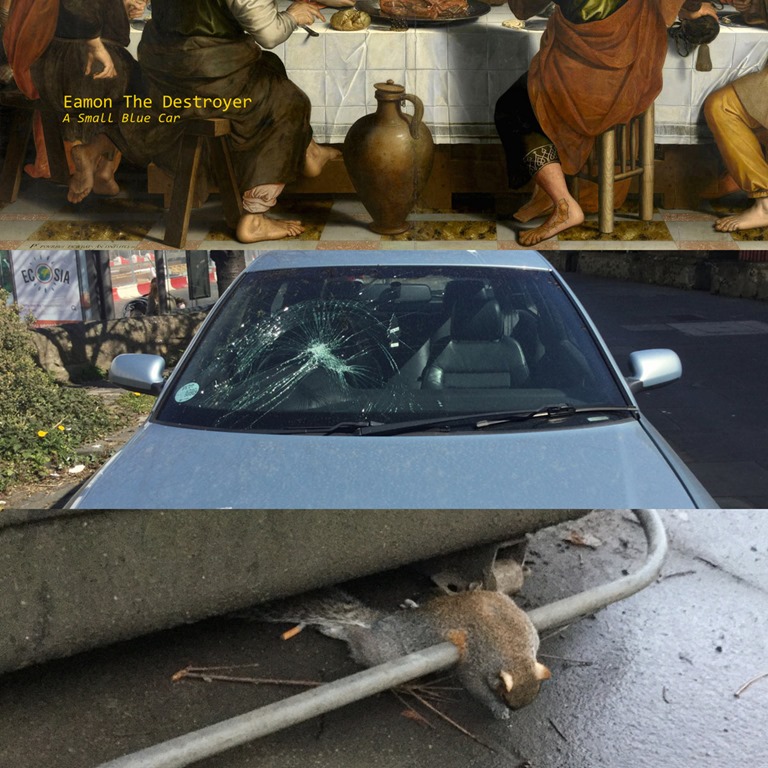
It’s unusual to open an album with a B-side from the lead single, but there’s nothing usual about Eamon the Destroyer or Bearsuit Records, and the scratchy soporific drone and distorted / filtered vocals of ‘Silver Shadow’ – which reference the ‘small blue car’ to which the album owes its name – makes for a worthy introduction by means of introverted minimalism. It’s largely representative of an album that’s slow sparse, minimal and somewhat lugubrious.

I take the nom de guerre Eamon the Destroyer ironically. That may be wrong, it may be some unpleasant prejudice, and if so, I do apologise. This isn’t a PC matter or issue. But names come with certain associations, and the connotations of Eamon aren’t particularly warlord, at least to my mind. No diss to any Eamons, but the name is about as warlord as Gavin, Kevin, or Craig. No doubt there are some brutal twats by the name of Kevin, but, well, y’know, it doesn’t evince fear. The concept of ‘the destroyer’ is one of something harsh, brutal, obliterative, too, but that also isn’t the case here. Consider Ah Puch the Destroyer, Mayan god of death and disaster whose coming would mark the end of days. There is nothing explosive or devastating about A Small Blue Car – it is not a violent sonic blast of earth-shattering, annihilative proportions, yet it does, strangely, evoke a sense of near-finality. There is an all-pervading sadness that hangs over the album’s entirety, a sadness that’s slow-creeping and heavy, like a weight that pulls you down, bending your back with the effort

‘Humanity is Coming’ is downbeat, gloomy, and things get particularly dark and dense on the short instrumental ‘The Conjuring Stops’, with a heavily phased synth yielding a pulsating throb in the style of Suicide. ‘The Avalanche’ also brings some weight, with lots of granular sounds and bolds bursts of sweeping synths in the choruses that contrast with the woozy drone and is perhaps how Leonard Cohen might have sounded in the early years of his career if he’s chosen Moods instead of an acoustic guitar. The end result, musically, is like Stereolab on Ketamine.

The slow rasp of single cut ‘My Drive’, with its whistle of feedback and detuned radio in the distance while the picked guitar – spacious and delicate – curls like smoke into the darkness, and it piles on the melancholy.

‘Uledaro’ follows, a dolorous jumble of discord. ‘Nothing Like Anything’ is conspicuous by its near-cheeriness ‘wake up / the sun is out / we’re almost home’, Eamon intones in a rare glimmer of optimism. There’s whistling and levity, and it’s almost, almost a pop song. But of course, it’s not. And perhaps it’s more me feeling autumnal, but the happiness only accentuates the sadness, as if the jollity is a mask to sorrow so inexplicably deep that it has to be covered up. The nights are dark, the world feels a very long way off and a long time ago. It’s time to hibernate, with A Small Blue Car for company.

AA

a2830016479_10

Dret Skivor – 1st October 2021

Christopher Nosnibor

Dret Skivor continue to provide an outlet for the weird and wonderful, not to mention the obscure and droney with the eponymous release from the enigmatic but somewhat amusingly-monikered twAt klaxon. All we know of twAt klAxon is that they’re a Finnish sound artist – but then, so we really need more (beyond the advice to ‘Play through decent speakers/headphones for best results’)? Sometimes, it’s preferable to engage simply with the music than to become side-tracked by biography and theory.

Being a Dret release, twAt klAxon is an album of two halves, created very much with the cassette format in mind (with just four copies of the limited C45 physical edition produced), and each side contains a single longform track. The first of these, the inspirationally-titled ‘twAt’ manifests as a single, thrumming, humming drone. It hovers predominantly in the midrange, and not a lot happens for a long time. Fleetingly, it stammers and stalls, before pulsing back with a stronger, more overtly rhythmic phase. While the variations are minimal, the sonic ripples yield some good vibrations – not just metaphonically, but literally, sending waved through my elbows and forearms as they west on the surface of my desk as I listen. And listen I do. Sometimes, to focus intently on a single sound can be a quite remarkable experience, one that’s both relaxing and liberating. The sound thickens and sticks, and slowly it creeps over you. It’s a frequency that doesn’t drill into your skull, but instead wraps your head tightly and squeezes, a smothering compression of emptiness.

As a child, I had a recurring dream in which pencil-drawn planes crashed and scrumpled in succession. This dream was soundtracked by a deafening silence. This is not that sound, but it reminds me of it, and in doing do, recalls the anguish caused by that dream, and it’s not pleasant. Even without that association, the tension of that single note that hovers from around the fourteen minute mark and on and on and on for all eternity is challenging. The reason I admire this as a work of sonic art because of the level of patience that must have been required to produce it – unless, of course, they left the room and made a cuppa while the sound continued, in which case I would feel somewhat cheated, and making them a twAt of the highest order.

‘klAxon’ is more drone: there are more vibrations, the sound is thicker, denser, buzzier, and there are intimations of beats of at least regular pulsations that thump rhythmically low in the mix. This slides into some heavy phase and throbs endlessly hard. It’s primitive, with undertones of early Whitehouse, mining that analogue seam minus the pink and white noise. twenty-one minutes of that undulating, slow-shifting bubbling almost inevitably has an effect, and it’s deeply disorientating. Perhaps less klAxon and simply more twAt.

Quippage aside, this album is certainly no accident: it is designed to register physically, while torturing psychologically. And no, torture is not too extreme a word: that isn’t to say that twAt klAxon is intended to inflict any kind of trauma, but it does employ the methods of torture within an artistic context to create a work that’s perverse and purposefully challenging – and it succeeds.

AA

a3994329484_10

gk rec – 31st October 2021

Christopher Nosnibor

I have a sort of anguish-tinged relationship with artists who I admire who are super-prolific. First and foremost, I hold the utmost respect, where it’s not just the occasional creative burst, but a way of working that means they can maintain an almost endless stream of creativity and output. The anguish, selfishly, comes from the awareness that their output pisses on mine and my aspirations – and while I am of course aware that quantity is no real measure of anything, the ability to simply produce, relentlessly, is something that provokes, if I’m honest, a degree of envy. How do they do it? How do they have the headspace? How do the even have the time?

Gintas K is an artis whose work I’ve been covering for quite some time now, and I’ve long-marvelled at his output. Having come to understand his process over this time, and having watched some of the videos of his improvised recording sessions, the means of production is a significant factor in his ability to produce so much output. But that is by no means to say that he’s tossing out any old thing, and when it comes to his album releases, there are always multiple elements and sources involved, and if there isn’t specifically a theoretical element that’s integral to the process, there’s nevertheless a theoretical aspect in the mix.

For this album, ‘an electroacoustic music work that consists of stretched granular motives during the entire piece’, there are ‘voices and stories told by people of different ages and gender’, where ‘Stories blossom out of humorous fairytales told by 5 years’ child, stories about death, narrations of mindfulness, stories about consequences of WW2, deportation during Stalin regime and life in Siberia.’ It’s a mish-mash that features abstract voices in the most disturbing way. Then again, GK has a knack for the disturbing as well as for extranea.

There’s a lot of that to find here on Nervus Vagus. The album is dominated by GK’s trademark bubblebath of bloops and gloops, fizz and fuzz, and it’s often difficult to tell what’s going on. This kind of abstract mish-mash of electronica is difficult to process. ‘Rising’ is a whiplash blizzard or blips and blops, while on ‘A Dream. Relatives Story’ the dank atmosphere is hard to penetrate, and while the album may be abrim with stories, following any form of narrative is nigh on impossible. That’s no obstacle to enjoyment or appreciation of the work, though, provided you’re not averse to chaos and cacophony, and besides, the notion that narrative should be linear, or even cogent, is outmoded and based on the construct of linearity, which is by absolutely no means representative of lived experience or perception in real-time. Linear narrative exists simply to enable us to process things more readily, to simplify, and to make us feel more comfortable by imposing order on disorder. But that comfortable, ordered way is not the reality.

Gintas K’s chaotic concoction is a slice of life. Granular bubbles and extraneous noise dominate as ambient drones undulate, eddy and swirl into an uncomfortable mess of awkward noise. There are rumbles of thunder amidst the endless froth of microtones that cloud the brain and claw at it. The whole experience is quite bewildering. Sound familiar? Feel like life? It may not sound exactly like life as you know it but Nervus Vagus is likely to be uncomfortable because it’s real and interrupts the mediated flow of linear perception. But believe me, it’s good.

AA

a1479087284_10

DRET Skivor // Bad Tapes – 5th November 2021

Christopher Nosnibor

There’s niche, and then there’s microniche. Swedish cassette label Dret Skivor, this time in collaboration with Bad Tapes, present a split release that on paper doubles the audience, meaning they could probably shift a larger run. So is the run of just twelve copies of the cassette an act of wilful obscurantism? Or is it simply an awareness of market reach for what is, by all accounts, an obscure and difficult release?

Housed in some particularly (out of character) tranquil fine art depicting a rustic scene worthy of Turner, created by the ubiquitous one-man noise scene that is Theo Gowans, this collaborative effort was recorded to celebrate the midsummer of 2021 – released, appropriately just days after the end of British summertime, and also coincidental with November’s Bandcamp Friday.

Side A is occupied by ‘midsommar’, a celebration Scandinavian style. It’s not exactly a celebration in the sense of a carnival atmosphere, but it is a celebration of a momentary pause, the point at which the year hangs at its apex before its gradual retreat back towards darkness and autumn.

It manifests as fourteen minutes of ominously hovering drone during which almost precisely nothing happens. It’s ominous, and its power lies in its commitment. That is to say, it’s the Waiting for Godot of drones. Practically nothing happens. There is no discernible variation. There’s not even much to listen to for change; the texture is flat, the tone is flat. So many releases are referred to as exponents of drone, but this, this is the definition of drone. It’s not doomy, it’s not dark: it’s almost completely blank. Not so much sound pouring into a sonic void, but fourteen minutes whereby sound creates a sonic void.

Flipside ‘midsummer’ is typically Gowans; midsummer English style – some chatter over the setting up of mics and the loke, some field recording ambience, birdsong and a small choir starts things off gently if there’s a lot going on at once, and then a barrage of feedback and churning noise that obliterates everything. It gradually slides into a morass of interweaving drones that undulate and twist, with all sorts of extraneous fizzes and scrapes intersecting throughout. If ‘midsommar’ is a smooth drone, an endless stretch to a clear horizon ‘midsummer’ is an unsettled and unsettling experience dominated by disruption, there is discord and discontinuity, and a pervading air of discomfort.

Taken together, the two pieces provide contrasting perspectives which illustrate that experience is not fixed, but something which comes from perception.

AA

a1635961788_10