Archive for the ‘Albums’ Category

Karlrecords – 26th August 2022

Christopher Nosnibor

Konstrukt – the Istanbul-based collective led by multi-instrumentalist Umut Çağlar and reeds player Korhaan Futaci have, in their fourteen-year career amassed an impressive catalogue of works, many in collaboration with international luminaries of the experimental / jazz scene.

As the accompanying notes detail, ‘The German Free Jazz titan [Peter Brötzmann] was invited to the Deneyevi Studio in the Turkish capital in November 2008 where they recorded Dolunay, an album that was released three years later on a small label in Turkey only. Back then a quartet with drums AND percussion, guitar, reeds but NO bass player, KONSTRUKT and their iconic guest took off on a session full of fire and fury: shrieking reeds, thundering drums andandand… Free Jazz of the wildest, most energetic and kathartic (afterwards) kind!

And so, eleven years after its release, and a full fourteen since its recording, the epic that is Dolunay finally gets a vinyl release, having been remastered for the format. Karlrecords haven’t skimped, either: the six tracks, spanning just short of an hour, has been laid across four sides of 180-gram vinyl.

Now, oftentimes, double-vinyl pressings feel like a bit of a cash-in geared at audiophile snobs and hardcore collectors – you know the kind, who will drivel on endlessly about the superiority of gold-plated plugs and shit (and I say that as both a vinyl fan and owner of separates, but also someone who accept the limitations of human hearing, especially after years of live music) – butt this, this truly deserves the treatment.

Because of the slightly awkward track lengths in relative terms, they pack ‘Dolunay’ and ‘Siyah’ – at ten-plus minutes apiece onto the first side, but the advantage of this that the listener gets to feel the cumulative power of the slow-simmer of the wandering discord. Thee drums clatter and roll, but they’re subdued and distant on the title track while the brass weaves frantic. As one saxophone withers and slumps, puffed out and weary, another rises in its place to honk to the heavens. ‘Siyah’ is sparse and slow to begin, and almost smooth at times, before an unexpected twist toward the humming, thrumming, cacophonous a few minutes in – and by the mid-point, it’s a sustained explosion of sound. ‘Kurtlar’ nags and spirals with a twist of Eastern exotica, but then… then…

No, I don’t love this kind of thing – I often find it too much – way too much. I spend so much time just willing for it to end. But then, equally, I find myself marvelling not at the musicianship, but the audacity. And then along comes along a piece like ‘Makinalı’ and for all of the hectic rolling percussion and wandering reeds, there’s some tranquillity, at least to begin, and the breathing space allows time for reflection, and the realisation that this s quite remarkable, in technical terms… but then before long it’s a swarm of hornets in your head and aaaagh!

In its field, its exemplary, and pushes the parameters of free jazz to the max – but that also means that it is challenging, hard work even – but of course, hard work always brings its rewards.

AA
KR094_front

26th August 2022

Christopher Nosnibor

How did this happen? How?? I mean, it’s no bad thing – quite the opposite, in fact – but somehow, a joke band so jokey as so seem almost mythological has broken through, not just on the local scene, but nationally and with songs being played on high-profile radio stations like BBC introducing and even 6Music. They’re a way off beating Shed 7 as York’s most renowned act, but they really are gunning hard for national status right now, following the success of Oh I Don’t Know, Just Horse Stuff, I Guess and now Please Note Intentional Misspelling of Horse.

To look at the covers of early Petrol Hoers albums – or indeed, alboms – is likely enough to deter most sane people – cartoon horses with toilet-wall scrawled enormophalluses provide the housing for messy combinations of hardcore techno and grindcore, the most improbably of hybrids imaginable rendered cheaply and with not only a knowing, but a gleeful lack of sophistication.

So what happened? Not much, really, at least on the face of things. The material is still very much centred around shameful horse puns and so on, and their sound is still a weird mash-up of techno and industrial metal, kinda like Revolting Cocks gone even wronger than on recent tours. The cover art’s been toned down a bit (Horse Stuff featured Danny elegantly draped in a dressing gown in his horse head mask), and some hard touring alongside mates Horse Bastard turned the nation on to all things equine seems to be about the summary of the turn in favour for the act whose most renowned merch is a T-shirt that was born out of a hilarious misunderstanding with the printers, bearing the slogan ‘“PETROL HOERS” IN COMIC SANS CENTRE FRONT BIG AS YOU CAN TA’.

Danny Buckley isn’t daft, and the whole HOERS project is very much an escape for him – but he does it all so well. From the relentless, eye-bleeding block caps posts on social media to the tie-dye T-shirts and pants, HOERS are the full package, so to speak.

Lead single, ‘Captain Me Space Daddy’ has already had some radio play, which is an incredible achievement, considering that it’s an aggressive shouty racket that switches from grating aggrotech to some kind of cheesy Eurovision pop shanty meets early Wax Trax! that’s 100% what the fuck.

It’s exemplary of the album as a whole: fast and frantic – Ali G rapping over chiptune Cossack disco in a head-on collision with full-on raging metal abrasion with raw-throated hollering vocals. It is utterly absurd, and even knowing what to expect, you still find yourself dazed by the audacity of this insane hybrid that singlehandedly knells the death toll for postmodernism, because now, it really has all been done. The thing is – and make no mistake, it’s absolutely genius – even if you absolutely hate it, it’s impossible to deny the audacity and to admire it. ‘Honk if You Like Donk’ is pretty much self-explanatory, while ‘You Can Give Horse a Buckfast’ is a balls-out rager that slips into some kind of lederhosen-slapping ho(rs)edown. ‘You can give a horse a Buckfast / but you’ll never see me drink’, snarls the tee-total Hoers. Wait, he does this shit sober? Oh yes.

It kicks off – and boy, it kicks off – with the Hi-NRG happy horsecore / doom-grind crossover of ‘It’s Just a Mask’, and one feels for all the horseplay, there’s something quite insightful and honest about this. ‘I Would Die for Mr Crunchy’ finds The Hoers spitting vitriol about politicians and the monarchy, and again illustrates that for all the frippery and puerile puns, there is some genuine substance here, and Hoers are by no means completely crass and two-dimensional.

Closer ‘Biblically Accurate Horse’ is a pumping techno tune that invites worthy comparisons to PIG and KMFDM. It’s a bangin’ finish to a bangin’ album, and yes, yes, it really does bang all the way. It’s completely barmy, and that’s precisely why it’s brilliant.

AA

a3115324007_10

Christopher Nosnibor

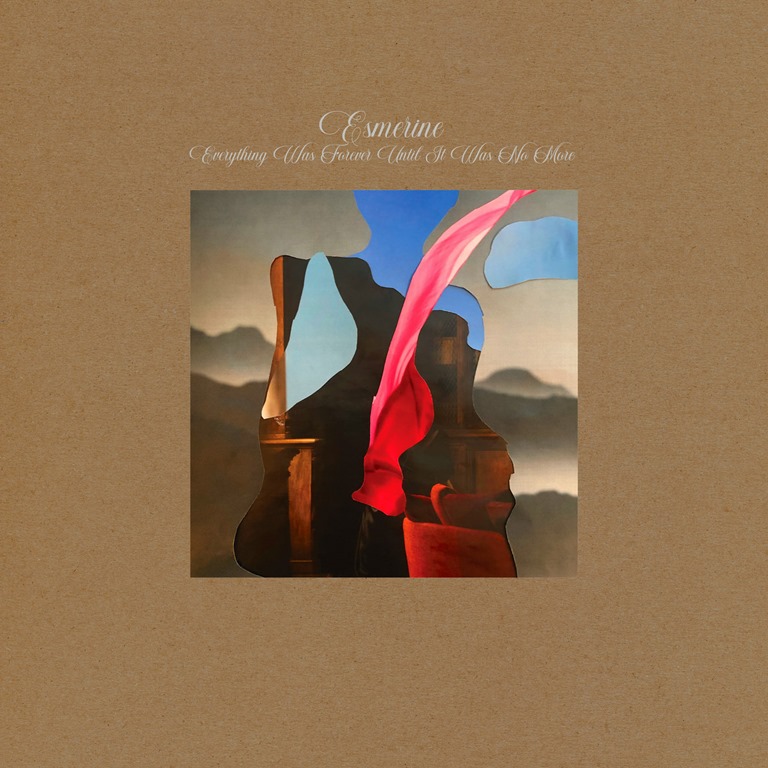
Everything Was Forever Until It Was No More is such a quintessentially post-rock album title: without hearing a note, it evokes the spirit of 2003-2006 or thereabouts. On listening, it’s perhaps not as overtly post-rock as all that – it’s not a slow-building crescendo-fest with chiming guitars like Explosions in the Sky or even lesser-known acts like And So I Watch You From Afar, but with ties to legends in the field, it is every inch of that milieu, with ‘the cello of Rebecca Foon (Saltland, Set Fire To Flames, Silver Mt Zion) and the marimba of ex-Godspeed You! Black Emperor percussionist Bruce Cawdron at its core’.

It’s been a full five years since their last album, 2017’s Mechanics of Dominion, and during this time the Montreal-based collective have been doing what, it seems, the Montreal post-rock scene does best – detaching themselves from the world and conjuring magnificent, magical soundscapes that offer a conduit to planes of pure escapism.

Everything Was Forever Until It Was No More presents a rich sonic tapestry that incorporates a broad range of elements. The press released makes mention of ‘emotive chamber works using threads of post-classical, post-rock, Minimalism, neo-Baroque, jazz, pop and a wide array of folk traditions’ as being Esmerine’s palette.

‘Blackout’ opens the album with a soft, elegant piano draped with brooding strings that’s graceful, subtly emotive, and easy on the ear. ‘Entropy: Incantation – Radiance – The Wild Sea’, the first of the two-part ‘Entropy’ suite is a nine-minute journey through atmospheric ambience, where one treads with trepidation, uncertain of what may be hidden in the shadows. There’s an aura of ancient mysticism that echoes before eventually, the track refocuses toward a driving prog rock finale.

The beauty and joy of such a work is that while there are undoubtedly inspirations and emotions poured into the compositions, such wide spaces without words offer the listener a vessel into which to empty their own experiences and interpretations, and as such, a piece like the seven-minute ‘Imaginary Pasts’ with its lilting piano, roiling drums, and textured guitar work which trips out into hazy space offers so much scope for the listener to invest and reflect upon their own imaginary pasts. Such invitations to meditate on life and to journey into inner space are extremely welcome when life is so relentless.

Despite the title seemingly alluding to a sense of nostalgia, Everything Was Forever feels more like a work that creates its own space in time, rather than reflecting on a time past. Three of the four final tracks are under three minutes each in length, and as such, are almost dream-like fragments, and the listener finds themselves wandering through chiming bells and rippling notes that dapple like sunlight through trees in a breeze on ‘Wakesleep’, before ‘Number Stations’ guides the way not towards the light, but through a murky sonic swamp or eerie echoes before taking its final magnificent form, and reminds us that, ultimately, nothing is forever, and everything is just a fleeting moment in the scheme of eternity.

AA

a2000110854_10

Curation Records

Christopher Nosnibor

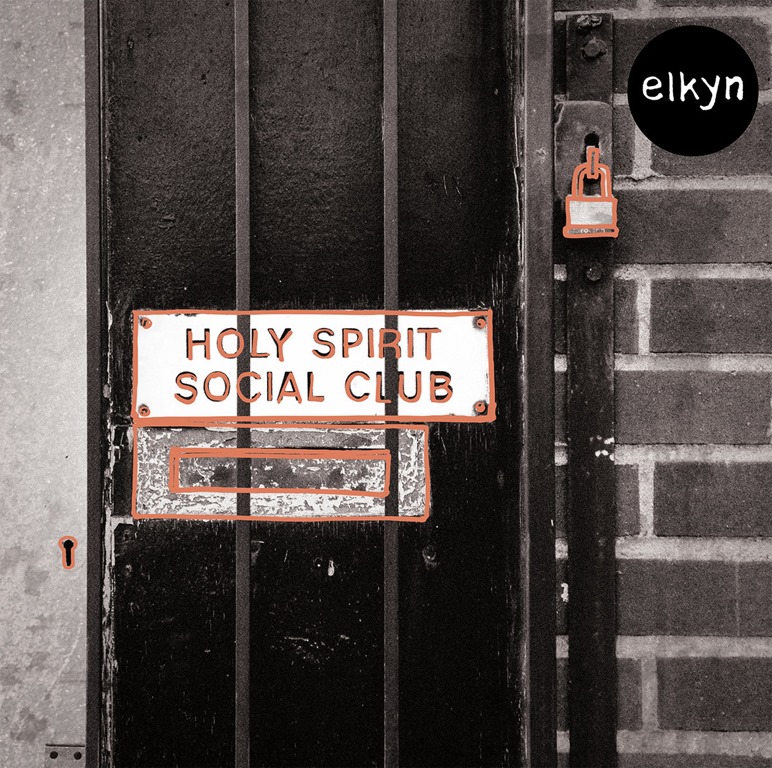
Elkyn is very much about the slow burn, the gradual diffusion, both musically and in terms of career trajectory. Joey Donnelly unveiled elkyn in 2020, having made the subtle shift from performing as elk and releasing the magnificently understated beech EP in 2019. Since then, he’s continued to release a steady stream off beautifully-crafted singles as teasers for the album, the most recent of which, ‘if you’re still leaving’ emerged in March of this year. Interestingly, the melody bears certain parallels with U2’s ‘Where the Streets Have No Name’, but nothing could be further from the bombast of the stadium-fillers’ epic: this is introspective bedroom indie, quiet and contemplative; there’s no ego, no pomp, no big production. ‘So this is it,’ he sings with a weak resignation.

So while progress certainly hasn’t been slow, it’s not exactly been swift, either, and listening to holy spirit social club seemingly explains why. To begin with, there’s the level of detail in the arrangements: on the surface, they’re fairly sparse, simple, acoustic works, but listen closely and there is so much more to hear, from delicate bass and washes of synth, rolling drums and incidental interludes with rippling piano and more. Reverb and layering are applied subtly and judiciously, too, and these things don’t happen by accident, but through a close and careful ear on every bar. The absence of capitalisation may niggle a pedant like me, but it’s clearly another conscious decision and rather than coming across like an irritating affectation, feels more like another aspect of elkyn’s self-opinion, the small ‘i’ indicative of a kind of abasement, while in no way seeking sympathy or validation. It’s a cliché to the point of a running joke when musicians say they write songs for themselves and aren’t bothered if anyone likes them, but with elkyn, it seems genuinely plausible: these songs are so intimate, it’s as if he’s playing them under the assumption no-one else will ever hear them.

If ‘found the back of the tv remote’ (another single cut) sounds like dreamy, winsome indie, it’s equally reminiscent of Dinosaur Jr’s more stripped back moments, and Donnelly shares that sense of almost being embarrassed to be audible as he sings comes through in J Mascis’ delivery. But then, this leads us to the second reason why elkyn isn’t banging stuff out every few weeks – these songs are intensely intimate, and filled with vulnerability and self-criticism, and one suspects that tendency to self-critique extends to his recordings in the same was as social situations, relationships, and life in general.

But while the tone is plaintive, mournful, regretful, sad, that isn’t the vibe of the songs in themselves, because elkyn manages to infuse every song with a certain optimism, the melancholy flavoured with hope. There’s a breeziness, a brightness, I might even say a ‘summeriness’ about many of the songs on holy spirit social club that renders them uplifting. But even at its saddest, most disconsolate and dejected, holy spirit social club brings joy simply by virtue of being so achingly wonderful in every way.

AA

a2130838683_10

Christopher Nosnibor

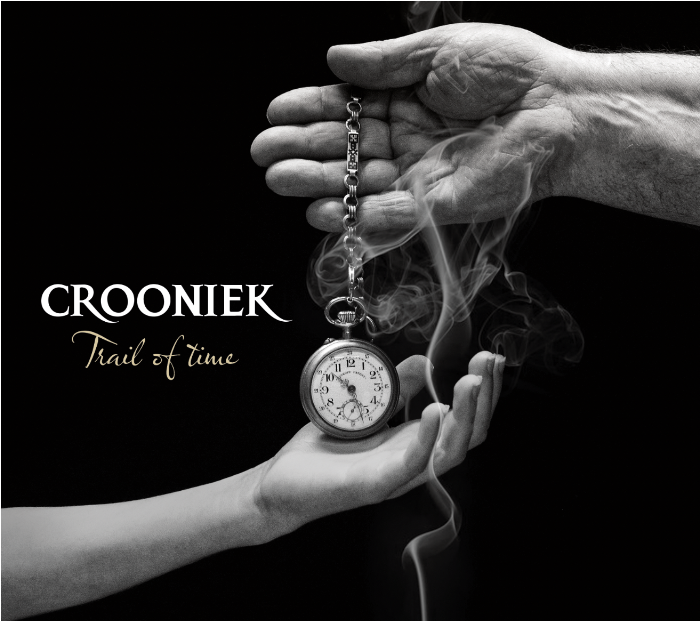
And here I am, presented with Trail Of Time, the new album from Darkwave/’Neo-Fanfare" Band, Crooniek, and album which, thematically, ‘reflects on the concept of time. In particular, the inspiration for Trail Of Time is the conflict between the known past and the unwritten future. The future remains hidden and we do not yet know it. But we do know the past’.

It’s a relatable concept, and according to the blurbage, ‘This album is a nostalgic journey through the past of driving force Gerry Croon, his musical projects (‘Parade of the ‘Funeral Fanfare’) and his relationship with his own birthplace Kampenhout, a small village in Belgium, known for his chicory cultivation.’

I much prefer chicory cultivation to Chicory Tip, because ‘Son of My Father’ is limp glam toss, and as such, Crooniek also win my approval for this altogether darker, non-glam album effort.

With slow, plodding beats and mournful brass, Trail Of Time is the absolute in nostalgia, the sound of cobbled streets and horse-drawn carriages, of bygone ages captured in black and white in sepia stills.

‘Would You Wake Me In Time’ is more a triumphalist medieval / martial oompah, and then again, there’s ‘At the Lemmeken Monument’ with its samples and sparse synths and eerie glockenspiel.

You could never call this album dull. For the most part, it is very much a work of nostalgia-laden post-rock, and it’s layered deep with sad strings and detailed but dolorous orchestration. ‘Condemned to the Fire’ somehow straddles ‘Greensleeves’ and I Like Trains circa Elegies to Lessons Learnt, and ‘Melancholy at Toorfbroek’ is classic post-rock.

It isn’t until halfway through that we get vocals, and for the most part, Trail of Time is an instrumental work, making single cut ‘G_B’ both a standout and an anomaly. It’s also a killer tune, in any context.

Perhaps ironically, as steeped in turn-of-the century and interwar nostalgia as it is, Trail of Time evokes – at least for me – more of the spirit of the turn of the millennium and the post-rock explosion if 2001 to 2005 or thereabouts. I say thereabouts because no time period has a definite start or end: there is a blurring, crossover, an intersection. And painful as it is to admit, 2004 is receding rapidly into the past: there are children born in 2004 who are now adults.

Time marches on, whether you like it or accept it or not. Breathe in, and breathe deep. Smell the present; smell the past: you never know if or when you will again.

AA

2f73e0cc-3cb9-ccc7-d7b9-fa85a6c5e466

Lo Bit Landscapes – 7th July 2022

Christopher Nosnibor

Life has felt somewhat relentless of late. I do mean this on a personal level, although this is perhaps as much a result off external factors as anything else. The pandemic turned me into an addict. An addict of 24/7 steaming news, of doomscrolling, of relentless checking of social media. When things are constantly happening constantly evolving, it’s easy to find yourself dragged into the whirlwind, and ultimately to depend on the maelstrom. Silence becomes scary. You’re overwhelmed by the volume of emails, texts, FaceBook messages and WhatsApps and find yourself begging for them to stop, but when they do, you panic that something is wrong, that there’s something more sinister afoot, something isn’t working, or that perhaps you’ve died and haven’t realised.

Lately, there’s been a tidal wave of music that’s been created as a reaction to life in lockdown, to social tension, to the mental health pressures of contemporary living. And I’ve been lapping it up, I’ve been loving it. Because people are bringing issues out into the open, and speaking in their own voice about the difficulties we’ve all been facing, relaying those relatable traumas. But I’ve started to feel more like a silent counsellor rather than a music critic. It’s a truism that a problem shared is a problem halved, unless you’re the recipient of all of the sharing. Sometimes, you need a break. Sometimes, you need to let all the tension go, and to simply float.

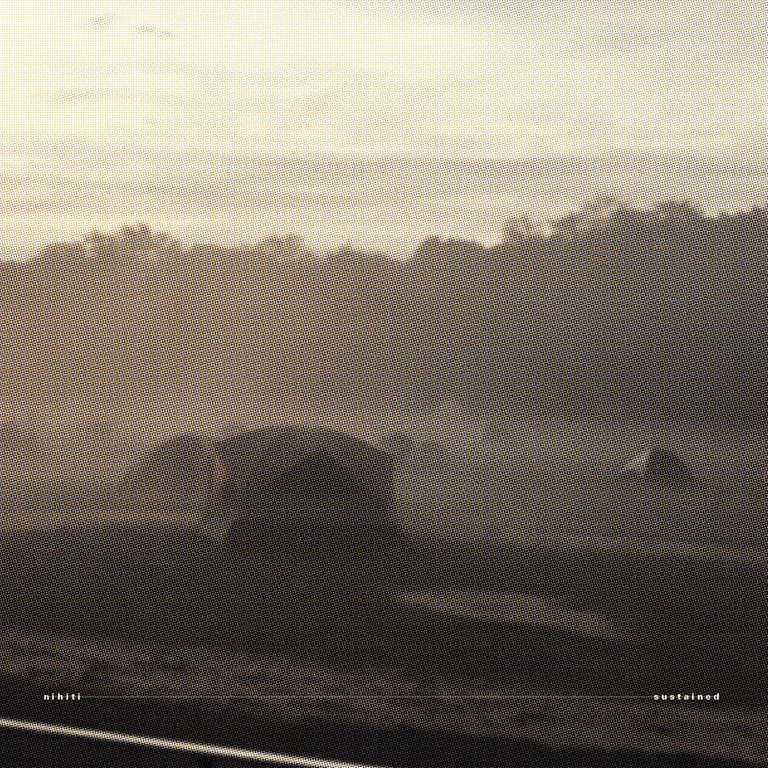
Nihiti’s Sustained is the perfect antidote to all the tension. It consists of three slow-moving ambient works, extensive in their duration. The shortest, ‘Tetrachrome’ is almost ten minutes long, and it opens with the immense, twenty-one-and-a-half-minute soft soundscape of ‘Stellar Observer’. I sit back by candlelight and close my eyes, and feel my jaw slowly unclench, and my shoulder blades gradually begin to loosen. It’s soporific, deep ambience that washes over you and with washing waves of sound and soft, elongated mollifies drones that drift like vapour. It isn’t without turbulence, but said distortion and treble waves crash a way in the distance and charge against a backdrop of slow undulations. The broad, textured sounds are indeed sustained, for what feels like eternities, and the yawn that swells in my jaws is one of relaxation rather than boredom.

There are glitches and switches in ‘If the Colour’ that disturb the flow, and you almost feel yourself tripping momentarily, like a sleep twitch, but things soon right themselves again, and you resume your calmness, despite scratchy samples and moments of dissonance, because in the overall sensory experience, Sustained is slow and gentle.

Breathe it in, absorb the vapours. Ignore the distant voices as they whisper and echo, and assume they mean no harm, despite the darkening sky toward the end. Let it simply hang in the air: sit back, turn down the lights, and tune in to your inner voice instead of the inaudible mutters. Trust your instruct. Trust the space. Absorb the calm.

AA

a0264725976_10

7th July 2022

Christopher Nosnibor

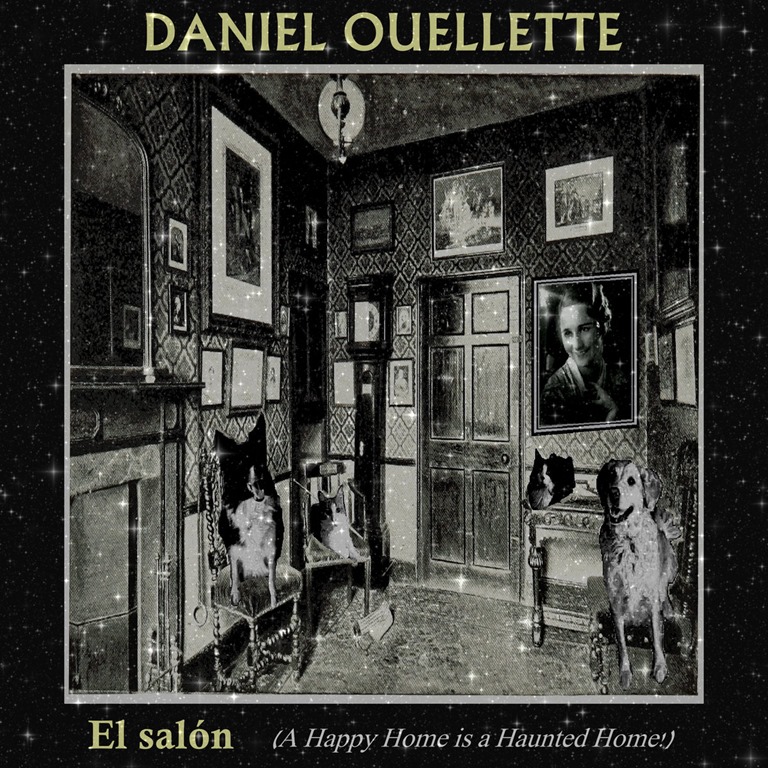
Well, this is a lot to take in: the pitch alone is a back and forth slap around the face of information overload as I struggle to absorb the idea of a ‘post-punk, synth-pop, new wave concept album that sings of the pleasures and difficulties of life within a haunted house’ which is ‘also multi-lingual’ whereby ‘Daniel will sing to you in Spanish about a werewolf, in English about a Ouija board, in Portuguese about a haunted house and in French about bats at Christmas time’.

Is anyone equipped to deal with this in our tiny-mind, hyper-anxietised, attention-short culture? I don’t really know if I am, and rather suspect I’m not, or even if I want this, and ‘m not sure I do, but there’s really only one way to know for certain, and that isn’t to ask someone who’s heard it.

According to the accompanying notes, ‘The title of the album, El Salón has multiple meanings. In Spanish it can reference a classroom, an art studio, a living room and of course, a salon. Daniel Ouellette says, “The best place I have learned to speak is in living rooms with loved ones who speak Spanish and this the title is in honor of my mates, my loved ones to whom I speak Spanish.”

As such, it’s a polylingual cocktail that draws on pan-cultural sources and a host of genres. This doesn’t make it any easier to assimilate, and the resulting product is a mixed bag to be polite, something I’m not always given to being. What do you get if you throw together Rammstein, Young Marble Giants, and Flying Lizards? The absolute toss of ‘A Planchette’. Pretentious, precocious, corny theatricals… it’s hard to swallow. It has novelty value, and I can accommodate that, but it just feels so painfully self-absorbed.

‘Duérmete’ is more palatable, 80s synth pop with a dash of Cure in the mix, and ‘O Lindo Sonâmbulo’ is a tidy slice of vintage electropop with a crisp and dominant snare. ‘The Kitchen Witch Who Stayed.’ is more bleepy, bouncy, and it’s wincey. It sits somewhere between Erasure and St Michel Front, but has the panache or aplomb of neither. St Michael Front demonstrate a winking knowingness, whereas Daniel Ouellette lacks that same sense of self-awareness, resulting in a clunky, awkward delivery made without a nod or a wank – and Ouellette is no Throbbing Gristle either. As a consequence, El Salon is a mixed bag and a shade patchy: at its best, it’s dark, stark, brooding and theatrical electropop: at its worst, it’s pretty cringy. In favour of El Salon, the best is proportionally better represented than the far from best, which is simply grating and cheesy. With its shifting forms, it’s hard to digest. Or maybe I’m just not ready to take it in all at once.

AA

a2394515336_10

20th July 2022 – Produkt 42

Christopher Nosnibor

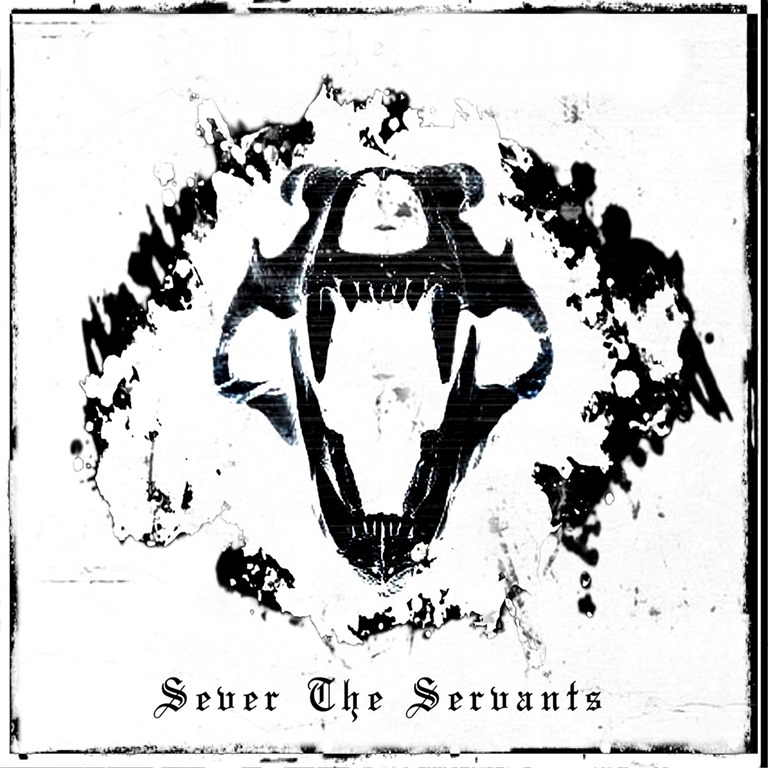
Sever The Servants – a nice play on words – have dished up an eponymous debut that’s as dark as darkwave gets, with subsonic bass, thudding beats and hushed, deadened vocals. As much as anything, I’m reminded of Test Department’s The Unacceptable Face of Freedom, only much more muted, and less abrasive, antagonistic, and slowed to a crawl.

Sever The Servants are no less political, skewering slabs off both ‘political and social commentary. From the ‘right wing hivemind’ theme of the title track to the things that slowly kill us day to day’, STS are seething… but with a taut musical restraint. It’s stripped back, minimal. No samples, no loops, just an undulating larval creep.

Instead of going all-out raging, industrial-style either by means of guitars (e.g. Ministry) or snarling synths (e.g. Nine Inch Nails), Sever The Servants create a dense, suffocating soundtrack that recreates the pressure of oppression with a sonic density and uncomfortable weight. Listening to this album is like having a heavy cloak pulled over your head. Everything is muffled, and you can’t think straight. You panic. The drum beats are like kicks to the chest. It’s hard to breathe. And they never let up. You feel the atmosphere thicken.

I was sold on the pitch that ‘The album’s themes are generally apocalyptical with some each of the album’s six tracks represent the freedom to explore with a complete lack of care towards staying in a “box”.’ Having spent the last couple of years effectively living in a box, I’ve grown accustomed to a certain sense of claustrophobia, but Sever the Servants manage to intensify this with the six tracks on the menu here. As for the apocalyptic… the world is quite literally burning now. And yet right-wing boomers are decrying those who dare to mention climate crisis as ‘woke’. We are fucked beyond fucked. The end of the world is truly nigh, and I’m out of words to describe just how fucked we are. But Sever The Servants at least manage to create a soundtrack that goes some way to articulating it – for as long as we have power, before the blackouts commence.

The vocals wheeze uncomfortably amidst tense soundscapes that roll and lurch, and the weight doesn’t come from volume or abrasive, but a menacing dark force.

AA

a4218863382_10

Front & Follow and the Gated Canal Community – 5th August 2022

Christopher Nosnibor

There’s so much to love about Front & Follow and the Gated Canal Community, and I’m absolutely not mocking when I say that Front & Follow have called it a day as a label almost as many times as Status Quo have announced farewell tours, because I deeply admire the fact that label head Justin Watson simply cannot resist a good project, and always returns after every break with a new release beyond bursting with great new music. This leads me to the next reason to love the label: every project that brings the label out of mothballs is for a worthy cause, and to see a label channel its energy into raising funds for charitable causes (without being preachy or holly about it) is truly heart-warming and goes a long way to remining us that human nature is, by and large, giving, and that it’s just the current government and the selfish / stupid anuses who keep voting for them who don’t give a fuck about anyone else. And then there’s the fact that – as previously mentioned – each release contains great new music, and the fact is that Front & Follow’s commitment to providing an outlet to lesser-known acts, including many who’ve not been previously releases, is unstinting. Just as it’s hard to find venues who will give gigs to bands who have yet to play and establish a fanbase, so it’s hard for those same acts to find an outlet other than doing it themselves on Bandcamp and Spotify, with their work being completely buried and diving under all radars in the process.

And so, here we have the first instalment of Rental Yields, a ‘multi-release collaboration project raising money to tackle homelessness in Manchester’. As the press notes explain, ‘Inspired by our current housing system, the project encourages artists to steal (or borrow, nicely) from another artist to create their own new track – in the process producing HIGH RENTAL YIELDS… Over 100 artists are now involved (the spreadsheet is fun), each one tasked with creating a new track from the sounds created by someone else – we are then collating the tracks and releasing them over the course of the next year.’

This is Volume One, and contains twenty tracks, ‘featuring the likes of Polypores, Elizabeth Joan Kelly, The Leaf Library, yellow6, Spaceship and more’, and it’s a cracker. This is no surprise on the basis of the label’s track record, of course. Most of the artists are super-obscure: Solomon Tump, The Incidental Crack, and yol are about the limit of my a priori knowledge, and that’s good: it means the collection is about the music rather than the artists, and people should be interested because it’s good, not because it has some shitty remix of acoustic version of a mediocre name band. It’s good because it’s good. And weird.

And there is nothing mediocre about this. It is a big compilation that showcases the exploratory, the experimental, the oscillating, the avant-garde. Dig, it, and dig it deep.

AA

RENTAL YIELDS - VOL ONE