Archive for the ‘Albums’ Category

skoghall rekordings – 30th June 2023

Christopher Nosnibor

Racking up a second release in its first month of existence, new Swedish label skoghall rekordings – the gentler sibling of Dret Skivor – offers up a reissue of the second album by Farming Incident, originally released in 2008 on Wrath Records, home of The Scaramanga Six and Eureka Machines.

The tags which accompany this release include ‘experimental’, ‘hip hop’, ‘ambient’, ‘anarcho-folk’, ‘folktronica’, ‘politics’, ‘post-punk’, ‘post-rock’, and ‘space rock’, and if that seems an incredibly eclectic cocktail, it’s a fair summary of a band who never sat comfortably in any category, at a time when crossovers and hyper-hybridity were still pretty uncommon and even less accepted: this was a time in the wake of the 90s emergence of rap-rock crossovers and around the time when instrumental post-rock’s ubiquity was waning after what felt like an eternity but was in fact a span of maybe four years at most.

For this, their final album, Farming Incident had expanded its pseudonymous membership to four, with Agent Jones (guitar, bass), Agent Mays (drums) and Agent Procktaur (vocals, guitar, bass, keyboards) being joined by Agent Pushkin (backing vocals, guitar, bass) ‘to allow more flexibility in instrument swapping’. And that’s certainly a lot of guitar and bass-playing contributions across their personnel.

‘Elk vs Volvo’ is a choppy slice of post-punk that crunches Gang of Four and The Fall together with sinewy guitars propelled by energetic drumming. It’s also got that authentic lo-fi eight-track early eighties sound, and really only being familiar with Dave Procter’s work from the last ten years or so, it’s something of a revelation to hear him doing vocals – and actually singing(ish) – in a more conventional indie / rock context. The verses on the goth-tinged ‘Sadism vs Fadism’ (although it’s more early Pulp with a dash of PiL and Rudimentary Peni than The Sisters of Mercy or The Danse Society) finds him in more recognisable voice, with a Sprechgesang delivery with flattened northern vowels, before coming on more like David Gedge in the choruses.

There’s indie-surf and straight-up indie in the mix, and it’s all going on really. Casting my mind back to 2008, and some of it’s hazy because time, and beer, and so may gigs and albums, but this doesn’t sound like an album from around that time. The nagging bass and guitar of ‘Stiletto’, which reminds me of Murder the Disturbed but with the synths from B-Move or even Ultravox, giving it very much a feel of c79-81, before it locks into a motorik groove.

‘The Terrorist You Seek Is in the Mirror’ finds Procter in the kind of lyrical territory he’s made his home since, slogging out slogans with passion, but with a fairly standard four-square punked-up pub-rock instrumentation, it’s perhaps the alum’s least interesting track, particularly as it’s overshadowed by the atmospheric stroll of ‘G.O.T.H.’ which explodes in a colossal crescendo three quarters of the way in, flange and chorus heavy guitars dominating.

They chuck in a surprise grunge tune in the shape of ‘Phobos’, but it’s also got that early 90s noise rock slant that owes as much to the more obscure acts. And then there’s the final track, ‘Owls’. It’s a goth—tinged alt-rock screamer, one of those longer songs that simply could never be long enough even if it was half an hour long, in the same way that The Honolulu Mountain Daffodils’ ‘Tequila Dementia’ is simply too short. ‘Night vision, owls are gonna get you!’ Dave sings, channelling paranoia and panic while prefacing the avian themes that would resurface latter in his career on songs like The Wharf Street Galaxy Band’s ‘No Puffins For You, Lad’.

A lot has happened in the last fifteen years. We’ve had thirteen years under a Conservative government for a start, and the whole world seems to have taken a nosedive socially, politically, economically, and it seems impossible to think now that Trump and Brexit and Johnson and Covid were only the tip of the iceberg. But while we’re seemingly more divided than ever as people wage war over pronouns and images of Mickey Mouse in hostels for asylum-seeking children, we do seem to have become more accommodating of music that is so eclectic as to seem rootless. Nine Degrees of Torture probably feels more at home in 2023 than it did back in 2018, but even now, it doesn’t really sound like anything else. Bits of stuff, yes, like a magpie raid on bits and bobs from all over, but it’s not grunge or post-punk or anything really, but somehow it hangs together nicely.

AA

a3609247591_10

Cruel Nature Records – 30th June 2023

Christopher Nosnibor

Less than a year on from Their Invisible Hands, and just nine months after Undergrowth, Clara Engel serves up Sanguinaria. The all-too-common ‘returns with simply isn’t appropriate here, since it implies absence, and Engel’s rate of output hasn’t only been consistent, but if anything has accelerated lately, with this being their eighth release since Hatching Under the Stars in April 2020.

The advent of streaming has unquestionably changed the face of the music industry, and it seems to be broadly accepted that the change is most certainly not in the favour of artists, with Spotify CEO suggesting that if artists want to achieve more streams and therefore more royalties, they need to be producing more content, and more regularly, famously telling Music Ally that it’s “not enough” for artists to release music “every three to four years” and that they ought to maintain “continuous engagement with their fans.”

This speaks volumes about his view of music – that it’s not art, but a commodity. And of course, his interest in artists cranking out product on a conveyor-belt is quite clearly in the profit it generates for his company and him personally, not those who produce it. It also shows a complete lack of understanding of the creative process: try writing and recording material while being continuously engaged. Moreover, many creative types aren’t extroverts by nature, and aren’t disposed to sharing endless videos and vlogs and updates on their time in the studio. And do audiences really want or need that anyway? We don’t necessarily need to feel like we know the artist or have a ‘chummy’ or direct connection with them: we just want the music and prefer a bit of mystery and distance.

In the 60s and 70s, it was commonplace for artists to prelease an album every six months, and there’s a very good reason this practise stopped: it simply wasn’t sustainable, and it was invariably the artists who suffered rather than the labels who effectively owned them.

But where I’m going with this is that every artist is different, and the creative process is a personal and individual thing, and sometimes artists experience huge creative flurries, while at others they may experience creative slumps. Clara Engel is clearly experiencing a flurry of late, and the remarkable thing about it is that they’re producing work not only in quantity, but of a remarkable quality.

If in terms of output, more may be more, the stark arrangements of Sanguinaria abundantly evidence that less is very much more in most cases. There is a beautiful achingness which pervades every moment of the album’s downbeat folk contemplations.

The songs on Sanguinaria are sparely-arranged and it’s Engel’s voice which is to the fore, at least in term of the mix. ‘The sky is huge, and the sea is green’, they sing in the reflective refrain of ‘Sing in Our Chains’, and it’s an evocative pastoral feel that nags at you and makes you feel… sad, haunted, makes you look inside yourself. You may not necessarily feel comfortable in doing so, but this is only one of several reasons why it’s worth spending time with Sanguinaria.

Although a solo album and a minimal one at that, Engel – a multi-instrumentalist who plays a fascinating array of instruments here, notably, according to the liner notes, ‘electric cigar box guitar, acoustic guitar, talharpa, gudok, cajón, wooden trunk with soft mallets, tongue drum, melodica’ – is accompanied by a number of contributing musicians who add subtle detail and essential texture and depth. The picked strings and sad-sounding violin forge a mournful dark folk sound on ‘Poisonous Fruit’ and it calls to mind Dark Captain, a band I still miss and feel were criminally underrated. ‘I Died Again’ is so simple, so melancholy, so human, it’s impossible not to be moved by it: Engel’s vocal is rich, but uncomplicated.

‘Extasis Boogie’ introduces percussion for the first time, with hand drums quietly bopping behind an understated guitar, while the lap steel drones on ‘A Silver Thread’ add a weight to the slow sadness that drips from every note.

These are songs which are carefully crafted, considered, and feel so natural and rich; there’s no hint of their having been rushed or being partially-evolved. As such, Sanguinaria feels like an album that connects the feelings behind its creation and the final output.

Engel’s soul is bare on this finely-poised and thoughtful album, and perhaps because of, rather than ins spite of, its minimalism, it’s a gripping work.

AA

a1950392451_10

Cruel Nature Records – 16th June 2023

Christopher Nosnibor

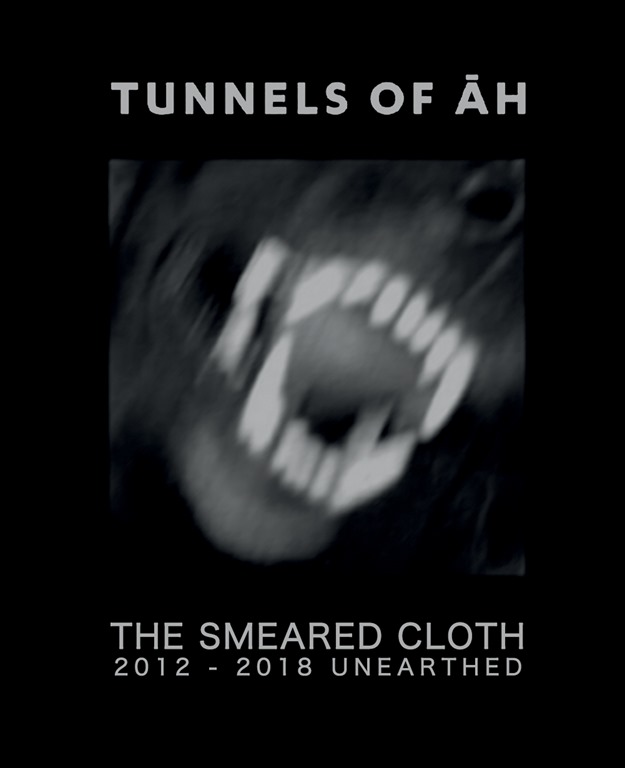
After calling time on Head of David in 1991, Stephen R. Burroughs re-emerged in 2013 as Stephen Ah Burroughs with recording as TUNNELS OF ĀH, and offering a dark ambient focus. Since the first TUNNELS OF ĀH album, Lost Corridors, Burroughs has maintained a steady output through the years, also working under the FRAG moniker (although this project was conceived in the ‘90s, it wasn’t until much later that recordings would begin to be released).

THE SMEARED CLOTH (2012 – 2018 UNEARTHED), as the title suggests, collects unreleased recordings made between 2012 and 2018 and more recently excavated. You couldn’t exactly call this a cash-in: this is ultra-niche and it is, however, a valuable dredging of the archives.

The cassette release is a double, with volume 1 spanning 2012-2015, and volume 2 spanning 2016-2018, and while an album conceived as an end-to-end listening experience would suffer from the enforced breaks, the (cruel) nature of this release means this isn’t an issue.

Oftentimes, with dark ambient works it feels as if the sounds are drifting out of the air rather than being forged by any kind of instruments, but the warping drones of the first composition, ‘Aceldama’, twist and grind and there’s quite analogue synth feel to it, with distant vocals adding an intriguing depth. In contrast, ‘Garlic Blades’ feels as if it something that has come not from instruments, but from a pair of bellows wheezing in a dank underworld. The two sonic facets come together on the third track, the heavy, stark ‘Brute World’ where drifting drones and creeping atmospherics filter over tense, brooding strings, and this all provides the backdrop to barely-audible incantations in a mystical tongue.

These contrasting elements highlight the range of the recordings featured on THE SMEARED CLOTH – and with twenty-one tracks, the majority of which are over six minutes in length, it’s a substantial document. But despite the contrasts – and the span of time over which the recordings were made – there is a certain cohesion to this collection, and the tracks run from one to the next without there being any jarring leaps.

Repetition is a common feature of the compositions; ‘Keys King at the Womb Again’ is centred around a short loop of a heavy industrial scraping, which equally sounds like a pained bark – or a pained barf, for that matter. Because Burroughs does venture into harsher territories at times, there’s some uncomfortable listening to be had among the drones and hums, scrapes and chants, and there are extended passages of quiet, ominous ambience, sounds without definition or any indication of origin ebb, flow, and eddy, to unsettling effect. The mid-section in particular is given to these more abstract forms, the sounds muted and creeping slowly, stealthily. ‘The Cloth is Smeared’ is exemplary: the words, spoken in an even, ritualistic tone, echo amidst creaking, creeping hums and clattering , and while stylistically worlds away, it harks back to themes that go back to early Head of David: the viscerality of ‘Smears’ (it’s a word which carries so much power and evokes a real revulsion, and religion, as represented by cuts like ‘Newly Shaven Saint’. Somewhat annoyingly and inappropriately because my brain is not my friend, the phrase ‘touching cloth’ insists on thrusting itself into my mind – and my mind wanders as it finds itself led through the dark, metal-edged passages of ‘Great Darkness’ with churning noise and what sounds like the clank of metal against railings, as if in protest or otherwise or trapped inside a prison cell. ‘Metallic Shoes and a Sword’ is particularly sharp-edged in the abrasive edges that saw through the swampiness of the damp gloaming, before ‘Gnosis of Self Loathing’ and ‘Amorphophallus’ drive us deep into some gruesomely dark spaces, suffocating, strangling, asphyxiating in their density: these are the sounds of slow punishment.

While the pieces themselves are (essentially) instrumental, the titles convey a great deal and ‘Circumcision (Hunter Christ)’ and ‘The Castrate Became An Angel’ largely speak for themselves. The latter is minimal, jittery, tense, like listening to the sounds in the walls at night and wondering if you have some kind in infestation. And perhaps. perhaps you do, but it’s in your body, inside your skull. There’s nothing here to calm that anxiety, only crackling distortion and drones and groans, grumbling, gut-shaking rumbles.

THE SMEARED CLOTH hangs dark, damp, and heavy, and rather than sounding like a bunch of straggly offcuts, it showcases the depth and breadth of Burroughs’ work, that the works in progress and outtakes and otherwise cast off and forgotten recordings are enough to make two full-length albums of consistent quality.

AA

cover

Room40 – 30th June 2023

Christopher Nosnibor

There is no quick way to consider this album. And for many reasons – the first being that it needs to be heard in its entirety before being able to summarise and pass critical comment. The second being that after hearing it, one needs to drag themselves from the wreckage of their psyche and process an experience that is likely akin to a week being subjected to psychological experiments at the hands of the CIA under MK Ultra. Brace yourself…

As his bio points out, ‘Tony Buck is no stranger to the realm of durational performance and composition. As a part of Australian unit The Necks he has been central to defining a reductive, but rich sound language that equally interrogates timbre and time…[and] with Environmental Studies he moves even further into these longitudinal pursuits.’

Longitudinal is one word to describe this album. It’s a single, continuous piece, some two hours in duration, and while there are a couple of five-minute excerpts designed to give potential listeners an indication of what it’s like, it’s simply impossible to convey the experience in snippets. The snippets are lifted from the album’s lighter moments: that doesn’t mean they’re mellow, melodic, but the multi-layered clattering percussion that’s evocative of some kind of space-jungle and brief segment of avant-jazz feedback is nothing in the wider context. And – as I always say – context counts.

While chart music – geared toward snappy three-minute cuts which are 90% chorus – and the inclusion of streams when compiling charts, has effectively killed the album in the mainstream, further afield (and to be fair, you can’t get much further afield than this), the album is still very much a cherished format for both artists and listeners alike. In fact, it’s interesting to observe the rise of the really long album. I will often harp on about Swans releases from the last decade, but they’re not isolated. Frank Rothkkaramm released an album as a 24-hour CD box set – which couldn’t be much more different from Throbbing Gristle’s 24 hours box – as he explored sounds which helped with his tinnitus. Numerous doom, drone, and ambient albums in recent years have really pushed the parameters of an album thanks to digital releases not being subject to the same limitations of physical formats – or the same production costs. Is the medium the message? Perhaps, at least to an extent.

The recorded medium was always an issue: even going back to the height of the classical era, once recording became possible, the media limited what could be released, meaning to hear a full performance of, say, Handel’s Messiah, you had to be there, since even a recording which required a box-set album release required truncation. It also, of course, required the turning of records and the segmentation of the work.

In its day, Earth’s groundbreaking Earth 2 challenged the conventional notion the ‘the album’ – more even than any monster prog releases like Yes’ eighty-one minute Tales from Topographic Oceans and the two-hour plus, sprawling triple YesSongs. Because what differentiates these is the fact that Yes was a lot of noodling wank, while Earth did something different, with a specific desired effect intended, and its duration was in fact integral to its cumulative effect, namely that of a sonic blanket of suffocation. Anyway: the point is that Environmental Studies is an absolutely immense album, and it’s a work that needs to be heard as an album. You may find yourself drifting in and out, but it feels as if this is part of the experience: better to drift than experience in fragments.

The accompanying notes describe Environmental Studies as ‘An incredibly dense matrix of interwoven voices and layers, each occupying and exploiting a unique space within the fabric of the sound-environment, co-existing to slowly reveal themselves in multiple interconnected relationships.’

Immediately from the start, the listener is assailed by a deluge of discord and dissonance and streams of noise. It gradually drifts through an ever-evolving, eternally-shifting journey, where mellow jazz piano and slow-melting notes emerge and drip slowly over cascading cymbals and an infinite array of extraneous sounds which wash in and out. There are passages of supple, strummed acoustic guitar – which get harder and more challenging at times but also explore mellow passages –– and gurgling extraneous nose, straining, clattering. There are sections which so tense, straining and submerged by noise that as feedback twists and turns and groans and hums, that the enormity of Environmental Studies finally hits.

There are infinite layers of percussion rattling shakes and clangerous curiousness, with errant twangs and all kinds of shades of strange, with dingy distortion crashing in heavy amidst the a maelstrom of noise that sounds like a hundred pianos being thrown down a hundred flights of stairs at the same time while someone in the top floor flat blasts a Sunn O))) album at wall-cracking volume and there’s a fire broken out in the basement and it’s rapidly escalating upwards.

An hour in, we’re in sonic purgatory – and it’s absolutely magnificent. The polytonal percussion builds and builds; industrial, tribal, everything all at once, with sonorous drones and crushing distortion and noise and wailing feedback whistling and screaming all the while, it’s a relentless barrage of sound – but not noise, and that’s an important distinction here. There are noises, and they’re collaged into something immense, with the rattling of cages and furious beating of skins.

When it does simmer down, some time further in, we find ourselves in an alien landscape, that’s strangely spacey and tense before the next round of percussion barrels in. Environmental Studies is big on beats, but not all of the beats are big: insectoid skittering and scratchy flickers are as integral to the complex interweaving as the thunderous floor toms and reverberating timpanis, and everything melts together to weave a thick sonic tapestry.

While there is nothing about Environmental Studies which is overtly heavy in the conventional sense, to immerse yourself in the album is an exhausting experience, both physically and mentally. But if art doesn’t challenge, what is it for? It’s merely entertainment. This is not entertainment. But it is an incredible work of art.

AA

a1038790420_10

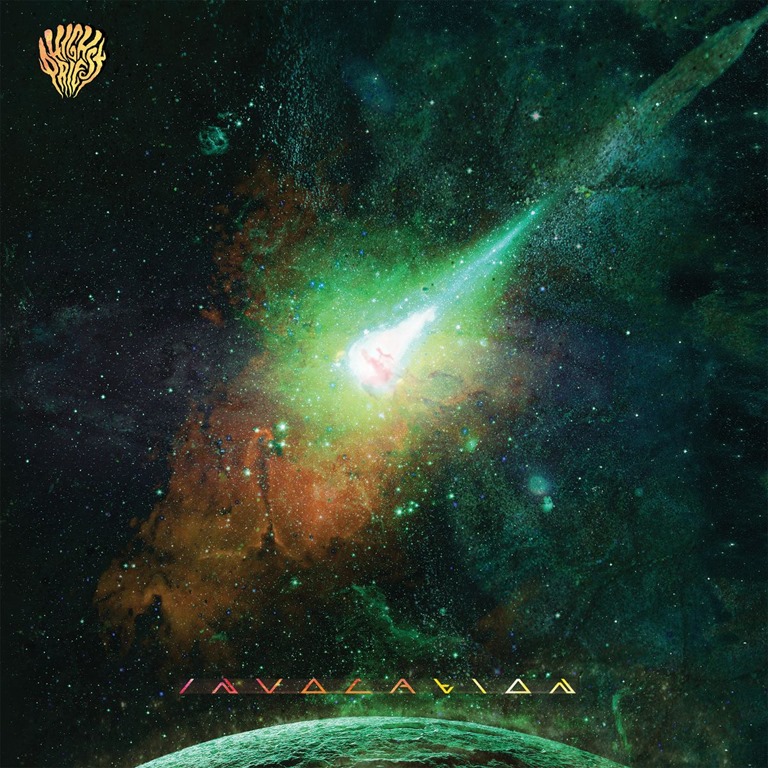
Chicago riff-doom four-piece HIGH PRIEST officially present their debut full-length Invocation to the world, now streaming everywhere and available in record shops across the galaxy from 23rd June 2023.

The band comment: “Our debut album Invocation is the culmination of years of hard work and collaboration”, guitarist John Regan writes. “We wanted to represent our breadth of influences and create something new while harkening back to the bands that inspired us to play music in the first place. I am the most proud of this record of anything I’ve ever worked on, and I’m so excited to share with the world.”

Hear it here:

AA

9b8ad402-34a0-1adf-46fe-a27b1f8d9ca5

7th July 2023

Christopher Nosnibor

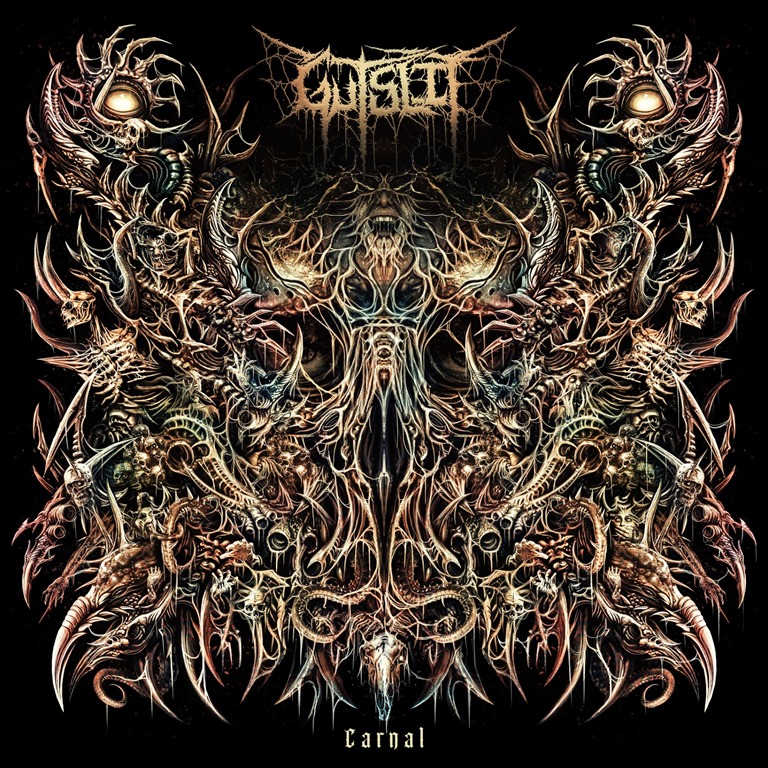
When it comes to band names, metal is one of those genres that has a unique way of throwing out monikers that mean you know it’s a metal band just from the name – unless, of course, you can’t read it because of the unintelligible spiky logo, in which case you absolutely know what to expect without even knowing the name. Indian deathgrind act are a quintessential example. Just look at that cover! It’s all the thorns – and it encapsulates the listening experience perfectly. Yes, it’s sharp, it’s a set of songs that snags and tears at your skin and your psyche.

Fifteen years into their career, Carnal is their third album, and if it sounds like that’s perhaps slow progress, the eight brutal cuts on here suggest that the time goes into compressing everything down to its tightest, densest form, honing it to the point at which its mass and velocity is absolutely optimal.

With the exception of the six-minute epic closer and the forty-one second blast of mid-album track ‘Insidious’, the songs range between around three-and-a-half and four minutes – and they pack everything into these compact sonic slabs. They don’t do fiddly, twiddly stuff, and there are no squealy notes or solos, apart from on ‘Bodysnatcher’ where they work -and wank – all the frets in a frenzy: this is music which sounds like it’s the output of a car-crusher – compacted, mangled, brutally fucked and as dense and weighty as it gets.

The album’s themes are clear from the song titles, with opener ‘Son of Sam’ setting the tone, ahead of ‘Bind Torture Kill’, ‘Body Snatcher’, and ‘Alter of Putridity’, which, like the font and everything else, pretty much speak for themselves. They’re well into their serial killer shit, but as I observed just the other day, this stuff is mainstream now. Pouring over mass murder and serial killing is no longer the domain of trenchcoat-wearing loners who aspire to wreak their own revenge on this cruel world; it’s David Tennent on ITV scoring eleven million viewers per episode.

That doesn’t mean that this kind of brutal tempestuous racket is mainstream, but people can no longer judge the work of a band like Gutlsit as sick or perverse when their subject matter is primetime. We’re all murder junkies.

‘The Killing Joke’ opens with a sample from an interview with notorious sadistic serial killer John Wayne Gacey (who makes Son of Sam with his seven victims look like a mere hobbyist), saying ‘The dead won’t bother you. It’s the living you gotta worry about’. Gracey may have been somewhat flippant in his remarks, but he had something of a point.

Gutslit sound neither dead nor living, their grating attacks sounding more like the undead on EST, a least vocally, and they go all out to deliver punishing intensity on a satanic level. It’s a churning mass of guitars that grinds at your guts as beats blast so fast as to blur to a flickering rattling sound rather than form an overtly structured rhythm. The obligatory guttural vocals growl and snarl, switching between styles fast and often between growl and barks, coughs and vomiting streams of vowels. It’s frenzied, demonic, furious. It sounds murderous, it sounds brutal, disturbed and disturbing.

‘Primeval’ is slow in terms of chords, but countered by a thunderous rush of beats, which renders it disorientating, harsh, and high on impact, and as a whole Carnal is pretty nasty – just as intended.

AA

407112

skoghall rekordings – 19th June 2023

Christopher Nosnibor

This was originally released some time ago, and now it’s getting a digital release and a CD reprint once the last of the old stock is gone, and it’s the first release on Dave Procter’s new label, skoghall rekordings, which he’s set up to home non-noise material which doesn’t sit comfortably with the remit of his Dret Skivor label. If I didn’t know better, I’d think this guy had mastered cloning, given the release and touring schedule of his myriad musical projects, the range of which is vast – although it’s fair to say that anything involving words will be a politically-charged vehicle for reminding us how shit governments, right-wingers and tabloid media are, and how capitalism shafts the workers without whom there would be no wealth for the elite. And so it is with Sounds from Underground.

‘Justice for the 95’ say the notes accompanying this release, some of the proceeds of which are being donated to the Orgreave Truth and Justice Campaign.

Memories are short, even among those who live through momentous events in recent history, and the miner’s strike of 1984-85 was one of those. It wasn’t simply a strike like we’re seeing with… most sectors right now, in what feels almost like a replay off the early 80s… the handling of the strikes was tantamount to civil war, the (Tory) government against the workers and the unions. The 95 then, refers to the 95 arrested at the so-called ‘Battle of Orgreave’ in South Yorkshire in June 1984, but all charges were dropped. As the BBC reports, ‘Police confronted pickets outside a coking plant in Orgreave, South Yorkshire, in what the miners said was a military-style operation to attack them… Former miner Kevin Horne said: “We were only striking for the right to work.”’

This is by no means the first musical work which focuses on the miner’s strikes: Test Department’s 1985 LP Shoulder to Shoulder, with South Wales Striking Miners’ Choir was released as a fundraiser, while ‘Statement’ from 1986’s The Unacceptable Face of Freedom is centred around a recorded statement detailing the brutality of the policing of the picket lines: ‘25 pickets… 150 policemen… I was dragged off to this van… another one had me in a headlock… I thought I was going to black out…’ It’s a harrowing account, and one which seems as relevant now as ever given the current government’s expansion of police powers, promoting greater use of stop and search, and the police’s ‘management’ of events like Sarah Everard’s vigil. It’s all too reminiscent of A Clockwork Orange.

As the accompanying notes outline, ‘This LP documents coal mining in all its forms – the pride of the job, the struggles of the job and the occasional deaths because of the job. A lot of my family were coal miners and most of them died from lung disease before their time.’

Yes, the miners got fucked every which way, and while the twelve acoustic-based songs on Sounds from Underground may not be as visceral or hard-hitting as some of Test Department’s works, they’re truly heartfelt. And that registers, emotionally.

While ‘Fiddler’s Ferry’ is a simple and wistful song that would perhaps class a s a sad protest song, the super-sparse ‘Macgregor th’ butcher’ is heartaching in its mood and the simple narrative. Similarly, ‘At the Face’ is simple and tells of the everyday realities of mining life – and the physical toll on those men who grafted and grafted, until death. It would be easy to romanticise the northern accent and barely-held melodies, but the fact is, it works because it’s real, and ultimately sounds like The Wedding Present covering Billy Bragg, if you need a comparison.

‘Me, A Picket Line’ and ‘Horse’s Arse’ are straight-up spoken word pieces, and perhaps the album’s most affecting tracks, because they’re so direct, the latter in particular, echoing as it does the narrative of Test Department’s ‘Statement’. But ‘Horse’s Arse’ references 2016, and you realise, nothing changes, and while sometimes things are reported and there is outcry and uproar, so often, events are ignored out of existence, and the narrative becomes skewed, rigged. But mention that and you’re a conspiracy nut, of course – more often than not dismissed by the conspiracy nuts. ‘Tory Twat’ is self-explanatory, and getting straight to the point.

And this is perhaps where we can see how Guerrilla Miner and Test Department share common ground, beyond subject matter: as much as they’re both political – because this is political, and it’s impossible to avoid or deny that this has a heavily political aspect – they’re both ultimately concerned with the human aspects of the miners’ strikes, and this in turn reminds us that the current strikes, too, are about people and their livelihoods. You will see reported, time and again, the government vilifying the striking workers for the disruptive impact of their industrial action. But any a striking worker will tell you that striking is a last resort, the only way to be heard when all avenues have failed, and if strikes are disruptive to consumers, they’re even more so to those striking. And it’s rarely simply over pay, but also conditions: and at the heart of it all lies capitalist exploitation, and such exploitation shortens and destroys lives, placing profit before people. And this is what really hurts.

Sounds from Underground is direct, real, human, affecting and ultimately sad. Listen, learn, and do everything within our power to stop history from repeating again, and again.

AA

kents lane 2 - LP art for bandcamp

7th July 2023

Christopher Nosnibor

A year after unveiling ‘The Nature of Light’ with the promise of a debut album in September 2022, Celestial North’s Otherworld is finally with us. With the title track and ‘Yarrow’ having also built a level of anticipation, it’s left like an album that’s been a long time coming.

Some things simply cannot be rushed, and Otherworld is appropriately-titled, as Celestial North creates songs which sound as if transported from another world, and another time. A she says of the album’s evolution, “I imagined that I was time-traveling through different and exciting worlds. Wandering through the ancient, sacred stone circles at Machrie Moor and then jumping straight into an underground rave in the forest.” And on Otherworld, she transports the listener on these journeys alongside her.

The album opens with the sweeping dreampop of ‘Are You Free’, which begins as a spoken word piece with misty synths, her Scottish accent strong and honest, before piano ripples in and she slides with grace and elegance into her lilting singing voice. It’s a question phrased as a statement, and I suppose it serves to remind us that whatever society’s constraints, we can, to an extent, choose our freedoms.

And yet, for all this ethereality and otherness, Otherworld has a deep-seated earthiness or sense of nature flowing through it. I don’t mean it feels like Celestial North is connected to nature: she is nature, and channels it through her ever molecule.

Raised in Scotland and now residing in Cumbria, Celestial North channels her natural surroundings and their rich, ancient history and heritage. Many artists have promotional photos shot by standing stones and in stone circles, but she describes her music as ‘pagan euphoria’, and listening to Otherworld, you feel that this isn’t image or posturing: these are the spaces where she belongs, and draws the energy from these places. Some – many – will likely dismiss the notion, but many of these locations do possess a unique and indescribable power that goes beyond mere awe. Castlerigg, near Keswick, is one which surprises me every time I visit; yet I have also felt something, like a crackle of electricity, on stumbling upon a minor circle, only half-intact, while in Scotland; the landscape was barren, and gorse had grown beside it, but the full circle was marked by a ring of nettles and a chill ran over me. These are the sensations which emanate from Otherworld.

Her piano-led rendition of REM’s ‘Nightswimming’ is a magnificently-realised slice of quintessentially dreamy indie. Ordinarily, I’d question placing a cover as the third track on an album, but context counts: this featured on a lauded and band-backed charity compilation released by God is in the TV – but moreover, it just works. ‘Olympic Skies’ is breezy, wistful, easy, airy, with a lilting melody that brings folk and dreamy indie into perfect alignment.

The aforementioned title track packs pitter-batter rhythms and sweeping synths and soaring backing vocals which wrap themselves around a fragile, yet confident-sounding lead vocal as it floats on air, before the more overtly 80s electro-sounding ‘Restless Spirit’, another paean to freedom, this time driven by a thumping dance beat. Her voice is unique and complex: it’s quiet, reserved, breathy, with hints of Suzanne Vega and The Corrs, but also Cranes’ Allison Shaw but also Maggie Riley on ‘Moonlight Shadow’. It makes for compelling listening, especially on songs like ‘The Stitch’, which convey powerful, wild-outdoors Celtic pagan vibes – but again, in an understated fashion. ‘Yarrow’ plays the album out with a rolling piano-based post-rock piece that’s sedate and soothing. Otherworld avoids the bombastic clichés which tend to mar much so-called pagan folk or electronic folk: many acts overdo the gothic leanings, and go for bold (melo)drama, which feels contrived and emotionally empty, simply because it’s trying too hard.

For Celestial North, it all comes naturally, and the dancier elements feel comfortable because one doesn’t get a sense of the artist trying to be simultaneously ‘hip’ and ‘deep’; this is simply her music, her style. Otherworld demonstrates that ‘powerful’ doesn’t have to be heavy or hard, and that ‘light’ doesn’t have to mean lightweight or flimsy. It’s accessible, but complex, deep but not dark or difficult. Sit back and let it carry you.

AA

856085

13th June 2023

Christopher Nosnibor

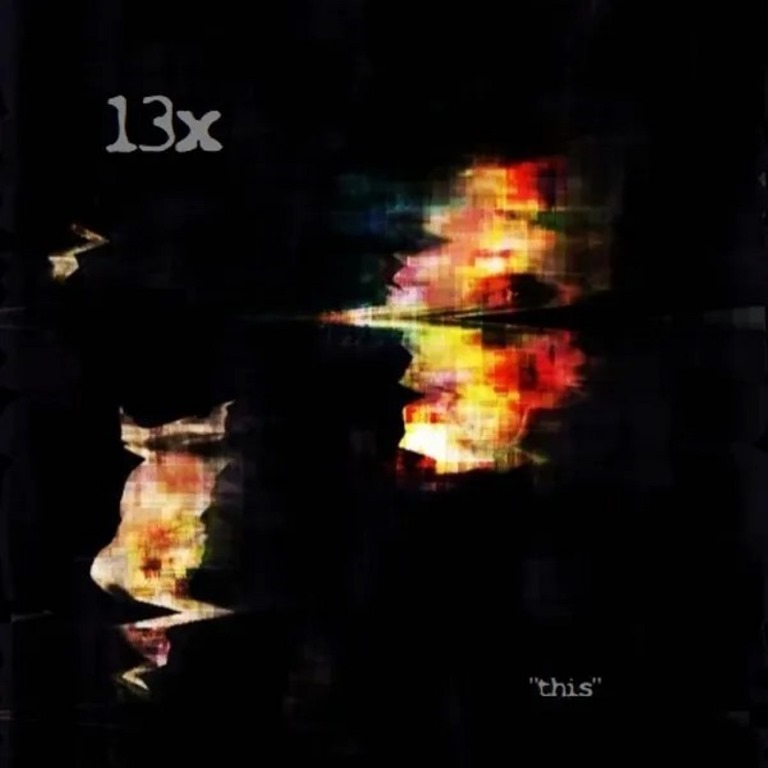
This. It’s a statement in itself. It’s simple, direct, to the point. It might indicate the image of a finger pointing down at the thing in question, like some kind of cartoon graphic or meme in the making – but there’s no need for it, or anything else. ‘This’ requires no qualification: it simply is. Self-contained. Precise. And this… well, this is 13x

It’s been a while since we last heard from ‘Multi instrumentalist transgirl’ 13x, who melted our brains good and proper in 2019 with antiscene. And it’s been a while because reasons, as the notes which accompany This outline: ‘Recorded over a 3 year period, this difficult release was made at the start of lockdown, and remained unfinished until now. Dealing with topics such as racism, transphobia, disingenuine people, the Government, abuse, loss and isolation, it goes from manic, crushing noize to quieter, more sombre tracks.’

Many, even most, of us, have endured some truly awful times these last three years, but it’s fair to say that some have endured more and worse shit than others. This is a document of some of the aforementioned shit of the notes, and the track titles encapsulate the mood and / or sentiment pretty neatly.

The first track, ‘TERFkilla’ is largely sparse and minimal in terms of both sound and arrangement, as a dissonant synth bleeps over a stuttering beat and low, droney bass. But shrill noise breaks over the top and the anger crackles within the cloud of abrasive noise. ‘fukt’ is, well, fukt, a sprawling mess of grinding synths and scratches, and some murky snippets of vocals with something of a hip-hop feel, and they sound sampled but appear to not be. They’re so cut and mangled, that when twisting and stammering against a backdrop of a shuffling drum loop and some low-end distortion it’s hard to know what the hell is going on – and it works.

There are plenty of samples woven into the fabric of This, and from an eclectic range of sources, ranging from Nirvana to a 60s interview with a catatonic schizophrenic, via a BLM interview after George Floyd was brutally murdered and Kate Winslett from Eternal Sunshine Of The Spotless Mind.

‘Fucking cunts’ is the looped refrain from the stomping aggrotech beast that is ‘Cistem Error vx.02’ – the most accessible and danceable track on the album, and simultaneously the most hard-hitting, while ‘brOkEnhEddz’ encapsulates the entirety of the album in just five minutes. Warped, woozy, it’s fractured and dark, whirring electronics and stuttering beats – but it builds and finds a groove, and from the chaos emerges something magnificent, an expansive, driving slab of dark synth pop.

I still find it unfathomable that we live in a world where vast swathes of society proclaim themselves to be anti-woke: if you’re anti-woke, you’re expressly pro-racist, pro-misogynist, pro-homophobic, pro-abuse, pro-anything that’s cunty. But then, we live in a world where vast swathes of people subscribe to Donald Trump’s view that ‘antifa’ is the enemy. But if you’re anti-antifa, you’re expressly pro-fa. There is something gravely wrong with this picture. ‘Truth Against Fascism’ and ‘The System Is Wrong (For George)’ are in effect a diptych of thematically-linked compositions. The former is a bleak mid-tempo trudge through mangled circuitry that reminds of the synapse-twisting impossibility of engaging in meaningful, rational discussion with right-wing shits who harp on about ‘stopping the boats’ and so on, while the latter has a gentler, more contemplative tone, laced with a wistful melancholy.

It’s this melancholy, expanded deeper into an aching sadness, which drapes itself all over both ‘Neeko’ and the album’s final track, the twelve-and-a-half-minute ‘Wintercutz’. I’m reminded vaguely of The Cure’s ‘Carnage Visors’ soundtrack from 1981, perhaps primarily because of the rolling drums of ‘Neeko’ and the expansive atmosphere which permeates both pieces. But there’s something special here: you can almost taste the nostalgia, and after the aggressive, angry start, there’s a sense that by the end of This, there is some sense of peace, acceptance, and a looking to the horizon in the hope of… something.

There’s often a significant disparity between the lived experience and its articulation in any medium: such is our wiring that even the most accomplished and attuned artists spend lifetimes striving to find the method that best suits them in their quest to convey what’s in their head to an audience who exists outside of their head. Sometimes, it’s not even about the audience: sometimes, the creation of art is a process by which to make sense of and deal with all of it. By purging the shit from the mind into something constructive and creative, however unappealing it may be to the masses, and there’s a strong sense that This is as much about purging and process as it is about communicating. But what This achieves is, in fact, both. This speaks without words, and says much, while at the same time, leaving substantial room for the listener to pour their own experience and frames of reference into the shifting sonic spaces. Over the course of ten pieces, This achieves a considerable amount: This has range. And This, while drawing on a host of elements from different places, sounds quite unlike anything else. This is This.

AA

a4153800615_10

Invada Records – 30th June 2023

Christopher Nosnibor

You know what? This never gets tired. I started reviewing live stuff in the 90s, but it wasn’t until 2008 I started receiving albums for review. Receiving albums ahead of release was a big deal back then: it made me feel somehow special. Advance promos probably meant something more then, on reflection. They would be, more likely than not., a single CD – or even a single-track CD – and my objective would be to get my review out ahead of, well, as many people as possible. It wasn’t so much about generating buzz as feeling a buzz.

I miss the steady drip of CDs and vinyl through the letterbox, although am coming to accept that space is an issue here, and if the endless bombardment of emails with downloads and streams sometimes – often – feels overwhelming, with up to fifty review submissions a day, when I clock a release I’ve been getting excited about well before time, the buzz still hits.

The way albums are released now isn’t quite the same, either: time was when there would be a single or two ahead of release, there’d be reviews and then the album would arrive and you’d have to buy it to hear it. Now, singles aren’t really singles and half the album’s been released on various streaming platforms along with a bunch of lyric videos and ‘visualisers’ (that’s one for another time). But having only slipped out a couple of tracks in a relatively low-key fashion in April and May, this landing in my inbox to download ahead of release, gave me a genuine buzz.

Gas Lit, released in 2021, was a powerful, album on so many levels. As they put it, the album was their ‘fight for Indigenous Sovereignty, Black and Indigenous Liberation, Water, Earth, and Indigenous land given back.’. The Australian duo make music with meaning, and do so with passion and sonic force.

How often do we hear recently that the failings were systemic? Systemic failings in the NHS led to deaths, and systemic failings in the schooling system resulted in kids committing suicide, systemic failings in vetting and so on has resulted in a culture of racism and misogyny in the MET police… daily, we hear or read news about systemic issues. And we know, we know the system is fucked. Not merely flawed: fucked.

And on fourth album Systemic, Divide and Dissolve examine ‘the systems that intrinsically bind us and calls for a system that facilitates life for everyone. It’s a message that fits with the band’s core intention: to make music that honours their ancestors and Indigenous land, to oppose white supremacy, and to work towards a future of Black and Indigenous liberation.’

“This music is an acknowledgement of the dispossession that occurs due to colonial violence,” says Takiaya Reed, saxophonist and guitarist in Divide and Dissolve. “The goal of the colonial project is to separate Indigenous people from their culture, their life force, their community and their traditions. The album is in direct opposition to this.”

Divide and Dissolve represent a people for whom the system hasn’t failed: it was always pitched against them, and succeeded in stripping Indigenous people of everything. What kind of system is it where this brutal debasement is a success? A capitalist one, of course.

Systemic certainly isn’t a flimsy pop record, then. But it is inherently listenable and does unashamedly incorporate pop elements, and this dynamic only serves to heighten its sonic power.

‘Want’ lulls us into a false sense of tranquillity, a looping motif pulsating over grand drones: it’s quite pleasant, even. And then ‘Blood Quantum’ hits: after a delicate, supple chamber-pop intro, the guitars crash in and it’s like a tidal wave. It’s a slow-stomping riff that grinds hard, and the textures are thick and rich.

The setup is simple, and the guitar and drum combo has become increasingly popular in recent years – but for all of its limitations, it also has considerable versatility, and Divide and Dissolve exploit and push those parameters by exploring the interplay between the two instruments when played slow and heavy and at high volume. And so it is that without words, their songs convey so much.

Photo_by_Yatri_Niehaus_516198

Photo by Yatri Niehaus

There’s almost something of a Duane Eddy / Western twang to ‘Simulacra’ before it explodes in a thrashing flurry of distortion and pummelling percussion. But for all the sludge-laden noise of ‘Reproach’, there is a grace and beauty about it, too, and this is what differentiates Divide and Dissolve from their myriad ‘heavy’ contemporaries: they imbue their songs with a palpable emotional depth. ‘Indignation’ begins with trilling woodwind, and possesses a wistful, aching jazz vibe before the thunderous deluge of guitar and drums heaps in. Featuring a spoken word recital from Minori Sanchez-Fung, ‘Kindgom of Fear’ is the only one of the album’s nine tracks to feature vocals: it’s a more minimal musical work which allows the words to stand to the fore, supplementing them with atmosphere and adding further variety and contrast to the album, notably ahead of the ragged riffery of ‘Omnipotent’.

The tranquil strings of ‘Desire’ provide the perfect bookend to stand opposite ‘Want’, and their synonymity is highlighted in this way. To want, to desire, something – something back – seems reasonable, should not need so much fight… but while there is the need to fight, Divide and Dissolve make protest music. It may not be protest music in the way many of us recognise it, but slogans and punk and folk are tired and worn, and on Systemic, Divide and Dissolve speak in their own strong and powerful way.

AA

644835