Archive for the ‘Albums’ Category

Felte FLT-089 – 14th July 2023

Christopher Nosnibor

Mission to the Sun is Chris Samuels of Ritual Howls fame (synths, samples, programming) and Kirill Slavin (vocals/lyrics), and comes recommended for fans of Wolf Eyes, Moin, Throbbing Gristle, Coil, The Legendary Pink Dots, Drew McDowall, Suicide, Cabaret Voltaire, etc.

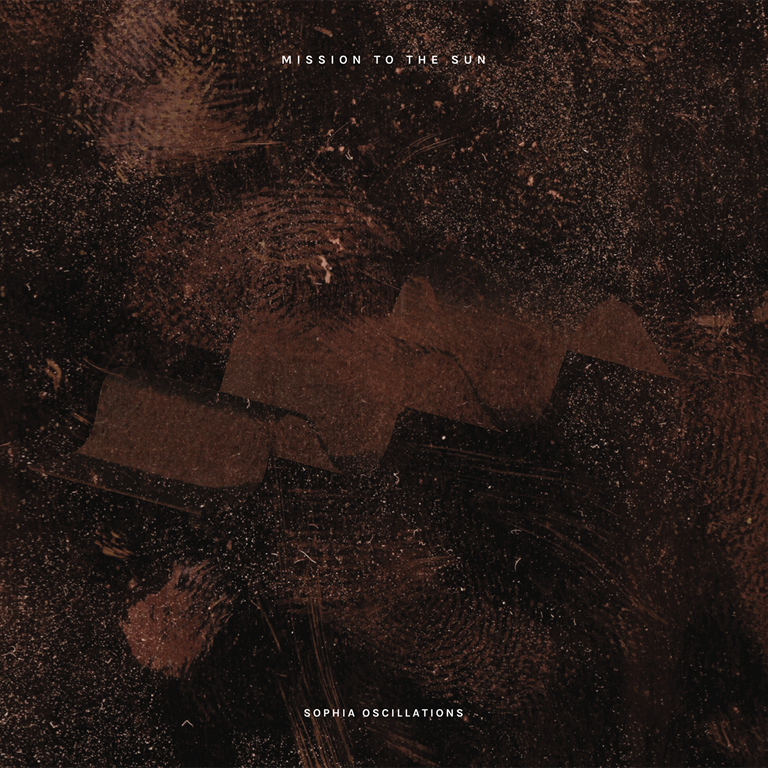
Sophia Oscillations is their second album, and it pitched as ‘an immersive journey through the dark corners of post-industrial music’, whereby ‘The Detroit based duo continues the sonic exploration started on their debut album Cleansed by Fire, while delving deeper into themes of isolation and lost communication. Christopher Samuels’ synths, samples and rhythmic programming is accented by Kirill Slavin’s haunting vocal delivery as the listener receives intersperse audio recordings from the outer reaches of inner space.’ This may seem an unusual angle of approach given their chosen moniker, but the one place hotter than the sun or the earth’s core is the core of what it is to be human. We still understand space better than we understand the deep sea, and the deep sea better than we understand the human mind. There is much scope for exploration in every sphere.

William Burroughs famously described ‘Scottish Beat’ writer Alexander Trocchi as a ‘cosmonaut of inner space’, although he also applied the label to himself, stating ‘In my writing I am acting as a map maker, an explorer of psychic areas, a cosmonaut of inner space, and I see no point in exploring areas that have already been thoroughly surveyed.’

This is an appropriate context for the eight compositions which make up Sophia Oscillations, which are essentislly beatless but strongly rhythmic in form. If they belong to the lineage of the avant-garde and the industrial music of the late 70s, it equally draws on a host of other, more contemporary threads in order to forge something quite different and ultimately new.

‘Drowning’ surges and pulses, rippling waves washing over a slow-treading bassline which wanders up and down, stepping somewhere between DAF and The Cure’s Carnage Visors while the vocals whisper and wheeze low in the mix, a stealthy monotone that’s both tense and detached. Whistles of feedback strain from the speakers and wrap themselves around the whole drifting expanse. Things take a turn for the abrasive on the title track, with machine-gun blasts of noise cutting through grainy swathes of bleak ambience, gradually fracturing and fragmenting quite uncomfortably.

There are hints of medievalism and classical on ‘Censor Sickness’, but they’re melted into a dark murk of muttered voices and unsettling atmospherics, and the combination is quite unsettling and far from comfortable: if anything, it’s queasy, and the minimal yet noisy ‘Unborn’ pushes this to another level: stark, metallic, robotic electronica, it has an 80s dystopian feel which again calls to mind DAF and Cabaret Voltaire. The late 70s and early 80s were exciting because musicians with limited means – and ability – were finding ways of using emerging, and increasingly affordable – technology to make music which represented the world in which they found themselves. As such, the emergence of experimental electronic music and industrial music was born out of a collision of multiple factors, none of which will ever recur, and for this reason can never be recreated.

Mission to the Sun aren’t attempting to recreate history here, but instead, Sophia Oscillations finds them processing history through their own filters. ‘Attrition’ brings together post-rock and crunching industrial electronica with a dash of Gary Numan and more detached spoken-word vocals, and it’s a hybrid that isn’t easy to process, because it all feels so alienating. But then, articulating alienation always does.

The churning grind of ‘Cornerstone’ sounds like the intro to something by Big Black, but instead of Roland kicking in, alongside a relentless bass, it just grinds on and on, and it’s dark and messy. Once again, Slavin’s voice is half-buried in the mix: it’s difficult to decipher the words, and his voice hovers, blank, flat, vaguely Dalek-like, in the vein of Dr Mix, but less harsh.

Sophia Oscillations is a challenging album. Yes, it’s unsettling, bleak, stark sparse, but the hardest part is the fact it doesn’t confirm to any one genre, it doesn’t follow any obvious or specific form, and it’s not the fact that it’s unsettling and difficult to find a place for it that’s the issue, but the fact it keeps you tense and on edge for its duration. But, perhaps even more than that is the fact it feels removed from anything human. But it’s not so far removed as to be alien. The brain simply isn’t equipped to process the inhuman– or the near-human-but-not-quite, the uncanny, the unheimlich. Because we recognise it, and yet we don’t. Sophia Oscillations brings the challenge right in front of your face. Sit back, draw breath, process. This isn’t an easy ride.

AA
FLT089_front

Testimony Records – 8th September 2023

Christopher Nosnibor

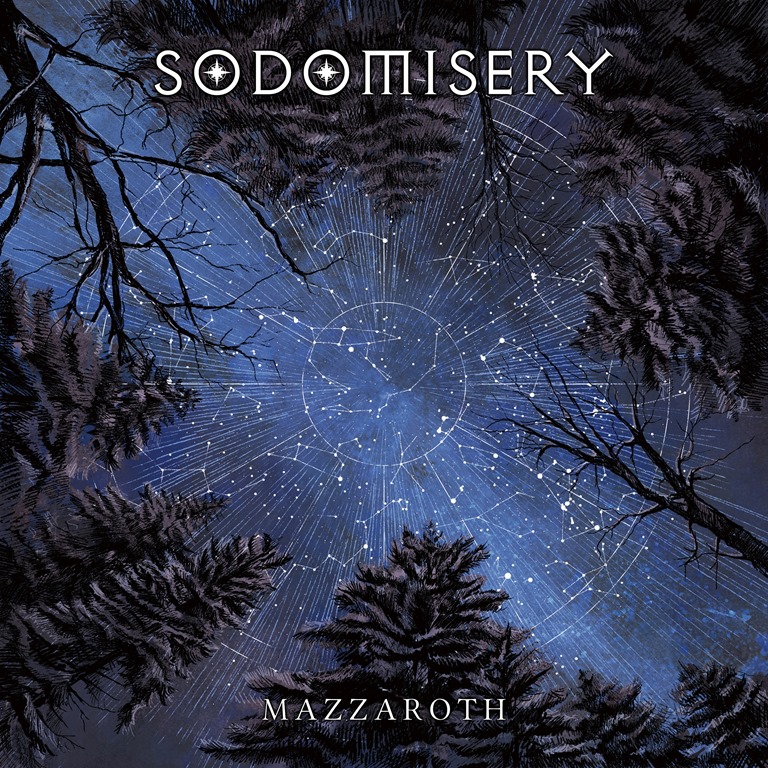
‘We are living in troubled times and it is hardly surprising that this is reflected in any form of art including music. On Mazzaroth, Sodomisery have spun a dark lyrical yarn about mental illness in society, religion, and the struggle of the individual, which is running like a red thread through their sophomore full-length. The Swedish melodic death four-piece are underlining their loosely conceptual approach with a remarkable musical evolution’, says the bio which accompanies this album.

There’s no misery like Sodomisery. At least, that’s what I’ve heard. For reasons I haven’t explored, while society has progressed – and I do mean this broadly and generally, being most aware of the fact that homosexuality and many things more widely accepted remain not only illegal but subject to severe punishments in a large number of countries – the word ‘sodomy’ carries brutal connotations which continue to hold currency in the circles of the

blackest of metal and industrial and power electronics. It’s true that Whitehouse’s Erector (with its blatantly unsubtle ‘cock’ cover) was released in 1981 and things have moved on a bit since then, but how much? Many of these bands are, as far as I can discern, less concerned with contemporary perceptions of anal penetration, whereby in permissive western society, it’s generally accepted regardless of sex or sexuality, and in pornography, it’s more or less considered essential, and more preoccupied with the harsh, perverse connotations of the writings of The Marquis de Sade – one of the few writers whose work still has the capacity to truly shock. And in this context, sodomy connotes the worst of sexual tortures, the infliction of pain, a statement of the ultimate power dynamics. It all seems appropriate given the band’s objectives.

This album had an interesting evolution, too: ‘When all the new tracks were written and pre-produced, SODOMISERY decided to create two versions of the album. One mix included keyboards and orchestration, while the other version had no such additions. After an extensive period of deliberation and many listening sessions, the Swedes decided that the new dimension and cinematic feeling added by the keyboards was exactly what their songs needed.’

Without hearing the two versions side by side, I’m in no position to comment, but the fact of the matter is that the keyboards certainly have not transformed this into some twiddly prog-rock effort: instead said keyboards are low in the mix but serve to fill out the sound with elongated droning tones against the relentless, thunderous fury of frantic fretwork and double-pedal drumwork that’s faster than the eye or ear can process.

There are some moments of such tunefulness that one has to take pause and breathe for a moment. We’re not just talking clean vocals or tuneful; there are moments, albeit brief, of outright pop sandwiched between the furious rage and overloading distortion. But rather than diminish the album’s power, I find myself respecting the band all the more. To have a softer breakdown in a song is one thing: to be so unashamedly clean and crisp and tuneful is bold.

‘Delusion’ balances all of the various elements nicely, coming together to forge a blasting yet grand and graceful dirty monster of a track which even packs in a heroic guitar solo near the end. Juvenile snickering ensues here with ‘A Storm Without Wind’, and I know it’s not funny and the delivery is entirely serious. Not least of all the lung-ripping bass that prefaces the throat-ripping vocals which snarl over guitars which alternate between old samples and snippets stolen from the present.

It feels scary, like being left alone on a platform and staring into the abyss. Any minute and it could retreat, and leave you falling into the void, and on the evidence here, you’d incinerate in seconds. Ultimately, we’re all scared. Mazzaroth is a worthy soundtrack to that fear.

AA

406169

nynode intermedia – 7th July 2023

Christopher Nosnibor

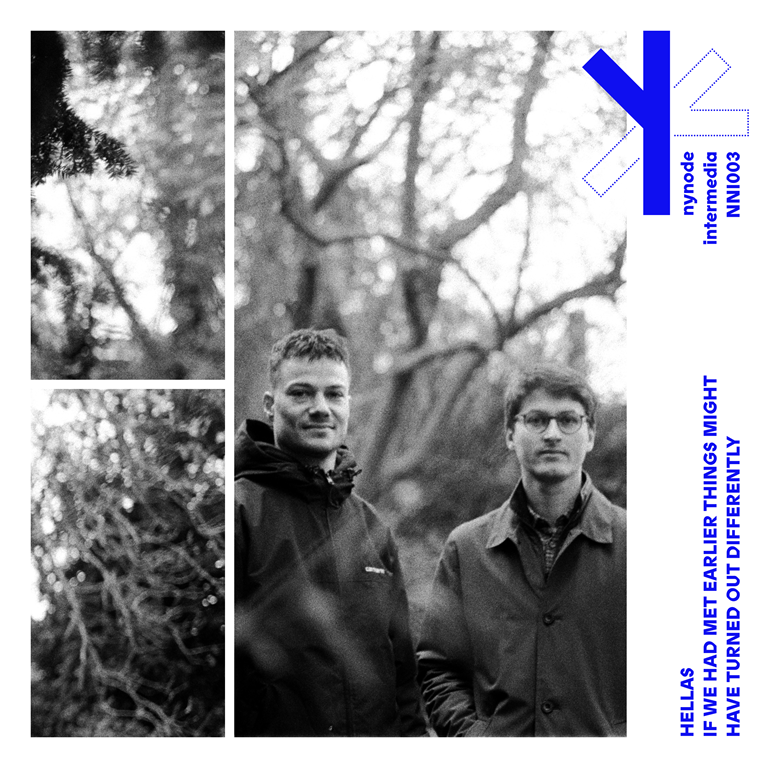
Sometimes, a title just captures the imagination. And in some respects, art – be it a book, an album, or a movie, will take one unawares in the same way as a new person. Sometimes, it’s something unexpected at precisely the right time, discovering something you don’t even know you need until it’s there. To select a quote from what may appear to be an unlikely source, ‘just when you least expect it, just what you least expect’, sang The Pet Shop Boys on ‘Love Comes Quickly’. It’s a great line because it so succinctly summarises the unpredictable nature of life, and this wordy title tripped a similar trigger, which, I accept is uniquely personal…. But then, in the personal lies the universal. It must be so true for many that we’ve met the right person, but at the wrong time, for whatever reason.

And so it is that I’m spiralling on a chute of reflection, a wall of mirrors inset with faded and distorted memories of people I’ve met and lost along the way as I begin to ease myself into what ultimately proves to be a remarkably diverse album, with deft compositions flitting between retro electronica, sparse techno, trance and shoegazy electrombience – and a lot more besides. Other times, mood-dependent, I may find the perceived lack of identity frustrating, the gentle mellifluousness without any obvious focus nigglesome, but right here, right now, I’m ready to experience transportation. And having emerged from a journey for the artists, If We Had Met Earlier Things Might Have Turned Out Differently feels like a suitable soundtrack.

As the accompanying notes recount, ‘Hours of recorded improvisations were arranged afterwards to slowly shape what would be the new sound of the duo. After three years of experimenting and writing various compositions the album slowly began to unravel itself and took its final form. Eleven unique pieces — deep explorations of sound — that all have their own story to tell are assembled in this collection of snapshots from the past years.’

In some ways, then, If We Had Met Earlier Things Might Have Turned Out Differently is more of a work of sculpture than composition, moulding and shaping the recordings into pieces with form and structure. Rising from a mist of gentle ambience, ‘Arbour’ soars, but is pinned down by a solid martial drum and ambulant, bulbous bass.

Listening to the ominous discordant experimentalism of ‘X’, I reflect on the fact that there was a time I’d have found this boring, just as I’d have cringed at anything remotely jazz-flavoured and sneered at anything overtly dance, before the clattering mess of ‘Techno | Hovestaden’ arrives, chanking and chiming over some ponderous keys, rippling piano, and evolving drones. In the background, as the piano plays mellow chords, there’s a banging tune giving it large way off in the distance, and it’s like hearing a neighbour’s music through your own. It’s irritating, but it’s real: as William Burroughs wrote, ‘life is a cut up’.

‘Ghost’ is suitably eerie, and ‘Shinjuku’ goes all-out tweaking electro, straddling late 90s dance and new age which just shouldn’t work and I should detest, but having lived through this and experienced a somewhat fractious relationship with tunes like ‘The Sun Rising’ and ‘Sadeness Part 1’, I’m rather more at peace with the incorporation of diverse elements to conjure sensations of spaciousness and spirituality, as long as they don’t involve pan pipes. Gotta have limits, y’know. This doesn’t actually sound like these musical forebears, but it feels as if there’s a certain context and progression at play here. The present only exists because of the past.

We’re plunged back into ominous drone territory with ‘Odessa’, and its warping grind which quavers up and down is most unsettling, building to a droning roar that’s hard not to equate to missiles and jets as the oppressive buzz grows louder.

The looming brass and slow, deliberate percussion of the spacious ‘Noon’, as it trickles slowly toward the album’s soft ending, with clattering percussion slowly marking a long wind-down before ‘Tide’ smoothy washes everything away to a smooth, blank state once more.

So what does this say? It says Hellas have conjured a majestic work from – well, who knows what source material? How much of this album came to fruition in the wake of its recording? And how much does it matter? It’s not as it’s an AI work, contentiously bypassing human input: pianist Peter Sabroe and drummer Jeppe Høi Justesen, with the assistance of producer Brian Batz have created something with personality, intricacy, depth. If I’d have heard it ten years ago, I’d have hated it: now… it reaches me. It’s an accomplished work, subtly complex and possessing significant depth. It’s amazing how things can turn out.

AA

NNI003_art

The Helen Scarsdale Agency – 4th August 2023

Christopher Nosnibor

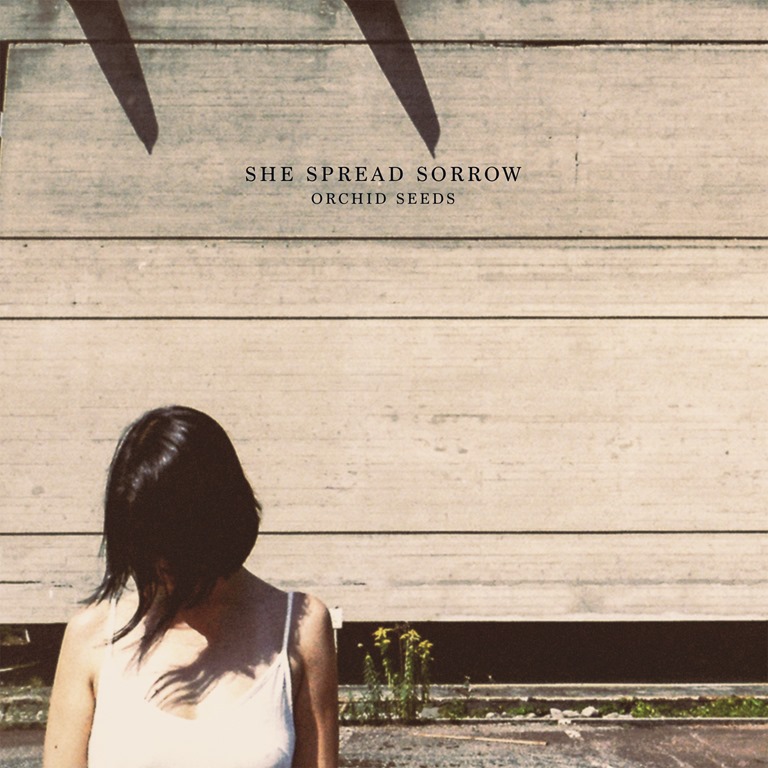
She Spread Sorrow is the musical vehicle for Italian artist Alice Kundalini, and over the course of a number of releases, the majority via Coldspring, she has explored a minimal industrial style, stark yet dense, and characterised by an eerie, whispered vocal delivery.

As the accompanying notes explain, ‘Orchid Seeds was originally published as part of the instantly out of print On Corrosion – a 10 cassette anthology from 2019 that was housed in a handcrafted wooden box and featuring full albums from Kleistwahr, Neutral, Pinkcourtesyphone, Alice Kemp, She Spread Sorrow, G*Park, Relay For Death, Francisco Meirino, Fossil Aerosol Mining Project, and Himukalt. The collection also stood as the 50th release for The Helen Scarsdale Agency, an imprint founded in 2003 and dedicated to post-industrial research, recombinant noise, surrealist demolition, existential vacancy and then some.’

Four years on, it finally gets a standalone release, both digitally and on vinyl.

Kundalini states that the album, “is about 5 different women of my family. Each track is about one of them with their difficult story and strengths. My family is totally destroyed now, no relation between anyone, but in the past there was a strong tradition of women with

interesting personalities.”

And even by the standards of She Spread Sorrow, Orchid Seeds is stark and eerie, dark and unsettling. The reverby, robotic vocals that whisper and moan over the sparse backing of ‘The Solitude in the Giant House’ may set the tone, and with a vintage drum machine thudding and clopping in the background, it has that late 70s vibe – somewhere between Young Marble Giants and cabaret Voltaire.

Things twist into darker territory with ‘Star’ as strains of feedback and grating, serrated synth ripples fizz and crackle beneath her gasping monotone vocal. This is much more reminiscent of Throbbing Gristle. It makes for a tense eight minutes: so often, when acts capable of producing great and heartstopping noise show such restraint as to keep it minimal yet audibly straining, the effect is amplified. This is one such composition; you find yourself moving to the edge of your seat, limbs tensing, waiting for something that never comes.

While the songs are about different people, ‘She Didn’t Care’ and ‘Queen of Guilt’ show opposite aspects of a theme, and perhaps provide some insight into the dynamic of the familial relationships and why they collapsed. The former is built around a stammering beat and hovering, hesitant synthesized organ hum; the sound and overall performance is primitive, immediate, while in contrast, the latter is dominated by a slow, heavy beat defined by a thunderous, reverberating snare, over which a simple synth wanders as echoed vocals drift, fuzzed and breathy and way off in the distance. The effect is some king of industrial dub, and it’s unsettling but not altogether unpleasant, perhaps because it contains stripped-back elements of common pop and dub tropes and so its oddness is countered by a certain stylistic familiarity.

The fifth and final track, ‘The Fortune of Others’, builds through serrated oscillations to grind away for what feels like a slow-throbbing eternity of electronic claustrophobia. It’s important to bear in mind the context: this is an album that’s equal parts narrative and concept, and the execution really pushes the concept to the fore, building the atmospheres of moments missed.

Without more detail – and let’s face it, more detail would likely be unsettling, even potentially traumatic – it’s impossible to determine the full extent of the meaning and also the pain behind the title. But for better or worse, the prospect of taking a firm grasp on the album seems to grow ever further away as it progresses. There is something magnificently and also frustratingly elusive about Orchid Seeds, and however deep you delve, however long you seek it, one suspects it will remain eternally beyond grasp.

AA

HMS050J_front

Human Worth – 15th September 2023

Christopher Nosnibor

It may not be apparent from my review output, bur I am uncomfortably familiar with experiencing torpor. That weight that descends like a cloak and simply loving is as much as you can manage, and in no time, half an hour, an hour has elapsed, and… what? Where does the time go? Where does your life go? For many of us, work eats our lives, as does just doing whatever it takes to keep afloat and on top of things. I will admit to being less familiar with abscission, which I had to look up to find that it’s ‘the shedding of various parts of an organism, such as a plant dropping a leaf, fruit, flower, or seed. In zoology, abscission is the intentional shedding of a body part, such as the shedding of a claw, husk, or the autotomy of a tail to evade a predator,’ according to Wikipedia.

I get the sense from listening to Abscission that this shedding is rather more metaphorical, and that the album is more of a work of catharsis, shedding skins and layers of shit, of unwanted emotions, to feel lighter, to emerge somehow freer, less encumbered by emotional baggage. But this is also something else. More than merely a shedding of dead skin, the experience of listening to Abscission is closer to tearing the skin from your body, the flesh from your bones to escape your corporeal being. Bloody, brutal, unspeakable pain.

On Abscission, Torpor bring the weight, the crushing weight that drags you down at every limb, your spine, your guts, your heart. The first track, ‘Interior Gestures’ is pure leaden punishment. It starts with megalithic raging, guitars like slabs of basalt, the guttural vocals growling and snarling beneath it all, before shifting into a dark yet graceful expanse, and for a moment, you can breathe, and feel a radiant energy. There’s something about slow, heavy music which is, in some instances, uplifting, and Torpor’s gentler passages are truly magnificent, delicate, elegant, even.

‘As Shadows Follow Body’ has a few delicate moments, but for the most part, it’s simply devastating. If the likes of Neurosis and Amenra are perhaps obvious touchstones, where Torpor stand apart is that they make both bands sound like PWL era Kylie. This goes beyond heavy. When everything is churning low and slow, you feel your muscles wilt and body sag. It’s how you perhaps imagine being hit by a truck, or the implosion of a submarine where the intense pressure simply collapses your body. I may be alone or in a very small minority in imagining these things, but sometimes, articulating the experience of particularly intense music requires something of a stretch when it comes to articulation, and most similes and metaphors simply fall a long way short.

I can’t decide – perhaps because my brain is melting – if it’s appropriate or ironic that listening to Torpor should induce torpor. I’m feeling numb, weary, my back and libs ache, likely from spending hours observing bad posture practices during my dayjob before returning to the same position to sift take care of life admin and review submissions. And listening to Abscission only seems to accentuate my aches, because listening to it feels like carrying a heavy load, for miles, in intense heat.

‘Accidei’ locks into a grinding repetition that’s reminiscent of early Swans or Godflesh, and crawls sluggish and sludgishly, before the album’s shortest song, ‘carbon’ ploughs into the depths and tears the ground apart.

‘Island of Abandonment doesn’t so much plunge new depths of heavy, as sound like the real-time death of an underworld god. It does pick up the pace around the midpoint, building to a sustained crescendo that feels like a typhoon. By the end of its enormous eleven-minute assault, I find myself at a loss. I’ve been covering heavy music for a long time, and have spent it developing my descriptive vocabulary. But words fall short, so short, in the face of this. This is another world. Enter it at your peril.

AA

a1160466171_10

Tzadik Records – 8th September 2023

Christopher Nosnibor

Everything seems to trigger some recollection or another. This is perhaps one of the greater pleasures of interacting with art in any form. As a child, I recall an old bagatelle board sitting in the shed. It always struck me as a quaint item – essentially a wooden board with nails stuck in it, some kind of hybrid between billiards and pinball, with a pile of very heavy, marble-sized metal balls.

If this triggered recollection seems random, that’s because it is, something beyond my control. But then despite everything, it comes to seem relevant, as Vol. 16 – which presents, as the press release puts it, ‘Big Band interpretations of John Zorn’s Book of Bagatelles’. It goes on to explain how ‘Zorn commissioned London-based Jewish composer, Eastmond to make an album from a selection of his 300 pieces: Book of Bagatelles. Arranged for 12 Musicians, the ensemble features some of Europe’s most celebrated creative musicians and improvisors alongside young rising stars of the UK scene.’

My musical palette has certainly expanded through the years, and I have JG Thirlwell to thank for this, as well as Gallon Drunk, for opening my eyes to wild and near infinite possibilities in terms of incorporating orchestral and brass elements into rock and guitar-based music. Everyone needs a route in to forms which aren’t readily digestible and certainly aren’t the norm for most.

There is nothing that’s especially digestible about this raging, ragged, woodwind-blasting behemoth, and that’s as intended. Actually, that’s not entirely true. There are moments, near the start, of the ten-minute opener, ‘Bagatelle #256’ which are immensely palatable in a smooth jazzy way, the kind of smooth jazzy way that might have you nodding along, and your friends saying ‘nice’ in a raspy whisper. But while there are some toe-tapping moments, the majority of this release is eye-popping, bursting as it is with some crazy shit that flies off in all directions at once.

There are some monster stomping moments, ‘Bagatelle #78’ is a proper full on dinosaur thump, and contrasts with the meandering drone of the next track, ‘Bagatelle #143’.

It’s all going on here, and sometimes it feels as if it belongs to a cartoon soundtrack, while at others it sounds like all-out sensory overload. There are some rather nice moments, expansive explorations of soundscapes while afford periods of laid-back-reflection. But then, there are as many moments of truly crazy shit, with everything exploding everywhere, highlighting insane range of this album.

If the climax of ‘Bagatelle #143’ would sit comfortably in the soundtrack to a cartoon, the start of ‘Bagatelle #63’sits in the bracket of headache-inducing wild jazz frenzy. And that’s something that this album quite unexpectedly highlights – the way in which there is no way of predicting the highs and lows and insane range that this album presents. When it’s chilled it’s nice; when it’s racing all over the shop, it’s fucking mental.

The Bagatelles – Vol.16 is all over the place, and it’s a truly wild ride. It goes from oompah to film soundtrack in an instant, and it’s impossible to keep up. And that’s its appeal.

D6944EF4-5344-4CFA-995A-487CC27D5BA4

Southern Lord – 28th July 2023

Christopher Nosnibor

Southern Lord are at it again, with an archival release of a cult hardcore act whose legacy is larger than its output, following the BL’AST and Neon Christ releases. It’s truly a joy to see the label move beyond its immediate back garden of drone and doom to use the platform its created to showcase the bands without which it likely wouldn’t exist. Originally released for Record Store Day, this second issue comes on vinyl and digital formats, it’s a comprehensive retrospective, which contains ‘all of the out of print 7”s and 12”s, compilation tracks, as well as the session the band recorded at the infamous Inner Ear Studios in Washington, DC, and never heard before unreleased songs.’

Existing for only four years, releasing just eighteen songs in that time, they’d called it a day before most people even heard of them. Like so many short-lived bands, their impact and influence only began to spread posthumously. There’s something genuinely cool about this, with bonus point for not having reformed, staying true to the original hardcore ethos.

As the accompanying notes observe, ‘the fact that the band’s entire output plus unreleased material, numbering thirty songs in all, fits – quite comfortably – on a double LP speaks for itself in many ways. Yes, this is hardcore, and you know the score: fast, furious, faster, more furious.’

Listening to Discography, it’s not pretty, and some of the recordings are pretty ropey. And ropey isn’t just ok, it’s good. It’s raw, it’s real. If it’s clean and polished, it ain’t hardcore.

This is indeed fast and furious, and utterly brutal, and triumph of bass and raging guitar-driven noise, The thing that’s hard to assimilate for me, being the age I am, is that 1993 was thirty years ago. Hardcore exploded in the mid-80s and was still in its heyday early 90s, parallel with the emerging grunge scene. Nirvana’s Bleach espoused the same values. And listening to Discography, what’s remarkable is the sound. It’s no-fi, it’s dirty, it’s gnarly. With the exception of perhaps black metal and crust punk, there aren’t really any other genres that hold such low production values in such high esteem. The gnarlier, the more authentic. And this is gnarly alight. Some of the tracks are barely above four-track portastudio tape quality. But too look at the context: four-track cassette portastudios were still hugely popular until the mi-late 90s. The world has changed beyond recognition in the last thirty years, meaning that recordings from the late 80s and early 90s feel like they’re nor not so much a lifetime, but another world.

Of the thirty tracks here, only three extend beyond three minutes. And yet, within these concise packaged of noise and fury, they somehow find room for some gentle, even borderline experimental passages. Heroin had range, and texture. But of course, first and foremost, they had fury and they had fire, and they had rage and volume. And Discography is essential listening.

AA

a1212115206_10

Brutal Resonance / Confusion Inc. –21st July 2023

Christopher Nosnibor

One thing I find – often – is that I keep encountering acts who have been going for quite literally decades without my having the slightest knowledge of their existence. This is a source of frustration: after all, I like to think I not only have my ear to the ground – so to speak – when it comes to emerging artists, but that I am pretty well connected with labels and PR. But then, so much of the music industry, it seems, is about luck and change encounters, and being at the right place at the right time. That, and the fact that existing in underground circles for a decade or more doesn’t mean that the chance of rising up toward the light is anywhere near remotely assured.

And so it is that I have been blissfully unaware of Slighter – the solo moniker of Colin C., who it appears, according to the bio, ‘has been fine-tuning the future of electronic music since kickstarting his music in Mid City Los Angeles in the early 2000s… Creating from a unique vantage point, he was involved in collaborations for various Metropolis Records releases and Cleopatra Records compilations, in addition to Slighter releases via his own Confusion Inc. imprint.’

‘How?’ I ask myself, and again, ‘how?’ I’m not only a fan and follower of these labels, but frequently get sent releases for review. I’ve mentioned perhaps a few times now – or more – how Cleopatra tapes were an integral part of my introduction to goth, and subsequently, Metropolis have been the outlet for some of my favourite more industrial-leaning acta like PIG, who I’ve been a fan of since they supported Nine Inch Nails on The Downward Spiral tour back in 1994. It might have wiped me bang in the middle of my A-Level exams, but fuck, the trip to Wolverhampton was worth it.

This is apposite. It seems almost impossible to discuss anything in the bracket of contemporary industrial without recourse to either Niner Inch Nails or Ministry, depending on whether the music is of an electronic or metal persuasion. It wasn’t always this way: from the 70s and through the 80s, industrial was a different beast, but circa 88 or thereabouts, something happened. It’s hard to really pinpoint what that something was, but it definitely happened.

And so it is that Slighter’s latest, The Futile Engine, is some strong work, which sits in the post-NIN industrial bracket, while owning a certain debt to 80s Wax Trax!. ‘Introspection Illusion’ announces its arrival with a squall of noise, a scream of electronica, and some muffled, subterranean vocal whisperings which are dark and unsettling… and then the machinery grinds into action and things really get heavy, and in no time we’re submerged in a throbbing barrage of noise, driven by a thudding industrial disco beat.

‘Pulling Me Under’ is more obvious brooding industrial dance with whirling synths and mangled, menacing vocals pitched against pounding beats. This sets the tone for the album as a whole: ‘Have No Fear’ is dark and sparse, a mechanised beat pulsating in the background against menacing close-mic vocals and we’re deep in PHM terrain here. In contrast, ‘Nostalgia Hysteria’ launches headlong into trance territory, tweaking the 505 in a full-on Josh Wink style.

They plunge deep into dark waters with the more experimental ‘Memory Corruptor’, but so much of The Futile Engine is simply dance music with some darker edges that it’s hard to really engage with. And the trouble I have with so much dance music is that it feels cold, clinical, impersonal. Perhaps it was the lack of drugs that mean I never got 90s rave or techno. But this doesn’t gain more appeal with time, and that’s a fact.

The Futile Engine has its moments, for sure, its execution is pure perfection, and the album displays a knack for insistent beats… but it’s exhausting. Unless you’re seeking relentless beat torture, you probably won’t dig this.

AA

a0419039551_10

skoghall rekordings – 4th August 2023

Christopher Nosnibor

This one feels like it’s had more build-up than any previous releases on either of Dave Procter’s labels, the recently-founded skoghall rekordings,, or the more established noise-orientated Dret Skivor: there have been numerous one-line quotes, snippets of lyrics from the album posted on social media in the last month – and it’s certainly piqued my interest as to just how far this latest project will take things.

Not that far, my notes suggests, but that’s no slight. You see, Procter’s output is copious and widely varied, from the abrasive noise of Legion of Swine to the recently-released acoustic protest songs of Guerrilla Miner. In between, there’s the grumpy spoken-word-with-noise of Trowser Carrier and the technical experimentalism of Fibonacci Drone Organ. But – and this is something I can say from personal experience – Procter is also a strong collaborator, one who’s open-minded and intuitive, but at the same time always retaining his own unique style as a clear element.

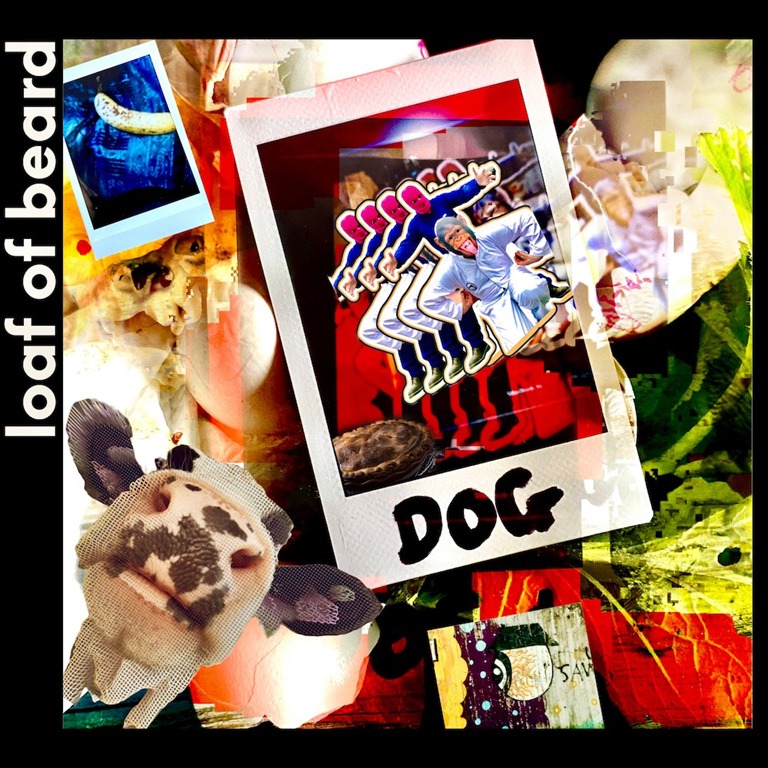
Loaf of Beard’s debut, Dog, features ‘2 British immigrants in Sweden point the finger at the state of politics in their home and former home countries, in a number of musical styles’. When they say ‘a number of musical styles’, it’s like listening to Joh Peel in the 90s, where baggy indie and experimental stuff would be crammed back to back with trance and grindcore. It’s all good, but it’s like a musical fancy dress party, with the pair tossing on different outfits and doing a different genre to go with it. And sometimes, it’s as if they’ve thrown on flares and a biker jacket, or a cocktail dress and a gimp mask by way of a combo.

‘Zippy Was a Blairite’ raises the curtain on the album in a post-punk style, and harks back to arguably one of Procter’s most popular and cherished musical vehicles, The Wharf Street Galaxy Band, with a nagging, elastic bassline pinned to insistent drums. Here, they’re programmed rather than acoustic, but that crisp, cracking vintage snare sound serves the purpose well of (re)creating the sound of the early 80s – but it’s the sound of the 80s as reimagined by Sleaford Mods, a primitive loop providing the musical accompaniment to the lyrics… and those lyrics are bitter. And at the risk of sounding like a crackling piece of overplayed 80s vinyl with a scratch, the current renaissance of the sound of the dark days of Thatcher in Britain is no coincidence. After thirteen years of austerity and the quality of life of the average worker being eroded faster than the world’s glaciers are receding, the mood is gloomy, angry, nihilistic. We can’t even think about protesting without risking being arrested. ‘The middle of the road is sitting on the fence’, Proc half-sings, half-speaks, reminding us of something many of us knew at the time, but chose to overlook because it meant getting the Tories out: New Labour was a long way off left in real terms: ‘pseudo-left credentials, politics so central’, as they summarise, chucking in a well-placed ‘motherfucker’ for essential emphasis.

Following ‘No Puffins for You, Lad,’ and Dale Prudent’s piece about pigeons, ‘Birds’ revisits the avian fascination that’s been a long-running theme in Procter’s work, and it’s a semi-ambient, spoken-word piece, which collides with the gritty chug and hyper-energised pumping of ‘Hund’, which comes on like Metal Urbain. ‘It’s a man in a frock!’ It’s a succinct summary of the indignation of the culture wars that obfuscate the real issues that are crippling the country.

That snarling glammy stomp of ‘Boothroyd Every Time’ is pure quality, and celebrates both a strong woman and a fellow Yorkshire person, and if ‘The Atrocity of it All’ is a less than subtle hectoring rant about the fucking state of everything it’s entirely justified, and the mangled, frenetic groove of ‘Cock’ may not be sophisticated, but it drives to the heart of the way the rich are milking the country dry while blaming increasing wages for inflation. Funny how wages are going down but profits aren’t isn’t it? No, it’s not remotely funny. Cock. Yes, Richboi Sunk, we’re looking at you.

‘Vote your life shitter / get your life shitter!’ Procter repeats over and over on ‘Lagom Murder Diaries’ and it doesn’t matter if he’s preaching to the converted here. Fuck. Just tell it to anyone who will listen: vote tory, get fucked. ‘Shithouse’ is comedically loose slacker funk, which finds Dave having a stab at rap. It’s not really his forte, but there’s a nice bassline and nagging guitar that’s a bit Orange Juice. It’s an odd mess of a tune that sounds a bit like a more tongue-in-cheek Yard Act.

‘Good’ sounds like Chris and Cosey but with that classic Northern flat vowel delivery in the vocals adding to the gritty groove as they sneer at the cuntiness of greedy capitalists. As if there are any other kinds.

Dog is fun, challenging, and tells it like it is. Fuck the Tories.

AA

364206108_807680231081653_4479751087162176766_n