Archive for the ‘Albums’ Category

Christopher Nosnibor

They’ve been going since 2013. Emerging from various permutations of solo and band-related projects by front man and songwriter Si Micklethwaite – evolving from his solo wall-of-pedals shoegaze work as Muttley, through the Muttley Crew collective to eventually coalesce as Soma Crew with guitarist Steve Kendra and drummer Nick Barker, with a rotating cast of contributors along the way. I’ve probably seen – and written about – most of these incarnations of both the band and their forebears, and they’ve never failed to provide music of interest. While the core trio means they’ve always retained their distinctive identity in ways which extend beyond Micklethwaite’s distinctive approach to songwriting – minimal, repetitive, cyclical, hypnotic – the shifting lineups have meant they’ve spent their career continuously evolving. It’s true that the evolution has been slow – a tectonic crawl, in fact, and if you ever meet the band, especially Si, it’s obvious why. These guys are as laid back in their approach as the music they make – and the music they make is psychedelic, hypnotic, slows-burning, hazy.

This latest offering – and it’s been a while since the last one – feel different. Strangely, it feels more overtly rocky. Bit it’s also different in other ways, while at the same time delivering everything you’d expect from these guys.

Confused OK is a long, droning, shimmery blissed-out exploration of all of the territories that Soma Crew love to ramble around: krautrock, drone, and here they bring a country twist to this weirdy retro grooveout. The country twist is very much a new addition to their relentless grooves and tendency to hammer away at a couple of chords for an eternity. And once again, on Confused OK Soma Crew Are seemingly content to batter away at a single chord for an eternity. More bands need to get on board with this.

With the slide guitar splattered all over the nagging bluesy honkytonk rhythm of the first song, ‘These Careless Lips’, they come on like The Doors circa LA Woman, at least musically. But whereas Morrison sounded like a roaring drunk spoiling for a brawl on that messy album, Micklethwaite sounds like he’s more likely to nod off than kick off, his vocals a low, mumbling drawl weaving loosely around the key of the guitars. The second song, ‘Tranquillizer’ is appropriately titled and is quintessential Soma Crew: seven and a half minutes of reverb-drenched tripped-out motorik drift. The intro hints at some kind of build, but once all the elements are on board, it’s a magically spaced-out kaleidoscopic spin where relentless repetition becomes inescapably hypnotic.

Flamboyant solos, guitar breaks… they’re so unnecessary, so much wanking. There’s none of that crap here: the extended instrumental breaks plumb away forever and a day, the guitars peeling off shards of feedback and tremulous layers of effects while the drums and bass stick tightly to the same locked groove.

The production on Confused OK is murky, hazy, the separation between instruments is, well, it’s all in the mix, which coalesces to create a fuzzy fog which recreates the sound of the late ‘60s, and it works so, so well.

Expanding their style further, ‘Let it Fall’ is a three-and-a-half minute slice of indie pop with a vintage sixties psychedelic feel, and it’s followed by the downtempo mellowness of ‘This Illusion’, before ‘Another Life’ goes all out for the blues rock swagger with a glammy stomp behind it. With the lyrics so difficult to decipher, it’s impossible to unravel the link between ‘The Sheltering Sky’ and Paul Bowles’ novel, although no doubt there is one, and here, they really cut loose with some wild guitar as Si sings up for a change over this hypnotic throbbing boogie.

Sprawling over seven minutes in a mess of reverb and distortion, ‘Propaganda Now’ closes the album off with a pulsating groove and an effervescent energy, fitting with its call to wake up and small the bullshit. Because it’s time. Sure, the Johnson / Trump ‘post-truth’ era may have given rise to the wildest frenzy of right-wing conspiracy theory, but now we know – we KNOW – that we’ve been lied to and fed a conveyor belt of bullshit… the pandemic was real, the fear was real, but our government partied hard while we were all trapped in lockdown, and their cronies made MILLIONS, nay, BILLIONS from backhanders and dodgy contracts for dodgy kit that never reached a soul. And now, the cost of living crisis, attributed to the war in Ukraine, has seen energy companies and supermarkets record record profits – because among it all, profits have been protected at all costs – namely at cost to customers while CEOs and shareholders rake it in.

Confused OK may sound like a mellow droner of an album on the surface, probably because it is. But is has detail, it has texture, and it has depth. It’s also their strongest work to date.

Soma new

Exile on Mainstream – 28th March 2024

Christopher Nosnibor

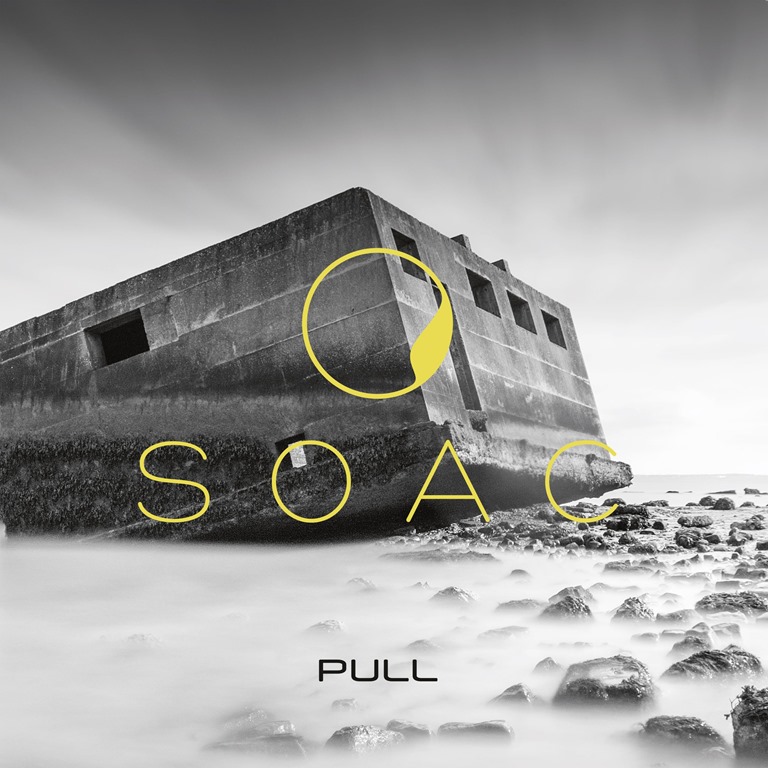
Cutting straight in with a big old guitar chug is a bold and hard-hitting way to open an album. No intro, no preamble, just big, beefy chuggernaut riffery. Bam! I’ve no aversion to a bit of intro a bit of preamble, but it’s refreshing to hit play and be smacked around the chops. The sound – and style – is quintessential grunge, and that grit, that grain, it has a grab that’s more than mere nostalgia, it’s a physical experience. But it very soon becomes apparent that Sons of Alpha Centauri are no generic grunge template rehashers, despite their adept use of the quiet / loud dynamics: ‘Ephemeral’, the opening song, draws in elements of quite blatant prog and classic rock, with melodic vocals and a reflective refrain of ‘Ephemeral… we are ephemeral’ that’s unashamedly prog in its ‘big, deep philosophical contemplations’ approach to lyrics. It’s certainly more ‘Black Hole Sun’ than ‘Smells Like Teen Spirit’.

Pitched as a ‘natural evolution’ to predecessor Push, they proffer ‘a powerhouse of searing post hardcore, alternative metal and progressive hazy rock’, where ‘Across the album, Sons of Alpha Centauri capture both a renaissance of the 90s post hardcore of their Sacramento luminaries, and a contemporary take on atmospheric dream-like rock music.’

Across the album’s nine tracks they straddle genre boundaries in a way that feels remarkably natural. Time was that I would be turned off by an album that was heavy instrumentally but not so heavy vocally – meaning I’d have been a bit hesitant about this. But it’s a mistake to perceive clean, melodic vocals as somehow weak or a detraction, as I discovered from listening to The God Machine and Eight Story Window, and Jonah Matranga packs in some emotional integrity into a strong set of songs.

‘Ease’ brings a watery-sounding bass and big, chunky guitar, and the combination makes for an unusual and interesting textural contrast, while the title track rocks particularly hard, the distorted guitar positively buzzing the speakers, Matranga giving a taut, tense performance.

At times I’m reminded of Amplifier, and not only in their incorporation of space themes – only far grungier in their melding of flighty prog and ballsy guitar attack. The chord structures of the aching ‘The Ways We Were’ are reminiscent of Placebo, and while sonically and lyrically there’s no real similarity, something about the dynamics and the heightened tension that defines Pull do warrant comparison, especially the slower, sadder ‘Tetanus Blades’. Sitting in the very middle of the set, it makes for the perfect album structure, and it’s clear that Pull has been created, crafted, curated, as an album rather than just some songs. ‘Doomed’ brings delicacy and introspection, anger and anguish delivered with a downcast sigh and wistful guitars. On ‘Weakening Pulse’ the guitars shudder and shimmer, and there’s a blend of dark aggression and choppy accessibility about ‘Final Voyage’. With its refrain of ‘Regenerate, regenerate, regenerate’ I can’t help but think of Dr Who, but that’s no criticism, and despite the big, bold, ambitious songs and matching production, they manage to steer well clear of going Muse on us.

The songs are pretty concise – mostly sitting around the three-and-a-half to four-and-a-bit minute mark, but have all the hallmarks of bigger, more epic songs. Yes, the vibe is very much rooted in the alternative sound of the 90s, but painted with the broader palette of the twenty-first century, whereby more diverse and eclectic elements have come to be accepted. It seems strange to think in 2024 that back in 1994, rap/rock crossovers were pretty revolutionary, that the soundtrack to Judgement Night was groundbreaking. In time, it came to pass that we discovered more complimentary hybrids, and Pull is a demonstration of this. There’s much detail to absorb and these are very much early impressions – but with so much to assimilate, Pull has everything about it that makes for an enduring album which only digs deeper with repeat listens.

AA

920630

17th February 2023

Christopher Nosnibor

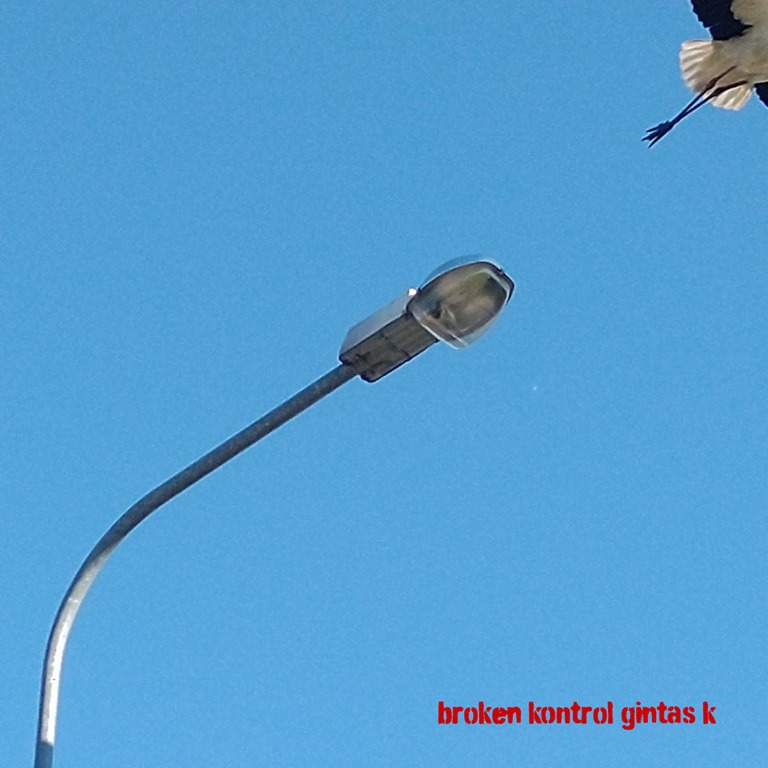
I can’t really type, or hype,  that Gintas K is back, when he’s not been away for five minutes. But in the world of the indefatigable avant-garde improvisationalist, being away for ten minutes is the equivalent of being away for a decade by the standards of many acts.

But then, what does ‘being away’ actually mean? And by what standard should this be judged?

Daniel Ek is of the opinion that artists should be more productive if they want to get paid. But what he really means is that artists should be more productive so that he can get paid – more. The current model is centred around maintaining the attention of an audience with the attention span of a goldfish by pumping out new product every other week, and if you’ve got no new songs, then it should be a behind the scenes recording videos or somesuch, anything to maintain a constant level of contact, of output. This is all about gouging money from fans, and nothing to do with art.

The point is, every artist produces at a different rate. Sometimes it takes five, even ten years, to assemble and release an album, due to multiple factors. Dayjobs, for many. Families, life. Headspace: creativity isn’t something you just churn out like a conveyor belt, necessarily. Opportunity: labels have release cycles, which may affect when there’s a window – and budget – to release an album.

Gintas K is a high-output artist, but not because he’s on the treadmill of social media engagement and chasing streams for fractional cents of royalties: he’s a creative whirlwind, spewing new material like a volcano which never stops erupting, and he never ceases to arrive from different angles. I had initially wondered if ‘broken kontrol’ was a reference to some damaged kit which was used in the making of this album, or if it’s perhaps an allusion to the crumbling, fragmenting structures of ‘democracy’ around the globe. Ultimately, I’m not so sure: the accompanying notes drive in hard from the left in terms of an unpredictable swing which throws us headlong and quite unexpectedly into academic territory, and as such it’s worth quoting for context: ‘

Uncertainty and surprise are in fact key components of an influential predictive-coding model of neuronal message-passing across the cortical hierarchy [16, 20, 45]. Music may therefore elicit pleasure by encouraging the listener to continuously generate and resolve expectations as the piece unfolds in time [16, 20]. Musical pleasure depends on the dynamic interplay between prospective and retrospective states of expectation. Our fundamental ability to predict [16, 20] is therefore an important mechanism through which abstract sound sequences acquire affective meaning and transform into a universal cultural phenomenon that we call “music” [15].’ There are extensive quotes and hyperlinked references, and once upon a time, I’d get excited by footnotes by volume and all the rest.

Once again, Gintas K has produced a work which was entirely spontaneous, ‘played, recorded live, at once without any overdub; using computer, midi keyboard & controller’.

It’s another squelchy, dribbly, drippy, dribbly effervescent slice of chaos. It’s a bubbling, frothing, brain-melting froth, an attack of gurgling electronics and beeps, and it’s pure Gintas K.

AA

a2244536590_10

Mille Plateaux – 22nd March 2024

Christopher Nosnibor

What’s often fascinating to me as someone who writes about music quite extensively, is to observe the avenues other writers explore, particularly when engaging with music that’s ambient, obscure, or otherwise difficult to take a hold of and to pin down. This fascination is amplified when the music, either by its inherent nature, or by virtue of explanatory words from the artist, has a foundations in a theoretical or conceptual context.

Achim Szepanski has been tasked with a challenge when it comes to the notes to accompany

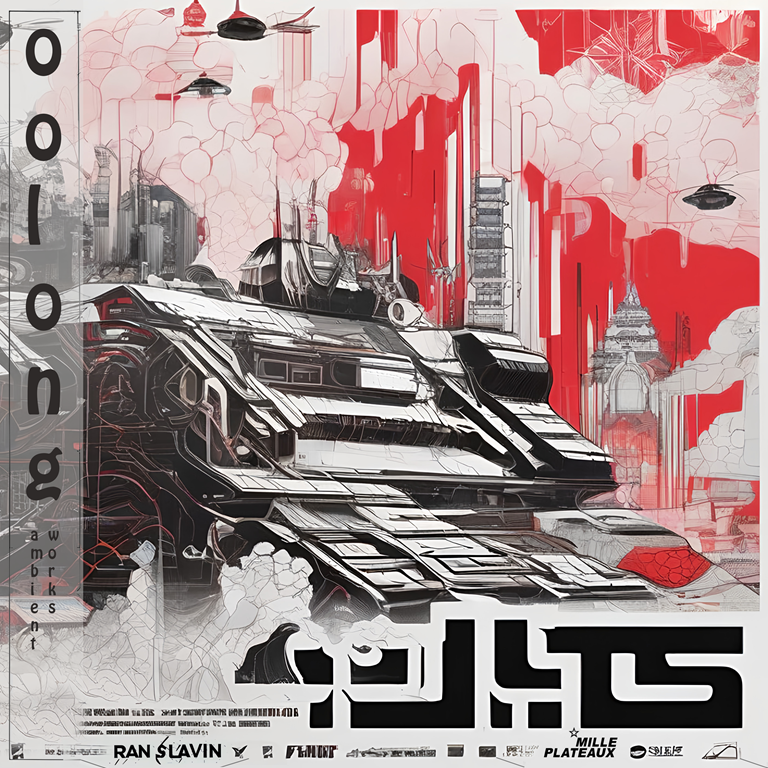
Oolong: Ambient Works, which is the 17th studio album from multi disciplinary artist Ran Slavin, which is pitched as ‘a 74 min drone-ambient-minimal-symphonic infused LP that takes after various teas in the far east.’ To heighten the experience, each track is accompanied by ‘a slow and atmospheric visual journey shot by RS in East Asia and the total can be experienced in total and joined as an immersive 74 minute journey.’

Szepanski helpfully explains the layered meanings in the translations of the word ‘oolong’, and expounds the complex interconnections of tea and dragons through a filter of Felix Guattari (which isn’t entirely surprising, given the label releasing it). He grapples with ‘the minimalist concept of tea architecture’ and the way in which ‘Not only the centripetal, but also the centrifugal orientation of the sound is imaginary.’

While the visuals clearly form an integral pat of the project overall, I shall preserve my focus exclusively on the audio release, and in advance of this draw the distinction between audio created to provide a soundtrack, and visuals created to accompany an audio work, because while Szepanski discusses at length the relationship between the visuals and the tea path and the simultaneous limitations placed on the work by the visuals and their capacity to enhance the experience, Oolong: Ambient Works is an audio release or an ambient persuasion, as the title suggests.

The seventy-four minutes is divided into eight individual pieces, with titles such as ‘Grand Jasmin’ and ‘Assam Jungle; as well as others which are less overtly tea-derived, like the first composition, ‘Time Regained’. It’s fifteen minutes of slow-simmering ambience, the levels of which fluctuate and catch, the glitches rupturing the smooth surface of the soft sonic fabric.

Szepanski makes an important point when he writes ‘It is impossible to know exactly what the individual sounds signify. Sometimes it might be the intention to hear the sounds of nature. But it’s not a question of identifying its source and its effect.’ And so we come to what is, for me, the crux of the ambient listening experience, whereby the source of the sounds is far less significant than what the listener hears. Not even what I hear as a listener, although I can only speak and interpret for myself, and the beauty of this experience is that however much Slavin strives to imbue this work with meaning, it cannot be imposed. Slow pulses bring a rhythmic element to this otherwise abstract piece, which is deeply calming, but occasional warps jolt the listener from their state of tranquillity like a prod.

‘Butterfly of Ninh Binh’ flits by with crackles and scratches by way of disturbance, and the introduction of static and ersatz surface noise to recordings is a curious one, as something which only became a feature with the advent off digital audio. Those who have come to vinyl since the renaissance are less likely to relate, since vinyl is now a plush commodity and not something people leavy lying around or use as a coaster or whatever as was commonplace in the sixties, seventies, eighties. But such interference is integral here: Slavin’s approach to ambience on Oolong is subtly different, and introduces just enough dissonance and discomfort for it to be not entirely comfortable.

The ten-minute ‘Ruby Ceylan’ is soft and ripping repetitive and hypnotic, but something – perhaps the abstract moans, perhaps something else – is just off.

Iroh, in Avatar: The Last Airbender, is a keen advocate of the calming properties of Jasmine tea, and I get a far stronger Jasmine connection from this – the original animates series, that is – than from ‘Grand Jasmin’ here – the album’s shortest track is subtle and soothing, but also marks a change of texture with a thumping beat which echoes away hard and fast beneath its slow-swelling outer layers.

‘Himalayan Flower’ unfurls slowly and with pronounced percussion, before the ten-minute ‘Summer Monsoon’ brings the album’s conclusion. A slow, mesmeric, soporific cloud of ambience passing by, with occasional clangs and abstract interruptions which echo through the drift, this is a real; eyelid-drooper which suggests it’s time to sleep, or time for a coffee.

AA

MP69_front

Distortion Productions – 8th March 2024

Christopher Nosnibor

Metamorph have made their way onto these virtual pages a couple of times with previous single releases, most recently ‘Witchlit’ just over a year ago to the day as I write this. And, it turns out, this single was the very long lead-in for this long-player, which comprises seven new tracks which follow ‘Witchlit’, augmented by three remixes.

I’m going to park the remixes to save retreading territory that’s growing tedious and focus on the album proper, which kicks off in solid style with the pumping dark disco of ‘Veridia’ which blends surging dance pulsations with 90s enigma music and a dash of eastern mysticism to conjure a compelling hybrid or esoteric origins that lands with a dancefloor-friendly immediacy and energetic beat and throbbing bassline – and packs it all into just two pumping minutes.

There’s a lot to be said for starting an album strong and going straight in and hitting hard over the slow-build, and in today’s attention-deprived climate, it really does seem like the way to go – and Metamorph nail it here. They want your attention, and they’re bold about it.

‘Witchlit’ is up next, and it’s perfectly placed as a shimmering slice of dark electropop, sultry but lively, like Siouxsie gone electro. This is Metapmorph at their best – haunting, gothy, a little bit twisted. The title track crashes in next, bursting with flamboyant Europop vibes counterbalanced by darker shades – and once again, they pack it all into two and a half minutes.

Casting an eye down the tracklist, the majority of the songs on HEX are under three minutes in duration, and the album showcases a real economy of songwriting – no expansive mid-sections, no extravagant solos. They really do keep it tight.

‘Woo Woo’ is perhaps the album’s weakest track , not only with its mundane lyrics – ‘I won’t lie / I’m gonna get real high’ and unimaginative efforts to be sexy – but its wholesale immersion in commercial pop stylings. It feels like a stab at mainstream accessibility which is beneath them and isn’t particularly successful; in contrast, the mid-tempo brooder, ‘Raining Roses’ is brimming with dark, doomed romanticism , and ‘Broken Dolly’ borders on industrial and steps over the edge into a darker shade of darkness. ‘Wasteland Witch’ is well placed, a glammy industrial stomper that pumps up the tempo just when it’s all getting a bit dark and moody.

‘Whore Spider’, the last album track proper, could reasonably describes as an electropop anthem – mid-tempo, building, and unexpectedly hooky, while unexpectedly bringing back the wild woodwind. You can almost smell the incense as it spirals thickly to its finale.

AA

a0251618540_10

Magnetic Eye – 15th March 2024

Christopher Nosnibor

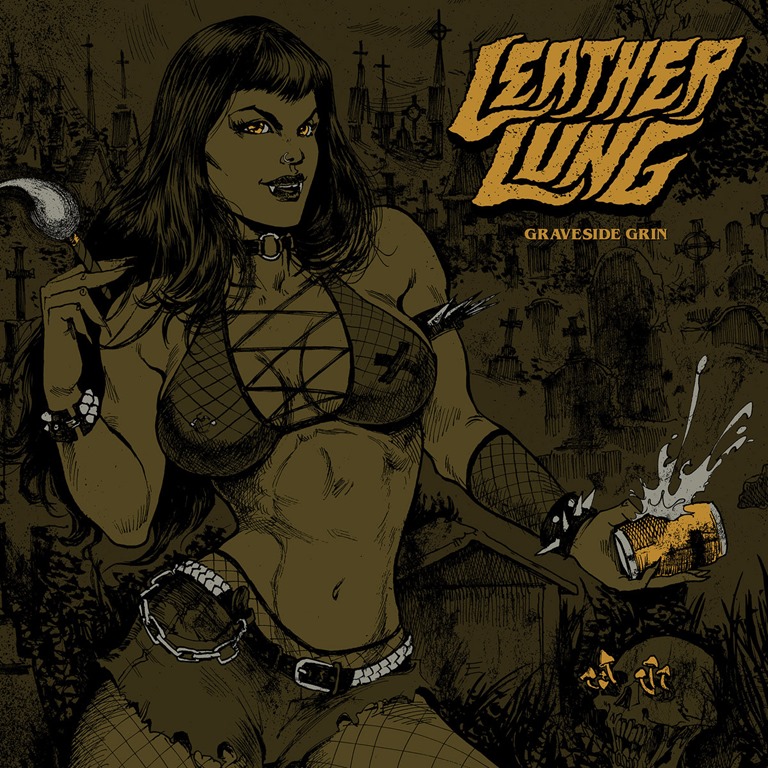
Emerging from the punk and hardcore scene of Boston (that’s Massachusetts, US, not the arse end of nowhere in rural Lincolnshire) in 2012, according to their bio, Leather Lung ‘quickly gained an excellent reputation in their local scene, as well as plenty of critical attention through a string of EPs’. And yet it’s taken them till now to complete their debut album. They’ve been busy launching their own lager, ‘Dive Bar Devil’, which has proven popular, and honing their sound, ‘a thick, chugging concoction of stoner metal, doom, and unrelenting sludge, blended into a refreshingly heavy brew with a catchy kick.’

They’re straight in with the big, thick guitars and hefty riffing. It’s mid-paced, weighty, heavy and gritty, and packs a punch. ‘Big Bad Bodega Cat’ is as loud and dumb as it sounds, a blown-out monster blues-based riff lumbering heavy as the backing for raw-throated vocals. It takes some nuts to sing such daft lyrics with such sincerity, and this, I guess, is a large part of Leather Lung’s appeal: they sound a lot more serious than they really are. The fact that the trash-talking ‘Freewheelin’ Maniac’ which comes on with some big-bollocked bravado about ‘getting the fuck outta my may’ shares so much sonic territory with Melvins is a fair indication of the territory Leather Lung occupy. Sure, it’s heavy, but it’s fun, too.

‘Empty Bottle Boogie’ is another example of the way they use the form for fun, landing slap band in between Motorhead and Melvins, before diverting on a melodic prog-metal mid-section and then flooring all the pedals for maximum overdrive to power on to the finish.

In something of a shift, ‘Guilty Pleasure’ starts moody and acoustic, blasts into black metal, spins through a brief electro passage before going full Slipknot. And it not only works, but the transitions are effortless. This should not be possible. It shouldn’t even exist. It’s testament to their abilities – and brazenness – that it does, and that that they carry it off.

Where they really succeed – is in balancing melody and aggression. ‘La La Land’ could easily be a Tad outtake, with a slugging grunge riff and a ragged vocal roar. In contrast, ‘Twisting Flowers’ harks back to seventies metal played through a more contemporary stoner filter.

Graveside Grin was worth the wait: Leather Lung have succeeded in producing a set of songs which is varied, and at the same time, consistently heavy, with a lot of attack and snarly, gnarly energy, with just the right level of irreverence and knowingly OTT extremity and violence. Win.

AA

a2197094414_10

Erototox Decodings – 1st March 2024

Christopher Nosnibor

Holy hell! Where to start? We’ll come to the band’s pedigree and the CVs of this supergroup in due course. But first, the immediate impact of this second album by The Children – that’s what hits in an instant. Perhaps because I missed the first, I simply wasn’t prepared in the way I might have been, but then again, is there any adequate preparation in advance of this?

A stark acoustic guitar – something about the way it’s picked and pulled is sharp, tense, scratchy, in the opening bars of ‘gOd is a Bereaved’ is prickly, awkward – paves the way for an eye-opening vocal performance. It simply doesn’t conform to the mores of conventional musicality, and instead flies skyward and swoops towards the ground in terrifying, unnatural flips and arcs. Something is certainly sudden, and it’s not a craving, but the impact of this completely out-there sound. Intense is an understatement.

‘Woven Mother Aflame’ brings brooding atmospherics split asunder by explosive percussion – a snare that has the power to split skulls cutting through serpentine strings and heavy, resonant bass reverberations which hang in the air, before the gentler ‘Breathing Shards’ fades electronics into a strummed acoustic guitar. Breathe… out. But all is not comfortable. The quavering vocals – not quite falsetto, not quite any specific range, but warbling, tremulous – quiver, uncomfortably atop and amidst the multi-layered backdrop which slopes and slides and traverses through starless space as basslines stroll and amble sedately.

Some background: The Children… ‘are . They have been making music together for over 15 years. Former Barkmarket bassist John Nowlin and drummer Rock Savage have consistently anchored the rhythm section, with a savagely airtight groove that’s both thunderous and mellifluous, primal and funky, and cellist Kirsten McCord has regularly enriched the band’s sound with her somber, lulling phrasing as a one-woman string section. John Andersen was a founding member and key early collaborator. The inimitable vocalist Shelley Hirsch has been a visceral contrapuntal foil for several live shows. Former Swans guitarist Norman Westberg and clarinetist Johnny Gasper provided invaluable texture to the recording sessions for this LP.

Norman Westberg has long been one of my favourite guitarists on account of his absolute minimalism: few guitarists would be content to bludgeon away at two chords for eight minutes straight, but his stoic patience is a rare trait which sets him in a league of his own. His more recent solo work is noteworthy for his sculpting feedback into musical shapes, and as such, his magnificently understated contribution to this album is essential.

Then again, how really to assimilate this? Our instinct, as humans, is to trust what we know, to lean into the familiar, the comfortable. This is perhaps why so much conformist pop, accessible blues-rock, landfill indie, continues to command so much appreciation. It’s not even that it’s easy and comfortable, but that it sits within an established framework with which people are comfortable – and the same, unsurprisingly, applies to people. ‘Weirdos’ are ostracised, and find themselves on the fringes, alone. People find ‘otherness’ simply too much of a challenge. Who can honestly say they haven’t taken a step back and made effort to put distance between themselves and a ‘crazy’ in their lives or on social medial? No shame in it: life is difficult as it is, and you have to have limits on who and what you can accommodate. But the point stands: other peoples’ disturbances create further disturbances. And A Sudden Craving sounds pretty disturbed.

A Sudden Craving is the sound of otherness. Yes, the vocals in particular are difficult to process. They sound… well, deranged. Wailing theatrically in a howling whorl of chaos and discord, underpinned by a hypnotic wave and monotonous plod of percussion, they really stand out as the definition of mania. ‘Breathing Shards’ may be mellower, but still possesses a sharp, jarring edge.

A Sudden Craving is scary because it doesn’t conform to any norms. Every one of the album’s ten tracks is unsettling, uncomfortable, unpredictable. It has depth and detail and many great qualities. Comfort and ease of access are not among then.

A Sudden Craving is a great album. It is not an accessible album, or an album which is comfortable or easy in any way. But then it’s not designed to be. It’s a head-shredding riot which really delivers some uncomfortable moments. At times I’m reminded of late Scott Walker. It’s compelling, and it’s quality, but one to file under ‘W’ for ‘Weird Shit’.

AA

a0924183782_10

Janka Industries – 3rd May 2024

Christopher Nosnibor

Once again, I find myself tussling with a jazz album and in a quandary as to quite what to make of it. For many, many years, I was absolutely certain I detested jazz. Until, that is, having been introduced in my line of work to acts like The Necks, I came to learn I’d simply been exposed to the wrong kinds of jazz. The weirdy, noisy, cacophonous kinds of jazz made sense in context of my appreciation of mathy noise rock, and wasn’t such an immense leap from Shellac to be incomprehensible. Like any genre, or even tea or coffee, it’s all about finding a point of entry, a flavour that suits your palette. I used to hate both tea and coffee, having been given the former with full-fat milk and sugar and the latter in the form of a fairly weak blend with milk but no sugar, and they only really clicked when I ditched the sugar and discovered Earl Grey, and that you could have really dark-roast coffee with no milk and a shovel-load of sugar. So, you know, you find your thing.

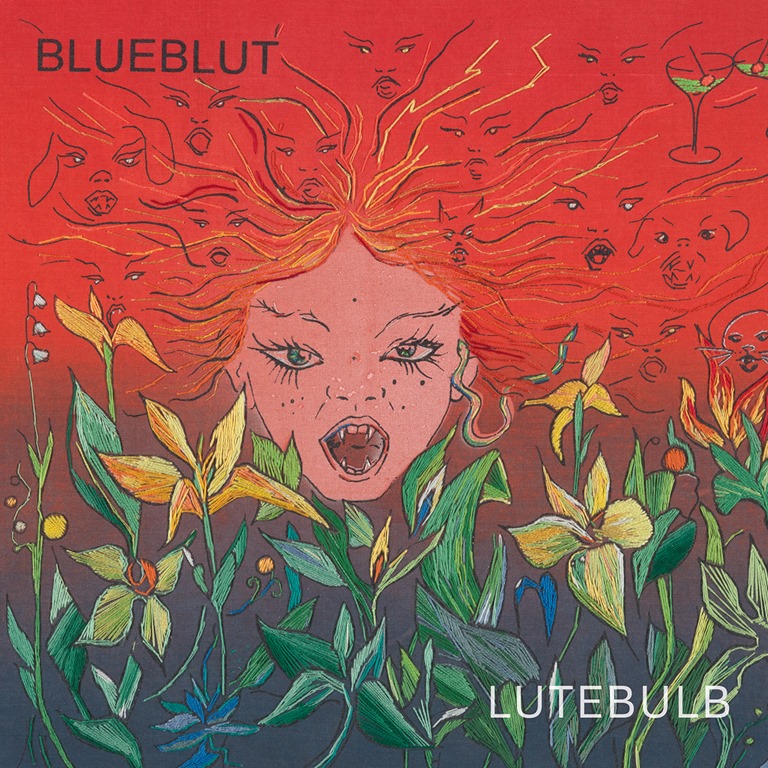
And then along comes Lutebulb, by Blueblut.

The blurb isn’t wrong in describing Blueblut’s lineup as ‘highly unusual, bringing together ‘three musicians acclaimed for exceptional contributions to their respective spheres in experimental jazz, electronica and rock.’ It’s a jazz-centred fusion, for sure, but it’s not jazz fusion as one tends to think of it, and certainly not as I’ve come to understand it. So what is it? As we learn, ‘Lutebulb is the fabulous culmination of ten years of intensive touring, with the Vienna based trio of Pamelia Stickney (theremin, vocals), Chris Janka (guitar, loops, samples) and Mark Holub (drums, vocals, percussion) socking it to global audiences with an international polystylistic musical language which takes in improv, jazz, avant-rock, ska, folk and Krautrock among other elements.’

There’s certainly a lot going on: initially, it comes on a bit laid back, not so much loungey as a smug muso pop collision of jazz and Latin dance, and I suppose the title, ‘Cocktail’ is something of a giveaway as to its swinging party vibes, but then shit happens – particularly some pretty crazy guitar work, and the percussion goes big and suddenly the party’s been crashed by a towering riot of sonic chaos, before suddenly, the entertainers seemingly remember themselves, pull their ties straight again and try to pull together some semblance of a funtime groove.

This sets the album’s template, really. Tracks tend to begin a bit kinda loose, a bit kinda boppable, a bit pool party fun times, albeit with some weirdness in the way the rhythms and the notes don’t quite chime in the conventional ways, and you wonder if it’s maybe the punch or the heat, but the tempo drifts a bit, first one way, then the other, and then maybe something doesn’t quite feel right, and it certainly doesn’t sound right and… what is going on? The room’s spinning and there are all sorts of random noises and you can’t tell if it’s people losing the plot or if some chickens have escaped and the sky’s falling in.

‘Aumba’ starts rather differently, a gentle piece led by acoustic guitar that brings a more reflective atmosphere, but it takes a hard swerve, the pace picks up, there are choral chanting vocals and then a handbrake turn into buoyant math-rock territory before some truly frantic fretwork. And because more surprises are needed, from nowhere, we get a crooning lyrical ballad in the last couple of minutes.

There’s unpredictable, and then there’s Lutebulb, which emerges with a fourteen-minute centrepiece of oddball experimental jazz that mashes absolutely everything together: one minute, I’m reminded of America’s ‘Horse With No Name’, the next, it’s Paul Simon’s Graceland and a Joolz Holland world music extravaganza. Then, somewhere in the midst of it all, we get the jazz breakdown with erratic percussion and space, dogs barking, and then, something else again. Led Zep riffage. Noise. More dogs barking. Every time I leave the house, the streets and parks and fields are like bloody Crufts, and the headfucking noise that’s emanating from my speakers – mostly a horrible conglomeration of barking and a strolling bass is making me angry and tense. And then the last piece, ‘Kaktusgetränk’, incorporates a familiar and popular jazz piece I can’t place or be bothered to research because by now I can’t decide if I need a lie-down or a massive gin.

With Lutebulb, Blueblut have created one of the most wildly varied – and in places, difficult, irritating, random – albums I’ve heard in a long time. I neither like nor dislike it: it has some truly great moments, and it has some not great moments. But when you throw this much into the blender, it’s to be expected, and I’d like to think that this kind of reaction isn’t entirely unexpected. The musicianship is outstanding, and their capacity to switch style, tempo, form, is something else, and the results are enough to leave anyone punchdrunk.

Blueblut – Lutebulb cover 1240px

Moabit Musik – 8th March 2024

Christopher Nosnibor

Gudrun Gut has forged a career on the fringes, participating in numerous collective and collaborative activities as well as solo projects. Often creating artistic work which sits well outside the boundaries of genre categorisation, her output has never been dull, or predictable. And so it is that GUT Soundtrack is precisely what the title suggests – her own soundtrack, to – wait for it – a mini-series about Gudrun Gut.

It’s a difficult call to make in assessing whether this is indulgence or an essential artistic profile, especially without actually viewing the series, but reading the synopses of the three episodes, it does seem that GUT is a bizarre hybrid of documentary and reality TV, particularly on the arrival of episode three:

Episode 1 The Blank Page. In the first episode of “GUT,” everything revolves around the mysterious blank page that means so much to artists. A Boat trip at moonlight with Thomas Fehlmann, a foto session with Mara von Kummer, and the surprise guest Ben Becker.

Episode 2 MMM. In the second episode the letter M takes center stage: Music, Mother, Malaria, and the mysterious Monotron. Gudrun composes the soundtrack for her series, everything turns into a pink dream. In the studio with her bandmates Manon Pepita and Bettina Köster.

Episode 3 The Sourdough. In the final episode, Gudrun turns her attention to the everyday, the routines, the laundry, and the bread. Here, an artistic ode to the freedom hidden in the seemingly ordinary unfolds. The visit of musicians Pilocka Krach and Midori Hirano culminates in a garden performance with Monika Werkstatt. A delicate symphony of the everyday, the essence of art and community resides.

Ah, that delicate symphony of the everyday. On a personal level I find pieces where people recount their routine not only vaguely dull, but, worse, depressing, as they invariably seem to have time – time to eat a nutritious breakfast, do some yoga or go to the gym or got for a run, before their morning session of creativity or money-making from a comfortable environment, be it a studio, or spacious office, or a coffee shop or somesuch. I feel myself shrivelling inside as curling with envy as I compare these routines to my own, which involves a daily to-do list an arm long whereby I squeeze in endless laundry and changing cat litter around my dayjob, runs to the shops and making sure everything is ready for my daughter to go to school in the morning, including making a packed lunch, before finally sitting down to knock out a review around 9:30pm and waking up at my desk, review-half-written around 11:30 and panicking about being back at the dayjob for 6:30 the next morning.

But I’m not here to berate the former Neubauten member’s breadmaking, but to critique the audio accompaniment, and, as ever, to reflect on how well a soundtrack stands when standing apart from the visuals to which it is intended to augment.

The series may contain three episodes, but the soundtrack comprises some twenty-four short, incidental snippets, which are nothing if not wide-ranging in style and form. One minute it’s like an episode of The Clangers; the next, it’s like listening to percussion made from the banging of bin lids. Spoken word and space-rock, swirling synths and fizzing electronics are tossed around all over the shop. There are moments of glacial synthpop glory – ‘Gutscore’ is atmospheric, dynamic, a bit Kraftwerk, a bit Tangerine Dream, a bit Mike Oldfield, while ‘Garten (Edit)’ is reminiscent of Yello. Yes, it does sound, often, overtly German, but then, Gudrun Gut was there from the early days of electronic exploration and as such, she isn’t following the lineage, but has been instrumental in its evolution.

‘Biste Schon Weg (23 Mix)’, one of the set’s few longer songs – that is to say, over three minutes – is a reworking of the song which appeared on Guts’ last album, the 2018 release Moment, while ‘How Can I Move (24 Mix) revisits a song which originally featured on Wildlife in 2012.

Tossing bumping electronica and some weird excursions make for an interesting journey, and a collection which encapsulates Gudrun Gut’s varied output during the course of a lengthy career. Quirky, odd, idiosyncratic, these are all highly appealing features which define a unique artist, and render GUT Soundtrack a fascinating listen.

AA

MOA24_front