Archive for the ‘Albums’ Category

Invada Records – 28th May 2024

Christopher Nosnibor

Well, this one landed out of the blue. A boon for fans, a shock to everyone, necessitating a reshuffle of review diaries for the likes of me.

It’s been six years since the last Beak> album. There are good reasons for this, as they explain: “After playing hundreds of gigs and festivals over the years we felt that touring had started to influence our writing to the point we weren’t sure who we were anymore. So we decided to go back to the origins of where we were at on our first album. With zero expectations and just playing together in a room.”

This is a remarkable slice of honesty about the effects of touring on the creative process, and band relationships. Most bands start at home – in some sense – with writing songs and the aspiration of touring those songs. But the dynamics change with success, and when touring relentlessly, time to write new material is squeezed. Over time, particularly with a pandemic interfering with, well, everything, many bands evolve their methods to operate over distance, and there’s always a risk that some of the dynamic is lost and stuff gets dialled in. It’s true that it’s now possible for bands to operate at distance, intercontinentally, even, but that’s not the Beak> way. They thrive on that instant interplay, the interaction, and without it, there’s simply no Beak>.

When they do come together they work fast. Single ‘Oh Know’ was ‘recorded on the only day the band could physically get together during the winter lockdown’ and released in October 2021. They really do make the most of their time, and their music – particularly this latest effort – froths with the urgency of pressured time. The urgency which has always permeated their music is banged up a couple of gears here, and as a result, >>>> is a frenzied explosion, with perhaps a desperate edge.

This being a Beak> album, it’s brimming with experimentalism, oddness, woozy psychedelia and persistent Krautrock pulsations, relentless beats. This being a Beak> album, it’s bloody great, and a lot of fun.

But that said, much of >>>> actually feels pretty bleak. Yes, Beak> turn bleak. It’s like a band having a blast while staring into the abyss, conscious that the end is near, but carrying on because at some point…

Of the album’s sudden and unexpected release, the band say in their statement, “At its core we always wanted it to be head music (music for the ‘heads’, not headphone music), listened to as an album, not as individual songs. This is why we are releasing this album with no singles or promo tracks.”

‘Oh Know’ isn’t included here, but the album does, however, include flipside ‘Ah Yeh’, and it does slot in nicely with its downtempo, lo-fi Pavement on sedatives vibe. It’s kinda loose, with rattling drums and drags out with a quivering organ drifting over a tense bassline, and it works something of a trance-inducing spell over the course of six minutes. You get the sense that however long and far part these guys are, they share a magical intuition, and whenever they do manage to get into a room together, creative sparks fly.

The band continues, “the recording and writing initially began in a house called Pen Y Bryn in Talsarnau, Wales in the fall out from the weirdness of the Covid days. Remote and with only ourselves and the view of Portmeirion in the distance we got to work.”

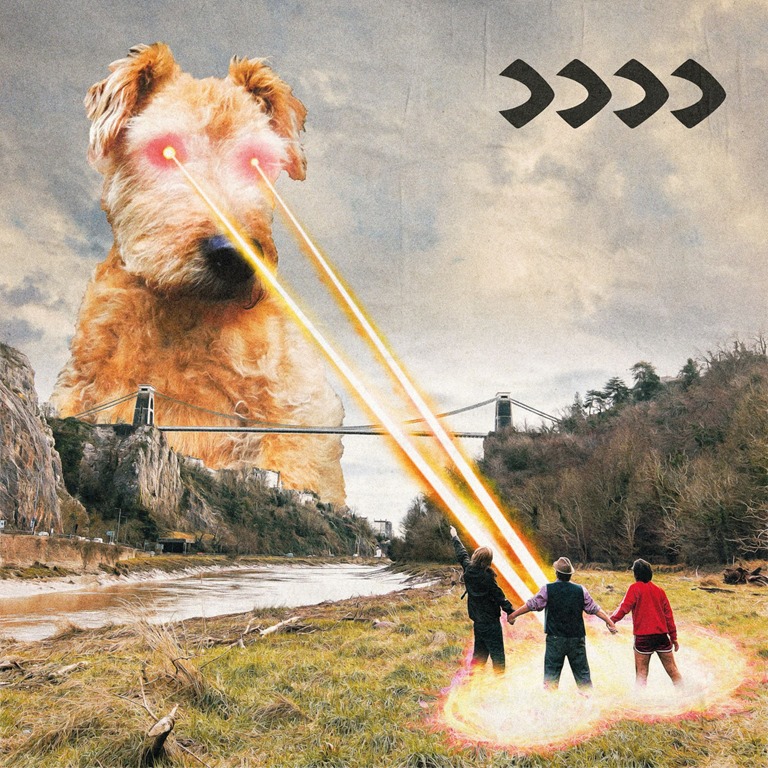
“With the opening track, ‘Strawberry Line’ (our tribute to our dear furry friend Alfie Barrow, who appears on the album’s cover) as the metronomic guide for the album, we then resumed recording, as before, at Invada studios in Bristol, whilst still touring around Europe and North/South America.”

‘Strawberry line’ makes for fairly a low-key opener, with a trilling organ and psychedelic reverby-drenched vocals rippling atop a bubbling bass before a shuffling beat enters the scene. But it stands as an eight-minute statement of intent, with that statement being that >>>> packs density to equal its melody. ‘The Seal’ delves into Krautrock, with a relentless groove centred around the rhythm section dominating. It grows dark. It grows tense. It’s sparse, minimal, but it persists, and four and a half minutes in, there’s a taut, jangling Joy Division guitar part.

Chilly synths and a robotic, rolling, repetitive bassline dominate the slow-melting ‘Denim’, a hazy psychedelic downer which delivers delayed gratification with the bursting of a monster riff. ‘Hungry Are We’ is delicate, reflective, post-rocky, with vocal harmonies which again allude to 60s pop and perhaps a bit of prog.

‘Bloody Miles’ marks a stylistic shift towards groovier territory, with a nagging bassline that borders on funk, but the tone remains doggedly downbeat, without getting depressing. With one foot firmly in the early 80s new wave sound, there’s no shortage of weirdness and warpy, brain-bending discord here, not least of all in the shadowy vintage-sounding electropop of ‘Secrets’, that brings together elements of Soft Cell and The Associates with the atmosphere and production of New Order’s Movement.

>>>> is often stark and claustrophobic (and nowhere more so on the eight-minute closer), and it’s always intense and brilliant. Beak> have surpassed themselves – again.

AA
a3178303801_10

LAAG Recordings – 10th May 2024

Christopher Nosnibor

Over the last couple of decades, Leeds has thrown out some truly amazing acts, and while few have achieved the kind of commercial success of Kaiser Chiefs, in terms of creativity and sheer range, it’s come to stand in a league of its own. It was round about twenty years ago that The Brudenell began to build its reputation as being s place that provided a space for non-mainstream acts, notably becoming something of a residential spot for iLiKETRAiNS in their early days, hosting their Signal Failure nights. While I saw a lot of post rock there around this time, I also got to see the likes of That Fucking Tank, Pulled Apart By Horses, Blacklisters, as well as visiting acts which included Whitehouse and Unsane. The Brudenell may have expanded in terms of what it offers now, but it remains in many ways the essence of the Leeds scene, an open and accommodating space where pretty much anything goes, with emerging local acts still getting a platform and, significantly, high-profile support slots. And then that are – and have been – an array of smaller independent venues which have all been integral to the crazed melting pot which is the Leeds scene, from Wharf Chambers, to the Packhorse, via Chink and Mabgate Bleach.

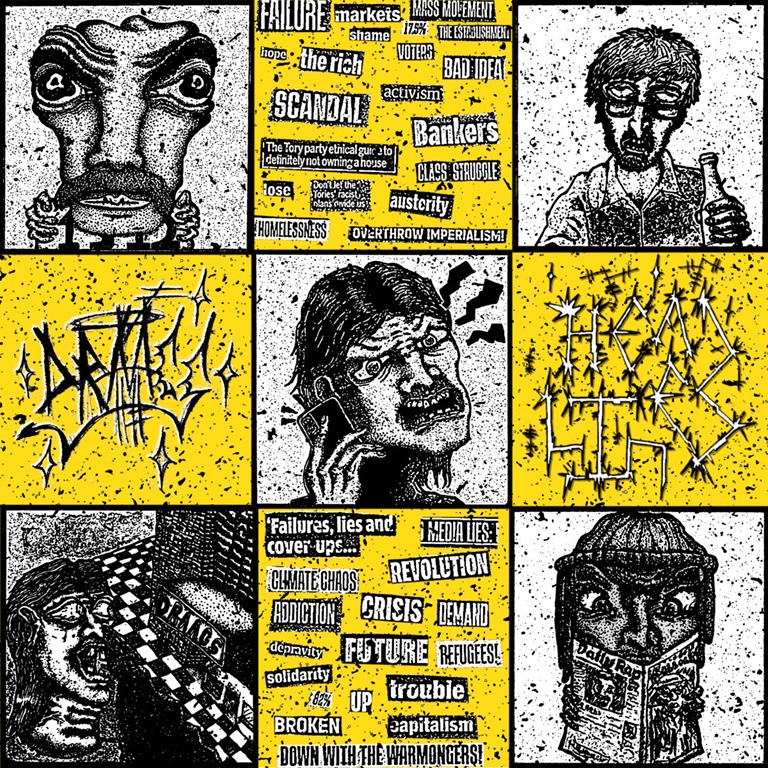
From the quirky alternative noise of Thank to the banging rave mania of Straight Girl, Leeds in 2024 really does provide a broad span of representation, in every way. And if further evidence is needed, step forward queer-dance-punk five-piece DRAAGS, who offer up their debut album on their own DIY label, LAAG Recordings.

Their bio and album pitch set out their stall nearly, as they recount how the album was ‘Made in their home over 2023’, where ‘the five-piece explored themes of escapism, queerness, rebellion, anti-capitalism, -police and -mass-media, creating melodies and lyrics to reflect their feelings at the time. No one song sounds the same, just as no member of DRAAGS is the same.’

They go on to explain how ‘In Headlines we are grappling with the alienating nature of post-internet capitalist society, fuelled by a will to understand our surroundings and not succumb to normality and drudgery. The album is an unraveling of self-purpose, self-destruction and escapism vs reality in a world that distorts the truth and seeks exponential growth through false ambition. The work as a whole intends to reflect the overstimulating impact that a possessive individualist society has on the human psyche. How this obstructs our ability to connect and the challenges we face to not degrade our beings to reflect our bleak surroundings. This project has been a driving force for us to rebel, find togetherness, community, collective joy and purpose and we hope others feel that too.’

Headlines is a deranged mash-up of absolutely everything. ‘SPINNER’ is exemplary: starting with a recording of a standard call-queue experience – we all know that that the reason all the agent are busy and an agent will be with us shortly – or not – is because no company ever hires enough staff because paying staff to provide any real service eats into their profligate profits… and then everything goes crackers, a head-on collision between Age of Chance and iForwardRussia!, in turn continuing the lineage of Leeds bands who dare to be different. Then it goes a bit operatic, a bit Sparks, a bit drum ‘n’ bass, a bit Foetus, a but Mr Bungle, a bit Selfish Cunt. To say that it’s a crazed and bewildering three-and-a-half minutes would be an understatement.

Every single song on here is ABSOLUTELY WILD! It’s quite difficult to pay attention to the lyrics when there’s so much going on. It’s arch, it’s arty, it’s a bit campy, it’s WAY over the top. It’s a RACKET! And as the song titles evidence, THEY LOVE CAPITALS, because SHOUTING AND IN YOUR FACE IS THE THING! I don’t even mean that critically: this is an album that feels like a relentless blizzard of barminess, and everything is just brain-melting. ‘PAPERS’ is a full-on, brain-melting slice of jazz-flavoured derangement, and there isn’t a moment’s let-up here, with helium-filled freneticism leading a cacophonous carnival of dementiture.

Twisted jazz and grinding funk coalesce, or congeal, into a maniacal mess, and sometimes, it gets noisy, too. How do you possibly keep up with this, or stay sane? Maybe you don’t. HEADLINES isn’t really a SONGS album, so much as an EXPLOSION that leaves you shaking our head to get clear as you find yourself sitting dazed, utterly floored.

There is no sane or objective response to this album. There is no easy way to process it: there is simply too much.

DRAAGS are going all out here to push and test themselves and their potential audience. Surrender to the CRAZINESS.

AA

a1343560981_10

Sacred Bones – 31st May 2024

Christopher Nosnibor

‘This record is for the radicals, the crackpots, the exiles who have escaped the wasteland of capitulation. This record is for the militants and zealots refusing to surrender to comforts, to practicalities, to thirty pieces of silver. And this record is most especially for the weaklings and malingerers, burdened by capricious indulgence, hunched by the deep wounds of compromise, shuffling in limp approximation, desperately reaching back towards integrity and conviction.’

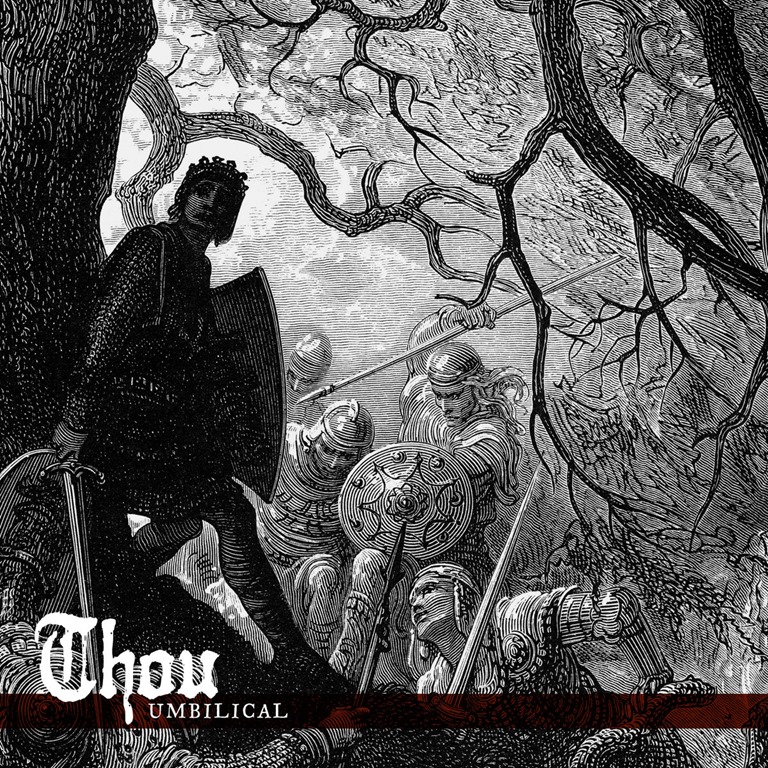
So Thou sell us their latest album, their first since Magus in 2018. And in this way they prepare us for a release which has no easy or comfortable positioning other than in the realms of outsiderdom. It was, of course, ever thus, their bio reminding us that ‘Thou transcends genre boundaries, drawing inspiration from a diverse array of influences spanning from ’90s proto-grunge icons like Nirvana, Alice in Chains, and Soundgarden (all of whom they’ve covered extensively) to the raw intensity of obscure ‘90s DIY hardcore punk found on labels like Ebullition, Vermiform, and Crimethinc.’

Coming into my mid-to-late teens in the early 90s, it’s hard to overstate the impact and importance of the advent of grunge, the breaking through of Nirvana, Alice in Chains, Soundgarden (who I wasn’t personally a fan of, but even at the time recognised their merits); this was a new wave of music which really spoke for us at that time, articulating the rage and disaffection. Put simply, grunge was our punk.

Times have changed, but by no means for the better: now, there is even more reason to be incendiary with nihilistic rage. And with Umbilical, Thou give voice to that rage. To say that they articulate it would be a stretch: the lyrics are completely unintelligible, a guttural howl spat with venom from the very pits of hell.

The titles are reflective of our times: ‘Narcissist’s Prayer’; ‘Emotional Terrorist’, ‘I Return and Chained and Bound to You’, ‘Panic Stricken, I Flee’ – these are all summaries of varying traumas, of deep psychological challenges. We’ve seemingly got better about discussing these things, bringing trauma out into the open and breaking down the walls of taboo, and in the process it’s become apparent that nearly everyone has suffered some trauma, but worse than that, the sheer extent to which Narcissism and abuse is rife is now beginning to emerge.

The guitars on ‘Lonely Vigil’; billow in blasts of nuclear detonation, the sound of sheer annihilation as the overloading wall of distortion decimates all before it. And then things step up even further with ‘House of Ideas’. Wails of feedback trace desolate trails amidst a landslide of the heaviest, most shredding deluge of sludge, and it feels like the idea that sits first and foremost is total destruction. Given the track record of major corporations and governments around the globe, this would seem a fair summary. Over the course of six-anfdf0three-quarter minutes, it scales heights of elevation paired with the deepest of trudging riffery.

‘I Feel Nothing When You Cry’, released as a single not so long ago, is the pinnacle of brutal nihilism, and ‘Unbidden Guest’, which follows immediately after plunges still deeper into the abyss. It’s a torturous experience that drags the listener to hell by the hair, and simply drops them there. ‘The Promise’ arrives as a surprise: a straight-up, no messing grunge metal stomper.

On Umbilical, Thou bring the riffs alright. By which I mean it’s fucking brutal. It’s not heavy: it’s hellish. It’s the sound of raw anguish, of unfiltered pain, and simultaneously an outpouring, a ceaseless spewing of untrammelled emotional tumult. There’s a purity to it which is powerful beyond words.

AA

a3170193588_10

Sub Rosa – 24th May 2024

Christopher Nosnibor

Yet another 24 May release… It really does feel as if the world had conspired to release 75% of the years albums on this one day. So I’m still working my way through them. And this release from some known names is not what I was expecting. I can’t recall precisely what it was that I was expecting but certainly not anything as heavy or as percussion-led as this.

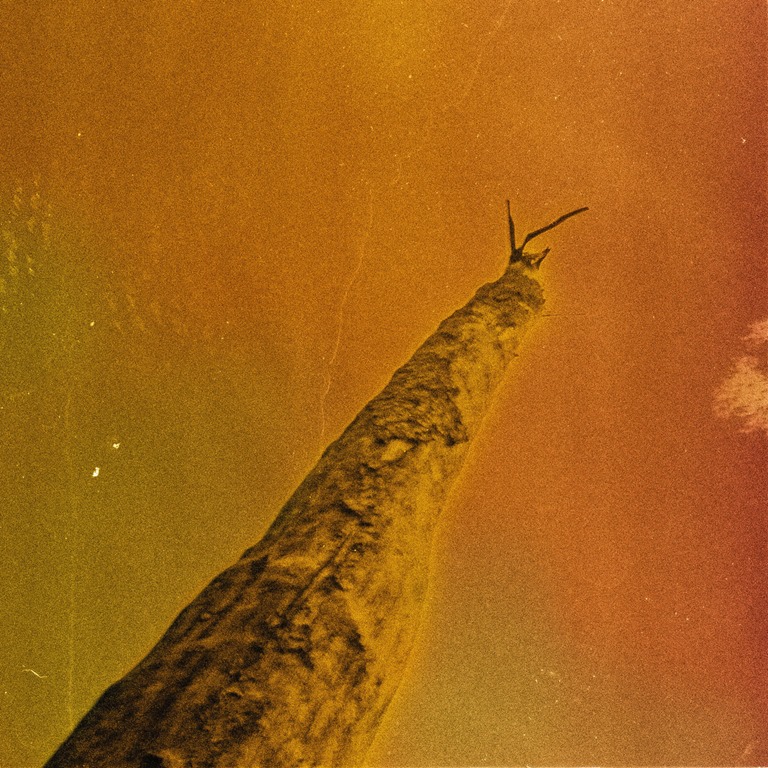
They describe SIHR as a ‘sonic manifesto by a post-anything quartet’, a work that offers up ‘new folklore for a devastated planet’. Within these words, there’s a sense of nihilism and gloom, but simultaneously an undercurrent of ‘fuck it’ and of quintessential avant-gardism, the principle ethos of creating anew only being possible from the destruction of that which came before. There’s a sense here that the destruction – the devastation of the planet – clearly isn’t something they’ve chosen, but in the face of apparent futility, they’ve come together to create, perhaps in the hope of a brave new world, or perhaps, more likely, something to be discovered among the ashes and the ruins of society and life as we know it.

The way in which they document their coming together and the creation of SIHR has all the hallmarks of the first stages of developing a mythology, which has the potential, in time, to grow its own legend: ‘The first sonic moves of this eclectic quartet, made in a bunker studio somewhere between Paris and Berlin, urgently took the form of a quest, that of a neo-folklore for troubled times, a music seeping with many kinds of atavism and experimenting in all directions. A fertile no-man’s-land where trance and contemplation, jazz and electronica, acoustics and electricity would merge in a stimulating mystical magma. From the possible emergence of a Babelian language to the shared desire to rediscover music as a ceremonial act, this encounter took place over three days of improvised sound bacchanalia, the phases of which were all recorded by Benoit Bel.’

The first track, ‘Oui-Ja’aa’ is a nine-minute colossus of a cut, drawing together elements of electronica and ‘world’ music with a dash of Krautrock and the sensibility of Suicide, with a throbbing rhythm melting into a hypnotic bubbling sonic cauldron. The tempo twists and seems to quicken as drones and jazz horns warp this way and that as if blown by the wind and everything builds to a frenzy before collapsing, exhausted in the dying moments.

While conjured in a bunker studio, SIHR sounds as if it was improvised around a fire in the middle of a desert while string out in an hallucinogenic haze. I suppose in some respects, the two scenarios bear numerous similarities in terms of their psychological effects: while one setting is a vast expanse of space with a huge sky vista and a distinct absence of other people, so the other, equally devoid of other people, forces the contemplation of the infinite realms of inner space.

‘YouGotALight’ is slow, smoking, soporific, a crawling, sprawling, mellowed-out meditation, before the glitchy whorl of bleeps and jitters that define the sound of ‘OhmShlag (Quake Tango)’ sees things take a very different trajectory at the album’s midpoint. A pulsating, seething miasma of sonic swampiness, punctuated with a metallic tin clatter of a snare that cuts through the murk, it’s like slowly sinking, not only in boggy terrain, but in a mental fog.

‘Babel Cedex’ eliminates the fog and just goes for the mental, beginning as another slow, serpentine, hypnotic exploration before building to a deranged frenzy of frenetic percussion and howling horns and chaotic discord that’s truly brain-melting. Eastern vibes and glitchtronica ripple through the woozy ‘Black Powder’, and you find yourself marvelling and utterly bewildered by the whole experience.

My earlier visions of desert campfires dissipate life vapourising mirages during the second half of the album, and I come to conclude that SIHR is indeed the sound of bunker life: one envisages the collective huddled in semi-darkness, hunched and half-crazed after months below ground in the wake of a global catastrophe, trying to keep it together in the hope of one day being able to return above ground. How will they know when it’s safe, when the coast is clear? Or is this a scenario akin to Philip K. Dick’s The Penultimate Truth?

We live in perilous times, and likely closer to the brink than any of us know or can even compute. In this context, SIHR feels like a document, and a message to future times.

AA

a0579997776_10

Bearsuit Records – 31st May 2024

Christopher Nosnibor

There was a time – not so long ago – when I would come home from work and struggle to nudge the front door open with my shoulder for the mountain of CDs that had been dropped through my letterbox, along with the occasional ‘sorry we missed you’ card telling me I had a parcel at the depot awaiting collection or to arrange redelivery, and more often than not it would be some vinyl, and all of it promo material for review. I had a box – which was initially a shoebox, but later replaced with something larger – which was my ‘to-review’ box, after the pile kept falling over once it reached an unsustainable height. It was a storage nightmare, and I still have boxes containing quite literally thousands of promo CDs with press releases folded up with them, in boxes in the walk-in cupboard and the end of my office, which is, in truth, too stuffed with boxes of CDs to squeeze more than a toe into, rather than actually walk in.

Working in an office as I did then – rather than at home – I would take a bundle of CDs in a jiffy in my bag, and sit and listen to them as I worked. It beat enduring the often moronic drone of the people around me, and I’d tap out notes which I’d email home to myself to flesh out into full reviews in the evening.

My working method has changed rather since then, and while still working the dayjob, I’ve barely set foot in an office other than the one in the back bedroom of my house since lockdown. I haven’t received stacks of CDs in the post for a similar length of time, if not longer. For all of practical issues around the stacks of CDs, I do kinda miss it, and this is one of the reasons I always get a thrill at the arrival of a disc in the mail from Dave Hillary, who runs Bearsuit Records. The other, and not insignificant reason I always get a thrill at the arrival of a disc in the mail from Dave is that I’m eager to discover what mad genius work the label’s releasing next. I enjoy slipping the disc in the external CD drive I have attached to my laptop and soaking in the strangeness that spills from my speakers: I’m never disappointed.

I love the fact that I still get CDs in the mail, with promo cards and handwritten notes and so on, from Bearsuit, not just because of the joy of the physicality and the personal touch, but because it’s emblematic of the label as an entity. It does what it does, regardless of whatever else is happening, and it releases music the likes of which you simply won’t find anywhere else.

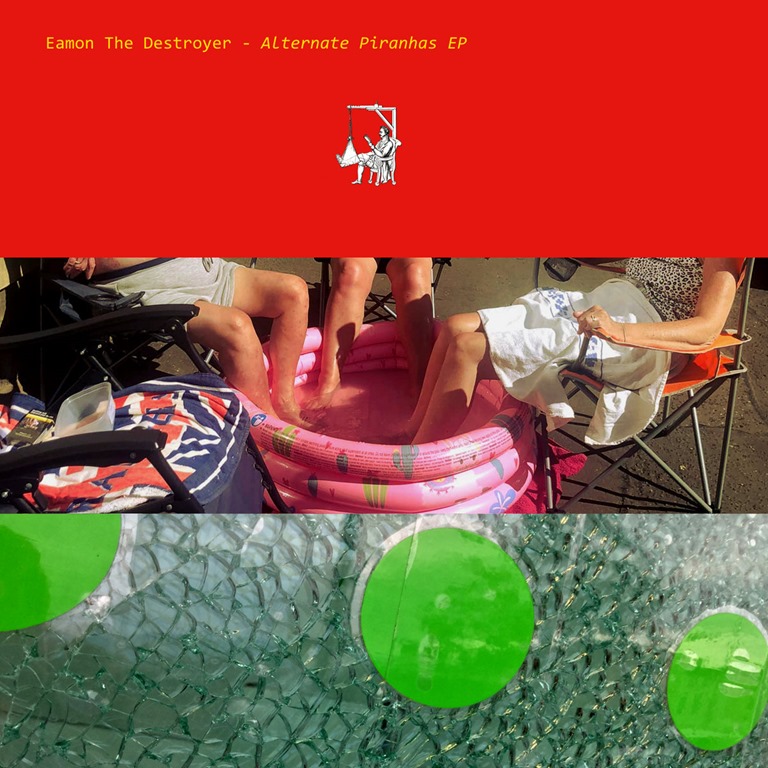
Eamon the Destroyer is a classic case in point. Another typically enigmatic artist in the Bearsuit tradition, Eamon the Destroyer has enjoyed a great run of releases to date. Debut album A Small Blue Car was a work of fuzzy, minimalist , downtempo brilliance. A sad, introspective work, it was unexpectedly touching for something so overtly odd, and follow-up We’ll Be Piranhas pushed further into forging songs that straddled the dreamlike and the nightmarish, a disorientating, discombobulating work that delved deep into the psyche in a way that felt like invisible fingers creeping inside the cranium and directly massaging the brain.

And now we come to the more or less obligatory counterpart release. Instead of the standard and expected remix EP, Alternative Piranhas gives us outtakes alternative takes of tracks from the album. A cynical voice might ask why they didn’t make the album cut, but there are myriad valid reasons: an album need to cohere and sometimes even the best tunes don’t fit with the flow, and similarly, the mood of one take or mix may in fact be better objectively, but not quite sit with the context.

And so it is with the five tracks here. All five appeared on We’ll Be Piranhas. While exactly the same length as its album counterpart, ‘A Pewter Wolf’ presents a quite different mix: the organ is much more boomy, more ‘churchy’ than on the album version, while the guitar sounds, almost buried on the album blurred and hazed out low in the mix, are more up-front and gritty here.

The version of ‘Rope’ on Alternate Piranhas seems to be in a different key, and is much grainer, murkier and messier than the more polished album take, and it’s more abrasive, more aggressive, with the vocals more up-front, and the result is that I found myself hearing thee song anew and soaking in the anger which permeates it, less obviously on the other version, tempered by the more mellow mix.

Overall, the versions on Alternate Piranhas are rougher, less ‘produced’, and it’s not difficult to discern why the versions chosen for the album were the ones they were. The album worked as a cohesive set, with an even, smoothed-out sound – well, in context – but Alternative Piranhas provides an insight into the process, which is never more apparent than on ‘The Choirmaster’. It’s not radically different… but it is different, while the alternative take of ‘My Stars’ is half the length of thee album and feels like a sketched-out demo. But again, it possesses qualities absent from the album version, just as the album version has elements which are absent here, including another five minutes of sound.

Alternate Piranhas feels more overtly rock than its progenitor, and perhaps it is, but above all, it’s a source of enjoyment to revisit these songs from a different perspective.

AA

a4099667252_10

Unsounds – 24th May 2024

Christopher Nosnibor

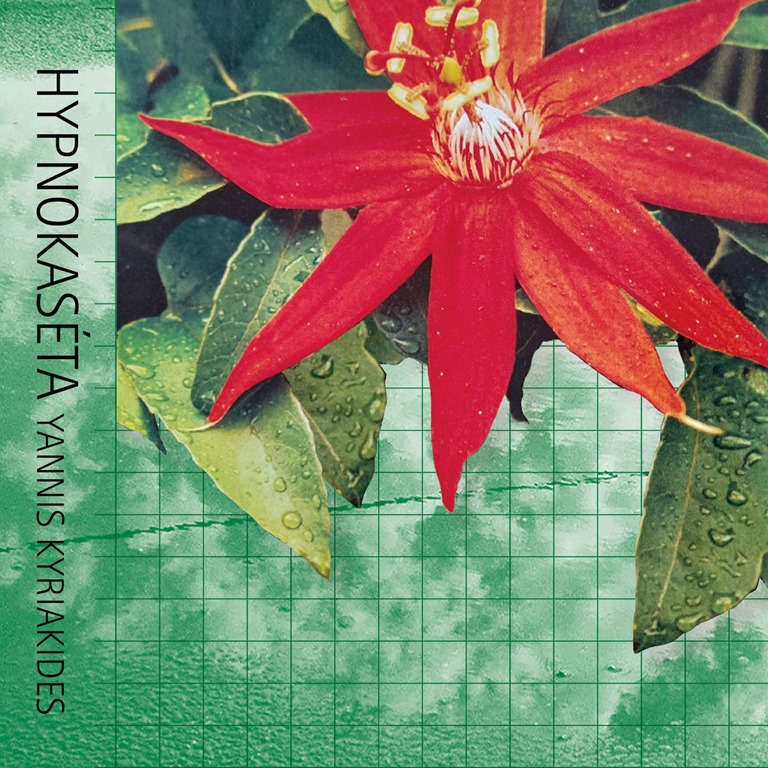
When it comes to being a music writer, for me, at least, perhaps even more of a buzz than getting advance listens of the most eagerly-anticipated releases is being exposed to music I otherwise wouldn’t have. And the nature of the avant-garde means that you have to be in the know to know. Being introduced to the Unsounds label and the work of Yannis Kyriakides certainly opened my eyes – and more so my ears – to a whole expanse of music I assumed must exist, but would have had no obvious means of locating or accessing while going about my ordinary life before.

Although I’ve only dipped in and out of Yannis Kyriakides’ output, more as one with a casual interest than a fan per se, his work has never ceased to impress with its range and constant questing for something different, something new, both sonically and methodologically and “Hypnokaséta (2020-2021) is no exception.

Kyriakides’ introductory notes explain both the concept and the practice behind the recording of the album: “Hypnokaséta (2020-2021) is a continuous set of 16 pieces for string quartet, improviser (playing cassettes and any instrument) and live electronics. The source material is based on dreams that I had during the first few months of lockdown, April-June 2020. Accounts of these dreams are encoded in the music that is played by the quartet and also encrypted in the sound textures that surround this.

“The pieces alternate between quartet as the foreground and electronic interludes, where solos or duos underpin the soundscape. The title of the piece (Greek for ‘sleep-cassette’) refers to a theory of dreams proposed by Daniel Dennett, that says that dreams are loaded into consciousness like a cassette tape during the night and played just before waking.”

It’s longtime collaborator Andy Moor who provides the guitar and tape work on these recordings, and together with Kyriakides’ electronics, which move between shuddering skitters and unsettling scratchiness and quite abstract sounds, when juxtaposed with the strings – which span playful to mournful to droning discord.

The sixteen pieces have been mastered as six separate tracks, but they flow as one immense composition in a continuous state of transition. Within each of the six numbered tracks, the individual segued pieces bear titles, with their time markers also noted. The titles present, if not strictly a narrative, then a guide to the theme, the idea, the inspiration.

‘Hypnokaséta I’ comprises ‘The government’s new cultural scheme’, ‘All roads to the airport are blocked’, and ‘Everyone is nervous, everyone is lost’, titles which serve to encapsulate the events and the sensations they engendered within the populace at the strangeness and uncertainty of lockdown.

‘Hypnokaséta III’ is a stunning work of contrasts, containing as it does the gentle, almost light-spirited string-led ‘The reluctant hotel manager’ and the dramatic, jarring ‘She lifts the mountain’, a dark, alien drone brimming with electronic tension that crackles and tweets. The rapid switches in mood and form recall the sudden and wild extremes I experienced myself during this time: it was impossible to keep up with the constant stream of developments in the news, while at the same time entrapped within the confines of the house, where the world outside felt so very far away, while also having to accommodate the changeable and diverse headspaces of friends, family, and colleagues. No-one knew what the fuck was going on, or how to cope.

There was an air of unreality about it all, and at times it became difficult to distinguish between the bewildering nightmarish reality of the wakeful hours and bewildering nightmarish sleep, and in drawing on dreams in the creation of Hypnokaséta (2020-2021), Kyriakides captures the essence of that abstract space forged in the mind where everything blurs. This blurring and abstraction is also reflected in the titles: ‘The concert promoter complains that not much happens in the piece’ sounds like something that could happen in one of those self-reflective semi-anxiety dreams, and ‘Bridges are being dismantled

across the city’ has an apocalyptic sense of separation, while ‘Body swap opera’, ‘Swimming pool synthesis’, and ‘Mutations on an empty grid’ are altogether more surreal in their connotations.

Throughout the album, the lister is jolted from a moment of tranquil reverie by some abrasive thud or rasp, an unexpected spike in volume, and a turn towards an altogether more disquieting atmosphere.

The composition is nuanced, the placing of the switches and transitions perfectly timed to achieve optimal impact, never allowing the listener to truly settle, to relax, to sit back and enjoy, and the moments of tension are indeed tense; but credit must also go to the performers: the strings are played with a keen awareness of the importance of both dynamics and detail, and Moor, in his capacity of ‘improviser’ brings texture and tone delivered with an infallible intuition. The album’s structures may be subtle, almost invisible, but they’re affecting, and as a whole, Hypnokaséta (2020-2021) is an experience which permeates the psyche in unexpected ways.

AA

a2874939530_10

Prophecy Productions – 17th May 2024

Christopher Nosnibor

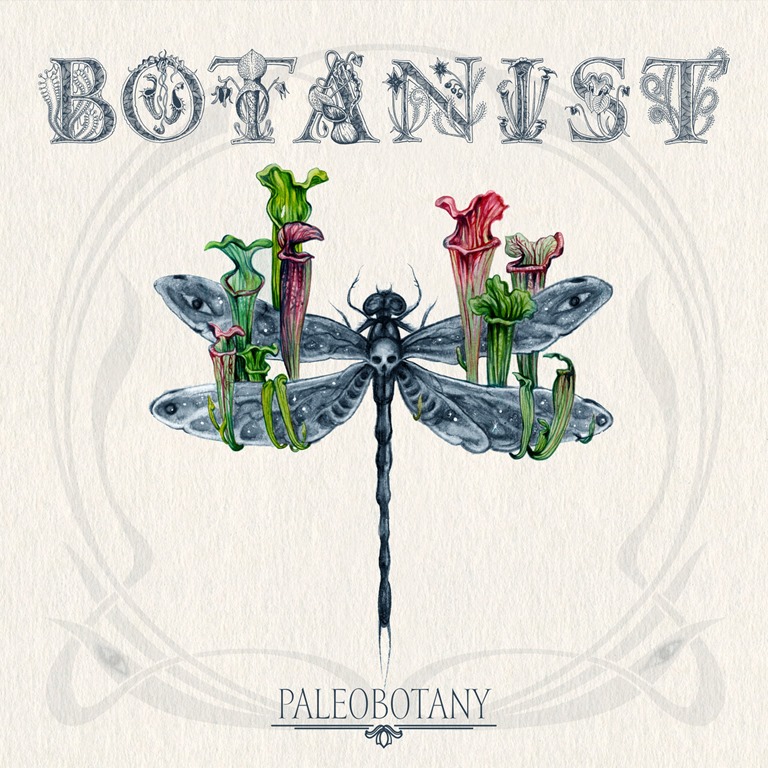
While many progressive metal bands are preoccupied with space or fantasy realms or mythology in some form, with San Francisco’s Botanist, the clue’s in the same, and it’s an obsession with species of plant-life which have provided the lyrical focus over the course of eleven previous albums before Paleobotany, which, they say, ‘take[s] us back more than 70 million years to a time when dinosaurs ruled the planet and early forests began to turn to coal. Before the age of giants ended in flames with the apocalyptic impact of the Chicxulub asteroid, some families of plants that still have descendants today also grew much larger.’ Bet you didn’t know that, did you? But then, the title tells is, really: an album about the botany of the Palaeolithic era.

Sonically, Paleobotany is interesting, and is more progressive than it is overtly metal for the most part, perhaps on account of the less conventional instrumentation used by the band, as outlined in their bio, which details how ‘Their music clearly has its foundation anchored in ‘metal’, but instead of 6-string guitars the Americans use 110-string hammered dulcimers. To the confused horror of traditionalists, BOTANIST fit these percussion-stringed folk instruments with magnetic pickups and distort them through various perverse means that range from amplifiers via analogue tape to digital manipulation.’

Perverse seems to be the operative word here. It’s fair to say that this is a band unswayed by trends or popularity. The overall sound is an amalgam of folk and progressive, and it’s highly melodic, too – and not just in the instrumentation. For the most part, the vocals are clean, soaring, tuneful, apart from the occasional foray into growliness, and they sit comfortably atop sweeping layers of cinematic sound, of which ‘Sigillaria; is perfectly exemplary. The bass runs in the closing bars of ‘Archaeamphora’ are more jazz-influenced than anything, and there are some truly black moments, such as ‘Strychnos Electri’, the verses of which are propelled by double-pedal bass beats and a deep growling vocal – but then they’re off on a tuneful trip about ferns with a tuneful piano rolling along in balladic fashion. When they’re heavy, they hit hard in the guts, but much of the album is given to expansive fields of tunefulness.

Their eschewing of all the conventional tropes is admirable and offers and exciting prospect, and while the concept is novel it is quite remarkable that they’ve managed to eke it out this long. At times, it does feel a shade pretentious – it’s certainly a little serious and lofty, with some of the lyrics sounding more like excerpts from essays in journals. This is by no means to denigrate intellectualism in music or anywhere else for that matter. Musically it’s an incredibly complex and accomplished work. It’s just… maybe it’s just a niche I can’t quite connect with.

AA

a0944583200_10

Cruel Nature – 24th May 2024

Christopher Nosnibor

It seems as if every album of the year has been released on this date, May 24th – and by every album of the year, I mean all of the releases have landed at the same time, but also that this album and the other ‘best album’ contenders have all landed simultaneously, too. It’s meant that I’ve been absolutely swamped, and struggling to listen to everything, let alone formulate thoughts and render them coherent – something I fear I struggle with at the best of times.

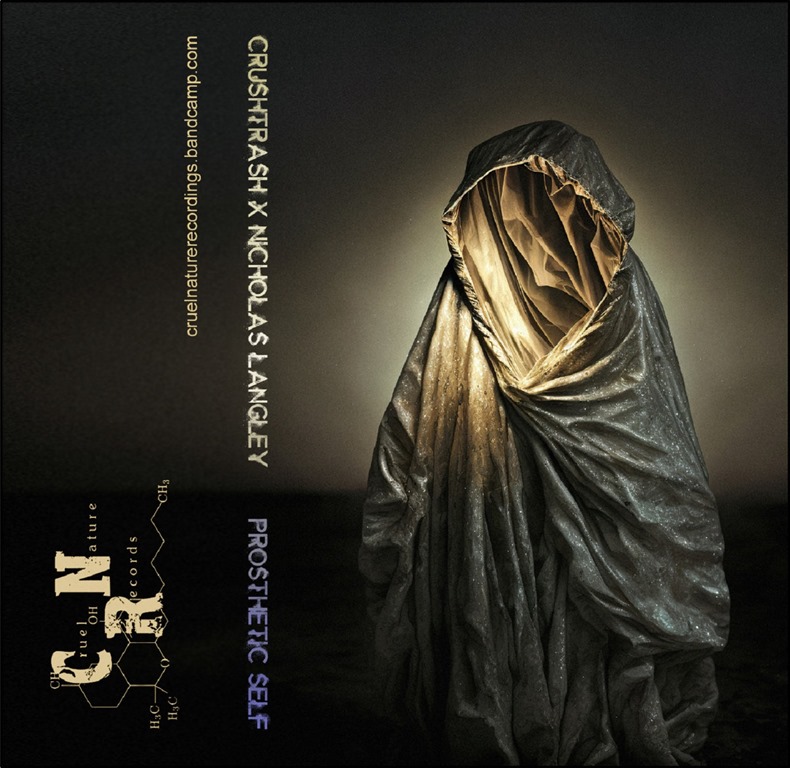
Surveying this release, I learned that ‘Prosthetic Self is a collaboration between CRUSHTRASH & NICHOLAS LANGLEY that seamlessly blends the energy of early ‘80s dark industrial synth pop with the mesmerising allure of ’90s electronica. Drawing inspiration from iconic acts like Coil, The Associates, Depeche Mode, Björk, and Portishead, this album is a sonic journey that transcends time and genre boundaries.’

It does feel as if every electronic act with a dark leaning wants to be Depeche Mode, and every electro-based Industrial act is essentially wanting to be Pretty Hate Machine – era Nine Inch Nails – who in turn sounded a fair bit like Depeche Mode if truth be told. That’s no real criticism, as much as an observation of the extent to which those two acts broke ground and created new templates in the 80s. However, the industrial elements of Prosthetic Self hark back to a time before Nine Inch Nails, and presents a more experimental form.

The tile, Prosthetic Self Connotes a sense of falseness, the fake exterior we apply to ourselves in order to deal with people and society. Workplaces – particularly offices – tell us to ‘be ourselves’ at work, while at the same time telling us we need to leave our problems and personal baggage at the door, but at the same time seem incapable of dealing with non-conformity. Well, come on then: what do you want: individuals or clones? Prosthetic Self is an exploratory work which presents a multitude of facets, and it’s a fascinating journey which leads one to the question as to what is real and what is construct, artifice. The cloak, on the cover, with its empty hood feels like a representation, not necessarily for this collaborative project, but the album’s themes, searching for what lies beneath the prosthetic self: is there, indeed, anything at all? Then again, how much here is style, and how much is substance?

There’s certainly a lot of well-studied style on display. ‘Bring Some Change’ is dark but also soulful, and their referencing The Associates hints at the almost operatic stylings of the vocals at times, and against some stark backings prone to some unexpected sonic ruptures and moments of heightened tension and drama, I’m also reminded of Scott Walker.

‘Claustrophobia’ is appropriately-titled. ‘In my dream, something’s wrong, caving in…’ Crushtrash croons with hints of Dave Gahan in his delivery against a slow-moving murky throb. But there’s a really attacking percussive loop that knocks on the top of your skull which makes it tense rather than soothing, and before long, panicked breathing gasps in the darkness, and you’re drawn into the nightmare.

Elsewhere, glitching, knocking beats shuffle and click, and the production really brings these to life in a way that makes you clench your jaw and tense your shoulders. ‘Selective Memory’ has something of a collage structure about the way the sounds are brought together and overlaid, with sampled snippets woven in alongside the bubbling vintage synth sounds.

In places, the kind of retro vibes which permeated 90s trip-hop seep into the shadowy atmospherics, and ‘Subtle Fetish’ comes on like Marc Almond in collaboration with Tricky, spinning lascivious wordplay along the way.

Prosthetic Self creates a lot of atmosphere with minimal arrangements, and they work because of the close attention to detail, the multiple layers of percussion which pulse and snake through spartan synths, more often than not with a simple, repetitive bass overlaid with subtle details, in a fashion which adeptly recreates the sound of the early 80s. In doing so, it recalls a time when so much was new, innovative. Coming at a time when there is so much sameness, and production and mixing has come to be all about the loudness, to hear a set of songs which really concentrate on dynamics and detail, it seems unexpectedly different.

AA

a1438080285_10

10ft Records – 24th May 2024

Christopher Nosnibor

Percy have been going since the mid-90s, but didn’t get to release an album till 2013. They’ve maintained a steady flow since then, particularly since the solidification of their current lineup in 2017 with New Phase being their fifth album in and their fourth in six years.

‘Workmanlike’ isn’t a criticism when it comes to certain bands, when their solid and consistent output and regular gigging is central to their way of working and to their identity, and while it’s not an exclusively northern thing, The Fall and The Wedding Present are bands which immediately spring to mind as acts who deliver albums like it’s a job. Said albums may all share a certain commonality, but push those tight parameters each time, and if Percy can be guaranteed to sound like Percy, then it’s all to the good.

New Phase is an apt title for an album which sees them take a lunge into darker territory, both sonically and lyrically. A fair few of the songs have featured in their live setlist over the last year or two, giving a fair indication of the direction they were heading with the new material, but to hear these songs all together and as full-realised studio recordings has a different kind of impact. On New Phase, they sound invigorated, vivified, but also tense, paranoid, embattled. Colin Howard’s lyrics are less given to social critique and instead present scenes of horror, of personal torment and heightened anxiety. Whatever the fuck’s been going down in his life or neighbourhood, or whatever grim stuff he’s been streaming on Netflix, the resultant art is powerful. The musical accompaniment captures the same uneasy mood of high tension and darkness.

‘Sink Estate Agents Satanic Rites’ is – remarkably – their most Fall-like track to date, a jagged paranoid spasm that’s dragged from the space between Grotesque and Slates. It’s tense, uncomfortable, and there’s something weird about the production that pulls in different directions and renders it even more difficult, and vaguely gothic in the early post-punk sense, too.

‘Blackout’ has hints of early Arctic Monkeys lurking amidst its clanging mess of guitars and panic-filled lyrics which narrate a bleak tale of alcoholic excess ‘there’s bloodstains on the floor / there’s bloodstains on the wall / and someone’s banging on the door… and then it hit me’.

Narrative is a strong feature of the lyrics, as is nowhere more evident than on the nightmarish ‘I Can Hear Orgies’. Are these auditory hallucinations or is weird shit going down round Colin’s way? Or is it a side effects of the meds?

The title track is raw, ragged, angular, more Shellac or Bilge Pump or even Part Chimp than The Fall, bringing a new level of aggression and noise to Percy’s repertoire.

More conventional Percy territory is covered in ‘Thinking of Jacking It In Again’, ‘Do You Think I’m on the Spectrum?’ and ‘Last Train to Selby’, delving back into the world of work and sociopolitical matters and delivered with powerhouse drumming and choppy, clanging Gang of Four guitars – and of course a dash of Fall-like rockabilly, because it’s Percy. ‘Wah-wah-wah-wah’ Howard signs off. ‘Greedy People’ is a classic Percy swipe at an obvious target, but as Colin spits ‘It’s not about the money / it’s about the principle’, there’s a palpable anger, articulated as much though discordant guitar.

New Phase marks a step up for Percy, and in many ways. They sustain the tension across the duration of the album’s ten tracks, with only the six-minute closer, ‘Afterlife’ calming down and taking a more synth-led dimension, but still presenting a bleakness and heavy melancholy that fits with the album as a whole. The production is tight and solid, bringing to life the album’s sonic and lyrical tensions.

New Phase is a magnificently awkward, challenging, angular set, and perhaps Percy’s least commercial, least overtly ‘indie’ album to date. But for my money, it’s also their best-realised, most authentic, and most exhilarating album yet.

AA

a0857077590_10

Partisan – 17th May 2024

Christopher Nosnibor

It feels like no time at all since I was reviewing the cassette release of Lip Critic II, and that their ascent from self-released EPs and cassette-only albums on microlabels has been astoundingly rapid, but time has a way of playing tricks when it comes to perception: Lip Critic II was, in fact, released almost four years ago. And now, signed to Partisan and having gained significant traction playing SXSW, with the NME claiming bragging rights for giving them a cover feature a few months ago, as well as a five-star review last November, they’re certainly breaking through. There’s no question that it’s entirely deserved, either: despite being overtly weird and clearly non-mainstream, they’re a quintessential cult alternative band, the likes of which gain substantial hardcore followings and are revered long after their passing.

With a lineup consisting of two drummers and two synths, Lip Critic are no ordinary band, and they produce no ordinary music, and Hex Dealer is a schizophrenic sonic riot. It’s a bit cleaner, the production rather more polished, but fundamentally, it’s the same deranged percussion-heavy cacophony that Lip Critic have always given us, and it’s still true that most of their songs are short and snappy – around two-and-a-half minutes. Consequently, Hex Dealer is aa succession of short, sharp shocks, like poking a socket with a wet finger. The whole thing is a spasm and a twitch.

‘It’s the Magic’ brings together a smooth croon that has hints of Marc Almond and some shouty rap mashed together with some Nine Inch Nails industrial noise and some woozy hip-hop beats and some aggressive drum ‘n’ bass, all in under four and a half minutes.

Lead single ‘The Heart’ is a standout, for is frenetic, kinetic energy, and its hookiness, but it’s a question of context: it’s a blissed-out pop tune in comparison to the blistering percussive onslaught and distorted dark hip-hop blast of ‘Pork Belly’, a cut that takes me right back to the early 90s, specifically the Judgement Night soundtrack. Single ‘In The Wawa (Convinced I Am God)’ is entirely representative of the album as a whole, compressing all of its warped elements into a noisy, spasmodic, hi-NRG two minutes and nineteen seconds. Crazed, hyperactive, it’s explosive and it’s unique.

It’s a rock album with rap trappings. It’s a rap album with rock trappings. It’s a mess and shouldn’t, doesn’t, work. Only, it does. And with ‘My Wife and the Goblin’, they introduce some gnarly noise which isn’t metal by any stretch, but it certainly gets dark near the end. I say ‘near the end’, but it’s only a minute and forty-one and it’s a real brain-melting mess of noise.

If the beats to grow a little samey over the duration of the album, the counterargument is that the thrashing percussive attacks give the set a vital coherence. Packing twelve tracks into just over thirty minutes, and more ideas per minute than any brain can reasonably be expected to process, Hex Dealer feels like Lip Critic’s definitive statement.

AA

a4093774739_10