Archive for the ‘Albums’ Category

Cruel Nature Records – 25th October 2024

Christopher Nosnibor

Mike Vest’s output continues to be nothing short of staggering. He’s played with a host of bands – great bands at that – Bong, 11Paranoias, Drunk In Hell, Blown Out – to name but four, and Discogs records a total of one hundred and sixty credits, with a hundred and nineteen of them being for instruments and performance.

Sear is the latest album from Vest’s ongoing solo project, Lush Worker. The accompanying notes promise a work ‘Blending smouldering guitar explorations with old-school noise psychedelia,’, and an album which ‘showcases Vest’s signature maximalist guitar sound mixed with heavy riffs and drone-rock atmospherics. A blissful yet intense listening experience.’

With stoner doom merchants Bong, Vest explored, in detail, droning riffs over longform formats: 2018’s Thought And Existence contained just two tracks, each just shy of twenty minutes in duration. Around the same time, Vest released Cruise as Lush Worker, a half-hour long behemoth, and he’s continued to pursue epic soundscapes.

Sear is perhaps the most epic yet.

Momentarily, on noting the title, I thought of the Swans album, which spans a full two hours, and its monumental title track. But a single letter makes all the difference. While a ‘seer’ is one who sees, a visionary, with all of the connotations of spirituality and mysticism, ‘sear’ is to scorch, burn, or to fry meat at a high heat. And over the course of thirty-eight monumental minutes, Vest spins forth guitar work which blisters and peels, the sonic equivalent of white-hot sheet metal. At first, drums thump away, almost submerged as if engulfed by a flow of molten lava. The squalling wall of noise heaves and howls, while sibilant sounds like whispering voices of the dead burst like pockets of has rupturing from the seething sonic miasma.

Long, meandering lead work emerges over time, the most spaced-out trippy solo seeping out over a thick, grainy backdrop of droning overdrive, from which strains of feedback break through, before everything gradually sinks into a swirling soup of feedback and distortion, the rhythm having collapsed.

The experience is somewhat akin to listening to Metal Machine Music and Earth 2 simultaneously, but that’s only an approximation of everything that’s going on here. While there’s no overt structure to Sear, there is a strong sense of ebb and flow, and each time the immense sound tapers off for a time, it gradually rebuilds to a point that seems even denser and more intense than before. Around the twenty minute mark, the percussion is back, and there is later upon layer of yawning drone which swirls into an eternal vortex. And the fact that it does go on for what feels like forever is essential to the fullness of the experience. A burst of this may give a flavour, but ultimately, Sear is designed as a fully immersive work, and indeed, it is.

For all the detail here – there are so, so many layers and textures to this – it’s the immense drone that sucks you in and leaves you staring into space. It’s like the cyclical growing hum of ten thousand didgeridoos, amplified and reverbed, and over time, the sounds seems to bend and twist, and it feels as if your very perception is warping as it slowly melts out of shape.

After half an hour, the drums once again stop, and an eight-minute wind-down begins. It’s another lifetime of slow-shifting blurring shades as darkness gradually descends and silence finally follows.

AA

cover

Human Worth – 15th November 2024

Christopher Nosnibor

They’ve been around for a while now, but as yet, there hasn’t been another act quite like Sly and The Family Drone. They’re one of those acts that straddle so many different boundaries and function on so many different levels, they’re impossible to pigeonhole and impossible to pin down. They make serious art delivered with a quirky, tongue-in-cheek sense of humour, and their live performances are celebrations of community and whacky while simultaneously being genius performance art improvisations. I’m by no means being superior when I suggest that a lot of people simply won’t ‘get’ them, and it’s obvious as to why they’re very much a cult thing. But that they’ve managed to sustain a career operating on a DIY basis, booking their own tours, etc., for well over a decade is testament to both the appreciation there is for them on a cult level, and to their sheer persistence and insanity. And their last release was a lathe-cut album containing a single twenty-minute jazz odyssey released via The Quietus.

Moon is Doom Backwards – a wheeze of a title which is factually inaccurate, and of course they know it – is a classic example of the absurd humour which is integral to their being, and it’s a joy to see that they’ve come together with Human Worth, a label I’ve filled many a virtual column inch praising, for this release. And because it’s on Human Worth, a portion of the proceeds from this release are going to charity.

The album, we learn, was recorded ‘exactly three years ago at Larkins Farm’. That’s quite a lag, but this does often seem to be the case when it comes to homing works of avant-jazz noise-drone. They describe it as ‘a patient, stalking, lurking thing. A properly noir thing, as notable for its long stretches of quiet atmosphere as it is for its pummeling skronk. Sly’s is a strange sort of quietude, though. A “drums heard through the wall”, “disquieting electrical hum” kind of quiet. An “eavesdropping PI”, “solo sax on rooftop” sort of quiet. An attention-grabbing kind of quiet so engrossing that, when our fave neo-jazz wrecking crew actually gets to wrecking – and they still wreck real good – we’re caught off guard, wrong-footed, defenseless. We get run the hell over by The Family Drone’s quintet of bulldozers.’

None of this should come as a surprise to anyone who’s been acquainted with them for any period of time. Because whatever one expects from Sly and the Family Drone, they’ll probably deliver, but simply not in the way one expects it.

Containing seven pieces, mostly around the three-to-five-minute mark, Moon is Doom Backwards is more conventionally ‘albumy’ – whatever conventional means when it comes to any format now. And there is, indeed, a lot of quiet on this album, much hush. There are many segments where not a lot happens, or simply a solo sax rings out into a slow-blowing wind of reverb.

‘Glistening Benevolence’ is underpinned by a mesmeric, tribal beat and crooning sax and wiffle of woodwind, at least until the percussion rises into storm-like crashes and the percussion surges around the mid-point, before it tapers, and then splashes to a halt. And then there is quiet, for quite some time, until the drums blast back and there is a sound like an elephant braying in pain. So far, so Sly. It’s pummelling percussion and frenzied honks and toots, parping and tooting in all directions which blast from the speakers on single cut and shortest track ‘Going In’, after which darkness descends. The inexplicably-titled ‘Cuban Funeral Sandwich’ has too much percussion and it too overtly jazzy to be ambient, but it’s a low-key, meandering piece that feels far too improvised to qualify as a composition and it certainly brings the atmosphere – a dark, oppressive one, which gradually builds and horns hoot like ship’s horns and clattering cans rattle with increasing urgency – before another abrupt halt.

If ‘Joyless Austere Post-war Biscuits’ may seemingly allude to some kind of Hovis-like cobbled-street and open-fire nostalgia, the actuality is altogether darker, as more sax flies into the sky on an upward spiral of infinite echo and the drums – building, building, to a crazed frenzy, but at a distance – create a palpitation-inducing tension, before ‘The Relentless Veneration of Bees’ – something which really should be a thing, along with the outlawing of pesticides – wanders absent-mindedly into an arena or ambient jazz, where the drums hang around in the distance somewhere.

There are shooting stars and percussive breakdowns amidst truly tempestuously frenzies jazz experimentation, and ‘Guilty Splinters’ is the perfect soundtrack to this. The closer, ‘Ankle Length Gloves’ is perhaps the most unstructured and uncomfortable of all here: amidst wheezes and drones, it’s the sound of creaking floors and subdued wailing utterances… and nothing but a buffeting breeze.

Moon is Doom Backwards is certainly their sparsest, most atmospheric, and least percussion-heavy album to date, but it really explores in detail and depth the relationship of dynamics, and pushes out into new territories. And while it’s still jazz, it’s jazz exploded, fragmented, dissected, and reimagined.

AA

AA

HW038_Sly&TheFamilyDrone_DigiCoverArtwork

Panurus Productions – 24th August 2024

Christopher Nosnibor

I take heart from discovering that Panurus Productions are as far behind on their PR as I am on my emails and messages. Even if it weren’t for the relentless flow of submissions – I’m looking at an inundation of around fifty a day, via email, messenger, and all the rest, even drops of CDs through the letterbox – there’s still that matter of… life. It consumes all of your time, and it wears you down. It’s an endurance test. Just living is a full-time job. No, it’s more than that. It’s exhausting, draining, it saps your very soul. On a personal level, just the day to day is too much at times for reading emails and listening to submissions. Throw in a dayjob, life and a single parent, and bereavement on top, and simply opening all the email submissions become too much. So arriving at the most recent Shrimp album around two months after its release, I feel ok about that – and by ok, I mean pleasantly calm, which is a rare sensation in the main.

Fucking hell. It’s a monster. It packs four tracks, the shortest of which clocks in at just under twenty five minutes. It’s more than a monster. It’s a skull-crushing leviathan. It will leave feeling week and so drained. It makes predecessor Mantis Shrimp sound like Barry Manilow.

They promise ‘a sprawling mass of free-form guitar, vocals (an associated miscellanea), effects and percussion’, whereby ‘the listener is thrown about the room with the sound, as the initial dirge collapses into a frantic scramble of activity, glitch and movement as the various pincers and claws dart out from the sonic mass. The sound field shifts as elements are isolated or the entire band is channelled through the snare, sometimes in line with the music and others completely of its own accord. Not even the platform you are listening from is stable.

‘Hidden Life’, with a running time of forty-one and a half minutes is an album in its own right. And it’s dropping tempo mood-slumping jazz with stutter percussion, at least at first. Before long, a slow-driving riff grinds in, and shortly after, it slumps into a drone and a feedback wail, while snarling, gnarling, teeth-gnashing, demented vocals rave dementedly amidst a tempestuous cacophony of… of what, precisely? Cacophonous noise. Everything is a collision, a mess, every second is pulled and pummelled, and it’s like The Necks on acid, only with chronic roar and an endless raging blast bursting every whichway, amidst howls of feedback.

Then you realise that this is only the first track and you’re already physically and mentally exhausted. You are absolutely on your knees here, battered, bruised, ruined by the noise, and still the frenzied furore continues.

There’s mellow, trippy, almost jazz vibe which lifts the curtain on ‘Leaf-like Appendages’, another epic track – but then they’re all epic, all challenging. ‘Maximum Sanity’ brings maximum pain and derangement, as howls and sputters from the very bowels of the very depths squall in anguish. James Watts has a rare talent for creating the most chthonic tones

Brine Shrimp trills and shrills, quills and spins in so many directions. It’s not only a mess of chaos, but a truly wild, and at times hellish, mess of chaos. It’s heavy, and it hurts. It’s Shrimp erupting like the Godzilla of the crustacean world: a monster in every way.

AA

a0473555031_10

Roulette Records – 25th October 2024

Christopher Nosnibor

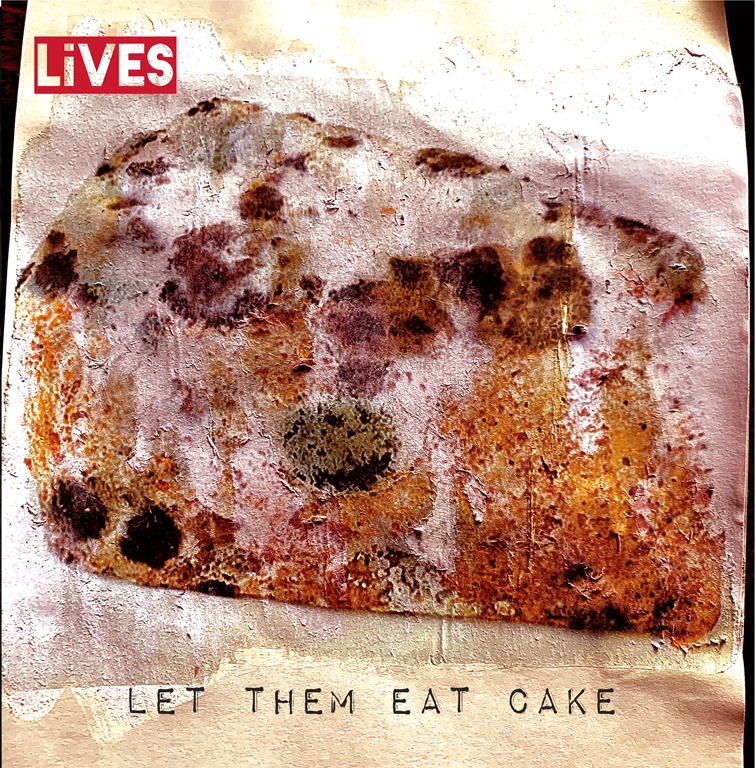
As the album’s title suggests, this is a political record. Then again, the single ‘Cancelled’, released a few months back as a lead-up, certainly gave enough of a hint that this was going to be a rage against contemporary society, and the themes of the social media ‘shitshow shower’ and the culture wars and flame-throwing, division and disinformation that has taken over so much of the Internet – a space where we seems spend more time living virtual lives than we do on real life – dominate the lyrics.

The opening lines of ‘What a Way’ neatly encapsulate the band’s angle:

He’s a little nazi with a pop-gun,

Spilling all of his hate onto the forum,

Overcompensating for the fact that,

It’s lonely life

And so it is that these seven sharp cuts (plus a radio edit of ‘Cancelled’) really pick apart just what it is about modern life that s so rubbish. That’s perhaps rather flippant, not to mention reductive of what Let Them Eat Cake is about. It explores numerous aspects of how the world on-line has eroded so much in culture, and how it’s riven with contradictions. On the one hand, the interconnected world of the ‘global village’ Marshall McLuhan first wrote of in Understanding the Media in 1964 has truly come to pass. The world is switched on and connected 24/7, and it’s possible to conduct conversations and business with the other side of the world in real time. News is instantaneous and everywhere. All music – well, hypothetically, and moreover perhaps depending on your tastes – and media are there, instantly, and for free. But on the other hand, as much as there’s a sense of sameness and conformity – same music, same news, same memes, same opinions – and an ever-blander homogeneity, the inhabitants of the global village hate one another’s guts and seem to even derive pleasure from rage, throwing bricks through their neighbours’ windows, keying their cars and burning their houses.

Everyone is shouting louder than the next, ‘look at me, look at me!’ while posting the same generic shit, the same Instagrammable coffee and cake (let them eat it, sure, diabetes is a small price to pay for millions of followers and true ‘influencer’ status, right?), and what’s more there’s simply too much of it. Anxiety, depression, and therapy have become normalised topics as people spill their guts into the world (and the subject of ‘Come Together’), and while yes, it’s good that they’re no longer taboo or shameful, what’s not good is that we’re in this position where these are everyday realities for so many.

Let Them Eat Cake is a snapshot and a critique of all of this.

‘Cancelled’ certainly gets the album off to a fiery, riff-driven start, but it soon becomes clear that LiVES have some considerable capacity for stylistic range. Of course they do: to rail about cultural sameness while doing the same thing on every song would be hypocritical.

The title track has more of a 90s indie vibe, and even goes a bit Manics, a bit Mansun, and a little bit glammy, and ‘Come Together’ has more of an indie vibe, too, but also a theatricality which calls to mind The Sensational Alex Harvey Band, but then ‘What a Way’ cranks up the guitars and hits like a punch in the guts. ‘Already Dead’ and ‘Is This What You Want?’ bring a big stoner-meets Led Zep rock swagger, which contrasts again with the country twang of ‘Hope and Freedom’.

The span of styles makes for an album that never falls to formula or gets predictable, but the lyrical focus ensure it retains that vital cohesion. What really comes across through every song is that this is an album from the heart, born of frustration, disappointment, despondency, irritation, antagonism, that whole gamut of emotions stirred by that feeling of inflammation that everything is so very, very wrong. For all that frustration, disappointment, despondency, irritation, antagonism, Let Them Eat Cake is an album packed with passion, not to mention some corking tunes.

AA

AA

LPJ1200S

XTra Mile Recordings – 18th October 2024

Christopher Nosnibor

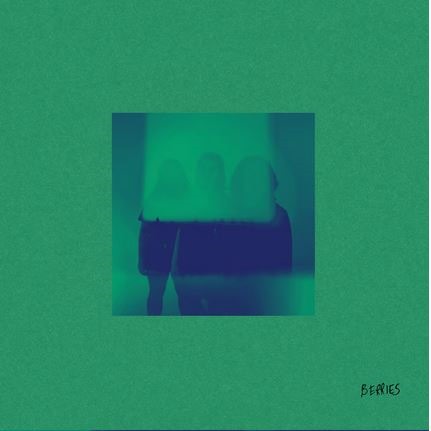
Berries have been on our radar since 2017, and now, just over two years on from How We Function, they return with they eponymous second long-player. They’ve done a good job of building the anticipation with a run of well-spaced singles, starting back in the summer with ‘Watching Wax’, before revealing an altogether previously unseen side with the acoustic-led ‘Balance’. So which Berries will we see come to the fore here?

It’s more than a pleasure to report that it’s the very best Berries which manifest across all of the album’s ten cuts, all of them sharp. Ten tracks is in itself significant: it’s the classic album format of old, and all killer, no filler, and no faffing with interludes or lengthy meanderings. The whole album’s run-time is around half an hour: it’s tight, it’s succinct, the songwriting is punchy and disciplined, and has the feel of an album as was in the late 70s and through the 80s, planned and sequenced for optimal effect. But they also manage to expand their template within within these confines: there’s some mathy tension in the lead guitar work, and there are flourishes which are noodly without being wanky, and they serve more as detail rather than dominating the sound.

‘Barricade’ kicks in on all cylinders, uptempo, energetic, post-punk with punk energy amped to the max. By turns reminiscent of early Interpol and Skeletal Family, with some nagging guitar work scribbling its way across a thumping rhythm section, it’s a corking way to open an album by any standard. ‘Blurry Shapes’ is a crafted amalgamation of mathy loops in the verses and crunchy chords in the choruses, all delivered with an indie-pop vibe which is particularly keen in the melodic – but not twee or flimsy vocals. and Berries just packs in back-to-back bangers.

‘Watching Wax’ lands as the third track, a magnificent coming together of solid riffing, chunky bass, and sassy vocals. Balance’ provides a change of pace and style immediately after, and it’s well-placed, wrapping up side one.

‘Jagged Routine’ starts off the second half with a choppy cut that brings in elements of poppy post-punk, math-rock and circa 1987 goth alternative rock. I’m reminded rather of The Kut, but then equally The Mission in the final bars, while ‘This Space’ steps things up with a dash of Gang of Four and a mid-00s technical post-rock flavour compressed into a driving rock tune that clocks in at just shy of three and a half minutes.

On Berries, Berries sound perhaps a little less frantic and frenzied, and maybe less confrontational and driven by antagonism than on their debut, but as a trade-off, they sound more focused and more evolved. The introspective introversion of the form creates an intensity that suits them well.

The guitar riff in the verse of ‘Narrow Tracks’ is so, so close to a lift of ‘When You Don’t See Me’ by The Sisters of Mercy that it makes me feel nostalgic for 1990, but finally gives me cause to rejoice in 2024, as they’ve incorporated it into a layered tune that has many elements and just works. Having waded through endless hours of bands doing contemporary ‘goth’ by making some synth-led approximation of a complete mishearing of anything released between 1979 and 1984 by the bands that would be branded goth by the press, it’s a source of joy to hear an album that captures the essence of that period without a single mention of the G-word.

Berries is a fantastic album. It gets to the point. It has power it has energy in spades – and attitude. They also bring in so many elements, but not in a way that lacks focus. In fact, they sound more focused than I would have ever imagined. This album deserves to see Berries go huge, and it’s got to be one of my albums of the year simply by virtue of being absolutely flawless and 100% brilliant.

AA

AA

-IoeYM00

AA

Berries

6th September 2024

Christopher Nosnibor

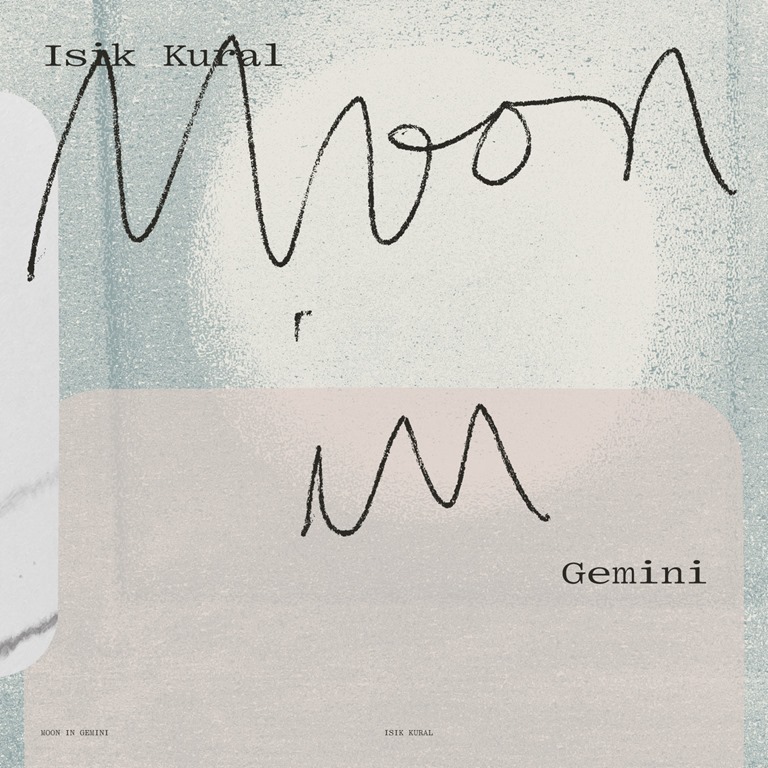
Isik Kural’s Moon in Gemini is described as ‘a luminous scrapbook of slow-flowing narratives couched in intuitive and symbolic storytelling. Awash in woodwinds and strings, lullaby-inflected lyrics and tender imagery, Isik’s voice moves closer to the listener’s ear on his third album, intoning states of being in which the wonder filled sound of everyday life can be heard and felt. Moon in Gemini is a space for wide daydreaming, where the invisible steps forward and dauntless ghosts play under a hazy lunar light.’

This is a charming proposition, and the actuality proves to be even more so. Moon in Gemini contains fourteen compositions, the majority of which are fleeting, ephemeral pieces of but perhaps a couple of minutes in length: a handful extend beyond three minutes, but none beyond four.

The overall effect, then, is soothing, but the fragmentary nature of the assemblage means the flow is broken, and often the smooth, calming flow is disrupted as compositions end – I won’t say prematurely, because who am I to say when a composition should end, how long it should be? These things are purely artistic choices, and my feeling that pieces here sometimes feel incomplete or abridged is simply a that, a feeling, as much from my desire for more than any clear or objective assessment.

The first piece, ‘Body of Water’ is typical in its soothing, tranquil ways. Delicately picked guitar and mellow woodwind drift and trill with a delicate drip-drop sound, and it’s beautifully relaxing, the sonic recreation of the experience of sitting by a still lake in warm – but not hot – sun while a gentle breeze ripples the surface. I close my eyes and find myself on the edge of a tarn in the Lake District: a happy place, a place of tranquillity, of escape. It’s a place I could spend long hours, and in my heart I believe those hours could extend for days. But it fades out, far too soon – after a mere minute and fifty seconds, the moment’s passed. But this is in many ways just how it is to be sitting by a lake, and sensing a moment of true perfection: just as you begin to bask in it, the wind picks up and a cloud drifts over the sun, the temperature drops and you realise that that perfect moment was simply that – a moment. Moments pass before you can grasp a hold on them. They exist in a momentary flicker, the blink of an eye, and so often, they’ve passed before you even realise they’ve arrived.

AA

AA

‘Prelude’ is a dainty, sugary, music box tune which exists out of time but is, at the same time, steeped in an ambiguous nostalgia. Precisely what it’s a prelude to, I’m not sure, but I’m also not sure it matters, while ‘Almost a Ghost’ is haunting, gentle, introspective and flitting with fluttering sounds of nature alongside its rippling pianos and low-key, almost spoken-word vocals. Each piece is shimmery beguiling, the supple and subtle layers rippling over one another while on the pieces where there are vocals – and much of Moon in Gemini is instrumental – it’s true that Isik’s voice is quite special, and an instrument in its own right, and also more about the enunciation and, often breathy, bedroomy, about its contribution to the overall atmosphere. ‘Mistaken for a Snow Silent’ is beautiful, and as much on account off its sparse simplicity than anything else.

We hear ambience and chatter around and even through the songs, and these incidentals work well, in context.

‘Gül Sokağı’ is low and slow and possesses a quality that difficult to define The soft woodwind on ‘Birds of the Evening’ is light and airy and mellifluous. The experience is uplifting, and as a whole, Moon in Gemini is sedate and arresting.

To bemoan that an album doesn’t provide everything that I would like is not a legitimate criticism: it’s not a failing on the artist’s part, and I cannot seriously claim a loss of expectation: with Moon in Gemini, provides everything promised, and more. This is a truly beautiful album, and one which has a rare warmth and softness.

AA

AA

a1909099100_10

Cruel Nature Records – 24th October 2024

Pound Land have become regulars here at Aural Aggravation, essentially because I absolutely love what they do and feel that it’s fitting use of the platform I have to broadcast the fact. They’re clearly not everyone’s proverbial cup of tea, with their overtly dour, dingy, misanthropic racket which provides the sparse backdrop to sociopolitical critique being presented with a grainy, lo-fi production which is absolutely guaranteed to ensure that they’re not going to be all over the radio, or even usurping the popularity of Sleaford Mods anytime soon, or ever. ‘Dour’ and ‘dingy’ hardly sound like strong selling points, but I’m clearly not alone in my appreciation of their work, and it’s been perversely satisfying witnessing the growth of both their reputation and audience.

But just to be absolutely one hundred per cent, cast-iron solid in guaranteeing this, their latest album is something of a twofer, a cassette release (of course) with a live set occupying the first side, and a single longform track in the shape of the half-hour long ‘Worried’ filling the other. It’s effectively Pound Land’s Ummagumma.

And while most bands who put out a live release pick recordings which are the most representative, while at the same time capturing them at their best – which is why a lot of live albums tend to be assembled from recordings made over the course of a whole tour, Pound Land are giving us a document of a one-off, as they write: ‘[It’s] a recording of the band playing live at New River Studios in North London in the summer of 2023. This was in the midst of a heatwave, without Nick on guitar, and joined by the good boss of South London DIY label Rat Run Records, Rob Pratt (who organised the gig and opened proceedings that night as his electronic alter-ego Entschuldigung). 35 minutes of dub-inflected psychedelic synth-soaked Pound Land has been captured, improvising through the heat and the alcohol, and laden with BBC Radiophonic-style special effects. Recorded by Tom Blackburn at the desk, then mixed by Tom and finally mixed and mastered by Nick Harris. This is Pound Land live as they’ve never sounded before (and possibly won’t again).’

Yes, it’s been mixed and mastered, but it’s essentially a warts-and-all document of a single moment in time.

Minus the guitar but with the addition of jittery sax, the bass-led rendition of ‘Violence’ reminds me rather of the Foetus track ‘Honey I’m Home’, which foetured on the live album Male and semi-official bootleg, with its simple, trudging chord sequence, especially with the drawling, thick-throated snarling vocal. Brutally atonal, it’s a hell of a set opener, and sounds like they’re on stage trying to see how many people they can drive out of the room in the first five minutes.

Single cut ‘Liar’ is a raw and raucous blast, motoric beats and monotonous bass groove laced with frenzied woodwind and a blitzkrieg of laser synths provide the sonic backdrop to Adam Stone’s ragged hollering, before they dig even deeper with ‘Flies’, which lands somewhere between The Fall and the Jesus Lizard. The eight-and-a-half-minute ‘Brain Driver’ is something of a standout: fully two minutes longer than the studio version, it’s a dirty, bassy, jazzy, reverby spaced-out journey through darkness.

And then there’s the new studio track on the reverse, which they describe as ‘a 30-minute-plus sonic odyssey’, expanding that ‘This mammoth audio-journey was the result of many months of hard work by Nick Harris, joined by Adam Stone on voice and guest-star Adam Pettis (ex-The Ofays/Fuck Fuck) from America, on guitar, electronics and vocals. Arguably some of the best production and sound work Nick / Adam have committed to tape.’

No argument there: it actually sounds produced (which is no criticism of their other work), and is an expansive and explicitly experimental piece with infinite layers of echo and delay giving this tense composition a dubby vibe. In the dark blend are elements of trip hop and late nineties / turn of the millennium apocalyptic hip-hop and nihilist No-Wave spoken word, plus tribal beats and a whole lot more, including a dash of Scott Walker and Suicide. The sound is cleaner – in that it’s not buzzing and fuzzed-out or breaking your guts with booming bass – but still murky, and treble tones and sibilant syllables in the vocals cut through it. It’s clearly a departure from their existing body of work but whether it marks the start of a new direction, or is, like the live set it’s being released with, a one-off, remains to be seen. Whatever happens next, this is a very different kind of offering from Pound Land, and one which proves they’re not moored to a fixed idea of what they are.

AA

cover

Human Worth – 18th October 2024

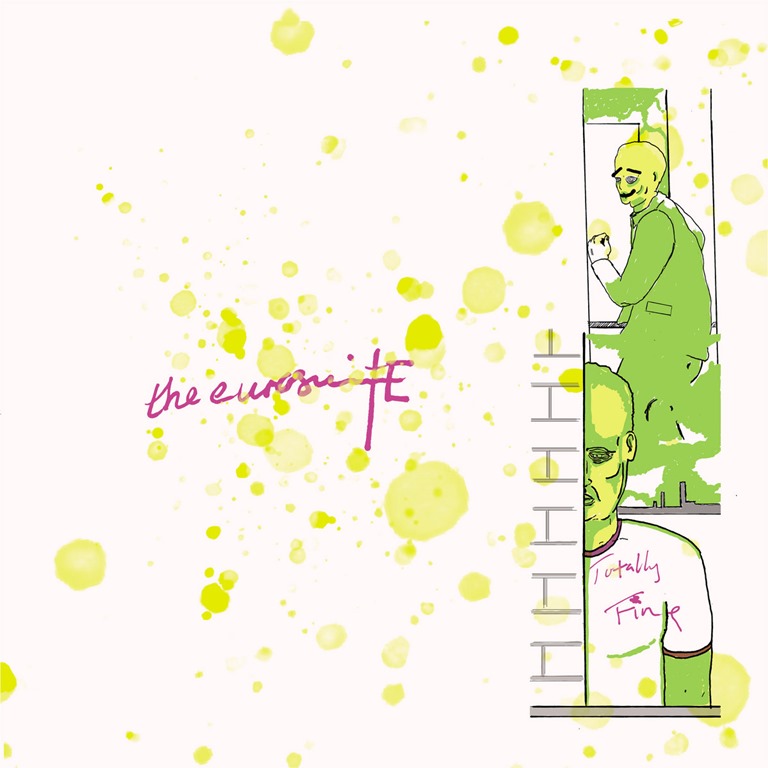
Sorry, not sorry, as they say. In the spring of 2023, off-the-wall supergeroup collaboration featuring members of USA Nails, Nitkowski and Screen Wives, The Eurosuite, released their third album, through Human Worth. They were so sorry, they’ve done another. Only this time, they promise, it’s different.

As the accompanying notes explain, ‘Produced by Wayne Adams (Petbrick / Big Lad) at Bear Bites Horse Studios, the band have taken a different approach from their maximalist output on their second LP Sorry – do less. Where the songs on Sorry were built from a variety of jams, band member ideas, traded demos and looped phone recordings, the 10 songs within Totally Fine were all built and mercilessly edited from a full band improvisations, with individualism, indulgence and egos set aside to better serve the songs… That spirit of minimalism is threaded through each track, which veer from sinewy post punk (‘Crustacean Blue’), throbbing death disco (‘Antimatter’) and something between driving krautrock, surf rock freakouts and an evil version of the B52s (‘12 Diphthongs’, ‘Houseplants’)’.

Sorry was a cracking album: that’s essentially a fact. It still is. But it was seeing them live that they really clicked for me: something about that manic energy in the room, the way each member of the band bounced off one another, if felt as if there was something happening in real-time that went beyond the recorded work.

Here, all of the same elements are present: fizzling synths, jerky guitars, sudden thundering bass runs, changes of tempo, blasts of noise, beats that flit from disco to industrial pounding, and vocals which swing from half-spoken to shouty – and that’s only in the first couple of songs, with a combined running time of less than five minutes. But there’s a newfound focus and intensity, and well as, perhaps a greater separation of instruments which lays the components elements more evident.

There seems to be an emerging subgenre of weird, quirky, jerky noisy shit that’s a bit mathy but with some fried electronics and simply prone to exploding in any direction without a moment’s notice, and it’s noteworthy that both The Eurosuite and Thank, prime exponents of this wide-eyed demented frenzied kind of racket have both found homes at Human Worth. The label’s always had its ear to the ground and its tendrils out for noisy stuff with something different about it, and this feels like an emergent form.

Somewhere in the recesses of my overcrowded memory, there’s a vague recollection of an interview with a band sometime in maybe the late eighties – it may have been a grebo act like Gaye Biker on Acid on how the future of music might be weird, like ‘people playing bits of toast or whatever’ (the quote is from memory, since I’m buggered if I can find it on the Internet and don’t have a month spare to look through books and press cuttings for the sake of fact-checking a detour in a review for an album due out next week). Anyone who’s seen Territorial Gobbing will likely agree we’ve reached that point. But with the likes of Thank and The Eurosuite, they may not be quite that far out, but they’re pretty damn far out in terms of the way their compositions leap and lurch all over, and are simply so far removed from more conventional song structures with verses, choruses, mid-sections, even bridges and pre-choruses or whatever that song forms are being pushed to new limits. And this is exciting and brain-bending in equal portions.

Perhaps this is the culmination of everything that’s preceded it. Perhaps it’s a reaction to the crazy, overstimulated world we live in. Perhaps it’s the soundtrack to emerging from the other side of postmodernism. After all, postmodernism was deemed a ‘schizophrenic’ culture by Deleuze and Guattari in their seminal work, Anti-Oedipus¸ suggesting that schizophrenia is the only sane response to a deranged world. And perhaps this is the proof.

Totally Fine as a title intimates a breeziness, but the kind of airy offhand response which often masks a darker truth. Not that Totally Fine is a showcase of frenetic flailing and pedalling in all directions, and as such has a groundlessness to it. It’s the sound of searching, of grappling with reality, and the very concept of reality.

Some of the songs are barely a minute long: ‘Crustacean Blue’ brings a stuttering blast of a riff that lasts for a mere fifty-five seconds, electronic squeals adding that all-essential eye-popping dimension, and only ‘Reflection Monster’ runs past three minutes. ‘Bellyache’ is one of the most ‘conventional’ songs on the album, and comes on a bit like Suicide and early Cabaret Voltaire with a hint of Throbbing Gristle.

Somehow, by stripping things back, they’ve cranked up the claustrophobia and amped the intensity. There are some dark, low, grinding grooves and some manic hollering vocals on display here, and they do define the album – but that defines it more is the audacious racket, the wild anti-structures, the sheer imagination.

Clawing my way through ‘Bagman’ ‘Earworm’ I can feel my blood pressure increasing as the manic noise amps up… and up. But I’m totally fine. Really, I am. Totally Fine.

AA

a0485217786_10

Trace Recordings – 11th October 2024

Christopher Nosnibor

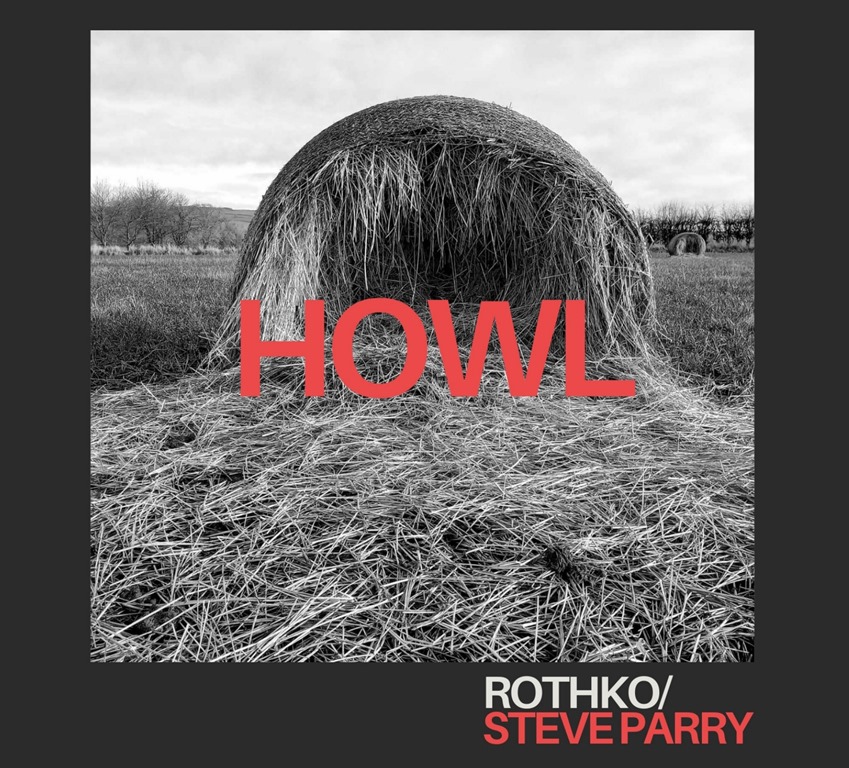
One might say that this collaboration has been a long time in coming: the pair have been friends for some twenty years, and have made contributions to one another’s recordings over that time. There’s no question that it was worth the wait. Their process and the way in which they each contributed is integral to the finished work, and here, not only to save typing, but to ensure nothing is lost in translation or paraphrase, I shall quote from the accompanying notes:

‘Emanating from the sounds of a church organ, with many short pieces recorded by Steve Parry in an ancient secluded church, and then embellished by Beazley, with his resonant bass tones, electric guitar and electronics, HOWL captures the senses of ambience, harmony, discordance and noise, with recordings of the churches space, of its emptiness, interspersed with the music.

‘The two, long, resulting pieces, create an almost ritualistic event, of something taking place that is mysterious, uplifting, and, in parts, unsettling.

‘The album reflects an emptiness, the echoes from ancient walls, a deep sense of place—and the refractions between these two artists. HOWL veers between moments of meditative beauty and unsettling discord, creating a soundworld that feels ritualistic, mysterious, and transformative.’

This is very much an accurate summary and fair description of the album, consisting as it does of two compositions each with a running time of around twenty minutes, but it’s more of a challenge to convey in fullness the resonant effects of this vaporous sonic drift. The first, ‘In the Season of Darkness’ is formed around elongated drones, but their organ origins isn’t immediately obvious in the ear. One associates the instrument with bold, piping swells which sing to the heavens, but here, it’s more subdued, almost a low, rumbling wheeze which provides an eddying undercurrent. Acoustic guitar and slow, meandering bass are far more dominant, and it’s very soon clear that this is by no means an ambient work, or a work without structure or form. The guitar and bass play distinct notes and motifs, often alternating with one another, but sometimes playing in co-ordination, and others still across one another. Treble strains like taut whines of restrained feedback filter through, these higher-end frequencies forming a counter to the resonating bass and the mid-range organ drone which slowly begins to emerge and take form a few minutes in.

The dissonant incidentals rupture the surface like lightning through a thick, rolling cloud cover. The mood is sombre, ominous. The fact it’s pitch black outside and has been since around 6:30, I’m feeling autumnal and writing by candlelight probably means I’m feeling it more, but this is music with a subliminal, subconscious pull. There’s a segment around the mid-point where there’s a pause, and there’s nothing but clatters and clanks, like tin cans rattling in the wind, before the drone returns, darker and denser than before, and with a sepulchral reverb, and it’s something which taps into something primitive and earth-born within. I can only really articulate it by way of a brief recollection of a time I visited an obscure stone circle in Scotland. Most of the stones were gone, but the shape of the circle was marked out by a ring of nettles. It was probably around twelve metres in diameter, and the few remaining stones were no more than three feet high. It was a little way off a minor road, in an unkept grazing field and as unremarkable as it was forgotten and neglected, and I had only paused by it because I had spotted it on the map. But, arriving at the place, something happened: the air temperature dropped a couple of degrees, the wind sped up and clouds obscured the sun; but more than this, there was an atmosphere which brought goosebumps and a shiver down my spine. The place had an atmosphere, and I almost felt as if I was for a brief moment splitting across millennia. The sensation was but fleeting, but it was palpable. The experience of hearing this piece is akin to that, resonating on a level beyond the sphere of commonplace experience.

Counterpart composition, ‘In the Season of Light’ is, again, constructed around a long, long, reedy drone, this time with piano and delicate scrapes and wind-like rustles and whooshes adding the additional layers and textures. It doesn’t feel our sound especially light or uplifting: dark sonorous tones and groaning creaks occupy the corners, before, again around the mid-point, a gentle guitar part, reminiscent of later Earth tunes, arrives, and there are some delicate strings, too. Finally, light begins to break through.

HOWL clearly has no correspondence with Allen Ginsberg’s seminal poem, but does very much tap into something primal and primitive, the way we feel the effects of the seasons, the sun, the moon, possessing what one might perhaps describe as a ‘spiritual intuition’, reaching elemental aspects of the human DNA. Understated, but powerful and moving, it’s a subtly intense work.

AA

6 page ECOpack with measurements.pdf

October 2024

Christopher Nosnibor

Having just effused over the benefits of Bandcamp Friday, as well as wrestled with the overwhelming volume of notifications and review submissions, this one lands as the kind f curveball only the likes of Foldhead are likely to deliver, in that this is by no means a new release. Beserk Pinball Machine / Quasar Delirium was in fact first released back in 2021, as something of an archival recording: ‘Recorded in 2015 for a tape label that ceased to exist prior to the intended release date. The 25 copies that had been made were distributed at the Experimental Yorkshire festival which took place at Hebden Bridge Trades Club on 21 July 2018’ And now the Bandcamp page has been refreshed, with ‘two new mixes + a new piece.’

I’m not sure if ‘beserk’ is an intentional variant of ‘berserk’, but I’m going to assume it is. The etymology of the word ‘berserk’ is quite fascinating. The word itself means ‘out of control with anger or excitement; wild or frenzied’, but its origin lies in the reverence the Saxons held for bears. ‘Berserk’ translates as ‘bear shirt’, and berserkers were the warriors placed at the front of a battle formation: their job was to chew their shields, gnash their jaws and foam at the mouth like frenzied bears in order to share the shit out of their opponents before the charge.

This release is every bit as scary and unpredictable as a frenzied bear, and certainly inflicts a bear-like mauling on the senses, being particularly brutal on the ears, and on the lower intestines for that matter.

The opener and lead track, ‘Beserk Pinball Machine’ is an absolute noise monster. There are – sort of – vocals in the mix, but they’re distorted and largely buried beneath a deluge of mangled noise, churning distortion and feedback all mixed together to forge the nastiest mess of trebly sonic ruination. It’s just shy of fifteen minutes shattering, explosive, convulsive digital meltdown which makes Merzbow sound mellow, and Kenji Siratoi supremely calm in comparison. Paul Whatshisface, having previously been a member of Smell & Quim and Swing Jugend – as well as occasional noise duo …(something) ruined has had a long career operating in harsh noise circles, and this is both noisy and almost unspeakably harsh. The noise frenzy ends abruptly, but there’s a spell of low-level hum at the end which offers some respite, however much the not-silence nags.

‘Quasar Delirium’ is appropriately titled: another quarter of an hour of brain-melting, tinnitus-inducing noise squall. Only this has more fizz, more squeal, more laser bleeps, more treble, and more feedback, more melting circuitry, all against a backdrop of churning cement-mixer grind, washing machine spin-cycle metallic reverberations. The experience is how I imagine standing next to a massive propeller engine without ear defenders, while a Star Wars type laser-gun battle takes place all around – while buildings explode and collapse all around, and there is nowhere to hide.

The concept of remixes in this context is rather amusing, and ‘Machine Pinball Bezerk’ and ‘Delirium Pulsar’ are more about fucking shit up even harder than remixing in the more conventional sense. ‘Machine Pinball Bezerk’ sounds like an atomic bomb: it’s noise on the scale of the scene in Threads where the buildings are decimated by a wall of white-hot flame. It’s a scene that seems to last an eternity despite being maybe five minutes at most. The fifteen minutes of ‘Machine Pinball Bezerk’ feels like a lifetime and you can almost feel the tinnitus coming on after just five minutes, while your brain melts and trickles out of your ear.

‘Delerium Machines’ delivers more of the same, the most pulverising, excruciating blasting racket. It hurts, and the overall experience is disorientating: an hour and a quarter of the most abrasive, churning noise imaginable. It’s not Harsh Noise Wall, but there’s not much variety, either, meaning that this release is a relentless assault that will likely leave you wilted, drained by the end – and that’s assuming you can still hear.

AA

AA

a1518553209_10