Archive for the ‘Albums’ Category

Sacred Bones Records – 31st August 2018

Christopher Nosnibor

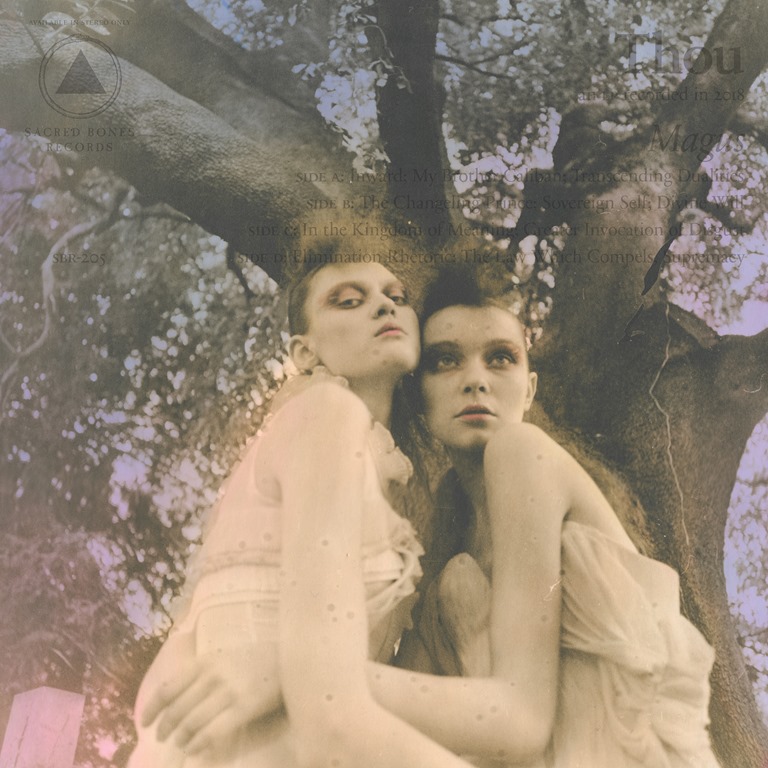
Magus is Thou’s first full-length since 2014’s Heathen. It’s perhaps fair to say that the three EPs which preceded it – which they forewarned would be ‘a complete sonic departure from Magus and from each other’ – which effectively constituted albums in their own right – did nothing to prepare us for this.

But what exactly is this? As the album’s press blurb acknowledges, they’re ‘often lumped in with New Orleans sludge bands like Eyehategod and Crowbar, [but share] shares a more spiritual kinship with ‘90s proto-grunge bands like Nirvana, Alice in Chains, and Soundgarden’, while ‘the band’s aesthetic and political impulses reflect the obscure ’90s DIY hardcore punk found on labels like Ebullition, Vermiform, and Crimethinc’. All this makes them hard to place.

The album’s opener, ‘Inward’, provides just over ten full minutes of snarling fury that carries enough weight to crush weaker souls who may venture forth expecting any of the soft musicality of the Inconsolable EP (which revealed Thou to be capable of extreme gentility, and, indeed, extreme beauty).

Things turn very black and very sludgy and very heavy on ‘Transcending Dualities’; and while it’s a snarling, low-tuned mess of slow-creeping sludge, there are stray notes that break free to squeal to break the trudging oppression. Bryan Funck’s twisted vocals draw every ounce of excruciation into the mix.

‘The Changeling Prince’ brings grace and grandeur to proceedings, and the hushed intro and expansive sound of ‘Sovereign Self’ (the second of three songs to cross the ten-minute mark) calls to mind Amenra, but his is a whole other level of gnarly, demonic savagery, and the overall sonic density is suffocating.

But Magus does find Thou continue to expand and explore in all directions, and there are three shorter tracks that serve as interludes between the towering monoliths which are the songs themselves: the cacophonous racket of ‘My Brother Caliban’ contrasts sharply with ‘Divine Will’, with its ethereal female vocals and pounding tribal drums. Elsewhere, the sprawling epic that is ‘In the Kingdom of Meaning’ introduces a psychedelic twist to the doomy trudge. And there are passages of extreme delicacy, rich in evocative atmosphere, which draw the lister into quiet clearings with dappled light where an air of calm radiates before the shadows loom, the clouds gather and the next tempestuous storm breaks. Such tension-building passages and contrasts of mood and volume create a compelling dynamic and makes Magus a mighty album which requires attention and exploration of the detail.

AA
954503

Constellations – 24th August 2018

Christopher Nosnibor

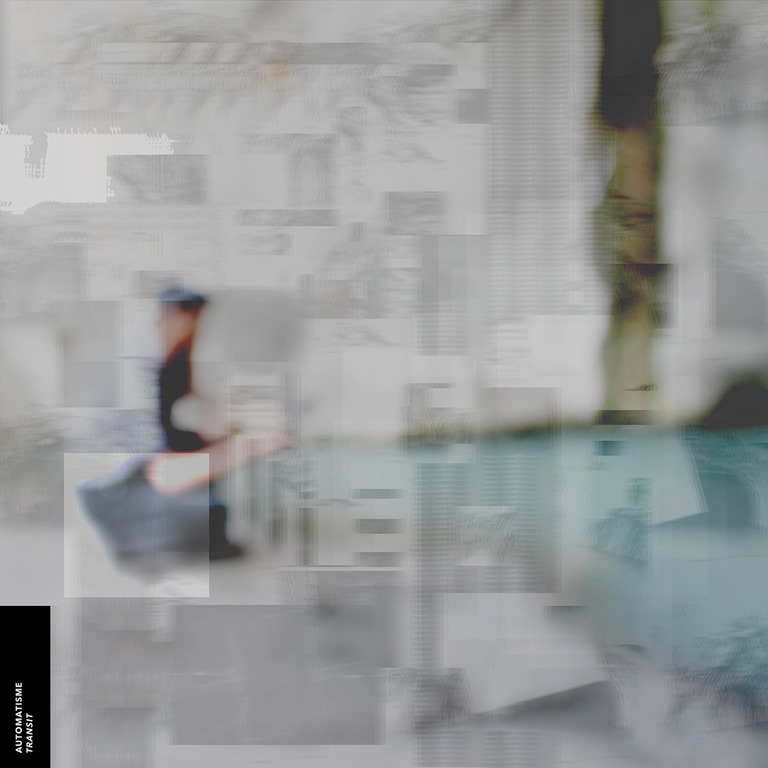
Automatisme is the moniker of reclusive glitch artist and electronic music producer William Jourdain. Transit is the follow-up to 2016 debut Momentform Accumulations, and has been formulated using modular synth racks and a vast library of field recordings.

As the title suggests, Transit is an album of movement. In transit are not only the creators, but the listener, who finds themselves being taken – often at pace – to unexpected destinations. But there is no stopping – each port of call is no more than a glance and a wave out of the window, perhaps a quick photo, before you’re on the move again.

The first suite – ‘Bureau’, a work in four movements, combines ambience and rhythm to often disorientating effect, and explores brooding expanses of sound and juxtaposes them with often jolting beats. ‘Bureau 0’ rapidly shifts from softly swirling cloudlike ambience to snarling, grating overloading noise – and back again. Blast of distorted beats and speaker-crackling overdrive create some disturbing kind of Dalek disco. ‘Bureau 1’ casts shades of gloopy glitchtronica which crackles and hisses, before bleeding into the more overtly groove-orientated ‘Bureau 2’. Groove is all relative, of course, and there are natural non-beat-orientated rhythms, too: shuddering oscillations swell like thunder on ‘Bureau 3’.

‘Registrariat’ stands alone between the ‘Bureau’ and ‘Bateau’ suites, and forges a more overtly dance beat. Only, the tempos shift erratically and sampled voices echo in the swirling sonic mists, and it gets too fast and before long, you feel your heart race increasing and instead of wanting to get down, you’re on the edge of panic.

The two-part ‘Bateau’ builds tonal intensity and volume, culminating in a dense eddying swell of noise that fills the cranium and creates an all-encompassing throb.

And it’s only at the final destination – a roar that abruptly leaves silence – that the album’s overall route becomes clear, a deleterious course from A to B via Z, Q and an unexpected assortment of curious places. You cast your eyes back over the map but it by no means conveys the experience of the territory. And after a pause, a moment of quiet reflection, you can’t quite recall the sequence of events that brought you here. You turn, and start to retrace your steps…

AA

cover_1528731707797039

Nonclassical – cnclss024

Christopher Nosnibor

Langham Research Centre originated through late-night experimental gatherings at the BBC studios, and have evolved to produce long-form radiophonic works, of which 2014’s Muffled Ciphers was inspiredby JG Ballard’s seminal novel -which challenged the very notion of the form – The Atrocity Exhibition. Created with an accumulation of rare and obsolete instruments and devices, and inspired by early electronic composers spanning John Cage, Alvin Lucier, and Delia Derbyshire, Tape Works Vol. 1 is pitched as ‘a collection of modern musique concrète.’

The first thing I noticed was that my copy is number 11 of an edition of 30 promos. This knowledge spurs me to get my finger out and provide some coverage. The second thing I notice, on scanning the track listing, before reading the biography containing the above, is that it features tracks with the titles ‘The Voices of Time’ and ‘The Terminal Beach’ – the former of which is a collection of short stories by Ballard, and the latter of which is the title of one of the stories in that collection, which first appeared in 1963 under the title The Four-Dimensional Nightmare.

On Tape Works Vol. 1, the Langham Research Centre (and doesn’t that sound so Ballardian in itself… I’ve spent hours scanning my collection to see if there’s a character named Langham in Ballard’s oeuvre and have drawn blanks before ultimately deciding it’s better to actually get the work done than disappear down another rabbit-hole of research) explore all the dimensions. And while at times it confirms to the template of so much experimental analogue work, at times it ventures in the truly weird.

‘LOL, Pt 1’ mixes monkey chatters and R2D2 bleeps with eerie abstractions, bibbling bloops, fractured vocal snippets and small samples of laughter enter the mix alongside the kitchen sink to from an uncomfortable, disorientating sound collage.

There’s a lot of stopping and starting, whistling and droning, woe and flutter and infinite disruption. This is the sound of dislocation, a soundtrack designed to induce maximum disorientation.

Bleeps and squiggles, trilling squeals rising to a high-pitched hum collide with woozy, groaning bass frequencies. Notes bend as if on a stretched tape, and tape whips back and forth through heads. There are moments which recall the head-spinning cut-up and drop-in tape experiments conducted by William Burroughs, Brion Gysin, and Iain Sommerville in the late 50s and early 60s.

Birdsong. New snippets. A plane roars overhead. A conglomeration of voices. Static. Interference. A howling wind. Sparse, arrhythmic beats clatter and clang. Yes, this is life: fractured discordant, difficult. Simultaneous. Overwhelming. This is essentially how I feel about it. I cannot compute. I feel dislocated, alienated. I feel tense. Nothing new there. But Just as reading Ballard makes me feel uncomfortable in my own skin, so Langham Research Centre’s fucked-up sampling of old adverts and blending them with minimalist dark ambient twists me into a state of discomfort.

At time gentle, at others abrasive and bordering on the attacking treble whistles and white/pink noise crackle of early Whitehouse and Merzbow, Tape Works Vol. 1 is at no point accessible, easy, cuddly. But it does push the senses and question linearity and accessibility and even the boundaries of musicality. And as such, it fulfils its objective.

AA

Langham

23rd August 2018

Stuart Bateman

How much review do you need of an album called Pain by a band called Immolated Moth? Look at the artwork. You already have an idea of what to expect musically, that’s pretty certain.

According to the blurb, ‘“Carefully constructed brutal fucking chaos” is an accurate description of the sound of Immolated moth. The work of Thom Bleasdale, who had his career as an audio engineer cut short by serious illness, misdiagnosis and mistreatment that should have killed him, Immolated moth is hybrid death metal with an old school feel that is a real expression of true anger, pain, fear and trauma. It does not get any more real than this.’

It’s real, alright. Really pounding, heavy. Really relentless, pulverizing percussion dominates a sludgy mix of really dirty guitars, finished with snarling, guttural vocals. From amidst the raging, uptempo tempest emerge frequent frenzied solos.

The songs may be fast, but they’re not short: opener ‘Suffer in Peace’ is almost seven minutes long and sets the tone. Brutal, dark, menacing and unswervingly relentless, it’s a complete juggernaut of a record. It judders, shudders, throbs and grinds without any real respite.

There’s some weird ZZ Top on speed riffery in the mix on ‘Anger’, before it explodes in a furious flurry or machine-gun drums and wild lead guitar work, and somewhere, a weird sort of groove emerges.

Overall, Pain isn’t an album you listen to for variety, or to admire the subtlety and detail of the production. The emphasis on the mid ranges add to the effect of the lack of variation and builds the cumulative effect of being hammered at a hundred miles an hour without mercy. In short, Pain delivers what it promises.

AA

immolated moth pain cover smaller

Grappa Musikkforlag – 24th August 2018

Christopher Nosnibor

I used to watch a fair few horror films when I was younger, but don’t get to so much these days: my wife isn’t a fan, and, moreover, I can’t watch movies and listen to music at the same time. Spending my evenings reviewing means it’s the movies that have had to give. But when I did have the time to watch horror movies, I always preferred the films that unsettled the mind rather than overloaded the senses with in-yer-face viscera and gore. It isn’t necessarily that I like to be scared: I just like to be mentally challenged, and the imagination is a powerful thing. For the same reason, I usually prefer to invest the time in a book rather than TV show or movie. Greater effort tends to yield greater reward, and what’s more, the mind can conjure scenes far beyond the scope of any film set and special effects.

The mind’s eye is a terrible thing, but also a wonderful thing. Just look at your dreams: they’ll likely present vistas beyond anything you’ve ever seen in any movie. And even if not, these scenes are your own, rather than something pre-presented, the product of someone else’s imagination.

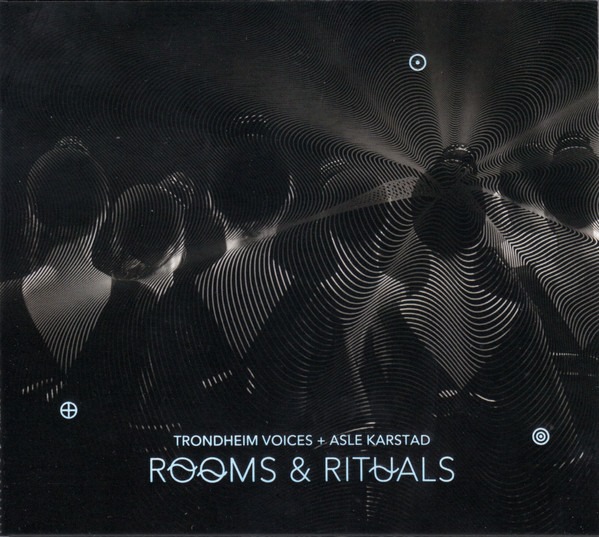
Rooms & Rituals is an album which engages the mind and encourages it to explore the darker recesses. The compositions are haunting, to the point of being outright scary. tapping into the deeper realms of the psyche, teasing out the horror of disquiet, and poking around in those dark, uncomfortable places. The voices are those of no less than ten female singers, although not necessarily at the same time. This is, indeed, a choir like no other.

‘Steamsaw’ sets the tone: dark, ominous, rumbling thunder and fear chords drifting almost subliminally… It’s minimal, and it’s a discomfort you can’t quite put our finger on. But it’s there, it’s real, and it gnaws at the pit of your stomach. ‘Pulser’ is eerie. Voices, disembodied, and as if rising from the grave, amidst unintelligible guttural utterances from the underworld, shrieks, and industrial pulsations and the occasional, sporadic clash of grating undifferentiated noise conglomerate to forge something stomach-churningly tense.

‘Ritual #3’ is a series of bleeps and tweets over a low-end rumble, and is reminiscent of some early Whitehouse, minus the trebly shouting. ‘Rise; is a voice lost in a gale, the sense of dislocation, distance and isolation rendered palpable in the drift. ‘Hymn’ pitches vocal melody that’s evocative, haunting, almost a Celtic folk piece, against a gnawing hovering synth hum, and elsewhere, ‘Gleam’ goes gloriously minimal, trilling organ pulses providing the backdrop to ethereal vocals that drift skyward.

Collectively and cumulatively, these pieces move and unsettle the listener, bringing a sense of dislocation, and disorientation. It creates a space for pondering. This is art.

AA

Trondheim Voices

Super Secret Records – 25th May 208

Given the album’s title, I wasn’t exactly expecting jaunty jubilance. But then, having heard a million albums since reviewing their 2014 debut, A Mothers Work is Never Done, I wasn’t expecting a wild hybrid of-hop hop and jazz at first.

They’ve upped the edge and intensity for this second outing, going all out with a strong start. An insistent groove, dominated by a relentless ‘vintage’ hip-hop beat, hammered out hard provides the backdrop to the jazz-rap crossover of the eight-minute ‘Attica Black’. Breaking from some nagging guitar and angry vocals, it breaks into a cacophony of discord, with brass honking like braying elephants tooting all over a collapsing barrage of percussion.

‘Black Tar Caviar’ mellows the pace and goes big on the sax and the sleaze in the opening bars. That sax… sax not in the smooth jazz sense, not in the café PA sense, but big bold, raucous, gutsy sax – before a thick, tearing bass grinds in, and… woah. Blackened hop-hop-jazz-metal? It’s like fur songs playing at once. It’s roaring and savage and intense and utterly bewildering. I don’t even know if it’ any good: it’s simply too much to take in. But if a derangement of the senses of the desires effect, then they’ve undeniably achieved it in around two and a half explosive minutes.

The weirdness abates for the start of ‘Bodiless Arms’, but only slightly, as a braying sax honks rudely to disrupt a delicately picked guitar piece that evokes pastoral tranquillity.

And yes, it’s ultimately all about the sax… it’s wild. The two short ‘untitled’ composition are bursts of noise without overt structure or form, but while the drums are all over and there’s

Ironically, ‘Jazz Oppression’ the least overtly jazz tune on the album, manifesting more as a full-throttle hip-hop metal crossover, a driving, two-and-a-half minute bass-driven barrage with throaty hollers and a sinewy lead guitar that’s swiftly buried amidst the chaos and screaming feedback. It’s swiftly followed by the equally attacking (and brief) title track: ‘Fuck all that weak shit’ is the half-buried refrain on ‘Morose’, which barrels headlong from a throbbing, insistent groove into screaming metal noise amidst a cascade of off-key xylophone.

If there’s a formula to be found, it’s a loose one based around shifting perceptions and expectations, the way in which a song can begin as one thing and end completely as another. The moments of accessibility lull and woo the listener, before s sharp left-turn and a sudden swell of noise annihilates all semblance of order and location.

But then, the crooning closer disrupts much of that: despite its extraneous additions, a swirling vortex of feedback in the background, and its awkward industrial trip-hop leanings, it’s a remarkably pleasant and smooth piece of soul-soaked hip-hop. To remark that it’s incongruous feels pretty redundant: everything about this album seems incongruous with the rest of the album. And somehow, it works.

AA

AA

Young Mothers - Morose

Cold Spring – CD 3rd August 2018 / LP 10th September 2018

Christopher Nosnibor

There are so many moments lost in the annals of history. This particular one has been languishing, unheard and unreleased for some 35 years. As collaborations go, this one is particularly special, and captures the spirit of the underground scene in the early 80s, with the original Coil lineup of John Balance and Peter Christopherson joined by John Gosling and Marc Almond. Although renowned as a pop singer, both solo and with Soft Cell, Almond has a raft of interesting collaborations to his credit: his work with JG Thirlwell as Flesh Volcano is a persona favourite, the pair amping up the sleaze and grime to deliver something quite dank and slimy. Better still, their live rendition of ‘Ghostrider’ for the BBC. And, lest we forget, undocumented save for some (painfully) ropey bootlegs, The Immaculate Consumptive, a short-lived live project (just three shows in three days in October / November ‘83) which featured Almond, Thirlwell, Nick Cave, and Lydia Lunch.

‘How to Destroy Angels’ was recorded shortly before The Immaculate Consumptive broke Brian Eno’s piano, on 24th August 1983, at the Air Gallery in London. And the recording has languished ever since, until now, emerging cleaned up and consumable. Although it’s still pretty raw, and if truth be told, sounds little better than some of the recordings of my own spoken word performances recorded on my phone. Of course, this has rather more cultural significance and wider interest.

As the liner notes observe, ‘the music bears only scant resemblance to the ‘How To Destroy Angels’ 12” that Coil would release as their debut vinyl the following year.’ And so the performance which would preface Coil’s studio debut was very much an experimental effort, a collaborative piece born of happenstance and a coalescence of creative fermentation that was bubbling around the time.

It’s Lunch’s influence that seems strongest on Almond’s contribution here: his narrative – a bitter tirade against an ex-lover – is full of bile and expletives as he spits the words quickly and abrasively against an eerie, unsettling dark ambient backdrop. Challenging is the word – but then, that’s entirely the point.

The Kos Kia remix of ‘How To Destroy Angels’, which whittles 23 minutes of audio to just over eight, feels a little redundant here. It’s not bad by any stretch: in fact, as weirdy ambient remixes go, it’s pretty good. It’s just a question of fit.

‘Baptism of Fire’ is an unreleased recording of Zos Kia and Coil at Recession Studios, London: dating from 12th October 1983, it’s contemporaneous with ‘How to Destroy Angels’. It’s the shortest piece here, and concludes the set with four and a half minutes of battering percussion, howling ululations and clanking, clattering noise that’s very Throbbing Gristle and very uncomfortable indeed.

While so many archival recordings and onus cuts on anniversary reissues – often of bands who were only of limited merit in the first place – feel like sloppy cash-ins, digging out second-rate demons , acoustic versions, remixes outtakes and live recordings of well-known studio tracks, this is a real rarity, which sheds new light on the origins of band whose effect has been significant and enduring. Moreover, it’s not only vastly illuminating in context of the nascent Coil sound, but a document which joints a number of dots in the wider context: and for that, this is an essential release.

AA

COIL ZOS KIA MARC ALMOND - Lo res album cover for web

Ici, D’ailleurs – 22nd June 2018

I find myself increasingly drawn to album covers that evoke a sense of desertion, emptiness, and which are oddly plain, bald. French avant-garde specialists Ici, D’ailleurs are particularly good in housing albums in covers of this type, with their ‘Mind Travels’ series, of which this is number eleven, being particularly noteworthy (and the tri-fold cover with a thick spine is especially nice). On the one hand, the cover art gives nothing away. On the other, it created a certain sense of emptiness and foreboding, which perfectly describes the music it houses.

Mysterium Coniunctionis – the product of a collaboration between Thighpaulsandra (who featured on many Coil albums) and Massimo Pupillo (who built his reputation as bassist with Zu, and has continued to expand it working with Eugene Robinson and as part of Triple Sun) – is dark and foreboding, and more.

The press blurb explains the album’s purpose neatly, so I shall quote: ‘Mysterium Coniunctionis makes direct reference to the eponymous and testamentary work of the psychiatrist Carl Jung, subtitled An Inquiry into the Separation and Synthesis of Psychiatric Opposites in Alchemy. It clearly reflect the duo’s intention to create particularly immersive and meaningful music from supposedly opposing materials’.

Mysterium Coniunctionis contains two tracks, each around the twenty-minute mark in terms of running time, and corresponding with one side of an album apiece. Halfway through the first, ‘Sagyria’, my wife wandered into my office and said she was worried there was something up with the motor on the dehumidifier before realising the uncomfortable humming was emanating from my speakers. Humming, throbbing, deep and resonant tones dominate both compositions.

There’s minimal movement across the album as a whole, and listening digitally the tracks bleed together to form an extended, expansive soundscape that pushes discomfort, a sense of disquiet and tension. Always tension. Some fourteen minutes into the second track, ‘Solve et Coagula’, the sounds reaches a shivering, spine-tingling level of intensity and density. It’s all in the frequencies, as the midrange and treble loom to the fore and get uncomfortable – really uncomfortable.

The ‘opposing materials’ which form the fabric of Mysterium Coniunctionis are the digital and analogue: in combination, they forge a dense and unsettling sound that eddies and whirls and tunnels into the inner regions by stealth.

AA

URUK

IHeartNoise – 16th July 2018

Christopher Nosnibor

What am I being sent now? Admittedly, I have some time for IHeartNoise with their championing and general backing – not to mention occasional releasing – of music that most would like file under ‘weird shit.’ As the label remind us, ‘rock music with oddly-tuned guitars, varied rhythms, clouds of dissonance, and bursts of energy wasn’t too hard to come by in the 1990s’.

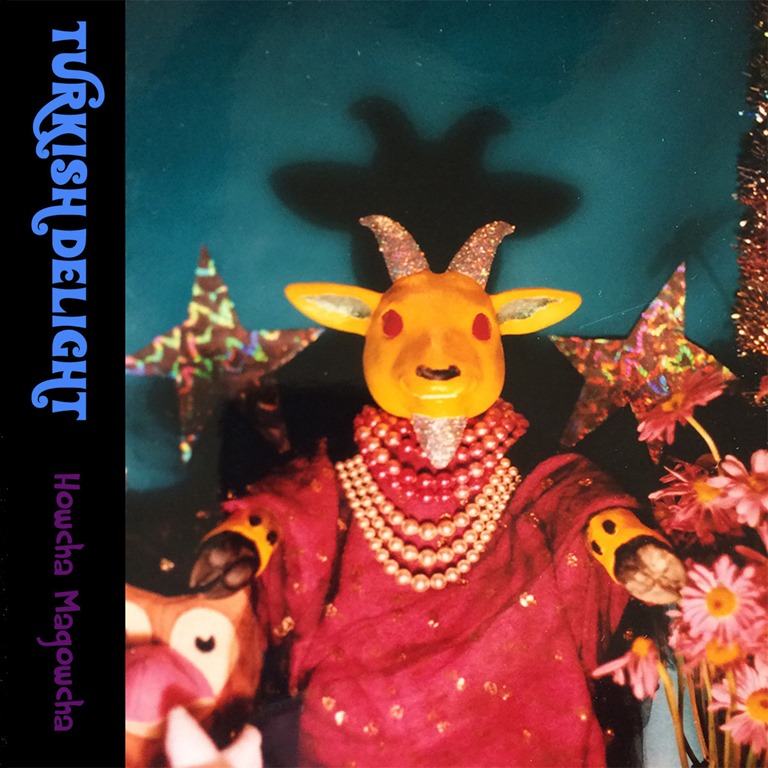
Howcha Magowcha, the second album by Turkish Delight, originally released in 1988 (and which follows IHeartNoise’s cassette rerelease of their 1996 debut last year), isn’t quite as weird as all that, but it’s hardy accessible or mainstream. In the main, it’s a high-octane, helium-filled punky thrashabout, and really rather fun. And while punk-pop has very clear connotations in contemporary terms, aspects of Howcha Magowcha belong to the time when indie bands like Voodoo Queens and Rosa Mota and Huggy Bear were cranking up the amps and revelling in the juxtaposition of ramshackle punky noise delivered with a pop sensibility. And Howcha Magowcha is bursting with tunes – all delivered with a spiky, angular energy.

The feel is very much of the era. We’re not talking grunge or nu-metal, but are deep in the domains of the weird underground that emerged and occupied the pages of Melody Maker and the NME for a while, and would often be found spun by John Peel. Reference points are likely pointless given this level of obscurity.

Anyway: let’s skip comparisons and get to the music, which is about jolting tempo changes, jarring key switches, contrast between pretty-pretty female vocals with throaty male vocals, as evidenced no more keenly than on ‘Smooth Karate’. ‘Li Cold Vas’ has the jangle of The Wedding Present and blends it with the angularity of The Fall and the obtuse oddness of early Pram, while ‘Sea Quest’ goes Slanted era Pavement with additional full-throttle US 90s noise. ‘Metronome’ creates new levels of angularity, and explores lyrical avenues of abstraction that twist the mundane and really mess with ideas of the ordinary. ‘No Sky’ slows the pace and goes all moody, before it erupts in all directions… extra points for the epic closer, appropriately entitled ‘Close’ that goes from nagging verses to explosive tornadoes of noise by way of choruses and veers all over the place over the course of seven minutes – in contrast to the three-minute blasts of the rest of the album.

There isn’t one song on here that stands out as a single: Howcha Magowcha is very much an album, and a discordant, noisy one at that. There’s no time to settle into any of the songs: mellow moments are torn in half with propulsive drumming and low-slung bass, while the guitars fire off in all directions. It’s music that keeps you on edge, engaged, exhilarated. And however big the 90s revival gets, they’ll never make ‘em quite like this again.

AA

Turkish Delight

Reject and Fade – 13th August 2018

It’s been some eighteen months since we heard from break_fold, the, post-I Concur musical vehicle of Tim Hann.

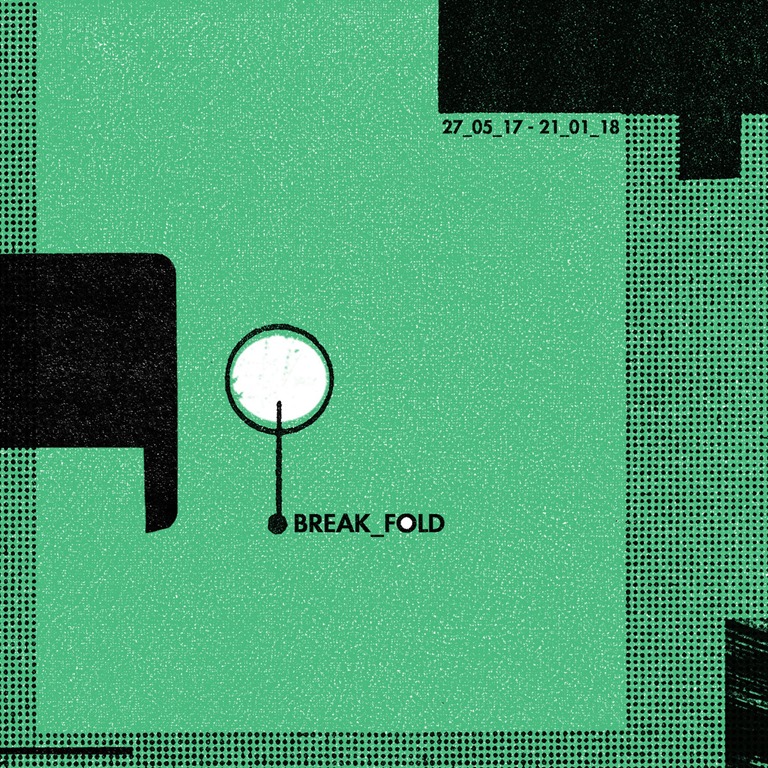
27_05_17 – 21_01_18 continues the trajectory of its predecessor, the first break_fold release 07_07_15 – 13_04_16, and as previously, each track title refers to the date that work on the song commenced. And, as the press release for this limited-edition cassette release explains, ‘The album serves as a document of time stamped periods of creativity captured in layered beats and foggy reverse reverb textures’. However, this set also marks a evolution, and whereas dark ambience dominated the first release, this outing offers some real range, not to mention stylistic expansion.

As such, it’s something of a musical diary, and Hann’s methodology isn’t a world apart from that of John Tuffen on a number of his projects, notably Namke Communications’ One Year; Two Days and 365/2015. An what both artists share is a certain logical sense of documentation and a prioritisation of location in time (but, seemingly, less so space: we know the when, but there where, undocumented, is immediately lost to history and perhaps vague memory).

There’s a lot of fog and murk in the mix on the seven semi-ambient pieces collected here, but 27_05_17 – 21_01_18 is a lot, lot lighter than its predecessor and is the soundtrack t a move o an altogether happier place.

‘08_01_18_Intro’ raises the curtain with clitchy, flickering microbeats, sedate pulses of bass and swathes of expansive, abstract sweeps of sound.‘21_01_18’ goes low-tempo and stealthy, with a strolling, near subsonic bass and rippling piano drifting gently over a slow-turning sonic expanse. There’s a more direct feel to ‘07_08_17’, with it pulsing synths and insistent beats – and with the vintage Roland snare sound, it has something of a tense, Krautrock vibe and a certain urgent turbulence beneath its smooth surface.

‘19_11_17’ hits an almost commercial vibe, with a buoyant dance beat pushing the altogether more focused composition forwards. There are no two ways about it: 27_05_17 – 21_01_18 finds Hann pushing himself and expanding his musical palette.

The atmosphere on this release is very different from its predecessor, and while it’s very much a mistake to align the artist and the art, the tone suggests that Tim Hann is in a better place than when he recorded 07_07_15 – 13_04_16. I certainly hope so. 27_05_17 – 21_01_18 isn’t all sweetness and light, but it is a varied and, in places, uplifting album with no shortage of buoyance, melody and accessibility.

AA

break_fold – 27_05_17 – 21_01_18