Archive for the ‘Albums’ Category

Bearsuit Records – 27th September 2019

Christopher Nosnibor

Edinburgh-based Bearsuit Records has established itself as a reliable source of weird stuff, a large proportion of which comes from Japan, a country renowned for producing some of the most brilliantly bizarre music. Needless to say, I’m a fan, and admire label owner Dave Hillary’s unswerving commitment to giving niche artists a home.

A trilling fairground waltz with stuttering microbeats provides the backdrop to the ethereal vocal on the title track, leading the listener into the weird and wonderful world of Haq, which is a collaborative musical vehicle for Japanese duo N-qia (Nozomi and Takma, the latter of whom is renowned in certain cult circles for his eight albums released under the Serph moniker) and the ultra-prolific Ediburgh based enigma that is Harold Nono.

Evaporator is a quintessential Bearsuit release – meaning, it’s way, way out there, strange and bewildering, in the most otherworldly sense. Evaporator is an album that more or less defines cognitive dissonance. It’s a headfuck, but that’s not a criticism. We need to be challenged: all too often, we’re presented with sonic chewing gum and shrug and think ‘yeah, that’s ok’. Ok is not ok, of course: we’re swimming in a sea of mediocrity and we need to break free of is tireless tide.

It’s all going on – at once – on ‘Dustboy Horrorshow’, which collides dreamy post-rock with pounding double-speed beats before taking a brief turn for the heavy in the midsection, before the industrial grind is dispersed in a ripple of fairy-lit world music to fade. And it only gets weirder and more incongruously juxtaposed from hereon in.

Ballistic beats and floaty mellowness collide, and often, as they explore the space between The Cocteau Twins and the Prodigy and somehow, in their state of dementure, attempt to bridge it by fusion. This shouldn’t work, and in places, it doesn’t, but that’s all the more reason to celebrate their efforts: experimentation and collaboration shouldn’t be about perfection, and even necessarily about the end product. The creative process is what matters.

That said, the end product, weird and baffling as it is, has more than its share of moments, and this five-tacker comes with a bunch of remixes of the EP tracks as well as an alternative mix of ‘Bees in My Feet’ from 2013’s Nocturnals. The approaches to remixing are ide-ranging and varied, and serve to highlight just how eclectic the composite elements of Haq’s original compositions are.

AA
Haq – Evaporator

Grimoire / Buzzhowl Records – 27th September 2019

Christopher Nosnibor

The second album from Baltimore trio Gloop is noisy, messy, manic. The liner notes describe it as ‘a splattering Jackson Pollock painting of a full-length record’, and refers to their sound as ‘a kind of skewed rock music that recalls Shudder to Think, and the Pixies at their harshest and weirdest’.

It is harsh, but that harshness doesn’t come from heaviness, but from a chaotic squall of treble and wildly unpredictable song structures. It’s got the punk spirit and some aggression in its execution, but not exactly post hardcore, either, but a jarring, jolting racket that has many of the hallmarks of math-rock played in such a way as to sound perpetually out of time and out of tune with itself. It’s skewiff, not in a slacker Pavementy way, but in a demented, all-over-the-shop demented Trumans Water way. If I say it’s enough to give anyone a headache, it’s by no means a criticism: we’re attenuated to tune into regular rhythms, accordant tonality, tunes. Smiling Lines has none of these, breaking every last rule of musicality by pulling apart the very fabric of rock music and stretching it, twisting it, tearing it, stomping on it, before examining the stained tatters and deciding ‘yes, this is what we were after.’

Dom Gianninoto’s vocals are kinda shouty, but he’s given to shriek, whoop, and holler and pitch up to falsetto at any instant, adding to the crazed unpredictability of it all. Smiling Lines is the sound of wide-eyed, frenzied derangement, a relentless rollercoaster, a furious flurry of frets. It’s a short, sharp shock, and it’s fucked-up, but it’s ace.

AA

Gloop - Smiling Lines

Crocodile Laboratories – 4th October 2019

Christopher Nosnibor

It seems almost beyond banal to remark that we live in troubled, troubling, challenging, and anxietised times. Since the turn of the millennium, and certainly for the last decade or so now, it feels as if we’ve been hurtling inexorably toward the end of days. Not one aspect of our existence is sustainable. We’ve known it for some fifty years, but here we are, staring into the swirling void the black hole that is our absence of future, and it’s nothing short of utterly fucking terrifying. It’s small wonder everyone’s cracking, that mental health issues are beyond rife to the point that it feels like half the population is struggling with some form of stress, anxiety, depression or related disorder. Are we getting better at speaking up, diagnosing, and treating these things – or could it simply be that we haven’t evolved at the pace of technology and society, and we’re just not built to cope with contemporary existence?

There was no way that when Amy Studt, after many, many years in the wilderness, and having followed a long, hard, road through recovery and stuttering false starts, could have envisaged the world she would finally deliver her comeback album to. So on the one hand, the recent events which saw the president of the United States of America first attempt to dismantle a 16-year-old-girl whose mission drive positive action against climate change, only for her to utterly demolish him by turning his words back on him, have no bearing on Amy’s album, the optimistically-titled Happiest Girl in the Universe. But on the other, the ‘happy young girl looking forward to a bright future’ Twitter duel is perhaps as relevant as it gets. Because in the personal lies the universal.

And Amy’s album is an intensely personal document of breakdown and recovery, and the title reflects the glowing hope of light at the end of the tunnel, of being able to find and cling to those moments of happiness, however fleeting, and accept that for all the darkness, there is light, and that light is what matters.

The singles, released at regular intervals over the last few months to give a slow-build engagement with the album have done more than pique the interest, but have built a steady-evolving picture of her creative rebuilding, and an insight into the long and difficult process that has seen her use creativity as a form of therapy.

From the haunting ‘I was Jesus in Your Veins’, which opens the album to the delicate piano-led introspection of the title track which draws the curtain with an air of soft calm , of homely comfort and a certain relaxedness that conjures images of Sunday morning coffee curled up in a chair taking it easy with a book or whatever.

But Amy sings of Diazepam, of depression, but also of empowerment: ‘Violently With Love’ is, on the face of it, a simple piano tune with vocals, but it’s a forceful songs that goes beyond ‘power ballad’ to an emotive tsunami. ‘I paid my dues. I played it your way. Now this s my way’, she sings on ‘Let the Music Play’. The video features footage of her from her childhood and beyond and evokes a deep nostalgia that’s resonant and affecting, and reminds us of the ageing process that affects us all. These are moments, locked in time, but they’re the moments of a one-time child star who’s different now. Older, wiser, perhaps, but also a traumatised adult who’s lived. Yes: she’s been there. She’s been done over by the industry. She’s still here. Survival is revenge.

‘The Water’ marks a stylistic departure, with a shift toward grand, sweeping cinemascopic sounds over a brooding piano. Studt’s voice is bathed in echo as she soars skywards once more, and in place of the quiet, intimate tone of the previous tracks, she spins skywards into the territory more common to Chelsea Wolfe and Zola Jesus. Stretching out to the five-and-a-half minute mark, it’s vast and immersive.

She’s no longer just a little girl: Amy’s a full-fledged artist ad while her years in the dark represent troubling times and reflect more on society than the artist, they’re past. Happiest Girl in the Universe is not an easy album, lyrically. Its lyrics are painfully introspective, raw, open, honest. But musically, it’s simply magnificent, and for all the pam and anguish there isn’t a song on here that isn’t lilting, melodic, and plain lovely. Happiest Girl in the Universe contain ten songs, and every last one is perfectly crafted, poignant, and touching. Amy is definitely winning: here’s looking to a brighter future.

Young God / Mute 25th October 2019

Christopher Nosnibor

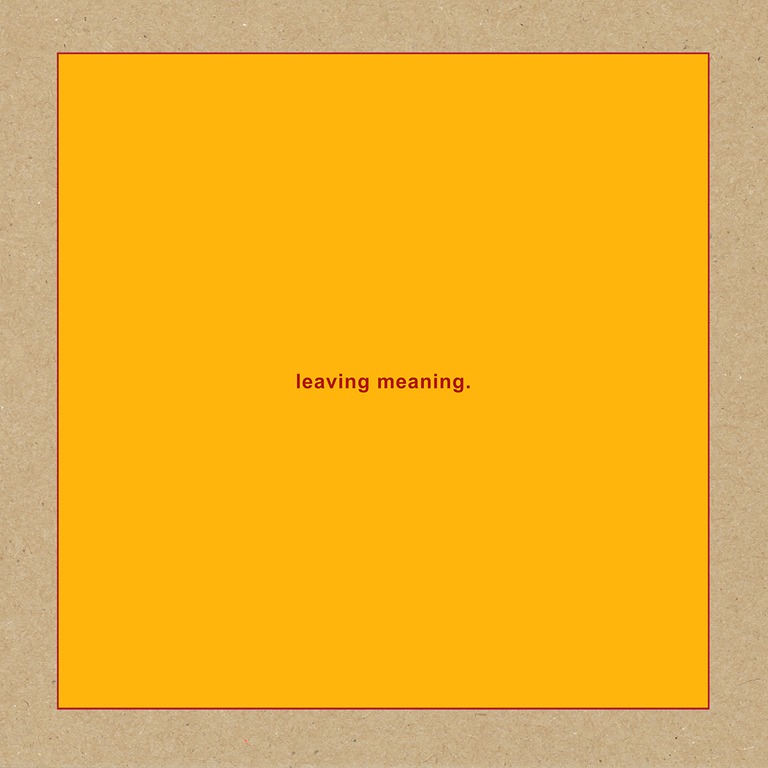
On receipt of the new Swans album, I posted on Facebook that I was ‘too excited to download it.’ This wasn’t sarcasm or bathos. The arrival of a new Swans album is always an event of no small magnitude, and with a certain sense of duty to deliver a review of a band I’ve revered my entire adult life comes a certain weight of responsibility to do justice. Swans have always been more than merely a band, standing as a sonic entity with almost infinite capacity to overwhelm. And they haven’t lost that.

Their last three studio albums, The Seer (2012), To Be Kind (2014) and The Glowing Man (2016) redefined epic and over their course took extended improvisational forms to a logical conclusion, each with a duration in the region of two hours.

Given the tone of Michael Gira’s statement about the end of the iteration of the band who produced these albums, Leaving Meaning brings two substantial surprises, the first being that many of the personnel from the previous incarnation remain present, and the second being the speed of its arrival. Kristof Hahn remains in the latest lineup, which also features eternal mainstay Norman Westberg – arguably as integral to the band as Gira himself – albeit only on some tracks, and Thor Harris, Phil Puleo, and Christopher Pravdica. They’re joined by an immense cast of contributors including The Necks, Baby Dee, Anna and Maria von Hausswolff, and Larry Mullins.

Leaving Meaning sees Gira take a slightly different and more openly collaborative approach to the realisation of his ideas, and it’s a more concise record in comparison to its predecessors. It’s all relative, of course, but in context, ninety-three minutes is concise.

Because of its sheer enormity, Leaving Meaning isn’t an album it’s entirely appropriate to dissect, and it’s constructed in such a way that it is very much best experienced as an album rather than dipped into. That means its effect is optimal when experienced in a single session, but that also means – as was the case to an even greater extent with its predecessors – that it requires a significant commitment of time in a time-pressured world. But then, Swans’ music has the capacity to lift the listener out of time and into another zone altogether.

The longer tracks are considerably shorter than even most off the shorter tracks on the last three albums, with the twelve-minute ‘The Nub’ being the album’s longest track.

Intro segment ‘Hums’ is appropriately-titled, consisting of just two minutes of cascading, hovering drones interwoven for create a soft ambience. ‘The Hanging Man’ revisits the nagging, dizzying cyclical bass motifs of numerous extended workouts from the last trilogy, and grinds it out for ten minutes. Anyone who’s familiar with the band’s extensive back-catalogue will be aware that this style of composition harks back to the band’s dawning and has remained a trademark of theirs, as well as Gira’s solo work. Paired with Gira’s vocal delivery, which switches from a monotone drone to a maniacal holler of elongated vowels and jabbering ululations and monosyllabic barks and yelps, it’s vintage Swans that threatens a climax around the mid-point but saves the real intensity for the finish. It’s less about volume than plain, bludgeoning repetition.

‘Amnesia’ is not the same ‘Amnesia’ as on 1992’s Love of Life. Perhaps Gira’s forgotten about it. It is, however, a brooding acoustic-led folk song. At heart. One of the things that constitutes a significant point of departure on Leaving Meaning is the return to sparser structures: gone are the immense sustained crescendos and pulverising explosions of discordant noise. There’s an altogether more mellow feel about Leaving Meaning. That said, there are orchestral and choral surges which punctuate both here and elsewhere.

A

‘Sunfucker’ is another classic Swans composition built around endless repetition, and with its backing vocal chants serves as an apocalyptic counterpart to ‘I Am the Sun’ from The Great Annihilator. Tapering off to drones in the mid-section, it suddenly explodes into a stomping glam bash. It’s bewildering, unexpected, everything all at once and probably the most daring and adventurous thing Swans have recorded in their entire career.

‘The Nub’ is gloomily funeral. Ethereal, haunting, but ultimately bleak in mood; ‘Some New Things’ is mantric, looping, hypnotic, while ‘My Phantom Limb’, one of the album’s standouts, has stronger echoes of Greed-era’s tortured pounding. It sits at odds with the rest of the album, but then so much of the album sits at odds with itself it feels right in a perverse way.

So what do we take from this? More or less what we’ve take from Swans over the last thirty years: with their ever-shifting parameters but constant core focus and the creative vision of Michael Gira always the driving force, Swans never cease to evolve, but never cease to be Swans, and are immediately identifiable as Swans, however far out they go.

swans-leaving-meaning

4th September 2019

There are two ways of going about reviewing albums: the easy way and the hard way. The easy way is to crib to the max from the press release, paint yourself as an expert on every artist however obscure they may be, while making on-point comparisons suggested by the band and their PR. The hard way is to ignore all that, listen painstakingly and go out on a limb on your opinions based purely on instinct and past experience. The hard way is to appreciate that however much you yearn to wrote objective reviews, no-one ever responds to music in a purely objective way, and reviews which take a truly objective stance are incredibly tedious to read – and to write for that matter.

So I know nothing about Kristeen Young, and expect that the cover art doesn’t really convey much of what she or her music is about. Then again, expectations exist to be confounded, and while The SubSet isn’t about goth dressmaking, the somewhat baffling choice of image is in keeping with Young’s quirky style.

‘Less Than’ crashes in by way of a starter with everything all at once: Eastern-inspired grooves collide against electronic bleepery while her vocals allude to Kate Bush in their delivery – and that’s a defining feature as she squeaks and soars her way through the album’s ten tracks. It’s an effective style that’s well-suited to the music.

Experimentalism is a prominent factor on The SubSet, and the fact there are hit-and-miss elements are par for the course and in no way detract from the overall experience: ‘Everyday Subtraction’ begins as a rather mediocre mid-pace dance cut, but steps up the drama as Young shifts her vocals unexpectedly into full-on operatic mode, while ‘In 3rd Grade’ is a tense, driving electropop shoegaze effort that throws in nods to early Garbage (back when they were exciting), before playing out on a delicate piano and soft, subtle bass and a sudden, unexpected burst of noise. When I say ‘hit and miss’, there really isn’t much miss: it’s just that some moments are more striking and distinctive than others, and Young strikes what’s probably an appropriate balance between weird and accessible to afford herself the potential of a wider audience.

‘Pretty Twogether’ is vintage electropop with a warping twist and some extraneous noise, propelled by glitchy percussion, while ‘Marine Combo Dadd’ is a semi acappella shanty with dreamy, psychedelic overtones, and it sounds incongruous, that’s because it is: once gets the impression Kristeen Young revels in creating moments of uncanniness, of oddness that are only a fraction removed from the familiar, but far enough to sit just the little bit uncomfortably. It’s a strength she works to, and well.

If The SubSet is a wildly unpredictable affair, it’s all the better for it.

AA

999434

New Heavy Sounds – 11th October 2019

Christopher Nosnibor

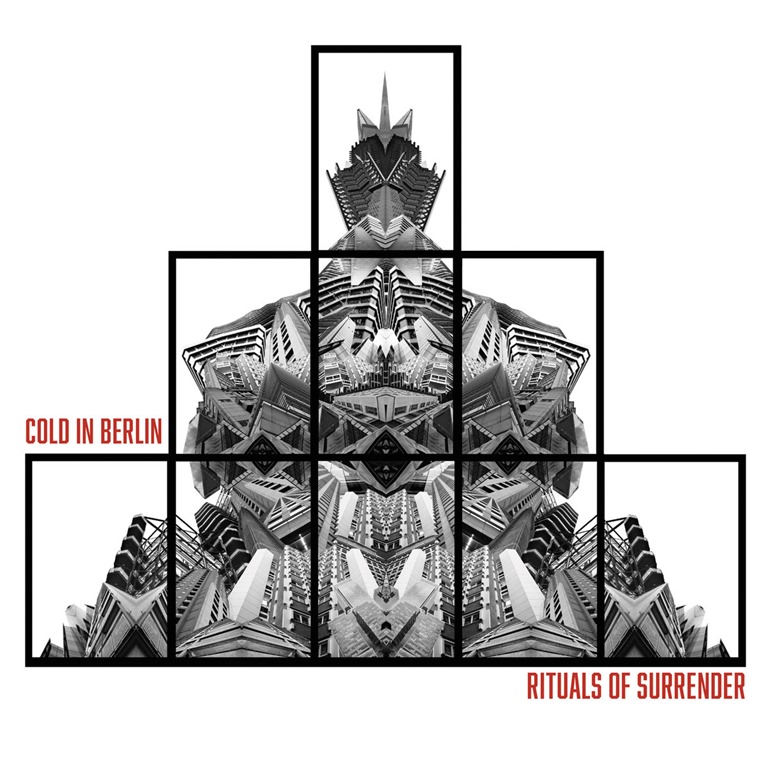
Cold in Berlin’s evolution has followed a fairly steady but swift arc: having emerged in 2010 with the spiky attack that was Give Me Walls, Rituals of Surrender represents their fourth album. That’s a respectable work rate, and over that time they’ve remained true to their dark, post-punk gothy roots, but have become progressively slower and heavier, the guitars growing sludgier, doomier.

In musical circles, there is always a ‘new strain’ emerging, even if said strain is a revisioning of an older strain. Not so long ago, it was post-punk revivalism, then there was a vintage heavy metal return, which in turn spawned the emergence of a stoner / doom / sludge hybrid. Cold in Berlin, having crashed in on the post-punk tidal wave are now more closely aligned to another more niche strain of the latter, namely colossally heavy female-fronted bands who bring an ethereal and emotive aspect to the sludgy / stoner / heavy template. Is it lazy journalism to bracket Cold in Berlin’s latest offering alongside Mammoth Weed Wizard Bastard and the last couple of albums by Chelsea Wolfe? Perhaps, but the references are at least instructive in terms of establishing a certain thread of stylistic commonality. But for every similarity, there are equal differences, and Cold in Berlin are most definitely a unique proposition in the way they balance the instrumental heft with Maya’s powerful vocals.

The album gets straight down to business with ‘The Power,’ which prefaced the arrival back in early September, accompanied by an appropriately moody, horror-hinting video. The bass and guitar grate and saw in unison over a slow tribal march. The tension builds and breaks in a landslide to a mammoth chorus.

The nine tracks on Rituals are heavy – plenty heavy – with some killer riffs. But that weight and the overloading overdrive is not at the expense of accessibility: the songs are clearly structured and benefit from strong and defined choruses.

Lyrically, the album is strewn with funereal imagery of death and decay, coffins and caskets, yet somehow manages to avoid cliché. The songs also pour anguish. ‘There is grief that tastes good in your mouth / there is grief that takes years to scrub out / There is darkness buried beneath my skin / there is darkness at the heart of everything’, Maya sings, pained, at the start of ‘Avalanche’ against a sparse sonar-like bass boom and a weeping drone of feedback before the drums and power chords come crashing in with crushing force. Can there be onomatopoeic instrumentation? If so, Cold in Berlin have mastered it, the pulverizing

The ritual aspect of surrender is never far from range: ‘You could string her up / you could string her up her body’s a temple for your love’ Maya sings commandingly on ‘Temples’ against a thunderous grind of heavily distorted guitars. Elsewhere, ‘Monsters’ is tense, intense, and grand, drama radiating from every note, and Rituals of Surrender is outstanding in its consistency.

Blending hefty riffology with full-lunged brooding, Rituals of Surrender sees Cold in Berlin occupy the space between doom and goth, emerging like Sabbath fronted by Siouxsie. And they do it so well: this could well be their definitive album.

AA

Cold in Beerlin - Rituals

Kranky – 16th August 2019 (rarely)

Increasingly, I’m finding a need for ambience in my life. We live in an extreme world, and in that context, a barrage of extreme metal and heavy-duty industrial makes sense – because release. We all need catharsis, an outlet. You’re never going to get that from Ed Sheeran so I can only assume his fans are so numb, so oblivious, so distanced, so disconnected, so braindead that the hell that is modern life simply doesn’t register with them.

This morning, feeling somewhat stressed by life and battling with some flatpack assembly to a soundtrack of sit 90s dance tunes and tannoy hollering being blown through my window from the Race for Life event with its start at York Racecourse, just up the road, I decided it was a good time to check out – a shade belatedly – Loscil’s latest offering.

Equivalents is what you might call quintessential contemporary ambient. The compositions are formed with layers of broad, soft sounds that sweep and drift and swish and drone, eddying abstractly to soothing effect. But there are tones and textures which break the soft, vapour-like surfaces and disturb the tranquillity: not brutally so, not to violently or abrasively as to damage the atmosphere, but sufficient to prick the listener’s senses back to attention as stuttering disturbances interrupt the delicate flows.

These moments shift the album – which I’m playing at sufficient volume to drown out the pumping beats from the racecourse wafting through the window – from background to foreground, and do so in a way that isn’t jarring.

It’s the subtleties and timings of the changes that highlight Loscil’s skill as a musician. Equivalents is more than the perfect antidote to modern life and noise stress: it’s a wonderful album.

AA

Loscil - Equivalents

Sargent House – 13th September 2019

Christopher Nosnibor

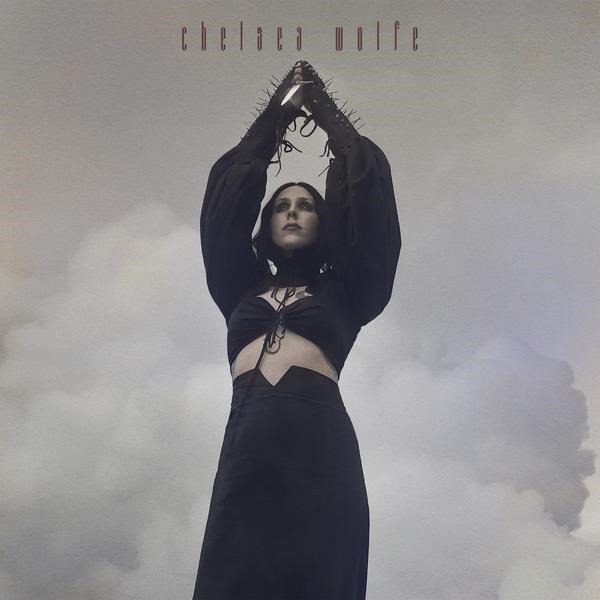
(Hiss) Spin it any which way, but following her last two inordinately powerful albums, which saw Chelsea Wolfe expand and deepen the depth of tempestuous noise and emotional force, the ‘eagerly awaited’ cliché was never more apt when Birth Of Violence was announced. Those two albums have left me emotionally raw and breathless since release, and I continually return to them as being simply stunning. It’s the perfectly poised juxtaposition of fragility and full-tilt riffage and noise that has impact on numerous levels and renders them with a special kind of intensity. Did I anticipate more of the same? I did I want more of the same? Could I handle more of the same?

It probably wasn’t entirely strategic, and probably more a reflection of the creative ebbs and lows, but nevertheless it makes perfect sense and sits with Wolfe’s creative arc to pull back the noise to deliver a reflective and largely acoustic album this time around. It does mean that despite what its title suggests, Birth Of Violence is altogether more sedate, and doesn’t grab you by the throat within a minute of hitting play. But then, in a world of noise, some reflection and hush is beyond welcome and necessary.

‘The Mother Road,’ unveiled back in June, opens with extraneous noise, but it’s acoustic guitar and a clean, untreated vocal that stand to the fore. Without the explosive crash of percussion and melting guitars one would reasonably anticipate based on recent for, we’re left to feel the pull of Wolfe’s tone and delicate intonation. But then it builds subtly to a rich swell of sound, a subtle adaptation of the post-rock crescendo that’s not overtly noisy, but isn’t exactly quiet either, culminating in a whirling swirl of noise around her emotionally fragile vocal.

The somewhat folksy title track finds Chelsea soaring, semi-operatic but also breathy and vulnerable and transcending to another plane, while ‘Deranged For Rock ‘n’ Roll’ finds heavy, murky percussion crash in behind her unusual pronunciation of ‘rock ‘n’ roll.’ She doesn’t sound particularly deranged, but more sedated. A lugubrious violin whines while the sound swells and surges and Wolfe soars to deliver a breathtaking climax.

‘Dirt Universe’ climbs slowly down to the gloomy depths of Leonard Cohen around Songs of Love and Hate: dark, lugubrious, and yet quietly intense. So intense.

It may be acoustic-based and considerably less noisy than its immediate predecessors, meaning it has less immediacy and less velocity overall, but Birth of Violence is an elegant and also striking album. Of course it is, it’s Chelsea Wolfe.

AA

Chelsea_Wolfe_-_Birth_of_Violence_grande

Wonkystuff – 5th September 2019

This one’s been a long time in coming: the liner notes document that the three pieces that make up Traditional Computer Music were ‘conceived and composed from various SuperCollider recordings over the years 2010 – 2014 [and] edited and compiled in Logic.

Then again, both Ash(ley) Sagar and Wonkystuff label boss John Tuffen have been kind of busy for most of the five years since this was finished, what with their being one half of The Wharf Street Galaxy Band, as well as operating as Orlando Ferguson and contributing to myriad other projects.

The title of this release is clearly a wilful oxymoron on the one hand, but on the other it’s entirely fitting, and a recognition of the tropes which have established themselves around digital musicmaking. Computer Music, once radical, is now a convention with a substantial lineage. And yet there is, somehow, a certain idea of what ‘computer music’ sounds like when presented with ‘computer music’ as a term, and Sagar manages to encapsulate that on this release.

The three numbered pieces – impersonal, inhuman, digital – are lengthy: 1 is 14:21, 2 is 19:24 and 3 is 18:58. And while Sagar doesn’t delve into retro robotix with bleeps and bloops, Traditional Computer Music explores digital soundscapes that have become synonymous with electronica.

Bulbous, warping drones weft and warp in the opening moments of ‘1’, with sounds of indecipherable origin – are they voices? Are they synthesised sounds? Tapering to an undulating mid-range droning hum after a couple or so minutes, coalescing to a throbbing hum around four minutes before dispersing into a vaporous mass after some four minutes, it becmes little more than a drone, before dissolving, fractured, splintered and broken, into painful howls of feedback that continue for a good few minutes before fading to darkness.

‘Part 2’ continues where ‘Part 1’ leaves off, with elongating feedback-filled drones extending outward for centuries and light-years back. It’s simultaneously evocative and sterile, again highlighting and exploring the dichotomies of digital music. Ash is one of those musicians who explores to the core. And yet his technicality is not at the expense of feeling. You can tell by listening to this that he lives and feels the music, wanky as it probably sounds.

The third and final track, ‘3’ moves into microtonal territory, which is crackly, glitchy, bleepy, and finds a slow pulsing beat thumping beneath an array of tweeting twittering R2D2 stutters. It descends into a morass of tweaking laser shots and squelchy pulsations buried under a growling generator hum ad there’s pitch-shifting and slowing drones galore. It becomes increasingly difficult as it progresses, dolorous drones and low pulsations and eternal, deliberate throbs roll on and on, before finally yielding to a climax of retro-futurist wibbles which ascend to a sustained rippling hum that’s not exactly comfortable whatever your preferences for sonic range.

On TCM, Ash shows that he probably knows the boundaries and remains within them, but at the same time tests the listener’s limits in a positive way. And yes, it’s good, and in its field, outstanding.

AA

Ash Sagar - Traditional

Metropolis Records – 23rd August 2019

In my world, The Legendary Pink Dots were just that: legendary. Heard of, often, heard, never. I’m embarrassed by this, but also accepting. There’s simply too much music and too little time, and when confronted with a band with an output as vast as theirs, where it’s impossible to know where to start, it’s easier to simply give up without starting. It’s a hurdle I overcame with The Fall in the early 90s, and maybe, just maybe, it’s time to make the first attempt at an inroad into The Legendary Pink Dots.

The album’s first cut, ‘Happy Birthday Mr President’ is structured around a shuffling beat and some sparse, echo-soaked guitars. It’s got a vaguely psyche edge, but having spent the last decade immersed in some of the most far-out avant-garde oddities emerging from all corners of the globe, it seems pretty tame and safe to my ears. This is largely true of the album as a whole, although it does have some more interesting moments: ‘Junkyard’ sounds like it could be a recent Foetus outtake, and ‘Neon Claculators’ plasters scraping electronic pings and quacks and parping sax over a bubbling Donna Summer synth rhythm track before drifting into some kind of avant-jazz spacerock oddity, and ‘Itchycoo Shark’ at least had a vaguely amusing title, but sounds a bit David Tibet only minus the pseudomystical bollocks, and ‘The Photographer’ is yawningly neofolk.

The trouble – if ‘trouble’ isn’t too strong a word – with sustaining such a lengthy career as an ‘experimental’ outfit is that all too often the hunger to innovate fades, and the songwriting gradually falls to formula. I can’t think of many artists who’ve become weirder, wilder, and more challenging over time, especially not over a career spanning almost 40 years.

Angel In The Detail is 50% atmospheric and interesting, 50% tedious and pedestrian, subscribing to too many well-worn ‘experimental’ tropes, which the band themselves were instrumental in establishing. It’s ok, and given their reputation, fanbase and career place (over 40 albums and counting), is likely to be just what the fans are after. And fair enough: they’ve nothing to prove at this juncture, and questions of relevance are ultimately irrelevant.

AA

Legendary Pink Dots – Angel In The Detail