Archive for the ‘Albums’ Category

Hallow Ground – 21st December 2025

Christopher Nosnibor

Ivan Pavlov has been releasing music as COH since circa 1997, and in the last twenty-eight years has amassed an immense catalogue which includes some thirty-six albums, often on respected experimental / avant-garde labels like Editions Mego and Raster-Noton. This body of work features a fair number of collaborations. This is his first with ‘the mysterious’ Wladimir Schall, who is no stranger to performing radically overhauled cover versions, not least of all his 2020 release on an endlessly looping cassette with his take on Satie’s Vexations. Suffice it to say, then, that none of the seven pieces on here could be described as ‘straight’ covers. Then again, given the nature of the selected material, how would one go about performing a ‘straight’ cover, and what would be the point, precisely?

As the accompanying notes explain, ‘the two multi-media artists are not content with the mere reinterpretation of their source material, but strive to reimagine it. According to them, the seven pieces on Covers were conceived as “a series of manoeuvres with an ambition to expose the machinery of Music in detail and with utter honesty, without making up for the faults of its traditional instruments or of the compositions themselves.”’

Perhaps the best known and most easily recognisable of the compositions is ‘Merry Christmas Mr Erik’, which opens the album by reworking Ryuichi Sakamoto’s ‘Merry Christmas Mr Lawrence’ as a sparse, almost jazzy work where it’s acoustic guitar which leads before the arrival of piano, which remains at a respectful distance. Not long after, we’re transported into a sparse, foggy trip of piano-led ambience. Perhaps one of the most audacious ‘covers’ is Soii Blanc’, an original COH composition which appeared on IIRON in 2011 – the album which was, in fact, my introduction to the world of COH. This version transforms the sparse electronic piece where experimental synth music meets early industrial grind into a soft piano work that’s as light as a feather but also mysteriously atmospheric through its subtle dissonances which grow with ringing, buzzing tones which gradually disrupt the delicate ripples with digital discord, creating the effect of some form of mechanical breakdown. Then again, ‘Snowflakes’ sees the pair ‘cover’ a ‘non-existent’ original’. It’s evocative: close your eyes and you may well visualise snowfall in your mind’s eye – but then glitches and scrapes cut through the reverie. In the main, it’s subtle, but enough to be disconcerting.

While there’s no clear or specific arc to the album, there is a sense that as it progresses, digital decay and interference gradually erode the graceful atmospheres conjured by piano and acoustic instruments alone – and by the arrival of the final piece, the brief bookend that is ‘Starost ne Radost’ – or ‘Старость не радость’ (joy and sadness), the juxtaposition of scratchy in the vintage sense and scratchy in the ersatz, manipulated digital sense comes to share a meeting and sensation.

AA

a1396191075_10

Projekt Records – 1st December 2025

Christopher Nosnibor

Having recently written on the retro qualities of Lowsunday’s latest release, the latest hot landing in my inbox is from another act which is preoccupied with a previous time – and who can blame them? I am painfully aware that old bastards like me constantly bemoan the shitness of the now while reminiscing about the golden era of our youth, and it’s no different from boomers still banging on about The Beatles and the music of the 60s and 70s as if time stopped when they hit thirty or whatever. There is a lot – a LOT – of exciting new music coming out right now, and much of it is pushing boundaries in unexpected directions. I for one will never cease to excited by this. But there is a significant amount of music emerging that draws its primary influences from the eighties and nineties, created by artists who simply cannot be drawn by nostalgia. Falling You are a perfect example.

Metanoia is pitched as being for ‘fans of 1980s 4AD dreampop (This Mortal Coil, Dead Can Dance), ‘90s shoegaze (Slowdive, Lush), or the darkwave / ethereal / ambient-electronic releases of the Projekt label (Love Spirals Downwards, Android Lust). It’s quite a span, but the fact is that this is a release with its inspirational roots well in the past. It pains me to be reminded that 1995 is thirty years ago when it feels like maybe a decade. The cover art of previous releases very much state shoegaze / dreampop, and while this album accompanied by altogether moodier artwork, which may in part serve to reflect the album’s title, it’s nevertheless hazy and evocative at the same time. ‘Hazy and evocative’ would be a fair summary of the album itself, too, and the dreamy / shoegaze elements are countered by some really quite unsettling spells of rather murkier ambience.

It starts strong with the bold swell of steel-stung acoustic guitar and a strong vocal – I’m not talking about a Florene Welch lung-busting bellow, but a controlled and balanced performance that really carries some resonance, and it’s mastered clear and loud… and then things swerve into a more electronic, almost dancy territory. Immediately it’s clear that this is going to be less an album and more a journey, and ‘Demiurge (Momento Eorum)’ immediately affirms this with its spiritual incantations and sonorous, droning rumblings.

‘Alcyone’ is the first of the album’s ten-minute epics, and it uses the time well: that is to say, with shuffling drums, spacious synths and layers of lilting vocals, it’s very much distilled from the essence of The Cocteau Twins, and slowly unfurls with an ethereal grace. A delicately-spun pop song at heart, the extended end section tapers down to a softly droning organ.

While the atmosphere is very much downbeat, downtempo, understated, one thing which is notable is the album’s range: ‘Ari’s Song’ is built around a soft-edged cyclical bass motif, around which piano and synths swirl, mist-like, the drums way in the distance, and even as a disturbance grows toward the end, it’s so far-away sounding, and the song itself, beyond that ever-present bass, barely there, and the same is true of the dank, dark ambient echoes of ‘Inside the Whale’. If ‘Ariadne’ is another shimmering indie tune hazed with fractal electronic ripples, the second ten-minute epic, ‘They Give Me Flowers’ provides a suitable companion piece to ‘Alcyone’, swerving from a brooding country and folk-tinged song with hints of All About Eve, and the album’s final track, ‘Philomena’ effectively completes the triptych, pulsing along gently and dreamily before slowly tapering away to nothingness. It’s a fitting conclusion to an album which at times is so vaporous and vague, it’s barely there – which is precisely the design. But in between the hazy drifts and particle-like waftings, there are some beautifully atmospheric and utterly captivating songs with strong leanings towards the dreamy pop side of indie. In terms of achieving an artistic objective, Falling You have absolutely nailed it with Metanoia.

AA

Falling You - Metanoia - cover

Artoffact Records – 5th December 2025

Christopher Nosnibor

In the last few years, CD box sets have become quite a thing. And I for one am a real fan. It’s not just about ‘fuck Spotify’ or the realisation that stuff has a tendency to disappear from streaming services at no notice – something true of Netflix and other TV streaming services, too. But, it is a fact that if you don’t have something physically, in some form or another, even if it’s only a digital file, you don’t have it, and you certainly don’t own it. But not all CD box sets are equal, and not all serve the same purpose. Much as I’ve come to appreciate the ’five albums’ sets and the like as instant collection fillers when it comes to acts I’ve previously managed to skip for whatever reason, they’re beyond stingy on bonus material. When it comes to releases for fans, releases like the monster boxes with all B-sides and bonuses galore, such as those by Fields of the Nephilim and The March Violets have been far more exciting.

Industrial Overture: Studio & Live Recordings 1982-1985 is definitely exciting. It’s no simple repackage of the albums, and the chances are most people – even the staunchest fans of Test Dept – don’t own the majority of the material on this one, consisting as it does primarily of scarce material, outtakes, and Peel Sessions.

Industrial Overture: Studio & Live Recordings 1982-1985 consists of 42 tracks across 4 CDs and also available digitally. It’s a document of their earliest, most abrasive period – not that they exactly mellowed in the years after, as perhaps their most commercially successful album, The Unacceptable Face of Freedom (1986) attests, and includes a first ever reissue of the group’s 1983 cassette-only debut album Strength Of Metal In Motion, the classic Ecstasy Under Duress and Atonal & Hamburg albums (both unavailable for over three decades), plus a disc of hitherto unreleased studio recordings that incorporate two sessions recorded for the John Peel show on BBC Radio 1.

As the notes inform, ‘In total, 26 tracks are new to CD and digital formats, of which 12 have never been previously available at all. All contents have been compiled by Test Dept and are newly remastered by Paul Lavigne (Kontrast Mastering)’.

Disc one gives us Strength Of Metal In Motion – a collection of raw live recordings. The first five were recorded at Albany Empire, Deptford, in August ’82, and it’s fucking brutal. Even remastered, it has something of a bootleg sound quality about it, that muddiness that’s particular to 80s recordings. In many respects, this adds to the appeal here. It opens with the dissonant blasts of harping faux-brass blasts of ‘Last Rites’ – heraldic, but askew – before giving way to the pummelling percussion and shouting of ‘Shockwork / Workshock’, which is brief but brutal. ‘Prokofiev’s Dream’ is a full-on assault of clanking percussions with occasional horns, before ‘Drum and Body’ drops a shard of industrial punk noise, with rabid vocals-riding a wave of the most relentlessly aggressive beats. The dark ambience of ‘Death of God’ is nothing short of purgatorial, and showcases a different side of the band. Four more of the thirteen tracks were recorded at Temperance Hall, Newbury, four months earlier, and with samples, synths, and drum machines flashing in all directions, their debt to Cabaret Voltaire is clear there – as is the sense of their future direction. That said, ‘Kindergarten’ is pure Throbbing Gristle, laced with heavy hints of Suicide and the bibbling synths of Whitehouse. But the wayward experimental jazz elements are also strong. Overall, this is the sound of punk in a head-on collision with Throbbing Gristle and drumming that sounds like they’re battering the shit out of sheet metal. Unless you were actually there, one can only imagine what it must have been like to witness any of these early shows.

Ecstacy Under Duress was initially released in 1984 and is another (largely) live compilation consisting of recordings which again were captured in ’82 an ‘83, although this time featuring future debut single ‘Compulsion’. The compositions feel more evolved, and perhaps as a consequence, more honed in their attack. ‘Hunger’ builds to a punishing climax and sets the tone. The aforementioned ‘Compulsion’ is relentless. Samples and crashing percussion dominate the stark industrial landscape, and the intensity of these performances translates well despite the separation of time and medium. I suppose it’s here we can really identify the point at which Test Dept carved a path which departed from their industrial predecessors and peers in their pursuit of the most punishing percussion. Only Einstürzende Neubauten really compare, but even they’re not quite as up-front with the hammering beats, despite their love of sledgehammers and metallic objects. The twelve-minute ‘Efficiency’ takes the percussive assault to a whole other level, leaving the listener feeling pounded, pummelled, bewildered.

The third disc offers some respite by virtue of being studio-based and therefore not having that muffled 80s live sound to the recording – although it’s marginal. ‘Blood and Sweat’ – one of three demos from 1982 – is primitive and raw and very, very drum-orientated: the vocals are relegated to the back of the mix, anguished shouting buried in a barrage of noise. It’s cruel and it’s harsh and it’s heavy, and the demo version of ‘Shockwork’, recorded during the same session is similarly hard on the ear, with its combination of machine-gun drumming and squalling avant-jazz tones.

The two Peel Sessions, recorded in ’82 and ’85 shows a honing of the sound: between the two sessions, they would release their debut album proper, Beating the Retreat, which included contributions from F M Einheit and Genesis P. Orridge, as well as Shoulder to Shoulder, with the striking miners choir, and which would finally see the release of an official studio version of ‘Shockwork’ – another version of which featured in the 1983 Peel Session, which comes on as heavy and mercilessly brutal as Swans on Filth – which was released the same year and channels the pain of life enduring the crushing slog of capitalism.

AA

Of the four discs, this perhaps has the greatest impact, and not just sonically. Atonal, anguished-sounding vocals reverberate vast sonic swamps dominated by the ever-present barrage of industrial-strength percussion. It’s relentless in intensity, and the effect is cumulative. Between the pulverizing six-and-three quarter minute ‘Efficiency’ (which feels in some way to be their answer to Throbbing Gristle’s ‘Discipline’), and the six-and-a-half-minute ‘Red Herrings’ version of ‘Gdansk’, with the disorientating mutter of ‘State of Affairs’ in between, this is a sustained assault that hammers blows from every direction.

AA

Disc four, which contains the Atonal & Hamburg album – released in 1992, but documenting two live performances from 1985 marks a significant shift from the earlier live shows. Containing material drawn predominantly from Beating the Retreat and The Unacceptable Face of Freedom, the punishing volume translates well, and the force is more controlled. There is structure, too, building from dirge-like crawls – again comparable with Swans around this time – quickening the pace and the all-encompassing ferocity of the percussion.

Those familiar will likely already know, but in addition to providing a truly magnificent document of Test Dept at their most uncompromising early best, Industrial Overture shows how they were right at the heart of an emerging zeitgeist spawned in the wake of Throbbing Gristle, as represented by the likes of Neubauten, Cabaret Voltaire, Swans… this was not a scene or a movement, but a disparate array of artists channelling frustration at the dark underside of a time when the charts were dominated by the likes of Duran Duran and Culture Club. In pop culture, the early 80s is presented and remembered as being glitzy, aspirational, fun. But that was not the lived reality of many. Test Dept may have been underground not least of all because their racket was largely unpalatable to the majority. But as Industrial Overture evidences, they were providing the soundtrack of the grim realities of working life, drudgery and trudgery. Essential listening.

AA

AA

3fa9f627305a21e10fbc1f2455628c4f1a429e6e

Fysisk Format – 12th December 2025

Christopher Nosnibor

I’m not being flippant or facetious when I say that we don’t contemplate or discuss death nearly enough. It’s only natural that we – all of us – are scared by the prospect, be it of losing a loved one, or one’s own demise. The concept of no longer existing is beyond comprehension. No-one has ever reported back on what happens afterwards, although the notion of an afterlife is at the core of many faiths and belief systems, and people believe because it gives hope. the alternative, being a definitive end followed by absolutely nothing, is almost too much to bear. And so the tendency is to bury heads in the sand – metaphorically – and to assume – especially in youth – that we’re immortal.

But we are not. I myself began to feel an awareness of death in my youth, quite inexplicably. On reaching twenty-five, I became obsessed with the fact I had attained a quarter of a century and the sheer pace of the passage of time. Since then, I have lost all of my grandparents, an uncle, several friends I was at school with, and my wife. I write this simply as a matter of fact: death is one of the few facts of life, but one we seem programmed to deny the very existence of, let alone its proximity. I see so often, comments on the deaths of people in their sixties, seventies, even eighties, that they were ‘no age’ or ‘taken too soon’. This is outright denial. We consider people in their sixties to be ‘middle aged’. They’re only middle-aged if they’re going to live to a hundred end twenty: for most of us – and again, it’s uncomfortable to accept it – but 37-40 is middle aged.

So, they may be young – still in their early twenties – but Norwegian quartet Fanatisme, who ‘channel the lunatic, forest-worshipping spirit of early Ulver and Darkthrone, merging it with the gothic pulse of Christian Death and The Cure’ are presenting on their debut album ‘a fiercely individual rush of post-punk-infused black metal, a spine-chilling celebration of humanity, the beauty of life, and the inevitability of death.’

And this is interesting: a lot of goth and metal hangs its mood on the death thing, to the extent that death is often romanticised, but without really taking a grip on the reality. On Tro, håp og kjærlighet, Fanatisme explore a vast sonic and emotional range, which seems befitting of the topic. Not that I can comprehend the lyrics: even if they were sung in English, this would be an absolutely impenetrable snarl. But you get the sentiment and the sheer force of Tro, håp og kjærlighet, which is at times rabid.

The first piece, ‘Stannhetens Slor’ is clearly designed as an intro, standing at under three minutes, and it’s a soft, drifting ambient work for the most part – but near the end, it builds and swells and culminates in an anguished scream of treble, a drone that grows to a howl. And then the guitars happen: ‘Nordens Eteriske Sommer’ slams in, a quintessential black metal blast of raw-throated vocals howling in a tempest of squalling sludgy guitars and a ragged, shamelessly underproduced rhythm section. ‘Kjrlightetsbrev til Vren’ actually sees the band find a rare groove, albeit punctuated by rabid, rasping vocals, while ‘Manetroket’ is a full-fat, heavyweight trudger of a riff monster.

Despite the complete impenetrability of the lyrics, this is an album that has impact and has a certain resonance. And it works. I wouldn’t recommend listening to this on your deathbed, but I do recommend listening. The last song finds them really hitting the spot, and hard. ‘Livet r en dans p Posens Tornet’ is one of those colossal epis that impossible to deny. The guitars race hard and fast a streaming metal churn of energy which rushes forward, its urgency dominating the whole blistering maelstrom, bringing an expansive, and heavyweight album to a racing climax. And whatever is lost in translation here, Tro, håp og kjærlighet is a high-impact release.

AA

347698

Dret Skivor – 5th December 2025

Christopher Nosnibor

This last week or so has been good for noisy, weird, abstract, experimental stuff. It’s pure coincidence, but these things to very much arrive in waves. There’s no thyme nor reason to it: Some weeks I’ll find my inbox abrim with guttural metal – and I’m by no means complaining – but sometimes I will crave noise, and there is none. Not proper noise, anyway. That said, this isn’t abrasive, full-on noise, but a work of abstract ambience dominated by field recordings, mostly of birds and billowing winds.

The last klôvhôvve release, which came out in the spring of 2024, was recorded live in Nottingham just a few weeks previous, and similarly this one was recorded live in November of this year. That’s about all you’re likely to learn with a dret release, although the accompanying notes are generous in their praise to the album’s contributors: ‘Thanks go to the wonderful animals and nature of Hammarö whose sounds you can hear being manipulated by klôvhôvve’. This is laudable: we don’t thank or celebrate nature nearly enough. There are gulls aplenty here, among other creatures less obvious by their calls (at lest to me).

It begins with the rumble of thunder, and it grows closer and more menacing. And then comes the rain. I assume it’s the rain. I’ve heard enough of it in the last couple of months. It feels like it will never stop raining. Again. Öljud rumbles and creaks and billows: a lot of this sounds like heavy rain and high winds, conditions which simply make me want to hibernate rather than reconnect with nature. There are quack and quarks, and all kinds of trilling sounds. Nothing much happens – if anything, really. It doesn’t need to.

Is it ok to drift off to an ambient work? I would have to argue that when listening to a studio work that’s particularly tranquil, it’s a compliment rather than an insult. Öljud is subtle, rumbling. Not a lot happens, and what does happen takes place slowly. Very slowly.

AA

a2852538014_10

29th November 2025

Christopher Nosnibor

It’s not a good thing to feel nostalgia for something from the recent past which wasn’t even any good to begin with. But on seeing the cover for this split release by Theo Nugraha and {AN} EeL, I’m reminded that Google DeepDream was actually quite fun for about five minutes in 2015. Ah, hindsight… The results DeepDream produced were weird, psychedelic, trippy, and resembled no dream or subconscious thoughts I’ve ever known, its hallucinatory aspects were oft said to share qualities with LSD. But this was part of the appeal: it was novel, silly, with dog faces emerging from inanimate objects, whappy wallpaper, and the like. How many of us knew that it would be a precursor to the AI hell we now find ourselves in? Ten years is not such a long time in the scheme of things, but in the context of the now, it feels like another lifetime. A lifetime when doing daft stuff with digital tools wasn’t annihilating the environment, when it wasn’t stealing the work of writers and artists, when it wasn’t rendering jobs obsolete while creating billionaires at the expense of those losing their livelihood. Arguably, the golden age of The Internet was in the first years post-millennium, when applet-based chatrooms first made it possible to connect in real-time with people around the globe and MySpace was a wild melting pot where people came together through shared interest and communities evolved. This isn’t just some nostalgia wank: these were exciting times, and the world truly began to open up in ways hitherto unseen. These were times when The Internet offered freedom, where, as Warren Ellis’ novel Crooked Little Vein expounded, anything goes and if you could imagine it, you’d find it online. Godzilla Bukkake? You got it.

Everything changed when major corporations realised that they could really, really make on this. But major corporations being major corporations, they didn’t want to participate – they wanted to take over and own it, to wring every penny of profit from every last keystroke. And so now, while Napster and Soulseek were the equivalent of home taping, which didn’t kill music, Spotify and most other major streaming services really are damaging artists’ livelihoods – because unlike small-time peer-to-peer file sharing, this is a multi-billion dollar industry which siphons off pretty much all of the money for owners and shareholders rather than artist – and then you have scums like Daniel Ek using those proceeds to fund war. Something has gone seriously wrong.

Theo Nugraha’s contribution, 1XXTR is a longform work – seconds short of thirty minutes – and while it’s perhaps not quite Harsh Noise Wall, it’s most definitely harsh noise, and there’s not a lot of variation. It may even be that any variation is in the imagination as the mind struggles to process the relentless barrage of sound and seeks tonal changes, details within the texture. It doesn’t so much sound like a cement mixer – more like being in a cement mixer with half a ton of rocks, at the heart of an atomic blast. There are squalls of feedback and mutterings beneath the blitzkrieg, and around ten minutes in, the tempest suddenly begins to rage even harder and it’s like being hit by a train. Twenty minutes in, the relentless roar drops to merely the blast of a jet engine and the sensation is like huge pressure drop, or a fall. It’s impossible to discern what’s going on inside this swirling vortex of noise (there does sound like a vast amount of collaging and random things floating in and out), but it’s a full-on physical assault that vibrates every cell in the body. By the end of this most brutal half hour, you feel battered, bruised, damaged.

‘TRXX1’ by {AN} EeL, which runs for a second over the half-hour mark, is altogether less abrasive, but it’s no more comfortable. At first, it’s a clattering, metallic rattle, like an aluminium dustbin rolling down the street in a gale, accompanied by rattles and chimes. Extraneous noises – twangs and scrapes – enter the mix, and the sound starts to build, like the wind growing stronger at the front-end of a storm. But soon, from nowhere, a squall of static – or rainfall – begins to swell and while off-tune notes reverberate in the background, and a scan of radio stations yields alternately cut-up fragments and random noise, and while it may not possess the same physical force as Nugraha’s piece, ‘TRXX1’presents a disturbing array of frequencies and makes for a particularly tense listen. There’s a thunderous ripple like a freight train a mile long barrelling along, while disjointed voices echo here and there, and as bhangra and old-time brass fade in and out, the collage approach to the track’s creation, harking back to William Burroughs’ tape experiments, and early Throbbing Gristle become increasingly apparent. The Police’s ‘Can’t Stand Losing You’ cuts through what sounds like a snippet from lecture or interview. The repetition of the same fragments becomes difficult to deal with after a time, and you begin to feel like you’re cracking up. The it’s back to the sound of metal buckets being dragged down a cobbled street, with random busts of discordant noise jabbing in for extra discomfort. The final segment is a cacophony of abstract drones and crashing, calamitous racketry – a combination which is uncomfortable and unsettling.

The two pieces are quite different, but equally difficult in their own ways, and as such compliment one another. And if you’re seeking an album that really tests your capacity for abrasion and nauseating noise, 1XXTR / TRXX1 hits the spot like a fist to the stomach.

AA

a2950925012_10

12th November 2025

Christopher Nosnibor

While the approach to recording his latest album is pretty much standard for Lithuanian sound artist Gintas K – that is to say, ‘recorded live, without any overdubs, using computer, MIDI keyboard, and controller’, the inspiration and overall concept is a little different this time around, with Gintas explaining that ‘The album is a subtle allusion to Flann O’Brien’s absurdist novel The Third Policeman, reflecting its surreal and enigmatic atmosphere through sound. In itself, this is quite ambitious – not quite the musical equivalent of interpretive dance, but nevertheless.

And, in contrast with many of his other albums, which tend to be relatively concise and often contain some shorter, almost fragmentary pieces, this one is a whopper, with thirty-one tracks and a running time of over two hours.

Initially, it’s display of K at his most manic, with ‘black box#1’leading the first four-track suite more frenzied and kinetic than ever, the sound of an angry hornet the size of a cat trapped in a giant Tupperware container. There aren’t always discernible spaces between the individual pieces, and after just the first eight minutes of wild bleeps and buzzes, I’m already feeling giddy. ‘black box#1 – 4’ is a quintessential Gintas K blizzard of noise which starts out like trickling digital water tinkling over the rim of a virtual glass bottle and rapidly evolves into an effervescent froth of immolating circuitry.

The second suite of pieces, ‘black box inside#2 Dog Hoots’ is made up of eight chapters – compositions feels like a bit of a stretch – and while there are a couple of sub-two-minute blasts, the fifth is a colossal nine minutes and forty in duration. This marks distinct segment of the album, in that it sounds a little more structured, like the sounds of a toy keyboard or a mellotron, rewired and then tortured mercilessly. It grinds and drones, hums and yawns, it bubbles and glitches and whirrs and it fucking screams. Before long, your brain will be, too.

The third segment, a set of six pieces labelled ‘black box inside… Calmness’ is anything but calm: in fact, it’s more likely to induce a seizure, being more of the same, only with more mid-range and muffled, grainy-sounding murk. There are more saw-like buzzes and crackles and pops and lasers misfiring in all directions. It’s not quite the soundtrack which played in my head as I read the book, but the joy of any art is that it affords room for the audience to engage and interpret on a personal, individual level.

The nine-part ‘rolling’ (or, to give it’s full title ‘black box iside#4 Rolling’ is more fragmented, more distorted, more fucked-up and broken. The pace is slower, the tones are lower, and it’s the sound of a protracted digital collapse. It’s unexpected to feel any kind of emotional reaction to messy noise, but this conveys a sense of sadness. By ‘Rolling – 4’ it feels like the machine is dying, a breathless wheeze of a thick, low-end drone, an attempts to refire the energy after this are reminiscent to trying to start a car with a flat battery. It’d messy and increasingly uncomfortable and wrong-sounding as it descends into gnarly distorted mess. ‘Rolling 7’ is creaking bleats, woodpecker-like rattles. and warping distortion, with additional hum and twang. The last of these is no more than roiling, lurching distortion, without shape or form.

Arriving at the four pieces tagged as ‘omnium – The Fourth Policeman’, its feels like you’re surrounded by collapsing buildings and the exhaustion is not just physical. Gintas K has really pushed the limits with this one. The is an arc, a trajectory here, which can be summarised as ‘gets messier and more horrible as it progresses’. Artistically, this is a huge work, a work of patience, and a work of commitment and focus. As a listening experience, it’s intense, and will likely leave even the most adventurous listener feeling like their head’s been used as a cocktail shaker and that their brain has been churned to a pulp. Outstanding.

AA

a3200436950_10

25th October 2025

Christopher Nosnibor

As the blurbage explains, ‘The Third Side Of The Coin is a split, 2 part album which includes 2 sides of one coin, Anima and Animus. They are separate entities but together they create a bridge between dark and light, outer identity to inner truth and form a union of opposites that gives birth to universal truth. They are the gatekeepers of transformation.’

Well that’s two sides, but what about the third? Of course, this is where the truly conceptual aspect of the work comes in – the part which goes beyond the recordings themselves – and which only really makes sense in context of the following explication:

The Third Side Of The Coin is about the natural but paradoxical dualistic state of the universe. This split album explores both sides of a polarized world by peering over the precipice of the coin only to see a reflection staring back from the other side. It is a surreal mirror showing that what you fear and what you hate is living within the unconscious parts of yourself, both sides being parts of a whole. As you look into the familiar and uncomfortable reflection the coin spins, dissolving duality and revealing a clear image of the third side.
Dissolve the duality! The magic is in the middle!’

Taken literally, this suggests that the magic resides in the space between track five and track six, but I don’t think that’s what they’re meaning. Similarly, although I’m reminded of how William Burroughs and Brion Gysion expounded the concept of ‘the third mind’ as how two minds in collaboration can create a work greater than the sum of the parts, as if there’s a ‘third mind’ at work between them, I don’t feel that this quite first with the concept Moons in Retrograde are offering here.

To delve into the album itself is to venture into a world of thumping beats and deep emotional exorcism: single cut ‘Mirror Obscura’ launches the set in classic style, forging a dark, industrial-infused, goth-hued slice of dark electropop – mid-tempo, atmospheric, anthemic, and completely enthralling. The tracks which follow feel rather more generic, particularly ‘Eternalgia’: it’s a solid electrogoth stomper, and while the synths are sweeping, layered, rich in texture, everything is centred around the hard kick drum, which cuts through it all and really slams. The final song on the ‘Anima’ side is a supple exercise in dreampop, with the emphasis on the pop, a quintessential anthemic mid-tempo ballad.

While the atmosphere is overtly darker during the second half of the album – the ‘Animus’ side – it doesn’t seem so radically different at first. ‘The Edge of Entropy’ very much employs the same instrumentation and approach to composition, and ‘The Rotten Tree’ is a classic, processed dark pop cut. But closer listening reveals more twangy guitar in the mix, and a more claustrophobic and subdued style of songwriting. ‘Taxidermy Mouse’ may sound like a rather humorous title, but it’s a slow, deliberate pulsating piece which goes full aggrotech stomper at the mid-point, drawing on elements of metal while pumping out technogoth grooves. And by the time we arrive at the heaving churn of ‘Biological’, with its rampant, frenetic nu-metal percussion and gargling noise, it’s clear that this is very much an album of two halves, and at times the second half feels like a goth Prodigy.

For the most part, The Third Side Of The Coin feels a shade too clinical to really hit the mark on the emotional scale. It packs some bangers, for sure, but there’s some distance between pumping beats and emotional intensity which has a resonant, moving impact. And perhaps, stripping away the concept and taking the album as it is is the best way to approach this…

AA

a1338474138_10

27th November 2025

Christopher Nosnibor

Richard Rouka is… an unusual man. He’s existed around the Leeds scene since the emergence of the goth scene, and he documented it back in the day, in real time, but to describe his own musical output as ‘adjacent’ would be generous, to say the least. The mid-to-late eighties saw his label, Rouska, release a stack of stuff, predominantly by The Cassanda Complex and Dustdevils, bands with strong Leed connections.

His own works, released under the guise of WMTID aka Well Martin This Is Different! draws on the post-punk vibe of that period, but is predominantly primitive electropop with a distinctly bedroom / four-track vibe. WMTID has been a thing for over forty years, but Rouska’s output has skyrocketed in recent year.

One way of pitching it would be early Depeche Mode as performed by Young Marble Giants, but this wouldn’t really convey the ways in which these elements – played and tossed together in the most ramshackle of ways coalesce. But what it hopefully would convey was the fact that this is steeped in early eighties analogue experimentalism, the time when synths were breaking through as emerging technology and the Musician’s Union was shitting itself about how this would herald the death of ‘real’ music – particularly on account of the increasing popularity of drum machines, which they feared would end the need for drummers. Just as home taping didn’t kill music – and if anything it meant that music sharing exposed more people to new acts (I know I discovered countless new bands because people gave me mix tapes), so synths and drum machines broadened musical horizons instead.

Silica Bombs revels in the primitive: ‘Fool Moon’ is simple, sparse, in its arrangement, synths quavering around a persistent piston-pushing drum machine beat. With its stark, minimal production, paired with a fairly flat, monotone vocal delivery, ‘If It Happened Anywhere Else’ very much channels the spirit of Joy Division. The bleak, synth-led ‘Walk With Me (Into the Sea) sounds like a demo for New Order’s Movement. And yes, the recording quality is pretty rough, and it very much captures the spirit and sound of the late 70s and early 80s.

It’s different, alright, but above all, it feels like a magnificent anachronism. The eighties revival had been ongoing for at least a decade now, and so many acts have sought to replicate the sound and feel they’ve largely failed. Maybe you needed to there. Maybe you need the right kit.

But the weird, trilling organ sound of ‘Good Mourning’ brings a dark weight and fizzed-put production which are incompatible with contemporised production values. ‘Crushing Bore; brings a certain humous to proceedings, while coming on like Cabaret Voltaire. ‘Opposites Attract’ brings some heavy drone which contrasts with the sing-song vocal melody, and in may ways this is typical of the way in which WMTID explore polarities with a shameless eighties naiveté. By this, I mean that the 80s was really the last decade of real innovation. The 90s were exciting, and that’s a fact – I was there – but the 80s witnessed the arrival of synths, of electronica, and marked a real turning point in the trajectory of music. And Silica Bombs doesn’t replicate that era so much as live there. With its thumping beats and swirling synth sound, ‘Rouge Planet’ has a strong club vibe. That vibe gets stronger and harder, with the pulsating groove of ‘Sweet Jesus’, which Rouska tells us ‘I’ve got a friend in Jesus’. Yeah. The Jesus and Mary Chain, perhaps. ‘Personal Jesus’ maybe. It drives hard fir a relentless five and a half minutes.

This is an album which wears its influences on its sleeve and shows no signs of shame in that. And why should it? Rouska is very much of that era and played a part. The fact that his musical output over the last few years is indicative of a person who doesn’t go for meetups with former colleagues. More than its predecessor, Finding the A.I. G-Spot, Silica Bombs feels significantly beat-orientated, and more hard-hitting. It’s retro, and its catchy. It’s retro and it’s weird in that it has no specific identity… it’s just what it is. And it’s a groove.

AA

AA

AA

a2195822840_10

1st December 2025

Christopher Nosnibor

Since relocating to Glasgow, Teleost have been forging ahead, first with the release of the Three Originals EP at the start of the year, and now, bookending 2025 – which has seen the duo venturing out live more often – with their full-length debut. And it’s definitely got length: five tracks spanning a full fifty minutes. But it’s got girth, too. Atavism is everything they promised from their early shows – amplified. In every way. With five tracks, and a running time of some fifty minutes, Teleost have really explored the epic space they conjure with their monolithic, crawling riffery, pushing out further than ever before – and with more gear than ever before.

Despite there only being two of them, you have to wonder how they fit all that kit into a studio, let alone a van. They’re not quite at the point of Stephen O’Malley – who had to play to the edge of the stage at the Brudenell when playing solo in Leeds some years ago because the backline barely fit – but at the rate they’re amassing equipment, it’s probably only a matter of time. But this isn’t the accumulation of stuff for the sake of it: this is a band obsessed with perfecting its sound, and then going beyond and taking it to the next level. Volume is integral to that, in the way that it is for Sunn O))) and Swans – and again, not for its own sake, but for the purpose of rendering the sound a physical, multisensory experience. And also because volume facilitates the creation of tones and frequencies simply not possible at lower volumes.

The challenge for any band who rely on these quite specific conditions live is to recreate not only the sound, but the sensory experience, the full impact, when recorded. Recording compresses, diminishes, boxes in and packages something immense, compacting it to something… contained, confined, in a way that a live show simply isn’t. Live, there is movement, there is the air displaced from the speakers, there are vibrations, there is an immediacy and margin for error, all of which are absent from that ‘definitive’ documented version.

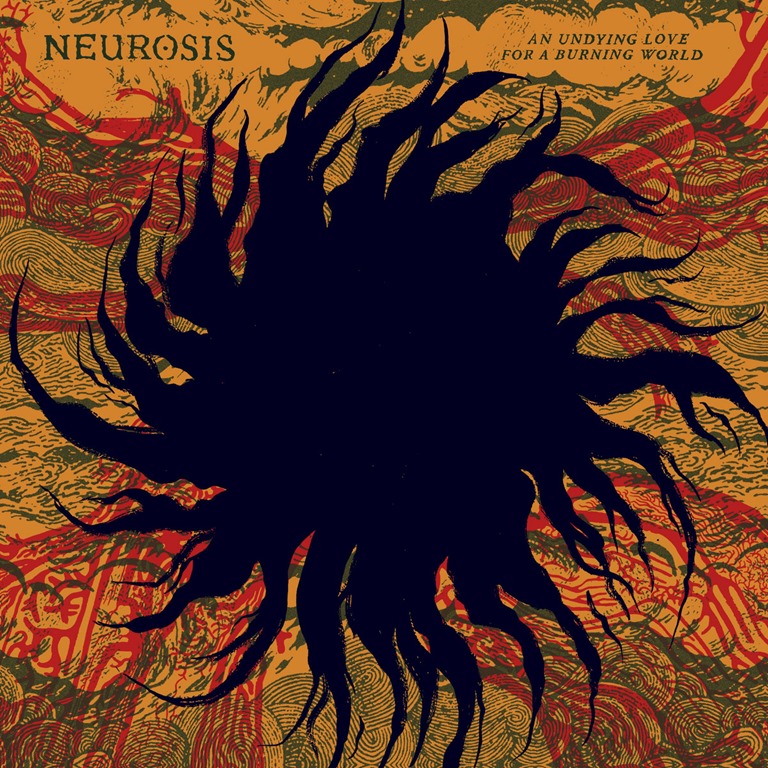
‘Volcano’ conjures atmosphere in spades, a whistling wind and tinkling cymbals delicately hover around a softly-picked intro, before a minute or so in, BAM! The pedals go on and the riff lands, and hard – as do the drums. Slow, deliberate, atomic detonations which punctuate the laval sludge of the guitar, which brings enough low-end distortion to bury an entire empire. The vocals are way down in the mix and bathed in reverb, becoming another instrument rather than a focal point. The pulverizing weight suddenly takes an explosive turn for the heavier around the mid-point, and you begin to fear for your speakers. How is this even possible? They do pair it back in the final minutes, and venture into the earthy, atmospheric, timbre-led meanderings of Neurosis. By way of an opening, this twelve minute track is beyond monumental.

They may have accelerated their work rate, but certainly not the tempos of their tunes: ‘Bari’ – which may or may not hark back to the band’s genesis, when they performed as Uncle Bari – rides in on a wall of feedback and then grinds low and slow. They really take their time here, with ten full minutes of jarring, jolting riffery that’s as dense as osmium. Turn it u and you can feel the hairs in your ears quiver and your cells begin to vibrate.

Where Teleost stand apart from other purveyors of slow, droning doom is in their attention to those textures which are grainy, thick, and each chord stroke hits like a tsunami making land reach, a full body blow that almost knocks you off your feet.

But for all of the annihilative volume and organ-bursting weight, Atavism is not an angry or remotely violent record: these are compositions concerned with a transcendent escape, and this is nowhere more apparent than on the mid-album mellow-out, ‘Life’, which offers strong parallels to more recent Earth releases. A slow, hypnotic guitar motif is carried by rolling cymbal-dominated drums. I find myself yawning, not through boredom, but relaxation – until four and a half minutes in when they bring the noise once more, and do so with the most devastating force.

AA

Penultimate track, ‘Djinn’ is contemplative, reflective at first and then goes on an all-out blow-out, seemingly more intense and more explosive than anything before it. While growling droning rumbling is the album’s defining feature, there does very much feel like there’s an arc of growing intensity over its course. Here, the vocals feel more skywardly-tilted, more uplifting in their aim to escape from the planet, and closer, ‘Canyon’ returns to the mesmeric, slow-creeping Earth-like explorations before slamming all the needles into the red. The result is twelve minutes of magnificent calm juxtaposed with earth-shattering riff heaven.

The fidelity is fantastic, the perfect realisation of their head-blastingly huge live sound captured. The chug and trudge cuts through with a ribcage-rattling density, and there is nothing else but this in your head. You mind is empty, all other thought blown away. It’s a perfect escape. And this is – at least in its field – a perfect album.

AA

a0002754035_10