Archive for October, 2025

British industrial/EBM artist ESA is proud to release a new music video for the song ‘Pound Of Flesh’, taken from the artist’s recent album Sounds for Your Happiness out from July 5th via Negative Gain Productions label.

‘Pound of Flesh’ is the most ambitious cinematic journey from ESA to date. Shot on location in Bangkok (Thailand) during July 2025 with additional scenes filmed in Manchester UK, the video sees the participation of Tan Toafa Maneepasopchock (Gotham/Oceans 10) and Panita Hutacharern along with three other native Thai actors. ‘Pound of Flesh’ is in part a powerful and compelling narrative experience, alongside a love letter to Thailand. A country that has meant a lot to Blacker over the years.

AA

The story follows a troubled soul, tormented by inner demons, trapped within their own mental prison, happening upon a vehicle to allow astral projection from one body to another in a vain attempt to escape their own pain and anguish. From body to body, it soon becomes apparent that dwelling within a new host body is not the solution it might first appear to be. As time passes within the host, breakdowns begin to emerge and the demons that are tethered to the troubled now take up chase, culminating in a powerful and incredibly cinematic exorcism experience.

‘Pound of Flesh’ is a music film in 3 parts, both adventurous in script and energetic in its execution. The acting of Tan and Panita levels up further the Universe that Blacker is trying to achieve with the ESA multimedia experience.

AA

ESA Photo

Ahead of the release of their new album, Burn Me Once, cult Yorkshire goth act Westenra have released ‘Time’ as a single.

Blending the feel of Siouxsie and the Banshees with arena-sized production values, it’s an instant classic.

AA

a2549065446_10

Coup Sur Coup – 17th October 2025

Christopher Nosnibor

Few drummers receive much recognition, unless they’re the backbone of bands who are household names (people know Ringo Starr, Keith Moon, Dave Grohl, Mike Joyce, Lars Ulrich), or have otherwise featured prominently in a specific musical milieu (Martin Atkins and Paul Ferguson come to mind). Their contributions are overlooked and underappreciated, and in the main, there’s a tendency to only notice exceptional drummers, or poor ones. It’s not the job of a drummer to grab attention, but to hold everything together at the back. Consequently, you might be forgiven for being unfamiliar with William Covert, whose career is defined more than 15 years of drumming in math rock, post-rock, and post-hardcore bands (Space Blood, Droughts, and Rust Ring).

As the narrative goes, ‘Covert began experimenting with live-looped synths alongside acoustic and electronic drums. This experimentation birthed two full-length solo albums characterized by post-rock and krautrock-inspired synth loops and melodies, all performed solo with loop pedals and sequencers.’ Dream Vessel was born out of a desire to pursue a different approach and a different direction, and indeed, the first part of this latest offering was a collaborative, group effort, with Nate Schenck on bass and Jack McKevitt on guitar, while we learn that ‘the other half was performed entirely solo, diving deep into cinematic ambient soundscapes, dreamy Frippertronic-influenced guitars, modular synth, and free-jazz drumming filtered through a post-industrial lens.’ Nothing if not varied, then.

The album’s five tracks span thirty-eight minutes, and it’s very much an exploratory experience. ‘Brotherhood of Sleep’ eases the listener in gently, with a slow, strolling bass and reverby guitars. It’s an expansive and spacious instrumental work, rich in texture and atmosphere – a shade proggy, a little bit jazzy, unfurling at a sedate pace. ‘Trancers’ fades in, and offers similar vibes, but it’s both more spacious, and more groove-led. The guitars bend and echo that bit further, and as the track progresses, so the pace and urgency build, along with the density of the guitars, which warp and stretch more with every bar. It may not hit the extremity of My Bloody Valentine’s Loveless, but the guitars do sound as if they’re melting by the midpoint, before the track locks into a muscular, driving groove that’s a world away from where it began. There’s an appeal that’s not easy to pin down when it comes to compositions which begin in one place and end up entirely in another, while it’s not entirely clear how they’ve transported the listener from A to B. The experience isn’t completely unlike making an absent-minded walk somewhere, when you haven’t been paying attention, and arrive with minimal recollection of the journey- although the difference is that the walk is usually via a familiar route that requires little to no concentration or engagement, whereas a song that swerves and switches involves an element of brain-scrambling along the way.

‘Dream Void’ is a centrepiece in every way: The third track, right in the middle, it’s over nine minutes in duration and a towering monolith of abstract drone. It’s immense, cinematic, widescreen, gentle. Around the mid-point, the drums arrive, and they’re busy, but backed off in the mix, and we’re led down a path to a place where frenetic percussion contrasts with chords which hover and hum for an eternity. Slow-picked guitar brings further texture to the mellow but brooding post-rock soundscape of ‘C-Beams’, which pushes toward nine minutes, as the album ventures into evermore experimental territory. As present as the drums are, they don’t provide rhythm, but bursts of percussion, swells of cymbal and wild batteries of rolling, roiling whomps.

The more concise, feedback-strewn ‘Throttle’ marks a change in aspect, a roar of noise, a wail of feedback, and positively wild, before ‘Come True’ closes the set with some Kraftwerkian bubbling synth and undulating bass, paired with a rolling beat. It’s all nicely done. And this is true of the album as a whole.

Dream Vessel is gentle, overall, but not without edge, or variety, and certainly not without dynamic. Here, ‘interesting’ and ‘unusual’ are not dismissive shrugs with a hint of condescension: Dream Vessel brings together a host of ideas and traverses a succession of soundscapes , never staying still for a second.

AA
a0283722598_10

For the second single from the companion album Best of Nine Inch Nails Redux that will be released parallel to the forthcoming MER Redux Series instalment The Downward Spiral Redux, sludge metal outfit THOU from Baton Rouge, Louisiana pay an ultra-heavy tribute with their cover of the NIN track ‘Suck’.

THOU comment by quoting Emil Cioran: “True confessions are written with tears only”, vocalist Bryan Funck cites an adage of the Romanian philosopher from 1934: “But my tears would drown the world, as my inner fire would reduce it to ashes.”

Parallel to the companion album Best of Nine Inch Nails Redux, Magnetic Eye Records will release The Downward Spiral Redux that contains 14 cover renditions of the original album tracks in sequence, recorded by some of the most compelling artists in hard and heavy music today.

AA

2ae81971-8651-3744-5ade-071300a7f05b

17th October 2025

Christopher Nosnibor

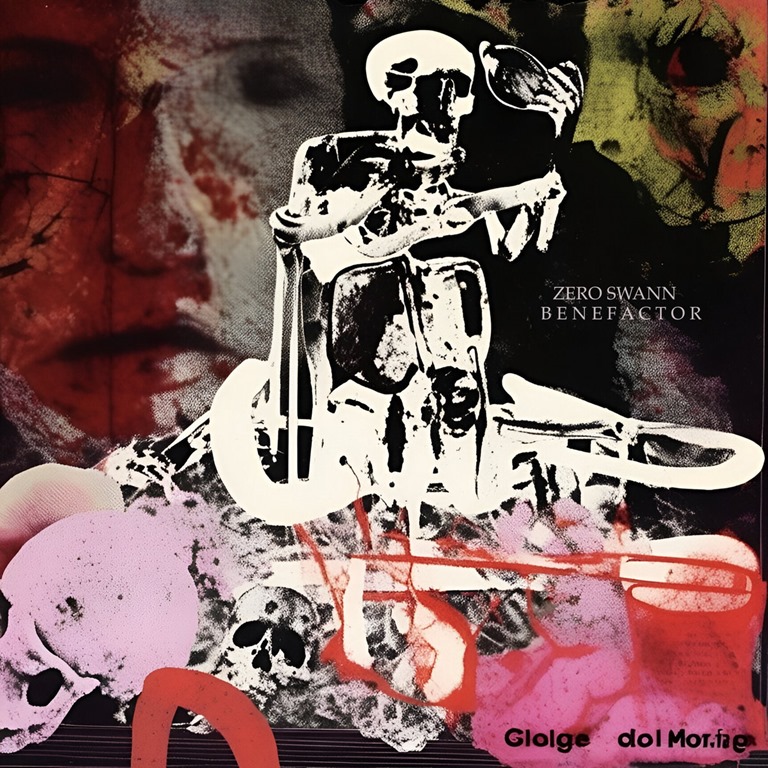
From the very outset, this is not easy on the ear. Sometimes, something leaps out about an album in the opening minutes, and here it’s the production – or lack of. The title track heralds the arrival of Benefactor, the first album by Washington D.C. improvisational psychedelic outfit Zero Swann in two years. And it’s a swampy, reverby, dingy mess. It’s integral to the experience, but it’s also likely to be a deterrent for some – but screw them, it’s their loss, right?

Although straddling heavy psychedelic and the dramatic gothic style, it’s the sludgy, feedback-riven outtakes of The Jesus And Mary Chains’s Barbed Wire Kisses which first come to mind when listening to this.

Benefactor is the follow up to 2023’s Amon Zonaris, which, at the time, was a one-off collaborative release with Scott “Wino” Weinrich. This time around, bandleader and Saccharine Underground label curator Jeremy Moore is flying solo, handling guitars, fretless bass, drums and noise assault. And there’s no shortage of the noise assault on this punishing no-wave behemoth. As they tell it, ‘From the noise rock / no wave snarl of Ritual Tension and early Sonic Youth, to the shoegaze sounds of My Bloody Valentine, to doom and free jazz chaos over a backdrop of pure lo-fi abrasion, Moore’s latest outing is a true crosspollination of styles’. It is, and what’s more, many of those styles are melted together to form a dark, disturbing sonic sludge.

‘Grave Wax Horticulture’ is a skull-splitting mesh of noise, equal parts The Jesus and Mary Chain and Christian Death. It’s theatrically gothy, in the vein of The Horrors, but primitively noisy – which is a fair summary of the album as a whole. It’s experimental, overloading in its racketaciousness – and while is a psychedelic album, it’s a full-on assault album, too, which draws parallels with Head of David’s first album, LP, and simply summarises a noise ethos which eschews convention in every sense.

Moore’s commanding baritone brings a sense of drama, not to mention a certain theatricality to the chaotic, palpating grind, and there’s an edge to his delivery which is both world-weary and tense, a voice emerging from the desolation of a society collapsing, a world in flames. This is surely the sound of the apocalypse, the sound of everything ending. Everything is overloading, murky, blown-out, blasted with distortion and reverb, resulting in a discordant thunderous attack which fires in all directions at once. It’s a primal roar reverberating from buildings collapsed to rubble, a brain-bleeding blitzkrieg of ruinous proportions, as mechanised drum sounds fire like machine guns and missile explosions, cutting through the wildest, densest racket. The absence of overt structures only compounds the sense of things falling apart. It’s the sound of unravelling, of societal threads pulling apart in real-time, a descent into mayhem, anarchy, barbarity.

‘Anagrams for Agnosia’ is perhaps jazz, but jazz in the loosest sense: it’s exploratory, experimental, freeform, but more than anything, it’s the sound of fracture, or fragmentation, instruments churning and burning, and pulling in different directions like splinters of an object in the wake of a detonation. As the screams die down, there is the thud of a panicked heartbeat, before the final track, ‘Phaneron’ obliterates with a squalling wall of howling guitar, stuttering drums and raw, ruinous noise.

Benefactor is an album without let-up, which provides no breathing space, and is thoroughly relentless in its intensity from beginning to end. Recommended, but approach with caution, and a stiff drink. It sounds like the cover looks.

AA

a0986994420_10

LA-based psychedelic rock outfit Tombstones In Their Eyes presents their brooding single ‘Under Dark Skies’, previewing their Under Dark Skies album, to be released via Little Cloud Records (for North America) and Shore Dive Records (for the UK and EU). Without wallowing in self-pity and emotional upheaval, this song leans hopefully toward a new beginning in the understanding that sometimes the bottom is the best place to start.

The video was created by Italian multi-arts visionary Francesca Bonci, known for her work with Federale (BJM’s Collin Hegna), British bard Philip Parfitt, The Dandy Warhols’ Peter G. Holmström a.k.a. Pete International Airport and Slowdive’s Rachel Goswell.

AA

Tombstones In Their Eyes is made up of John Treanor (vocals & guitar), Stephen Striegel (drums), Courtney Davies (vocals), Phil Cobb (guitar), Paul Boutin (guitar), Nic Nifoussi (bass) and Clea Cullen (vocals). What began casually a decade ago has evolved into a powerhouse band known for their expansive psychedelic soundscapes. For Treanor, these sonic explorations are like a cosmic therapy session – an immersive subliminal journey, as well as a way to grapple with anxiety.

This record was created during a year of intense personal change, followed by a clearing of the decks and a move forward into a place light and gratitude. Recorded and engineered by Paul Roessler (Josie Cotton, Nina Hagen, Hayley and the Crushers, Gitane Demone) at Kitten Robot Studios, this album was co-produced by John Treanor and mastered by multi-platinum engineer Alex DeYoung at DeYoung Masters (Michael Jackson, BTS, Macy Gray, The Linda Lindas, TSOL).

“’Under Dark Skies’ is essentially a prayer sent for a path forward from the darkness of the spirit into the light. When the spirit is crushed, a rebirth is possible but the way forward is not always obvious. I feel fortunate to have a creative outlet like music to deal with the chaos in my head. Having said that, fighting the urges for self destruction by self-soothing in harmful ways is still not easy,” says John Treanor.

“We live in a tough and harsh world that is also filled with beauty and joy. Finding beauty and joy is the goal. I’m aware that I have many privileges and do not discount that, but mental health challenges do not seem to discriminate. Finding strength and hope is a daily practice that I must undertake and writing these songs is one of the many ways that I cope. By expressing and sharing these feelings, I let go of the poison and seek connection with others.”

AA

TITE

17th October 2025

Christopher Nosnibor

Raoul Sinier first caught my attention with the release of Guilty Cloaks, although he had already built a substantial catalogue of strange and surreal works in the preceding years, notably Brain Kitchen (2008) and Tremens Industry (2009). After Welcome to My Orphanage (2013) and Late Statues (2015), I rather lost track – something which is clearly to my detriment – and then he fell silent following Death, Love and Despair in 2018. Perhaps that title was a revelation beyond any of the contents or accompanying notes. It’s not anyone’s business, regardless.

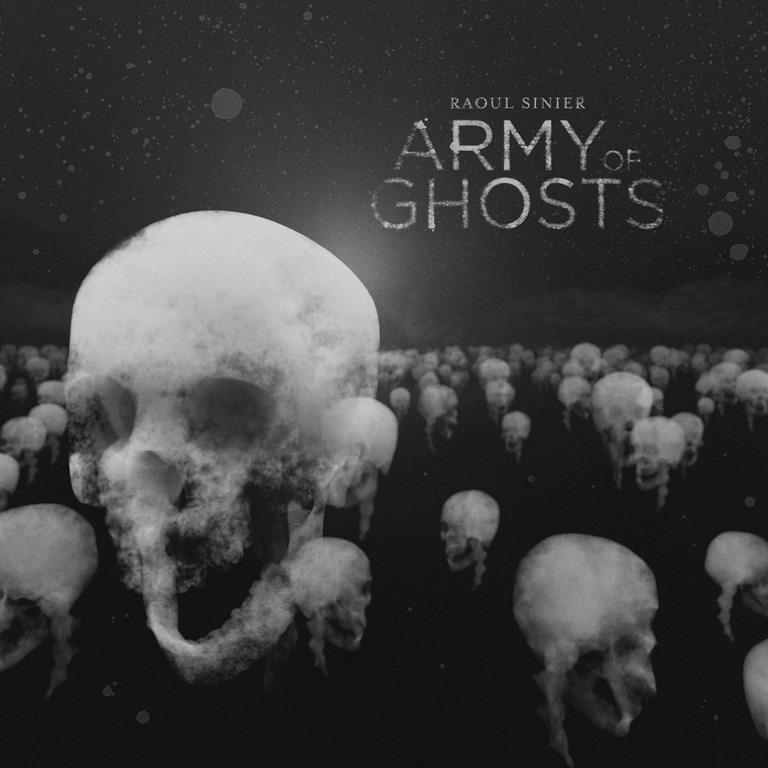
What matters is that the arrival of Army of Ghosts is a welcome one, and one which is heralded in the accompanying press release with the fanfare that ‘Raoul Sinier is back — more hybrid and unpredictable than ever’. We go on to learn that ‘His new album is a bold fusion of everything that made electronic music iconic, layered with sample work straight out of hip-hop’s golden age. Add in overdriven guitars, throbbing bass, flashes of rock, prog, and funk, and you’ve got a sonic landscape that’s as explosive as it is unique. Floating above it all is Sinier’s signature ethereal voice, a haunting counterpoint to the beautiful chaos below.

Melancholic yet sharp, lyrical yet raw, his music walks the line between introspection and confrontation.’

The appeal of Sinier’s work is its inventiveness – although with Guilty Cloaks, I will admit that I was drawn by a certain post-punk vibe, too – and Army of Ghosts is certainly inventive.

The album’s first song, ‘Phony Tales’ switches between Phantom of the Opera theatrical verses and brutal industrial choruses worthy of Trent Reznor. It’s not just the surge of sound, but the crashing, metallic bin-lid snare that dominates the mix and completely spins your head. It may only last two minutes and ten seconds, but it’s intense.

Much of Army of Ghosts is intense, but in different ways. The drums are uncommonly dominant, and Sinier’s vocals often invite parallels with A-Ha’s Morten Harket, but crucially, said vocals are wrapped in a broad range of forms. ‘Brace Yourself’ offers a lethal cocktail of this, and that, and the other, led by some trip-hop drumming and proggy guitar work, before tapering out with a dark, sonorous bass. It’s that same insistent, baggy beat and Bauhaus-meets-metal explosion which shapes ‘Disperse’, a word which has enhanced implications and resonance of late.

In its eclecticism, Army of Ghosts comes up trumps. ‘Walking Through Walls’ offers springy post-punk energy in the vein of Bauhaus at their best, while the title track straddles post-punk and Nu-Metal, and then post-rock, with sludgy bursts of low-end distortion and…piano. Unexpectedly, it calls to mind the stylistic swathe of Bowie’s 1: Outside, an album which knows no borders.

Sinier knows how to spring surprises, and the wild intro to ‘Spectral Ocean’ is indeed wild, a furious flurry of violin, layered and awash in echo abruptly giving way to a low-slung thunderous bass groove that’s got goth stamped all over it and would have been perfectly at home on the new Rosetta Stone album – and that’s before we get to the brittle, picked guitar and sturdy mechanical drumming that pumps away relentlessly. After the widescreen expanse of the moody ‘Distant Wildlife’, which builds to a dark, slow-burning climax, driven by a dense, throbbing bass, the final track, ‘Neon Sign’ pairs things back and goes all out on the haunting atmosphere, with serrated guitars cutting through drifting synths and a contemplative vocal performance – before suddenly closing with a blast of drone metal straight off Earth 2.

The thing about Army of Ghosts is that it is both detailed and direct, sometimes simultaneously, but it is never predictable. The song titles do not offer a clear overarching theme, but the ghostly and paranormal hover in every shadowy corner of this theatrical and imaginative set of songs – a set that’s wildly varied, but consistent in its quality. Raoul Sinier is most definitely back, and this is very much a good thing.

AA

WXFDSWXCXII front

Just back from roads of Europe and full concert halls, Industrial metal legends Die Krupps drop the new video single ‘Will nicht – MUSS!’. This track is taken from the EP Will nicht – MUSS! / On Collision Course that was sold as a hand-numbered collectors’ CD during the already ended and highly successful 45th anniversary tour of this genre defining band.

Due to high demand for the EP, Die Krupps will offer only 45 copies of ‘Will nicht – MUSS!’ as an exclusive 45th Anniversary Gatefold Vinyl edition that is filled with a petrol-green liquid. A limited transparent green gatefold vinyl will also be made available. Both versions will be released on December 12, 2025 and can be pre-ordered at this shop link: https://spkr.store/collections/die-krupps

The Will nicht – MUSS! / On Collision Course EP contains guest contributions and remixes from prominent musicians of renowned acts such as MINISTRY with whom DIE KRUPPS have successfully toured in the US earlier this year. The two single tracks of the EP also offer a first glimpse at the upcoming new album.

DIE KRUPPS comment: “The original idea for ‘Will Nicht – MUSS!’ is based on the classic German movie M (1931), which was directed by Fritz Lang following his huge success with Metropolis, Jürgen Engler explains. “The movie’s subtitle ‘A City Is Hunting for a Killer’, sums up the basic plot. The child-murdering antagonist keeps whistling the main theme from Edvard Grieg’s ‘In the Hall of the Mountain King’ throughout the movie. This inspired us to take Grieg’s melody and add our classic harsh Die Krupps sound to it. The composition came together just as quickly as our 2013 hit ‘Robo Sapien’, which is always a good sign for us. We sincerely hope that you will receive the track just as positively!"

AA

334f5d0e-c52c-d37f-9b2f-aa4a5560bd62

The Hangnails have certainly evolved. Recent releases have been a very far cry from the raw garage blasts of their early works, starting out almost fifteen years as a full-throttle garage duo.

There was something of a fallow spell after the release of DOG in 2017, after which Martyn Fillingham and Steven Reid made an understated return, the dropping of the ‘…and the’ signifying their shift towards different territories.

‘Come On Outside’ may be their most different yet. Stripped back, mellow, atmospheric, and synthy, it boasts epic, cinematic qualities – and they still make sound that you’d think impossible for a two-piece.

The visuals for the video are pretty striking, too.

AA

557129847_1385194123607392_9211412401179351774_n

Rocket Recordings – 17th October 2025

Christopher Nosnibor

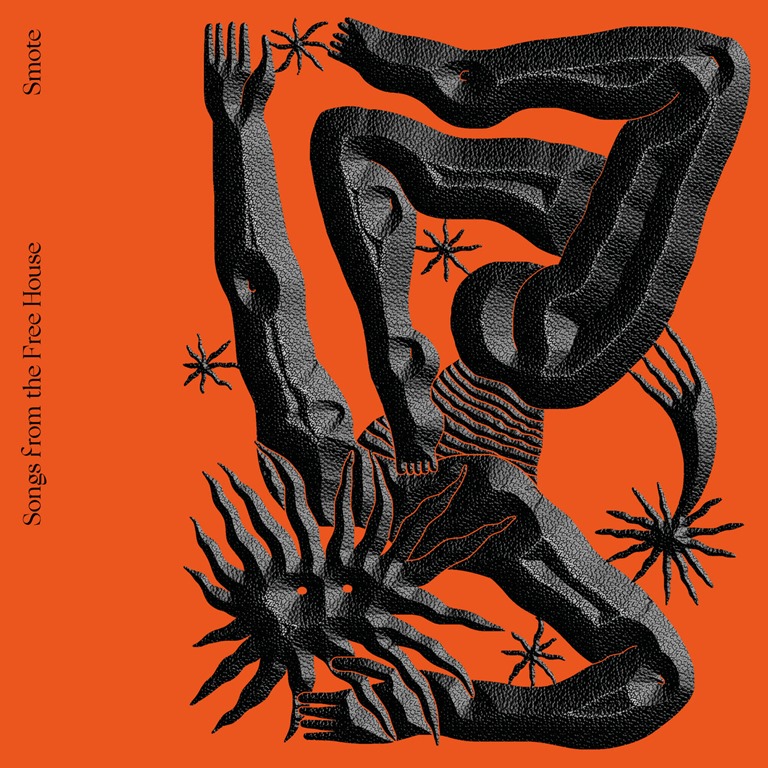
The thing that particularly stands out in the bio for the latest Smote album is this: ‘Daniel Foggin has spent the majority of his adult life working as a landscape gardener, frequently pursuing his trade in conditions of either baking heat or freezing cold and, as he puts it “more often covered in mud than not”. Yet the primal, meditative aspects of this work, the act of communing with nature, its histories and its depths have fuelled his art on a profound level. As Daniel himself relates; “I think the music is a direct reflection of this feeling that I haven’t quite managed to define yet, it is dirty and hard but there is an overwhelming comfort to it.”’

It’s something artists rarely mention: they have day jobs. Perhaps there’s an element of shame in it for some. Maybe it detracts from the mystique. Or it could be that it’s considered a detraction from the pitching of the latest creation. But it’s a truth rarely spoken: most musicians, and artists in any medium, have day jobs and have to make time for their creative work. Tours have to be negotiated with work, taken out of annual leave, often juggled with family responsibilities. Sleevenotes by Joe Thompson of Hey Colossus and Henry Blacker is the most open narrative on the realities of this I’ve read to date, and at times the exhaustion crawls from the pages. As such, it’s refreshing that Foggin not only acknowledges his day job, but recognises it as a significant influence on his creative work. And why not? The most engaging art is drawn from life, after all. Much as it would be a more ideal situation that artists could make their living from art, at the same time, there is perhaps greater value in art created by those who live in ‘the real world’ rather than floating, detached, elevated above it in some kind of bubble.

The words ‘Free House’ make me automatically think of pubs, which perhaps says more about me than the artist, of whom we learn that ‘In the world of Smote, going further out means going inward. Less a metaphysical journey into inner space, more a physical journey into the ground itself, converging with its roots and vibrations. What’s more, a journey right to the heart of its principal architect’s daily experience’.

A cottar is a farmer, and with the album’s first piece, we’re plunged into a deep, surround-sound immersive dronescape, There are many layers to it: reverberating voice, trilling flute, sonorous synths, distant percussion… and it builds, and builds, growing into a hypnotic swell before finally breaking into a slow, weighty post-metal riff that twists and turns with spectacular force, hammering with the force of Pale Sketcher by the six minute mark. It has the weight of sodden earthworks, and conveys the hard exertion of ploughing and tilling, as it descends into a speaker-shredding wall of distortion.

‘The Linton Wyrm’ brings heavy Nordic connotations as it plods on, and on, over the course of a rousing nine and three quarter minutes. It’s not so far removed from the epic force of Sunn O))), but equally Wardruna, a band who evoke earthiness and the essence of pagan spiritualism – not about worshipping mythical gods, but celebrating a connection with nature on a level which is almost primal, and isn’t readily articulable through words: it’s something which transcends language.

Single cut ‘Snodgerss’, which clocks in at under four minutes is both representative of the album as a whole – and not. With its trilling flute and thunderous slow riffery, it incorporates some of the leading elements, but in a way which is considerably more accessible, not least of all with its folk leanings, and presents them in a condensed format. That said, it’s an intense piece, which offers no let-up.

The ten-and-a-half-minute ‘Chamber’ is slower, heavier, dronier, and encapsulates the true essence of the album as a whole, building on a low, resonant throb before the introduction of mournful woodwind. As graceful and soulful as it is, it connects with a primitivism which reaches to the core, a place beyond linguistic articulation. This is the sound of forests, of hills, of streams and moorlands.

The final track, ‘Wynne’ hammers the album home in a squalling blast of overloading guitar and powerful oration propelled by thunderous percussion. It’s mighty, and beyond, seven and a half minutes of blinding intensity which concludes an album that’s varied but unswerving in its density and force. You can truly feel the earth move.

AA

a1730365911_10