Archive for September, 2020

Fight the Power Records – 1st October 2020

Christopher Nosnibor

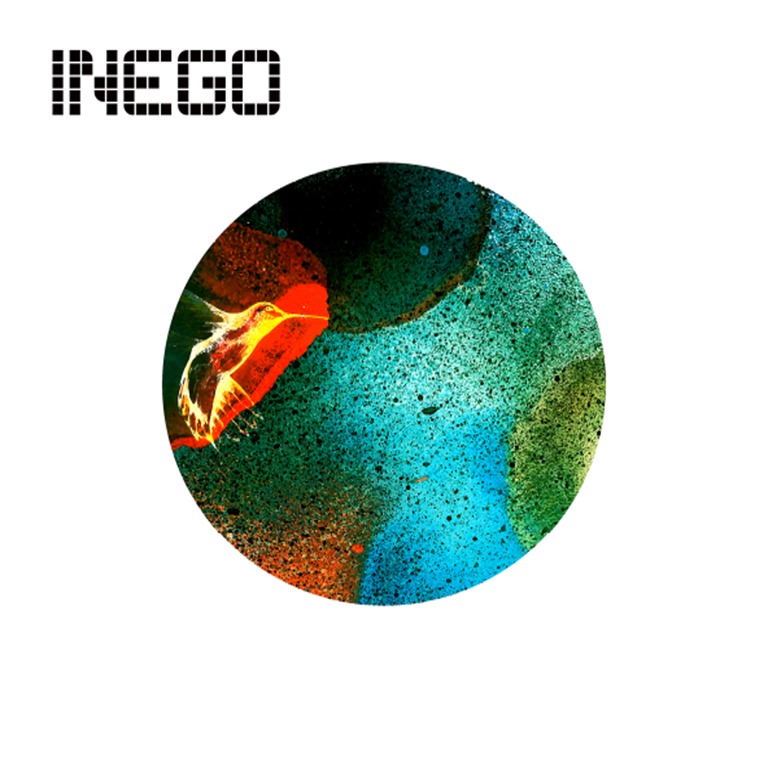
Inego, who hail from Manchester, proclaim to channel ‘some of the city’s finest musical heritage such as New Order, James and Oasis; blending them with other influences that range from Daft Punk to Fleetwood Mac, Phoenix to Chic, and meeting somewhere in the mid-Atlantic to create their own unique brand of anthemic leftfield indie dance rock with pop and disco-funk sensibilities’.

I see ‘disco-funk’ and shudder to my core. I expect the problem is with me, and believe it’s biological or neurological. I don’t have a funky bone on my body, and funky shit all too often fuels an almost unspeakable rage that roars from the core of my being. On calmer days, I just get irritated.

But actually, Inego’s Departures draws on elements that appal, perhaps largely on account of their retro elements, most of which hark back to 80s pop. The production is clean and crisp to the point of near-sterility, and I’m frankly in awe: while many dismiss Duran Duran as vapid and overpolished, there are darker undercurrents to be found in their songs, and the production, as smooth as glass, is something else – and that’s what Inego recreate here.

Opener ‘Je Sais Ce Que Tu Ressens’ has heavy hints of The pet Shop Boys in the mix, and there’s a strong pop sensibility that runs throughout. ‘I Need Your Love’ is unashamedly cheesy, a nagging bass and clean guitar defining the sound, and at its best, Departures sounds like Mansun’s Paul Draper fronting The Psychedelic Furs circa 1982. ‘Can You Feel’ throws some bold, arena-friendly cinematic ambition into the mix, hinting at U2, and maybe later Editors and New Order, specifically amalgamating ‘Ceremony’ with the sound of ‘Republic’.

And so I should absolutely detest he slick groove of ‘Coming Up’, but nostalgia prevents me, hearing, withing its hectic shuffle The Associates, Mansun, Duran Duran. The slower, acoustic-based ‘She Don’t care’ is soulful and sincere, and affecting despite being heavy on the brass.

The bottom line is that this is a really, really good, solid album. It’s not challenging, it’s not contemporary, and it’s got the most overwrought bass and slap bass than anyone’s likely to have heard since Top of the Pops circa 1983. But it’s got songs, and they’ve absolutely nailed the sound and the production.

AA

Inego Album Artwork

Cruel Nature – 18th September 2020

Christopher Nosnibor

Meyer Huthwelker is Helge Meyer and René Huthwelker: these are new names to me, but they seemingly have pedigree as emerging from ‘the hydra-headed experimental noise and ambient scene of Hamburg’. Meyer is also part of the band Ex-Kopf together with Scheich In China, and Huthwelker lately released a great solo tape on Phil Struck’s Stoffe imprint.

As Meyer Huthwelker, the liner notes inform us that ‘they play slow moving electronic music, using various modular and semi-modular synthesizers as weapons of choice.’ These words are chosen as carefully as their weapons, and reflect the way the duo’s sound has a strong attacking element to it, which is showcased perfectly here.

Purdue Generator contains two tracks, corresponding with the two sides of an audiotape, and Cruel Nature are releasing this one in a limited edition of 65 copies – which is an indication of the duo’s appeal given that their tape runs are often considerably smaller. It’s nice, it’s cult, but it’s without doubt respectable.

Purdue Generator contains a lot of heavy drone. Heavy drone. And a lot. Purdue Generator is one of those albums where you find there really isn’t much to say. It’s ambiguous, vague, somewhat formless. It drones on and on… and on. It oscillates and undulates. Slowly, gradually, like so much burrowing and tunnelling and meandering from hither to thither… but nothing happens. Wait, here’s the good bit… Actually, that is the good bit: the lack of change or specific ‘bits’ is entirely the point – it’s an elongated, continuous piece, unpunctuated, defined by protracted sameness that has a cumulative effect. The dronier, the less eventful, the more resonant, the deeper the impact, a little like exposure to radiation, I suppose: the more frequent and prolonged, the more effect on the system.

And so, with the first side, ‘Oxy’, where the elongated pulsations last for aeons, eternities, trickling into the second, ‘Hundo’, there’s a continuity and constant buildup. This being 2020, that buildup is one of tension and resembles less a buildup of excitement than a buildup of plaque. It’s something more to pick at than to actually learn major lessons from.

The low, slow, oscillations hum and thrum at a pace and frequency that settles around the lower thorax, and the reaction is as much physical as mental: Purdue Generator blossoms and blooms with questions over answers as it inspires the listener to step back from the tumult of everything external to meditate in one’s own internal rhythms. The higher, trilling notes that sometimes enter the mix bring levels of discomfort, as do the shifts into lower, grinding throbs. Fading out over a long, deliberate gradation, it doesn’t leave us with very much other than an empty space and room for contemplation.

AA

a3041477711_10

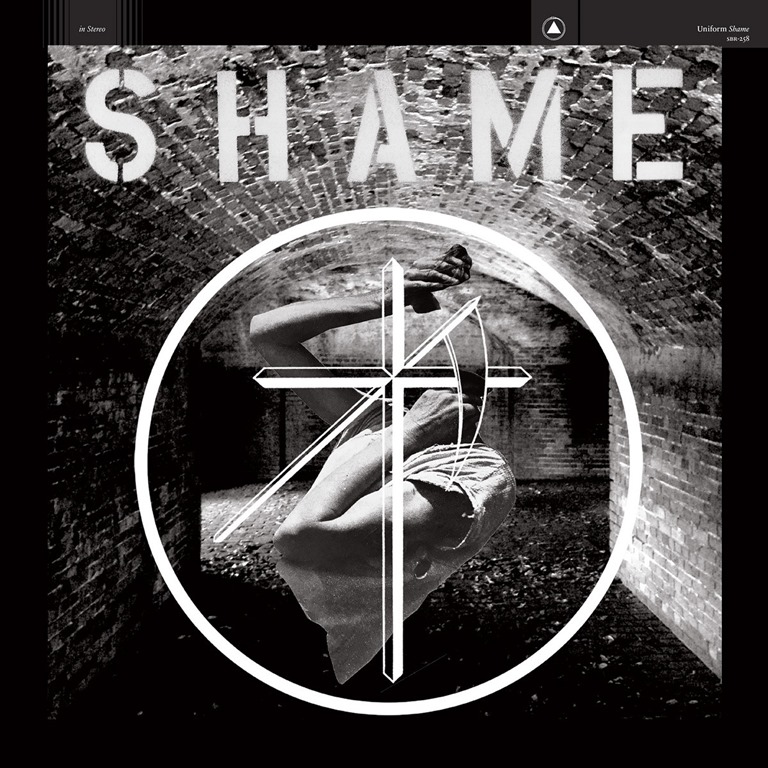
NYC primal punks Uniform share another work of art, an astonishing new video (directed by A. F Cortes) for "Life In Remission" the latest single from their new album Shame, out today via Sacred Bones.

About the track Berdan comments, "The lyrics of Life In Remission deal with loss, guilt, and the facade of a stable life. It’s about the persistent voice in my head constantly telling me that I’m a fraud and urging me toward self destruction. It’s about becoming numb to tragedy. It’s about seeing those around me suffer and die and knowing all too well that it just as easily could have been me a million times over. It’s a song of equal parts anger, regret, and cold despondency.”

The video director A.F Cortes adds, "With this video, I wanted to use the body as a communication tool of chaos. A deconstruction story told through ritual and action. Two friends’ bond is gone wrong from a visceral and perverse perspective. Inspired by abstract expressionism, instead of playing opposites with the music, I wanted to match its intensity like a Jackson Pollock painting, a piece that feels filthy, messy, claustrophobic, yet beautiful and contained."

Watch the video here:

28th August 2020

Christopher Nosnibor

In a format frenzy reminiscent of Mansun back in the late 90s and around the turn of the millennium, which saw the band release around two albums’ worth of material as B-sides over the course of just three or four years, this is the first of a two-part double EP release from Londonites Latenight Honeymoon. It’s a set that wasn’t only written and recorded during lockdown, but that is a product of lockdown in it lyrical explorations, manifesting as a raw, vivid, visceral and personal working through the anxiety, tension, anguish, and insomnia of living life in social separation.

The band’s biographical details may be sparse, and if on one hand it may be frustrating, it’s maybe a strong positive, in that the focus is on the music itself. Does anyone actually need to know who does what? No, of course not: that’s all ego. The singer doesn’t have a conventionally musical voice, but does have a way for delivering a lyric – which always worked more than adequately for Morrissey, Mark E. Smith, and John Lydon, among many others. Rock, pop, and punk aren’t about perfect pitch, but about communicating in a way that registers on an emotional level. And here’s a lot of emotion on the songs on offer here, to the extent that I do feel like I’m being dragged through someone’s lockdown trauma and the correspondent emotional ups and downs as I listen to this EP.

Lead track, ‘Afterglow’ has a certain swing to it, a post-punk indie cross with a dash of funk and blue-eyed soul infused into the spring-stepped guitars that bounce, crisp and clean, over a light-footed rhythm section. The band describe the song as ‘an ode to all the healthy relationships transformed into nightmares thanks to the unprecedented times we find ourselves in. Communicating so inhumanly via the phone screens we are chained too,’ [sic] and it’s likely universally relatable. Hands up who doesn’t miss people, or at least some people?

‘If it’s not your fault / then it must be mine’ the singer sings on ‘B.S.T.’, a heavy hint of resignation in his voice, and it’s a lack of conviction and a sense of hollowness that colours the lines ‘Oh baby please don’t worry / I think were both gonna be alright / in spite of tonight / 2020 / How could you do this to me?’

The vocals are particularly raw and ragged on ‘[What If?]’, landing somewhere between Kurt Cobain and Shane McGowan as he hollers every last ounce of anguish and a piano played heavy-handed hits the mark as the lyrics reprise the chorus of ‘Afterglow’, while referencing Shakespeare’s ‘Sonnet 18’ and Tennyson. There’s no shame in poeticism or literary referencing, and it rounds off the EP nicely.

Given that they’ve already scored some high-profile support slots, this EP is bound to only enhance their reputation and solidify their fanbase, and deservedly so.

Stream the EP by clicking the image below.

BST EP final

Sacred Bones – 11th September 2020

Christopher Nosnibor

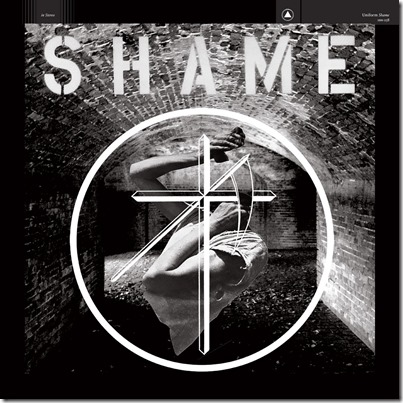
Regular readers will likely have spotted Uniform featured on numerous occasions here at Aural Aggro, and in may ways, they encapsulate everything that inspired me to start this in the first place – namely that reviewing music that moves and affects me isn’t quite enough, because only half of it’s about the music, and the remainder is about that personal reaction, and that’s more of an essay than a review. To some this may seem indulgent, and maybe it is, but the intention is that in explaining my own personal response, there may be something relatable there for other readers – and also, potentially, something for the artist, namely an insight into how their music resonates with fans, what it means to them.

I’m not dismissing the merit of reviews that endeavour to quantify the quality of a release based on various merits and so on, but when confronted with music that exists to convey the most brutal emotions in a way that almost physically hurts, you just have to go deeper, and pick it apart properly, much as in the way you’re compelled to pick at an itchy, crusting scab until it’s weeping and raw and bleeding once more in some wrongheaded attempt to understand the nature of the wound.

The particular thing about Uniform is the way in which they balance unbridled rawness, a rage so explosive and nihilistic that words cannot even begin to convey even the outline of the sentiment, one so deeply enmeshed with a choking fury that renders words worthless, and a rare literacy.

“Thematically, the album is like a classic hard-boiled paperback novel without a case,” says front man Michael Berdan. “It focuses on the static state of an antihero as he mulls over his life in the interim between major events, just existing in the world. At the time we were making the record, I was reading books by Raymond Chandler, James Ellroy, and Dashiell Hammet and strangely found myself identifying with the internal dialogues of characters like Sam Spade and Philip Marlowe.”

These are all authors I have an immense admiration for, on account of the pace of their narrative, their economy, their capacity to deliver plot at pace, and their writing methods. Writing is one discipline. Writing to deadlines and producing quality and quantity quickly entirely another, and one I genuinely aspire to.

Uniform have demonstrated an impressive work ethic since their inception, and have been cranking out an album a year either on their own or in collaboration with The Body on an annual basis for the last few years. And never once has the quality or intensity dipped one iota, and Shame continues this unblemished record.

They have evolved over time, replaving the drum machine with a human drummer, but this hasn’t rendered them any more ‘ordinary’ and even without the harsh, pounding electronic battery of percussion, they’re still cranium-crushingly intense and head-shreddingly harsh.

Admittedly, I’ve had The Long Walk on heavy rotation for some two years now, with ‘The Walk’ not only defining that raw, aggro, nihilism that IS Uniform, but also being something of a soundtrack to life. Because life is short, cruel, and painful an there aren’t many acts who convey this as accurately as Uniform.

Shame explores all of the pains and anguish of shame and humiliation, the desire to bury one’s face or to disappear, and for all its harshness, all its abrasion, and all its brutality, Shame is an album that speaks on a deep emotional level. Shame hurts. It’s also harsh, abrasive, brutal, and as visceral an album as you’re likely to hear, and not just in clusterfuck 2020, but period.

The singles released online in advance of the album certainly give an idea of where it’s headed, but Shame needs to be heard in full – and at full volume of course – for maximum impact.

It crashes in with lead single ‘Delco’, possibly the most accessible of the ten cuts. It’s all relative, and by ‘accessible’ we’re looking at Ministry circa Psalm 69, with driving guitars dominating mangled vocals pegged low in the mix. The album swiftly descends into the depths of darkness, a murky blur of metal fury that combines the detached mechanisation of Ministry and Godflesh with the screeding impenetrable guitar noise.

The title track is tense, bleak, but there are hints of redemption at least in the intro before it turns dark and self-flagellatory. The refrain ‘That’s why I drink / That’s why I weep’ is another intertextual reference, this time made in homage to Rod Serling’s Twilight Zone episode ‘Night of the Meek’. But it distils a dark intensity that is the essence of an internal pain that can only be soothed by a chemical anaesthetic. It’s so succinct, and so absolutely magnificent, despite being painful and ugly. We’re all fucked up, and personally, I’m more wary of those who present themselves as happy and normal than anyone else. Who are they rely lying to?

‘Dispatches from the Gutter’ is a sub-two-minute blast of gnarly noise that is virtual onomatopoeia, while ‘This Won’t End Well’ is a slow-paced, industrial trudge, and closer ‘I Am the Cancer’ is just horrible, a mess of frantically-paced guitars, mangled to fuck, and vocals, distorted beyond impenetrability, all cranked out fast and hard. And this is how this album would always have to end. It would have to be painful. It would have to be like peeling flesh. It would have to be like murder.

Shame sees no sign of Uniform softening, Moreover, as they try to make sense of this ugly, violent world, their music more conveys the confusion and the pain of being alive. Embrace it or don’t, but with Shame, Uniform captures the spirit and the anguish of life right now.

AA
a2171488218_10

27th August 2020

Christopher Nosnibor

Leeds proves once again to be the spawning ground for some interesting experimental music, and this four-tacker from Material Loss is a work of dark, dark ambient, a genre I’ve become increasingly drawn to over time by virtue of its lack of prescription: what I draw from it is as much about my own projections, my own internal state and contemplations as the music itself, although it in turn has the capacity to reflect back at me those internalisations. And what Material Loss convey corresponds with the name – a sense of emptiness, a sensation of being aimless and bereft. Admittedly, these moods do hit from time to time and I know his isn’t something by any means unique to me, but when they descend they do so rapidly, like a storm blowing in from the horizon on a strong wind, building from out of the blue and forcing a sudden pressure drop.

And what is material? Something palpable, tangible. And yes, these four tracks, for all of their vague, effusiveness, they succeed in conveying something more concrete, somehow. It’s all about the atmosphere, which has been carefully constructed and arranged for optimal effect, and while it’s short, it reached seep into the psyche, and into the body, prodding the gut, the bowels, the lungs, and, above all, stealthily creeping around the deeper recesses of the brain.

Such dank murkiness shouldn’t be associated by any means directly with a depressive state, though: the lack of overt form or structure can be quite therapeutic, offering a form of escapism as one allows oneself to drift through the sonic clouds, The first piece, ‘Set’ rumbles and growls, and within those sonic clouds, there’s a storm brewing. It’s a distant rumbling, a dissonance, an almost unquantifiable and most unspecific unease more than anything else.

Following on, ‘UA’ manifests as a barely-audible droning hum for the most part but it’s occasionally rent with tearing shards of nose or rising tides of amorphous sound. The fact that each composition is brief means that none becomes overwhelming, r challenging to the point of traumatic, although in the infinite subtlety, the menace is always present.

‘SD-CLA’ may be brief, but it’s dark and doomy, a single beat repetitively hammered out at a funereal pace amidst fizzing electrics and splinters of breaking glass. Closer ‘Alm’ – the calm without the c – brings a sense of tranquillity, a lifting of the mood and something approximating a sense of lightness and of relief, and a sense that maybe things aren’t so bleak after all.

They are, of course: the reality of living in the now is beyond dismal, but at least, for a couple of minutes, we can perhaps forget and pretend otherwise.

AA

a2284880949_10

28th August 2020

Christopher Nosnibor

The idea of a single a month isn’t new: The Wedding Present did it back in 1992, and in doing so broke records (pun not intended) for the most chart singles in a year by any artist, erasing Elvis Presley from history in the process. Ok, not quite, but you get the idea.

That was back in the days of record labels and physical releases, meaning the logistics of a similar exercise now are far easier, although the chances of charting are considerably smaller. I’ve seen a number of artist release a single song a day / single or album a month / etc in recent years, and 2020 is the year that Ben Wood & The Bad Ideas decided to put out a single a month.

And so here we are with ‘Black’, the August instalment and eighth offering from an act pitched as being for fans of The Gaslight Anthem, Tom Walker, Arctic Monkeys, The Smiths, and Queens of the Stone Age – which is a pretty eclectic mix to say the least.

‘Black’ is a song about introspection and self-reflection, and it’s pretty punchy: clocking in at well under three minutes, there’s something unashamedly old-school punk about it. Fast, furious, and built around an unpretentious four-chord thrashabout played with passion and urgency, it’s got a sharp hook and all the energy, not to mention a broad appeal.

28th August 2020

James Wells

If a band can’t sell itself up, what hope have they for anyone else? So fair play to Horrible Youth, who pitch themselves as ‘an Icelandic five-piece sludge and grunge band that sprang to life in Oslo in 2016 and quietly recorded their stunning debut, Wounds Bleed.’

And you know what? It is stunning. ‘Monkeys’, the album first track is a low-tempo grunger that blends Nirvana and Metallica and ultimately comes on like Melvins – and if you’re going to for sludge and grunge, Melvins is the band against which any other is going to be judged.

The songs on Wounds Bleed are concise (the majority being under four minutes) and built around simple repetitive riffs cranked out with a big, overdriven guitar, and favouring the mid to lower ends of the EQ spectrum for a dense, murky sound. Only the cymbals crash through the

Single cut ‘Blissful Tropes’ brings a psych twist to the lumbering riffery, and it’s got hooks and weight in equal measure (it’s hardly a pop tune, but there’s a sinewy lead guitar behind the shouting), making it a standout on what is, undeniably, a really solid album.

It sure as hell ain’t soft or gentle, and doesn’t do the cliché ‘mellow’ track at the end of side one or anything, instead slinging riff after riff, with the rawness of Tad at their best. ‘Serve the Plague’ hits a particularly hefty, low-slung, goth-doom groove, and the tempo picking up around halfway through to thrash out a full-throttle attack.

Combining density and intensity, and packing a megalithic dose of angst, Wounds Bleed distils the sound of 1994 and turns the volume up to eleven, and the result is something special.

AA

AA

a2274728220_10

7th August 2020

Christopher Nosnibor

Having built themselves a solid fanbase since their formation in 2017, with a series of single and EP releases, supported by some live shows primarily in their regional territory of Kent, Salvation Jayne have been going from strength to strength.

As has been the situation for so many bands, lockdown has put paid to pretty much all activity: gigs simply can’t happen, rehearsal rooms and studios have been closed, and it’s not been feasible for many artists to record at home for various reasons, not least of all not being allowed indoors together.

Despite all of the hot air and rhetoric and the unprecedented use of the word unprecedented, the 1918 so-called Spanish flu pandemic bears remarkable similarities to the present, and it’s like we’ve learned nothing in the last century. However, two major differences are that in 2020, we have the Internet to connect us, to spread misinformation, and to perform live streams and so on, and exchange chunks of audio.

For Salvation Jayne, exchanging chunks of audio wasn’t conducive to the creation of new material, but did facilitate a quite unexpected project, whereby other people could put their spin on cuts from the band’s back catalogue by means of some remixes.

For this project, they’ve enlisted a diverse array of collaborators: John Tufnell (Saint Agnes) – Black Heart; Jericho Tozer (SKIES) – Coney Island, Baby!; Eden Gallup (Violet Vendetta) – Cortez; Sara Leigh Shaw (The Pearl Harts) – Juno; Fuji Hideout – Tongue Tied, Tiiva – Jayne Doe. And at launch, they donated the proceeds of sales from Bandcamp to Refuge.

Witnessing bands so sorely deprived of income using their art for the greater good has been one of the most heartwarming things about lockdown: infinitely more meaningful than clapping for NHS workers in a display of virtue-signalling solidarity, artists making genuine sacrifices for charities spanning foodbanks, support for the homeless and mental health support shows where the real heart is. It’s always the grass roots acts passing up on Royalties, too, not fucking Bono imploring punters to donate, and that’s significant too. This is real charity.

It also matters that the product is of a certain quality, and this really is there: these remixes showcase the breadth of Salvation Jayne’s material, which may be rooted in solid alt-rock with more classic twists, but are well-suited to adaption.

The Saint Agnes Lockdown remix of ‘Black Heart’ explodes in a blast of abrasive noise and steers the song into a kind of early 00’s Pitchshifter industrial noise and distortion space, with pounding percussion and slabs of overdriven guitar backing Chess’ fuzzed-out vocal. With more disco-orientated verses, it shouldn’t work, but it does, and what’s more, it packs some real groove.

The Pearl Hearts’ take on ‘Juno’ is another stomper, disco beats cranked up to industrial strength, and this take also has a much harder edge than the original, and it works surprisingly well, as does ‘Coney Island, Baby!’, when SKIES sub the post-punk feel of the original version with something slower, heavier, more industrial, then sling in some epic strings on top. The result is pretty spectacular.

‘Cortez’ is a standout in the SJ catalogue, and to hear it pumped up, grooved up, and sped up is a major rush, and the same is true of ‘Jayne Doe’, released in May of this year and here given a radical and full-on dance reworking. It may divide the fans but it’s important that the band continue to push their parameters instead of limiting their horizons. Ultimately, this is what the remixes EP is all about: Salvation Jayne may be a rock band with a certain post-punk leanings, but above all they’re a band who don’t want to be pinned to a style, and a band with range, and these remixes showcase both the sound and progressive attitude perfectly.

AA

a3147981244_10

28th August 2020

Christopher Nosnibor

Spar Marta’s Facebook page defines them by what they’re not rather than what they are. Specifically, the quintet – consisting of Ieva Aleksandrovičiūtė, Luke Wilson, Conor ‘Corndawg’ Taylor, Sam Liddle, and Dan ‘Danno’ Purvey – are at pains to point out that they are not an acid jazz trio. The fact there are five of them is a significant clue, but, it has to be said, three of them do have beards… and y’know, nothing says jazz like beards, right?

This six-tracker, which features previous singles ‘The Postman’, ‘Frey’, and ‘Let is Go’ (which has absolutely nothing to do with the Disney smash Frozen – thankfully) showcases a mighty guitar-driven sound tempered by a keen sense of melody and a vocal that’s got guts and sass in equal measure. Recent years have seen a real surge in exciting female-fronted hard rock bands, who punch hard and pack some killer tunes.

With Leeds titans Black Moth having called it a day, the arrival of Sky Valley Mistress, and now Spar Marta is more than welcome.

It’s ‘The Postman’ that opens – or, more accurately, rips things open – with a hefty blast of overdrive, a busy, cyclical riff and gritty rhythm guitar. The shift to a ska-influenced riff for the middle eight is unexpected, but equally unexpected is the fact that it not only doesn’t suck, but actually works, and when they lumber back into the full gut-punching riffage, it hits even harder and calls to mind The Pretty Reckless at their best.

As the nagging mid-tempo ‘Let it Go’ demonstrates, they’ve got a real knack for dynamics, a clean, buoyant verse ‘I’ll never let you go’, Ieva Aleksandrovičiūtė sings, and it sounds like as much of a threat as a promise of support, and it’s all driven home with a full-throttle riff-mongous finale that fills the final minute.

What we get from this EP is the work of a multi-faceted band who’ve got an ear for an accessible alt-rock tune in the Paramore vein: ‘Frey’ is very much representative, being a bit more arena / Kerrang! radio friendly and suggests they’ve got the capacity to reach a much wider audience – but it’s when they put the pedal to the metal and rage hard they’re at they’re best by far, and ‘Take Control’ brings the fretwork fury propelled by some hefty drumming.

Closer ‘Run’ is a real beast of a closer, beginning with a soft, tripped-back intro that hints at something wistful, transitioning through a succession of segments to culminate in a raging, rip-roaring climax, all the while keeping one ear on the melody and filtering some palpable emotions through it all. It’s accomplished work, and while the production is full, it’s not excessively polished, meaning the songs are delivered with bite, and the passion behind them is very much to the fore.

Stream by clicking the image below.

118424237_3302531303127605_2486036806050645192_o