Archive for July, 2020

Room40 – DRM475 – 24th July 2020

Christopher Nosnibor

In one of a brace of releases on Lawrence English’s Room 40 label in July, Australian minimalist Todd Anderson-Kunert presents a selection of Moog synthesiser compositions, which we learn are ‘exercises in intimacy, restraint and unerring patience. Past Walls And Windows plays with how sound emerges and decays. It is an edition that celebrates the ephemeral nature of the medium and the way sound’s immateriality invites a constant sensing and seeking on behalf of those that encounter it’.

These are indeed minimal works, so sparse at times as to be barely audible, and they’re a long way from presenting any sounds conventionally associated with the vintage Moog. Instead of jangly, trilling tones, Anderson-Kunert teases hovering single notes that evoke a sombre, even funeral atmosphere for the most part. There are flittering oscillaations and low, diminishing drones, and they make up much of the fabric of this set, comprising six pieces, most of which sit over the five-minute mark.

It’s quiet and delicate: ‘Better Left’ begins with distant grumbles of thunder, before low ominous notes drone in and halt abruptly, while ‘An Echo’ brings slow pulsations and haunting drones like a trilling church organ ringing out dolorous notes in a sepulchral setting. It’s gloomy, and it’s ambient in the background sense, yet it has the capacity to send the listener inside themselves on a contemplative course.

It’s no criticism to remark that there isn’t a lot to say: this is an album that requires not commentary, but peace, and time: to be listened to without interruption or distraction, and ideally in semi-darkness. It isn’t an album that really raises questions, and it doesn’t offer answers: it simply is. An as a sonic vehicle for contemplation and tranquillity, it’s ideal.

DRM475_art

DL only – Self Released – 15th July 2020

Christopher Nosnibor

Four months on from the original Kressel Studies release, Mick Sussman delivers a second volume of ‘algorithmic studies’ which explore ‘new rhythmic and timbral techniques’ The accompanying text explains that ‘as with the previous volume of Kressel Studies, these pieces are brief and generated from compact nuggets of computer code. But they form a varied procession of musical thoughts, some severe and some almost merry.’

I wrote of the first back in March that Sussman took the listener ‘deep into skittery microtonal bleeping territory’, and this twenty-one track collection of snippety fragments of drones, hums, bleeps and yawning extraneous and quivering noises follows the same experimental trajectory. And as one may reasonably expect, Vol 2 is more of the same, only different – but not very.

‘kr40P1p5’ is a jittery, skittery melange of synths, and ‘kr40P1p5’ is similarly brain-bending, but even more fractured and dizzying, as stunted notes bounce and ricochet every which way in a kind of Brownian motion. ‘Kr42p2p5’ is a swampy soup of straining analogue, while ‘kr42p2p7’ is a fizzing morass of whupping phase and stunning static hiss that’s churned to a spacey foam.

R2D2 bleeps and whistles and retro-futurism clash with short blasts of power-electronics noise, and this is very much a work which is preoccupied with sound rather than sense, conjuring a wibbly-bibbly world of weirdness.

It’s very much a mixed bag of oddities, and if, like its predecessor, it sounds like so much dicking about in the studio, then that’s because it really is, although that’s no criticism. The blurb explains that across the album, ‘some [tracks] veer toward pure noise, like Kr. 42.2.3, while others have a lighter melodic flavor, like Kr. 42.3.1. And some split the difference, with rough-textured grooves, like 44.2.1.’ And perhaps, rather than view this as an album in the conventional sense, it should be held up against the sound effects alums of the 70s and 80s, the likes of which were recorded by the BBC Radiophonic workshop.

With each piece – compositions is a stretch, at least as a musical descriptor: any composition involved is digital coding as Sussman plays with the parameters of programming – so brief, the listener doesn’t get the opportunity to settle, and is instead slapped by a quickfire succession of sonic assaults presented as sketches that flit across the full range of textures and tones, and at a pace that’s sometimes bewildering.

It does work – again, not as an album, but a collection of random sounds and sonic experiments.

AA

a1746053039_10

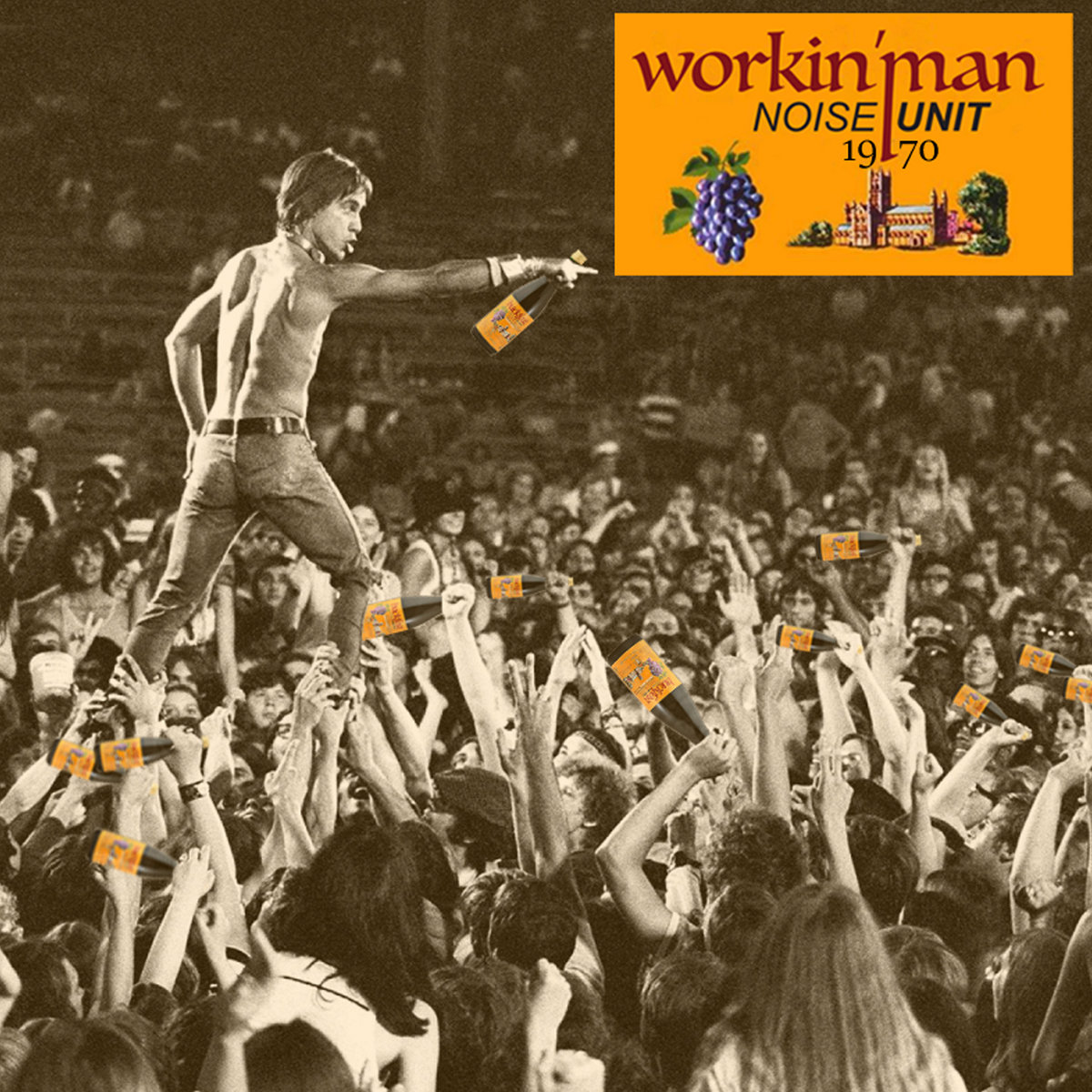
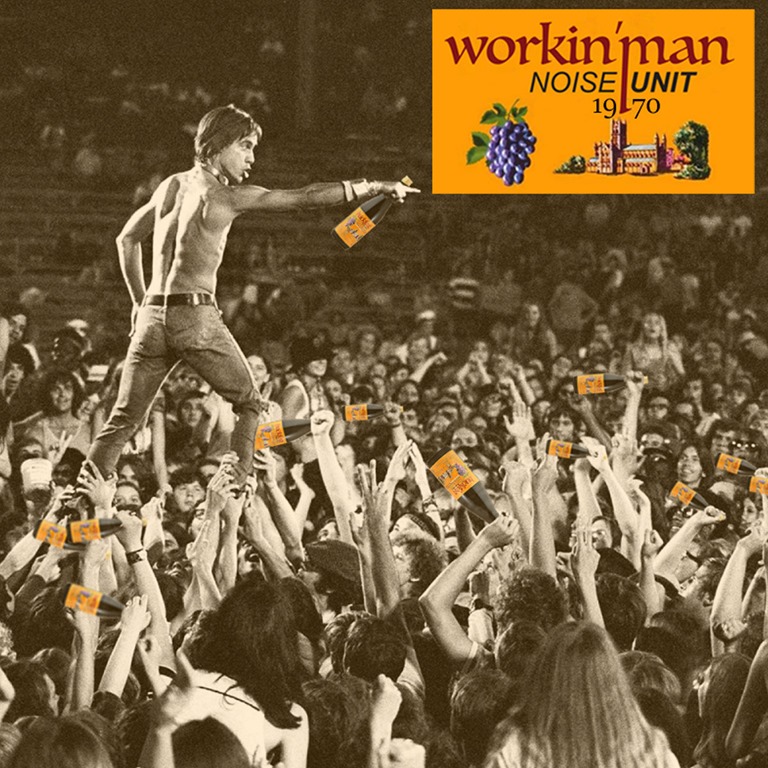
Workin’ Man Noise Unit mark the 50th anniversary of The Stooges’ second album, Fun House with the release of their take on ‘1970’. It’s a belter, and captures the blistering intensity of the original with a sinverity that’s impossible to fake. What’s more, it’s priced a pay what you feel, with everything you feel being given to Gendered Intelligence.

Good people doing good things via the medium of good music.

The world needs this right now.

Listen to and download  ‘1970’ here:

AA

a2216120716_10

Lonely Robot, the project masterminded by producer, guitarist and singer/songwriter John Mitchell (Kino, Frost*, Arena, It Bites), are set to release their fourth album ‘Feelings Are Good’ on the 17th July 2020. Now, a second track from this record has been released featuring an impressive video by Miles Skarin of Crystal Spotlight.

Watch the video for ‘Spiders’ here:

AA

John Mitchell has the following to say about this song: “’Spiders’ is a song about a woman, nay wolf in sheep’s clothing, who chose a path of greed and wretchedness and exploited her position of trust at a time of weakness when she COULD have done the exact opposite. Long since gone but never forgotten for all the wrong reasons.”

‘Feelings Are Good’ marks sort of a fresh start following the conclusion of the ‘The Astronaut Trilogy’ as John explains: “‘Feelings Are Good’ is a bit of a departure from the first three Lonely Robot albums. On ‘Feelings Are Good’, I wanted to explore more personal themes and the songs are very much about individual experiences and narratives that I believe had been the cornerstones, good and bad, to my life. The long tall and short of it is that we’re back on planet Earth, and I have a personal lyrical axe to grind!”

AA

Lonely Robot will hit the road in December 2020 for some select headline dates, as follows:

Dec 13th  Islington Assembly Hall, London, UK

Dec 16th  Riff, Bochum, GER

Dec 17th  Das Rind, Rüsselsheim, GER

Dec 18th  Muziekgieterij, Maastricht, NL

Dec 20th  De Boerderij, Zoetermeer, NL

Ideologic Organ – SOMA034

Digital release date: July 3/10 / Physical release date: mid August 2020

Christopher Nosnibor

Ideologic Organ label owner Stephen O’Malley effuses over Ai Aso’s ‘immaculately crafted form of minimalist pop music skirts the edges of tensity with the manner and with the skill of a tight rope walker, calmly balancing repeatedly at every step, with a combination of surety and the risk of a slip, a fall, and an unknown uncoiling of events’.

Pop may not be a genre commonly associated with he label or the Sunn O))) founder, but Ideologic Organ do have a track record for venturing beyond the expected and showcasing some unusual talents, and Ai Aso is definitely one of those, as the nine tracks on The Faintest Hint demonstrate. Legendary Japanese rock band Boris accompany Aso on two of the pieces, but if you’re expecting powerchords, keep moving on.

Picked acoustic guitar alone accompanies Aso’s voice for most of the first song, ‘Itsumo’, and indeed, much of the album, and even with the multi-tracked vocal, it’s a simple, spartan, and intimate recording. The guitar and voice are in the room with you. And they touch you accordingly.

‘Scene’ is more post-rock, a slow, quivering bass chord echoes out against chiming guitar notes and Ai’s soaring ethereal voice calls to mind Cranes at their most delicately haunting, but also at times is simply a shy humming that’s endearing in its understatement and apparent reticence.

Sometimes, quietness and sparseness simply seem to equate to sadness, and the low, mumbling low-note repetitions of ‘Gone’, despite the words being unintelligible, emanate an aching sadness, while in contrast, ‘I’ll do it My Way’ carries something of a playfulness, not to mention a certain Young marble Giants lo-fi bedroom indie vibe. The straining electric guitar discordance that disrupts the singsong easiness of the song toward the end is a nice touch. She trills, swoops and croons on ‘Floating Rhythms’ in a way that sounds like she’s singing to herself – and this intimacy provides a large part of the appeal.

If there’s anything about The Faintest Hint that may suggest ‘amateurish’ to some, that’s certainly not the reaction from my ears: Aso’s minimal approach to songwriting and performance gives a rare immediacy, and it’ss unhampered by conspicuous production. It’s touching, intimate, and special.

AA

a0454863500_10

For nearly twenty years, Gazpacho have reigned as the kings of atmospheric and affective art rock. That’s certainly no small feat, as the subgenre is full of wonderfully moody, ornate, and emotional artists; yet, none of them manage to achieve the same level of exquisite baroque resonance and hypnotically introspective weight as the Norwegian sextet. As a result, they never fail to provide awe-inspiring examinations of the human condition, and their latest observation, Fireworker, is no exception. It is undoubtedly among their greatest achievements, as well as one of the most profound pieces of music you’ll hear in 2020.

Listen to ‘Fireworker’ here:


Conceptually, the album follows the band’s tradition of blending grand philosophical quandaries, stimulating literary leanings, and haunting personal turmoil. In a way, it acts as the culmination of the themes and techniques that’ve decorated earlier collections, combining the fatalistic isolation of Night and Missa Atropos; the ill-fated narrative drama of Tick Tock and Soyuz; and the hefty theological/scientific contemplations of Demon and Molok. Beyond that, its central premise (that humanity has always been controlled by an infallible and omniscient creature determined to propagate at any cost) means that Fireworker comes across like the overarching umbrella under which all of its predecessors occur.

Keyboardist Thomas Andersen elucidates: “There’s an instinctual part of you that lives inside your mind, separate from your consciousness. I call it the ‘Fireworker’ or the ‘Lizard’ or the ‘Space Cowboy.’ It’s an eternal and unbroken lifeforce that’s survived every generation, with a new version in each of us. It’s evolved alongside our consciousness, and it can override us and control all of our actions.” In order to get us to do what it wants, he clarifies, the “Fireworker” will silence the parts of our mind that feel disgust or remorse so that we’re unable to stop it. The conscious part of our mind, Andersen notes, will actually “rationalize and legitimize” those thoughts and actions so that we never discover the beast behind-the-scenes. No matter how we feel about ourselves in terms of identity, accomplishments, and value, we’re all just vessels—or “Sapiens”—that the creature uses until it no longer needs us. “If you play along,” Andersen explains, “It’ll reward you like a puppy and let you feel fantastic; if you don’t, it’ll punish you severely.”

Modern Technology have unveiled a video for the second single to be released from their upcoming debut long player, Service provider. Featuring visuals every bit as stark and impactful as the bleak ribcage-rattling bass-driven racket of the song, ‘Blackwall Approach’, it’s a belter. Watch it here:

AA

a1432357693_10

Come Play With Me – 17th July 2020

Christopher Nosnibor

Since their inception and their first release, Leeds label Come Play With Me have done a remarkable job of showcasing local talent and giving an outlet to an array of acts from the area – and to be fair, they’ve always been spoiled for choice.

As has been increasingly apparent over social media in particular lately, with attention all on schools, pubs, hairdressers, the music industry is foundering. Which is why this release is important, as a compilation record ‘to support contributing artists as they deal with the delays, cancellations and loss of income caused by the coronavirus pandemic’.

I may have mentioned it before: I’d questioned the appropriateness of reviewing under the circumstances, but with so many acts releasing new music under lockdown either out of boredom or necessity, following a certain degree of public pressure, I elected to press on, and releases like this remind me why.

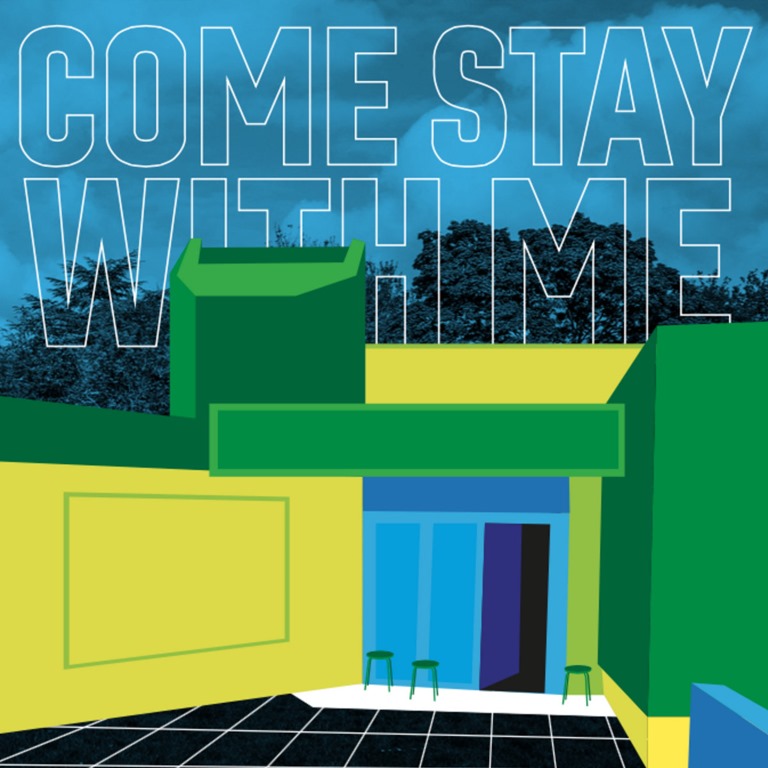
Come Stay With Me is ‘a collection of 13 new songs from bands and artists across Leeds ‘Come Stay With Me’ will feature Magick Mountain, Talkboy, Dialect, Team Picture, Van Houten, Dead Naked Hippies and more with artwork from ‘Life’ drummer Stewart Baxter. Set for release in July on eco-vinyl, all profits from Come Stay With Me will be shared between the contributing artists.

What isn’t to support here? For those in need of a reason, here are plenty:

Team Picture are a band who invariably surprise: perhaps it’s because of their incorporation of so many disparate stylistic elements that they never sound like the same band. On this outing, they’ve gone for some Hi-NRG disco which is more Donna Summer than the indie seem they’ve mined previously.

Mindstate are a new name to me, and while I’m not taken by their brand of mellow, lougey jazz, it’s hard to fault the musicianship or their capacity to conjure a mellow, late-night club vibe with their chilled brass and skipping percussion. As it happens, the majority of the bands are unfamiliar, and it’s heartening to discover so many emerging artists. The majority are of an overtly ‘indie’ persuasion, and collectively, there’s something of a C86 vibe to this compilation.

But then, what goes around comes around, and the label is names after a song by on of the definitive indie bands of all time, local legends The Wedding Present.

But then Dialect’s ‘Come Up’ represents a vastly underrepresented aspect of the Leeds scene, with some direct and no-messing old-school bassy, beaty hip-hop. It hits hard and packs some meaty bass, too. That it’s very much a lone example amidst the stereotypically white indie probably suggests less an act of tokenism as how the various scenes in the city meet, and hearing this says it’s a shame and reminds us of just how far we still have to go to realise

Tall Talker’s ‘River Hands’ may be contemporary, but their noodly instrumental math-rock belongs to a rich heritage of technical post-rock that goes back to the turn of the millennium and reminds me of countless bands I saw at the Brudenell and various other venues around the city circa 2004-2008. There was a time I found this stuff a bit samey, but listening to this now, it’s hard not to get dewy-eyed. I’d rather listen to a thousand identikit instrumental post-rock acts than see venues going under and not be able to mill around at the bar between acts and discover new bands several nights a week.

Jagged post-punkers Dead Naked Hippies offer something different with the stark, broody electropop of the ‘Night Time Version’ of ‘Eyes Wide’, which sounds like Siouxsie and the Banshees remixed by Depeche Mode. Which means it’s absolutely killer.

Local supergroup and Pulled Apart by Horses offshoot Magic Mountain bring all the grungy surfy racket with ‘The Shitty Beatles’, and DENSE do a storming job of primitive lo-fi punk din with a contemporary spin on the ball-busting ‘Electric Chair’.

Dead Poets bring a slice of DIY folktronica, that boasts a dense cinematic production that belies its simplicity, and Talkboy’s demo for ‘Over Under’ is another classic indie cut with a certain vintage feel

The last track, ‘One Last Look Around’ by Household Dogs is interesting, musically and in terms of its place on the album: it’s brooding, reverby, and semi-gothic, at the same time calling to mind Post war Glamour Girls and early Pulp. It’s no understatement to say that this is an absolute revelation, and I’m buzzing for more Household Dogs. It makes me yearn even more for the live scene and situations where I can stumble upon new acts with ease. But in the meantime, stay alert, keep on the hunt for new artists and support music any and every way you can.

AA

a0398853239_10

As part of their fundraising efforts, Wakefield’s Long Division Festival – which has now been postponed until 2021 – have announced two new records available to order as part of this Friday’s Bandcamp fee-free day.

The first is  ‘A Romantic Destination’ – a live album by Jamie Lockhart, leader of critically acclaimed DIY Wakefield band Mi Mye. Recorded at Long Division 2018, ‘A Romantic Destination’’ see’s the songwriter and producer reimagining music from a book of songs that has been passed down by his family in Skerray in the Highlands for 166 years.

A songbook from 1851 used by two brothers; one a folk songwriter, the other the 1st Piper To Queen Victoria was passed down six generations before ending up in Jamie’s hands – accompanied by Mi Mye bandmate Morgan Evans, ‘A Romantic Destination’ captures this incredibly special one-off and sold out performance.

The second of these new albums is ‘New Additions: Vol 2’ – the second in a run of compilations from Long Division Festival, ‘New Additions’ features brand new songs and recordings from artists who had been scheduled to play at this year’s Long Division Festival.

Pressed onto 12” vinyl thanks to support from independent label ‘Last Night From Glasgow’ , New Additions features 10 new songs from a host of exciting new artists including Priestgate, Cowgirl and Mt. Doubt with all proceeds distributed evenly amongst the artists.

Full Track listing:

· Cowgirl – Wasn’t Listening

· Priestgate – Now

· Life Model – Walking Backwards

· Lemon Drink – Manic

· Mt. Doubt – Stairwell Songs

· HerTiltedMoons – Orange Grove

· In The Morning Lights – Milk And Honey

· Bunkerpop – C’est Comme De Robots N’est Pas

· Macroscope – Reveal

· The State Of Georgia – Little Tiny Ones

Both records are available to buy now from Bandcamp: https://longdivisionfestival.bandcamp.com

Long Division’s Crowdfunder is sitting just below 50% of its goal after its first week, more information on the fund, how it will be spent and how you can contribute can be found here.

Cruel Nature Records – 3rd July 2020

Christopher Nosnibor

On the face of it, Newcastle has a conspicuously large and thriving scene devoted to all kinds of noisy / experimental metal shit, until you realise that about 75% of the bands feature James Watts and a number of his mates. Ultimately, that’s col, because Watts is a versatile vocalist – maybe not Mike Patton, but more than adept at affecting all kinds of low-throated metal, as well as anguished elongated notes and monastic incantations, and, as the last song evidences, human didgeridoo.

The band are described as ‘a unique weirdo blend of improvised doom with a drunken psychedelic vibe which is anywhere between THRONES to The Melvins to a very pissed off Butthole Surfers.’ The blurb also goes on to detail that ‘They normally play as a 3 piece, with bass, drums, a little sax and vocals which sound like they are coming out of someone’s mouth who has been trapped in a basement for 20 years and staying alive by licking the mould that grows on beer barrels.’

It’s a fair summary, although there’s more than a little sax here. But no violins. For all the sonic assault, they’re very much pacifists.

There’s nothing like easing the listener into an album gently, and the twenty-three minute opener, ‘Ioniser’ is absolutely nothing like easing the listener into an album gently. An overloading crackle and buzz churns and distorts like hell. It eventually settles into a Shellac-like groove, hectic Todd Trainer-esque drumming driving a grungy low-end grind that provides the backdrop for a display of vocal contortions that celebrate all things tortured and guttural.

Christ, that bass! It’s so low and grindy it could relieve constipation within a matter of bars, and against a jazz-influenced rhythm played with explosive force, ‘Shan patter’ is an absolute beast. The vocals are barely audible and as low, if not lower, than the bass, a chthonic gurgle

‘Shenanigans’ has the looping structure of a dance track crossed with the nagging circular motifs that defined Therapy’s sound on Nurse – only it’s a twisted jazz-funk odyssey, and it’s a complete contrast with the ultra-slow, ultra-minimalist drone-plod of ‘Wallow’ that crawls into a droning boom of repetition, a single chord ringing out for an eternity, the sustain twisting to feedback. Any Sunn O))) comparisons are entirely justified, although the percussion has a certain swing that lifts it from the domain of sludgy doomy drone and into that of something more jazz/low grunge in style.

And if the title of the final cut inspires references to Derek an Clive, the thirteen-minute ‘Horn’ is less to inspire a rush of blood to the penis than a crawling sensation over the skin as another lumbering bassline strolls, battered, bruised, dust and dirt-covered from amidst a fizz of noise before a heavy-hearted brass brays, wails, and honks all over.

While the freeform elements of the pieces give them a sense of looseness, or non-conformity, of spontaneity, of disarray, the way they come together so tightly and intuitively on the extended riffy segments is indicative of a real musical competence and a high level of intuition. It’s special and it’s rare. And it’s a defining feature of an album that’s properly heavy, and at the same time, way jazzy without sucking.

AA

a0908613782_10