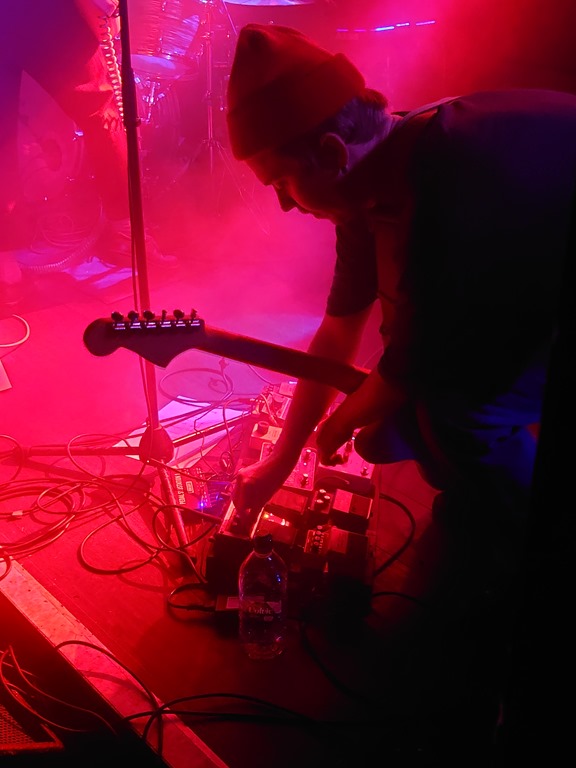
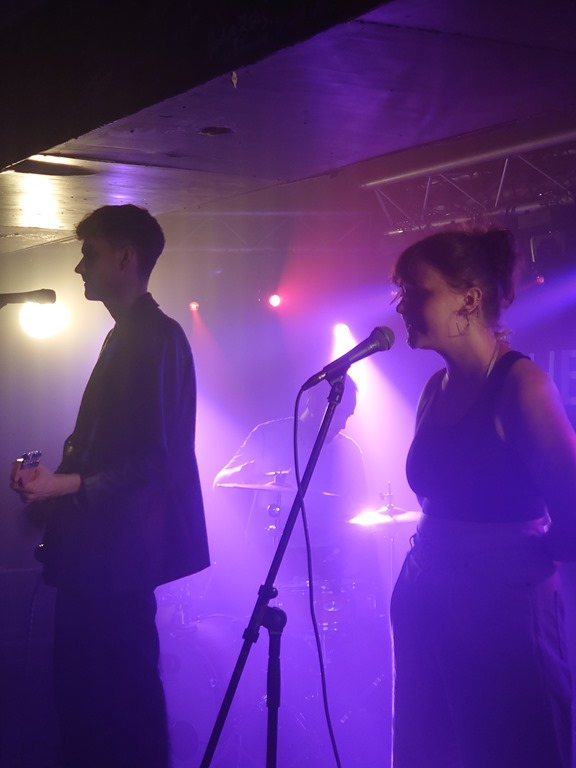
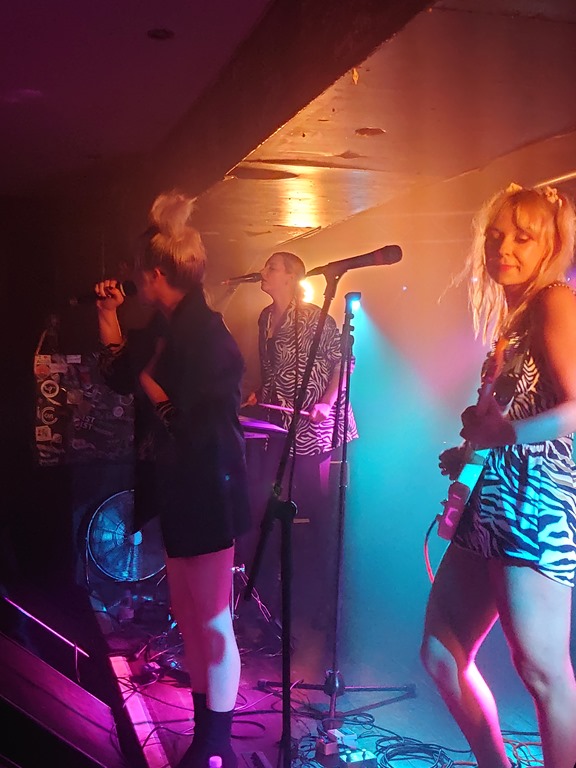
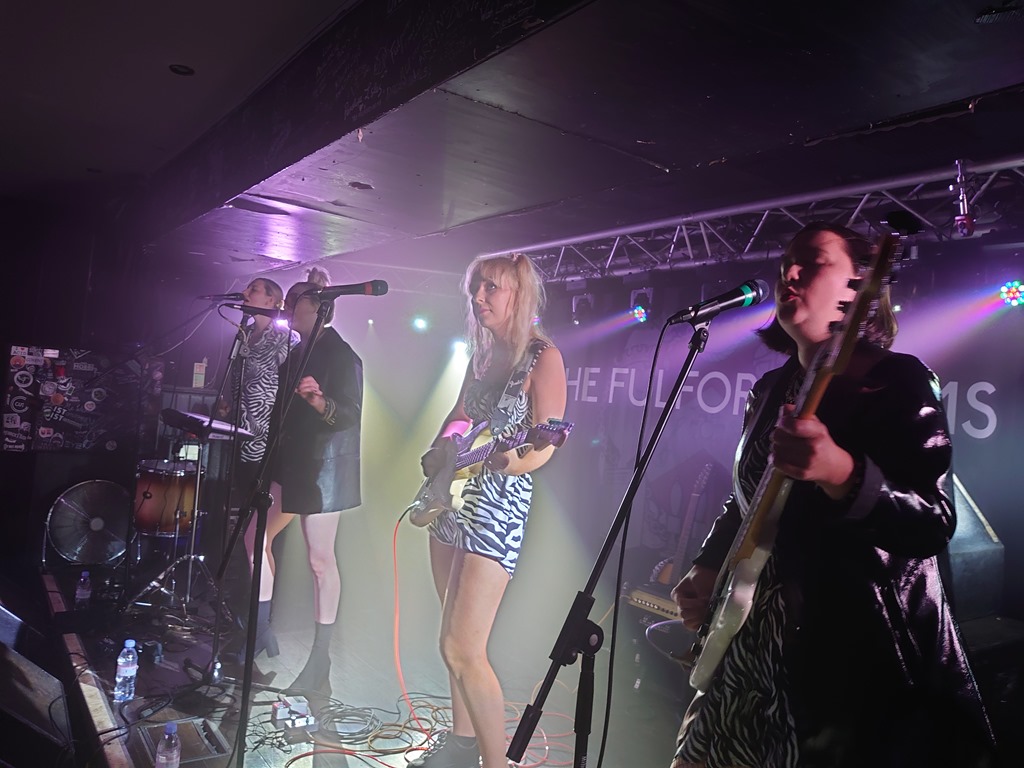
Posts Tagged ‘York’

Christopher Nosnibor

Almost invariably, when there’s a buzz building around a DIY act, they’ve had some kind of assistance or boost, either via a PR campaign or radio play, and / or some fortunate support slots. Not so Benefits, whose profile has grown with the speed of contagion of the pandemic: they’ve thrived during lockdown without management, any ‘proper’ releases, and next to no press (although that’s changing fast); but instead of them seeking out the coverage they’re the ones being sought out.

On paper, their appeal is limited: shouty sociopolitical spoken word paired with blistering squalls of electronic noise is kinda niche, right? Like Sleaford Mods only more noisy and a bit shoutier, right? Sociopolitical ranting aside, not so much. Mods have very much exploited the affront some people feel about their not being a ‘real’ band, and have turned the lack of performance into a schtick. Benefits are very much a band, and despite the swinging, rhythmic hip-hop style delivery of some of the lyrics, Benefits share more with harsh post-punk noisers Uniform than another other contemporary act that comes to mind.

Steve Albini perhaps sums up the two key, and seemingly opposing elements of what Benefits do in referring to the period of musical foment of the early 80s, with ‘the Crass/Pop Group ranting lefty/anarchist punks, and Whitehouse/TG/Cabaret Voltaire pure noise’. He’s not wrong when he writes that it’s ‘Been a while since something evoked that era as effectively as this Benefits track.’

But Benefits don’t only evoke that era: they’re a band that are precisely of the moment. During lockdown, people were on edge – and they still are as they emerge, blinking, into a world that has changed, and not for the better. More divided, more violent, it’s a difficult place to navigate. People are scared, and they’re also disaffected. Benefits channel and articulate all of this, and the buzz around tonight’s show was positively electric.

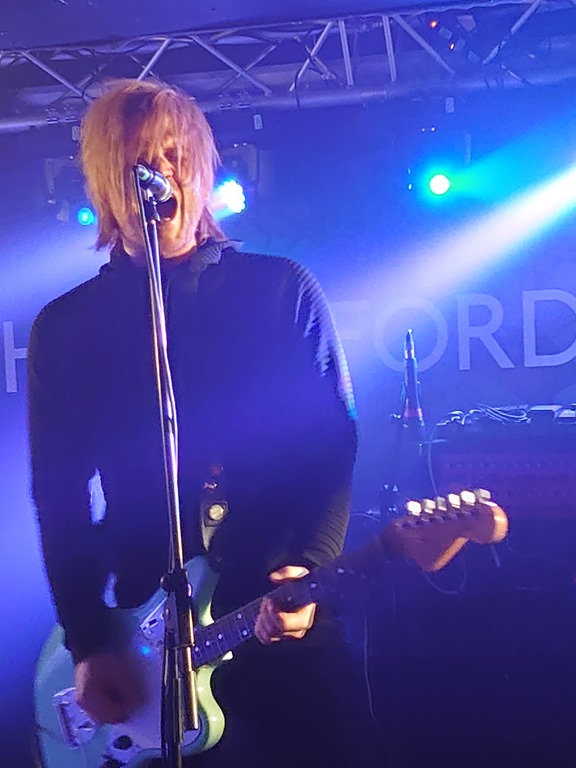
Feather Trade could easily be mistaken for being a ‘haircut’ band on face value, but their tousle-topped singer’s vocals invite comparisons to The Cooper Temple Clause’s Ben Gautrey, and the comparison to TCTC doesn’t end there as the trio blast through some jagged alternative rock defined by solid, meaty bass and gritty guitars. With a post punk vibe, great voice, the lineup may have been hastily-assembled, but they boast a truly great rhythm section. Switching between acoustic and electronic drums varies sound, and the line ‘fuck your trust fund’ from closer ‘Dead Boy’ is a sentiment we can get behind. Keeping the set to a punchy five songs, they made for a compelling opener, and I doubt I’m the only new fan they’ve won on this outing. I liked these guys a lot.
DSC_1923

Feather Trade

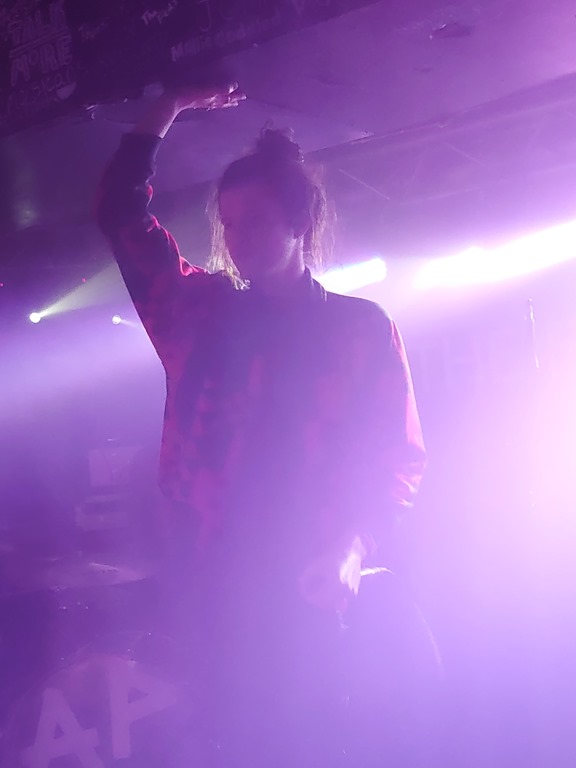
Some guys I never really liked are La Petite Mort: in fact, my last review of them was pegged to a single line in parenthesis. But this newly-resurrected iteration shows that they’ve evolved massively in the intervening years, transitioning from a novice sixth form indie band to something altogether more challenging, and altogether more powerful. If anything, there are shades of The Young Gods both sonically and visually. Now a duo with laptop and live drums, they’re dense, dark, intense. At some point, just as he has for Avalanche Party on occasion, Jared Thorpe whips out his sax and starts tooting away. No, it’s no euphemism. La Petite Mort embrace a slew of genre styles, and nail them to some tight, technical jazz drumming and lots and lots of reverb.
DSC_1932

La Petite Mort

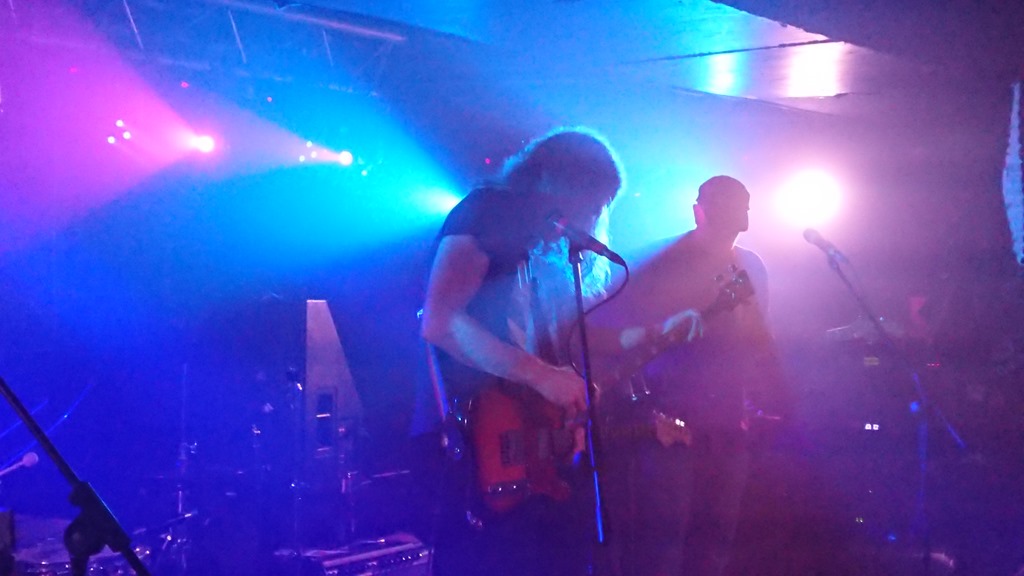
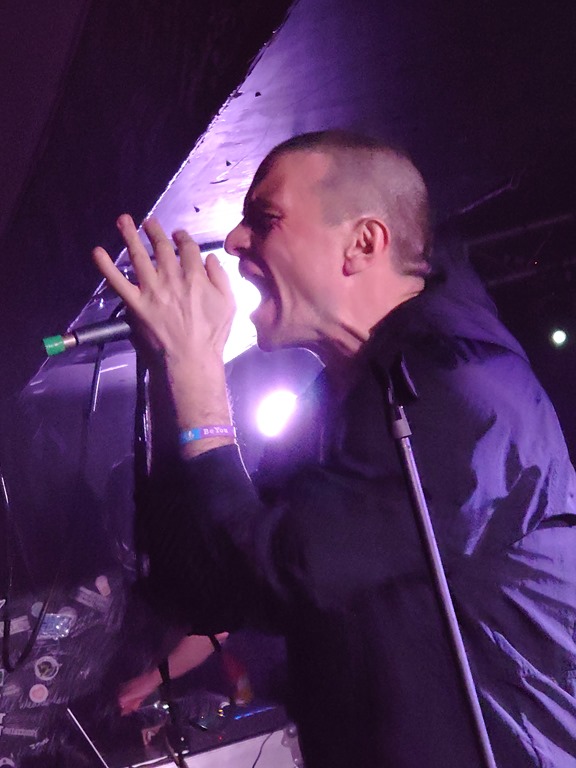
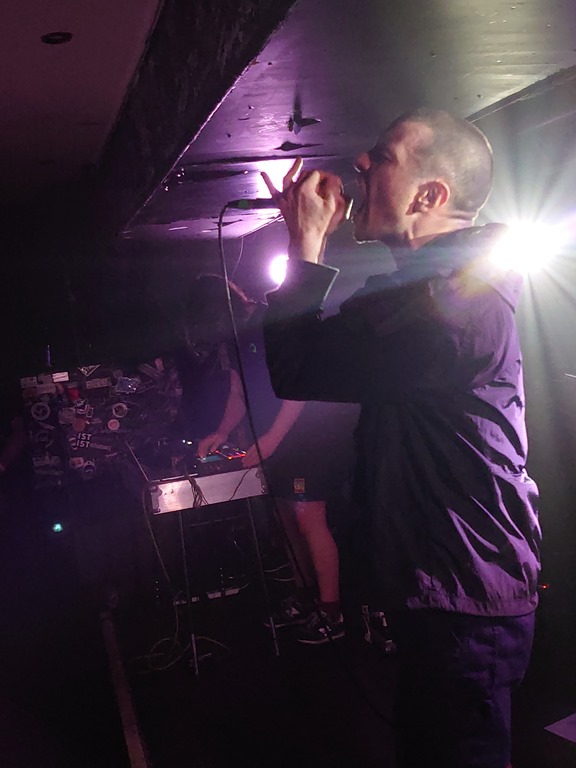
This all leaves us ultra-hyped for the headliners, and they sure as hell don’t disappoint with their spoken word grindcore hybrid. With some brutal electronics from Robbie Major, they build from sparse, acappella hip hop to a blistering wall of noise. They build and build and rage so, so hard it’s savage. There are some smoochy hip-hop vibes, but they’re a stark contrast to the raving lyrics. ‘You get what you deserve’, Kingsley Hall warns, menacingly. Against the backdrop of Russia invading Ukraine as we look on, we hope it’s true. They venture into post punk / Sleaford Mods-ish territory just the once over the course of an hour-plus long set. Hall reads the lyrics to ‘Meat Teeth’ from his phone in a state of anguish. The song itself is stark, harsh, and it hurts. And yet this pain is what connects us with the band. Hall’s openness and honesty when he speaks between songs is like a body blow. This isn’t a performance, this is real. “What a fucking country, what a fucking state…. Sausage roll man… Tory cunt.” He admits to struggling with the whole being on stage thing, but it’s clear from the way he attacks every line, this is something he feels he simply has to do.
DSC_1956DSC_1977

Benefits

In a recent interview with Loud and Quiet, Hall explained, “I’ve got this pent-up anger and desire to speak and to shout and discuss. But how do I translate that?” On stage, that anger is anything but pent-up: it’s channelled into an eye-popping storm of words dragged from the very soul.
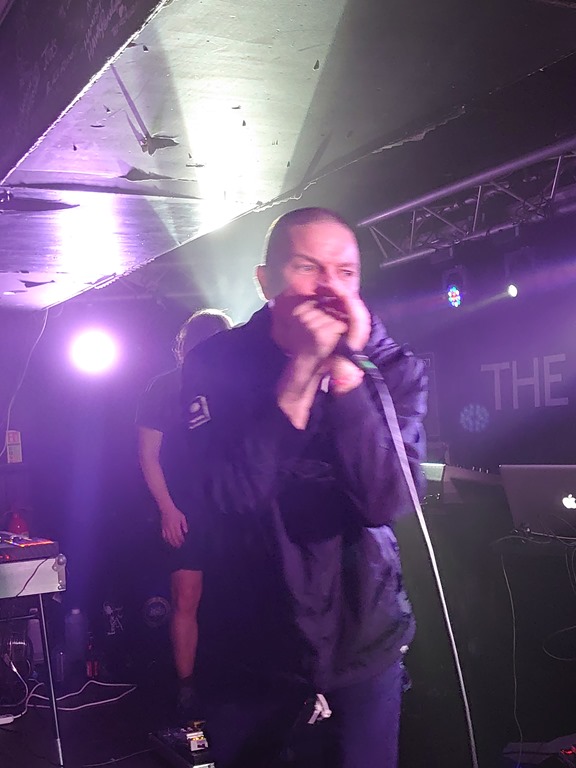
DSC_1939

Benefits

‘Flag’ steps up a level just when there seemed like no more levels to step up, with punishing percussion and snarling noise. It’s harsh, but so, so invigorating and cathartic. The encore / not encore is a perfect example of the way Benefits don’t conform, don’t play the game. And while doing things on their own terms in every way, they stand apart.

There’s no pithy one-liner to wrap this up: I leave, borderline delirious, simultaneously elated and stunned by what I’ve just witnessed – a show that was, frankly, nothing short of incredible.

Christopher Nosnbor

By this time in any normal year, I’ll have been to at least three or four gigs by now, but 2022 has got off to a slow start largely because the impacts of Covid-19 continue to hit live music harder than perhaps most industries. Planning is nigh on impossible when bandmembers find they have to quarantine as late as the day of a show. Plus, people – bands and punters alike – are still cautious, and the dilemma of to play or not to play, attend or not attend is one that’s understandable. But, having attended my first live music at The Victoria Vaults (a seated show) last August, I’ve been working to overcome any anxieties I may have by getting out more, at least incrementally, and it’s remarkably life-affirming to arrive early doors to find a fair few others have already turned up for what promises to be a top night out, with touring London acts The Kut and Healthy Junkies supported by local quartet The Bricks.

If the name suggests something unsubtle, and also blankly nihilistic, it’s halfway to a fair representation, in that The Bricks trade in dark, spiky goth-tinged (post) punk, with some busy but solid bass grooves. Gemma Kennedy delivers gutsy vocals at the lower end of the range but then rising to a scream, and brings real power to the songs, and she’s a compelling focal point for the band, too. Introducing one of the songs, it dawns on me that the three guys playing instruments probably remember the miner’s strike that one of the songs is or isn’t about, in contrast to the vocalist who very much doesn’t, but they work cohesively as a unit, and deliver a solid and exhilarating set, and they’re admirably tight.

Bricks

The Bricks

Healthy Junkies – a band who’ve been on my radar for a while as a band to see – don’t disappoint and kick ass from the outset. They power out of the traps channelling Pretty On the Inside era Hole sonically and visually (and perhaps Nina Courson brings a dash of Katie Jane Garside to the punk rock party too). They sustain full throttle, max energy, punky energy for the duration, and while their cover of ‘These Boots Were Made for Walking’ is perhaps a bit standard, it’s played with feeling as part of a set that builds. Recent single ‘Tricky Situation’ is but one of a number of standouts in a set delivered with real panache.

Junkies

Healthy Junkies

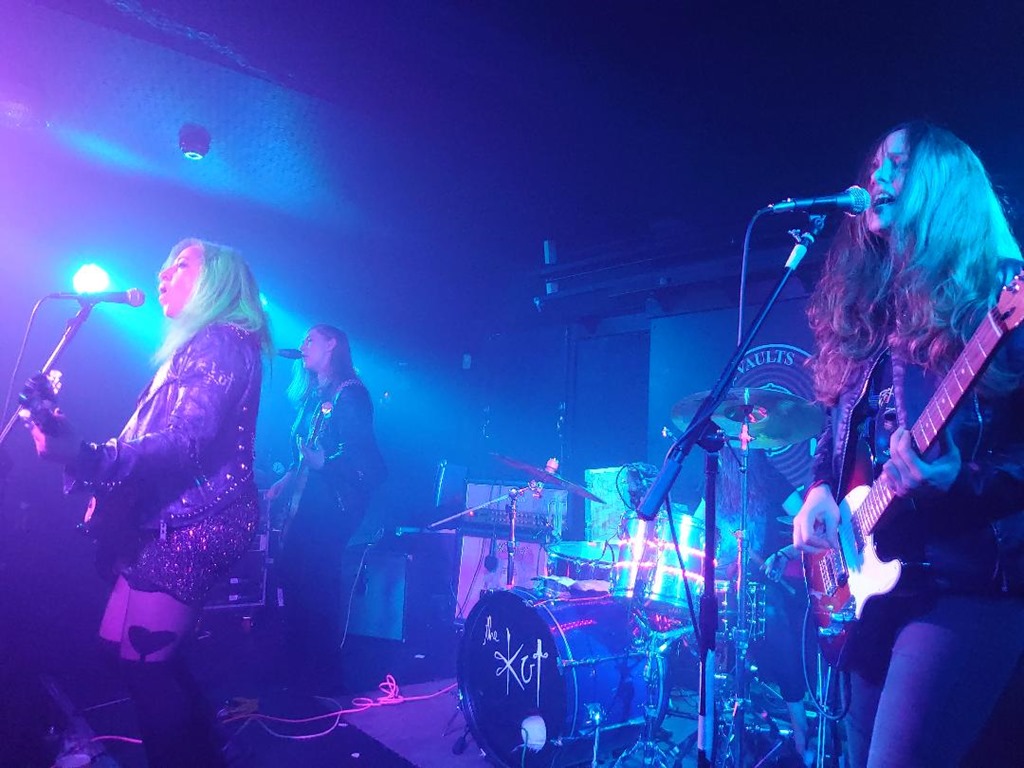
I won’t bang on about how long I’ve been listening to and covering The Kut, but will say that it’s been a long but rewarding journey tracing their ascent, and following the release of their long-awaited debut album, they’ve continued that upward trajectory. While it’s Princess Maha as the band’s principal member who’s driven this, it’s only been possible by building a grassroots fanbase through hard gigging, and regardless of lineup, The Kut have always been a strong live band, and this is never more apparent than tonight. It’s a different lineup from the last time I saw them at Verve in Leeds in August 2018, which is practically a lifetime ago.

In a set that rocks hard, post-album single cut ‘Animo’ lands second. It’s perhaps a shame that the ‘girls to the front’ shout suffers from the wall of male photographers making up the front row, but they’re not going to throw a Dream Nails strop about it: they’re clearly enjoying being up there in front of a respectable crowd, playing songs after so long away, and they’re on strong form. Maha’s vocals are scratchy in the throat, but actually sound really good against the backdrop of chunky rock guitars. There’s palpable pleasure on their faces as they rip through the poppier ‘Hollywood Rock ‘n’ Roll’, and the moshing down the front expands from a couple off people to a proper pit. Maha’s grinning and pogoing, and it’s a joy to witness, as is the kickass rendition of ‘DMA’, and ‘I Want You Maniac’ brings forth more solid riffing. The forthcoming album is well represented with a number of songs, too. Of these, ‘Burn Your Bridges’ is slower and more dynamic, and something of a standout.

Kut 4Kut 2Kut 3

The Kut

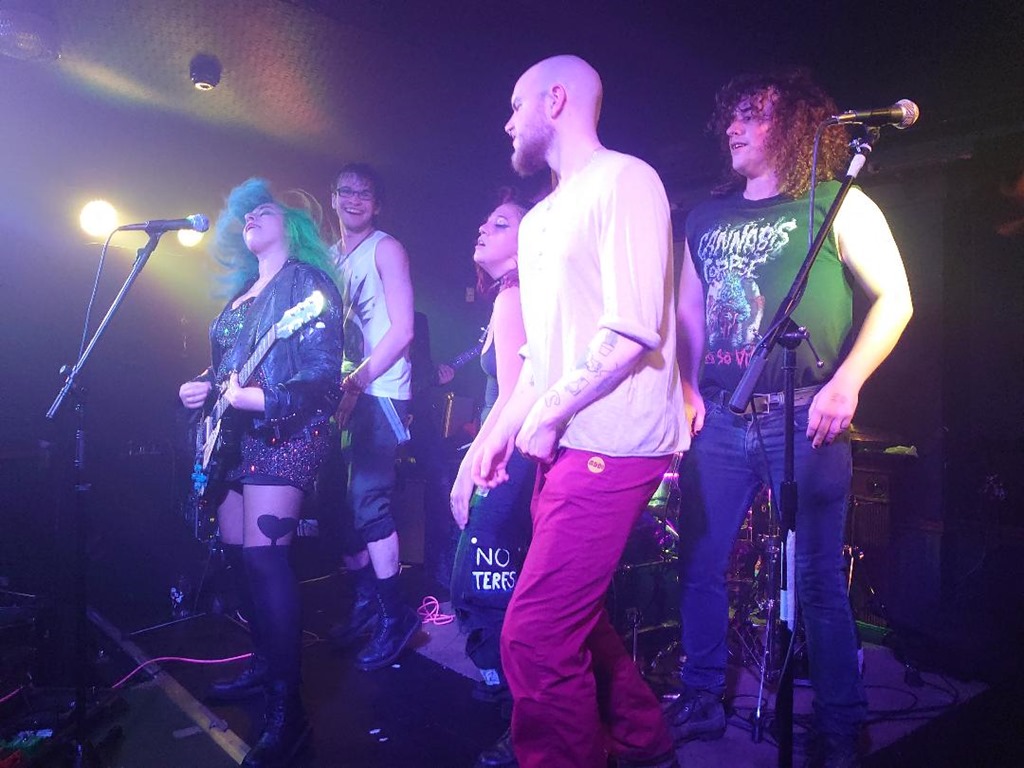
Main set closer ‘Badman’ brings most of the moshers up onto the stage, and I realise that it’s precisely this that I’ve missed; people cutting loose, enjoying themselves, the whole gig principle of getting lost in the moment. I’m immersed in the performance, the show, the experience, and for a few minutes at least, this is the world. There is nothing more, and this is the entirety of the universe. If only life was always this way – because in there here and now, with a pint in my hand and a band blasting away, giving it their all, this feels like the best of living.

Christopher Nosnibor

The clue’s in the name: Bdrmm started out as a bedroom-based solo project for Ryan Smith in 2017, but soon transitioned to being a proper gigging band. Like so many bands, their progress was severely hampered by more than eighteen months of no live activity, something that seems to have hit bands in the early stages of their careers the hardest, since they rely on performing in grassroots venues and supporting larger bands to build their fanbase.

This was one of many shows that got booked, rescheduled, and rescheduled over the course of the last eighteen months, during which time they’ve maintained a steady flow of releases, including their debut album and an attendant set of remixes and a number of singles, which have clearly done no harm to their profile, garnering glowing reviews from across the spectrum from NME to MOJO via Line of Best Fit. The Fulford Arms, then – sold out, although still operating at reduced capacity for ticket sales – is pretty busy even early doors.

It’s an interesting demographic, too, probably around a 60/40 split of twenty-somethings and forty-somethings – which isn’t entire surprising given Bdrmm’s referencing of the music that the older fans were listening to when they were around the age of the younger ones.

Having just two bands on the bill works well – not only allowing time to ventilate the room between acts – but to give the punters and their ears a rest, time to recharge glasses without a crush at the bar, and an early finish. After so much time out, it might take some time to rebuild the stamina for late nights for a few of us, and for those slightly further afield, public transport isn’t what it was a couple of years ago (or more).

Manchester’s crush – another band who, having formed in 2018 have a lot of early-days ground to recover – are on first. I was pretty sure there have been other bands called Crush, and it was only later I recalled Donna Air and Jayni Hoy’s short-lived pop career and the early 90s project featuring John Valentine Carruthers (formerly of Siouxsie and the Banshees) and Killing Joke drummer Paul Ferguson . The young four-piece are nothing like either. The set makes a shuddering launch into mid-tempo post-rock shoegaze with two guitars. Their sound is reminiscent of melodic 90s indie with a dreamy style, but still some drive too. There’s lots of texture and occasional bursts of noise. They may be lacking that slickness that playing often develops, but they can really play, and the closer comes on like Dinosaur Jr being covered by Slowdive, and it’s ace.

DSC_0793

crush

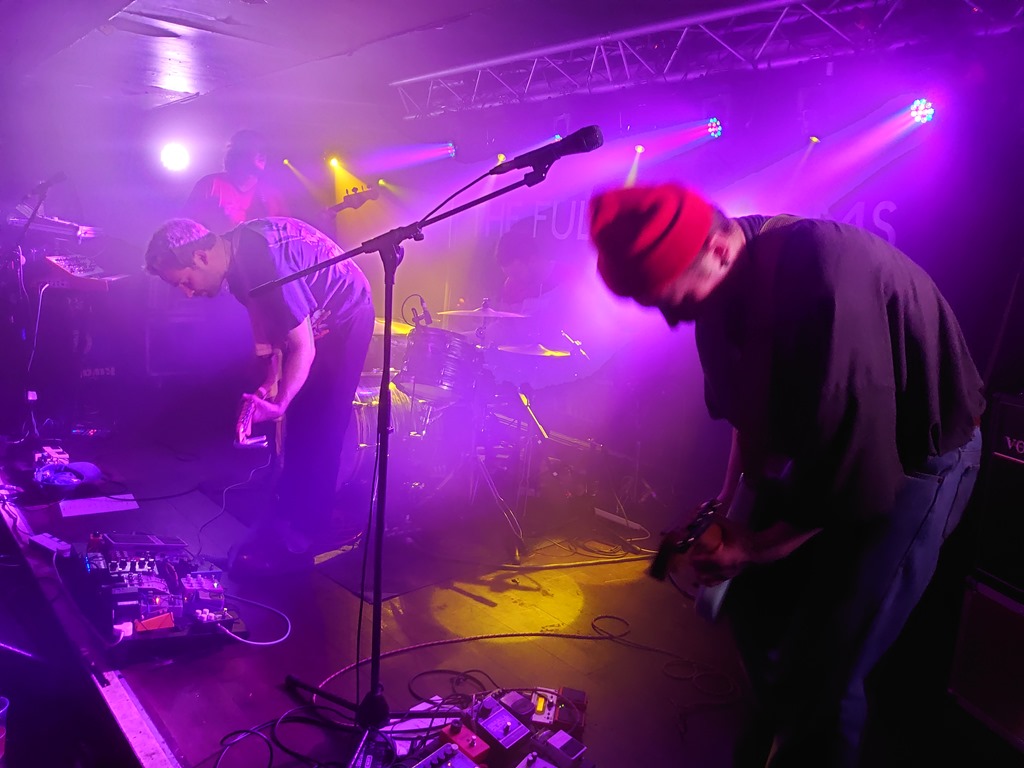
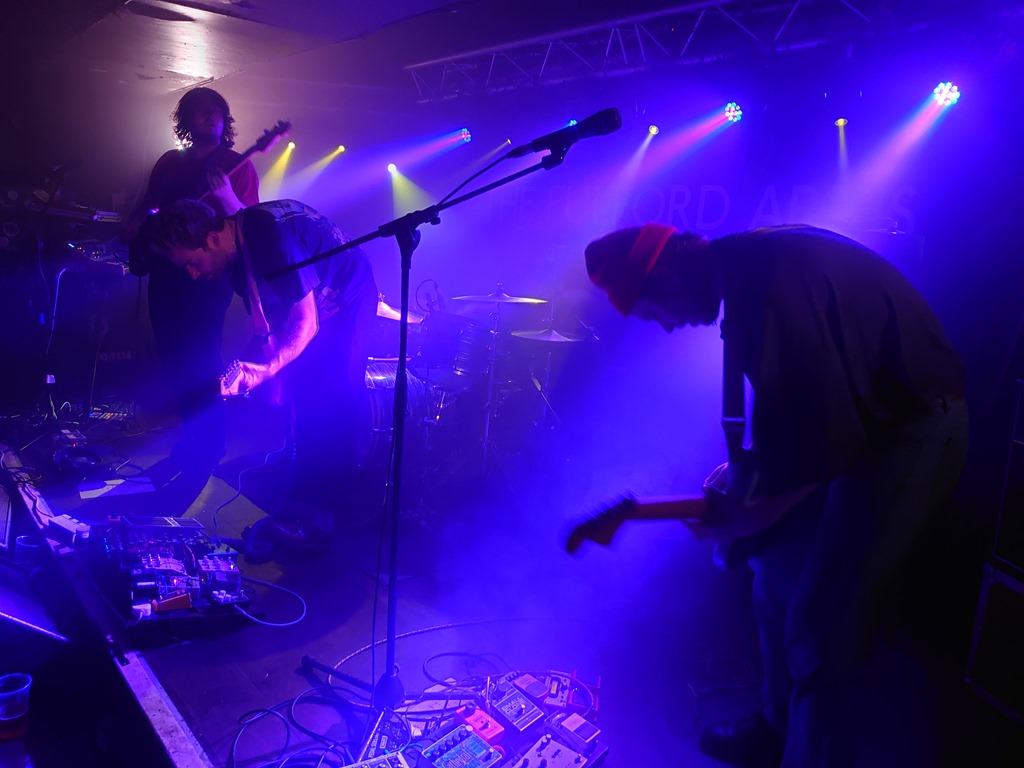
Crackling distortion yields to a driving motorik riff to announce the arrival of Bdrmm, and it’s immediately apparent that they’re a cut above, and that any hyp is entirely justified. The sound is immense. The drums are half-submerged beneath a heft wash of guitar. It’s a dense, throbbing, shimmering wall of sound. The percussion is a mix of traditional and electronic drum pads, and everything comes together magnificently. New single ‘Port’ drops early as the third song and it’s a brooding synth-driven beast, part My Bloody Valentine, but probably more A Place to Bury Strangers. There’s all the reverb, and all the volume: in fact the sound is great, and sound man Chris Tuke gets a deserved shoutout from the stage during the set. Because while it’s nice on record, and all the comparisons to Slowdive and early Ride are entirely appropriate, live, it really needs to be heard – and felt – at organ-trembling volume.

DSC_0812DSC_0813

Bdrmm

‘Happy, is a synthy swirl meshed with a gritty bass, and as the set progresses, we see the band peeling off blistering sheets of noise. Bent over, guitars practically scraping the floor, they don’t only do shoegaze but they also properly rock out. Near the end of the set they treat us to an immense, slow-building crescendo climax worthy of I Like Trains.

DSC_0796

Bdrmm

They leave us overheated, breathless, and stunned by the sheer power of the blistering noise of the guitars that howl and melt. No way should we have been able to experience this in a venue with a capacity of around 130, and I rather doubt we will again. Bdrmm are a Brudenell band at the very least: they have not only the songs, but that indefinable ‘fuck yeah!’ quality that comes from the wild exhilaration of seeing a band who simply blow you away.

Christopher Nosnibor

The return of live music remains on a balance beam of managing finances and staff / punter safety, especially in terms of what people are comfortable with. Every gig, therefore, is a gamble, and tonight’s is no exception: for while The Fulford Arms had spent lockdown not only working on making nots own space as safe and accommodating as possible, as well as campaigning hard for other local venues and live music in general, they’ve used the time to make improvements that had been longer-term plans, they still face the challenge of bringing punters in.

Tonight’s event benefits from a Lottery-funded two for one offer on tickets, which has encouraged a respectable showing for a wet Thursday night. It’s all good, but PINS have been struck by (non-Covid) illness and are two members down, and so are playing a stripped-back set as a foursome without a drummer. But they’re troopers, and so the show goes on, and Tides walk on to crashing waves and crystalline ambience, before launching into a set of jangly, melodic indie with a distinctly late 80s / early 90s vibe. The foursome are young, and while not especially outgoing in their performance, play with an assurance that comes across well, and they’re tight and solid, but still with much to learn.

They land the slowie early, with the emotive ‘You’ being third in an eight-song set. Revelling in their poppier leanings is a cover of Lizzo’s ‘Juice’, and it’s well-played, but bland, although well-received by their friends down the front. But two covers in such a short set isn’t best form: either they’re yet to accumulate enough original material or lack the confidence in what they have, but the less said about their competent but characterless rendition of Shania Twain’s ‘Man, I Feel Like a Woman’ the better, as well as the sixth-form handbag dancing it inspired. They feel like a band who haven’t fully decided their identity yet, swinging between a slick contemporary pop and more of a female-fronted Smiths or Wedding Present. Given time, they’ll hopefully figure out how to combine the two, but in the meantime, they prove to be a fun and competent support act.

DSC_0219

Tides

PINS are one of those bands I feel I should know but simply haven’t got to for various reasons, and so I won’t claim in any sense to know the tracks from their three albums – but the strength of any band is to deliver a set than has the capacity to not only please established fans, but to convert new ones from among an impartial crowd.

Admittedly, I took little convincing: the first song of the set lifts a 3-note motorik looping bass groove from Suicide’s ‘Ghostrider’, and they hold that insistent repetition into the second. It’s an instant grab. It actually sounds a bit like 90s indie / shoegaze / goth act Sunshot, who I revisited just the other week. It’s certainly no criticism, so much as an indicator of their post-punk/ shoegaze / crossover sound, propelled by sparse percussion with a vintage drum-machine sound. Landing in at the third track in the set ‘Bad Girls Forever’ brings a country / gospel vibe to the thumping new wave sound that’s counterbalanced by an abundance of electropop sass, while ‘Ponytail’ sashays and swishes through an easy pop that carries a sentiment of girl power 2020s style. They do political, too, with the stomping ‘serve the Rich’ snapping and sneering over a thumping bass groove.

DSC_0229

PINS

In terms of performance, PINS are the epitome of cool, with Faith Verne’s oversized shades positively screaming ‘pop icon’ and Lois MacDonald guitarist affecting the best bored face as she treads on the spot throughout the set.

DSC_0222

PINS

If the sound itself is a well-realised take on preexisting forms, it’s the multi layered vocals that really make PINS stand out here, and it all makes for an engaging show. The women who’d spent the set dancing down the front were up on stage for the final song, and there sense of togetherness was palpable. If any reminder was needed that there really is nothing like live music to nourish the soul, then PINS provided it here tonight.

Christopher Nosnibor

And here it is: live music, as it was. Not seated, no tables, so no table service. Too soon? No. Certainly not. So many have been affected in so many ways by the closure of venues and the suspension of live music, and while we all get the why, questions remain over why so many other ‘crowded’ places were allowed to reopen before pubs and gig venues. But those aren’t questions for now: we’re here, and The Fulford Arms is a venue I’ve long considered a home from home, and not just because it’s a fifteen-minute walk from home house.

During lockdown, proprietor Christopher Sherrington has poured all of his energy into campaigning for grass roots venues, and not just for the benefit of his own holding, but nationally, as well as working to support other venues in York and Leeds, creating the sense of a network of venues, instead of their being in competition with one another. This has been quite a revelation in a sense, although the sense of community among gig-goers has long been strong.

The last ‘proper’ live show I attended, on 14 March 2020 felt plain fucking weird, like the end of the world. On that landmark night, where hand sanitiser in the door was a new and strange thing, and bar staff worse surgical gloves to pull pints, Soma Crew were on the bill, so making them my first ‘normal’ gig back felt somehow significant on a personal level.

Some things are different – the box office being outside, the signs encouraging mask-wearing, the now-standard sanitisation gel, the bar behind Perspex, the removal of all furniture to create more space for the audience, which is at 70% capacity max to allow maximum space, the opening of doors to ventilate between acts – but overall, it feels the closest to normal I’ve seen anything since I can’t quite remember when.

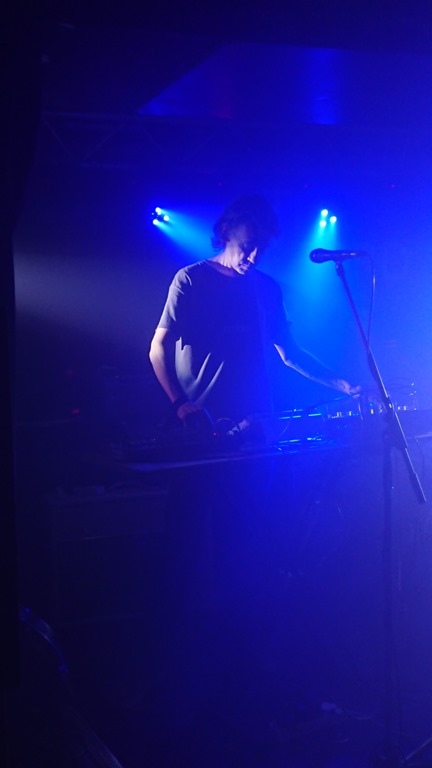
Playing minimal music in low lighting, John Tuffen’s Namke Communications set has a subtle start – so subtle a lot of people don’t even realise he has started, but they’re gradually drawn in as he builds the set, a single, continuous piece of gentle krautrock tinged electro improv work that sits comfortably alongside Kraftwerk, worriedaboutsatan, and Pie Corner Audio.

DSCPDC_0001_BURST20210730200241788_COVER

Namke Communications

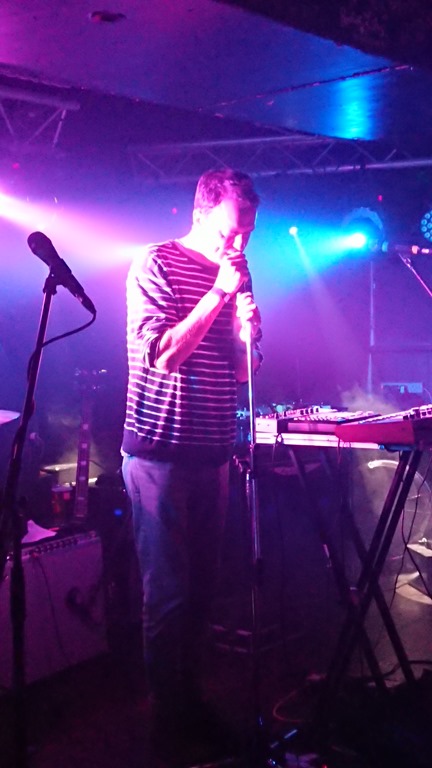
Tremulous Monk – the current musical vehicle for Christopher J Wilkinson, who’s previously worked as Dead Bird and was a member of psychedelic shoegaze droners Falling Spikes – offers another shade of electronic music. His is altogether song-based, serving up some mellow retro minimal electropop. The last song has a sort of Inspiral Carpets vibe, with a dash of psychedelia in the blend.

DSC_0876

Tremulous Monk

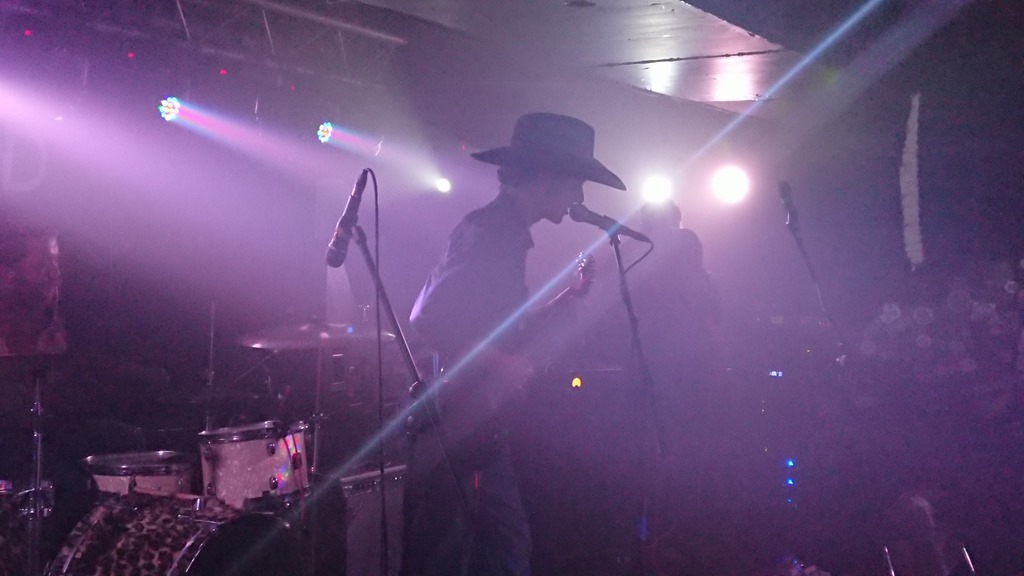
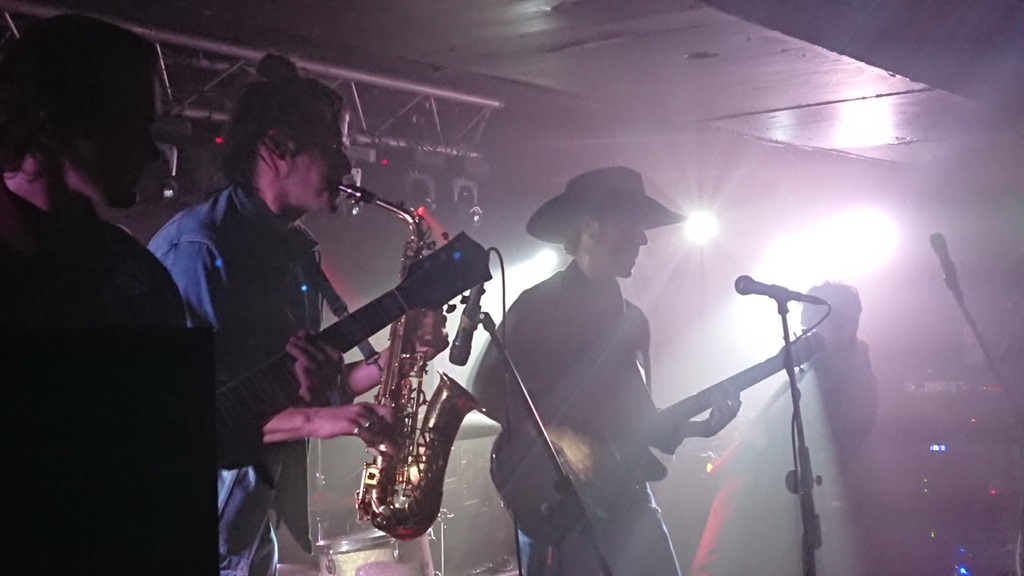
It would appear that that last time I caught Black Lagoons was back in the summer of 2017, when I remarked that the band – at the bottom of the bill – were headline standard. Seems they’ve just continued to get better in the time since, too, although if they’ve matured they’ve certainly not mellowed. The gritty blues-based sound has evolved into a kind of grainy Country/grunge crossover with snaking, twangy reverb-heavy guitar driven by a stonking bass and crashing drums. Bringing on the sax, the frenetic attack is more Gallon Drunk than Psychedelic Furs, and it sure as hell ain’t jazz. The set just builds and builds to a blistering, sweaty climax and a slow blues post-climax that winds down to the finish. And a hat makes for a great silhouette against a smoky backdrop, making for memorable visuals to accompany a memorable sound.

DSC_0881DSCPDC_0001_BURST20210730214640246

Black Lagoons

And so it is for Soma Crew to do their thing. And thing about Soma Crew is that whoever’s in the lineup, whether they speed things up or slow things down, they always sounds like Soma Crew. This is a good thing: they’re like The Fall or The Melvins of psychedelic drone. Christopher J Wilkinson, is filling in on drums tonight, for part two of Soma Crew’s album launch for Out Of Darkness / Into Light (which makes sense since the new album is really two albums). He provides a suitable no-frills motoric style of drumming that suits the band perfectly.

DSCPDC_0003_BURST20210730223903386_COVER

Soma Crew

It starts with a blast of off-kilter guitar noise in a soupy sonic haze, and the set is vintage Soma Crew – at times a bit loose, a bit off-key, a shade ramshackle, but perfectly in keeping with the slacker / stoner vibe of their slow-twisting psychedelic drone. Besides, it’s a dependable fact that once they find a groove, they absolutely nail it, and merrily plug away at it for four or five or six minutes, three chords, no drum fills, no wanking around, just 12-bar blues and a massive fuck-off rack of effects. And it works every time. Elsewhere, they build layers incrementally while plugging away at a single chord… Which also works a treat with their execution. We got what we came for.

A whole bunch of people – mostly women, and Black Lagoons – properly got down at the front during the encore, and the looks of enjoyment were a joy to witness. We’ve missed live music, and it’s so, so good to be back.

‘‘Hey Sister’ is the 3rd video release from Soma Crew’s album Out Of Darkness / Into Light .  

Shot at various locations around York, it’s a simple but effective accompaniment to a solid tune.

Check it here:

Vinyl Eddie Records – VINED006 & VINED007 – 9th July 2021

Christopher Nosnibor

Opposites and opposition – and the way in which those contrasts are core to our understanding of the world and our place in it – have been key points of exploration in art for centuries. The concept of either / or, light / dark, heaven / hell is the foundation of Judaeo-Christian religions and those polarities became the core tropes of Elizabethan poetry, at the dawn of modern literature. Sir Thomas Wyatt’s ‘I Find No Peace’ cements these tropes that have come to define both internal conflict, the turmoil of love, and the fundamental dichotomies of the human condition.

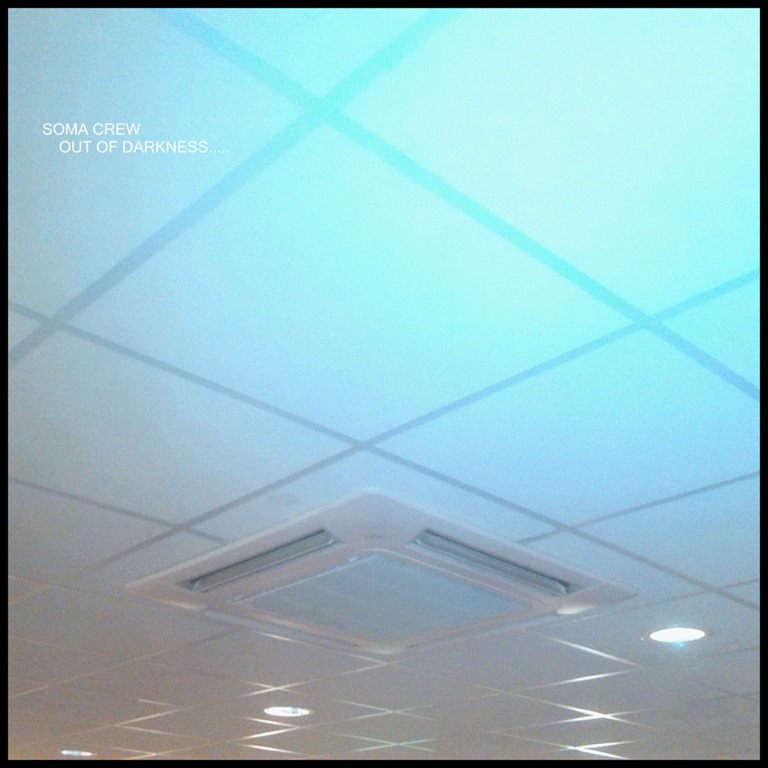
And yet it’s Earth’s Angels Of Darkness, Demons Of Light, released in two parts that comes to mind when presented with Soma Crew’s new offering, a twin vinyl release capturing two days’ intensive recording to collectively forge one monumental document of the band’s creative work since the release off 2019’s F for Fake in 2019.

I know, I know I always say the same when writing of Soma Crew – which I have done often since they formed under the guide of Muttley Crew back in 2013 – that they get better with every release, with every show. But that’s the simple fact of the matter. They tend not to deviate far from their psychedelic drone style that’s most reminiscent of Black Angels, but that isn’t to say they don’t push their limits in the execution. But most importantly, they know how to batter away at a riff for an age and whip up a psychedelic haze.

Out Of Darkness / Into Light is a slow-burner, and marks something of a shift, and on first listen, I was a shade concerned by the lack of motoric beats and shimmering walls of distortion and delay rippling over cascading riffs. But this is the new direction: the beats are still motoric, but simply more minimal and subdued, and the emphasis has shifted toward a more understated and minimalist sound.

The first track, ‘Phantom’ starts off simple, plugging away at a four-chord riff with a hint of swagger that’s almost Primal Scream. The guitar sound is clean, shimmering, and Si Micklethwaite’s vocal is pretty low in the mix, meaning everything blends together gently. There are heavy hints of early Fall about the six-and-a-half-minute ‘You’re So Cool’ – the easy-tripping clean guitar with its naggingly repetitious riff is straight off Live at the Witch Trials or Dragnet. It’s simple, it’s immediate, and the fact it was recorded on the spot only accentuate these qualities.

Soma Crew don’t do short songs: of the twelve here, only two are under five minutes, with the majority clocking in around the six-minute mark. There’s plenty of throbbing bass runs and repetitions and spacey slide guitar going on here, and these qualities are integral to the Soma sound. They’re not a ‘chorus’ band, but a band who create a hypnotic atmosphere through their endlessly cyclical riffs and the plod of the percussion – by no means a criticism here, as drummer Nick understands that less is more – using a setup consisting solely of snare and floor tom for the duration. This minimal ‘Bobby Gillespie’ setup works well, meaning the instruments occupy the space – or don’t – instead of the conventional sound whereby crashing cymbals fill the sound the a load of top-end mess that so often sounds crap.

‘There’s a Fire’ steps up the urgency eight songs in, but instead of going all guns blazing with distortion and a blast of cymbals and snares, Soma Crew hold steady. The slow down again for the forlorn country meandering of ‘Broken Matches’ and counterpart ‘Machines’ with some nice lap steel work, and there’s no question that Out Of Darkness / Into Light is a more ponderous, reflective set of songs, and rather than being a set of two distinct halves, it’s very much a coherent and unified work.

If anything about Out Of Darkness / Into Light intimates production values that eschew slickness and polish, that’s one of its real selling points: recorded live over two days in January 2020, this is a band at work, and it’s an album that captures what they actually sound like, rather than a studio-based tweaked and fiddled fantasy version of what they might sound like if they were another band entirely. Hearing them stripped back and sparse, they sound musically confident even while Micklethwaite’s plaintive vocal navigates seams of self-doubt and introspection through the lyrics, and this album shows that plugging away at simple, cyclical chord structures is as effective and hypnotic without the deluge of effects as with.

AA

a3992898530_10

7th July 2020

Christopher Nosnibor

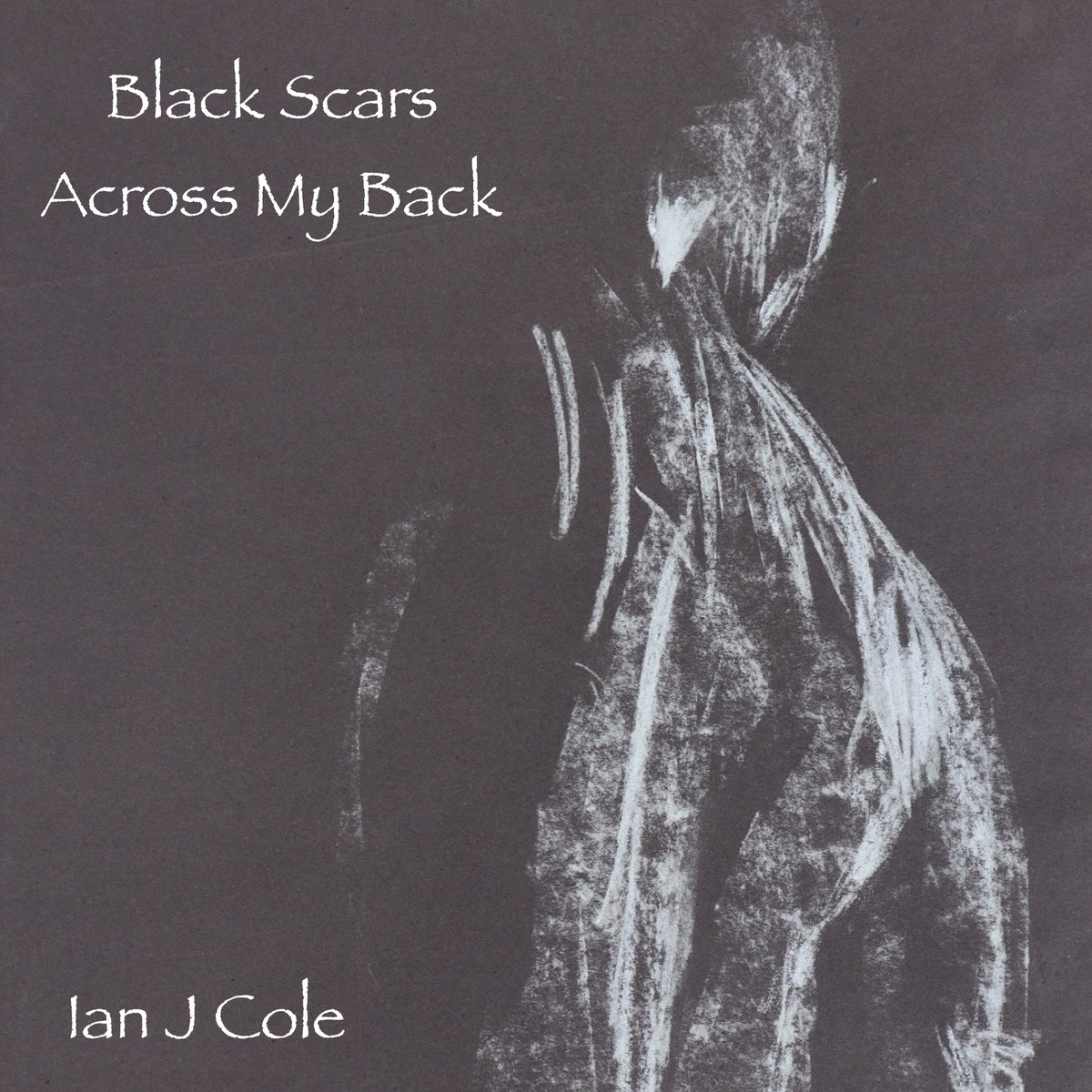
Another face on the Yorkshire electronic music scene, Ian J Cole is someone I’ve seen – and enjoyed – performing a few times. Obviously, not recently, nor probably any time soon, which makes the arrival of his new album, Black Scars Across My Back, most welcome.

Inspired by Bevin Boy John Copley, who died as a result of working down a Doncaster Mine in 1946, Black Scars Across My Back is a conceptual / narrative-based album in essence, although translating any concept or narrative to purely instrumental compositions means the scope for interpretation is vast. The expanse of the album is also pretty substantial, clocking in just shy of an hour and a half.

The details accompanying the album are minimal, but a spot of research show that Copley, who died aged 21, who is buried in York cemetery, was ‘one of the 48,000 ‘Bevin Boys’ (named after Ernest Bevin who was the Minister of Labour & National Service) who were conscripted to work in the UK coal mines between December 1943 and March 1948.

Then again, music alone can convey meaning and emotions in a way that resonate deeper and in ways that words simply cannot. And what’s particularly noteworthy about this album s that it focuses not on grand narratives, the political or even the personal, but a microcosmic sliver of local history, often neglected. Real history isn’t about wars and politicians, but the lives of the everyman, lived and forgotten about. Yet without these people, what would we have?

The album’s sixteen-and-a-half-minute opener balances elegiac piano with creeping swirls of ambience. It’s delicate, and softly transitions between spaces over the course of its duration, with richly layered washes of sound that interlace and interweave. What does it convey? Nothing… but everything. A certain air of simplicity, of airiness, unhurried and uncluttered breathes through the spacious arrangement, which subtly turns moods from optimism to shades of gloom via plain drifting.

There is only one Elvington Terrace in the whole UK, and located in the centre of York it measures a mere 90 metres: ‘2 Elvington Terrace’ is a haunting piece that drifts and wafts, ghostly and ethereal.

The shuffling groove of ‘Cook, Trowton and Simms’ is unexpected, and unexpectedly buoyant, introducing percussion to the album’s palette and upbeat, lively percussion at that – although there are thunderous rumbles and crashing waves in the distance, which twist the tome a little. Next up, the gloopy tension of ‘The Balloteer’ features looped samples amidst the electronic bubbling, calling to mind early Test Department and the like, and lines like ‘produce for victory’ bear remarkable parallels to the latest slogans like ‘eat out to help out’. Do we ever learn from history? It’s a rhetorical question, and I think you know.

‘Drift Sights’ is a conglomeration of clattering, industrial percussion and sparse notes, while the epic ‘The Bevin Boy’ is a constant flux of tempestuous ambience that’s far from tranquil. It provides a bleak backdrop to segments of spoken-word narrative.

The title track brings a chiming, glistening charm, as well as sprightly bright flashes of light, which bounce across the ripples and creaks of metal-cast shade, before the album’s last piece, ‘She Left Flowers on is Grave’ draws the curtain with a dolorous finality.

Black Scars Across My Back may not expressly articulate the life of its subject, but is highly evocative, and knowing the story, the context, imbues it with a sadness that’s affecting. It’s hard not to be touched by its quiet intensity.

AA

a0882284475_10

The Crescent, York, 14th March 2020

Christopher Nosnibor

It doesn’t seem real now. It was the night before everything changed, before everything changed again a couple of days later. While cancellations were accelerating, advice and clarity was sparse, and what constituted ‘the right thing’ was very much a matter for debate. The Crescent were very much doing ‘the right thing’ based on the advice: punters were steered to washing their hands on arrival at the venue: those without e-tickets advised to pay by contactless card, while also paying contactlessly at the bar, being served by staff in gloves, pints being served in cans or single-use plastic vessels. Social distancing wasn’t yet a specific thing, and there was scant information which suggested that in excess of 15 minutes in close proximity may increase the risk of transmission. We greeted with elbows and nods. In the main, we respected the guidelines.

I’d be interested to know how many of those who attended have subsequently fallen sick with Covid-19. Not all of us were in the ‘young’ demographic; none of us was being wilfully irresponsible. The virus has become divisive in the way that Brexit was: on social media, in particular, anyone leaving the house risks being subject to vilification, abuse, and even police interrogation. We now live in a climate of fear – an unprecedented climate of fear, dominated by an unprecedented overuse of the word ‘unprecedented’.

The middle of March: a mere month ago, but another lifetime. Gig attendances were already beginning to drop off sharply as the fear spread. And with everything amping up, there was a certain sense of occasion about this: I sense that many of use attended as much out of a sense of solidarity and support: solidarity and support for the bands, the venue, the local scene, and one another. And because we knew, if only subconsciously, that the opportunities to convene like this would be numbered. Gatherings like this are what keep communities together, and keep many of us sane. I’m elated to see numerus friends, including some I’ve not seen in far too long: we catch up about parenthood and our concern for our elderly parents under the creeping shadow of the virus. We drink beer, and we watch bands.

Viewer haven’t been out in a while, and apart from time down the pub, have almost been on a self-imposed isolation for I don’t know who long. I’m not even sure Tim Wright would notice a 12-week lockdown. But here he is, hunched over a laptop, cranking out beats and backings and migraine-inducing visual backdrops while AB Johnson – still suffering the effects of concussion and sporting a black eye and struggling to remember the lyrics after a recent accident involving his face and the pavement – pours every ounce of energy into his performance. They’re the primary reason I’m here, and given the quality of the songs, the visuals, and the people they’ve dragged out of the woodwork, every moment is a joy. Johnson’s lyric sheets are scattered around the stage and his difficult relationship with mic stands is evident tonight. But despite any shakes or glitches, they remain one of the most essential acts around, and just need for the world to catch up.

DSC_3727[1]DSC_3723[1]

Viewer

Soma Crew are showcasing (another) new lineup tonight, with a minimal drum set-up and lap steel dronage and slide bringing new dimensions to their deep psych chugging repetitions driven by varying between two or three guitars. My notes begin to descend into sketchy incoherence around this point, but the memory-jogging ‘RRR’ reminds me that they’re masters of the three ‘r’s – repetition, repetition, repletion, and they slug away at three chords for five or six minutes to mesmeric, hypnotic effect. It seems that every time I write about Soma Crew, I remark that they’re better every time I see them. And yet again, it’s true. They’re denser, more solid, more muscular, and tighter than ever, and on this outing they feel like a band who should be playing to way bigger crowds, capable of holding their own at the Brudenell or the Belgrave.

DSC_3730[1]

Soma Crew

Leeds’ Long-Legged Creatures are new on me, and they impress, with a fluid bass and big washes of texture defining the sound. An eletro/post-rock/psych hybrid, they lay down some hypnotic grooves, and my sketchy, increasingly beer-addled notes remind me that their performance is frenetic, kinetic, with some strong – and complex – drum ‘n’ bass / jazz drumming driving the songs.

DSC_3746[1]

Long Legged Creatures

Things take a major left-turn when some poet guy steps up to the mic and spews lines and rhymes like John Cooper Clarke on a cocktail of drugs. A spot of digging suggests he may be Joshua Zero, but I may be wrong. He’s a compelling presence, though: he’s wild, he’s crazed, and his staggering vitriolic attacks are in stark contrast to the coordinated post-rock jams of the band. It’s as exhilarating as it is unexpected. It’s great.

Maybe you had to be there. Maybe you were better avoiding it. But I’ve no regrets. I miss gigs, I miss pubs, I miss live music, and I miss people. At least my last experience of all of these was truly wonderful and encapsulated everything I love about this.

Christopher Nosnibor

The Wonkystuff nights to date may have been a shade sporadic, but that’s what happens when the organisers have day-jobs and families, and more importantly, what they’ve lacked in regularity, they’ve more than compensated in quality, and that’s a major reason why there’s such a respectable turnout to a gig midweek, mid-January, in York. There’s also the warm, welcoming vibe: these nights may be musical showcases, but they’re also a coming together of an oddball community, where we’re all misfits together and it feels good and feels like home. Tonight’s lineup – as usual – demonstrates John Tuffen’s skill for bringing together acts who provide a satisfying balance of contrasting and complimentary.

It’s the Wonkystuff House Band – a collective rather than a fixed entity, tonight comprising Tuffen alongside Ash Sagar and Simon Higginbotham – who warm things up with a set consisting of permutational repetitions delivered by multiple vocals, delivered in a drab monotone over repetitive beats. Comparisons to Can, Cabaret Voltaire circa ‘Nag Nag Nag’, The Fall, Flying Lizards, Girls vs Boys, Young Marble Giants, and the more contemporary Moderate Rebels all make their way into my notes as I watch them crank out vintage synth and drum machine sounds. Cyclical bass motifs and whizzing diodes fill the air as they sit and twiddle knobs and read lyrics from clipboards and the historical leaps into the present for a while.

DSC_3198[1]

Wonkystuff House Band

The start of TSR2’s set crackles and pops fireworks. The trio hunch over customised kit with wires all over to create warped undulations and machine gun fire beats that batter the speaker cones. The set builds into a dense, murky trudge. The second track, ‘What will be’ is more co-ordinated than the opener, and is solidly rhythmic, mechanoid and spacious, and metamorphosises into some kind of glam reimagining of Kraftwerk via DAF. Heavy echoes and tribal beats dominate the third track, and they very much find their groove at this point, at least for a spell, before the construction grows shaky despite solid foundations. Perhaps it’s the sheer ambition of layering up so much at once that’s difficult to keep together. Despite this, the discord and dissonance are part and parcel of an intriguing set.

DSC_3201[1]

TSR2

Rovellasca takes the stage, quietly and understated and stands behind a bank of kit. So far, so standard. The set begins with deep, dark, rumblings, and very soon builds into something shatteringly immense. It’s dense. It’s loud, and fills the room like a thick, suffocating smog. The sound is thick, immersive. Time passes. Unexpectedly, elongated mid-range notes sound out and the underlying dense noise builds. I’m no longer listening: my entire body is enveloped. This is the effect of sonic force. Noise wall without the harsh. Burrs of static, pink and brown noise lurk in the immense billowing noise. The shifts are subtle, and gradual, but present over the course of the single, continuous half-hour piece. People start to become visibly uncomfortable after a time others vaguely bored. I’m loving it, and could listen all night. A slow fade to finish. The hush is deafening.

DSC_3204[1]

Rovellasca

It’s a hard act to follow, but See Monstd – the new musical vehicle of radiofreemidwich’s Rob Hayler is an inspired choice, in that it represents something completely different that thus prevents any risk of comparison. There’s a lot going on here: the set starts with a sample, then breaks into what my notes describe as ‘wtf noise’. It subsequently settles into heavy harsh ambience, with dense, grating drones providing the body of sound, with swerves off trajectory for spells of audience participation, with a phone being passed around for members of the crowd to repeat lines from the sheets circulated prior to the set. This is one of those performances where you never know quite where it’s going to go, and is all the better for the element of unpredictability.

DSC_3212[1]

See Monstd

And this, in a nutshell, is everything that’s great about the Wonkystuff nights.