Posts Tagged ‘The Cure’

Bin Liner records – 5th July 2024

Christopher Nosnibor

The band hailed by Louder Than War as ‘probably the Last Great Gothic Rock Band’ – Portsmouth based post-punk/goth band Torpedoes – return with their fourth album, Heaven’s Light Our Guide, six years after their previous outing, Black Museum (2018). To compensate for the time away, they’ve made it a twenty-track beast of a double-album, and when coupled with something of a transition in their sound towards something rather more keyboard-driven, it’s almost certainly their most ambitious release to date.

The album’s themes are pretty bleak, but no-one’s here for a party goth album, right? The press release is worth quoting for context: ‘Principal songwriter Ray (Razor) Fagan (Ex Red Letter Day) gives his take on the world we must all inhabit whether we like it or not. Lyrically the album focuses on largely dark themes from the destruction of the planet & corruption to bereavement and historic tragedies. Including a song inspired by a mass suicide in the town of Demmin, north of Berlin in May 1945. Over a thousand of Dremmin’s inhabitants, mostly women and children elected to commit suicide rather than face the advancing Russian troops….’

Hopefully, this sets the context, rather than torpedoing the mood – pun intended, of course.

Heaven’s Light Our Guide is by no means a concept album, or a work which focuses specifically on any one tone or theme, which would be difficult to sustain and likely difficult to listen to over such a duration: instead, the album is in many ways a pick ‘n’ mix from the smorgasbord of goth, in the way that The Cure’s Kiss Me Kiss Me Kiss Me offers contrasting elements of light and dark. These contrasts do make for a work that feels like it pulls in different directions at times – not nearly as schizophrenic as Kiss Me, but certainly the product of a band on a voyage of discovery.

‘Somekindaheaven’ kicks things off with a quintessentially gothy bass groove, that foot-to-the-floor, four-four thudding bass, and while it’s draped in cold synths, the guitars rip in just shy of a couple of minutes into its expansive six. There are some nagging gothy guitar breaks, too, and it presents balance between introspective and anthemic.

‘End of the World Party’ is far from a knees-up, but it’s a dreamy, wistful Curesque slice of jangling, indie which definitely sits at the poppier end of the goth spectrum. It’s fitting, inasmuch as it was The Cure who really broadened the spectrum of what is generally recognised as ‘goth’ – a term I really do struggle with despite principally identifying as such myself. Then, as many of the songs on here are more 90s grunge than goth, as ‘Idiot’ evidences perfectly.

‘Blue Sky (In the Rain)’ sits somewhere between Dinosaur Jr and REM, and in its execution ends up sounding not unlike later Red Lorry Yellow Lorry. None of this is a criticism: it’s a solid tune, and Heaven’s Light Our Guide has plenty of them.

There is a strong leaning towards that mid-late 80s alternative sound as showcased by the likes of The Rose of Avalanche and IRS-era Salvation. The fact that the latter toured extensively with The Alarm does give some indication of the more commercial sound which had evolved by this time, and hints at the tone of Heaven’s Light Our Guide. In the main, this is a highly accessible set of songs. But then they chuck in some really hefty darker-hued cuts along the way: ‘Made of Stone’ comes on like The Mission in their early years, but heavier and more fiery, and it’s by no means the only stomper in this vein here. The grungy ‘Your Democracy’ certainly brings the riffs on one of the album’s most blatantly political songs, which goes a bit Metallica, too.

The title track is different again, a sweeping post-rock instrumental sweep that really mellows things down, and it’s clear that Torpedoes really want to demonstrate their range and musical skills here. Takings its title from a novel by Dostoyevsky, ‘Notes from the Underground’ is another gritty slice of sociopolitical critique, which contrasts with the altogether folkier acoustic-based ‘Fear of Human Design’.

Despite its length, Heaven’s Light Our Guide manages to hold the attention: it’s varied and interesting enough to do so, but not so diverse as to feel unfocussed or messy. Perhaps an even greater feat is that it doesn’t feel like there are any filler tracks or any which it would have been beneficial to cut.

AA

Copy of HLOG Front Cover text black star (1)

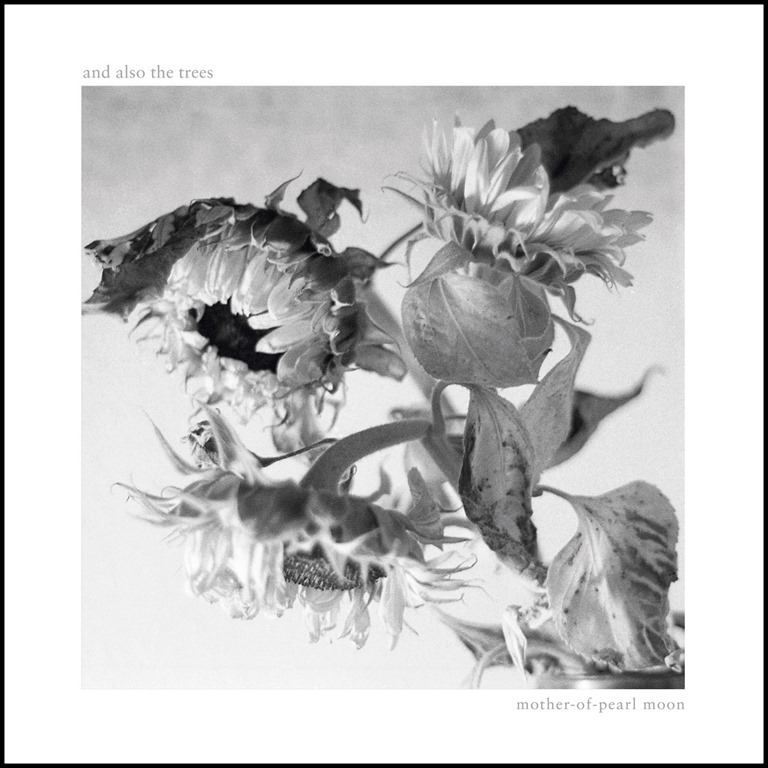
and also the trees will be releasing their new album, Mother-of-Pearl Moon, on 23rd February. Ahead of its release, they’ve unveiled a video for the track ‘Valdrada’, which you can watch here:

and also the trees (AATT) formed during the original post-punk era in rural Worcestershire, an environment that has provided a constant inspiration to a group whose music has often explored the dark underbelly as well as the beauty of the British countryside. They are renowned for their captivating live performances, a unique style of mandolin-like electric guitar, evocative lyrics and dark jazz rhythms – not to mention a creative independence fiercely preserved for over four decades.

AATT immediately caught the attention of Robert Smith of The Cure, who invited them to tour with his group on several occasions. Smith was also involved with their early recordings alongside his bandmate Lol Tolhurst, who produced their first records, a long-term friendship and mutual respect further solidified when AATT were invited to perform at the 2018 edition of the Meltdown festival in London, an event that Smith curated.

Founded by singer Simon Jones and his guitarist brother Justin, AATT have maintained a continuous presence on the post-punk, alternative rock and Gothic scenes worldwide. They have released fifteen studio albums and toured frequently throughout mainland Europe, as well as North America and Japan where they have also built a sizeable following.

The panoramic soundscapes on AATT’s compelling new album, Mother-of-pearl Moon, were born from a series of extraordinary electric guitar improvisations created in the pre- and post-dawn hours during a month of solitude in 2020. With the artful integration and imagery added by the voice, clarinet, piano, percussion, autoharp and Moog, the listener is taken on a voyage from the depths of the English countryside far out in all directions of the compass.

The music on Mother-of-pearl Moon is often filmic and reminiscent of various genres from the ‘50s to the ‘70s, perhaps most apparent in ‘This path through the meadow’, which explores the intertwining of nature in its human, animal and botanic form. Elsewhere, AATT visit ‘Valdrada’, an imaginary city described by Marco Polo to Kublai Kahn in the novel Invisible Cities by Italo Calvino, telling us what they saw, while the album title track transports the listener oceans away to the Far East…to its exotic gardens, still waters and the Mother-of-pearl Moon.

Mother-of-pearl Moon will be released on 23rd February and promoted with tours throughout the year, beginning with a rare UK show in Birmingham on 24th March followed by six dates in Belgium and France in early April.

bd137761af3ff0f3876a7bee8a567ae0e0ee5843

1st December 2023

Christopher Nosnibor

My introduction to West Wickhams was the day their debut single ‘He’s Acquired a New Face’ crashed my inbox in the Autumn of 2019. Something about it absolutely gripped me. Something about it was strange and different. And of course, it’s no longer available anywhere. But it was the only thing they had out at the time, and for various reasons, I didn’t get wind of subsequent releases, the first of which arrived almost a year later, and now it turns out I’ve got some catching up to do, as it turns out they’ve knocked out not one, but two five-track EPs since June 2022. But first, Vivre Sa Vie. A nine track EP!!!

Admittedly, when most of the tracks are around two to two-and-a-half minutes in length, it’s definitely got an EP running time, and would easily fit on a 10” record, but still.

It’s a joy to discover that while the songwriting has evolved and expanded, they’re still magnificently idiosyncratic, and still revel in every layer of echo and reverb going. ‘I am Sparkling Cyanide’ is a mid-tempo shimmery tune that’s almost poppy, bringing together early 80s synth pop with a dash of The Jesus and Mary Chain, all spun through a shoegaze filter. But ‘The Maddening Crowd’ is a piston-pumping blast of fucked-up psychedelic surf rock with an agitated bassline and relentless cheapy drum machine creating a rigid spine, over which even cheaper synth notes tinkle and twinkle.

With its nagging bassline and monotonous programmed beat ‘Carla Suspiria’ plunges into haunting early 80s goth territory, its heavy atmospherics reminiscent of early Danse Society. The vocals – like the guitar – are almost lost in a cavernous reverb. The atmosphere gets darker still on ‘I’m Spinning I’m Spinning’: the fat bass sound is pure Cure and listening to it feels like floating in space – detached, disorientated, out of body.

‘At the Cinema’ transforms the mundane into a heightened emotional experience, channelling Joy Division all the way, even down to the sounds of breaking glass.

The large number of tracks is by no means an indication that they’ve just bunged everything on there just because they’ve got it: Vivre Sa Vie is quality all the way, and they’ve utilised the space afforded by the longer format to structure the sequence in a way that feels like there’s a flow and a certain linearity, punctuating the really bleak gloomers with the poppier efforts.

The final track, ‘Damned Defiant!’ crashes in on a barrage of beefy percussion countered by chiming synths, and it’s a total assimilation of The Cure’s catalogue, and it’s rendered so magically, and in the space of two minutes and nine seconds that it can only be described as doomy goth-pop perfection.

AA

a2127070247_10

Spleen+ (Alfa Matrix) – 1st December 2023

Christopher Nosnibor

Christmas has come early this year, with an absolute deluge of releases landing on1st December, many from acts I like or am otherwise keen to hear. Hanging Freud are in the former bracket, and Worship marks their seventh album release, following 2021’s Persona Normal.

The duo have established themselves as purveyors of premium-quality dark, stark, gothy electro, and with Worship, they solidify their position with aplomb. Persona Normal was recorded at a leisurely pace between 2018 and-2020, and, like so many other releases in the last couple of years, Worship was written and recorded during the pandemic and under lockdown conditions, and the accompanying notes lay out both the contents and context in further detail:

‘The 10 songs featured on this album literally come from a place of contradiction hanging somewhere between courageous vulnerability and fearful resilience, and deal with themes such as collective distress and loss, finding beauty in tragedy or yet questioning about what makes us human in the symbolic contrasts of life and death…. It’s no surprise to hear that this “less is more” introspective ode to melancholia was written in particular claustrophobic circumstances during the pandemic lockdown. “Because of what was going on, we were essentially stuck in temporary accommodation in Scotland, away from our studio and forced into a period unexperienced before. The songs that came out therefore come from a different place. Everything was done within a laptop and is proudly 100% digital. It was recorded and mixed while literally sitting on the side of a bed in a mouse infested apartment…” explains Paula Borges.’

If it sounds like a grim and oppressive set of circumstances for creating art of any kind, then the singles which prefaced the album have set the tone and expectation, while affirming the claustrophobic intensity of the music which emerged from these challenging conditions.

The result is a hybrid of Siouxsie and 17 Seconds era Cure with a hefty dose of New Order’s Movement and dash of Editors circa On This Light and On This Evening. Reference points may be lazy journalism, but they serve a purpose. While this album stands alone like an icy obelisk, singular and a monument to the darkest introversions, some musical context is probably useful for discursive purposes.

The stark ‘Falling Tooth’ is as bleak and haunting as it gets: Paula’s vocals are breathy but theatrical, pitched over a strolling squelchy synth bass and a vintage-synth sound that wanders around over just a few notes, while ‘I pray we keep the world’ is low, slow, sparse, and lugubrious, as well as emotionally taut, and dominated by a truly thunderous drum sound. ‘This Day’ is particularly drum-heavy, withy only gloomy, droning synths sweeping through a heavy mist of atmosphere.

There are some who bemoan the use of drum machines, and who complain that they lack the vibe of a live drummer. Hell, there are contributors to forums and groups devoted to The Sisters of Mercy who question why they don’t get a real drummer, some forty-two years on from their inception. These people are missing the point. Drum machines can do things that human drummers can’t, and one of those is how drum machines can be louder, heavier, more monotonous than a live drummer. And in context for certain music, this can be a real asset, accentuating the sensation of dehumanised detachment of synth music that sits at the colder end of the spectrum. And Worship is one of those albums which will leave you with chapped lips.

It’s against brittle snare cracks and sweeping synths that Paula claws her way through complex emotions, and where the lyrics aren’t immediately decipherable, the haunting vocal delivery is heavy with implicit meaning. It resonates beyond words alone. Everything is paired back to the barest minimum, exposing the darkest recesses of the psyche.

Standing alone as a single, ‘A hand to gold the gun’ was bleak and heavy. Sitting in the middle of the album, this sensation is amplified, accentuated, and the gracefulness of the vocals as they drape around the broad washes of sound which surge and well is that of a dying swan.

‘Her Joy’ is perhaps the least joyful thing you’re likely to hear in a while, and if ‘Beyond’ feels somewhat uplifting, it’s only because it’s a flickering candle flame in an endlessly dark tunnel, as devoid of air as light. The mood is heavy, and presses on the chest, slowly pressing the air out and crushing the spirit, and as the album progresses, the effect is cumulative. By the time we arrive at the piano-led ‘Don’t save yourself for him’, I feel my shoulders sagging and my back hunched forward from the endless weight of this.

Worship is a masterful exercise in poise and restraint, a work which conveys the purest essence of isolation, of desolation.

AA

HFreud

Polish post-punk/darkwave band, Mekong has just unveiled the first single from their upcoming album, Danse Danse.

In ‘Going Numb’, the hypnotic fusion of post-punk and dark-wave weaves a haunting tale of a girl’s last night out. The dance floor becomes her sanctuary one final time. Amidst the pulsating beats and disco-inspired rhythm, she embraces the numbness, surrendering to the melancholic melodies that guide her through a poignant journey.

The song encapsulates her bittersweet dance, capturing the raw emotions of her final moments before the inevitable darkness descends.

AA

4d5ab591-a63f-4167-c4f7-3b239dc60ec4

Christopher Nosnibor

It’s a common issue for artists, even those with labels, that a release simply fails to gain traction. There are myriad reasons and multiple factors, and it’s often a combination of them which contrive to leave a release sunk like a stone, dead in the water. It’s rarely a question of quality. Even A-Ha’s ‘Take On Me’ and ‘West End Girls’ by the pet Shop Boys took more than one attempt to break through, despite major label backing at a time when labels would plough absolutely hods of cash into new artists.

Sometimes it’s simply a question of timing: some weeks and months there’s a glut of major releases or releases that otherwise grab the attention that mean some great records slip through the cracks. This month is a classic example, and it seems there are at least half a dozen truly killer releases all landing on the 10th. I can’t even listen to them all, let alone write about them.

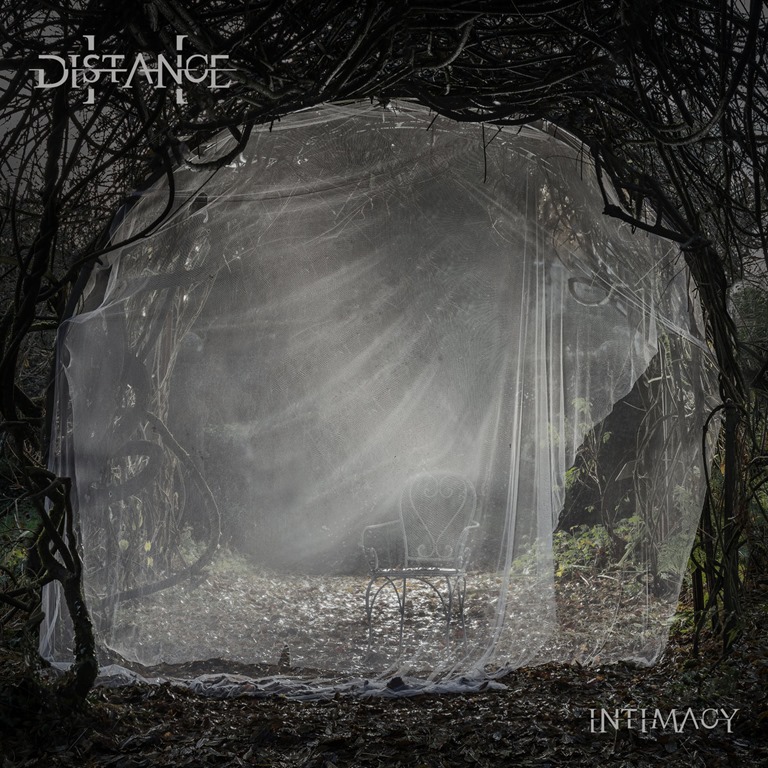
And so it seems to have been the case when Distance H dropped debut EP Intimacy a few months ago. The single cuts released in advance of this EP grabbed my attention, not least the first, Bitch 16’, featuring Ophelia from Saigon Blue Rain. In fact, there wasn’t a weak selection among the three singles: ‘Waters of Woe’ by Distance H feat. Marita Volodina was – and remains, as I described it at the time – ‘vintage goth with a contemporary spin’ and ‘a cracking tune’.

But having failed to make a splash, Intimacy is getting a PR reboot, and it’s a good thing, because the tracks which didn’t get single releases a year ago or whenever, are just as strong, and this makes for a full and founded EP. Casting an eye back to the 80s and 90s when big bucks were doing the rounds, it was often the case that albums would depend on a strong single or two, and that those singles would stand as beacons in set of mediocre slop, or, as was often the case, indulgent turd. It’s rather harder to get away with that ‘lead single’ marketing approach now people can stream the album or hear to by other means in advance without needing to go and check out a listening booth or blag it off your mate.

But Intimacy is truly all killer. ‘Twilight’ is a big, sweeping slab of majestic melancholy, balancing cool synths and chiming guitars that lean on Disintegration era Cure and sits nicely alongside The Twilight Sad circa Nobody Wants to Be Here and Nobody Wants to Leave. It’s a song with a sadness that aches, but at the same time, there’s an ethereal majesty about it, due in no small part to the sweeping, soaring vocals. The epically multi-faceted ‘Waters of Woe’ we’ve already raved about here, but hearing it afresh in the context of the EP, it seems to gain power. The same if true of ‘Reasons to Rush’ which features Liset Alea, combining heavy goth vibes with the electric rush of 90s alternative acts like Curve.

The final track, the epic six-minute ‘Leaden Sky’ now selected to lead the reboot, again features Ophelia on vocals. It’s another gothy epic, clocking in at over six minutes, with a bulbous bass and a wash of echo-soaked guitars weaving a richly textured backdrop cut through with programmed drums which punch out a rolling rhythm. In the context of the EP, it rounds off a big journey ending as it begins, while stepping through some memorable terrain. For these collaborative cuts, Manu H has made some truly immaculate selections. Each of the vocalists brings a subtle but essential twist to the sound, and while tied tightly to the templates of his stated influences (The Cure, Joy Division, Siouxsie And The Banshees, Cocteau Twins, The Sisters of Mercy or The Chameleons), Intimacy sees Distance H emerge victorious by capturing the atmospheric aspects of his forebears without falling to cliché, and the quality of the songs seals it.

AA

a1691727151_10

6th October 2023

Christopher Nosnibor

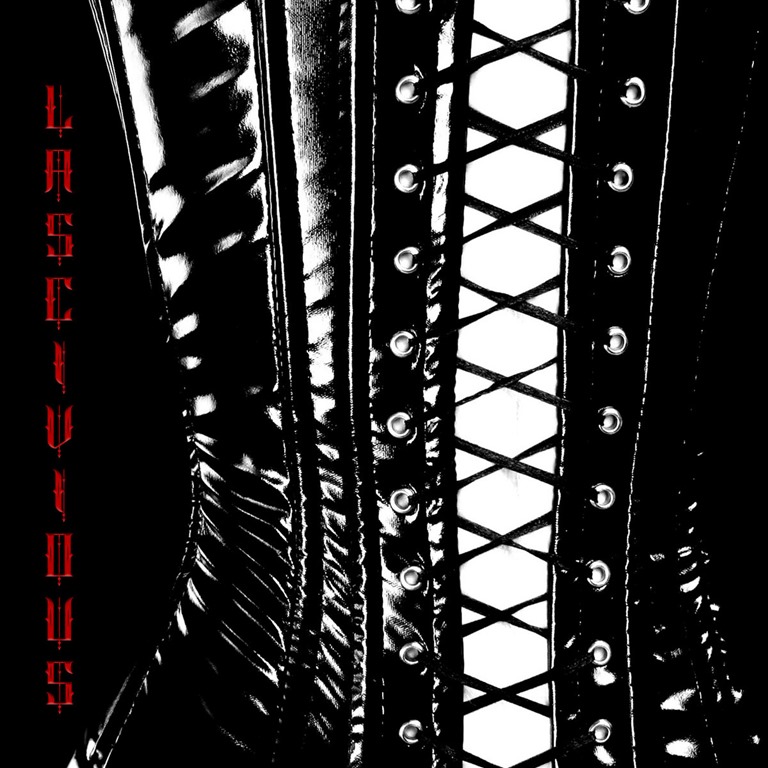
Lascivious is Black Angel’s fifth album, which promises the band’s ‘hybrid Gothic Rock sound and taking flavors from their 80’s predecessors while adding new tones… retaining the essential gothic elements that drive his inspiration as originally provided by the likes of Siouxsie and the Banshees, Bauhaus, The Cult & Sisters of Mercy.’

Certainly, Lascivious is steeped in the stylistic tropes of the 80s, not least of all the thick four-four bass grooves and smashing snare drum which both dominates and defines the sound. But the first thing that strikes me, as a longstanding fan of that golden era in the 80s (I was too young for the start of it all but when The Sisters and The Mission started breaking the Top 40 singles charts between 86 and 88, it was a revelation which set me on a lifelong journey) is that the ‘new tones’ very much involve contemporary production. That is to say, it’s just that much cleaner and fuller, more polished than the true ‘vintage’ sound.

Ah, but they know the features of yesteryear. It’s been a while since I’ve heard a fadeout, but that’s just what happens on the album’s first track, ‘Killer’ – and it’s not the last time on the album they employ it either.

The drum intro on ‘Black Velvet Amphetamine’ is an on-point lift of the snare sound of the Sisters’ cover of ‘Gimme Shelter’, and many of the sounds can be pinpointed as having a certain root or origin. In fact, five seconds into the title track, it’s clear that the drums are lifted from ‘Heartland’, although it also leans on the Sisters’ cover of ‘Emma’ by Hot Chocolate, and it’s clear they’ve been raiding the early Sisters back catalogue – and fair play. The Sisters achieved some incredible sounds with minimal means, with ‘Temple of Love’ marking their first step up from an eight-track ‘studio’ in the run-down northern seaside town of Bridlington.

But if the drums and guitar work make big nods to The Sisters, Corey Landis’ croon is closer to that of Wayne Hussey than the cavernous baritone of Andrew Eldritch. One of the divisions between fan-camps when Hussey and Adams went and formed The Mission – and a source of tension when Hussey began offering songs with lyrics. I write as a fan of the Mission when I say that while they work in the songs, Hussey’s lyrics are more cliché patchworks than literary masterpieces (Eldritch played with and perverted cliché and did so poetically), and one problem with bands who followed in the wake (excuse the pun) of both The Sisters and The Mission is that they’ve had a tendency to ape the lyrical substance without really adding anything creatively unique

‘She’s My Suicide’ slips into more generic rock with a gothy edge, and makes me think of the bands who emerged following the cult but had more of a hair rock leaning, reminding me why despite all my teen goth credentials, I was pretty picky but then, right at the end, they pull out a really gritty, spindly guitar break that’s magnificent, reminding me of The March Violets. And this is a fair summary of the album as a whole: some really good bits, some solid songs, but some rather weak and generic aspects which hold it back in the bracket of ‘decent’ rather than ‘awesome’.

‘Bite It’ bristles with spiky guitars and a low-slung groove, and is perhaps the first song that seems to really fit with the sleaze implied by the album’s title, and ‘Want’ also achieves this, but suffers from trying too hard to be ‘More’. It’s a fair stab at bombast, but it’s hard to compete with the Sisters, especially when they’ve got Jim Steinman on hand, plus a whole host of backing singers and a monster budget for state of the art studio time. I’m sorry I’m not more undemanding. Halfway through ‘Dirty Little Secret’, I realise its chords are based on Motörhead’s ‘Ace of Spades’, and afford myself a small chuckle.

The slower, ‘Ticking of the Clock’ is driven by a crunchy, flangy bass that’s pure early Cure, and is one of the album’s real standouts, by daring to deviate from any obvious formula, and in fairness, the title track is low-slung, sleazy, and grinds out a dark seduction with style.

Sonically, Lascivious is more than solid, and Black Angel clearly know what their doing: there’s no question they have their sound and style absolutely nailed – and consequently, with this set of solid songs, the album will go down well with existing fans and a huge chunk of the goth crowd, and deservedly so.

AA

a3733231510_10

23rd June 2023

Christopher Nosnibor

Talk about moving fast: as their bio details, ‘The Bleak Assembly was formed in July, 2022. Two weeks after its inception, the first EP, We Become Strangers was unveiled. The Bleak Assembly’s meaning takes inspiration from Charles Dickens’s Bleak House – the ‘Bleak Assembly’ being the chain of people in the story whose lives are destroyed by the promise of wealth.” This seems a fitting parable for modern times, and show how we never, ever learn from history.

Comprising Michael Smith (all Instruments) and Kimberly (from Bow Ever Down), they continues to create at pace (ugh – I hang my head at having written such a corporate phrase in a review… but, phraseology notwithstanding, it’s true), and followed up their debut EP with the ‘Alibi’ single in February of 2023, and now they present Strangers Among Strangers. The goal of this EP, says Michael Smith was to “try a different sound. Bands seem to fall into a certain sound after a while, so if that should happen to us. I wanted to open it up to a more electronic sound to give us more room in the future.”

They have pedigree and experience, having between them shared stages with the likes of Assemblage 23, Razed in Black & Switchblade Symphony with their own individual projects, and it’s unusual to see them declare up-front that The Bleak Assembly will likely remain strictly a studio project. But why not? Sometimes the creative process evolves organically and feels like it needs to have that live outlet, while at other times, recordings simply don’t lend themselves to being replicated live. And then there are logistics, not to mention economics. The latter is a very real factor in determining how artists operate now. Funny (not) how the cost of everything has gone up apart from wages and the fees paid to artists.

But this sounds like a studio project, also. And that’s no criticism, and no bad thing. Oftentimes you’ll find bands striving – and failing – to capture the energy of their live performances in the studio. It’s often the case that they developed out of playing live and that’s the platform on which they’re familiar and on which they thrive. And fair play to them: but other acts evolved in the studio and are detrimented by distance, while others simply don’t feel comfortable as live entities and feel they simply cannot replicate their studio works in a live setting. Whatever the case with The Bleak Assembly, they’ve clearly found a method which works for them, facilitating a rapid stream of material.

With Strangers Among Strangers, The Bleak Assembly, who clearly have something of a fixation on strangers and the unheimlich have crafted a crisply-manufactured piece of electropop, and while it’s got some strong gothy / darkwave elements, there’s a lot of Midge Ure era Ultravox and Violator-era Depeche Mode in the mix here, as is immediately apparent on ‘A Night Like This’ (which isn’t a Cure cover).

Strangers Among Strangers is solidly electro-based and packs some real energy. It’s synthy and it’s dark – and nevermore dark than on ‘Ready to Die’, where Kimberley faces straight out into the abyss and confronts the ageing process and, ultimately, the end, against a backdrop of swirling chorus-soaked guitar that’s pure 1985. ‘Remains’ is similarly bleak on the lyrical front, and these songs channel a lot of anguish. It may well be that they’re common tropes in the field of goth and darkwave, but the delivery is gripping, as well as keenly melodic. There’s something of a shift on the EP’s second half, moving to a more guitar-driven sound, but the throbbing synth bass and cracking vintage drum machine snare keep everything coherent and push the songs along with a tight, punchy feel. There’s much to like.

AA

a0917300862_10

5th May 2023

Christopher Nosnibor

Back in the day – that is the 80s and 90s and the time before YouTube and pretty much all things Internet – bands of a certain status would find their live shows being released first as crappy tapes on market stalls with even crappier photocopied sleeves for £3.50 a pop, and later, on CDs which flooded record fares at £12 a go (and for the bands with a real cult following, the late 880s and early 90s there were heaps of vinyl pressings, too). Most of them sounded terrible, but fans lapped them up because they’d buy anything, especially from a show or tour they’d attended. And it wasn’t always the biggest artists who were the most heavily bootlegged: it tended to be the bands with the most hardcore cult followings, which explains why The Sisters of Mercy were more bootlegged than Prince.

The Internet and YouTube and technology in general has changed things rather, in that anyone with a smartphone can upload footage of a show within seconds of the event, even sharing, say, an unreleased song in real-time. But if the quality of 80s audience recorded live bootlegs was ropey, shaky footage of an artist shot on a mobile phone from the third row while the individual dances, slightly drunk, while being jostled about is infinitely worse.

This is where the self-documenting methodology of acts like Throbbing Gristle are the answer. ‘Beat the bootleggers’ was a slogan I heard in the 90s. I always thought it was fair in principle, but the kind of people who bought the shitty tapes at the market already owned everything on every format, so the idea that they were stealing from the artist seemed questionable. Anyway, some acts made it work for them, with Throbbing Gristle’s 24 Hours box set, which contained tapes of their last twenty-four live shows, making most of the boxes different from one another, being an obvious example.

Live 2022 EP 4 shares two tracks with its recent predecessor, EP 3, namely ‘And She Would Darken the Memory’ and ‘That Summer, At Home I Had Become the Invisible Boy’, both from their debut album and both set staples to this day. There’d be riots if they weren’t. And the point of these EP releases is really for the fans – the hardcore devotees who want to hear the details of the differences of the performances from every show, and I get it: consecutive nights on a tour can sound and feel so different, dependent on so many variables, not least of all venue, location, audience, band. If you’re not convinced, go and watch and compare a band playing Glasgow and Nottingham on consecutive nights.

This EP, recorded in Belfast, is certainly different from its predecessor, recorded in London, not least of all because this is an acoustic set performed by James and Andy alone, and it contains six songs against the four off the last one. Personally, a large part of the appeal of The Twilight Sad is the ear-splitting volume and intensity, but as these versions highlight, they’re a consummate live act.

‘VTR’ is a song that loses none its potency with a stripped-back arrangement, while ‘Last January’ lends itself particularly well to the acoustic treatment with its aching melancholy emanating from every note with poised perfection. Much is often made of the passion behind James Graham’s vocals, but rather less tends to be made of the fact he has a magnificent voice, and it’s never been more apparent than here.

In context, ‘And She Would Darken the Memory’ doesn’t suffer from the absence of the blasting crescendo finale, and the quality of both the songwriting and the musicianship shine through.

AA

a1131340594_10

Ipecac Recordings – 28th April 2023

Christopher Nosnibor

As their bio explains most succinctly, ‘Spotlights occupy the space between a push-and-pull of jarring metallic catharsis and sweeping distortion. Even as either side vies for supremacy, neither extreme ever completely tightens its grip, allowing waves of melodic vocals and expressive sonic sorcery to breathe in the middle. This deft balancing act has enabled the trio—husband-and-wife Mario Quintero [guitar, vocals, keys] and Sarah Quintero [bass, vocals] joined by Chris Enriquez [drums]—to carve a singular lane. Armed with an uncanny ability to wield darkness or light, the trio’s fourth full-length offering, Alchemy for the Dead [Ipecac Recordings], finds them exploring something we all face, yet few embrace…’

Expanding on this, Mario explains the album’s overarching theme, which the title alludes to: “One of the major parts of our lives, is the fact we’re all going to die,” he says “Most people are terrified of it, some people learn to look forward to it, and some see it as a way out of their misery. Various cultures view it differently. There isn’t necessarily a story to the album as a whole, but each song deals with the theme of death. It could be fantasy such as bringing a loved one back to life or darker moments like suicide and deep depression.”

It’s a fact that, at least in Western culture, death remains perhaps the last taboo, something of which even the dying tend not to talk about, not properly.

It was back in 2018 that I first encountered Spotlights: their cover of ‘Faith’ by The Cure from their Hanging by Faith EP was an instant grab. This was a band that really ‘got’ the atmospherics of the track and captured the essence of what, for many, myself included, remains as an untouchable trilogy of albums, 17 Seconds, Faith, and Pornography.

Alchemy For The Dead doesn’t sound like any Cure album specifically, but still takes cues in terms of weighty atmosphere. Following a gentle introduction that borders on dark synth pop, it’s not long before the blasting power chords crash in, thick and dark and heavy. And the thick, processed bass on ‘Sunset Burial’ blends with a rippling guitar that’s richly evocative and reminiscent of Oceansise at their best. But when they break into monolithic crescendos of distortion, I’m reminded more of the likes of Amenra, of BIG ¦ BRAVE.

There are some extravagant guitar breaks, but somehow, they’re as forgivable as the more processed prog passages, which in the hands of any other band would likely sound pretentious: Spotlights sound emotionally engaged and sincere without pomp or excessive theatricality: this isn’t something that’s easy to define, not least of all because it’s such a fine line when weighing up musical that’s so reliant on technical proficiency and very much ‘produced’. And the production is very much integral here: the arrangements require this level of separation and clarity. But this is where it’s important to distinguish between production and overproduction, and it’s testament to Mario’s skills at the desk that he’s realised the band’s vision so well. The bass really dominates the sound, which is so thick, rich, and textured, and also explores a broad dynamic range: the quiet passages are delicate, the loud ones as explosive as a detonation at a quarry.

Similarly while the songs tend to stretch beyond the five-minute mark, there’s nothing that feels indulgent or overlong here. ‘Repeat the Silence’ builds on a simple repeated sequence almost reminiscent of Swans’ compositions, but thunders into a bold, grungy chorus that’s more Soundgarden.

The album’s shortest song, the three-and-a-half-minute ‘Ballad in the Mirror’ is also the most overtly commercial, a straight-up quiet/loud grunge blast, and the riffage is colossal.

‘Crawling Towards the Light’ marries monster riffage with Joy Division-esque synths, and somewhere between Movement-era New Order and Smashing Pumpkins, but rendered distinctive by the propulsive drumming which drives the track which builds to a roaring climax.

The seven-minute title track is sparse and suffocating. It has a nostalgic quality that’s hard to define, and it’s perhaps something that’s only likely to punch the gut of nineties teens in this specific way, but it’s understated and emotive, and then the guitars crash in and it’s fucking immense and… well, what a way to conclude an album.

Alchemy For The Dead is a huge work, an album that draws its own parameters and digs new trenches around genre definitions before bulldozing them to the ground with riffs. Complex, detailed, and unique, Alchemy For The Dead is something special.

AA

SPOTLIGHTS_AFTD_LP FULL.png