Posts Tagged ‘Textured’

Gizeh Records – 28th March 2025

Christopher Nosnibor

I sometimes wonder if Aidan Baker has secretly mastered cloning, since he has seemingly pursued multiple careers simultaneously. He’s been active for some time, it’s true, but even the compressed version of his bio makes for quite the read:

As a member of Nadja, Hypnodrone Ensemble, Noplace Trio, Tavare and a host of other projects and solo endeavours, Baker’s prolific output remains vital as he continues to explore a vast terrain of sounds and genres across a 30 year musical career.

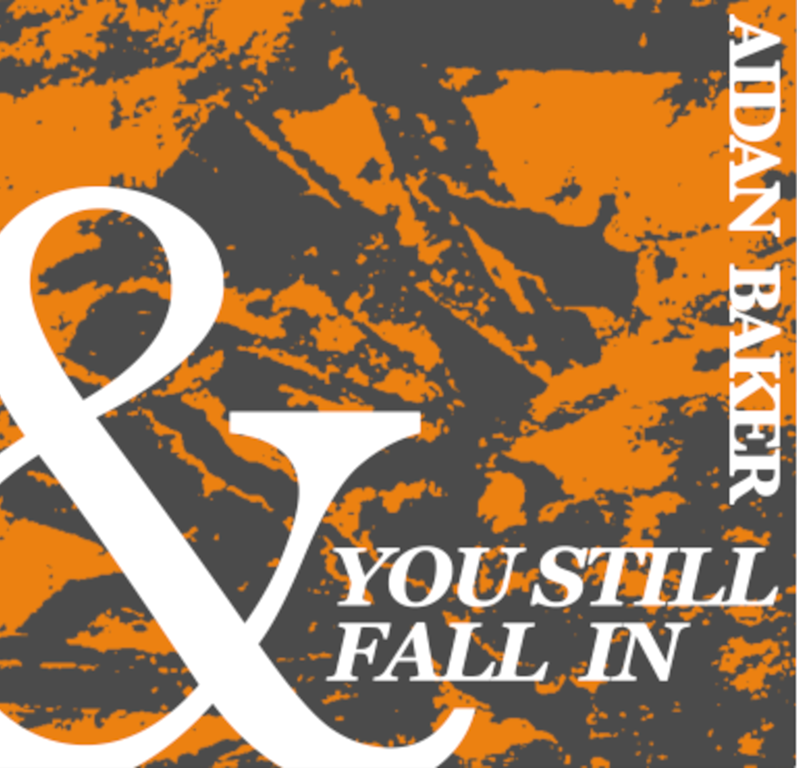
His latest work, & You Still Fall In, we learn, was recorded at Baker’s home studio in Berlin, and ‘hints at the mood and songcraft of the likes of Midwife, Hood, Stina Nordenstam and Movietone. The album is a compelling listen, stripped down to mostly electric guitar and vocals and moving at a distinctly glacial pace. The intimacy of the hushed tones and muted textures lean into a dark, hypnotic and gentle stillness that lingers in the air…’

That fact that this is a truly solo work, with Baker taking care of guitar, bass, drum machine, and vocals is perhaps key to its low-key, introspective atmosphere. Intimate is the word: on the title track which raises the curtain on this soporific sequence of compositions, the acoustic guitar strum hovers to a drone, wavering in volume, seeming to drift, seeming to warp, to fade, you can hear fingertips swiping on strings between frets, and Baker’s vocal is but a mumble; you hear sound, but the words don’t fall free to clarity.

‘Drowning Not Waving’ blends rumbling bass distortions with glitching drum machine and an air of uneasiness: the experience is every inch the struggle the title suggests. And that title… the phrase may have become a popular adaptation of the line from Stevie Smith’s 1957 poem and a metaphor for depression, but to momentarily reflect on the actuality of this all-too -common experience is to recognise the extent to which we, as a society, still – STILL – fail to identify a person in crisis. ‘Cheer up, it might never happen’, we hear often. But it does happen. Even well-meaning friends will diminish the spasms of crisis with ‘well, my life’s shit or probably worse, actually’ type responses. And each such response is like a hand on the head, pushing down. And yes, I speak from experience, and not so long ago I was out for a walk in an attempt to find some tranquillity, some headspace, some time with my thoughts. A dog, off lead, ran up to me and began barking and hassling. Its owners called it back and then groused at me for my failure to smile and thank them. “Ooh, someone’s lost their smile,” the guy said loudly, purposefully so that I could hear. No fucking shit. But you know nothing about my life. My wife died recently and I am not in the mood for being hassled by dogs, and I owe you twats nothing, least of all a smile. I continued on my way without a word, let alone a smile, and there was no point in waving. I was simply drowning. The moral? People may have stuff going on you know nothing about, so don’t be a twat. And anger is only a few degrees along from depression. Music has a boundless capacity to inspire the most unexpected responses.

Things stray into even more minimal, lo-fi territory with ‘You Say You Can See Inside Me’, which captures the spirit of Silver Jews and the soul of some of Michael Gira’s solo recordings. It’s muffled, droning, barely there, even. And yet, somehow, its sparsity accentuates its emotional intensity. There’s almost a confessional feel to this, but it’s a confession so mumbled, either through shame, embarrassment, or plain unwillingness.

On the surface, & You Still Fall In is a gentle work, defined by mellow, picked acoustic guitar and vocals so chilled as to be barely awake – but everything lies beneath the surface. And the surface isn’t as tranquil as all that: ‘When The Waves They Parted’ may be defined by a rippling surge but there’s discomfort beneath the ebb, and the reverb-soaked crunch of ‘Still Cold from the Rain’ is bleak and lugubrious.

Although presented as two separate pieces, ‘Thin Film Interface’ is a continuous thirteen-minute expanse of murky ambience with lead guitar work which soars and echoes over a shifting sonic mist. It hovers in the background, yet simultaneously alters the texture and colour of the air, relaxing but with an unresolved tension beneath.

& You Still Fall In is a difficult album to place – but why should that be necessity? A lot happens, an at the same time, it doesn’t. & You Still Fall In is sparse, drifting between acoustic and altogether simpler acoustic instrumentation. But instead of dissecting the details or reasoning, I’m going to point to the album, and simply say ‘listen to this’. Because it’s simply incredible.

AA

cover

Nocturnal Rainbow Recordings – 4th October 2024

Christopher Nosnibor

Where does the time go? It’s a question one hears people ask often, and I often ask myself the same. Time, it seems, evaporates when you’re busy simply existing, keeping going from one day to the next, working, paying bills, shopping, eating, sleeping. All the things you want to do, but simply never get around to, for one reason or another.

Where does the time go? All too often, I’ll receive an album well in advance of release, and, because of life, and an endless inflow of upcoming releases and other diversions and distractions, I will take a long breath of relief on calculating that I have ages, weeks, before the release date, to listen, process, and digest the work, to write and refine my review, and still be ahead of time. The next thing I know, I’ve reordered my review schedule numerous times, perhaps drafted a few preliminary notes, and the album’s been out for almost a month.

It was only a little over six months ago that I covered Slavin’s seventeenth album, Oolong: Ambient Works.

New Dawns, we’re told ‘exemplifies Slavin’s nonconformity, commitment and expansion to his cultural roots of exploratory music, through early clicks and cuts electronica and instrumental ambient, highlighting an immediacy and necessity for musical independence, through which he hopes to reach attentive new audiences… The album is more than a collection of tracks. a cohesive blending of diverse influences and sounds into a unified experience. A beginning of a journey. As with his previous projects, New Dawns invites listeners to immerse in a unique and tropic sonic world, where the boundaries between acoustic traditional instruments, post leftfield electronica, east and west, are blurred.’

New Dawns comprises sixteen tracks, titled ‘Dawn 1’ to ‘Dawn 16’, each representing, I suppose a new dawn. Each composition is distinctive, and distinct: there is separation, rather than segue, and this very much determines how this feels as an album – in that it feels like an album rather than a single composition sliced into tracks. And as such, there is a sense that each piece, appropriately, starts afresh. And while the overall experience is mellow and broadly ambient, there are solid features which mark the territory, and actual, distinct instruments, too, which punctuate, and, indeed, provide form and structure to the wispy ambient soundscapes: strolling, jazzy double bass, haunting, twangy guitars, piano, irregular beats, and splashing cymbals all feature… to say they feature prominently may be something of an overstatement, but their presence is clear, and in context, powerful.

Just as the sun rises in the east, so the twang and drone of sitars colour some of Slavin’s dawns, and across the span of the sixteen pieces, the sense of mood changes every bit as the sense of geography. Oftentimes, the dawning is gradual, a slow emerging of gentle light, but then, for example, the more percussive ‘dawn 7’ arrives abruptly and unexpectedly, and simultaneously brings with it more overtly electronic vibes which bring together Krautrock and minimal techno. ‘dawn 8’ brings swaggering avant-jazz wrapped in a cloak of prog rock leanings, shrouded in a murky fog of obscurity. ‘dawn 11’ has the kind of murky robotic minimalism of late 70s industrial, hinting at the point where Chris and Cosey would go on to spawn trance.

Its total running time may be under seventy minutes, but New Dawns is an immersive work, and I find myself drawn deeper into the details as it progresses. And those details are abundant. There’s simply too much going on for this to be considered a truly ‘background’ work: zone out for a second, and something else will prod its way to the fore, nagging and needling for attention, before sinking below the surface, to be replaced by something else. Having found myself drawn into the scrapes and drones, the subtle – and not to subtle – details, the album slips by, and so does an hour and a bit. And that, I come to realise, is where the time goes.

AA

a2974132267_10

Cruel Nature Recordings – 23rd February 2024

Christopher Nosnibor

Nnja Riot is the solo project of Lisa McKendrick, who also happens to be one half of experimental electronic noise duo Isn’tses, with Tim Drage, who makes serious noise as Cementemental.

It’s a small world, especially in circles of noise and experimental electronics, and so it is that a few years ago, I paired with Tim for a one-off collaborative set in London at the bottom of a bill curated by Human Worth, with the mighty Modern Technology headlining. I lost my hearing in one ear before the set due to some congestion, and by the end, I’d lost my voice, too. Somewhere along the way, I’m convinced I’ve crossed paths with Isn’tses, too, but can’t find the evidence at this moment in time.

Anyway, my needless digression brings me to the point of observation that their individual projects are quite different from one another, and their collaborative output. This is ultimately a good thing, because while algorithms which have seemingly replaced the music press in making recommendations of the ‘if you liked listening to this, you’ll like this’ ilk, it ain’t necessarily so. Because algorithms don’t understand art, or the fact that an artist’s output may be widely varied.

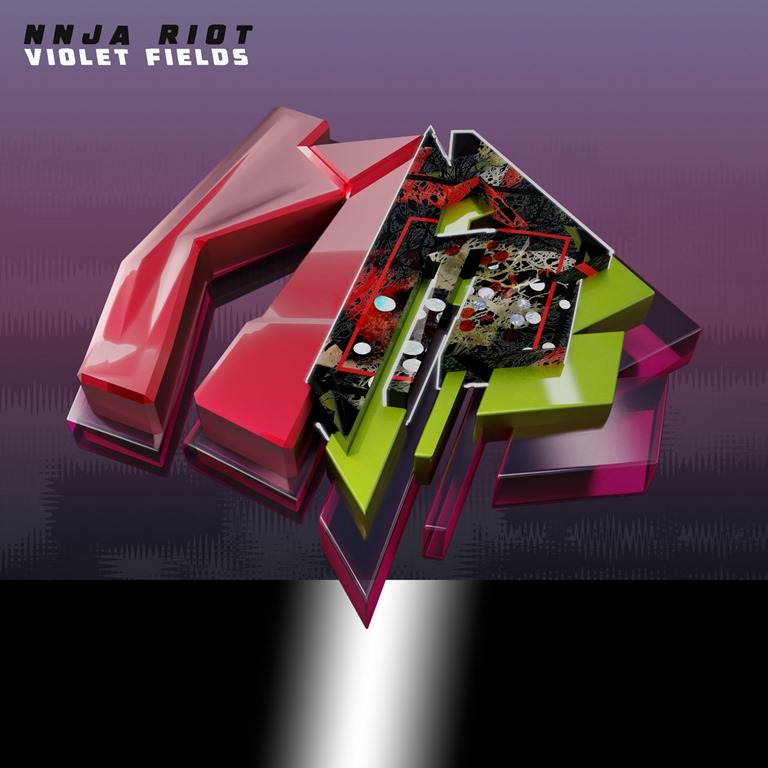
And so it is that as Nnja Riot, Lisa takes a much more songwriterly approach to things, and Violet Fields contains seven songs which can be described broadly as stark industrial electropop. ‘Horror Heart’ brings all of the elements in together to raise the curtains on the album: understated verses, with a thumping heartbeat bass beneath a delicate vocal bathed in reverb, are suddenly blown away in a wave of noise and monotone robotics with whipcracking synthetic snares cutting through the murk with some harsh treble.

‘The Evolve’ is a low, slow, dark pulsating grind which swells to a blistering ruckus of bubbling, broiling eruption of glitching electronic froth, and things get mangled fast and hard. Nnja Riot is indeed an appropriate moniker: the noise grows and takes over by stealth, as if from nowhere: one minute things are pretty mellow, the next, it’s all going off and you’re being carried away on a sonic tidal wave.

The album’s longest track, ‘Dark Assassination’, stretches beyond the seven-minute mark, and with a stuttering, beat hammering like a palpating heart in a state of fibrillation against the ribcage, it’s creates a muscle-tightening tension which is uncomfortable. The vocals are disconcerting, sounding as they do detached, off-key, non-melodic. Desperate drones bend and warp in the background, adding layers of dissonance and discomfort.

Everywhere across Violet Fields, there are subtle but essential incidental details, little lines of melody which ripple and fade. The title track is hazy, sedated, spaced-out, with melodic elements juxtaposed with swerving sci-fi noise which threatens to drown out the erratic beats and she cuts loose to another level of intensity with the vocal delivery: fuzzed with distortion, there’s a outflowing from the innermost which pours into the swirling wash of multi-faceted noise.

Violet Fields crackles and fizzes, often promising structures which crumble and evaporate and leave the listener feeling a little lost, grasping for something uncertain and just beyond reach. It’s this sense of vagueness which remains after the grainy ‘Musical Fix’ and the ephemeral drift of ‘Slow Release’, a mere fragment of a song which carries a spiritual richness on a ritual drumbeat before fading. There’s a sense that hearing Violet Fields and fully grasping it are not one and the same, and it feels that however long one spends engaging with it, there will always be depths and layers of implicit meaning that exist beyond the realms of conception. You wave a feeble hand, desperate to clutch and cling, but it’s gone. It’s gone.

AA

a2182947288_10

1st December 2023

Christopher Nosnibor

The latest offering from Mark Beazley’s Rothko follows 2022’s Let Space Speak EP, and standalone single ‘Summer In October, Winter In July’, which was an uncommonly loud and abrasive work by his usual standards, although, in context, it made sense, as he wrote, ‘Things have been blurred, uncertain, scary…here’s to certainty soon’, adding ‘I got my brain scan results today, they all came back showing nothing untoward. Good news on a personal level after such uncertainty, but close friends of mine have not had such positive news this year. This is for all of us.’

It would be a stretch to say I found solace in those words following the loss of my wife at the beginning of the year, but having found grief to be an extremely isolating experience, even with the support of friends, it helps in some small way to realise that you’re not the only one dealing with extreme personal difficulty. It’s easy to go through life feeling somewhat blasé, shrugging ‘hey, what’s the worst that can happen?’ But when confronted with the stark realisation of ‘the worst’, your mindset changes. And after the worst has happened, what then?

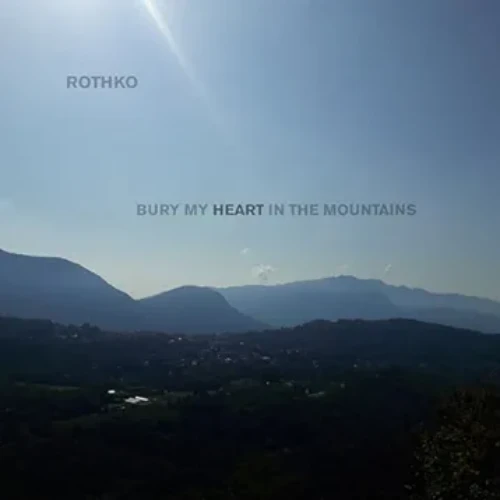
The five compositions on Bury My Heart In The Mountains take their titles from the names of peaks in the Swiss Alps, and capture the brooding beauty of these spectacular summits. Mountains possess a powerful magnetism: simultaneously alluring and foreboding, they can mean so much to so many. It would be misguided of me to even begin to attempt to comprehend or to make assumptions about Beazley’s own relationship with these impressive peaks – I can only know my own relationship with those I have climbed or otherwise stood in awe of, here in the UK, particularly the Lake District, a curious blend of exhilaration and tranquillity, joy and fear. Because the mountains may provide the perfect escape, the ultimate experience of life-affirming freedom, but you can never treat them with too much respect, and while they may in themselves be immutable, they’re prone to rapid change when it comes to conditions, and each mountain has its own character of sorts – and this is something which the six pieces on Bury My Heart In The Mountains conveys in the most nuanced of fashions.

The first track, ‘Monte San Giorgio’ extends beyond eleven minutes in duration and brings together all of the different expressions of terrain and the associated emotions, marking the start of an exploratory adventure that’s contemplative and largely calm, but not without peaks and troughs and moments of mounting drama.

Field sounds create a thick atmosphere at the start of ‘Monte San Salvatore’, with cooing and gurgling, and extraneous sounds, before delicate picked guitar notes drift off into the crisp, clear air, while it’s Beazley’s bass which dominates the grumbling yet expansive ‘Säntis’. A chill wind blows on the arrival of ‘Monte Tamaro’, before drifting into a brittle, cold conglomeration of chimes and drones. The final track, ‘Monte Bre’ is but a brief outro, all of the elements of the preceding compositions compressed into a minute and a half, bringing calm and tension simultaneously. It’s unexpected, sending ripples of disquiet through the stilling waters left in the wake of the slow ebbing of ‘Monte Tamaro’ moments before. One suspects that this brief judder is intentionally placed, and leaves the atmosphere that bit less smooth and soothed than before, a reminder that it doesn’t do to become complacent or too comfortable or settled, because life is full of surprises, and you never know what’s around the corner.

Gizeh Records – 30th June 2023

Christopher Nosnibor

In this sense, Bleaklow is a rather different proposition, and in some respects, the instrumentation is a significant factor in the shape of the sound, with Claire contributing ‘Voice, Nord Electro, Yamaha PSS-170, field recordings, Moog Taurus’, and Richard contributing ‘Electric gtr, drones, field recordings, Yahama PSS-170, Moog Taurus’. But by the same token, there is something about anything Richard Knox does which has something of a signature – not a signature sound as such, more of a signature feel, which comes from the kind of wispy ambience and dense atmospherics.

The overall effect of Bleaklow’s debut, Glume, is mellow, amorphous washes of cloud-like sounds drifting softly on invisible air currents, but there are moments where the textures are coarser, more abrasive, and these provide vital contrast. ‘Husk’ scrapes in with a wash of distorted guitar before tapering tones supple piano and vocals, layered to a choral effect surge and swell.

Claire’s voice by turns evokes Kate Bush and Cranes, haunting, ethereal, and as much as this sits in the post-rock bracket from which Richard and Gizeh emerged back in the early 00s (the label put out not only the The Heritage, the debut mini album by Her Name is Calla, but Knox also put out a super-limited CD of ‘Condor and River’ in a crazy corrugated card sleeve, as well as Arrivals, the debut album by worriedaboutsatan, wrapped in a chunk of blown vinyl wallpaper, which looks and feels amazing but is a real bugger to store… but I digress) it also very much harks back to 90s shoegaze, with a heavy debt to Slowdive and My Bloody Valentine, but then again, it’s impossible to listen to this without recourse to The Cocteau Twins. If this sounds like a catalogue of touchstones, it’s testament to how deftly they draw on myriad elements and whip them into a sonic souffle with the texture of candyfloss – not that this is particularly sweet, but it is lighter than a feather, lighter than air. And nowadays, the packaging is a little less DIY, but still very much focused on sustainability: the packaging for Glume is a recycled cocoa-card sleeve, whereby the ‘recycled card is made from 40% Post Consumer Waste and 15% natural fibres (by-products derived from the food processing industry which would otherwise go to landfill.) Turning a waste product into a natural, GMO free, raw material derived from nuts, fruits etc, resulting in distinctive colour shades’. It’s not just commendable, environmentally: it taps into the physicality of a releasing music and rendering the physical release a work of art rather than a commodity of plastic in plastic.

Everything on Glume happens at a sedate pace, and everything melts slowly together. The chances are that at some point, you’ve sat, stood, or even laid on the grass and simply looked at the sky and watched the clouds slowly shifting shape, rabbits and elephants becoming elongated and increasingly deformed, until they’re no longer rabbits or elephants, but abstract shapes stretching and fading to formlessness. The songs on Glume are by absolutely no means formless, but the sounds are like mist and the structures are supple. It’s a magnificently realised work: textured, detailed, nuanced.

It may not be bleak, but it’s dark, and it’s got detail. Bask in it.

AA

a0373089653_10

Invada Records – 30th June 2023

Christopher Nosnibor

You know what? This never gets tired. I started reviewing live stuff in the 90s, but it wasn’t until 2008 I started receiving albums for review. Receiving albums ahead of release was a big deal back then: it made me feel somehow special. Advance promos probably meant something more then, on reflection. They would be, more likely than not., a single CD – or even a single-track CD – and my objective would be to get my review out ahead of, well, as many people as possible. It wasn’t so much about generating buzz as feeling a buzz.

I miss the steady drip of CDs and vinyl through the letterbox, although am coming to accept that space is an issue here, and if the endless bombardment of emails with downloads and streams sometimes – often – feels overwhelming, with up to fifty review submissions a day, when I clock a release I’ve been getting excited about well before time, the buzz still hits.

The way albums are released now isn’t quite the same, either: time was when there would be a single or two ahead of release, there’d be reviews and then the album would arrive and you’d have to buy it to hear it. Now, singles aren’t really singles and half the album’s been released on various streaming platforms along with a bunch of lyric videos and ‘visualisers’ (that’s one for another time). But having only slipped out a couple of tracks in a relatively low-key fashion in April and May, this landing in my inbox to download ahead of release, gave me a genuine buzz.

Gas Lit, released in 2021, was a powerful, album on so many levels. As they put it, the album was their ‘fight for Indigenous Sovereignty, Black and Indigenous Liberation, Water, Earth, and Indigenous land given back.’. The Australian duo make music with meaning, and do so with passion and sonic force.

How often do we hear recently that the failings were systemic? Systemic failings in the NHS led to deaths, and systemic failings in the schooling system resulted in kids committing suicide, systemic failings in vetting and so on has resulted in a culture of racism and misogyny in the MET police… daily, we hear or read news about systemic issues. And we know, we know the system is fucked. Not merely flawed: fucked.

And on fourth album Systemic, Divide and Dissolve examine ‘the systems that intrinsically bind us and calls for a system that facilitates life for everyone. It’s a message that fits with the band’s core intention: to make music that honours their ancestors and Indigenous land, to oppose white supremacy, and to work towards a future of Black and Indigenous liberation.’

“This music is an acknowledgement of the dispossession that occurs due to colonial violence,” says Takiaya Reed, saxophonist and guitarist in Divide and Dissolve. “The goal of the colonial project is to separate Indigenous people from their culture, their life force, their community and their traditions. The album is in direct opposition to this.”

Divide and Dissolve represent a people for whom the system hasn’t failed: it was always pitched against them, and succeeded in stripping Indigenous people of everything. What kind of system is it where this brutal debasement is a success? A capitalist one, of course.

Systemic certainly isn’t a flimsy pop record, then. But it is inherently listenable and does unashamedly incorporate pop elements, and this dynamic only serves to heighten its sonic power.

‘Want’ lulls us into a false sense of tranquillity, a looping motif pulsating over grand drones: it’s quite pleasant, even. And then ‘Blood Quantum’ hits: after a delicate, supple chamber-pop intro, the guitars crash in and it’s like a tidal wave. It’s a slow-stomping riff that grinds hard, and the textures are thick and rich.

The setup is simple, and the guitar and drum combo has become increasingly popular in recent years – but for all of its limitations, it also has considerable versatility, and Divide and Dissolve exploit and push those parameters by exploring the interplay between the two instruments when played slow and heavy and at high volume. And so it is that without words, their songs convey so much.

Photo_by_Yatri_Niehaus_516198

Photo by Yatri Niehaus

There’s almost something of a Duane Eddy / Western twang to ‘Simulacra’ before it explodes in a thrashing flurry of distortion and pummelling percussion. But for all the sludge-laden noise of ‘Reproach’, there is a grace and beauty about it, too, and this is what differentiates Divide and Dissolve from their myriad ‘heavy’ contemporaries: they imbue their songs with a palpable emotional depth. ‘Indignation’ begins with trilling woodwind, and possesses a wistful, aching jazz vibe before the thunderous deluge of guitar and drums heaps in. Featuring a spoken word recital from Minori Sanchez-Fung, ‘Kindgom of Fear’ is the only one of the album’s nine tracks to feature vocals: it’s a more minimal musical work which allows the words to stand to the fore, supplementing them with atmosphere and adding further variety and contrast to the album, notably ahead of the ragged riffery of ‘Omnipotent’.

The tranquil strings of ‘Desire’ provide the perfect bookend to stand opposite ‘Want’, and their synonymity is highlighted in this way. To want, to desire, something – something back – seems reasonable, should not need so much fight… but while there is the need to fight, Divide and Dissolve make protest music. It may not be protest music in the way many of us recognise it, but slogans and punk and folk are tired and worn, and on Systemic, Divide and Dissolve speak in their own strong and powerful way.

AA

644835

Medication Time Records – 27th January 2023

Christopher Nosnibor

My first encounter with Fågelle was supporting Big | Brave in Leeds last spring. Despite suffering some technical difficulties and being on before a band so mighty that I still haven’t quite got over the experience, I wrote that ‘Fågelle proves to be an absolute revelation’.

The release of her new album, album Den svenska vreden (The Swedish rage), affords proper time to digest, and to reflect on this. And live, I remarked on her understated presence and the variety, shifting from quiet restraint to some heavy noise, and with experimental elements. Those are all present here, to forge what the press release set out as ‘collage-like soundscapes made with twisted field recordings, mobile memories, digital trash, dark electronics, and howling choirs while moving between harmony and noise.’

For the most part, Den svenska vreden is subtle. There are soft, electronic washes and the slightest of glitches ripple and stutter almost subliminally. The layers rub against one another to create tensions, but still, the overall mood of the album is comparatively light, particularly given the album’s title and her explanation of the album’s context and contents.

“I was so angry and had been for years.” explains Fågelle, “A kind of adult rage that was new to me. Feeling forced to accept and stay in circumstances making me miserable. To patiently suffer now for a better future. But also, a subdued Swedishness that doesn’t hold space for flaring, tearing, wallowing rage but rather pushes it down from the surface and inwards. Question is, where does the rage go, and which forms does it take? That became a starting point for the record where I kept exploring my personal boiling points, pressures and releases, where to hold my rage, in words and in the body, as a swede and as a woman.”

She continues, “Swedish social norms value the level headed and emotionally subdued. There is a pressure put especially hard on women to function like social glue and to always be consensus oriented. It’s a pressure to practice self control, a self choking of non-agreeable ideas and feelings. Rage being one of them.”

As such, one senses the rage is very much tempered by the Swedish restraint. And that’s something that there is a strong sense of, listening to Den svenska vreden – that there is in fact far more beneath the surface, simmering.

‘Slavar’ is dark and tense, tentative, mysterious. In contrast, ‘Aldrig mera här’ is almost minimal pop in its flavour. As a prelude to the soft folk reflections of ‘Fåglar’, which in parts invites comparisons to Suzanne Vega while in others goes quite wonderfully weird, ‘Tredje långgatan tretton’ begins as hushed ambience and builds into dramatic strings. It’s on the title track that the rage burst forth, manifesting as two minutes of mangled noise, and the album culminates in a thumping burst of beat-driven electronica which I wouldn’t go so far as to describe as dance, but it’s certainly got enough groove to get down to.

There’s a sense that Den svenska vreden reflects its creator: complex, inscrutable, enigmatic, and multi-faceted.

AA

919308

PNL Records – 16th December 2022

Christopher Nosnibor

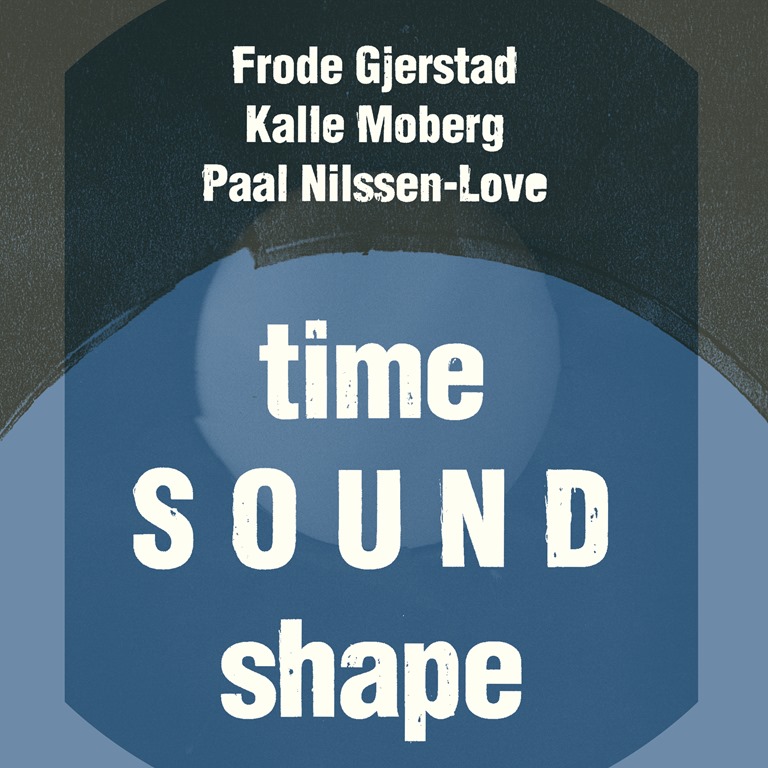
Nice… as you’d probably expect from this three-way collaboration, Time Sound Shape is a work of atmospheric instrumental experimentalism with some strong jazz leanings. That’s not smooth or mellow jazz, of course: more the weirdy, spaced-out non-musical kind of jazz. So not so much nice, as awkward, uncomfortable, challenging. This is not jazz of the cardigan and slippers variety, and you certainly wouldn’t play it at a dinner party, apart from perhaps at thee point when your remaining guests have overstayed their welcome and you want them to fuck off home.

Time Sound Shape is a single continuous piece with a running time of a full-length album, clocking in at precisely forty-nine minutes, and it’s a great example of intuitive improvisational collaborative work, and it sounds far better than the clunky text-based cover art suggests.

There are some dissonant, discordant, even outright difficult to digest crescendos, and moments of queasy chamber orchestral meanderings, as they tweet and toot together in a sort of droning solidarity. It begins gently enough, with some trilling woodwind courtesy of Frode Gjerstad who brings flute, and clarinet to the party as well as sax, but it doesn’t take long before things shift in numerous different directions.

There are moments that almost feel ‘continental’ in vibe, perhaps not least of all on account of Kalle Moberg’s accordion work. And all the while, Paal Nilssen-Love brings texture and atmosphere with his application of a wide selection of Paiste gongs, bringing doomy dolorous chimes and rolling thunder. At times, the crashing gongs are strong enough to vibrate the internal organs within the ribcage.

In many respects, Time Sound Shape delivers precisely what you would expect from these three musicians coming together, and yet at the same time, it brings more. It’s a richly textured work, that evolves as it progresses, and it never stays stull, and yet the changes are often subtle. Time drifts and bends as the sounds transition, changing shape. Let yourself be carried.

AA

PNL052_front

Ahead of the release of their second album, Inviolate, Dystopian Future Movies release ‘Black-Cloaked’ as a follow-up to ‘Countenance’, which came out in January.

Check it here: