Posts Tagged ‘Techno’

Long Trax Productions – 31st January 2024

Christopher Nosnibor

The brief liner notes are almost as perplexing as the cover art and the rest of Will Long’s Bandcamp page. I mean, you might think that the title is the key here. While clocking in around the eleven-minute mark, these compositions, as much as they’re far from short, well, I’ve certainly heard many longer trax, with many albums featuring a single twenty-minute piece on each side. But of course, it’s a pun. Sort of. Regardless, spreading these four tracks across four sides of vinyl feels somewhat indulgent, although I won’t go quite as far as to say exploitative, despite the temptation.

Will Long has to date created an extensive catalogue of work, both with Celer, since 2004, and as a solo artist – and when I say ‘extensive’, I mean extensive, with Celer having released around a hundred albums (if you include collaborations and compilations), and his solo output is equally overwhelming in volume. The Long Trax releases have arrived sporadically between other releases, and are broadly connected, in stylistic terms. As Long puts it, ‘round 4 of the Long Trax series [is] the pivotal moment of truth. Four new deep cuts spread across 4 sides of vinyl in dual sleeves, and spun onto disc. An all-analog, hardware machine affair, full of glacial pads and icy stabs, rhythm composure (composer) sequences, round booming basslines, and narrators from beyond. It’s the real thing, still chugging along.’

Less than a minute into ‘One in the Future’, I’m feeling late 90s chilled techno vibes, and I’m dragged back to a handful of club experiences where I fucking hated the music and I hated the posers.

I’ll admit, I’ve always had something of a fraught relationship with dance music and its culture. I suppose I’ve generally leaned towards rock, but have found spaces in my head and heart for some dance and adjacent, loving the KLF from the start, and so much of the electronic music from the late 70s and early 80s. Chris and Cosey’s Trance is a straight-up dance album, and I dig it not just because it’s a Throbbing Gristle-related release. But, as I discovered when visiting a club in Brighton on visiting friends in the late 90s, some stuff, I just struggle to connect with. And this is it. To add to my story, I attended an Optimo night in Glasgow in 2004 to see Whitehouse. It was a strange event, in that most were there for the downtempo dance, which was halted for three quarters of an hour while William Bennet and Philip Best cranked out the most punishing, ear-shredding set to the sheer horror of the majority, before smooth beats returned, to their relief. My experience was inverse to the majority. Whitehouse did not go down well: the end of their set did. As the relentless bouncing beats returned, I was happy to leave, as were my whistling, devastated ears.

‘One in the Future’ is the longest eleven minutes of nondescript sonic wallpaper I have had the pain to endure in over a decade. It’s the monotony that hurts. It’s soulless, tedious, and nothing happens. And this is a fair summary of the album as a whole. To my ear, to my mind, to my insides, it feels so devoid of… anything that I can connect to. The samples blare, the squelchy synths blip and bloop and pulsate over tedious beats and maybe I need different drugs or a different brain, but this is relentlessly tedious, monotonous and crushingly dull. Get me out of here!

AA

名称未設定のアートワーク

Kalamine Records – 14th September 2024

Christopher Nosnibor

Whether it be solo works ranging from ambience to classical, or collaborations running the full gamut in the electronic field, Deborah Fialkiewicz’s output in recent years has been nothing short of prodigious, and spanning as many forms as her work does, there is never a dull moment. This latest work, under the POOCH moniker, in collaboration with Dan Dolby (Bassist in Mastiff, Noisemonger in Catafalque and Sulphur Nurse) is no exception. It offers a set of eight dark, stark electronic compositions which owe a considerable debt to early industrial and electronic works, bringing a combination of dark atmospherics and nagging beats. Although entirely instrumental, we’re in the kind of territory occupied by the likes of Cabaret Voltaire, Test Dept, and Chris and Cosey’s Trance.

As an opener, ‘Hades’ is as dark and subterranean as the title would suggest, a bleak, murky pulsation squelching around and leading the listener down, down, down. It serves as something of a primer, a mood-setter, but doesn’t fully prepare one for the altogether steelier, starker, more rhythmic and percussion-driven pieces which follow.

The title track pairs a dense, dirty bass with clattering, metallic percussion which assails the mind like a concerted assault with the contents of a cutlery drawer, and it bashes away relentlessly for four and a half minutes straight. On paper, it might not sound much, but as an experience, it’s pretty hard-hitting. Built around short, clipped repetitions, it creates a suffocatingly claustrophobic aural space. The word ‘pooch’ evokes a cuddly companion, something friendly, but there’s nothing cuddly or friendly about this, a listening experience closer to being whipped with a chain than fussing a canine buddy.

Each composition bears a one-word title (‘GameBoy’ being a forced blend-word (it doesn’t really qualify as a portmanteau) in order to maintain the theme. Funtime bit-tunes are bent with glitches and warping drifts of darkness here, before things begin to slide further into beat-orientated minimal techno.

The steady beat which dominates and defined the spartan ‘Quazar’ is almost soporific: the track assumes something of a background position as it clicks along nonchalantly, with a low, unshifting drone hovering just around the level of register. Nothing happens. It doesn’t need to. And while the thunder which heralds the arrival of ‘Midnite’ might initially serve as an alert, the piece soon melts into abstraction. The final track, ‘Stimpy’ may be missing Ren, but hits hard, built around a strong, thudding beat and looped electronic undulations.

For all of its cuddly connotations, Pooch is a pretty dark album. To my mind – and it could be to my mind alone – music which is heavily beat-orientated and instrumental feels impersonal somehow, and I find it somewhat disorientating, disconnecting, alien. And so it is that the pounding beats of Pooch leave me feeling somewhat dazed, detached, even dizzy. But it’s impossible to deny the detail, the quality of the execution, or the fact that this is an outstanding work.

AA

cover

Industrial band, CLOCKWORK ECHO has just unleashed their highly-anticipated new single, ‘Hallowed Be Thy Pain’.

Laden with raw emotion and haunting revelations, ‘Hallowed Be Thy Pain’ delves deep into the themes of deceit, faith, and the far-reaching consequences of a single lie. The song’s lyrics are poignant and introspective, unravelling a story that intertwines personal guilt with collective delusion.  The song offers a powerful critique of faith, deception, and the human condition. It challenges listeners to question the narratives they have been fed and to seek the truth behind the comforting lies.

In a world where belief often triumphs over evidence, ‘Hallowed Be Thy Pain’ critiques the exploration of faith and the ease with which people are swayed by spiritual narratives, often lacking concrete evidence. Phrases such as ‘shadows in their eyes’ evoke a sense of collective blindness, a willingness to be deceived in exchange for spiritual comfort.

‘Hallowed Be Thy Pain’ serves as a haunting reminder of the fragile line between truth and fiction. As we navigate through the shadows of our own lives, may we find the courage to confront the lies we tell ourselves and others, and seek a path illuminated by truth and understanding.

Listen to this blasting stomper here:

AA

ab1a4016-f502-e421-4960-d414cbdb59eb

Metropolis Records – 17th May 2024

Christopher Nosnibor

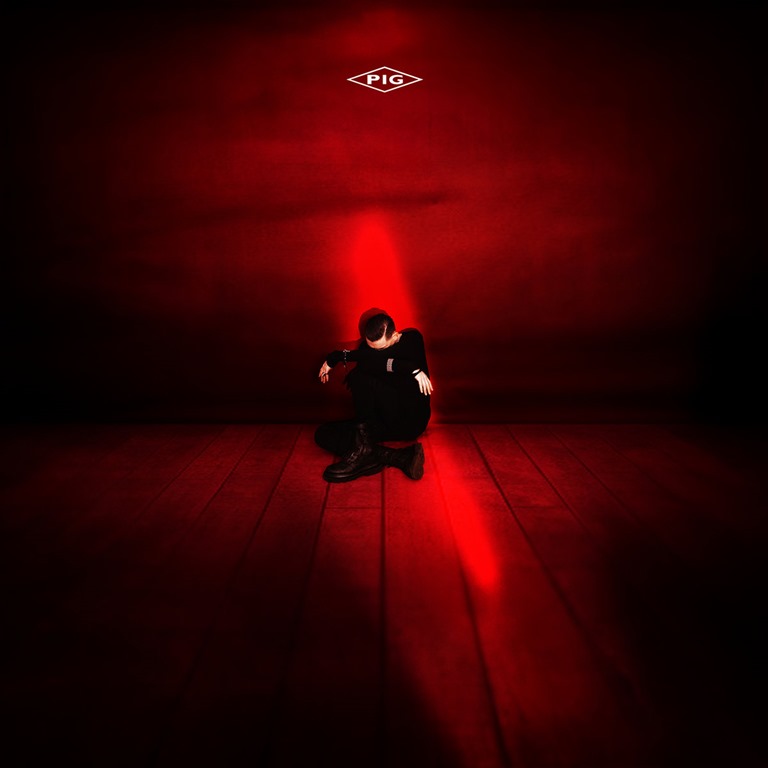
For a good many years, PIG lay dormant, moribund, mute. Gone, but not forgotten, having mingled with the milieu of industrial royalty since emerging in the ranks of KMFDM and retaining that connection and confluence while operating separately under the PIG moniker, Raymond Watts arguably reached his largest audiences in the wake of touring as support to Nine Inch Nails on the Downward Spiral tour. With pig’s heads on stakes at the sides of the stage, it was visual, visceral, and vital.

Things went quiet for a time – a very long time – but since returning in 2016 with The Gospel, the releases have come thick and fast, with Red Room being the sixth album (if you include Pain is God, a compilation of EP cuts) since PIG’s phoenix-like resurrection

As the accompanying notes explain, ‘Watts has co-written much of Red Room with Jim Davies, a longtime member of Pitchshifter but best known for his acidic and acerbic guitar lines on many chart hits by The Prodigy. Several regular cohorts are also present and correct, along with some new additions most majestically heard on ‘Dum Dum Bullet’ as the PIG choir: Emily Kavanaugh (Night Club), Chris Hall (Stabbing Westward), Burton C Bell (Fear Factory, Ascension of the Watchers), I Ya Toyah, Chris Connelly (Revolting Cocks, Ministry), En Esch (KMFDM) and Marc Heal (Cubanate) are among those featured.’

First: it’s a hell of a roll-call of contributors. A veritable who’s-who, an industrial supergroup on a scale that pisses all over recent lineups for RevCo or Pigface. Second: Jim Davies’ presence is notable in terms of defining the sound. There’s a lot of sinewy detail in between the chugging riffs and bulbous sequenced synthy bass notes. Recent releases have seen Watts expose the poppier, glammier aspects of PIG, but these have been cast aside here in favour a sound which is altogether more reminiscent of mid-to-late 90s PIG, only minus the flamboyant orchestral strikes and string flourishes.

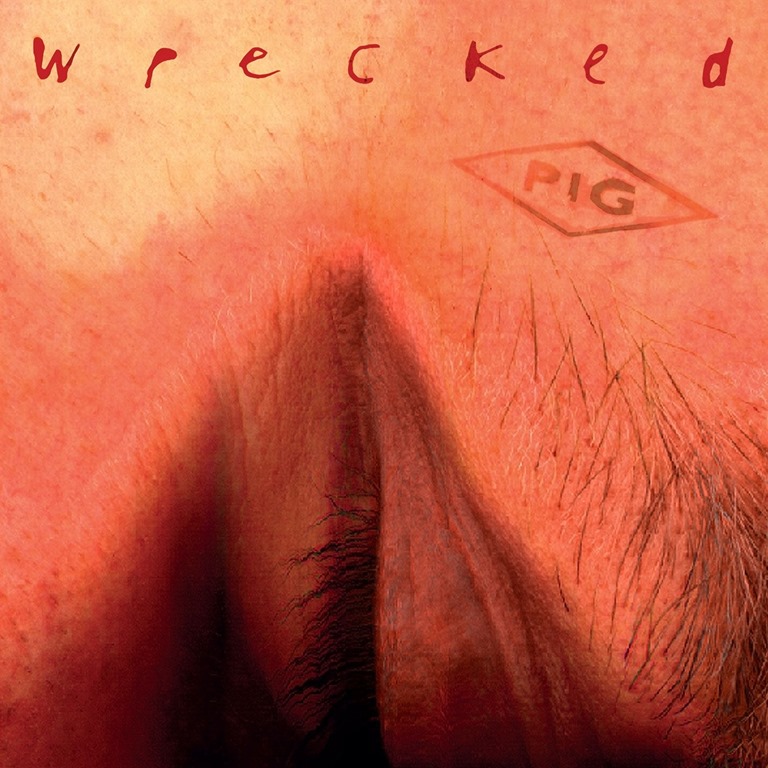
Blasting in with ‘Crumbs, Chaos, Lies’ – which deviates from the classic alliterative rule of three – the album gets down to the grind from the off, the track boasting some dirty low-end scuzz, the likes of which would have been quite at home on Sinsation or Wrecked, with overloading guitars that burst from the speakers rent with a serpentine synth line and some discordant piano. Layers? It has many, and the more you listen, the more you hear. Watts has long been a meticulous master of detail in the studio, and while Red Room is darker and noisier than some of its predecessors, it’s a masterclass in attention to the little things.

The title track is a proper PIG prime-cut: anthemic, but dark, bleak, and dirty, while ‘Dum Dum Bullet’ is reminiscent of previous ‘gospel’ flavoured pieces, but equally, I’m reminded of a grimier sweatier, sleazier version of She Wants Revenge. If ‘Does it Hurt Yet’ calls to mind Nine Inch Nails circa Pretty Hate Machine and the more low-key, robotic synth moments of The Downward Spiral, it’s worth bearing in mind that it was Watts who working this field before Trent, before Reznor contributed to Pigface, Watts was recording with KMFDM, and come 1988 (when PHM was released), he released the first PIG LP and worked as a touring member of Foetus.

‘Slave to Pleasure’ mashes a whole lot together, sounding like an industrial version of The Associates, while throwing nods to Depeche Mode and David Bowie. It’s high-energy and a killer tune which would go down well on the radio, if the whip cracks and general themes could pass approval. ‘Six Eye Sand Spider’ is again predominantly electronic but the layers ad textures are exciting, and the guitars, while packed down so, so low, bring both dirt and density the sound. ‘PIG is at Your Window’ is uncomfortable, and brings some bold brass and busy orchestral work atop the big, grinding blasts of guitar, not to mention a dash of .

Red Room captures PIG at their darkest and heaviest, but also marks a return to their eclecticism and experimentalism of the mid-nineties. It’s an unapologetically hefty set with some inspired twists.

AA

a0167926687_10

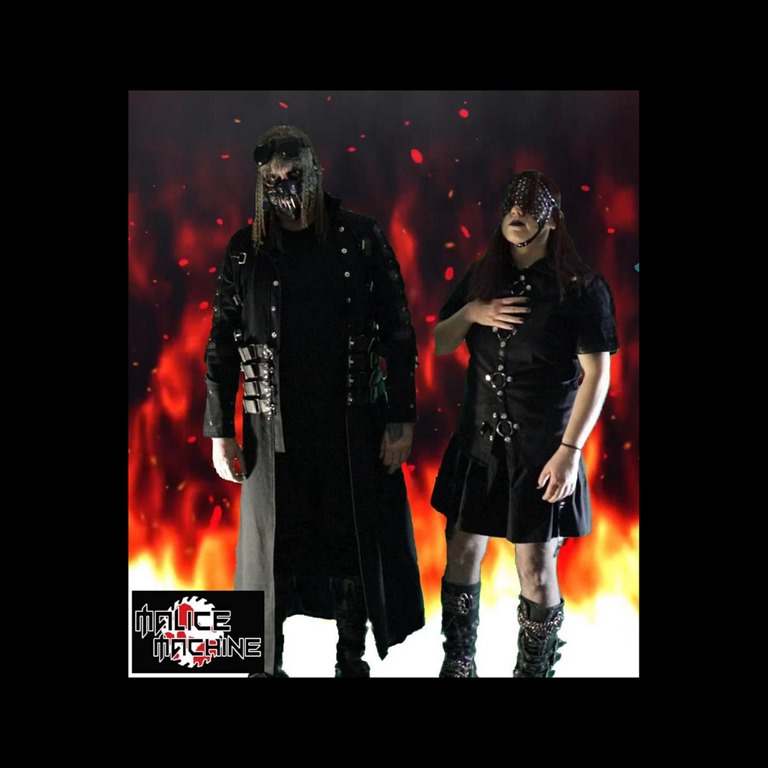
Aggro-punk band, MALICE MACHINE has finally unleashed their long-awaited new single, ‘Hyena’.  The track will appear on the forthcoming full-length album, Act Of Self Destruction.

‘Hyena’ is about the forces and the decision makers that create chaos in the world and ultimately burn us all. It’s a message based on imagery and driven by bass and drums that’s expressed in the typical MALICE MACHIKNE fashion of unfiltered angst… At it’s core, ‘Hyena’ is a statement of anger about life, society and its leaders.

It’s pure late 80s technoindustrial, KMFDM, Ministry circa Twitch, Skrew, Wax Trax!

Get yer lugs round this monster here:

AA

a1430851937_10

15th March 2024

Christopher Nosnibor

Following the stop-gap single release of their remixed version of their debut, ‘Messy’, Eville are back and firing on all cylinders with their first new material of 2024. While it incorporates the defining elements which made their previous two single, ‘Messy’ and ‘Leech’ – namely hard-driving nu-metal guitar slabs juxtaposed with electronic drum ‘n’ bass, which combine to drive a ‘a huge pop chorus,’ ‘Monster’ represents a clear step up, and is, as the title suggests, a monster.

Having a specific goal can provide vital focus in the creative process, and this was central to the creation of ‘Monster’.

If Yard Act are striving to make hits, self-professed ‘brat-metal’ trio Eville are all about the Pits, as Eva (Guitar and vocals) explains the objective for ‘Monster’: ‘We are building on the success of our singles by keeping up the standard our fans expect. ‘Leech’ and ‘Messy’ have done us proud, but we are ready to move up a level with ‘Monster’, I wanted to write a feral tune that would be perfect to open up mosh pits.’

It may be old-school, the notion of making music that will hit live and by playing support slots and touring to build a fan-base, but unless you’ve got massive label backing and PR that can score bags of radio play, it’s the only way for an independent act to grow. And it seems to be working pretty well for Eville.

With its stuttering electronic beats and muted, twisted, heavily filtered synthesized sound at the beginning, we’re instantly reminded of The Prodigy and turn of the millennium Pitch Shifter. Being in the demographic where the arrival of ‘Firestarter’ proved to be an absolutely pivotal moment in music – where a rave act brought in hellish guitars and brutal aggression and went absolutely stratospheric – hearing ‘Monster’ evokes the excitement of that time. It was a seismic shift from grunge, and while grunge served to articulate angst, what followed was more aggressive, more nihilistic, more angry.

What goes around comes around, and it figures that a nu-metal revival would ultimately happen following a lengthy grunge renaissance – but more than that, the generation of new bands are coming of age in truly shit times. It stands to reason that they’re feeling angry and nihilistic. And after many missed out on key life experiences during the pandemic, they’re now finally finding the cathartic release of going mental at a gig. The moshpit is the perfect release.

And yes, ‘Monster’ delivers the potential for an all-out mosh-frenzy. And it’s also got huge alternative radio potential, too. The production is super-crisp, ultra-digital sounding, in the way that on their emergence, Garbage slapped us with a sound that was at once dirty and slick. There are some mammoth guitar chugs, and they’re big and chunky, but smoothed and polished. It may only be a fraction over three minutes long, but this is a massive tune.

Bedless Bones is Kadri Sammel, a singer-songwriter, producer, multi-instrumentalist and interdisciplinary artist from Tallinn, Estonia. As Bedless Bones, Sammel presents what she describes as ‘incantations of nocturnal rapture’, building bridges and bending borders in her experiments with electro-noir sub-genres such as darkwave and EBM and marrying them with techno beats, industrial sounds and otherworldly atmospherics.

Mire Of Mercury is the third album by Bedless Bones and was released on Metropolis Records in early November. A Kenneth Anger-style video for a song from it entitled ‘Solar Anumus’.

"The video is directed and edited by me and filmed by [Bedless Bones drummer] Anders Melts,” explains Sammel. The song is inspired by the contrasexual archetype in the unconscious. The predominance of the shadow extends to a possession, a chronic eclipse of the sun. Animus in anima. So she has to transform her Eros."

Watch ‘Solar Animus’ here:

AA

Sammel’s influences are vast and varied. She has spent a decade singing in choirs and has studied cultural theory, audiovisual media and photography.  She is a member of Estonian avant-garde deathbeat/outdustrial outfit Forgotten Sunrise and the singer in the UK/Estonian dystopian industrial band Deathsomnia. Additionally, under the alias DJ Dirt Vessel, she has been a crucial part of Beats From The Vault, an underground event series in Estonia that has been in existence since 1998. Her captivating and transcendental live sets see her performing dark industrial techno, EBM, darkwave and post-punk.

As Bedless Bones, Sammel has performed at festivals that include Wave-Gotik-Treffen (Germany), Cold Hearted Festival (Germany), Castle Party (Poland), Kalabalik på Tyrolen (Sweden) and Tallinn Music Week. She has shared stages with acts as varied as She Past Away, Ordo Rosarius Equilibrio, New Model Army and Sex Gang Children.

28th November 2023

Christopher Nosnibor

Following on from the interim Thrown Away EP release, which boldly, and perhaps somewhat unexpectedly – pitched a Papa Roach cover front and foremost, and taster single release in the shape of ‘Slow Blade’, Binary Order drop the new album The Future Belongs To The Mad. In doing so, Benjamin Blank’s techno / industrial / metal vehicle reveal just how much has evolved since previous album, Messages from the Deep.

So many acts in this musical sphere seem to exist in a sort of genre-specific bubble, grinding out endless psychodramas centred around dark sexuality and degradation, having taken the first couple of Nine Inch Nails albums as templates for their musical existence. Fair enough. It’s easy enough to become embroiled and fixated on the relentless turbulence of your angst and relationship disconnects and how they fuck with your head. At least when you’re a fucked-up hormone-explosion, which is pretty much anyone’s teens and probably twenties.

This could perhaps explain in part the difference in focus of The Future Belongs To The Mad. Blank has been operating as Binary Order since 2008 – the same year I got serious about reviewing music – and it’s been a ling and tempestuous fifteen years. Older, wiser… and more bewildered by the world.  Blank’s statement which accompanies the album is stark, bold, bleak, and honest – but at the same time suitably vague, and I shall quote in full in order to provide context:

“It’s never easy to be honest about these kind of things, but I feel it’s important with this release to be so. The Future Belongs To The Mad was written during possibly the most difficult period I’ve ever had to get through – a period I’m not actually done dealing with – and one from which I now fear I shall never depart.

This album is an expression of my own inability to find meaning or purpose in life. And the utter disdain and emotional distraught that comes from the accumulation of living like that year, after year, after year. With this album I’ve managed to turn something that is for all intents and purposes destroying me, and created what is without any doubt in my mind, the greatest accomplishment of my life.

I don’t know if there is going to be anymore Binary Order after this. Finishing this album felt like an impossibility at one point, and now it’s done I feel like I am too. I hope anyone who listens to this can find something of value for within it. If not then I just appreciate having this platform to express myself in this way because it has kept me alive.”

Whether so much of this existential trauma was triggered by lockdown or other personal circumstances, we don’t know, but the fact that Blank is British and subject to the daily hell of living in a country in turmoil and seemingly hell-bent on utterly fucking itself and its citizens is worth highlighting, in that this seems to reflect the mood of many people I know. It feels as though the mad have already taken over and are stealing the futures of the rest of us, and our children. From this vantage, you look in, you look out, and you feel hollow and broken.

The Future Belongs To The Mad is harsh, abrasive, and rages hard from the offset, with the blistering hot guitar inferno of ‘Consternation’, which judders and stutters, halts and race, blasts of noise slamming in your face in the first bars. The vocals alternate between snarling, impenetrable metal roars in the verses and cleanly melodic choruses abrim with bombast.

Elsewhere, ‘Perfect World’ builds to a truly magnificently anthemic climax, while ‘Feel Again’ brings some crisp dark electropop that calls to mind mid/late 80s Depeche Mode with its layered synths and backed-off but crunchy guitars, over which Blank wrestles with his entire soul over darker feelings. There are dank instrumental interludes to be found during the course of the album. ‘Hope is a Mistake’ is every bit as bleak and life-sapping as the title suggests. ‘Skin’ is tense and claustrophobic electro, but again, there are segments which are smooth and soulful. ‘Face Beneath The Waves’ is a black blast of aggrotech metal / glichy electro / industrial / emo which takes your face off then soothes your raw flesh with some nicely melodic passages.

If nu-metal at its best / worst battled with stylistic duality, Binary Order carry this through to a Jekyll and Hyde manifestation of internal struggle on The Future Belongs To The Mad, which incorporates elements of numerous genres. These contrasts serve the album well in terms of it being a dynamic, energised offering, but such schizophrenic sonic stylings make for an album that’s almost pitched at two or more different markets. But more than anything, it feels as if these stylistic conflicts are the manifestation of Blank’s internal conflicts – and with this interpretation, The Future Belongs To The Mad works well. Blank hauls the listener through his difficult experiences, one at a time, and you bear witness to his self-torment a song at a time.

The Future Belongs To The Mad is not an easy album, but it is one that carries much weight and is well-realised. I won’t be alone in hoping it isn’t the last of Binary Order – but if it is, it’s a grand final statement.

AA

a3124503610_10

Sinners Music – 30th September 2023

Christopher Nosnibor

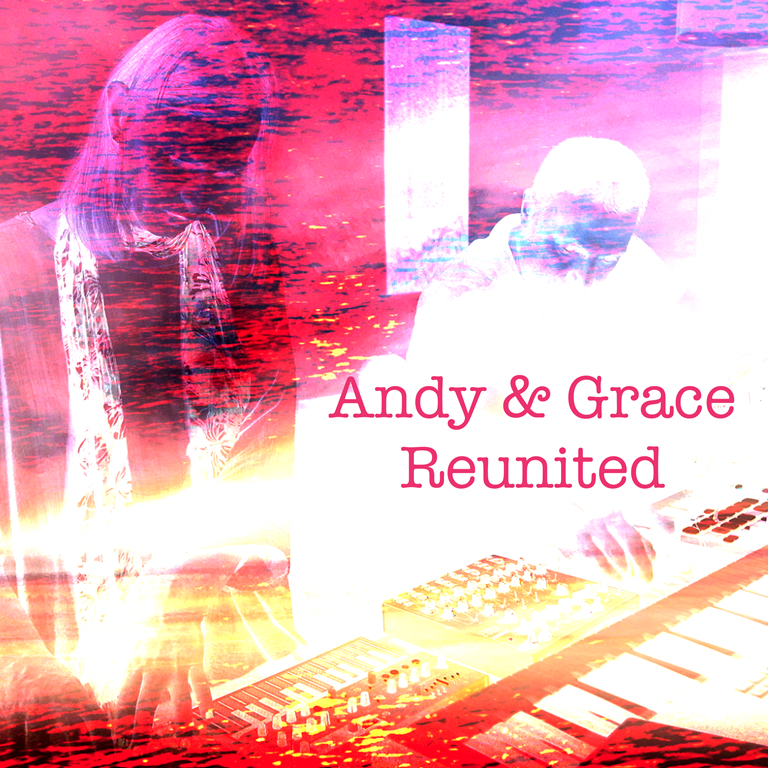
As the album’s title suggests, this is not Andy & Grace’s first work together, but does come after some time since their last collaboration. By ‘some time,’ I mean a long time. Like two decades long. As the bio which accompanies the album outlines, they first met in the late 1990s ‘as founding members of the ambient chillout band Chillage People’, under which moniker they played ‘long, improvised sets in sweaty chill-out rooms in gloomy Sheffield clubs’ and resulted in the album Solid Water, released in 2001.

There’s much of the intervening time unaccounted for, presumably because life. So many creatives in all media seem to suddenly disappear from view. Work, families, and ordinary everyday adult pursuits take over and there simply isn’t the time or the energy. Some accept this comfortably, even embrace it, others wrestle with the opposing forces of creative juices fermenting and slowly gnawing at their guts while enduring.

Whatever the reason for the gap in his musical CV, recent year have seen Andy becoming a part of the Electronic Music Open Mic (EMOM) movement, appearing at venues around the North of England playing with his modular synthesiser. This is where Sinner Records come in: Ian J Cole is also a face on the EMOM circuit, a musician in his own right, who recently established Sinners Records. And let’s not forget Grace – that’s Grace Griffin, who at the time of joining Chillage People, was already a highly sought-after live sound engineer, working with some of the biggest names in the music business.

‘You name them and it’s a fair bet that Grace will have worked with them,’ says the bio. On top of that, and being ‘an accomplished musician with a gift for crafting fascinating textures and grooves, she is also an adept photographer and video editor.’

She’s remained engaged in music. There may be a worry that after twenty years and their lives having taken such different trajectories, reconvening would bee awkward, but the clue is in the title, really: Reunited speaks of coming together, coming home and picking up where you left off. And listening to Reunited, for all its crazy crossover and stylistic divergences, it feels like an album that has been dying to get made, whether they knew if or not before they started work on it.

Over the span of thirteen pieces, the pair explore a host of soundscapes and varying moods, all incredibly rich in atmosphere, shifting constantly. The first of these, ‘Deady Long Legs’ transitions from shifting sands of electronic noise to somewhat unsettling echo-drenched ambience, eerie chimes and shooting stars spinning off course against a warping backdrop of slow-melting vintage synth tones and shuffling groundworks, and there’s a lot going on here. It’s an album dominated by rippling waves and space-age spins, and there are some tracks which find the pair go full dance – or EBM or EDM or whatever it is in America. The beats aren’t often dominant, but they are frequently driving. At times, the tones are brittle, reducing from full range to clipped, tight compressions mingling with undulating synths forge cinematic techno.

There are moments of expansive tranquillity, such as ‘Sad Major’, and this is an album that places tone and texture to the fore in terms of the way the sounds are sculpted into songs. It’s immersive stuff, and on a number of occasions I find myself zone out, not through boredom but the music enveloping my mind and body. And perhaps some tiredness, too. But ‘Forty Winks’ a bleepy wakeup, and one suspects the title is a reference to Josh Wink.

Reunited is the sound of old friends coming together and finding they still have an intuitive connection. There are some neat grooves – like the buoyant almost funk-tinged workout of ‘Groovy Machine’ and the stuttering harder beats of the mellow ‘Mallets of Entanglement’, and there are elements of playfulness in evidence, as on the skittering ‘Wasted in Da House’ and the irreverently-titled ‘When A Seagull Ate My Icecream’ – which reminds me of the time a giant cockerel nicked my baguette, but that’s a story for another time.

Reunited is a cohesive work which strolls through numerous different terrains of electronica, and shifts from light to dark, but mostly ambulates the spaces in between in fine style.

AA

Andy _ Grace Cover

28th August 2023

Christopher Nosnibor

Techno/industrial is rather like craft beer. It was invented in Europe (KMFDM are obvious progenitors back in 1984), before being embraced in the States and with Wax Trax! almost singlehandedly spawning a factory for the genre, which in turn found significant popularity in mainland Europe, particularly in Germany.

English exponents are rather harder to come by, although Benjamin Blank, who has been working under the Binary Order moniker since 2008, is a worthy representative. His words on this latest single, lifted from forthcoming album The Future Belongs to the Mad (out at the end of November), illustrate perfectly why this mode of music is ideally-suited to life in Shit Britain: “’Slow Blade” is a reflection of the decline I’ve witnessed in my lifetime. It’s a decline that has gotten us to a point where we are more concerned with passing the blame than attempting fix the decay that has rotted away at us all, leaving many despondent and lost, myself included.”

I’m writing this in the week that, as schools are due to reopen after the summer break, hundreds are being forced to close or otherwise relocate students because the buildings are unsafe, built using cheap concrete which is structurally unsound and liable to collapse without notice. Our government has known about this for years, but has failed to act. And, indeed, over the last thirteen years, our infrastructure has been slowly crumbling – our roads, our sewerage systems, our rail network – as profit has been put before people, and we’ve become embroiled in petty patriotism, culture wars, and outright horrible racism and prejudice of every kind. It’s no wonder Blank feels as if our small island is sinking while the only things rising are rates of poverty, depression, and other mental health issues.

‘Slow Blade’ feels like a significant progression from the material which comprised previous album, Messages from the Deep. While it incorporated guitar elements, it was very much in the vein of early Nine Inch Nails, the sounds crisp, tight, overtly synth-dominated. In contrast, ‘Slow Blade’ is far more gnarly, far dirtier, more raw, rough-hewn, and simply more metal. And not the kind of metal you’d likely associate with industrial – the likes of Ministry or perhaps Godflesh – but gritty, murky black shit smashed together with the guitar slabs of nu-metal. At least, to begin with – because ‘Slow Blade’ is a song of psychotic multiple personalities, and a song in three parts.

Unexpectedly, the songs slows and goes first expansive and melodic, then explodes in a frenzy of stuttering techno beats that’s more Fixed than Pretty Hate Machine, and then it brings the two elements together in the third and final stage. While to suggest it has a particular arc, narrative or otherwise, feels like something of a stretch, ‘Slow Blade’ transitions through a series of emotions, from blind raging fury to the acceptance of defeat as everything collapses. The end is final. And we all know it’s coming.

AA

082306