Posts Tagged ‘Single Review’

7"/DL – Not on label – 16th November 2018

Christopher Nosnibor

Pharoah Chromium’s Gaza was one of the most remarkable, and incredibly powerful releases of 2016: an audio collage constructed primarily with audio captured during during operation Protective Edge in Palestine in July and August 2014, it was a document of life in a war zone.

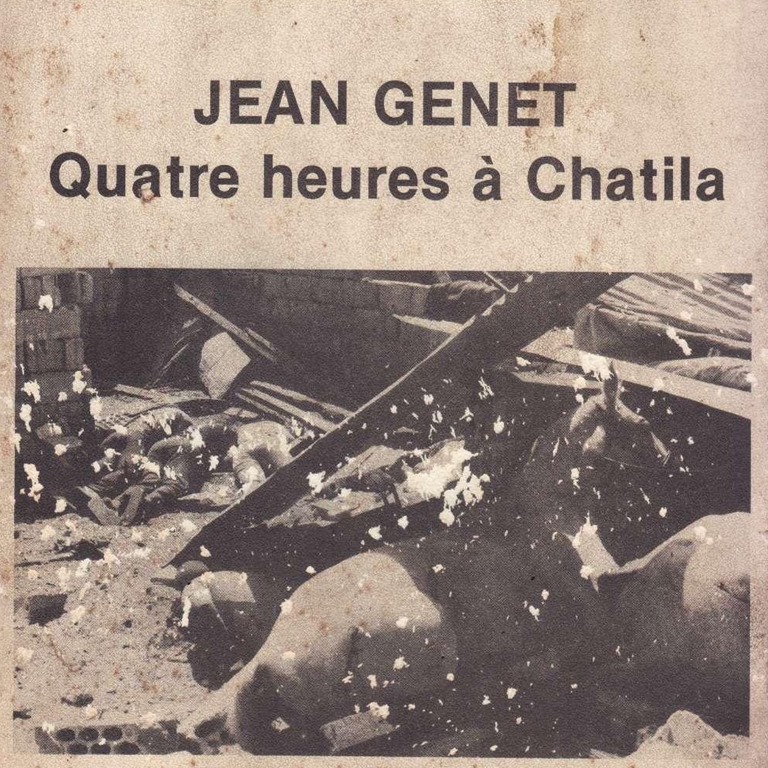
The press release which accompanies this 7” vinyl-only release, described as ‘a spoken word record with a sonic background’ explains that ‘Quatre heures à Chatila’ is a continuation of the Gaza project’, although this time the focus is on ‘the massacres that took place in the refugee camps Sabra and Shatila over the course of three days in September 1982, in Beirut, Lebanon’.

Of the Gaza LP, I suggested that context was everything, and this is also true here, as the accompanying text explains: ‘In an eerie twist of fate, one the most talented and subversive writers of the 20th century happened to be visiting Beirut at the time these gruelling events occurred. He was one of the first foreigners to enter the camps and witness the carnage. His text “4 hours in Shatila” is a minutious and poetic account of the war crimes Genet’s eyes encountered and endured for 4 hours that day’.

As such, the release – culled from the Eros & Massacre album project – features Elli Madeiros reading two segments of Jean Genet’s text against an electronic backdrop of elongated drones and a drifting wave of overlays from buzzing top-end and extraneous intrusions that bend and twist forged by Ghazi Barakat (aka Pharoah Chromium), and augmented by guitar courtesy of Osman Arabi on ‘Une Photographie a Deux Dimensions’ on side 1, and whispers courtesy of Rahel Preisser on ‘Saint Genet à Chatila’ on side 2.

‘Une Photographie a Deux Dimensions’ creates a creepy, unsettling atmosphere, flickering sonic shadows skitter this way and that behind the narrative, and while perhaps it’s best appreciated in its native tongue and without the encumbrance of text or the need to engage in activity which distracts from the listening experience as intended, the availability of an English translation of Genet’s text on-line does help in fleshing out the context. It also serves to render the full horror of the experience explicit.

The shorter ‘Saint Genet à Chatila’ is built – at least at first – around a looped, cascading motif. The vocal is delivered close-mic and with a certain urgency as digital diddles flit every which-way, spider-like across stop-start surges of bass that start sparse but echo to rolling thunder. It’s spine-tingling and uncomfortable, although one suspects something is lost in translation – or lack of.

Fittingly, as much as Genet’s depiction of the gruesomeness streets littered with bloodied corpses is horrific, it’s the pains he goes to to articulate the limitations of any given medium which render his account so powerful:

‘A photograph doesn’t show the flies nor the thick white smell of death. Neither does it show how you must jump over bodies as you walk along from one corpse to the next. If you look closely at a corpse, an odd phenomenon occurs: the absence of life in this body corresponds to the total absence of the body, or rather to its continuous backing away. You feel that even by coming closer you can never touch it. That happens when you look at it carefully. But should you make a move in its direction, get down next to it, move an arm or a finger, suddenly it is very much there and almost friendly.’

As such, Barakat must necessarily accept that the medium of sound can only convey so much, and while the composition and recital evoke the bewildering scenes and the effect of witnessing them first-hand, they can never truly convey that lasting traumatic impact.

AA

Chatila_front

Solemn Wave Records – 6th December 2018

Christopher Nosnibor

We’re inching into winter and again my inbox seems to be getting darker and gothier in its content – or perhaps it’s just my SAD-attuned headspace. Either way, this is one extremely welcome arrival.

As a prelude to the album ‘Black Light, White Dark’, Evi Vine have given us ‘Sabbath’ as a single release, featuring The Cure’s Simon Gallup on bass, along with guitar by Peter Yates of Fields of the Nephilim. It’s a slow burner, and it’s epic and then some: fully nine brooding minutes of slow, smouldering atmosphere and hauntingly evocative melodies which burst into dazzlingly kaleidoscopic curtains of sound.

It’s one of those songs that lures you in with its grace and delicacy: Evi’s nuanced, emotionally rich and moving vocal, reminiscent by turns of Jarboe, Chelsea Wolfe and – perhaps at a short stretch – Julianne Reagan (she can swoop and soar, and I suspect her choice as backing singer by The Mission is no coincidence) is alluring, ethereal, simultaneously creating a sense of vulnerability and otherness. And as the sonic storm swells into a dense and richly-layered mass, the effect is intensified, until finally, the surging sound is all there is… nine minutes simply isn’t enough. Allowing the hypnotic bass and deliberate groove to take over and transport me downstream as the guitars build and build, deeper, louder, more and more, until I’m drifting, I find this is a song to loop, and loop…

The six-minute single edit is even more not long enough, and probably isn’t short enough to get much radio play either – even though it absolutely deserves all the audience it can reach. The fact mainstream audiences aren’t likely equipped to handle the intensity is their loss, but also a sad reflection on things. Because this is music to embrace, and be blown way by.

AA

Evi Vine

Movement-2 Records – 31st October 2018

Some things shouldn’t be rushed. And some things just take time, because. When it comes to the Gaa Gaas’ career and release schedule, both statements apply. 15 years on from their inception, they’re finally on the brink of the release of their debut album, and to build momentum, they’re throwing out a few tasters / reminders. Following a brace of EPs, V.O.L.T.A.I.R.E. was the band’s first single release back in 2010. And finally, it’s received a vinyl reissue, with a limited amount sold exclusively for Record Store Day 2018 prior to the official release date in October.

The physical format matters. For bands – anyone who was born pre-millennium, at least, I would say – the dream is to release music and be able to hold, as well as hear it. Music-making is a multi-media, multi-sensory practise, and how it’s presented is an integral part of the experience where consuming music is concerned. And for fans – the object is the gateway to the sonic experience, the tangible form to which the attachment to the music itself forms, presenting the band and their music and firing an infinite array of subliminal triggers and associations. The black-and-white cover art and labels say budget, independent, underground – and it’s all in the detail, like the hand-stamped number on the label. It gives a sense of artefact, of something to be treasured.

And rightly so: the single itself, it’s a stormer. The drums snake out of a screed of feedback and nagging, off-kilter, shrieking guitar that’s got a bit of Bauhaus about it before the bass cuts in with a funksome groove that again hints at Bauhaus’ ‘Kick in the Eye’ but equally hints at Gang of Four and Radio Four. It’s tense, dark, reverby post-punk with a twisted psychedelic edge that’s claustrophobic, desperate, anguished, the trebly, echoey production capturing the essence of early March Violets and at the same time offering an infectious hookiness.

Flipside – and yes, it’s a genuine, literal, flipside here – ‘Hypnoti(z)ed follows a similar trajectory, with a dense, throbbing bass groove and metronomic, mechanised doom disco drumming providing the skeleton over which they stretch a skin of spindly guitars and echo-soaked yelping vocals. Skeletal Family and The Danse Society’s early work comes to mind, but The Gaa Gaas bring a manic edge that’s uniquely their own, and Gavin Tate’s vocal only accentuates the fevered unpredictability of the skewed, clanging guitars.

The post-punk revival that spawned the likes of Interpol predates the emergence of The Gaa Gaas, meaning they don’t sit within that bracket in terms of timing, but then again, The Gaa Gaas don’t sit within that bracket stylistically, either. While Interpol, White Lies, et al feel somewhat studied, controlled, and produced even in their more formative stages, there’s something warped, unhinged, dangerous about this. And eight years on from its initial release, it feels more vital than ever.

AA

Gaa Gaas

Bearsuit Records – 1st November 2018

James Wells

This one seemingly pinged in from nowhere finds BBC (that’s Black Bear Catapult, which consists of Ippu Mitsui and Jimmy Finlayson) deliver a slice of strangeness that combines hyperactive electropop backing of spacey synths which wibble and warp against a drum machine which flitters and stutters frenetically as if its programmer is on a rush of sugar and caffeine, bursting into double-time seemingly on a whim. Jittery, jumpy, overenergised, this release positively twitches with a stroboscopic kineticism.

There’s a nice strolling bassline that emerges here and there during ‘Leopold Checks In At The Laughing House’, and while the overall tone is playful and a little bit daft, it’s something you can groove to. And I’m down with that!

AA

BBC - Laughing

Mamka Records – MAM01 – 1st November 2018

Christopher Nosnibor

‘Language becomes sound, and sound becomes language. Out of the fragmentary, the density is weaved. From the depths of the fragile, the whole is born. Time structures are questioned and assembled through loops. Field recording from Mexico meet Osojnik’s singing. Spoken language turn into melodies, whole noise turns into bittersweet rancheras.’ The words from the text – more of a short essay – which accompanies this release resonate: as a long-time student and practitioner of cut-up methodologies, I’m a firm believer in the unusual power of the fragmentary, the capacity for those broken, ruptured pieces of discontinuity to unlock experiences and emotions direct approaches to narrative and the channelling of experience cannot. similarly, I’ve long maintained that the language of sound has the capacity to transcend the language of words, to touch deep and difficult parts of the soul and the psyche irrespective of the tongue or tongues in the listener’s ken.

And so it is that the first release on Mamka records, the label established by Maja Osojnik – whose work I’ve not only covered previously but greatly admire – is something really quite special. My download arrives – personally addressed, handwritten, stamped, embellished – all the way from Vienna, in an envelope 7” square and therefore resembling a 7” single, accompanied by a six-sided press release packed with words far more engaging than the usual hyperbole. There’s also a numbered cut-vinyl print, 7” square included in the package, and it all adds up to a multisensory experience – sonic, tactile, visual – which above all conveys a real sense of commitment, a passion, to making something tangible, something that’s not ephemeral or disposable, but something that matters. The medium is the message, and Maja has found a way – labour-intensive as it is – which goes beyond the medium of the audio release to create… art. The same approach applies to the ‘commercial’ release, a 7” available in a super-small run of 150 copes, only 120 of which are available for public consumption. But better target a small, passionate niche than a large indifferent mainstream if art is your pursuit.

Finding a way to render digital media tactile, visual, and above all, personal, in giving the digital listener a large portion of the vinyl experience, Maja is quite possibly breaking new ground, or at least standing at the forefront of something new. For me, it’s less about nostalgia and more about recovering some of what’s been lost with the demise of physical media.

Said release finds Maja performing with Rdeča Raketa (together with Matija Schellander, she’s integral to the duo who go by the name of Rdeča Raketa) and author Natascha Gangl to deliver a brace of tracks – very much a replication of the classic 7” A and B sides.

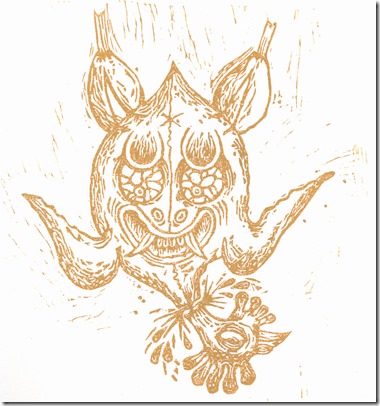
‘Chicken’ opens with a frenzy of analogue synth noise. It simmers to a grating buzz and pulsating electro beat before Maja barrels in with a deep-throated monotone with a barrage of lyrics about a chicken in her heart which bleeds and bleeds, and while clucking electronic bleeps twitter and bleep here, there, and everywhere. It’s weird, it’s noisy, it bumps and thrums, but still has an off-kilter pop sensibility partially submerged in the layers of noise and oddness.

‘Die Toten’ (that’s ‘the dead’ in translation) is rather less accessible, but no less intriguing, engaging, or odd, and in fact, introduces a new level of strangeness to proceedings. It’s low, slow, lugubrious.

Simultaneously weird and wonderful, ‘Chicken’ is everything you want – and need – by way of an introduction to partially-accessible, highly idiosyncratic, and extremely engaging weird shit.

AA
Natasha Gangl & Rdeča Raketa – Chicken

31st August 2018

Christopher Nosnibor

SAHARAS’ previous single, ‘Sweat’ won me over in an instant, being a sucker for that post-millennial retake on the post-punk sound.

The contention that they’re ‘one of the most unique emerging bands in the industry’ might be a bit of a stretch, but on the strength of this latest effort, they’re proving to be one of the most consistent and exciting, which is probably a bigger deal.

They forewarn that ‘Shake My Fever’ marks ‘a shift in focus from their previous synth-heavy arrangements of past releases [resulting…] in an increase of emphasis on their spacious and melodic guitar work.’ This is no bad thing, and said guitar work was always there and integral to the sound and structure.

The cover art looks like a nod to The Cure’s ‘A Forest’, but with its buoyant post-punk disco beats, ‘Shake My Fever’ is closer to ‘Let’s go to Bed’ or ‘Hot! Hot! Hot!’. It’s unashamedly poppy and less angular than its predecessor: it’s still all about the smoky, chorus-heavy guitars and wandering bass groove, but with the melodic backing vocal hook to the fore in the chorus, it’s what you might justifiably call a ‘chooooon!’

AA

Saharas - Shake

James Wells

The Clash’s Topper Headon reckons they’re ‘fucking brilliant,’ so they must have something about them. But we already knew that here at Aural Aggravation, and that was before they were featured on Metal Hammer’s Revenge of the Riff cover CD and landed on Planet Rock playlists with single ‘Juno’.

Salvation Jayne’s latest offering, ‘Cortez’, was inspired TV show American Horror Story and sees their sound continuing to evolve. Propelled by a sturdy beat you can dance to. It’s still got plenty of melody and a keen sense of groove, but brings a harder, darker edge. In fact, it’s quite the riffy beast, a solid grunger that drives hard from the start.

It’s not only a massive grower, but also has the potential to reach an even wider audience. The video ain’t bad, either.

AA

Salvation

Christopher Nosnibor

Leeds synth-led post-punk outfit FEHM have mellowed a fair bit since they first burst onto stages in and around their hometown three or four years ago. New single, ‘Scarborough Warning’ may lack the abrasive edges and wild, wide-eyed bass-driven gothy mania of early songs like ‘Sinking Sands’, but that isn’t to say this more commercial sound is without edge.

This means that while Paul Riddle’s frenzied holler has softened to a brooding croon, and the instrumentation sounds less like X-Mal Deutschland and more like early Human League with a hefty dash of The Cure in the mix, not to mention a lead guitar part that’s pure (early) New Order, there’s a dark, melancholy edge to this slice of disco-pop. It’s heavy on reverb and imbued with a nagging wistfulness, and it’s also still deeply rooted in the first half of the 1980s.

I dig.

AA

AA

FEHM will also be playing a handful of dates in August support of the release:

2nd: The New Adelphi, Hull

3rd: The Brudenell Social Club, Leeds (With full supporting line up including Drahla)

9th:The Underground, Newcastle

10th: The Castle, Manchester

11th, The Shacklewell Arms, London

FEHM

James Wells

You’d never guess that this York-based band was hardcore, with a name like Rotting Monarchs. ‘Disorder’ isn’t a Joy Division cover, but a self-penned slab of churning, bile-brimming noise that comes off the back of last year’s debut EP and provides a flavour of their debut album, also entitled Disorder, set for release next year.

It’s 2:22 of trebly, shouty, full-tilt abrasion. It’s not pretty, and it’s not technical: instead, it slams in at a hundred miles an hour, fiery and full-throated, pissed off and petulant, and with a simple, hollering chant of the title by way of a refrain, it’s got a vintage punk vibe: uncomplicated, antagonistic, sloganeering. Its primitivism is much of its appeal: it’s direct, an uncomplicated shout of dissatisfaction.

http://a%20href=

AA

Rotting Monarchs

15th July 2018

Recently named ‘artist of the month’ at The Great Frog, former Arrows of Love drummer, film and game soundtracker and artist in his own right, Mike Frank is on a bit of a roll.

He’s written and recorded two albums post-Arrows: ‘This is going to get weird… I’m going to make this weird’, which he describes as ‘a collection of orchestral and experimental film music songs’, and an album featuring Rufus Miller, Lyndsey Lupe and Artur Dyjecinski which is ‘full of dark sounds and Middle Eastern instruments’. Only the former has yet seen the light of day.

A taster of a forthcoming album, ‘All My Possessions’ has no connection with either project, and is infinitely more accessible – I’ll refrain from going so far as to say commercial – than anything we’ve heard from him so far. What’s more, this downtempo yet somehow simultaneously jaunty, jangly indie rock tune, which boasts a really rather catchy chorus, hints further at his songwriting range. With delicate, understated, picked guitar and a bleak croon, the opening resembles Leonard Cohen, and there’s a darkness which shadows the song as a whole.

Bukowski’s influence is rendered explicit in the lifted footage which accompanies the song, which is essentially about the vagabond life of a writer, but also, as he puts it ‘about feeling down and out, lonely or even desperate’ – and you wonder which voice or perspective lines like ‘she’s so good to me / I’m such an asshole’ and ‘I like to drink because I can / It makes me feel like I’m still with the band’ are really coming from.

It’s got a nice slow build that swells subtly to a full finish, and is, as a song, rounded and satisfying. And really very nice, if kinda sad.

AA

Mike Frank