No Sleep Records – 16th September 2016
Christopher Nosnibor
I have to admit, I’d been wondering what was happening with Battle lines. Following the single releases ‘Colonies’ and ‘Hunting’ (split with Post War Glamour Girls), and a storming set at the Brudenell to launch it, there was talk of an album when I chatted with the band afterwards, and then… Well, they seemed to drop off the radar. Carly had mentioned work and all of the things that get in the way of doing things, although it was some time ago, and I’d had a few pints during the evening and what with work and an endless stream of new releases demanding my attention… well, I sort of forgot about things. I’m sorry for the fact that this makes me the same as pretty much everyone else: I blame the ‘net age, the insane pace of our post-postmodern culture, where memories are overlaid and replaced in an instant, buried in the endless blizzard of shiny new things, images, sounds, more bad news and another media frenzy over the latest celebrity scandal. And so, a guilty late review of an album by a band I’m a big fan of.
While I’m looking around at intangibles to blame, I’m also aware that I’m feeding my own anxieties and understanding more the pressure on any artist, in any medium, to devote as much time to promotion as to the production of actual art. It’s all about the momentum! Paradoxically, to weather the storm that is the blizzard of social media, one is required to contribute to it further, and constantly. If you’re out of the public eye, you’re forgotten in a flash. It’s an absurd situation, of course: artists need to retreat in order to produce. In an over-loud world, silence is good, and importantly, silence from a band means they’re likely holed up working on material.
Battle Lines, individually and collectively, have been getting on with their lives, and thankfully, have been doing the things that are important, instead of fretting over their public profile. The press release apologises for their apparent absence, but is matter-of-fact about things:
It’s not a secret that we’ve been very quiet over the last year… There’s no big story, we love each other, we’re as good friends as we’ve ever been. Life has moved on for all of us, and we now reside in New York, London, Brighton and Leeds, geography prevents us from touring, but it can’t prevent us from releasing new music.
And so, while I was busy being distracted, Battle Lines slipped out their debut album, a record I’d waited more years than I care to count for: having first discovered them in their previous guise as Alvin Purple, I’d been captivated by the quality and richness of their dark, post-punk influenced material and the incredibly assured live performances they gave so consistently.
The switch to Battle Lines marked a refocusing: the energy which effused from their earlier songs was directed more inward, and the material displayed an almost ascetic discipline in its execution on those first single releases and in the live shows, more clinical, more icily intense than their previous incarnation.
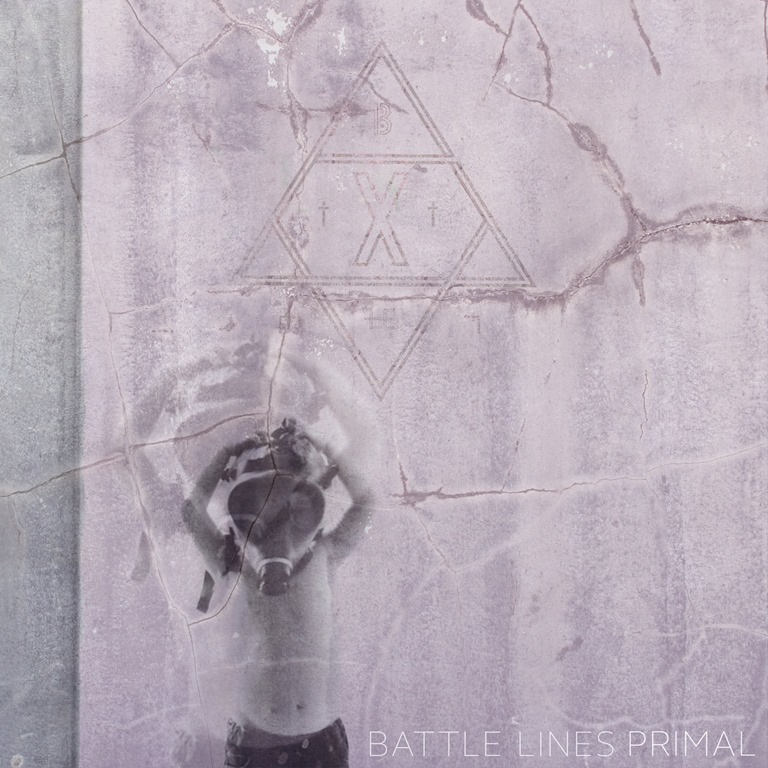
This is all captured perfectly on Primal. The sparse title track and album opener hints equally at The XX and Closer era Joy Division. But then, glacial electropop undercurrents and thunderous tribal drumming also define the sound. And the sound… the fact they’ve taken their time over this means that the sound is honed to perfection. There isn’t a note out of place. That isn’t to say it’s overproduced within an inch of its sterile life or stripped of its soul: they’ve pulled everything to tight as to render it almost claustrophobically dense, a work which offers an insight into a near-obsessive control over the output. In context, it makes sense:
There’s an honesty about the notes which accompany the release which is at once uncomfortable and refreshing:
Lyrically this was an incredibly dark place to go to, I had come out of a relationship that became mentally abusive; looking back I wondered who I had become in excusing that kind of behaviour. This is what drove me in the album, those darkest moments became a journey of self discovery and a realisation of who I really am and what I deserved.
When life is out of control, what can you do but obsess about the things you can control – your art? But from darkness comes light, and creativity can be so cathartic. As dark as Primal is, it contains some truly beautiful and magnificently uplifting musical moments. Carly’s vocals at times soar so high as to disappear from the register of the average human ear, but ‘Sea of Fear’ is a swelling anthem of a track, and the sunburst shoegaze of ‘Smother’ ripples with the joy of drinking in clear air and rediscovering the potentialities of life.
‘Outsider’ is built around an insistent motoric beat and exploits the quiet / loud dynamic, bursting into explosive shoegaze wall-of-FX guitars which call to mind Ride in their early years, but as is always the case with Battle Lines, Carly’s ultra-high-frequency vocals means they don’t really sound like any of their forebears, or their contemporaries.
Of their single releases, only ‘Hunting’ has made it to the album. This is a bold and admirable choice, and one which makes a statement: a statement which says that \Primal is an album proper, a document, and not a ‘Hunting’ is, of course, a belting wall of noise driven by a twitchy disco beat and shuddering synth with metallic screeds of guitar peeling off a Donna Summer groove, over which Carly comes on like Siouxsie Sioux, breathy and intense.
The album concludes with ‘Riot’, a richly-layered and uplifting song which blossoms in a screed of guitar noise over an insistent rhythm section, the drums and bass tight and locked into a sedate groove.
Primal displays remarkable poise, and as much as its architecture is concerned with the turbulence which inspired its lyrics and overall tone, its coherence and control are remarkable. But rather than feeling soulless in its clinical execution, there’s a clear sense that Primal is about holding it together and showing just what can be achieved through sheer will and determination and the exertion of mind over matter. Despite the obstacles, personal and geographical, Battle Lines have (meticulously) produced a powerful album that was more than worth the wait.






 Aural Aggravation