Posts Tagged ‘Shoegaze’

With Observed in a Dream, Norwegian purveyors of  psychedelic post-punk / shoegaze, Mayflower Madame, delivered one of our favourite albums of 2016. While their second album is unlikely to see the light until late 2017 or even early 2017, they’ve unveiled ‘Drown’ by way of a taster now. It’s by no means a mere stop gap: to say the signs are good for the next album would be an understatement. A whirl of echo-heavy gutars and even more echo-heavy baritone vocals, ‘Drown’ has an aching melacholy emotional pull. Watch the video and get your lugs around it here:


Clue Club

The other day, I chipped in on a debate over split releases, which essentially revolved around the question ‘yay or nay?’ Personally, I like split singles. I commented that I would usually purchase a split release for one of the bands, but, often, subsequently get into the other.

It so happens that the first release by Clue Club, a subscription-based aspect of Clue Records  features two bands I’ve seen, heard, and enjoyed immensely in the last year. Split-singles-based projects seem to be popping up with increasing frequency (see, for example, the excellent Come Play With Me), and this represents a belting start to this one.

Fighting Caravans were up there with my favourite discoveries of 2016, and probably one of the best live acts I caught all year, on all three occasions I saw them. ‘It’s a Nice Ride (To be Fair)’ is entirely representative of their brand of fucked-up gospel-tinged desert country. Over a spacious, bittersweet guitar, Daniel Clark visits the classic themes of death and hell with a delivery that treads the thin line between psychopathy and self-destruction.

Similarly, the drifting, dynamic shoegaze of ‘Frail’ is exemplary of Colour of Spring’s sound, and provides a perfect stylistic contrast, too its counterpart, too. It’s a dense yet delicate song which conjures a heady atmosphere of blissful melancholy by means of understated vocals and bold, swirling guitars.

Clue Club subscription is available here.

10th February 2017

Christopher Nosnibor

If dreampop has overbearing connotations of weak and wispy, vague and ethereal, then the slant on the genre VEYU bring on ‘Where Has The Fire In You Gone?’ a taster of their forthcoming EP, ‘Underbelly,’ will likely confound the expectations of many. The chiming guitars and layered atmospherics are all present and correct, but they’re married to a hard-driving and insistent rhythm track that owes more to the conventions of rock.

Chris Beasley’s vocals are distinctive and commanding. Shifting effortlessly from a delicate, haunting falsetto to a strong, emotionally forceful tenor, comparisons to Morten Harket are perhaps obvious but entirely justified. But then, A-Ha were fantastic at penning pop songs which are both gripping and moving – a fact perhaps eclipsed by their biggest hits – and with elements of early New Order also in the mix, VEYU look capable of marking out their own territory in the contemporary musical landscape.


SpaceFest presents a brief documentary about the latest experience with Pure Phase Ensemble. In its current incarnation, the collective is led by a true legend: Anton Newcombe of The Brian Jonestown Massacre, along with with Emil Nikolaisen of Scandinavian rock band Serena Maneesh.

Filmed by RSU / Agencja Vizualna, this film presents a sneak preview of what is to come on the ‘Live at SpaceFest!’ album and the story behind Pure Phase Ensemble 6. Every December during Gdansk’s illustrious SpaceFest!, an eclectic group of musicians from across Poland are joined by a guest curator from abroad to form Pure Phase Ensemble. The group’s makeup constantly changes, guided by the artistic vision of a new curator every year and directed by Karol Schwarz of Nasiono Records who has been responsible for its musical cohesion from the very outset.

Through improvisation at a workshop organized by Nasiono Records and SpaceFest!, the musicians produce a set of unique songs during a week-long workshop ahead of the festival at the Laznia 2 Centre for Contemporary Art in the city’s Nowy Port district, seeking inspiration amidst its post-industrial atmosphere. The festival then culminates in this music being performed and recorded in real time for the inevitable album release.

Anton Newcombe espoused one rule for this experiment – that there are no rules when making music… and one standard… “get weirder… be heavy. and dreamy. but not pointless”.
Pure Phase Ensemble 6 is comprised of 8 musicians, including six from emerging Polish alternative bands: 
Karol Schwarz (7faz, KSAS) – guitar, vocals
Olga Myslowska (Polpo Motel) – vocals, keyboard
Maciej Karminski (Jesien) – drums
Marcin Lewandowski (Judy’s Funeral, Castlings, Soon) – bass guitar
Jakub Zwirello (Oslo Kill City, Szezlong) – guitar
Kacper Graczyk (Aiodine, coding) – electronic beats, synths, backing vocals

“I prefer to hear the sound bouncing off the walls and most festivals are outside and have time limits and various handicaps…I am more or less a jazz folk guy, I’m not an entertainer there to jump up and down and get you pumped…I just do as I feel…,”says Anton Newcombe. “I see myself as an idea person. I play like 80 instruments in as many ways as I can reinvent them because I am not a virtuoso… I want to contribute to Polish culture by writing at least one song that is worth listening to.”

In past incarnations of Pure Phase Ensemble, the group was curated by Mark Gardener (Ride), Laetitia Sadier (Stereolab), Ray Dickaty (Spiritualized), Steve Hewitt (Placebo), Jaime Harding (Marion), Chris Olley (Six By Seven), and Hugo Race (The Bad Seeds, The True Spirit). Nasiono Records’ very own Karol Schwarz (7faz, KSAS) has been responsible for the Ensemble’s musical cohesion from the very outset.

You can watch a preview of the forthcoming documentry here:


You want slow-buiding, psych-tinged shoegaze with a magnificent motorik groove? We’ve got it right here. Lifted from their upcoming debut album Call Them Brothers, it’s seven and three-quarter minutes of blissed-out, FX-laden alternative rock steeped in the haze of 90s greats like Ride and Chapterhouse. But enough preamble. Watch and listen. And enjoy.

Leonard Skully Records – 9th December 2016

James Wells

I’m growing rather weary of arty shots of naked or semi-naked women adorning the covers of releases by post-rock and shoegaze bands. And shit post-metal and post-hardcore bands. Everything’s post-something now, and I’m beyond weary of that. But we live in a click-bait world where adolescence is suspended in perpetuity, and despite the fact that everything’s freely available and as hardcore or strange as you want it at the click of a button, there’s still a certain lure in the risqué.

Call it art – and it should be possible to do so – but the prevalence of the practice makes it feel hollow, cheap and exploitative. ‘Yeah, let’s slap a chick on the cover of our meandering, ponderous post-rock EP… it’ll make us look arty and interesting and like we know photographers who can get girls to pose for them. Incidentally, I hate photographers as a rule, especially the ones who manage to make like they’re ‘safe’ aren’t sleazy… and no, not because I’m jealous. I really do just think they’re cunts.

The_Veldt_-_In_a_Quiet_Room

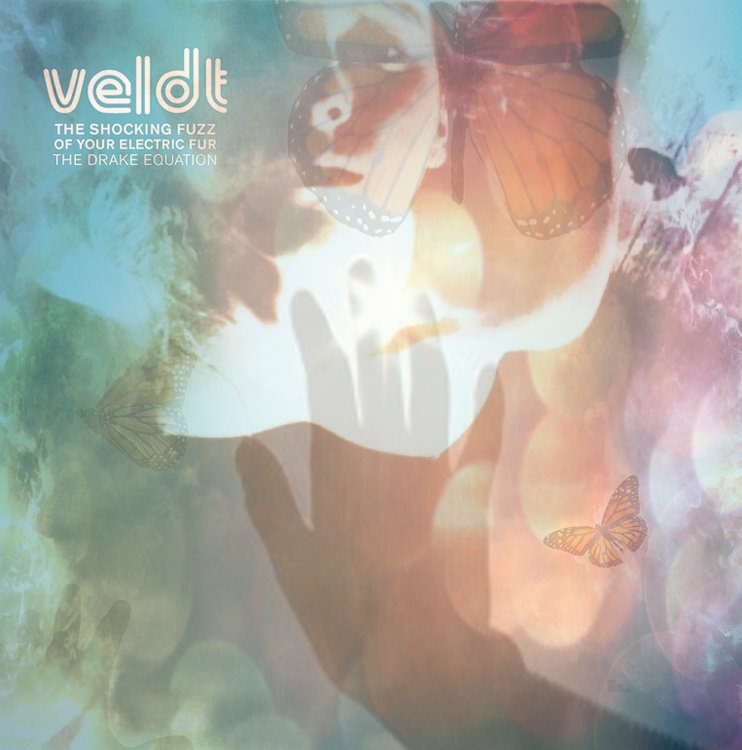
In a Quiet Room’, the single cut from The Veldt’s preposterously-titled The Shocking Fuzz of Your Electric Fur: The Drake Equation has an arty black and white head and shoulders shot of a woman, or a girl, by way of a cover. Apropos of absolutely bloody nothing. It certainly says nothing of the layered, textured, murky, glitchy, drum ‘n’ bass influenced soulful post-rock sonic expanses they conjure, the trickling cymbal work which grips a tight tension over squalling, drifting guitar treble on the EP’s opener ‘Sanctified’ or the shimmering post-rock / r’n’b crossover of said single ‘In a Quiet Room’.

Quite how comfortable I am with their seemingly incongruous but seamlessly smelted hybridity, I’m not sure, but there’s no faulting its execution. The Veldt get atmosphere, and they get sleekness. I’m not sure I get it, or the appeal, but it’s neatly executed and sounds nothing like the cover art suggests.


Veldt EP

ELaB Records – 10th February 2017

Christopher Nosnibor

Being a teen of the late 80s and early 90s, I discovered curve through the pages of the music press as was, and absolutely bloody loved them. It’s perhaps hard to appreciate now, in these jaded, music-saturated ties, just how exciting it all was back then. I’m not disparaging the current music scene: far from it. I find new bands which excite me on a weekly basis. But that’s part of the problem: it’s all there, streams and links shared by friends and reviews rippling across social media within hours of posting by a single person of note. And said person of note can be anyone with a high media profile. Back then, it was all about the ability of a critic to capture the imagination, and then for the music fan to seek it out. If you were lucky, John Peel would be spinning something by the act in question. If not… well, you’d got legwork to do. If it sounds arduous, think again: it was fun. It was rewarding.

Anyway. Post-Curve, Dean Garcia formed SPC ECO with his daughter, Rose Berlin. The parallels between this current vehicle and Curve are abundant, to the extent that they require no comment: you can likely find those observations elsewhere all over the internet, and such duplication is such a bore.

What you want – need – to know is that this EP which features five tracks which break the mould: instead of bursting with compressed guitar and mechanised drum-machine led shimmering walls of sound, these are hushed sedate and understated works. Restrained and dreamily subdued as they are, they’re rich in atmosphere depth.

Instrumentally, ‘Under My Skin’ has hints of Moby and The XX about it.. It begins quietly, Rose’s voice close to the mic singing quietly and backed by only a brooding piano. But there are layers building beneath, with tapering synths and delicate reverb filling the space and the space between.

‘Creep in the Shadows’ is a weird one: the bloopy autotuned vocals are so heavily processed as to be essentially robotic, detached, unhuman, and they drift over a backing so minimal as to be barely there: a sparse beat clacks away way back in the distance as a super-low, dubby synthesised bass wanders at will. There’s practically nothing to get a hold of, and it’s so produced it’s hard to position. Contrast that with the lo-mo tri-hop dub of ‘Lt it Be Always’: murky beats and swampy bass conjure dark atmospherics while Berlin comes on like Beth Gibbons at her most hauntingly ethereal.

In its pursuit of the fragile and the paired-back, this EP is by no means SPC ECO’s most immediate release, and doesn’t offer the dynamics of some of their previous releases, but it does follow their recent trajectory which has seen the duo create music of an increasingly claustrophobic, hushed intensity.


SPC ECO - Under My Skin

No Sleep Records – 16th September 2016

Christopher Nosnibor

I have to admit, I’d been wondering what was happening with Battle lines. Following the single releases ‘Colonies’ and ‘Hunting’ (split with Post War Glamour Girls), and a storming set at the Brudenell to launch it, there was talk of an album when I chatted with the band afterwards, and then… Well, they seemed to drop off the radar. Carly had mentioned work and all of the things that get in the way of doing things, although it was some time ago, and I’d had a few pints during the evening and what with work and an endless stream of new releases demanding my attention… well, I sort of forgot about things. I’m sorry for the fact that this makes me the same as pretty much everyone else: I blame the ‘net age, the insane pace of our post-postmodern culture, where memories are overlaid and replaced in an instant, buried in the endless blizzard of shiny new things, images, sounds, more bad news and another media frenzy over the latest celebrity scandal. And so, a guilty late review of an album by a band I’m a big fan of.

While I’m looking around at intangibles to blame, I’m also aware that I’m feeding my own anxieties and understanding more the pressure on any artist, in any medium, to devote as much time to promotion as to the production of actual art. It’s all about the momentum! Paradoxically, to weather the storm that is the blizzard of social media, one is required to contribute to it further, and constantly. If you’re out of the public eye, you’re forgotten in a flash. It’s an absurd situation, of course: artists need to retreat in order to produce. In an over-loud world, silence is good, and importantly, silence from a band means they’re likely holed up working on material.

Battle Lines, individually and collectively, have been getting on with their lives, and thankfully, have been doing the things that are important, instead of fretting over their public profile. The press release apologises for their apparent absence, but is matter-of-fact about things:

It’s not a secret that we’ve been very quiet over the last year… There’s no big story, we love each other, we’re as good friends as we’ve ever been. Life has moved on for all of us, and we now reside in New York, London, Brighton and Leeds, geography prevents us from touring, but it can’t prevent us from releasing new music.

And so, while I was busy being distracted, Battle Lines slipped out their debut album, a record I’d waited more years than I care to count for: having first discovered them in their previous guise as Alvin Purple, I’d been captivated by the quality and richness of their dark, post-punk influenced material and the incredibly assured live performances they gave so consistently.

The switch to Battle Lines marked a refocusing: the energy which effused from their earlier songs was directed more inward, and the material displayed an almost ascetic discipline in its execution on those first single releases and in the live shows, more clinical, more icily intense than their previous incarnation.

This is all captured perfectly on Primal. The sparse title track and album opener hints equally at The XX and Closer era Joy Division. But then, glacial electropop undercurrents and thunderous tribal drumming also define the sound. And the sound… the fact they’ve taken their time over this means that the sound is honed to perfection. There isn’t a note out of place. That isn’t to say it’s overproduced within an inch of its sterile life or stripped of its soul: they’ve pulled everything to tight as to render it almost claustrophobically dense, a work which offers an insight into a near-obsessive control over the output. In context, it makes sense:

There’s an honesty about the notes which accompany the release which is at once uncomfortable and refreshing:

Lyrically this was an incredibly dark place to go to, I had come out of a relationship that became mentally abusive; looking back I wondered who I had become in excusing that kind of behaviour. This is what drove me in the album, those darkest moments became a journey of self discovery and a realisation of who I really am and what I deserved.

When life is out of control, what can you do but obsess about the things you can control – your art? But from darkness comes light, and creativity can be so cathartic. As dark as Primal is, it contains some truly beautiful and magnificently uplifting musical moments. Carly’s vocals at times soar so high as to disappear from the register of the average human ear, but ‘Sea of Fear’ is a swelling anthem of a track, and the sunburst shoegaze of ‘Smother’ ripples with the joy of drinking in clear air and rediscovering the potentialities of life.

‘Outsider’ is built around an insistent motoric beat and exploits the quiet / loud dynamic, bursting into explosive shoegaze wall-of-FX guitars which call to mind Ride in their early years, but as is always the case with Battle Lines, Carly’s ultra-high-frequency vocals means they don’t really sound like any of their forebears, or their contemporaries.

Of their single releases, only ‘Hunting’ has made it to the album. This is a bold and admirable choice, and one which makes a statement: a statement which says that \Primal is an album proper, a document, and not a ‘Hunting’ is, of course, a belting wall of noise driven by a twitchy disco beat and shuddering synth with metallic screeds of guitar peeling off a Donna Summer groove, over which Carly comes on like Siouxsie Sioux, breathy and intense.

The album concludes with ‘Riot’, a richly-layered and uplifting song which blossoms in a screed of guitar noise over an insistent rhythm section, the drums and bass tight and locked into a sedate groove.

Primal displays remarkable poise, and as much as its architecture is concerned with the turbulence which inspired its lyrics and overall tone, its coherence and control are remarkable. But rather than feeling soulless in its clinical execution, there’s a clear sense that Primal is about holding it together and showing just what can be achieved through sheer will and determination and the exertion of mind over matter. Despite the obstacles, personal and geographical, Battle Lines have (meticulously) produced a powerful album that was more than worth the wait.


Battle Lines - Primal

12th January 2017

Christopher Nosnibor

Ummagma have been making quite a name for themselves, and have done a great deal in revitalising the shoegaze / dreampop crossover style characterised by early 4AD releases. This release finds the Ukranian/Canadian act join forces with dreampop pioneers A.R. Kane (who also released music as half of M/A/R/R/S) and who have been silent since the 90s.

To try to get to the root of what it is about dreampop’s capacity to touch the listener is, indeed, akin to trying to locate the source, and subsequent emotional resonance of a dream. Waking up at 5am – as I often do – I was groggy with the images of dreams melting from my mind as I made the uneasy transition from unconscious to conscious. Some of the scenes clung, but their significance, which had been immense whist in sleep, swiftly evaporated as I rose to the surface. There was a logic to some of the more anxiety-inspired elements of the dream – desperately trying to send a text message while trapped in an eternal office meeting held in a room with no windows, for example – required little unravelling, but others subscribed to a dream-logic which only sustains any sense of coherence while in a dream-state.

Dreampop, at its best, suspends the listener’s connection with the concrete world and transports them into a mental zone somewhere in between realities. For the three to five minutes the song plays, the sound occupies the mind completely, and conjures a rarefied emotional state, a distillation of a deeper inner self that’s only partly accessible at any given time. This is why, in order to fully appreciate the cream of dreampop, it’s necessary to fully surrender oneself to the music. Anything else is likely to leave the listener feeling very much on the outside, looking in, and completely untouched.

‘Winter Tale’ is a song by Ummagma, featured here in its original form and subject to a substantial reworking by A.R.Kane, and accompanied by an abridged radio version of the A.R. Kane interpretation.

The original is a dainty, delicate ditty, wistful, softly blurred, a lightly skipping vocal melody careening its way over a sparse backing of simple percussion and cloud-like synths, and it’s full of wintry imagery and a pervading sense of suspense. Shauna McLarnon’s vocal is delicate, airy, and floats mellifluously on the breeze.

The alternative version is quite different. A.R.Kane’s primary addition, however, is an overloading guitar. It’s kept at a respectful distance and doesn’t submerge the entire frame of the underlying original, but crashes like waves and breaks into howls of feedback, bringing textural layers and additional depths to the song, accentuating the darker aspects. The absence of percussion somehow abstracts the song in some way, and the gently rising bubbles of synth bring a sense of colour.

But when it ends, it’s hard to recall exactly what it was about it, like a cloud that’s changed shape and the rabbit is now just a streak in the sky.


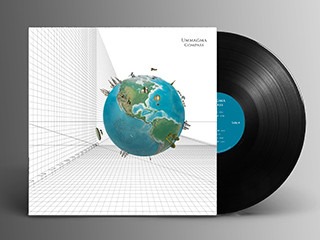
Ummagma   A.R.Kane - Winter Tale (cover artwork)

Tavern Eightieth (TVEI) – 31st October 2016

Christopher Nosnibor

Don’t read too much into the Hallowe’en release date for this solo offering from Matt Christensen, who is more usually found lending his voice to Chicago genre-straddling guitar-based act Zelienople. There are no guitars to be found here, or vocals, and despite the album title’s connotations of the predatory, the sinister and the dangerous, this is no haunting horrorshow or ultra-dark ambient work coughed up from the bowels of the earth, although the five tracks on Prowl are certainly strong on atmospherics.

The title track sets the mood, a murky groove softly bounces along, the insistent beats largely submerged by a thick, opaque subaquatic sonic murk which strangely deadens the sound and creates a sensation that’s almost physical rather than simply auditory. When the rhythms are completely absent, as on ‘Mountains of Fire (Remix)’, Christensen glides effortlessly into what one may reasonably call ‘pure’ ambience: the forms are vague, intangible, with no discernible sense of structure as the soft and slowly-drifting washes of sound shift and turn gradually.

‘Spending It’ is perhaps the most haunting track on the album, crackles and pops – somewhere between the click and clatter of worn vinyl and the cracks and snaps of burning wood – form the distant rhythmic undercurrents which echo through the warping tones before being carried away into silence on a long, low wind-like drone. In contrast, ‘Junk Test’ is altogether more buoyant, bubbling beats flit beneath rippling Tangerine Dream synth motifs.

Everything is kept low-key, the sounds dissolving into one another and in a slow but continual evolution. It’s a radical departure from Christensen’s work with Zelienople, but, as one may expect, it’s an album that demonstrates a keen awareness of the dynamics of texture and tone. In the context of Prowl, these elements are explored in their most delicate and subtle forms, and in its field, it’s an accomplished and enjoyable work.


Matt Christensen – Prowl