Posts Tagged ‘Review’

Ni Vu Ni Connu – 2nd November 2023

Christopher Nosnibor

While the late 80s and early 90s saw the absolute peak in format-driven consumer exploitation, with the major labels finding evermore extravagant and ostentatious ways pf presenting a single or an album to boost its chart position by milking hardcore fans who would buy every format for the sake of a bonus track, a remix, or a poster, there’s been a strong return for physical releases in recent years. Admittedly, the days of CD singles packaged in tri-fold 12” sleeves, cassette singles in album-sized boxes, 12” boxes in which to house a series of CD singles, albums released in boxes as six 7” singles, and the like are well over, the fetishisation of the object is very much enjoying a renaissance, most likely as a reaction to the years when everything became so minimal and so digitised that no-one actually owned anything.

This was a bleak period. As someone who had spent a lifetime accumulating books, records, CDs, even tapes, I found it difficult to process. I had grown up aspiring to own a library and a wall of records, and found myself foundering, drifting in a world where entire lives were condensed to a playlist on a phone and a few kindle picks. I’d walk into houses – admittedly, not often, since I’m not the most sociable of people – and think ‘where’s the stuff?’ Stuff, to my mind, is character. It’s life. People would endlessly wave their Kindles and tell me ‘it’s just like a book!’ and rejoice at their Apple playlists on their iPods because they had their entire collections in their pocket and no clutter. I suggesting I should clear out my ‘stuff’, these techno-celebrants were missing the point, and continue to do so. Rifling through a collection, finding lost gems, engaging in the tactility, remembering when and where certain items were purchased is an integral part of the experience. My collection isn’t simply a library of books and music, it’s a library of memories.

In more underground circles, the existence of the artefact remained more consistent, perhaps because more niche artists and labels always understood the relationship between the artist and the consumer as conducted via the medium of the object. The release of this epic retrospective as a 4-LP box set is, therefore, less a case of getting on board with the Record Store Day vinyl hype in the way that HMV are now carrying more vinyl – at £35 a pop for reissues of 70s and 80s albums you can find in charity shops and at car boot sales for a fiver (and you used to be able to pick up in second-hand record shops until they died because no-one was buying vinyl), and more a case of business as usual.
a2289573057_10

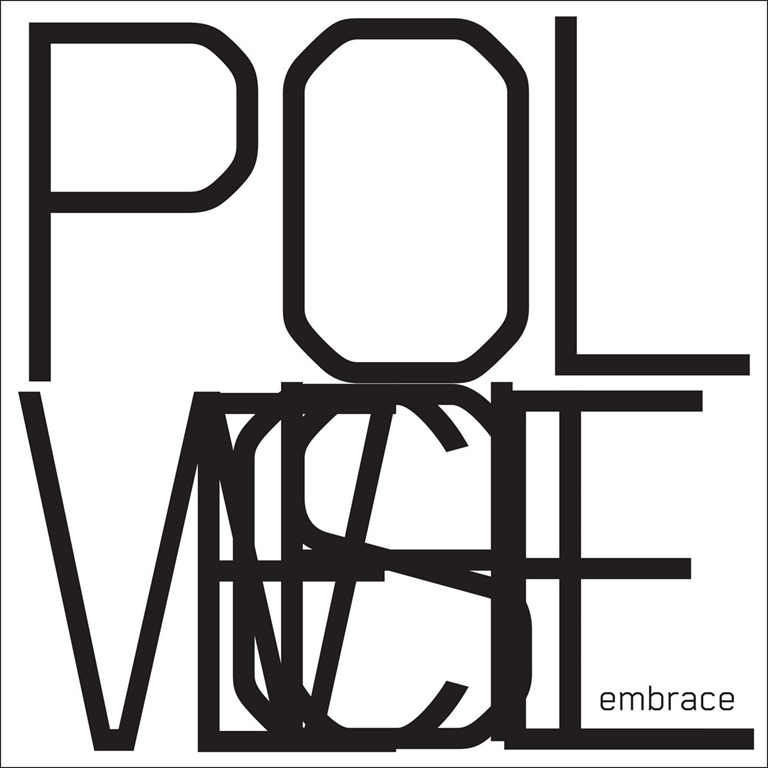
Vienna- and Berlin-based ensemble Polwechsel have a thirty-year career to reflect upon, and with a substantial back-catalogue to their name, and it’s a landmark that truly warrants a box-set retrospective. Although it’s not a retrospective in the conventional sense: this is a work created in collaboration with a selection of instrumentalists and improvisers who share their exploratory mindset. Traditional compilations feel somewhat lazy, and are ultimately cash-ins which offer little or nothing new to the longstanding fan. And so this set serves to capture the essence and style of their extensive catalogue, rather than compile from it.

There’s a lot of ground to cover, too. As the accompanying notes detail, ‘Vienna- and Berlin-based ensemble Polwechsel have been making music at the interface of collective improvisation and contemporary composition. With their changing cast, the group have been at the forefront of musical experimentation, from style-defining works in reductionism in the 1990s, which concentrated on silence, background noises and disruptions, to a change in direction in the 2000s, which saw the introduction of traditional musical aspects such as tonal relationships, harmony and rhythm. Through varying constellations, instrumentations and collaborations, Polwechsel have developed a unique body of work that has firmly established them as one of the driving forces in contemporary music-making… Their music has mostly straddled a line between contemporary music and free improvisation, and is characterized by quiet volume, sustained drones, and slowly developing structures.”

And so it is that for EMBRACE, Werner Dafeldecker, Michael Moser, Martin Brandlmayr and Burkhard Beins are ‘joined by a roster of likeminded guest musicians and former band members to perform a series of new pieces reflecting the whole breadth of their musical investigations.’

‘Jupiter Storm’ is spacious, spatial, strange and yet also playful, an assemblage of sounds that lurch from serious and atmospheric to sleeve-snickering toots and farts, and everything in between over the course of its eighteen minutes, with slow—resonating gongs and trilling shrills of woodwind and plonking random piano all bouncing off one another, while the bass wanders in and out of the various scenes in a most nonchalant manner. On ‘Partial Intersect’, drones and hesitant drones occasionally yield to moments of jazzification, parps and hoots and squawks rising from the thick, murky sonic mist which drifts ominously about for the track’s twenty-minute duration.

Sides C and D contains ‘Chains and Grain’ 1 and 2, again, longform pieces almost twenty minutes long, comfortably occupying the side of an album, are the order of the day. Clanking, clattering, chiming, bells and miniature cymbals ring out against a minimal drone which twists and takes darker turns.
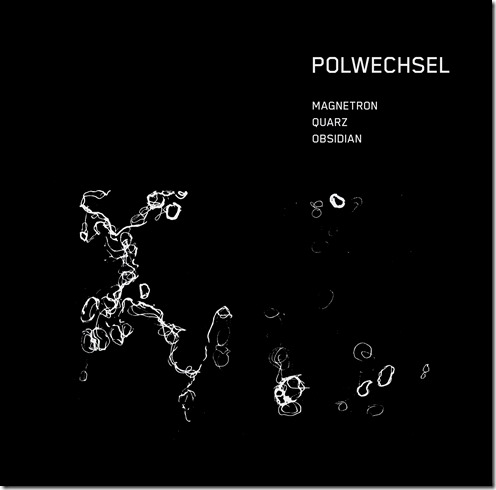
cover

The tracks with Andrea Neumann are eerie and desolate, and occupy the third album. These pieces are different again, with the two ‘Magnetron’ pieces building from sparse, moody atmospherics to some piercing feedback undulations. The shrill squalls of treble, against grating extraneous noise, make for some tense listening. The second in particular needles at the more sensitive edges of the nerves. ‘Quartz’ and ‘Obsidian’, are more overtly strong-based works, but again with scratches and scrapes and skittering twangs like elastic bands stretched over a Tupperware container. The fourth and final album contains two longform pieces, with ‘Orakelstücke’ occupying nineteen and a half minutes with creaking hinges, ominous tones, and a thud like a haunted basketball thwacking onto a bare floorboard. There are lighter moments of discordantly bowed strings, but there’s an underlying awkwardness with crackles and scratches, muttered conversation in German. The fifteen-minute ‘Aquin’ is sparse, yet again ominous and uneasy, majestic swells of organ rising from strained drones and desolate woodwind sinking into empty space.

The set comes with a thirty-two page booklet containing essays Stuart Broomer, Reinhard Kager and Nina Polaschegg (in both German and English) and some nice images which are the perfect visual accompaniment to the music, and while it’s doubtless best appreciated in luxurious print, a digital version is included with the download.

EMBRACE is a quite remarkable release – diverse and exploratory to the point that while it does feel like an immense statement reflecting on a career, it also feels like four albums in their own right. It’s a bold release, and an expansive work that certainly doesn’t have mass appeal – but in its field, its exemplary on every level.

14th September 2023

Christopher Nosnibor

Have I lost the plot covering such commercial stuff as this? No, not at all, and besides, plot is overrated, and this is an interesting one. Having built up something of a following since emerging a few years ago, Luna Aura’s latest EP release coincides with her touring as support for Slipknot Frontman Corey Taylor on his solo tour. If on the face of it, it seems like a surprising choice for such a pop-orientated act to bag such a slot, however big on guitars they are, Corey’s ubiquitous media of late in promotion of his second solo album has seen him really pushing to emphasise the fact that he’s a multi-faceted, genre-fluid songwriter.

I think I’ve been growing a newfound respect for him for this: he genuinely seems more about making the music that he enjoys than about being remotely cool, which is a far cry from the enigmatic masked presentation of Slipknot, where no-one ever knew who any of the members were for a long time. I always thought Slipknot were shit on every level, and I’d always suspected they were middle-aged record company execs donning boiler suits for some postmodern nu-metal equivalent of The KLF, only more calculatingly exploitative. I was wrong, but not completely off track. But it turns out Taylor’s had some high-profile feuds with the kind if people who warrant feuding with, although I digress. The promo rounds for CMF2 have been interesting, in that they show Taylor, aged 49, facing up to the fact that he’s staring directly at a point in life where his physical capacity is waning and frankly, he’s reached a point in his life where he doesn’t care about cool and just wants to do his thing. At 48, I find this far more relatable than an artist trying to remain relevant and be the voice of ‘youth’, like so many acts who emerged around the turn of the millennium, not least of all so many punk-pop acts who are old enough to be grandparents to their target audience. But also, credit due for giving a young, up-and-coming female artist the exposure instead of some predictable all-male band.

Perhaps unsurprisingly, half of Luna’s EP has already been unveiled as video singles, because that’s how it works now, but regardless, hearing all five songs in sequence is what this is about, and over the course of five songs, we get a sense of Luna’s range and what she’s about.

It’s hard to evaluate new music from new artists that resembles the new music by new artists that was emerging when I was at the same point in my own life. As a teen in the 90s, it didn’t only feel like the most exciting time in music ever, but it felt like our generation had something of its own and something that spoke both to and for us. This was our punk, our new wave, our new romantic. I may have been aware of and listening to new romantic and electropop as it emerged, but at the age of maybe eight or nine, I can’t claim it was for ‘me’. Grunge and the alternative music of 92-94… that was different. On the one hand it seems unusual that a generation behind should revisit and reclaim it. But after a wilderness spell of shit mass-produced r‘n’b and a truly dismal decade socially politically, and all the rest, it makes sense that this should once again reflect the zeitgeist.

But something has changed. There has been a shift. Not only has life in general got shitter, but technology and social media have changed everything. Attention spans have shrunk, and that’s a fact. When it comes to music, you’re got maybe ten, fifteen seconds to make an impression (although an article published earlier this year suggested it was as little as five seconds – but interestingly, the study showed listeners tended to like a song more if they listened to the whole thing first, rather than just being exposed to just a clip).

In this context, it’s obvious why ‘Money Bag’ is the first track and why it was the first single: it’s uptempo, guitar-driven and punky and blasts in, all fuzzy guitar, and arrives at the hook in under a minute. It’s a promising start. Savvy songwriting for attention-deprived times. The guitar is up-front, overdriven, gutsy. But the chorus goes for the bubblegum vacuous style, with an airy ‘woo-hoo’ at the fore. It’s popular right now, and it’s a winning formula, but it just gets on my tits because it feels like a lazy stab at a radio-friendly hit without actually writing a lyric. And it often seems to work. Well, for some people: not for me, really.

But after this obvious start that’s probably only weak in my view, the majority of the rest of the EP is pretty solid. ‘Lost in the Fiction’ is smoother but no less guitar-based, and with an overtly digital feel, it slots in comfortably alongside Garbage sonically and stylistically.

Blind? Bland would perhaps describe this derivative turn-of-the-millennium alt-rock bounce-along that’s Avril Lavigne and Natalie Imbruglia and Alanis Morrisette all rolled into one, which isn’t the worst thing, and it’s neatly crafted, but you can’t accuse Luna Aura of being predictable or one-trick. ‘Candy Coloured Daydream’ is an explosion, with a monster hook and killer chorus, and ‘Cut and Run’ closes in kick-ass style, with an opening riff that’s pure Nirvana before adding a 90s shuffling drum groove and more driving guitar. The Fiction EP is grunge for the 21st century – it’s perhaps more melodic, but it’s got attitude and you can mosh to it. And that’s more than reason enough to say yeah.

AA

AA

LUNA AURA - CANDY COLORED DAYDREAM copy

Christopher Nosnibor

Engineer Records

I have mentioned – more than once – that I’m not fan of punk pop. But I am a strong believer in that there are two kinds of music – good and bad – and that there are exponents of both in any genre. A quote that sticks in my mind is Morrissey’s declaration that ‘all reggae is vile’. Now, I’m no fan of reggae, but that doesn’t mean that reggae is shit, it simply means that most reggae is not to my taste – but then there are reggae-flavoured songs and bands I absolutely fucking love, from The Special to The Ruts, not to mention some of Bauhaus’ dub/reggae dabblings. But vile? I suppose this was one of those early hints that Morrissey was a racist twat, along with his comments about needing to be black to get on Top of the Pops or whatever it was. Only back in the mid-80s, it was simply viewed as being niggardly, misanthropic, and contentious because it made good press.

I know absolutely nothing about the band, or the release: this is one of those CDs that just arrived through my letterbox. Some people would worry about how people find their email address or whatever, but I’ve come to be comfortable with people sending me stuff, because, well, as long as it’s downloads and CDs and books, rather than death threats, it’s a good thing.

Bed of Snakes definitely sit at the punkier end of the spectrum, rather than the poppier end. and it’s an instant grab with ‘Bridge to Nowhere’. It has the drums right up front and centre, the guitars crackle with crunch and big speaker volume, and the vocals are lower in the mix than the mixed-for-radio stabs at success that’s depressingly commonplace. There is, to my ear, nothing more irritating than clean vocals at the top of the mix on a tune that purports to be punk… and even in general. Mix really does matter, and with guitar-based music, the vocals should sit in it, rather than dominate, way above it. Too much vocal just sounds… wrong. But this, this is perfect, And those vocals are gritty, full-throated, raw, they grab you, and they’re riven with energy and sincerity.

‘Over You’ slumps into middling mediocrity and it would take far longer than the song’s two minutes and thirty-seven seconds to list the bands it sounds like. For me, it’s two and a half minutes of wondering why. Why do something so derivative? Why, when you can clearly do so much better, be so much more exciting? I suspect that radio play is the goal. Let’s write the tune that could get radio play, guys! I get the rationale, but no-one wins here.

But they’re back hard and heavy on the closer, ‘Stolen Moments’. As on ‘’Bridge too Nowhere’, the guitars are big and gritty, and the sound is dense and there’s a punchy, passionate edge that feels real. And two outta three ain’t bad: Bed of Snakes have proved that they’ve got guts and grit, and some knack for riff-driven tunes. Let’s have some more!

11th August 2023

Christopher Nosnibor

One of the great pleasures I derive from reviewing music, particularly that of experimental and ambient persuasions, is the amount I learn from reading about the inspirations behind the works. Because of the nature of these musical forms, the inspirations are wide and varied, but often reactions or responses to events or places, or even abstract concepts, and unencumbered by the conventions of lyrics, which are so often hampered and constricted by the limitations of meter, rhyme, even vocabulary and simple words themselves, lyrical songs fail to convey things which, on occasion, music alone can do. Because music speaks its own language, and has the capacity to communicate, to convey more than words. As a writer, and writing about ambient compositions, I am often acutely aware both of my limitations and the contradiction of the process, in essence, or reversing the magic of instrumental musical works to ‘explain’ them using rather blunter tools, but at the same time, I relish the challenge. Moreover, I have learned more of history and geography and beyond from my curiosity-led research than I ever did from my formal education.

So much information is simply not given to us, and so much history – recent history – is lost to us, unless it has a specific local interest, and even then, many people who are natives to the very town or city they life often know woefully little of the heritage which surrounds them. I am guilty of this also, knowing comparatively little of my locale, although it was again my own curiosity which compelled me to learn the history behind the existence of a brick and concrete bomb shelter in my own back yard.

Globally, we’re so wrapped up in the moment, and a nostalgia for the recent past that the history of a generation or more ago may as well be Elizabethan rather than Victorian or Georgian.

And so it is that I had absolutely no knowledge of Carabanchel Prison… which of course meant that I simply had to find out about it. How did I not know about the largest prison in Europe, built between 1940 and 1944, and operative until 1998? Disused and abandoned for a decade, plans to convert the immense brick complex to flats came to nothing (can you imagine actually living there) before it was demolished in 2008. So many questions… about its occupants, about it mere existence, about its collapse… so many questions about a place which housed political prisoners after the Spanish Civil War, and many more besides.

This EP is, in fact from the soundtrack to a forthcoming movie, released next month. As the accompanying notes explain: ‘The film portrays a person painting a line from the prison’s epicenter to across the wall. The abstract textures that drown the images are created by streams of water. The film was shot in 2006, inside the prison of Carabanchel, Madrid. The prison had then been closed and abandoned for over 10 years. It was finally demolished in 2008. The tapes were edited in 2023, 17 years after its making. The film features Ragnar Bey as the painter.’

Painting a line through aa disused prison my seem a rather curious film project, but no doubt context bolsters its content. But the soundtrack…

Across three pieces, each around four to six minutes in duration, War San (Swedish composer Kim Warsen) leads us through the building’s structure, and the titles correspond with the location: ‘Wall’, ‘Cell’, ‘Exit’.

Despite taking the form primarily of an elongated, wavering drone, ‘Wall’ has soft elements, trilling long notes as though from some pipe or another: not a pipe organ or bagpipe, but something long, droning but at the same time bright, airy. Meanwhile, ‘Cell’ feels almost spiritual. There is an oppressive darkness which pervades, and lingers at the corners throughout, but the overall sensation blends contemplation with optimism, before ‘Exit’ breezes, cloudlike towards freedom.

Perhaps, then, this EP’s function of a soundtrack to a post-abandonment creative project means any presupposition about it being a place of confinement is mistaken. Instead of chewing over its darker history, Carabanchel Prison invites us to reflect on the fact that those days are over now, and looks to a brighter future. It traces a line – quite literally – from confinement to exit, and to freedom. If only this was possible for more historical dates and places.

AA

CARABANCHEL_PRISON_Cover_NEW

26th June 2023

Christopher Nosnibor

‘Industrial’ is a definition that’s shifted significantly over the years. The shift seems to have come some time in the late eighties or early nineties, when the likes of Ministry and Pitch Shifter were breaking into a much more mass-market audience: the former smashed MTV with the singles from Psalm 69, with even Beavis and Butthead getting down to ‘NWO’ and proclaiming ‘even the old dude is cool’ in reference to William Burroughs’ appearance in the video to ‘Just One Fix’. It seems hard to reconcile the enormity of that album with the face of music in the media now, but the early 90s really were something. You’ll read endlessly about how Nirvana smashed open the doors and so on, and perhaps to an extent that’s true, but they were simply a part of the zeitgeist in an era when MTV focused on ‘M’, and you would find bands like Soundgarden and Butthole Surfers and Rage Against the Machine being played alongside ‘Sabotage’ by The Beastie Boys, and it didn’t seem incongruous with all the mediocre pap because, well, that was what people were listening to. I even picked up a Therapy? live bootleg CD in a record shop while on holiday in Venice in the summer of ’94. I was excited, but it didn’t seem particularly strange at the time. Pitchshifter, meanwhile, had named their debut album Industrial, and it was fucking heavy, but it wasn’t until they changed their sound and rode the wave of sports metal around the turn of the millennium that they got popular, doubtless aided by their intersection with The Prodigy.

But because of the bracketing of these bands as ‘industrial’ in the 90s, the original characteristics of what had previously been deemed ‘industrial’ became buried, and forgotten. It’s hard to really find a connection between Ministry and the likes of Throbbing Gristle and Cabaret Voltaire (at least musically: they all loved Burroughs, but Jourgensen’s fascination was more about the junkie guru legend, whereas TG and The Cabs were into exploring ways of applying the cut-ups and Burroughs’ tape experiments of the late 50s and early 60s to music.

Binary Order sit firmly in the bracket of contemporary industrial, or what many refer to as Industrial Metal, and with this release they really show their influences and wear them with pride.

Now, I do get somewhat twitchy when the running order of a review stream or download differs from the Bandcamp stream or whatever, because the flow of a release is important – at least to me, and I tend to consider the overall flow of a release in my appraisal of its success.

So we’re going with the Bandcamp sequence here, which kicks off with lead single and title track, ‘Thrown Away’, a cover of the song by the oft-maligned nineties nu-metal act Papa Roach, who, remarkably, are still going and releasing albums at a steady rate. Are people really still buying this shit? Rap Metal was surely one of the worst things to have happened to music… but here it is. They blast off the four-track EP with a chunky riff-dense rendition of ‘Thrown Away’, and with that out the way, be can finally turn to the rest of the EP.

The remaining three tracks are remixes of songs from their debut album, Songs from the Deep, released in November of last year. The ‘Bleeding Mix’ of ‘Parasite’ is a gut-churning gurgle of stuttering electronica, that starts with a pumping, shuddering beat and a quivering synth groove which provides a stark backdrop to the raw vocals… but then it gets a bit ravey and autotune and straddles the uncomfortable intersection between dancefloor and sonic assault.

The Arcadmix Remix of ‘A Good Death’ is altogether more atmospheric and moody, and works well, largely because it’s neither overtly dancey nor Industrial / Nu-Metal. The six-and-a-half-minute ‘Irreversible Mix’ of ‘Hands of Time’ manifests as a long, oppressive, darkly ambient drone that’s a real departure from the rest of the EP.

The diversity is the key strength of this release, paired with the fact that it shows a band wanting to push their limits and aren’t especially precious about how their material is reshaped or adhering rigidly too their chosen genre.

AA

812429

Gizeh Records – 30th June 2023

Christopher Nosnibor

In this sense, Bleaklow is a rather different proposition, and in some respects, the instrumentation is a significant factor in the shape of the sound, with Claire contributing ‘Voice, Nord Electro, Yamaha PSS-170, field recordings, Moog Taurus’, and Richard contributing ‘Electric gtr, drones, field recordings, Yahama PSS-170, Moog Taurus’. But by the same token, there is something about anything Richard Knox does which has something of a signature – not a signature sound as such, more of a signature feel, which comes from the kind of wispy ambience and dense atmospherics.

The overall effect of Bleaklow’s debut, Glume, is mellow, amorphous washes of cloud-like sounds drifting softly on invisible air currents, but there are moments where the textures are coarser, more abrasive, and these provide vital contrast. ‘Husk’ scrapes in with a wash of distorted guitar before tapering tones supple piano and vocals, layered to a choral effect surge and swell.

Claire’s voice by turns evokes Kate Bush and Cranes, haunting, ethereal, and as much as this sits in the post-rock bracket from which Richard and Gizeh emerged back in the early 00s (the label put out not only the The Heritage, the debut mini album by Her Name is Calla, but Knox also put out a super-limited CD of ‘Condor and River’ in a crazy corrugated card sleeve, as well as Arrivals, the debut album by worriedaboutsatan, wrapped in a chunk of blown vinyl wallpaper, which looks and feels amazing but is a real bugger to store… but I digress) it also very much harks back to 90s shoegaze, with a heavy debt to Slowdive and My Bloody Valentine, but then again, it’s impossible to listen to this without recourse to The Cocteau Twins. If this sounds like a catalogue of touchstones, it’s testament to how deftly they draw on myriad elements and whip them into a sonic souffle with the texture of candyfloss – not that this is particularly sweet, but it is lighter than a feather, lighter than air. And nowadays, the packaging is a little less DIY, but still very much focused on sustainability: the packaging for Glume is a recycled cocoa-card sleeve, whereby the ‘recycled card is made from 40% Post Consumer Waste and 15% natural fibres (by-products derived from the food processing industry which would otherwise go to landfill.) Turning a waste product into a natural, GMO free, raw material derived from nuts, fruits etc, resulting in distinctive colour shades’. It’s not just commendable, environmentally: it taps into the physicality of a releasing music and rendering the physical release a work of art rather than a commodity of plastic in plastic.

Everything on Glume happens at a sedate pace, and everything melts slowly together. The chances are that at some point, you’ve sat, stood, or even laid on the grass and simply looked at the sky and watched the clouds slowly shifting shape, rabbits and elephants becoming elongated and increasingly deformed, until they’re no longer rabbits or elephants, but abstract shapes stretching and fading to formlessness. The songs on Glume are by absolutely no means formless, but the sounds are like mist and the structures are supple. It’s a magnificently realised work: textured, detailed, nuanced.

It may not be bleak, but it’s dark, and it’s got detail. Bask in it.

AA

a0373089653_10

20th February 2023

Christopher Nosnibor

Hailing from Austin, Texas, electronic act Gleaming are deeply rooted in 80s synth pop, and while there are hints of gothic grooves and whatnot, the more obvious touchstone is mid- to late-80s Depeche Mode. But if opener ‘Rat Me Out’ is a clear access point with a strong hook, the first single, ‘Run Faster’ is starker, harder, more industrial, a thudding kick drum welded to a relentless bassline that nags away at your brain while calling to mind DAF. It’s a tense affair, and with lines like “the phone, the ego, the friends, the future, the body I’m in – all telling me to run”, we get an insight into the EP’s themes. The band describe the EP as ‘an ode to one’s former self and depression, habits, partners, family, friends, etc.,’ adding ‘It’s an attempt to bring closure to a darker past and to celebrate life in a more positive and meaningful sense.’

Closure, catharsis, celebration: it feels like all three to an extent. ‘Ashes’ is propelled by a busy beat and throbbing bass, and ‘The Voyager’ follows its path but ventures more toward Depeche Mode c84 crossed with Pretty Hate Machine era Nine Inch Nails – it’s dark, it’s synthy, but also accessible and feels light and perhaps less menacing than intended, in the way that early Ministry wanted to be harder than it was. The glitchy autotuned vocals don’t help: the never help anything, unless perhaps you’re Cher. It’s not a bad tune – there isn’t a bad tune on the EP – but the execution, if done differently, may have had more impact.

The seven-and-a quarter-minute title track is a low-tempo, slow-burning synth-led brooder, heavy with reflection and emotion and a sense of closure.

Showcasing a certain range within the stylistic confined of their genre of choice, Gleaming are an interesting proposition, with a sound that’s familiar and illusory, but not specifically derivative – and that’s an achievement.

652195

18th November, 2022

James Wells

Perhaps I’m sensitive. Perhaps I’m just aware, attuned. But certain phrases trip me. And on reading ‘Everything You See Is Mine’ I feel my skin crawl a little. Something about it says power trip, something about it says control, something about it says manipulation, something about it says shades of wrong. It’s not something that explicitly makes its way through the music, but then, who do you trust?

This gnarly four-tracker is a furious frenzy of high-octane, uptempo industrial that draws many cues from early NIN with snarling electronica driving things hard from the get-go, with first song, ‘Soft’ being anything but as driving electronica slams home with the kind of abrasion that blasts the chest. It’s a strong start to a release that tapers off rather after that initial blast.

‘Wasp Factory’ – which I like to think tips a nod to Ian Banks’ debut – goes a bit emo and hints a bit awkwardly at Linkin Park and then the last song, ‘Only Skin’ brings a satisfying trudging crunch but also an unexpectedly accessible vibe, as it drives the EP home to its conclusion.

It’s not as dark or hard as all that and perhaps isn’t the dominant sneer the title suggests, but Everything You See Is Mine is certainly not an entirely accessible attack either. One to explore.

a1987592192_10

12th October 2022

James Wells

Alright, so I can’t see ‘bad news’ without thinking of the spoof rock band that was part of the Comic Strip Presents… series, featuring the actors behind The Young Ones who released a parody rendition of Queen’s ‘Bohemian Rhapsody’, actually produced by Brian May, and got themselves bottled off stage at Monsters of Rock in 1986.

There’s nothing periodic or rock cliché about this, though. As the blurb outlines, ‘Bad News explores dreams and nightmares, forgiveness and damnation. Through dark electronic and industrial rock themes: wailing bagpipes and fragile synths on the likes of ‘Not Enough Bridge’ contrasted with pounding beats and heavy guitars on ‘Wild Girl (Slug Mix)’ the band further develops their self-described ‘alternadustrial’ sound.

Admittedly, bagpipes sound like really fucking bad news, but this six-tracker doesn’t sound nearly as bad as the cover art suggests it might. ‘L’appel du Vide’ comes on like Pornography-era Cure with doomy synths and clattering, crushing drum, but with the bonus addition of crunching metal guitar, with the end result being as heavy as hell.

‘Echo Chamber’ is twitchy and urgent, a vintage snare cutting through stark synths and a murky fog of bass and guitar; elsewhere, ‘Darkest Dream’ is stark and sparse, blending early Depeche Mode and Meat Beat Manifesto with a dash of Wax Trax! industrial-tinged electronica injected with a shot of adrenaline – and it’s all slammed home with that tempo that gets you pumped.

If the dense, dark waves of synth and snarling vocals and stomping beats which dominate the EP seem fairly standard fare, at least the pipes are kept in the background.

AA

a3952447274_10529013

Punk Slime Records – 11th November 2022

Christopher Nosnibor

I sometimes feel a twinge of embarrassment when I see press releases and reviews referencing bands I haven’t heard of, in that it makes me feel like I’m failing in my diligence. So when I see that So Young Magazine has described Manchester quartet Mister Strange as ‘An uncompromising cross between the manic charisma of The Dead Kennedys, and the contemporary fury of Melbourne rockers Civic’, I fleetingly think ‘shit, I’m behind the curve here’.

But then, you work with the reference points you’ve got, and this EP packs no shortage of raw punk energy, and plenty of unexpected turns, too.

There’s very much a vintage vibe to Nothing at All, and while the fuzzy, lo-fi production is an integral part of it, the fact that they play hell-for-leather garage punk with murky guitars and reverb-heavy vocals is the main factor. Back when The Strokes and The Hives and The Vines emerged to lead a garage revival shortly after the turn oof the millennium, I got the urge to dig out the various Pebbles and Nuggets compilations. Listening to this, the urge is sated by the gritty authenticity of the band’s lo-budget sound and full-throttle riiffery.

The title track leads off, starting with a raging feedback inferno before ploughing into a relentless high-octane psychedelic punk groove, before suddenly slowing to a heavy trudge that’s 70s heavy metal melted into 90s noise in the vein of Terminal Cheesecake, before reigniting the tempo and racing to the finish.

The remaining five songs aren’t quite such a rollercoaster, pushing instead a muggy, fuggy, grungy guitar style that pursues more sustained riffery and tempos, at least until they arrive at the relentless closer, ‘Rat Bench Alley’, which slugs hard.

In between, ‘Dead Weight’ is fairly standard garage fair, but it’s loud, scuzzy and punches hard, and ‘Crazy Lemon’ pushes a repetitive riff to the max. It’s pretty damn heavy duty, and it’s a decent racket.

AA

Strange