Posts Tagged ‘Retro’

Blaggers Records – 2nd October 2025

Christopher Nosnibor

Continuing the thread of my review of the new Eville EP, which sees a young band push hard on the forward trajectory of a nu-metal revival, I find myself basking in the retro sound of ‘Anything,’, the latest offering from JW Paris, trashy indie / alternative trio from London. This isn’t some kind of nostalgia wank, whereby the 90s is largely misrepresented through the prism of Britpop (or grunge), but a cut that reminds us just how eclectic the 90s – particularly the first half of the decade – was. It was a melting pot of skewed guitar-led bands which were often lo-fi, ramshackle, bands who would grace the pages of Melody Maker but rarely play outside Camden, and the only way you’d ever hear any of their music would be by tuning in to John Peel, where they’d be wedged in between some weird dancy shit and the filthiest grindcore going, alongside something jangly on Sarah Records and something else entirely on Rugger Bugger records. And something by The Fall, of course.

‘Anything’, the lead track from their forthcoming EP, packs the essence of that period into just shy of three and a half energetic minutes. As much as it’s 90s indie / Britpop in its attitude, it’s the early Wonderstuff that comes through most strongly here. Before they became the beloved band of every cherry-red DM wearing sixth former, and way before the Gallagher brothers came onto the scene, Miles Hunt swaggered forth with colossal confidence, and songs that sizzled with snappy wordplay and hooks, and while I never really dug much after The Eight-Legged Groove Machine, they were exhilarating and fresh, and it’s this that JW Paris recreate here. The woo-ooh-wooooh backing vocals are a bit dandy Warhols, and there’s a lot going on, a lot of ideas and energy compressed into this neatly crafted nugget of a tune.

Bad Song Single (3000 x 3000 px) - 7

Canadian dark electro artist S1R1N has unveiled the new single and video, ‘Voodoo Doll’.

‘Voodoo Doll’ is, at its core, a song about self-destruction and destructive relationships. The lyrics describe an effigy, a doll that the protagonist has created. This doll is the most precious thing in their world, as they love it with abandon, but it also becomes the target of their anger and rage and destructive behavior. As it often is in life, people hurt those whom they love the most, and it is no different in the relationship with the self.

The story also serves as a metaphor for the artistic process, as the journey of creation involves placing one’s heart and soul into something, all of the love and positive emotions that one feels, as well as all of the suffering and pain . The sound palette used to create the song calls to mind a creepy yet melodic aesthetic reminiscent of horror film soundtracks.

AA

The music video for ‘Voodoo Doll’ was very much inspired by the surreal yet gritty aesthetic of the music videos of the late 90’s and early 00’s. It was filmed in several abandoned buildings including a Victorian Insane Asylum and a Tuberculosis Sanatorium. The symbolism of these places, as well as the imagery of dolls and the bloody white clothes worn by Morgan in the video call to mind themes of lost innocence, and the corruption of the inner child. This is especially exemplified by the scenes in the video where dolls are destroyed. Both the song and video are intended as a cathartic experience for both the artist and audience.

AA

224febac-1343-f204-9316-56d1d82199f3

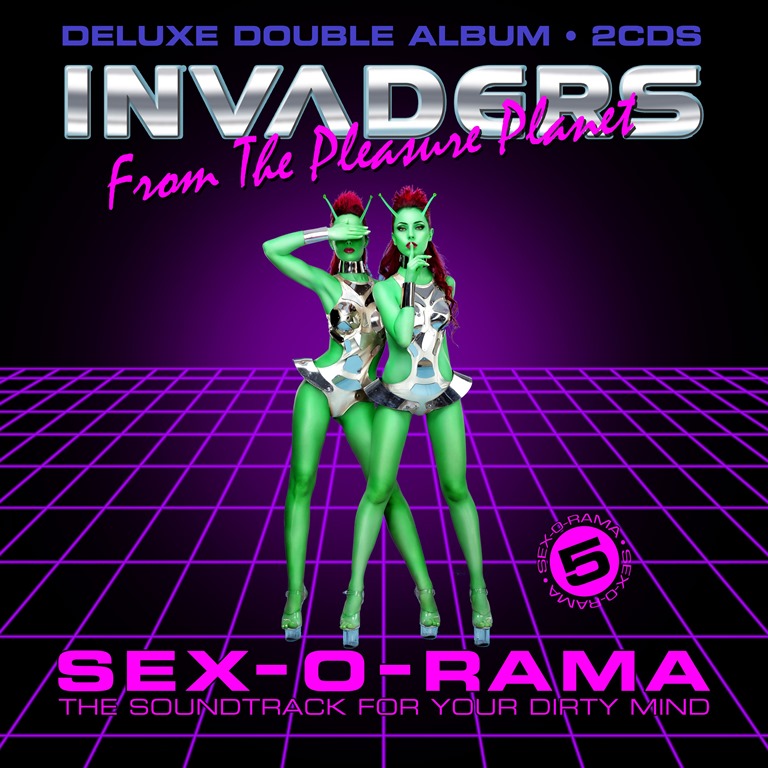
Get ready to dive headfirst into the neon-soaked daydream of your wildest VHS-era fantasies—Sex-O-Rama is back with their latest single, ‘Inside Your Dirty Mind.’

Taken from their recent double LP, Invaders from the Pleasure Planet, the new single is a full-frontal sonic seduction: dripping with synth-laced sleaze and tongue-in-cheek swagger. A cinematic throwback through and through, the track channels the voyeuristic thrill of late-night cable TV and the pulpy punch of vintage softcore scores—with a wink, of course.

“Inside Your Dirty Mind” captures everything that defines Sex-O-Rama’s signature “Porn-Funk” aesthetic: campy, cool, and completely uninhibited. A love letter to the decadent, neon-flooded excess of ‘80s softcore soundtracks, it fuses nostalgia with fresh production and sly social satire.

The mastermind behind the madness, Carvin Knowles, describes the music as a deliberate rebellion against classical constraints. “We wanted to make music that was free—groovy, dirty, unpretentious,” says Knowles. “’Inside Your Dirty Mind’ is about those taboo thoughts everyone has… and the freedom that comes from embracing them.”

Their return in 2025 marks a new era for the cult heroes of sleaze-funk. After stirring up controversy in the late ‘90s with their film placements and provocative sound, Sex-O-Rama’s resurgence is nothing short of intergalactic. Invaders from the Pleasure Planet features remastered cult classics and brand-new tracks that take listeners on a journey through laser-lit bedrooms and outer space discotheques.

AA

j48n9ZzKEHCVUi7aPJebp1CEKlt1lykHfqeuio77

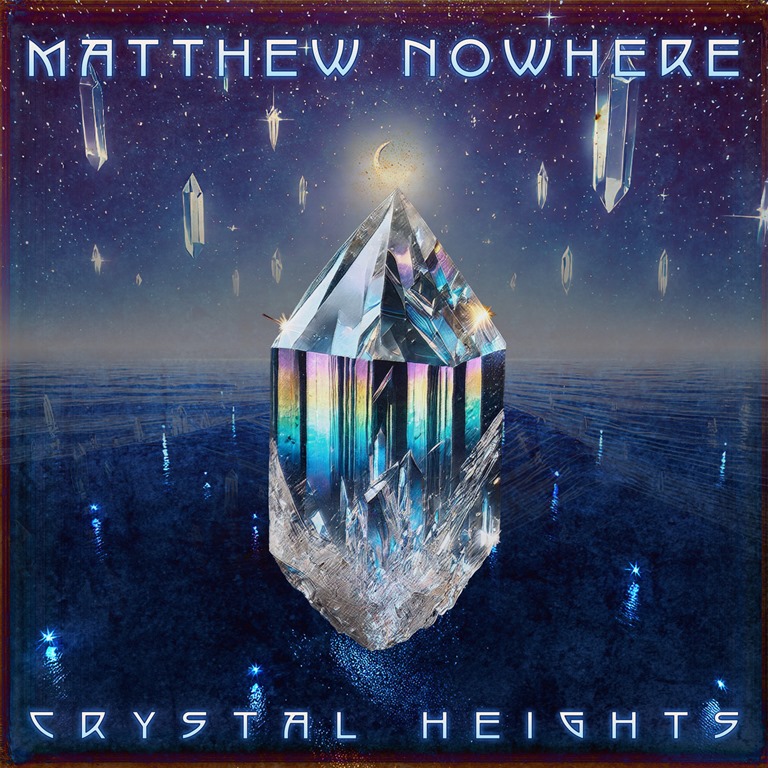
How times have changed. Back in the early 80s, this would have been mainstream. It would have been major label. It would have been huge. It would have smashed the charts. 2025: nah. And so Crystal Heights is a self-released effort, and the chances are its audience will be respectable but limited.

This is an album which is steeped in all things retro: it’s an electropop work which is light and airy and easy on the ear, and low on demand.

He describes it as ‘a sonic love letter to the 1980s’, and the title track is exemplary: it’s light, bouncy, melodic. But it feels somewhat shallow, a shade flimsy. Then again, this was also true of much 80s pop, and it was a criticism levelled at pop music at the time. Critics in particular were not especially enamoured by electronic instruments, particularly sequencers. Here in the UK, the Musicians’ Union sought to ban drum machines as they were seen as doing drummers out of a job. They weren’t really all that keen on synths, either. Using machines to make sound wasn’t considered ‘real’ music.

Again, how times have changed (although drum machines in a ‘rock’ context are still unusual). Drum machines didn’t eradicate drummers, but the death of small venues pretty much killed off bands, impacting the number of places for them to play in the most dramatic fashion. And the proliferation of two-piece acts, and solo acts, is nothing to do with technology, and everything to do with the simple practicalities of performing live music. Rehearsal spaces are as scarce as gig spaces: what are bands to do?

The mid-tempo ‘Love is Only What We Are’ sounds like mid-80s radio-friendly movie soundtrack material, and drifts along nicely with some picked reverby guitar work, and it works nicely as a counterpoint to the crisp snare and clinical kick drum sounds. ‘Echoes Still Remain’ is atmospheric, evocative, and also sounds so familiar – not because it is, but because it’s the very quintessence of so much music released circa 1984. It’s hard to fault the level attention to detail here. ‘Ruby Shards’ provides perfect evidence of this, in that it manages to compress pretty much the entirety of New Order’s output into four and a half minutes.

‘Transforming’ was recorded with Lunar Twin, and is a bona fide electropop banger. Constructed around a rippling loop, it’s a supple work that oozes 80s vintage. It’s going to nag me for weeks which songs it reminds me of. It’s a clear standout in an album that’s solid but… but what, exactly? It feels light, perhaps lacking, even. But what more should we want from it, realistically? Innovation? No, that was hardly the objective here. Lunar Twin also features alongside The Antonio Family Singers on ‘Persist3nce’, a brooding slow-burner built around a mesmeric beat which fades to grey.

With Crystal Heights, Nowhere has achieved something that’s not insignificant – an album that’s instantly accessible, strong on melody, and enjoyable.

AA

a0495838035_10

Lost Map Records – 14th July 2023

Christopher Nosnibor

The release of ‘Stillness’ as a single last week by Firestations was a simple but neat bit of promotion. Backed with a remix version, its lustrous dreamy waves alerted me to the existence of Thick Terrain, the album from which it’s lifted. The album was released back in July, but, because there is simply so much music out there, it’s simply impossible to keep up, however dedicated you are in your exploration of new music.

I know a lot of people listen to Spotify while they’re working or on the bus or whatever, and stuff pops up and they like it, and many friends say they like how it recommends them stuff they wouldn’t have sought out but have found they’re pleasantly surprised by and it’s as if it knows… well, yeah, it does, to an extent, but not in a good way. Algorithms, selections by ‘influencers’, or sponsorship – none of these are as organic as people seem to believe. It’s not about choice anymore, but the illusion of choice. Before the advent of the Internet, I would spend my evenings listening to John Peel, and later, as a weak substitute, Zane Lowe, before I could tolerate his effusive sycophancy no more, and later still, but less often, 6Music. These were my Spotify, I suppose, but oftentimes, music in the background while I’m doing other stuff simply doesn’t engage me so much, and if music is to be background, it works better for me if it’s familiar.

I still listen to albums while I work, and have found since the pandemic that I can no longer wear earphones and listen to music in public places. Given what I do when I’m not doing my dayjob – namely review music – I prefer to sift through my myriad submissions, pour a drink and light some candles and fully immerse myself in something that takes my interest and suits my mood based on the press release or, sometimes, just arbitrarily.

Anyway. Back when I used to listen to the Top 40 – mid- to late-80s and early 90s – I would hear singles which piqued my interest, and would discover that often, they were the second, third, or even fourth single from an album that had been out some months, even the year before, and, alerted to the album’s existence, I would go to town the next weekend and buy it on tape in WH Smith or OurPrice or Andy’s Records.

The model has changed significantly since then: EPs are released a track at a time until the entire EP has been released as singles by the release date, and you’ll likely get four ahead of an album’s release and then within a fortnight of the album’s release, that’s the promo done. And so Firestations’ rather more old-school release schedule proves to be more than welcome, because it so happens that their first album in five years is rather special.

Released on Lost Map Records, which is run by Pictish Trail, from his caravan on the Isle of Eigg, it’s a set of psychedelic dreamgaze tunes reminiscent of early Ride, and takes me back to the early 90s listening to JP. Straight out of the traps, ‘God & The Ghosts’ places the melodic vocals to the fore with the chiming guitars melting together to create a glistening backdrop, shimmering, kaleidoscopic. The lyrics are pure triptastic abstractions for the most part, and in this context, the curious cover art makes sense – or at least, as much sense as it’s likely to.

While boasting a chunky intro and finalé, ‘Hitting a New Low’ is janglesome, a shoegaze/country which evokes dappled shade and wan contemplation than plunging depression, before ‘Travel Trouble’ comes on with the urgency of early Interpol, at least musically: the vocals are a dreamy drift and couldn’t be more contrasting.

Thick Terrain has energy, range, dynamics, and stands out from so many other releases that aim to revisit that 90s shoegaze style because the songs are clearly defined, and while displaying a stylistic unity, they’re clearly different from one another: Firestations don’t simply retread the same template, or stick to the same tempo. There is joy to be found in the variety, and Thick Terrain is the work of a band working within their parameters while pushing at them all the time. From the mellow wash of the instrumental interlude of ‘Tunnel’ to lead single ‘Undercover’ – an obvious choice with its breezy melody and easy strum and blossoming choruses – via the psych/county vibes of ‘Also Rans’, Thick Terrain is imaginative.

And ultimately, we arrive at ‘Stillness’, which, clocking in at six-and-three-quarter minutes is anything but an obvious single choice, at least in terms of radio play. It’s the perfect album closer: low, key, slow-burning, it evolves to break into some ripping riff-driven segments before ultimately fading out to space.

Thick Terrain treads lightly through a range of ranging textures and soundscapes, and does so deftly.

AA

a3885607160_10

Negative Gain Productions – 8th September 2023

Christopher Nosnibor

It likely seems strange to anyone born in the last thirty years that electronic music as we know it simply wasn’t a thing at one point. If the Seventies saw a slow emergence of new technology in music, it wasn’t until the early 80s that that technology became accessible – that is to say, affordable and more widely available in commercial terms. This was truly revolutionary, and to hear bands like The Human League, Soft Cell, Depeche Mode, all coming through in the charts felt like, well, the dawning of a new era. Which is precisely what it was, and this would evolve in darker directions – as well as dancier, poppier ones – as the decade progressed, and through the 90s, by which time the sense of revolution had become fully assimilated. No-one bealed about the lack of instruments involved in the making of the Utah Saints’ album.

You can see why your traditionalists hated it, of course, and the Musicians Union, too, and this friction did continue into the 90s: as they saw it, drum machines threatened to make drummers obsolete, and if you had a synthesiser which could do bass and lead, both bassists and guitarists would be out of work! It was of course pure knee-jerk, and one wonders to what extent the same is true of the outcry over AI, but on that score only time will tell. As it stands, history had proven that home taping didn’t kill music – no, that would come later with the advent of streaming, and not illegal streaming via Napster and subsequent P2P platforms like Gnutella and Soulseek.

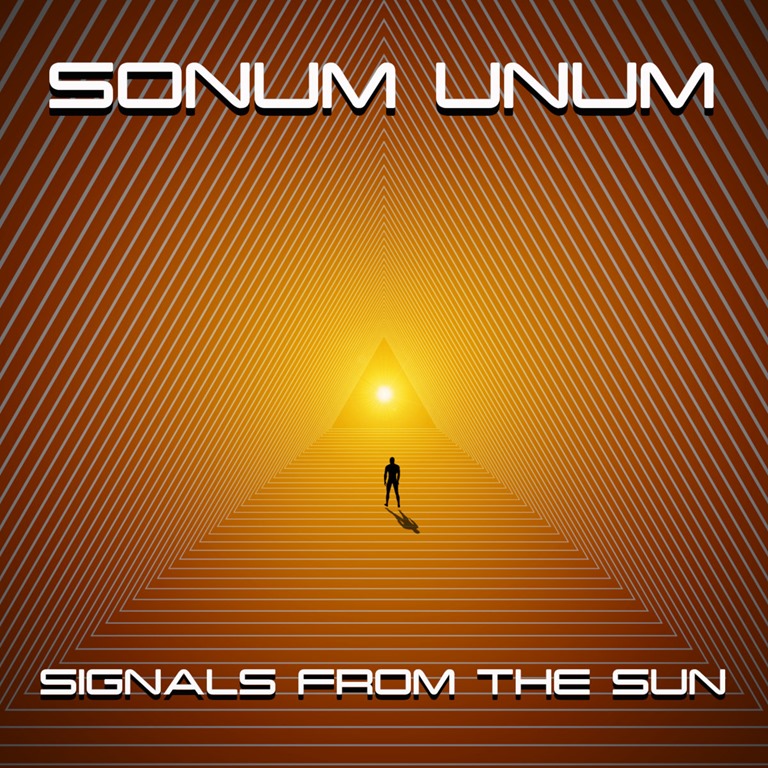
This s the backdrop for the debut album for electronic rock duo, Sonum Unum. Signals From The Sun is, according to their bio, ‘heavily inspired by 80s and 90s eras electronic and synth-pop music. Dark and ominous tones, ambient textures and thumping beats abound while lush, layered vocals soar to epic and cinematic tiers.’

It’s tempting to slide into the easy commentary which maintains the narrative of this being an album with a retro vibe, primarily because it’s true: it’s an amalgamation of two decades of electropop slickly delivered to draw in elements from specific acts, but the entire oeuvre of the timespan, from bolder darker grooves of gothier European dark electro, but also incorporating elements of the emerging case sound, with the quickfire drum builds that pace the way for expansive choruses.

There are times where it feels as if their approach to appropriation – essentially pulping and compressing the very essence of the forms into smooth perfection – results in songs that are simply too generic to have a real sense of character or identity. But then, plough through myriad releases from that time span from acts who either bubbled under or who only had a hit or two, and you’ll find the same is true of the rest of the album tracks. Moreover, to return to the question of sounding ‘retro’ – it feels like an increasingly obsolete concept. More or less everything draws on something precursive, and most of what is starting to be a recycling of a recycling. It’s no longer a case of a seventies or eighties or nineties revival: all of these things now exist in perpetuity. Retro is the new contemporary, and I can’t decide of the seeping sadness I experience listening to it is because of the emotive quality of the songs – which are tightly crafted more than gripping, to the point that they slip past without for a second taking hold – or if it’s because of the way they evoke so much that entirely removed from the songs themselves.

Signals From The Sun is Mr Mister to Depeche Mode via Eurythmics and A-Ha and Nine Inch Nails and Bastille. Slick, anthemic, it seeps nostalgia and has immense commercial appeal if it finds its way to the right channels and outlets.

AA

a3576946630_10

Cruel Nature Records – 28th July 2023

Christopher Nosnibor

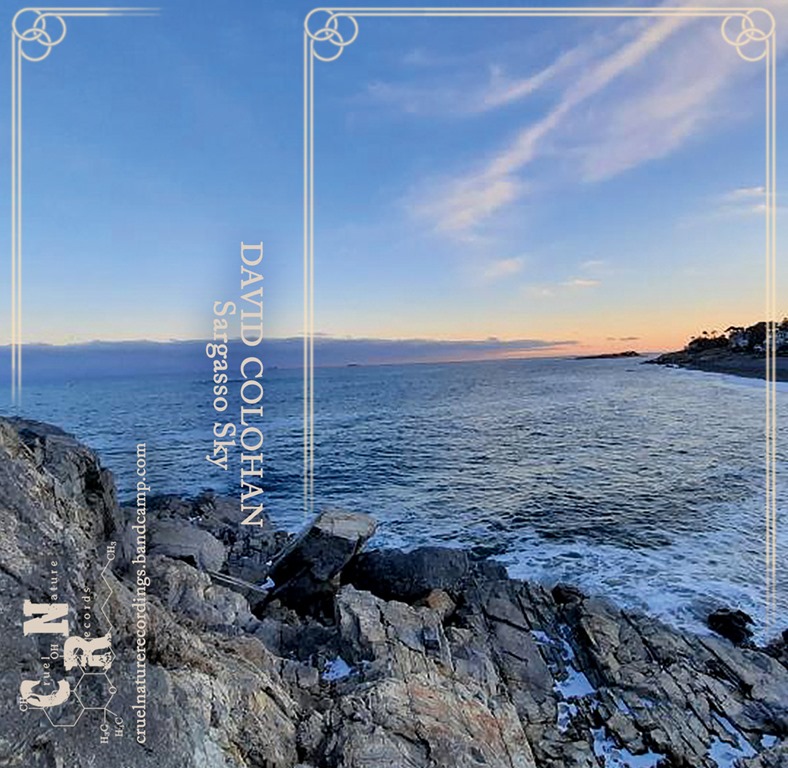
The Sargasso Sea is a unique place on earth: situated within the Atlantic ocean, it is the only sea without a land boundary – a sea within an ocean, in other words – its borders defined by sea currents. Its name is derived from to the vast ‘sea’ of free-floating seaweed called Sargassum which occupies the space, and it’s an ecosystem like no other, the aquatic equivalent of the Amazon. And yet its existence appears to be considerably less well-known, despite the success of Jean Rhys’ 1966 novel, Wide Sargasso Sea, which has been adapted for film, stage, TV, and radio and has been lauded as a pivotal work of postcolonial feminism. And it’s this book which I think of when I hear the word ‘sargasso’ – although clearly, it has absolutely no bearing on this album. What even is a sargasso sky?

The liner notes paint the scene, where ‘A sargasso sky shimmers above a twilit American shoreline, slipping in & out of time. Via a way slowed down take on jazz fusion, limpid pools catch its reflection, ebbing & flowing with the soon to come stars… The cover images taken at Marblehead, Massachusetts depict something of the aura of an area that H.P. Lovecraft considered life-changing. Step into the sea & sky….’

There are many layers, then, to this release, which extend far beyond the surface of the music itself. But when it comes to the music, Colohan presents ten pieces, all comparatively concise (only four extend beyond the five-minute mark, and none reach beyond eight), and the form is ambient yet structured, with rippling washes of synth gliding over the mellow mists of sound which float invisibly through the air. Despite its title casting its eye above the horizon to the sky, parts of this album is given to a preoccupation with the water, still, as exemplified by titles such as ‘Sacred Teeming Waters’ and ‘Longshore Drift’.

Whereas much ambient music is formless, abstract, the instrumentation vague, on Sargasso Sky, David Colohan offers musical works with structure, and with the implementation of identifiable instruments.

‘Longshore Drift’ is led by sparse piano, backed by a sliding, bulbous synth bass that’s extremely eighties in sound, and elsewhere on the album, long resonant voices dominate, from flute to organ. These are clearly synth voices, sounds conjured digitally in response to creative needs but also evolving technology facilitating new music. There are some bold drones which surge and swash on ‘Anoint’, and ‘Summers Old as Stars’ brings late 70s and early 80s synth stylings to the fore, with hints of Tubular Bells and Vangelis, and the myriad music of this era which remained anonymous. But for all that, Sargasso Sky is subtle and it’s still not overtly electro for the most part, and it’s not of the prog persuasion either. But what is it? Certainly, there are parts which do very much pursue progressive forms, and Sargasso Sky is very much an exploratory work: spacious, undefined by limits of composition or instrumentation.

AA

a2197923751_10

German synthpop artist, Meersein has introduced their new single, ‘Haunting’;  a hauntingly beautiful song with a ghostly melody that lingers in the atmosphere.
Meersein sings about the memories of a love that is impossible to forget. The chorus is an earworm that will stick with you long after the song is over, capturing the feeling of being trapped in a love that taunts and lures you in, with nowhere to hide.

‘Haunting’ is a must-listen for anyone who has ever been haunted by a love that just won’t let go.

Watch the video here:

AA

The nostalgic sound of the 80s returns with a modern twist. The solo artist Meersein presents a Depeche Mode aesthetic with unique, contemporary elements. His debut single "Speechless" was released in June 2022, but he has been establishing himself on the darkwave scene since October 2021.

With his own radio show and new music reviews, he has established his channel as the ultimate darkwave resource.

This multidimensional artist is not only an experienced musician and dynamic live performer, but also a passionate new wave enthusiast. His infectious passion for multiple aspects of music is evident in his releases. 

321409

Mille Plateaux – 19th May 2023

Christopher Nosnibor

Fase Montuno is the twenty-seventh release by Cristian Vogel. Yes, the twenty-seventh. Depending on which version you get, this one has seven or eight tracks, all reliant on old synth and drum machine sounds, giving it very much a late 70s / early 80s vibe,

As the accompanying notes detail, ‘This highly personal release is a visionary take on the futuristic potential of Latin American electronica, and promises to be a thrilling journey through Vogel’s musical imagination, every track infused with his signature creativity and energy.

Vogel has lingered on the fringes of dance music for the entirety off his career, and Fase Montuno goes very much all out on accentuating the dance elements of the pieces. That doesn’t mean that Fase Montuno is a chart-dance album, not at all. But with its Larin American influences, it’s very much music you can dance to, if you’re that way inclined – and if you’re not, well, it has groove, and that’s something anyone can get into.

The title track is a busy, bleepy six-minute chiptune that builds layers and energy as it progresses. Things get glitchier and gloopier on ‘Temples in the Sky’ with some busy polyrhythms which flicker over pulsing beats and swathes of swashing synths. It’s sparse, but at the same time there is much happening, sometimes incidentally, sometimes simultaneously.

Always, the beats are dominant, even when pitched subtly. ‘Labyrinth and Warrior’ mines a specific seam of techno I find quite oppressive despite its spaciousness, whereby the repetitions are tightly looped and I find myself feeling as if I’m trapped in a nagging glitch of just a second or two and physically can’t move. Ironic, perhaps, that certain dance music should, instead of moving me, render me utterly paralysed and almost suffocating with claustrophobic panic. But there it is. For those reasons, I find this and uncomfortable experience, and difficult to enjoy.

And so it is that the nagging grooves of Fase Montuno lead nowhere other than inside, burrowing into themselves and clanking away hermetically: there is nothing beyond this is and of itself, and while many find release and escape in this form of music, for me, it’s like being zipped up in a bag where I’m unable to move my limbs and then thrown into a darkened room – worse than sensory deprivation, it’s like the drip-drip-drip of water torture.

I can’t blame Cristian Vogel for my extreme and quite irrational reaction to his music: it’s meticulously crafted, and the frequencies, the mix, are magnificent, and evidence – as if more evidence were needed – Vogel’s enduring appeal in his field.

AA

MP60_front

Sinners Music Records – 15th May 2023

On reviewing the debut EP by Fashion Tips recently, I commented that the northern noise ‘scene’ was, in effect, more of a community. I suppose this is something that is true of many more niche corners of the musical world, and it’s certainly true of the electronic scene, particularly that which has grown up around the EMOM (Electronic Music Open Mic) nights that take place around the country as a platform for all strains of all things electronic based (several of which I’ve reviewed, and a few of which I’ve performed at). These nights are a broad church, and have not only welcomed me, but opened the doors for myriad collaborations, as well as providing a safe space for testing stuff out as well as an opportunity for seasoned performers and novices alike to connect with an accommodating audience, and this release comes courtesy of Sinners Music Records, established by Ian J Cole, another face familiar to attendees of the York EMOM nights, who also streams the Audiophile radio podcast showcasing weird and wonderful exploratory electronica.

Mho – that’s ohm backwards, and pronounced ‘mo’ – is the musical vehicle of Dave Walker, who’s been a regular face at the EMOM scene, and has become established as being instantly recognisable for his stagewear, with neon-splatter t-shirt and hat. Obviously, these visual props don’t translate to the recordings, which must stand on their own merits – and they very much do.

Over the course of ten tracks, Walker showcases a broad span of styles and sounds, and the compositions are all accomplished and considered. As his bio states, he ‘began his foray into making electronic music at school when he built a Transcendent 2000 synthesiser and a ETI String Synth, as the Polymoog synth cost as much as a house back then’. He’s since switched to more contemporary kit, but his years of experience have led to a nuanced approach to musicmaking: there’s a lot of detail, but nothing’s overdone. Every drop, every time the beats bang back in, every layer, every stutter, every new sound and sample, is perfectly placed – but not in such a way that the precision leads to sterility. Walker’s tunes flow with a rare naturalness, and there are no jarring jolts or awkward lurches between segments.

Predominantly, these pieces are built around conventional piano sounds and broad strokes of synth which fill out broad spaces, and there’s a lot of analogue-style pulsations, too, cut from the cloth of Mike Oldfield and Tangerine Dream.

There’s something familiar that I just can’t quite place about the melody of ‘Nie Rozumiem’ (which will undoubtedly annoy me for days), and elsewhere, ‘Chorale’ brings ambience with low-key beats that washes along nicely, being largely undemanding but pleasant. ‘Eternal’ brings a hint of Eastern promise and a vaguely operatic vocal carried on a soft breeze of shuffling beats and rippling piano.

‘Contact’ and ‘Moon’ appear to be thematically linked, the former bursting with samples and laser-beam bleeps, and it does have quite an 80s feel to it. This, though, is true of much contemporary electronic music which isn’t overtly dance – or EDM and the encroaching Americanism would have it. The latter is a seven—minute sonic exploration that expands through time and space with crackling radio transmissions from the lunar landing of 69.

‘Take it Easy’ is pure 80s retro tootling melting into 90s euphoric trance, and while well-executed, it’s perhaps the least engaging or enticing tracks on the album, but it’s but a brief weakness in an otherwise solid album which concludes with the surprisingly light and accessible spin of ‘I Am With You’ which practically skips along.

With EMOM sets providing just ten to fifteen minutes for artists to showcase their style (these nights are absolutely bloody packed, to the point that despite being ‘open mic’, all slots are usually taken a full month in advance), it’s good to hear the full span of the elements which feature in an Mho set, and even better to hear that Mho has the material for not only a longer set, but a full album which is at once diverse and cohesive.

AA

333455632_2197845260603259_2646669291313228150_nmho1