Posts Tagged ‘Progressive’

Christopher Nosnibor

‘Do your research’ has become an admonition in recent years, mostly since the advent of COVID, and it’s probably sound advice when it comes to picking gigs. But a mate who had tickets alerted me to this one, and as it was pitched as a night of hardcore and the poster was bristling with illegible spiky writing, I thought it would be worth a punt. It’s healthy to be exposed to the unknown, to new artists and acts which may exist beyond the domain of your comfort zone. If you don’t like them, what have you really lost? I elected to do precisely no research in advance, and to take the bands as they came, with no expectations.

In the event, none of the acts were hardcore in any sense I’ve come to understand the term, and we’ll come to this – in particular Street Soldier – presently, but first, there were five other acts on this packed lineup.

With it being an insanely early start, arriving at 6:40, I only caught the last couple of songs by Idle Eyes. They presented a quite technical sound, with a sort of progressive instrumental metal feel. They announced the end of their set that they’re on the lookout for a singer. I’m not entirely convinced they need one, but it would likely broaden their audience potential.

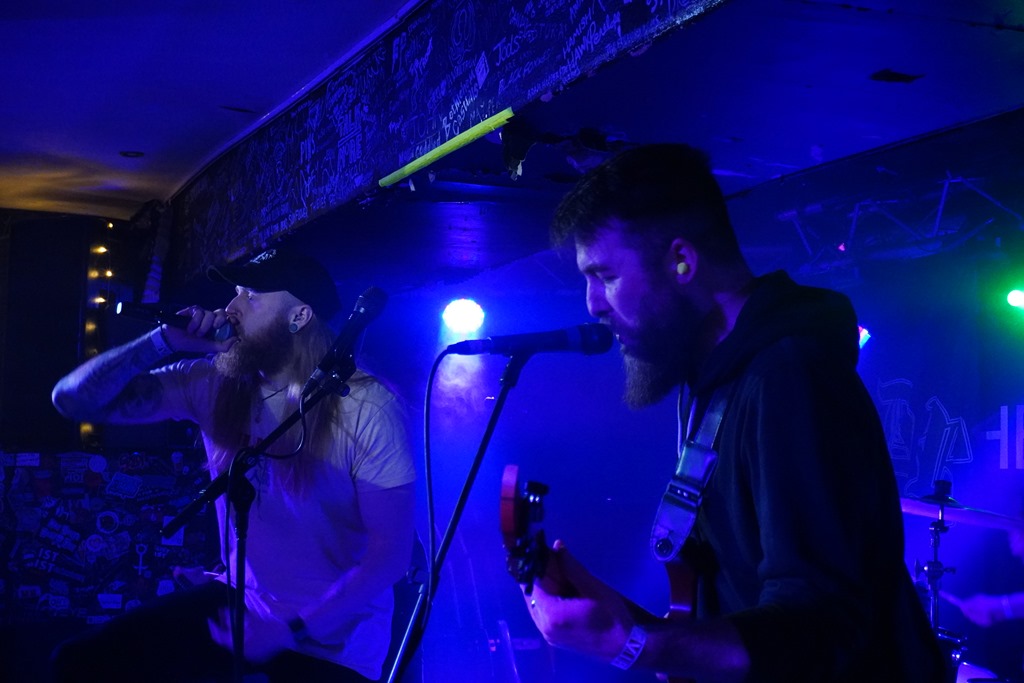
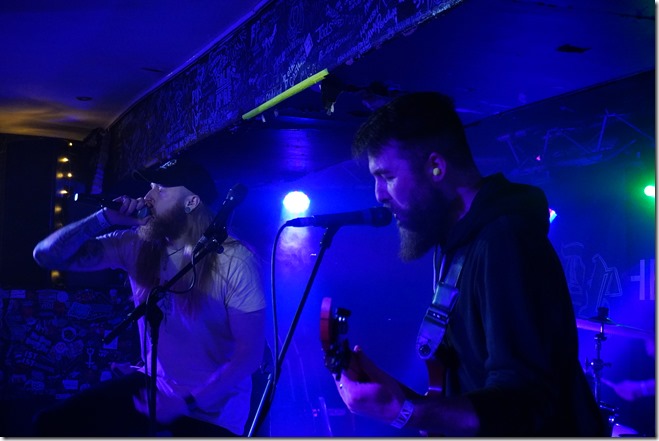
Next up, Theseus opened with samples and atmosphere… And then went heavy and the headbanging and moshing – or solo slam dancing – started. With 5-string bass and two 7-string guitars, they bring some chug and churn. The songs have a fair amount of attack, but their sound is fairly commonplace metalcore, the look being regulation beards and baseball caps. Fine if you dig it, but it’s all much of a muchness.
DSC00697

Theseus

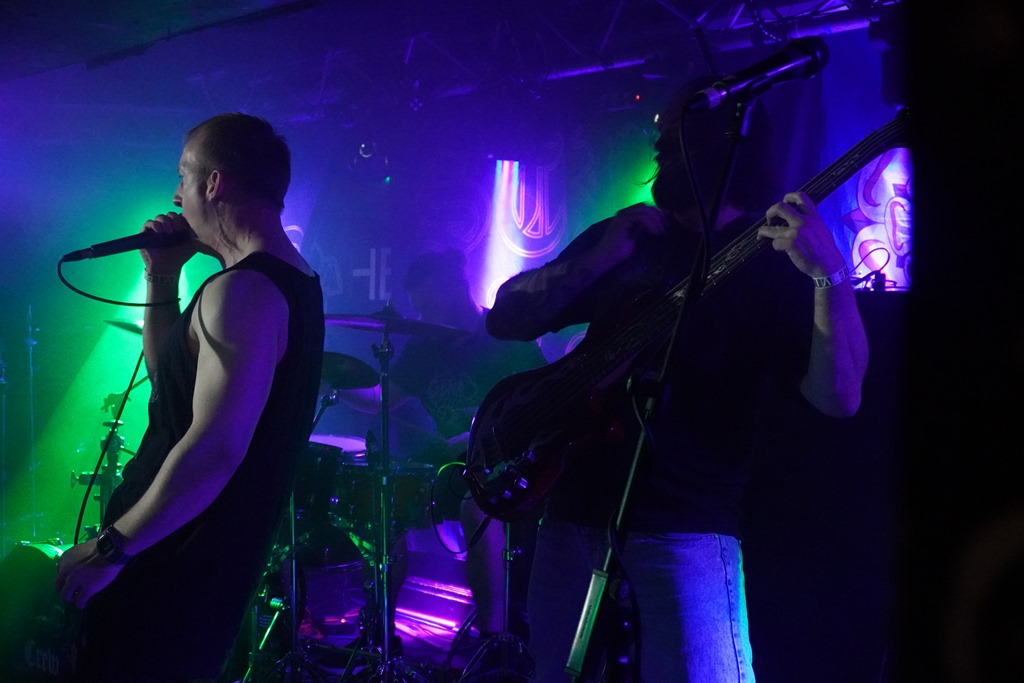
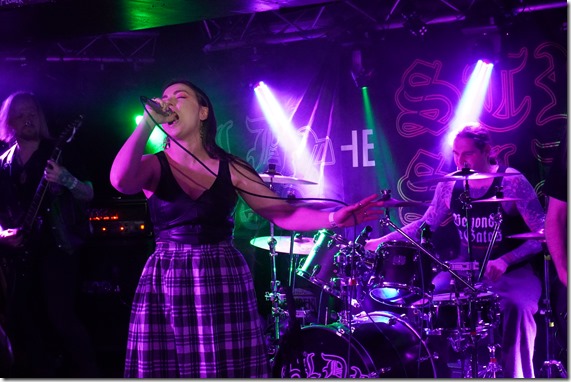
Miško Boba stand out, being the only female-fronted band – and indeed, the only act to feature a woman in their lineup – and also the only black metal band of the night. My mate shrugged and said that he simply didn’t ‘get’ black metal or its appeal, and it’s easy enough to see his point: as a genre it has a tendency to be pretty impenetrable. Misko Boba only accentuate the impenetrability with lyrics in Lithuanian, and they’re dark, the songs propelled by double pedal kick drum. But while black metal conventionally shuns any kind of studio production values, Misko Boba sound crisp and sharp through the PA, and are straight in, hard and fast, with raging guitars and demonic vocals. Epic blackness, and relentlessly fierce, and above the reasons mentioned previously, they’re a standout of the night for quality.

DSC00702DSC00717

Miško Boba

Final Words’ bassist has a hint of Derek Smalls about him, but with a 6-string bass and the biggest earlobe holes I’ve ever seen. The audience member who looks like he’s here for East 17 and keeps busting moves which are more like bad street dancing is bouncing around while they’re still setting up. They may have the grimy industrial hefty of early Pitch Shifter, but ‘motherfucker’ seems to account for sixty percent of the lyrics, and in terms of fanbase, they’re less industrial and more tracksuit and camos wearing, kick-the-crap out of one another metal and it’s carnage in the crowd. By now, the place is rammed, but there’s a good ten feet between the stage and the first row proper, with people staying back to avoid risk of harm from the increasingly wild scrummage down the front.
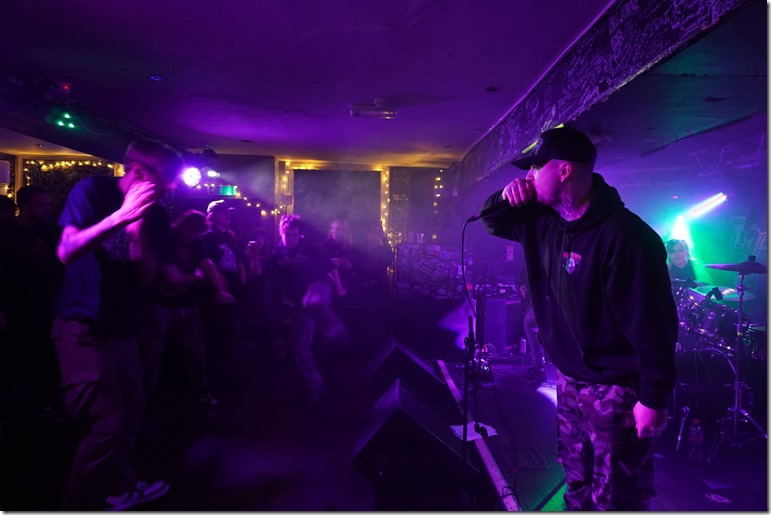
DSC00734

Final Words

It may have been after their set that the bar staff were out mopping the floor after what I had assumed was beer spillage, but transpired to have been the result of a couple of punters standing on a radiator to get a better view, resulting in the radiator coming off the wall and water from the broken pipes soaking the floor. And then of course, they legged it. It would be this story which would eclipse the night on social media and even make local press. It’s always sad when the actions of a small minority eclipse the representation of the majority. I don’t want to dwell on this, but by now the space near the stage was a high-risk area, and anyone with a camera was cowering in the small safe zone either side of the stage – which meant pretty much shoulder and ear to the PA stack.

Colpoclesis soundcheck the vocals with a handful of guttural grunts. They’re still setting up the drum kit ten minutes after they’re due to have started. Proportional to the stage, the kit is immense. It’s a lot of kit to sound like the click and rattle of a knitting machine. But they are, indisputably heavy, and sound nothing like the vocalist looks, blasting out brutal grindcore. Between songs, they sound like affable Scousers, then announce the songs in a raw-throated roar. There’s something amusing about this, in that stepping into the song they suddenly switch into ‘hard guy’ mode. Inflatable clubs suddenly proliferate around the venue and comedy violence ensues, followed by a circle pit.
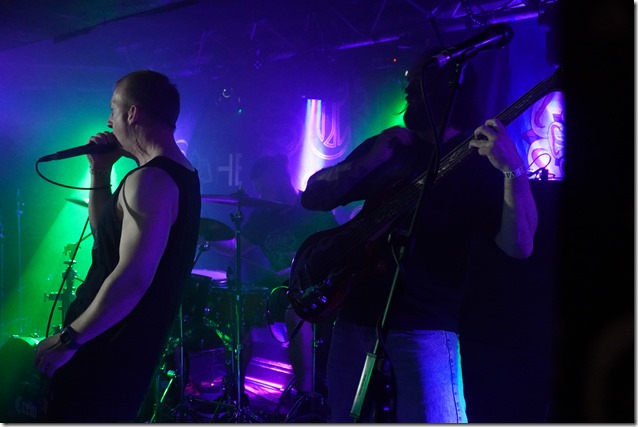
DSC00760

Colpoclesis

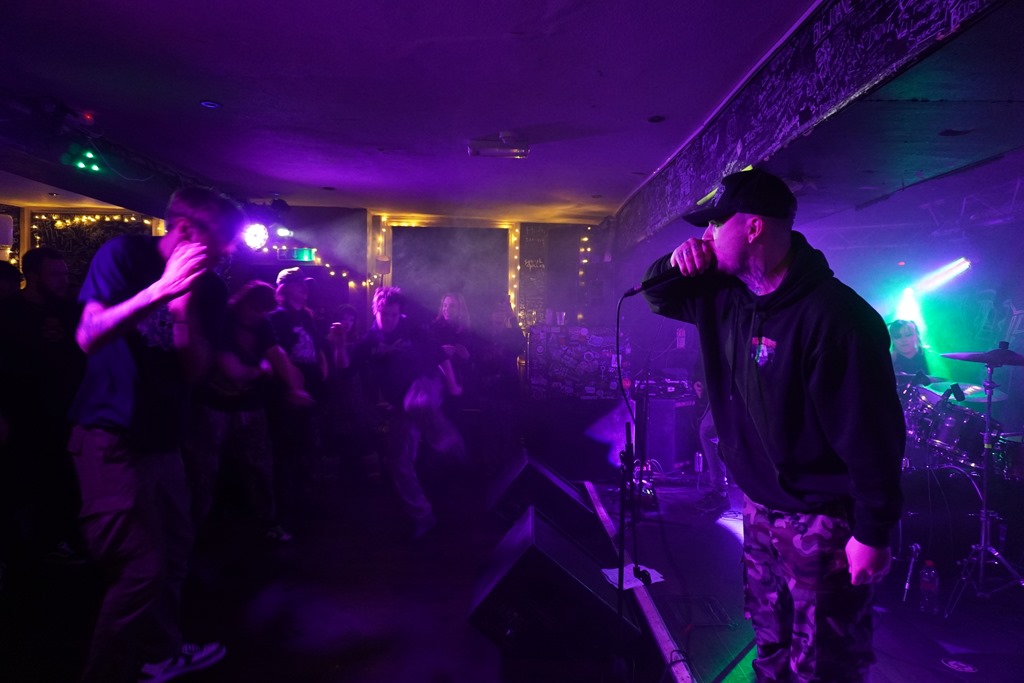
Street Soldier, I soon learn, are exponents of a new – at least to me – kind of hardcore. Alternating between quick fire tap and guttural metal, they whip up absolute carnage. A scan online suggests there is no such thing as tracksuit metal, but perhaps there should be, and defined as ‘grunty metal by people in vests and trakky bottoms and baseball caps shouting “c’mon, motherfuckers” a lot while people windmill and karate kick the crap out of each other with Nike trainers’. “I wanna see violence, I wanna see blood!” they exhort, pumping the crowd into a frenzy.

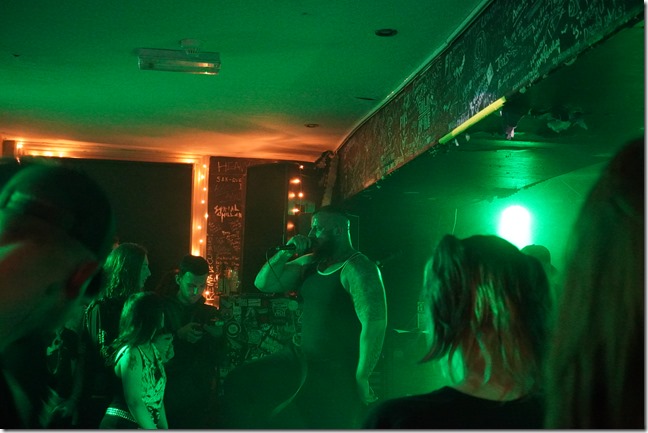
DSC00769DSC00787

Street Soldier

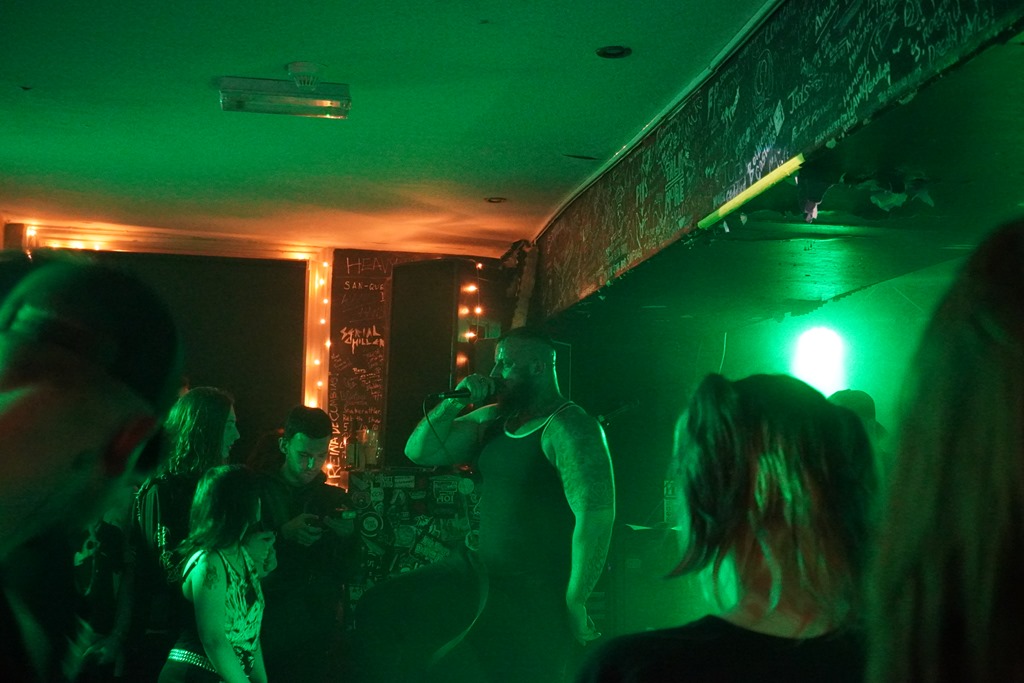
It’s difficult to put a finger on precisely why this doesn’t feel comfortable, but having recently extolled to a friend how metal gigs often felt like the safest of places, where people were ultra-considerate and kind to one another, united in their outsiderdom and sense of society being wrong. Sure, as with other moshpits, the fallen got picked up, but not before a few punches and blows, and however playful, I felt an undercurrent of senseless brutality, the tang of a lust for violence intermingled with the smell of sweat, and there was something dystopian, Ballardian about the spectacle. Having given up on fighting the man, Street Soldier,– as their Facebook page puts it, in ‘SPITTIN SHIT MADE STRAIGHT FOR THA PIT’ have adopted the self-aggrandising tropes of rap, and with cuts like ‘Middle Fingaz’, ‘Nonce Killaz’ and ‘Nah Nah Fuck You’, they appear to espouse anti-societal nihilism, but in a form that’s more aligned to rap than metal, while encouraging crowd behaviour which is more akin to blood lust and a reimagining of Fight Club than unity. Given the current state of things, it’s not that difficult to comprehend their appeal, especially to the under twenty-fives: smashing the living shit out of themselves and one another is probably far more appealing than whatever dismal prospects the future offers. But this is a bleak and nihilistic entertainment, and it sort of feels like torture dressed as fun.
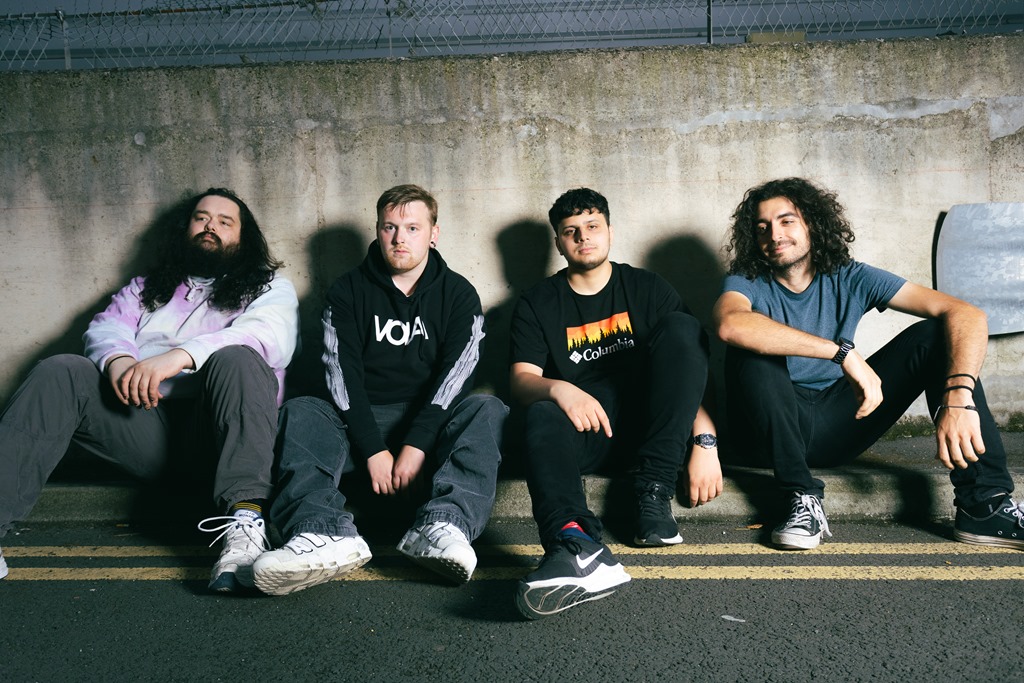
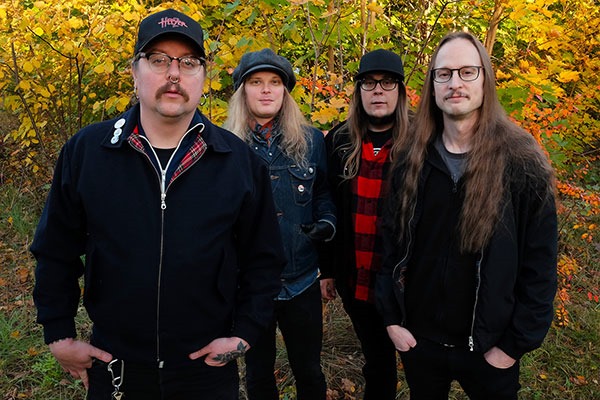
Finnish progressive heavy psychedelic rockers Craneium are thrilled to announce they’ve officially signed with Majestic Mountain Records. To celebrate this exciting occasion, the band will release their brand-new single Empty Palaces’ today, available on all digital platforms.

AA

In a statement from the band, guitarist Martin Ahlö shared: “A friend of the band gifted us a book on old Egyptian magick, and some of the spells carried really empowering messages. It also inspired the themes that we explored a lot in our music at the moment: the inevitable decay of mankind’s empires and monuments at the hands of nature and time.”

Drummer Joel Kronqvist added, “We’re beyond excited to share a new single called ‘Empty Palaces’ with the world. This track is the perfect blend of our signature 90’s edge mixed with the soulful, retro vibes of the 70’s.”

Known for their ability to seamlessly blend classic riffing with dynamic atmospheres, Craneium explores the ebb and flow of light and heavy, drawing inspiration from ’70s hard rock, ’90s desert psychedelia, and various other musical influences. Their sound stands as both timeless and uniquely their own.

Formed in 2011 in Turku, Finland, Craneium has made a name for themselves with electrifying live performances across the Nordic countries and Europe. Having shared the stage with acts such as Skraeckoedlan (SWE) and Mars Red Sky (FRA), Craneium continues to spread their powerful sound to fans worldwide.

The band has already released four albums and two split releases and is currently working on a new full-length album, tentatively scheduled for release in 2025, now under the wing of Majestic Mountain Records.

98ffeb0d-6ecf-8ca3-5538-d6cf590abf3b

25th October 2024

Christopher Nosnibor

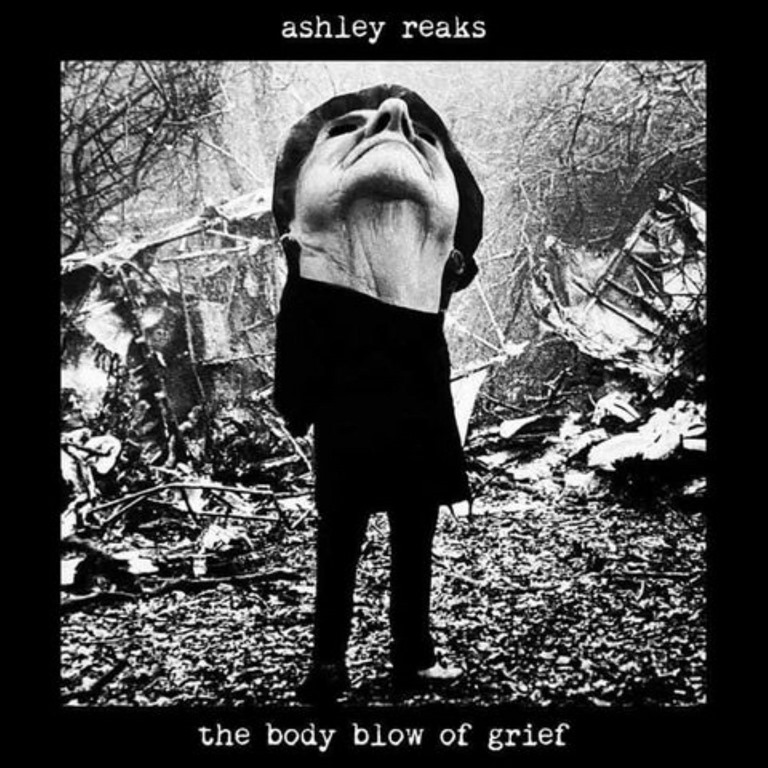
As is the case with his collage artworks, there is a sense of physicality about Ashley Reaks’ recorded work. His album titles tend to be brief but evocative, visually or otherwise: Compassion Fatigue; Track Marks; Growth Spurts; Winter Crawls… these are titles which evoke a sensory response – a shudder, a shiver, a skin crawl. The Body Blow Of Grief – Reaks’ fourteenth solo album – lands with an impact before you even arrive at the music itself.

I suppose – as is often the case when it comes to any music – there’s a personal element to my response here, and I make no apology for this. As I have touched on elsewhere, art is personal, in that it elicits a response which is unique based on a multitude of factors, ranging from life experience to emotional state and the mood of the moment. But the very phrase, The Body Blow Of Grief, lands like a punch in the stomach, and I’m aware that, while recently bereaved, having lost my partner of twenty-two years and adjusting to life as a single parent to a twelve-year-old, I am acutely sensitive to things which many others wouldn’t be. And yes, grief hits like a body blow. It knocks you, hard, socks the air out of your lungs and leaves you feeling weak, dazed.

Reaks’ music very much sounds like his artwork looks: a collage, a collision of styles, disjointed elements overlayed unapologetically; instead of smoothing over the joints, Reaks revels in the ruptures. Because this is where the vitality of life is found.

‘Home is Where the Hurt is’ may be a fairly obvious piece of wordplay, but the album’s opener digs deep into this seem, one which is a rich source of material in Reeks’ exploitation of trauma and its effects. ‘I can’t really feel what’s real’, he confesses against a backdrop of dubby bass and honking horns, before a shuffling beat settles into a tidy groove. It’s a bit Interpol meets Madness before lurching into post—rock territory and tapering out in a rippling tingle of layered guitar.

While the topics may be heavy, The Body Blow Of Grief is remarkable for its levity, its musicality, it’s easy tunefulness. I don’t mean necessarily that it’s all air and light – because it really isn’t.

There’s some quite tight, choppy, indie guitar on ‘No Place In The Nature Of Things’, a song that squirms and twists its way through almost seven-and-a-quarter minutes.

‘Somewhere To Hide Among The Swarm’ takes the bold step out into the swarm to offer some-full-on progressive rock flavours.

Across the course of the album’s eight tracks, Reaks walks through the familiar territory of previous albums with leaning toward dub and post-punk, but ventures into altogether newer territories with some spaced-out prog-inspired explorations, and ‘Hobbling Like A Refugee’ has an eighties feel that unexpectedly delves into electropop and AOR. It’s not polished to the levels of the 80s rolled-up jacket sleeve bands, but it alludes to the slickness of the era, but the dark lyrics are a stark and uncomfortable contrast. ‘Mongrel Nation’ is a slice of chunky post-punk laced with the bombastic excesses of Muse and a few jazzy twists.

The last track, the eight-minute epic ‘I’m Not a Fossil’ is a multi-faceted, multi-headed monster propelled by some strong technical dtrumming.

As always, Reaks presents us with an album that’s complex and layered, but The Body Blow Of Grief feels like a step up in the ways it opens horizons to new levels of boldness and ambitious sonic vistas.

AA

a1473578772_10

24th May 2024

Christopher Nosnibor

Welcome… to The Royal Ritual! I simply felt the urge to open with that. It felt necessary, if only to me. But if you can’t please yourself…

In my case it’s something of a belated welcome, having been aware of the act and its founder, David Lawrie for quite some time, but having only recently come around to the actual music, with my introduction being their recent show in York. There’s something to be said for hearing a band live first, without knowing the songs, rather than the other way around: if they can grab you in that twenty minutes or half an hour, when you’re not necessarily primed to absorb songs and details, then there’s a strong chance they’ve won a fan, provided the recordings are up to scratch.

Where The Royal Ritual really stand out live is with the use of live guitar, which brings the benefit of not only an immediacy and human aspect to the predominantly digital music, but an additional body on stage, which creates not only a visual balance but a greater sense of movement.

Recorded, these elements are less essential, and the songs here are clearly the product of extreme focus and a meticulous attention to detail. When I wrote in my review of the York show that The Royal Ritual sound ‘produced’, I observed that ‘their approach to production owes more to the methods of Trent Reznor as pioneered in the early 90s on Broken and The Downward Spiral, balancing gritty live guitars with synths and fucked-up distortion and harnessing their tempestuousness in a way that creates a balanced yet abrasive sound.’ And so it is on record, also.

Pleasure Hides Your Needs is The Royal Ritual’s second full-length release, following MARTYRS in 2022. A lot has happened, and much has changed since then, and the project, born in lockdown, has evolved significantly – as have many of us. Life is different now: that’s a fact.

We learn that ‘Pleasure Hides Your Needs sees David contemplate his own life and experiences, adopting a distinctive, more personal tone than the expansive and outgoing approach of MARTYRS: “Pleasure Hides Your Needs is much more introspective when compared to the social and political commentary of MARTYRS,” says David. “For me, it is about the closing of three distinct chapters of my life. Finding the common threads through each of those chapters in order to represent them sonically, and in a consistent way, was a really interesting challenge – if at times quite emotionally exhausting.”

Life is exhausting, in every way, but there’s a tense energy to Pleasure Hides Your Needs. It builds from the instrumental intro piece, ‘Shadow Self’, where crashing waves erupt from soft ripples, dark rumbles and inaudible muttering contrast with chimes, before ‘Vantage Point’ opens a broad sonic vista paired with a solid kick drum beat. Just as it’s leaning into the proggier end of alternative rock, a gritty guitar kicks in and the mood immediately turns darker.

‘Fifteen 14’ lands as an unexpectedly pop tune, with a solid chorus, which softens the arrival of the album’s nine-and-a-half-minute centrepiece, ‘Sinner Gambler Fugitive’, which really does run the gamut for range, a sonic and emotional rollercoaster. It’s ‘Modes of Violence; that goes full industrial, with a metallic smash of a snare and snarling bass providing the backdrop or Lawrie’s wrought vocal as he wrestles with a veritable tempest of emotion, before he hollows himself on the bleak, minimal title track.

The album as a whole is more geared toward tension than release, always simmering but rarely bursting the floodgates. Muted isn’t the word: it’s more a case of clenching tightly to maintain a grip of control for fear of what may erupt otherwise.

Pleasure Hides Your Needs is dark and exploratory, but still eminently listenable. As The Royal Ritual evolves its sounds and expands its horizons, there remains much potential to explore myriad paths in the future, and recent touring will likely serve to open new avenues of exploration.

AA

a0879761406_10

Bordeaux-based rock/metal band Seeds of Mary are back with a powerful new video for ‘Amor Fati,’ the first single from their highly anticipated new album, LOVE, set to be released on October 18th via Klonosphere / Season of Mist.

Directed by Thomas Duphil, the video for ‘Amor Fati’ delivers the big, bottom-heavy riffs that fans have come to expect from Seeds of Mary, coupled with dark and somewhat melancholic choruses.

Watch the video here:

AA

The band comments: ‘Amor Fati’ is the opening track of the new album. We chose it as the first single because it can be seen as a distillation of what the rest of the record holds: heavy riffs, haunting melodies, and ethereal atmospheres. Lyrically, it has a philosophical approach, drawing on the concept of Amor Fati dear to the Stoics and Nietzsche: ‘love what happens.’ The lyric video, created by our friend Thomas Duphil, features bodies in all their roughness and imperfections. This was the most obvious way for us to talk about self-acceptance, reality, and the trials of a fleeting life that leave their mark on our flesh. Each song on the album LOVE deals with a facet of love. Here, it’s perhaps its most intimate expression. And the fact that this track was written during the Covid period is probably no coincidence. We inevitably found ourselves confronting ourselves a lot during this significant time.”

LOVE, due out on October 18th, promises to be a defining moment in Seeds of Mary’s discography, blending their signature heavy riffs with dark, introspective lyrics and a raw, emotional edge. The album sees the band walking into heavier and darker tunes, incorporating more aggressive and screamed vocals, adding a new dimension to their already dynamic sound.

5442617f-7367-164d-4895-cefb15c847e1

No hype needed: new material from  AND SO I WATCH YOU FROM AFAR. Check it here:

AA

441964603_6593426110495_7554639745285294722_n

5th April 2024

James Wells

While firmly rooted in classic stoner rock, Gramma Vedetta’s latest offering, which follows on the heels of album The Hum of the Machine, which made number twenty-five in the Doom Charts (the existence of which is something I was unaware of), is an expansive, ambitious heavy prog monster of a tune. Yes, it’s over six minutes long and built around a big, swinging blues-based riff which displays elements of Led Zeppelin and Black Sabbath, but also brings in a hint of Pink Floyd in its widescreen feel. It also packs in a bunch of changes in tempo and transitions through a number of quite distinct segments.

Despite all of the elements having been done to death, ‘Don’t Cross the Line’ still feels like it’s doing something a little bit different, and, more importantly, it does what it does pretty well. Since it’s nigh on impossible to come out with something that’s entirely new – and even less likely to conjure something that’s new and remotely listenable or worth hearing – quality counts for a lot. Balancing beefy riffage with keen melody, ‘Don’t Cross the Line’ has enough to appeal to both traditionalists and those who like it with a bit of a twist, and that makes it pretty solid in my book.

AA

a0759497777_10

Exile on Mainstream – 28th March 2024

Christopher Nosnibor

Cutting straight in with a big old guitar chug is a bold and hard-hitting way to open an album. No intro, no preamble, just big, beefy chuggernaut riffery. Bam! I’ve no aversion to a bit of intro a bit of preamble, but it’s refreshing to hit play and be smacked around the chops. The sound – and style – is quintessential grunge, and that grit, that grain, it has a grab that’s more than mere nostalgia, it’s a physical experience. But it very soon becomes apparent that Sons of Alpha Centauri are no generic grunge template rehashers, despite their adept use of the quiet / loud dynamics: ‘Ephemeral’, the opening song, draws in elements of quite blatant prog and classic rock, with melodic vocals and a reflective refrain of ‘Ephemeral… we are ephemeral’ that’s unashamedly prog in its ‘big, deep philosophical contemplations’ approach to lyrics. It’s certainly more ‘Black Hole Sun’ than ‘Smells Like Teen Spirit’.

Pitched as a ‘natural evolution’ to predecessor Push, they proffer ‘a powerhouse of searing post hardcore, alternative metal and progressive hazy rock’, where ‘Across the album, Sons of Alpha Centauri capture both a renaissance of the 90s post hardcore of their Sacramento luminaries, and a contemporary take on atmospheric dream-like rock music.’

Across the album’s nine tracks they straddle genre boundaries in a way that feels remarkably natural. Time was that I would be turned off by an album that was heavy instrumentally but not so heavy vocally – meaning I’d have been a bit hesitant about this. But it’s a mistake to perceive clean, melodic vocals as somehow weak or a detraction, as I discovered from listening to The God Machine and Eight Story Window, and Jonah Matranga packs in some emotional integrity into a strong set of songs.

‘Ease’ brings a watery-sounding bass and big, chunky guitar, and the combination makes for an unusual and interesting textural contrast, while the title track rocks particularly hard, the distorted guitar positively buzzing the speakers, Matranga giving a taut, tense performance.

At times I’m reminded of Amplifier, and not only in their incorporation of space themes – only far grungier in their melding of flighty prog and ballsy guitar attack. The chord structures of the aching ‘The Ways We Were’ are reminiscent of Placebo, and while sonically and lyrically there’s no real similarity, something about the dynamics and the heightened tension that defines Pull do warrant comparison, especially the slower, sadder ‘Tetanus Blades’. Sitting in the very middle of the set, it makes for the perfect album structure, and it’s clear that Pull has been created, crafted, curated, as an album rather than just some songs. ‘Doomed’ brings delicacy and introspection, anger and anguish delivered with a downcast sigh and wistful guitars. On ‘Weakening Pulse’ the guitars shudder and shimmer, and there’s a blend of dark aggression and choppy accessibility about ‘Final Voyage’. With its refrain of ‘Regenerate, regenerate, regenerate’ I can’t help but think of Dr Who, but that’s no criticism, and despite the big, bold, ambitious songs and matching production, they manage to steer well clear of going Muse on us.

The songs are pretty concise – mostly sitting around the three-and-a-half to four-and-a-bit minute mark, but have all the hallmarks of bigger, more epic songs. Yes, the vibe is very much rooted in the alternative sound of the 90s, but painted with the broader palette of the twenty-first century, whereby more diverse and eclectic elements have come to be accepted. It seems strange to think in 2024 that back in 1994, rap/rock crossovers were pretty revolutionary, that the soundtrack to Judgement Night was groundbreaking. In time, it came to pass that we discovered more complimentary hybrids, and Pull is a demonstration of this. There’s much detail to absorb and these are very much early impressions – but with so much to assimilate, Pull has everything about it that makes for an enduring album which only digs deeper with repeat listens.

AA

920630

Mandrone Records – 22nd March 2024

Christopher Nosnibor

According to their bio on Bandcamp, the London trio’s sound is ‘inspired by the punch and grit of 90s alternative rock and eerie creatures of the mind’. But equally, they draw on 70s heavy rock to conjure dark and moody music that’s heavily concentrated on the power of the riff. They’ve been going a while now, emerging with a single release way back in 2015 and launching their debut EP some three years later.

‘Dame Paz’ is their first new material since their debut album, Completely Fine, in 2021 and continues the style of cover art depicting states of anguish, panic, turmoil – which is in keeping with the musical content, and in particular the lyrics.

‘Dame Paz’ is a six-and-a-half minute exploration of psychological anguish, and a collision of heavy rock, goth, and grunge. The dark mood and looming-on-a-precipice tension of the verses – primarily bass and vocal – bring shades of Solar Race, but when things build in volume, so does the sense of drama and theatricality, and they go big, and properly epic, even scaling up to operatic metal at times.

On paper, you might be inclined to think they’re a bit Evanescence or something, but Aliceissleeping do way more, demonstrating an eye-popping ambition and approach to scale which fully embraces the prog aesthetic. It’s bold, beefy, dynamic.

Frustratingly, it’s only been released on Spotify at the moment, which is a bummer if, like me, you’re a Spotify refusenick, or if you’re a band wanting to get paid for your work.

Aliceissleeping - Dame Paz - Single Cover

29th December 2023

Christopher Nosnibor

Alright, I’ll get the moment of amusement about the fact that US stoner / prog / space rock / psychedelic indie trio We Are Space Horses have a member named Kevin Vanderhoof out of the way before getting down to business – the business of getting to grips with this expansive seven-track EP, which sees the band really explore texture and detail across its duration. I make no apologia for my flippancy, since first and foremost, I’m here to offer a detailed and serious critique, and a small amount of levity is no bad thing.

The first track, ‘To Let Go… Absolutely’ is representative, beginning with a screed of noise which backs off to leave us with a simple acoustic guitar and wafting falsetto vocal. The vibe is very much 70s prog, accentuated by some bold guitar breaks over the song’s six-and-a-half-minute duration. It’s not so much leaning on this artist or that, so much as assimilating the broader oeuvre.

Bass and drum-led ‘Haunt’ mines some blued-based seems with some gutsy Led Zep-inspired riffology delivered with some serious swagger. The contemporary production values and overall gritty heft places it alongside the likes of Rival Sons. Now, on a personal level, I’m in two minds about the latest heavy blues revival and in particular about Rival Sons, and this comes from the perspective of someone who spent their early teens almost exclusively at pub gigs watching blues acts, electric and acoustic, and seeing countless blues artists in York around 2005, not least of all because every other pub was host to live acoustic blues at that time. And I learned you can have too much of a good thing.

We Are Space Horses are unquestionably a good thing, and that’s a fact, and best of all, when they transcend beyond the blues template to wander exploratory space, as they do on the meandering but beefy ‘God is a Ghost’ they’re hugely exciting.

If ‘Ketoacidosis’ is a bit standard alt-rock and is the sound of black-shirt wearing beard-sporting clean progressive metal, it is at least well-executed: there can be absolutely no doubting these guys’ musical competence or their capacity for dynamic structures, and the songs across the album as a whole are imbued with palpable emotional sincerity. ‘Stale Skies’ thunders in with an intro that’s pure Joy Division before pairing off towards something starker, sparser, more 80s AOR, but stretching its way boldly into more contemporary prog. Clean chords strike off in different directions as the bass rolls and strolls, moves and grooves before lunging in with some chunky distortion.

The vogue for epic last tracks may have become somewhat predictable of late, but I really can’t complain. Way back in the 80s, even, the killer epic longer last song by way of a closer became, for me, the mark of an album that was special. And of course, slower: from Duran Duran’s ‘The Chauffeur’ to The Sisters of Mercy’s ‘Some Kind of Stranger’, the extended, emotion-tugging closer emerged as a thing and over time, it’s become more pronounced, although I won’t suggest more indulgent – bands have simply created space to extend beyond their limits to deliver spectacular album finishes. And this is a spectacular finish to a spectacular album.

Apologia is bold, varied, and ambitious, and finds the band taking risks. More often than not, they pull them off, too, making for an album that’s bold, confident, and exciting.

AA

AA

a0967635177_10