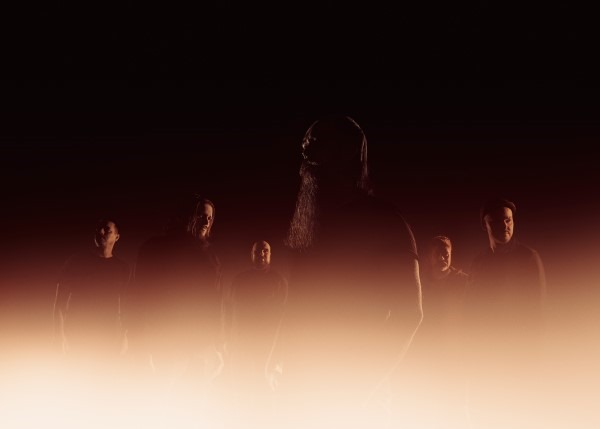
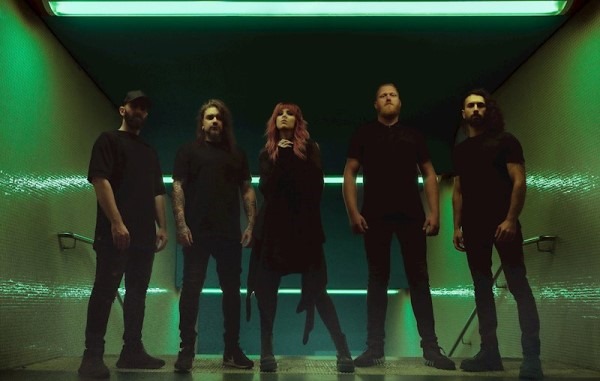
Hypnotic French Post-Metal quintet Uncomfortable Knowledge have a video out for ‘An Empty Heart Cannot Break’; the fifth and final single to be released from the upcoming sophomore album Lifeline. About the track the band expound that “To be able to accept love, to receive it and to give it weakens us. The phoenix, on the other hand, survives and is reborn alone, no danger because an empty heart cannot break. Therefore the title reflects the evolution of the narrator. He finally achieves a state of completeness and balance through the acceptance of love. He understands that far from weakening, his heart is only strengthened by it. Through a big riff, and an intense melodic progression, this piece aims to put us back on our feet in the face of life’s adversity”.
Watch the video here:
AA
With Lifeline, we are invited to think about our position in the world, about the meaning of our life, as well as the many sided interplays we may share with our fellow men, while remembering every instant counts. The album will also reveal baroque stringed settings and dark film atmospheres that will add a unique dimension to their sound and is an invitation to both perseverance and resilience.
The band have a series of gigs announced this year…
03/02/24 – Paloma – Nîmes – France 10/02/24 – Black Lab – Wasquehal – France 11/02/24 – MCP Apache – Fontaine L’Evêque – Belgium 16/02/24 – Dropkick – Orleans – France 09/03/24 – Ciné Concert – Ales – France 19/05/24 – AK Shelter – Nantes – France
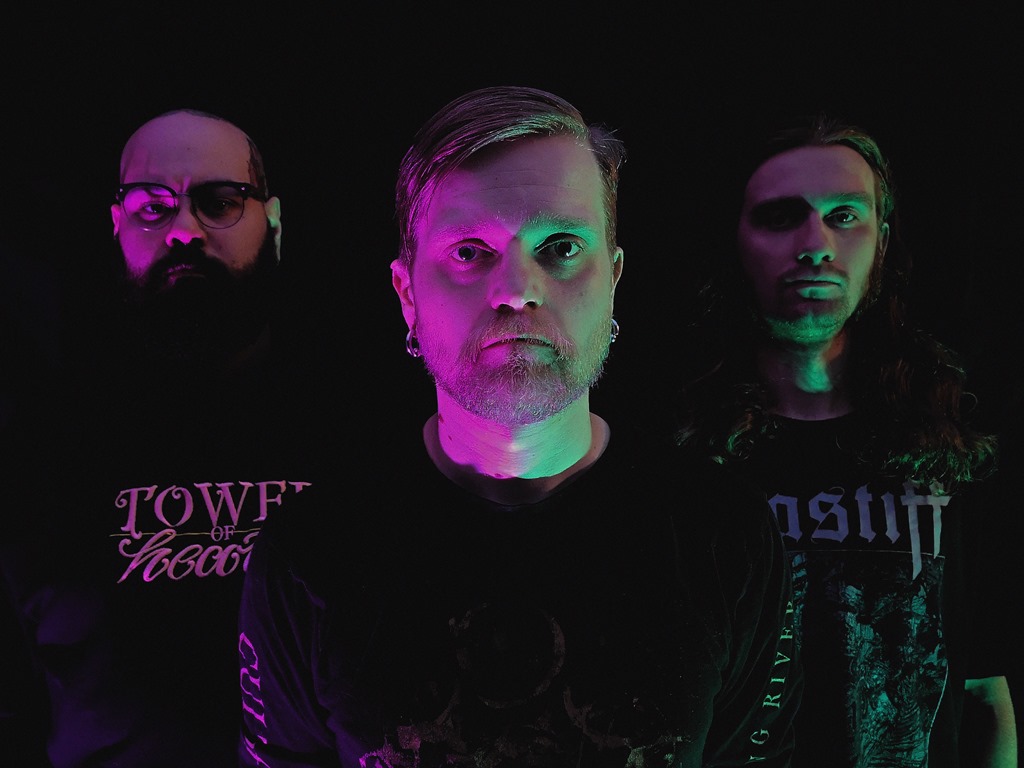
Finnish post-metal collective BESRA have recently shared a music video for a new song off the band’s second full-length album Transition, which was released in late September on Suicide Records.
Titled ‘Valor’, this new video was directed by Atte Heinonen and Ville Kaisla and is now playing here:
AA
The band’s vocalist, Hannes Hietarinta had this to say about this new track: "’Valor’ is a good example of the journey we have taken from our debut to the present: from a slow, almost sludgy post-metal groove to a dynamic, progressive, and tighter rhythmic groove. While the new album explores very vast landscapes, ‘Valor’ is definitely on the more energetic side thematically as well: the familiar melancholy and distress have been replaced with courage, honor, and a yearning for lost virtues. In our opinion, a tight song overall!”
Recorded at Rødhouse Studio and mixed and mastered by Cult Of Luna’s Magnus Lindberg, the follow-up to their critically acclaimed first studio album Anhedonia is the result of a long and arduous writing and recording process and sees BESRA circling through a vast spectrum of emotions and sonic textures encompassing elements of post-rock, post-metal and ambient.
The notes in the press release which accompany this release are strange and intriguing in equal measure, and pique my interest for all of the things they evoke, mysteriously and evocatively. The one thing they don’t really do, it set my expectations stylistically, which isn’t necessarily a bad thing.
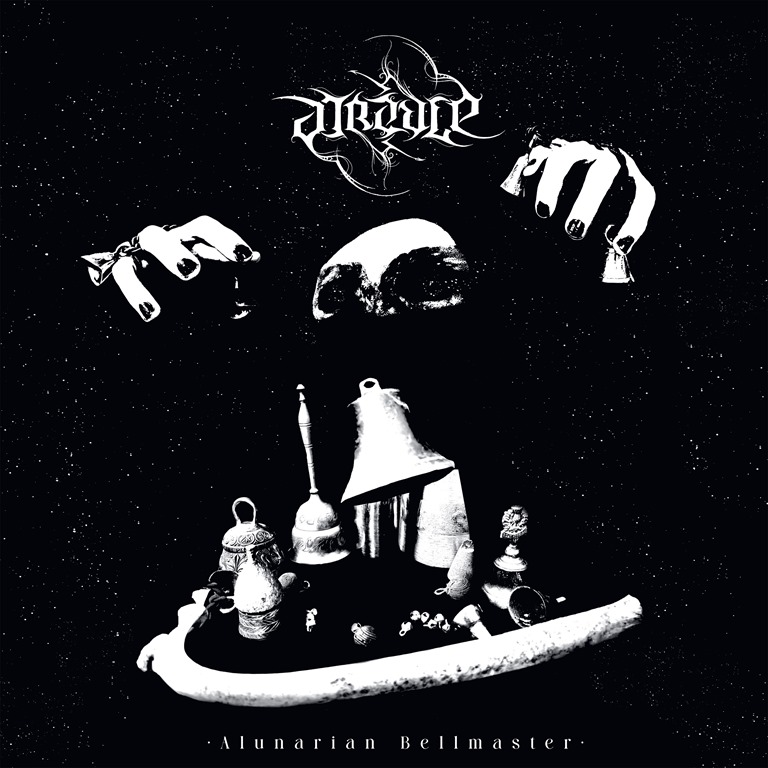
‘For whom the bells toll in the Citadel Alunar shall encounter the Bellmaster!.. The particularly sinister and insidious musical and lyrical universe that Markov "M.S." Soroka is continuously creating with his various projects AUREOLE and TCHORNOBOG as well as ETERNIUM, KRUKH, and DROWN is enriched by a new chapter… The third AUREOLE full-length Alunarian Bellmaster differs stylistically from its direct predecessor Aurora Borealis (2016) in atmosphere and feeling. The album returns to the spirit of the 2014 debut Alunar albeit as a more advanced version with the added experience regarding production techniques and conceptual writing that Soroka has acquired over the years.’
It goes on to explain how ‘Armed with a vicious sound, the album’s lyrical theme is echoed in the sound of 30 bells sampled by Markov and incorporated on Alunarian Bellmaster. The story told on this album is part of the same grimdark fantasy and science fiction based cosmos that AUREOLE and TCHORNOBOG share.’
I don’t know what even half of this means, and I can’t help but be a shade sceptical when bands talk of things like a ‘grimdark fantasy and science fiction based cosmos’. Either we’re plunging into deeply enigmatic territory here, and have perhaps gone beyond a point where lore and mythology and are merely influential elements to become something altogether greater, or we’re in the realms of self-absorbed pretentious guffery. There’s a fine line between high art and theatre, and wank.
In the event, the themes and concepts behind the album are very much that – to the back when it comes to the actual listening experience. The vocals serve as another facet of the overall sound rather than being pitched to the fore, and the titles, too, are sufficiently abstract as to be unobtrusive: that is to say, it’s possible to listen to and appreciate the album without becoming bogged down in any narrative or pseudomythos, while stylistically… well, it soon becomes clear why there’s no attempt to align AUREOLE with any genre. Just as ‘female fronted’ isn’t a genre, neither is ‘experimental’: these are adjectives, and it’s possible to experiment in so many ways within – or without – the confines of any given genre. But experimental, for many, brings with it connotations of happenstance, of the random, the arbitrary, and while the way in which samples and sounds are explored is experimental in nature, to define Alunarian Bellmaster as an experimental work would be to unfairly downplay the detailed, structured nature of the album’s many-layered and multi-faceted compositions.
‘Alunarian Ghosts of Bellmaster’ grows and swells organically from the drones of low ambience searing post-rock, only with ghostly There are echoes of guttural vocals reverberating in the eternal darkness. There are also echoes of Gregorian chants, and guttural mutterings, amplified and reverberated to a colossal scale, which very swiftly swells to become something truly immense. This in itself is a difficult thing to process, even in isolation. In context – an ever-evolving one, where the sounds and textures shift imperceptibly – we find ourselves adrift and in motion through an expanding alternative universe.
The thirty sampled bells are multiplied – and multiple, and multiplied again – to create the immense sound of ‘10000 Bells Resonate Cosmos Untold’, a title which sounds like a phrase from a William Burroughs cut-up. Muttered voices, uttering in an unknown language, flit in and out of earshot. ‘Arrival of the Deathless Interlopers’ is a bold, surging piece of grand proportions and high drama, which isn’t only spectacularly cinematic, but a sweeping piece of neoclassical music which evokes the same stirring of the senses as Mars from Holst’s Planets Suite. If there is a sense of narrative flow between the pieces, then ‘Orbiting Among Alunarian Ruins’ tells us that not everyone here is deathless, as purgatorial howls and screams swirl in a pitch void, from which emerges a big post-metal riff with an atmosphere reminiscent of Field of the Nephilim at their most doomily bombastic. At nearly ten minutes long, it is epic in every sense, while ‘Alunarian Surrender’, another ten-minute monster soundtracks doom and destruction in slow motion against a backdrop of contemplative strong sounds before everything is obliterated by thunderous percussion and slowly the tide turns to another soaring expanse of post-rock with the darkest, most sinister undercurrents. ‘UGC 2885’ is a last piece truly worthy of the word ‘finale’, almost fourteen minutes of dark ambience, through which a piano echoes into nothingness, through the sound of matter slowly collapsing in on itself.
I’ve harped on about my appreciation of physical releases a fair few times here, and while I am myself striving to declutter my home of late, miscellaneous crap is more clutter than collections. Placing CDs and records snugly on shelves satisfying, and collections are the culmination of what can be a lifetime’s work. I started collecting at the age of around thirteen, having discovered The Sisters of Mercy via Floodland, and the fact that they had a significant back catalogue which wasn’t available on cassette in WHS or Boots, and so started hitting record fairs, which were commonplace at weekends in the late 80s and early 90s.
But while vinyl and cassette have been enjoying a sustained renaissance, CDs remain at a low ebb, and this is a sad state of affairs. Considered by many to be inferior by virtue of their clinical, impersonal nature, they’re the perfect balance of a physical format, and practicality, in that you can skip tracks, for a start.
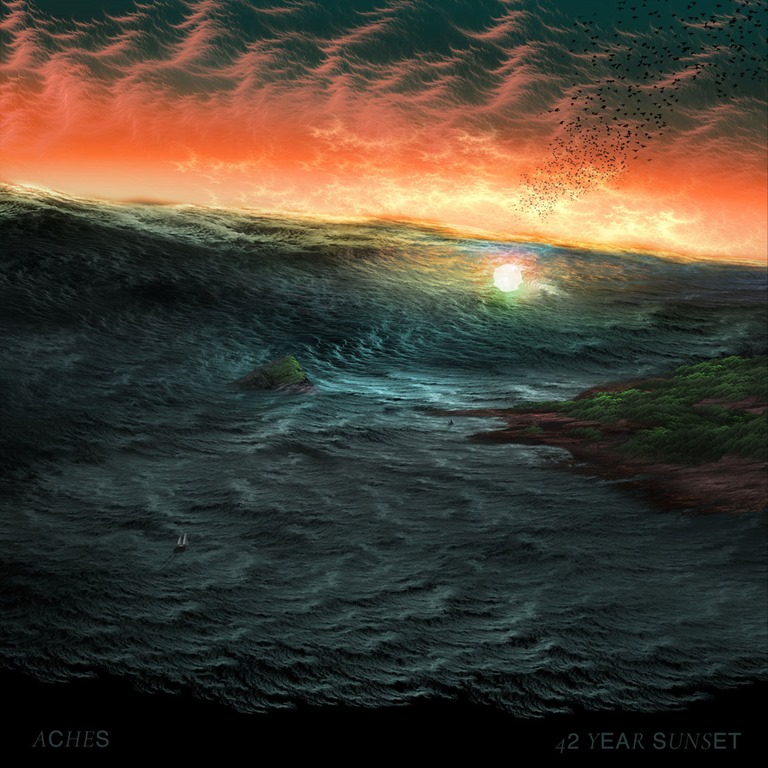
Receiving a CD copy of Aches’ release through my letter box truly made my day, initially for the simple reason that this is a wonderful physical product – a hand-numbered digipak with a nice sleeve, with a Japanese-style wraparound strip, although it’s not an Obi but a semi-opaque slip which bears the band logo and the track listing. It has quality written all over it, and it’s a joy to hold it. If it sounds like I’m being a physical format enthusiast wanker, so be it: the element of tactility is completely absent from the streaming / download experience, and those who have never experienced it are missing out.
And so turn my attention to the band – well, another experience, but of a different kind. Aches aren’t quite a supergroup, but featuring members of Helpless, Gunderson, The Imperfect Orchestra, and Caracals, they are very much a new hive mind collaborative collective that represents the best of the Plymouth scene – a city which isn’t particularly renowned for its musical exports, but did bring us the unparalleled Cranes at the very least. Aches are a whole lot heavier than Cranes, though.
Heave-ho! ‘Sky Shanty’ comes in hard with a roaring grunt and heft that strains the guts and blasts on a tidal wave of brutal black metal guitar. The roaring impact is enough to stop your breath for a moment. The band’s bio explains how they draw inspiration from writings on capitalism, neuroscience, and drug use, as well as from personal experiences and research on mental illness and suicide, and that this release ‘responds to the feeling of hopelessness we feel, as combating climate change is increasingly minimised by those in power in return for gargantuan profits of archaic industries…’
It may be an incorrect and assumptive joining of the dots to suggest they’ve individually been impacted by these in various ways, but when one in four are likely to suffer mental heath issues in any given year, it’s not unreasonable – but it’s reasonable to recognise the fact that any release which confronts these issues is culturally critical. And those feelings of hopelessness… One suspects they’re widely relatable, and anyone who doesn’t clearly has too much money, and this is about you.
Aches don’t require a trigger warning: life doesn’t come with trigger warnings, after all. But Aches confront all of the topics head-on, and 42 Year Sunrise is hard, heavy, unflinching.
If ‘Sky Shanty’ is fucked-up post-hardcore noise rock, then the brutal ‘Bruxism’ start out hard and heavy before drifting into softness. I’m reminded more of Bjork and Zola Jesus during this soft close. Spinning together dramatic post-punk and elements of post-rock into a multi-faceted roaring torrent of raging anguish which essentially encapsulates the essence of 42 Year Sunset. ‘Bruxism’ is a post-hardcore explosion; switching rapidly between psychotic mania and theatricality, equal parts Dillinger escape Plan and Muse via Oceansize. To pack this much into just over four and a half minutes is a monumental feat which evidences just how articulate and accomplished this release is.
The shortest track is also the heaviest, with ‘Is That It’ bringing a barrage of crushing riffs and packing about three songs’ worth into less than two frenzied minutes, before the monster title track brings forth absolute devastation. It’s a slow, heavy, monotonous crawler that slugs relentlessly. The way the drums roll and patter busily while the guitars grind at a snail’s pace and you feel this pulling at you slowly like a thread tied to your intestines. Five minutes in, the bass cuts in low, slow, dark and heavy, and by the eight-minute mark, it’s burst into a shrieking riot of demonic torture that’s gother than goth: it hurts.
With 42 Year Sunset, Aches articulate the anguish of feeling utterly powerless in the face of everything as it piles up, end on end. It packs so much force, and it hurts. Aches bring the pain, and this is a phenomenal debut.
German post-metal collective Unverkalt today share a new music video for a song titled "Mass Hysteria", which is taken from the five-piece’s second album A Lump of Death: A Chaos of Dead Lovers released on October 20th via Argonauta Records.
Directed by Yiannis Margetousakis & Thanos Liberopoulos, this new video has premiered at Visions Magazin and is now playing here:
AA
Originally from Athens, Greece and recently relocated to Berlin, Germany, this post-metal collective draws influences from the European cinema, art movements, and human experiences, to churn out an emotional and cinematic post-metal sound.
Established in 2017 by guitarist Themis Ioannou and vocalist Dimitra Kalavrezou in Athens, Greece, they were later joined by guitarist George Stamkos and started the recordings of their debut album L’origine du Monde, which was released in November 2020.
Shortly after the debut album’s release, Unverkalt entered the studio to record their second full-length studio album in Berlin, Germany. Bassist Spyros Olivotos joined the group in 2022, contributing to the final touches of the new album.
Titled A Lump of Death: A Chaos of Dead Lovers, this new effort was recently released by Argonauta Records and revolves around a theme that is gruelling, powerful, and intense in all of its aspects. This album’s specific plot is influenced by the 70’s and the flowering of the cult community, and the acts of criminals and serial killers at that time. Most of the lyrics are influenced from that period of modern society.
Consisting of seven hymns, A Lump of Death: A Chaos of Dead Lovers signifies the ultimate blend of post-metal, avant-garde, and alternative sound with a distinct cinematic character and an atmosphere inspired by the dark 1970s decade.
Revelling in a blend of atmospheric textures & powerful sludge riffs… After venturing through the vast scope of heavy music and experimenting with their sound, Gozer’s vision was realised with the album An Endless Static released in 2022.
Receiving praise from the likes of Metal Hammer, Metal Injection, Invisible Oranges and more for the album’s dense sonic power, song structures and emotive depth.
GOZER are now set to release their continuation in the EP ‘THE PATH ALWAYS LEADS TO THE END’ building off the themes of mental health found throughout their first release this EP’s subject puts more focus on passing on and with it the unknown of what comes next.
"A Lot of us have our own notion of what comes after we pass, some people find comfort in the belief of some form of afterlife beyond what we could ever experience in this mortal coil, others may simply believe we return to the earth and the cycle of life continues. I’m still undecided about what happens once we breathe our last breath but I know that creating something with people means a great deal as all we truly leave once we are gone, are the people in our lives with who we shared our passions, successes, losses, joy and sadness but above all else our love.” – GOZER
The Path Always Leads To The End will be released on the 3rd of November. Recorded & mixed by Tj Fairfax and mastered by Magnus Lindberg.
‘Celestial River’ is the first single to be shared from the EP with the band adding,
"’Celestial River’ was one of the first tracks we wrote after finishing our album An Endless Static. Originally it was going to be instrumental, but Kez came with these great lyrics that summed up how life pushes you forward. There’s always obsticals but if there’s a way to embrace them we can hopefully be happier when we look back on our journey”.
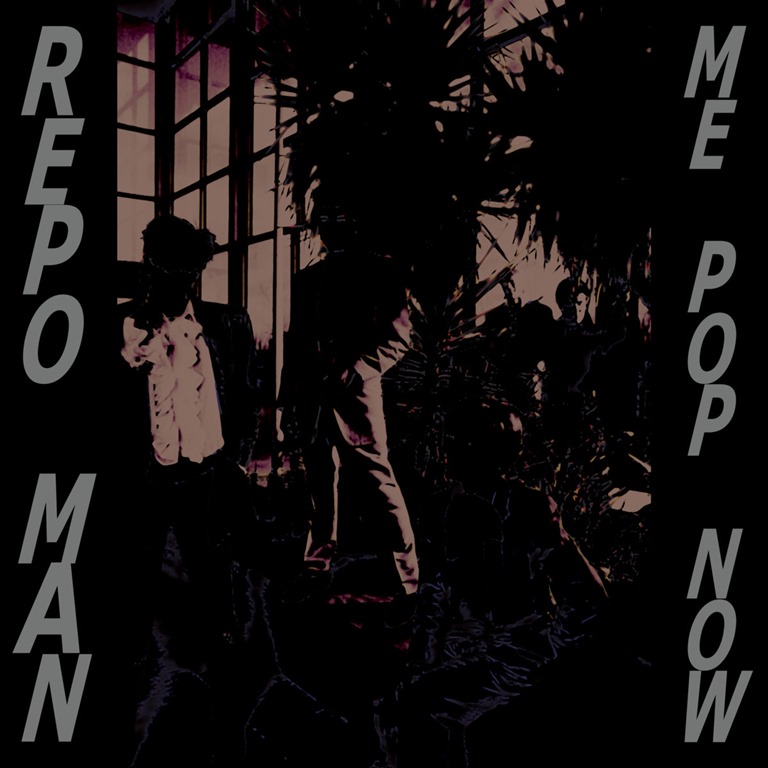
Cruel Nature keep the good shit coming with this absolute monster of discord courtesy of Repo Man, who are new to me despite their twelve-year existence. According to their bio, ‘
Repo Man emerged in Bristol in 2011, reshaping ‘rock groop’ sturm-und-clang into subnormal forms, son-of-Oldham vocal slurries, oozing free sax splatter and shards of punishing guitar bliss. If you ever freaked to The Fall, Sonic Youth, Swans or Ornette Coleman then Repo may be your ticket to oblivion.’
I’ll admit, the title didn’t entice me, perhaps because it reminded me of the narrative form of the impenetrable and truly awful Chick Palahniuk novel Pygmy. I write that as a huge Palahniuk fan, and despite having found both Pygmy and Adjustment Day to be so dire that I have up fairly early, I’ve devoured everything else h’s written and have the ultimate admiration for the fact that he will try something different with each outing. It’s testament to his creative integrity that he doesn’t simply rehash the same winning formula.
This is also true of Repo Man, presumably named after Alex Cox’s 1984 cult classic movie. Wikipedia describes it as a ‘science fiction black comedy’, and in this context, the band’s fourth genre-smashing noise explosion album makes sense.
We’re eased in gently with a slow, trepidatious atmospheric twang before, thirty seconds in, ‘Back on the Meat’ explodes in a chaotic frenzy of pure mania. It’s all going off all at once, the jolting sinewy guitar mess of The Jesus Lizard and Blacklisters cut against a stuttering percussion. Things stay schizophrenic with ‘Simian’, which is rather more of a hectic math-rock persuasion, the guitars jangling but jarring and the bass kinda groovy, sort of like Gang of Four gone wrong.
How to pitch this? The vocal delivery is sort of spoken word, like John Cooper Clarke on acid, while the musical backing veers all over, from slugging post-metal to avant-garde via mathy post-punk… The first ‘Pop Me Now’ and ‘Me Pop Now’ (the fact there are three of each scattered across the album only adds to the overall bewilderment that this album cooks up in a cauldron of chaos, but also serve as a thread which weaves the album together in a loose sense) are but brief interludes, wedged back-to-back and packing industrial Krautrock oddness and squalls of feedback into a couple of minutes, and then ‘Butter Pump’ bursts in and brings a blast of brash brass, but there’s blustering bass and all sorts happening in this psychotic sonic collision. Me Pop Now is without question the most outré album I’ve had the joy of running into in a while, happily reminding me of the most mental shit of the 90s – I’m talking about the likes of Trumans Water and Terminal Cheesecake. When a friend – younger than me – asked why I thought being the age I was in the 90s was exciting, I went with the obvious response of the way Nirvana and the whole grunge thing changed the face of music. I forgot to mention that reading Melody Maker, I discovered the weirdest of shit, and it was noisy and crackers and nothing like most of what passes for alternative now. Pummelling programmed beats are assaulting my ears as I realise that Repo Man capture that whole off-the-wall musical experience, the likes of which I haven’t had since listening to John Peel in the early 90s. And while I’m not one to harp on about the past – at least not in the sense that ‘music’s been shit since I turned thirty’ whining – Repo Man evoke the spirit of the 90s in their approach.
It’s taken me a while to warm to jazz-flavoured stuff, although I suppose seeing Gallon Drunk on SNUB:TV in the early 90s was the first time I saw how jazz and noise could be fused to powerful effect. I was blown away by the intensity, and it’s that intensity that Repo Man replicate: yes, there’s jazz and art rock and stuff that some might find pretentious all going on, but what stands out is that this is a set of driving rock tunes, albeit of an extremely alternative persuasion.
And how the hell do you fuse ska and jazz – and make it work? It shouldn’t be possible, yet on ‘Sirhan Sirhan’, they achieve it, and then spin off in a skewed manic math-rock direction.
It’s deranged and demented, and impossible to guess the direction they’ll blast in from between one song and the next, but it works, perhaps because the noise leads and the jazz is more of an infusion: ‘Ratsgrave’ and ‘The Blues Lawyer’ are simply a straight up angular noise driven by chunky churning bass with shouty vocals that sit squarely in the territory of Shellac and The Jesus Lizard, with enough chops and changes to induce whiplash as you try to keep up.
I’m late to this one, but make no apologies for this. While the majority of my peers bemoan the fact that there’s been no good music released since, oh, they turned thirty-five or thereabouts, as I’ve mentioned on numerous occasions, I’m finding the opposite is true. I am absolutely overwhelmed by the sheer volume of new music being released, and it’s music of quality. None of it will get within a million miles of the charts, most of it won’t achieve a single radio play, and they’ll be lucky to make 3p off Spotify (but then, that goes for pretty much any act).
But the pitch for Voyage is exciting: ‘The release is a 39-minute inventive and powerful musical experience, journeying through the realms of prog, metal and post-rock, masterfully weaving from pounding and fierce polymetric metal through sprawling and irreverent groove-laden riffs to beautifully captivating melodies.’
Following three purely instrumental EPs, Voyage is the band’s first release to feature vocals, and as the bio details, these are covered ‘with guitarist Markus Lillehaug Johnsen handling all clean vocalizations while guitarist Martin Rygge (who also handles guitars in grindcore group Beaten To Death) providing the fiercer screams’. They also explain that ‘It’s also the first release to be written with the bass lines in mind. Previous effort “Sylvain” was pivotal to this change, when producer Danne Bergstrand and Meshuggah guitar extraordinaire Fredrik Thordendal thought the songs lacked some bass frequencies and Thordendal steeped in to play bass on the EP.’
It strikes me as funny to think that basslines may be overlooked in a compositional context, but there you go: every band is different and some simply focus on the foreground, like bad painters or writers who forget to fill in any background detail to focus on the actions of the characters. The bass is what holds everything together, and not just in a dance context where people rave about the bass: the bass is the backbone. And so it is on Voyage, a jolting, jarring mess of twisting noise that straddles post-rock and post-metal with a hefty dose of jazz lobbed into a mix that’s airy and expansive and of clear appeal to both those who appreciate shoegaze and post-metal.
The lead guitar parts are soaring and light, and spin contrails thousands of miles above the crunching bass and pulverising drums. Echo-heavy vocal samples wash in and out in a way that calls to mind Maybeshewill, but there’s also a dreamy psychedelic hue evident from the start, as on the dreamy but heavy ‘Blue Desert’. There’s no shortage of chunky riffage, with thickly distorted guitars driven by rolling drums, but there’s lightness and texture as the interplay between lead and rhythm creates a compelling dynamic, and the same is true of the contrasting vocals. There are some unusual juxtapositions, too, with clean mellow vocal passages floating over some of the grittiest, grainiest, heavyweight sonic tempests going. There are details to be found among the din; the way the sounds, the frequencies, the notes resonate and bounce off one another is integral to the soul of the way the band play together.
There are also moments where they conjure vast, sweeping sonic vistas, as on ‘Vertigo’, and the joy of Voyage is in hearing musicians displaying remarkable technical skill without the music being excessively technical (for me, there’s a point where technical simply isn’t fun to listen to, where technique and extravagant complexity take primacy over the compositional form. Because you can play difficult stuff fast is all well and good, but it’s pretty useless if you can’t write tunes). Voyage has tunes, and it has range, too – but the way the songs are structured shows that they’re mindful not to pack too much range into each song, and have a sense of how much is too much as they navigate the transitions between individual passages. The climactic closer, ‘Grant the Sun’ is a worthy finisher, a monumental sustained crescendo of incendiary power.
As such, Voyage is appropriately named, as it represents a monumentally transitional spell for the band to the extent that they’ve evolved – rapidly – to become an almost entirely different entity. There’s a sense that their journey will continue, but for now, it feels like they have found territory well worthy of further exploration.
From the very opening bars, you get a sense of expanse, of importance. A certain flexing, you might say. But is this real, or is it bombast and posturing? Is this, as the title suggests, a false haven musically, or is it a work which explores darkness. Can we trust Vorder? Can we trust anyone?
They emerged from the Swedish underground hardcore scene of the 90s, with the band coming together before the turn of the millennium, albeit with a different rhythm section. According to their bio, ‘What started conceptually over 20 years ago as a straight path towards a better life with a socio-political agenda has during the years evolved into a realm of survivalism in an ever-increasing nihilistic environment.’
This does very much feel like a fair summary of the last two decades: whatever optimism – or fear – the new millennium brought, I don’t think even Nostradamus could have predicted the global lurch to the right and the warzone that the Internet has become. And these are simply the tip of the iceberg. Recent history, and the present, is not littered with atrocities: it is one, continuous atrocity. Simply getting through a day in the world in which we find ourselves feels like a major achievement. And with False Haven, Vorder have navigated this brutal terrain with an album that’s textured, contemplative, and monumentally forceful.
Opener ‘Introspective’ is a mammoth cut, with an epic build and a super-spacious production. The weight of the riffage drops just over the minute mark and it slams in on the same grand scale as Amenra, and the strangled, strained, rasping vocal, low in the mix, are also in the same vein. There may be a certain level of grandeur and elevation to this, but it soon becomes clear that this isn’t mere theatre: this is heavy, expansive music born out of sincerity.
‘Beyond the Horizon of Life’ begins with a slow, picked intro, brimming with atmosphere and reminiscent of Fields of the Nephilim but of course, equally, Neurosis. The surge of power that bursts is an explosive release of tension, a rush. ‘The Few Remaining Lights’ is an eight-and-a-half minute epic that delves dark and deep and with segments of clean vocals that radiate emotion – and the more delicate passages mean that the raging torrents which follow have even greater impact.
The title track, slap in the middle of the set, is also the album’s shortest, and it’s a thick, chugging sinister slow thrash chug – but there’s some melodic lead guitar work that lifts it, and it’s nuanced work that’s not the commonplace fretwanking. The detail of the compositions is something which really stands out across the album’s six tracks. There are many segments woven together, but there’s a flow to each of them, meaning that each song feels like there’s a sense of progression, of evolution, rather than chopping and changing and packing in switches for the sake of unnecessarily showing off technical skills as so many metal acts are prone to. In this way, there is a sense that each song is a journey.
This is nowhere more apparent than on the final track, the ten-and-a-half-minute ‘Come Undone’ – which most certainly is not a cover of the Duran Duran single. They really take their time over this one, drawing out the most tension with a slow, solo picked guitar intro which paves the way for a monumental riff-fest, which – in an unexpected twist – transitions from being another Neurosis-style cruncher to something altogether more a kind of post-metal/grunge crossover.
As it tapers out, the silence gives pause to reflect: it’s not an easy album to process, because while it does sit broadly in the post-metal bracket, there’s a lot more going on, and it’s done in such a way as to seem natural in the transitions, when on paper, it shouldn’t always work. But why not? It’s music: there are no limits. Music may have become a commodity, because capitalism has conquered all, but at the heart of it, music can, when it’s not being used as sonic wallpaper or for marketing or cheap entertainment, be an outlet, and a medium by which it’s possible to articulate something beyond words. And this is what I get from False Haven: the sense that Vorder are a band compelled to create to have an outlet, and they don’t care whether it conforms to one genre or another. They truly do not give a fuck. False Haven is an album which had to be made, rather than being an album they thought they should make. And that’s what makes it such a powerful work, and as real as it gets.
Dymna Lotva unveil the highly symbolic video ‘Death Kisses Your Eyes’ (Смерць Цалуе Ў Вочы) as the second single taken from the Belarus duo’s forthcoming new album The Land under the Black Wings: Blood (Зямля Пад Чорнымі Крыламі: Кроў), which is slated for release on August 4, 2023.
Watch the video here:
DYMNA LOTVA comment on ‘Death Kisses Your Eyes’ (Смерць Цалуе Ў Вочы): “This song is dedicated to the memory of the Belarusian protest activist Roman Bondarenko, who was killed by the Lukashenka regime”, vocalist Katsiaryna “Nokt Aeon” Mankevich states. “Roman’s last words were a message in the neighbours’ chat, ‘I’m going out’.
When unknown people arrived in his yard and began to destroy protest art and national symbols which were jointly created by the residents of nearby houses, he could not stand aside. When Roman Bondarenko left the house, he was brutally beaten and abducted by unidentified men wearing black clothes and masks. Roman died from his injuries the next day, on November 12, 2020. On the same day, the first demo of this song was mixed. The song’s lyrics which are carrying the words ‘those who wear midnight will take you away’ and ‘let’s go’ were too reminiscent of his story. The video clip was created by the photo artist Jay Flokker. It was not originally conceived to be shown alongside this song, but we felt it to be very appropriate as it is a strong reminder of the struggle of the people of Belarus and their national symbol, our flag with its white, red, and white stripes.”