Posts Tagged ‘Pain’

Fysisk Format – 12th December 2025

Christopher Nosnibor

I’m not being flippant or facetious when I say that we don’t contemplate or discuss death nearly enough. It’s only natural that we – all of us – are scared by the prospect, be it of losing a loved one, or one’s own demise. The concept of no longer existing is beyond comprehension. No-one has ever reported back on what happens afterwards, although the notion of an afterlife is at the core of many faiths and belief systems, and people believe because it gives hope. the alternative, being a definitive end followed by absolutely nothing, is almost too much to bear. And so the tendency is to bury heads in the sand – metaphorically – and to assume – especially in youth – that we’re immortal.

But we are not. I myself began to feel an awareness of death in my youth, quite inexplicably. On reaching twenty-five, I became obsessed with the fact I had attained a quarter of a century and the sheer pace of the passage of time. Since then, I have lost all of my grandparents, an uncle, several friends I was at school with, and my wife. I write this simply as a matter of fact: death is one of the few facts of life, but one we seem programmed to deny the very existence of, let alone its proximity. I see so often, comments on the deaths of people in their sixties, seventies, even eighties, that they were ‘no age’ or ‘taken too soon’. This is outright denial. We consider people in their sixties to be ‘middle aged’. They’re only middle-aged if they’re going to live to a hundred end twenty: for most of us – and again, it’s uncomfortable to accept it – but 37-40 is middle aged.

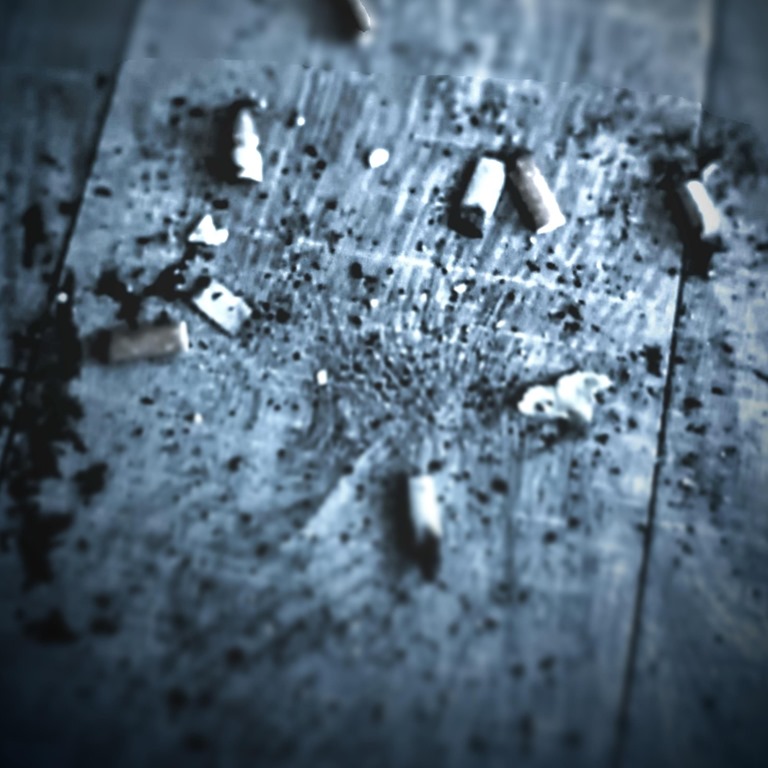
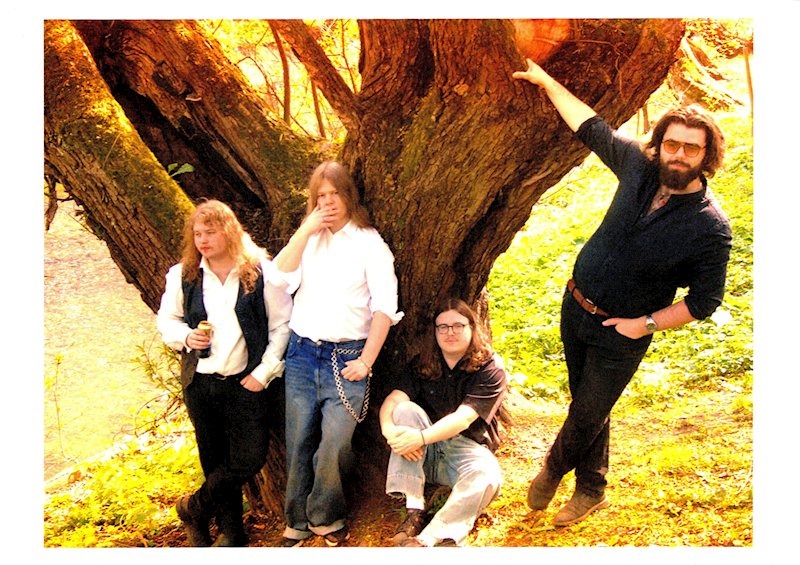
So, they may be young – still in their early twenties – but Norwegian quartet Fanatisme, who ‘channel the lunatic, forest-worshipping spirit of early Ulver and Darkthrone, merging it with the gothic pulse of Christian Death and The Cure’ are presenting on their debut album ‘a fiercely individual rush of post-punk-infused black metal, a spine-chilling celebration of humanity, the beauty of life, and the inevitability of death.’

And this is interesting: a lot of goth and metal hangs its mood on the death thing, to the extent that death is often romanticised, but without really taking a grip on the reality. On Tro, håp og kjærlighet, Fanatisme explore a vast sonic and emotional range, which seems befitting of the topic. Not that I can comprehend the lyrics: even if they were sung in English, this would be an absolutely impenetrable snarl. But you get the sentiment and the sheer force of Tro, håp og kjærlighet, which is at times rabid.

The first piece, ‘Stannhetens Slor’ is clearly designed as an intro, standing at under three minutes, and it’s a soft, drifting ambient work for the most part – but near the end, it builds and swells and culminates in an anguished scream of treble, a drone that grows to a howl. And then the guitars happen: ‘Nordens Eteriske Sommer’ slams in, a quintessential black metal blast of raw-throated vocals howling in a tempest of squalling sludgy guitars and a ragged, shamelessly underproduced rhythm section. ‘Kjrlightetsbrev til Vren’ actually sees the band find a rare groove, albeit punctuated by rabid, rasping vocals, while ‘Manetroket’ is a full-fat, heavyweight trudger of a riff monster.

Despite the complete impenetrability of the lyrics, this is an album that has impact and has a certain resonance. And it works. I wouldn’t recommend listening to this on your deathbed, but I do recommend listening. The last song finds them really hitting the spot, and hard. ‘Livet r en dans p Posens Tornet’ is one of those colossal epis that impossible to deny. The guitars race hard and fast a streaming metal churn of energy which rushes forward, its urgency dominating the whole blistering maelstrom, bringing an expansive, and heavyweight album to a racing climax. And whatever is lost in translation here, Tro, håp og kjærlighet is a high-impact release.

AA

347698

Roman Numeral / Machine Tribe Recordings – 24th January 2025

Christopher Nosnibor

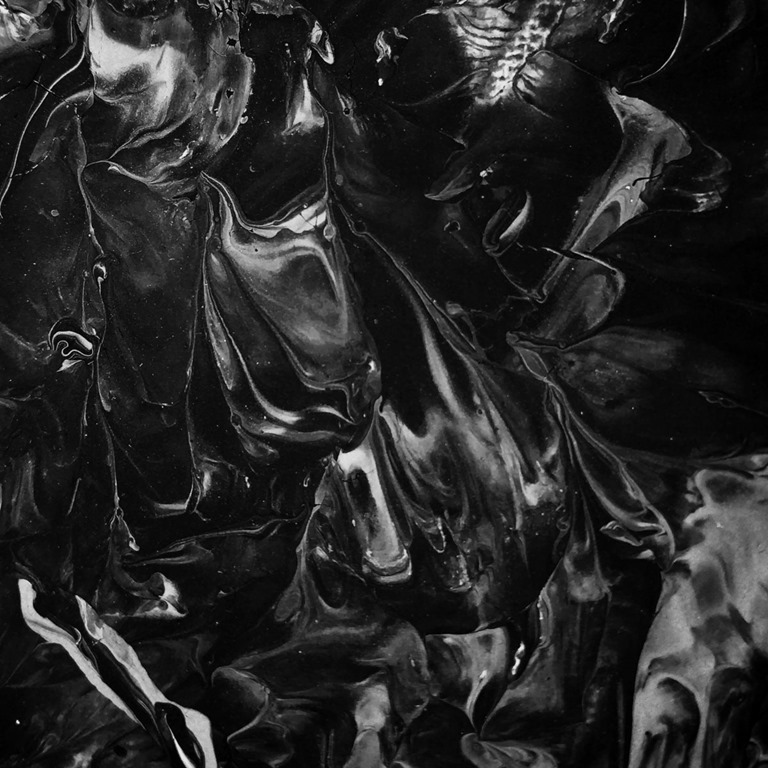
Having premiered ‘Opilione’ just over a week ago as a taster for this blackest of black sonic expulsions, I’ve now had some time to digest the album in its entirety. And it’s an acrid, acidic tang of bile which burns the throat and scorches the trachea, and a bilious discomfort which emanates from every noxious moment of this absolutely hellish effort.

The Finnish duo’s Bandcamp simply describes them as ‘BLACK VOID NOISE’, and it’s hard to better that, really. Black Abyss Invocation, which essentially launches Vomitriste phase two, having drawn the curtain on phase one with the Droneworks (2022-2024) compilation.

Black Abyss Invocation is relentlessly dark. In fact, it goes beyond being merely ‘dark’: darkness connotes an absence of light. Here, Vomitriste create a negative balance, subtracting, subtracting, endlessly subtracting, sucking out both light and air, like a black hole which drags the listener into a vortex of perpetual purgatory, while hanging over the smouldering pits of hell.

‘Opilione’ is entirely representative: each of the album’s six compositions last between five and eight minutes, providing ample time for the agonizing atmospherics to wrack every one of the senses in the most torturous fashion, and seeming to manifest in physical ways as you find your skin crawling and your muscles tense.

The album opens with ‘Void Sermon’ – a rumbling blanket of sound that’s between dark ambience and harsh noise wall at first, before vocals – rasping, demonic screams, shit-your-pants inhuman – roar in before the very bowels of hell open wide and drag you down, down, down. Void Sermon? Void bowels would be equally apt.

From here, it’s less about progression, as slow subtraction. Listening to Black Abyss Invocation, I find myself reflecting on various methods of punishment and torture from throughout the ages – rat torture, for instance, or coffin torture, or the breaking wheel. The slow, agonising tortures which almost invariably resulted in a protracted and extremely painful death. Or perhaps, one I discovered on a visit to York dungeons, the ‘blood eagle’, referenced in Norse literature. Certainly, by the arrival of ‘Fleshwards’, on feels as if one’s ribs are being severed from the spine with a sharp tool, and the lungs pulled through the opening to create a pair of “wings” – because this is brutal, cacophonous noise and howls of anguish echo from subterranean caverns without mercy. To survive to the end of the album is to still be awake and alive in the hell that is life on earth in 2025.

Black Abyss Invocation is truly the stuff of nightmares: there is no escape from the abyss, and there is none more black.

AA

a3185354594_10

Sacred Bones – 23rd August 2024

Christopher Nosnibor

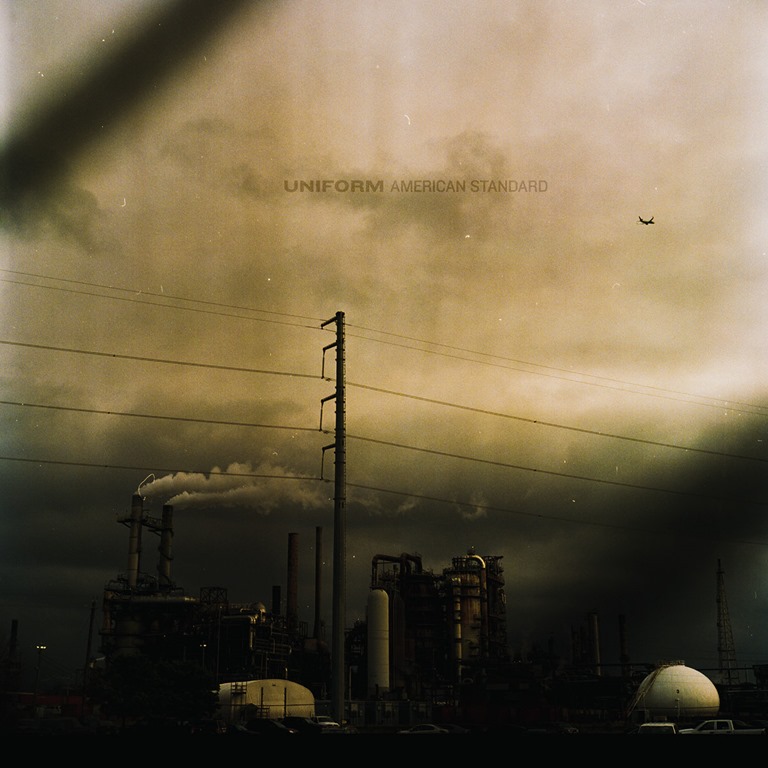
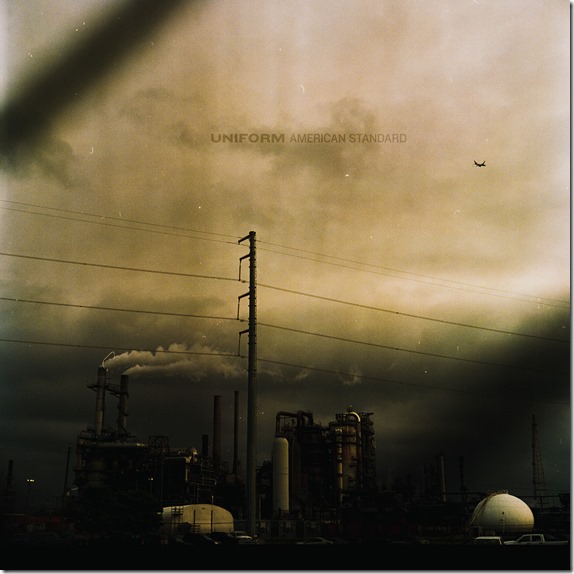
You know that when the bio for an album’s release is prefaced by a trigger warning, this is going to be some pretty powerful stuff. But this being a Uniform album, it almost goes without saying. Since their inception, they have gone all-out on every level, with the harshest noise providing the backdrop while Michael Berdan strips his skin to make the most brutal, unbridled, rawest expositions of the human condition, invariably born out of his own personal traumas.

I’ve often wheeled out the line that in the personal lies the universal, and even where there’s no direct correlation in terms of shared experience, the articulation of extreme emotions often provides a vessel whereby the outpouring of an individual’s catharsis offers a chalice into which others may pour the flow of their own emotional stigmata. If the metaphor seems a shade overwrought, bear with me.

Uniform is, unquestionably, a vehicle through which Berden vents endless pain and anguish. He’s a troubled person, and he’s open about this, to the extent that it’s more than just a but uncomfortable. But this isn’t some kind of trauma porn ride: the appeal of Uniform is this raw honesty, the absence of filter. You know – and feel – this is real. It’s not a case of manipulating the listener’s emotions, but an example of creativity as a vital outlet, a survival mechanism, even. It doesn’t exist for anyone’s entertainment. And with each release, Uniform, seem to find new heights of intensity, and new levels of sonic brutality, while dredging new emotional depths.

Shame felt like a gut-wrenching pinnacle which would be difficult, if not impossible, to surpass – but then, so did The Long Walk. In this context, it should come as only small surprise that American Standard goes even harder and harsher, but the simple fact is it would hardly seem possible. But here we are.

In the run-up to the release, Berden has spoken / written openly and in detail about his struggles with bulimia, and the fact that over many years of managing alcoholism and having come to a point whereby this is no longer a taboo topic, breaking down this particular wall has felt altogether harder.

Even the preceding singles, ‘Permanent Embrace’ and ‘This is Not a Prayer’, could not have provided anything like adequate forewarning of the intensity of the album as a whole.

I shall quote, while I take a moment and steel myself for this:

“The following songs are about a lifetime of making myself vomit,” Berdan writes in the personal essay that accompanies the album. His pain is so apparent, so immediate, that it feels like hearing someone scream for the very first time. “There’s meat on my face, that hangs off my face, sweats like I sweat, cries like I cry.” The music finally begins with those words, not in a glorious crash and clatter but in the tones of a gurgling drain. This is the sound of liquid moving through pipes that are full to the point of bursting with things usually hidden inside of stomachs and behind mental walls.

It all starts with an admission. Beneath the harrowing screams, there’s the pain of bulimia nervosa. There’s the pain of a sickness that is as physical as it is psychological. This is a kind of coming out. This is a kind of emergence. A far cry from edgy provocation or high school level transgression, this is something truly unacceptable.

As one might fear, this is just the beginning. As Don Delillo once wrote, “There are stories within stories.”

American Standard contains only four tracks, but the first, the title track, is fully twenty-one minutes long is the definition of harrowing. It’s a massive departure, in that with perhaps the exception of their 2015 debut, their compositions have conformed to the fairly defined structures, often with verse and chorus structures built around chord sequences and the arrangement of the percussion.

After an intro that can only be described as a scream of pain, ‘American Standard’ lurches into life as a churning throb of noise, and Berden’s bonne-rattling roar is only just audible amidst the pulverising fizz. When the power chords kick in, they’re like a full-on slam to the guts. Around the nine-minute mark, some keys enter the mix and there’s almost a redemptive tone, at least in the music, but Berden’s vocals continue to articulate the upper reaches of anguish. This is a different kind of purging from the subject matter – a flaying, emotional purging, a release of all of the years of torture and self-flagellation, distilled to the highest potency. It’s the barely human sound of breaking, breaking, emptying, over and over. The lyrics may not be easy to decipher, but the excruciating pain Berden articulates in their delivery is unmistakeable as he howls his larynx to bleeding shreds amidst a thunderous cacophony worthy of Swans live performances. If it’s not the heaviest shit you’ve heard all year… well. Just making it to the end of the title track is a thoroughly draining experience that leaves you feeling utterly spent.

The pounding machine-gun drumming, squalling, atonal synths and booming bass blasts of ‘This is Not a Prayer’ offer no respite, the layers of vocals, all screaming in pain, is beyond punishing: you feel your chest tightening and breath growing shorter with each intake, your throat clenching. The sheer physicality of the piece – which they sustain for a relentless six and a half minutes – is a panic attack in a can.

If the introduction to ‘Clemency’ swirls into ambience, it’s a bilious, nauseating brew of sulphur and fumes that festers just long enough to unsettle before the hardest percussion and the dirtiest guitars lurch in and everything becomes intensely claustrophobic. Again, there’s no oxygen, you’re constructed by the density and sheer relentlessness of it all. And it slams away like a lump hammer for almost eight minutes. The arrival of ‘Permanent Embrace’ feels like relief, of only for its brevity. There are some uplifting synths in the mix, but it’s the most savage finale they could have mustered.

The last time a record affected me this intensely in a physical way was over thirty years ago, when at the age of fifteen or thereabouts, having been introduced to Swans by way of Children of God, I picked up a copy of Cop at a record fair. I found it hard to conceive the record was actually revolving at 33rpm: it felt more like three, as time stood still and I felt my body being compressed by its crushing weight.

American Standard is certainly anything but standard. It goes beyond – way beyond – harrowing, or heavy, in any sense that words can easily convey. It’s the hardest listen. It simply hurts. But you know that this was the album they had to make. Forget your discomfort, and feel the pain.

AA
a2313479398_10

Transcending Obscurity Records – 19th January 2024

Christopher Nosnibor

Every day, every week, the world descends further into a pit of shit of human making. I feel as if I’m continually circling back to this same premise to frame almost every discussion, not just when writing about music, but any conversation I have about pretty much anything. The sad fact is that there is simply no escaping the fact that it’s not just me personally, but the whole of our existence which hangs under a cloud of gloom.

Only this afternoon, my mother texted me in her usual cack-handed typo-filled fashion bemoaning the succession of storms which has battered the country this week, commenting on how she can’t get over it and asking what we’ve done to deserve such crap weather. I simply couldn’t face pointing out that things have been heading in a bad direction since the industrial revolution and that we’re pretty much driven off a cliff at full speed in the last fifty years thanks to capitalism, and what we’ve done to deserve is fucked the planet with greed. She probably wasn’t really looking for an explanation, and likely wouldn’t have appreciated or even understood if I’d given one. Meanwhile, wars are raging around the globe, and escalating on a daily basis. And because we don’t have quite enough death and destruction, the state of Alabama has seen fit to pilot slow and painful executions by nitrogen gas. What the fuck is wrong with the world? And is it any wonder we’re experiencing a massive mental health crisis?

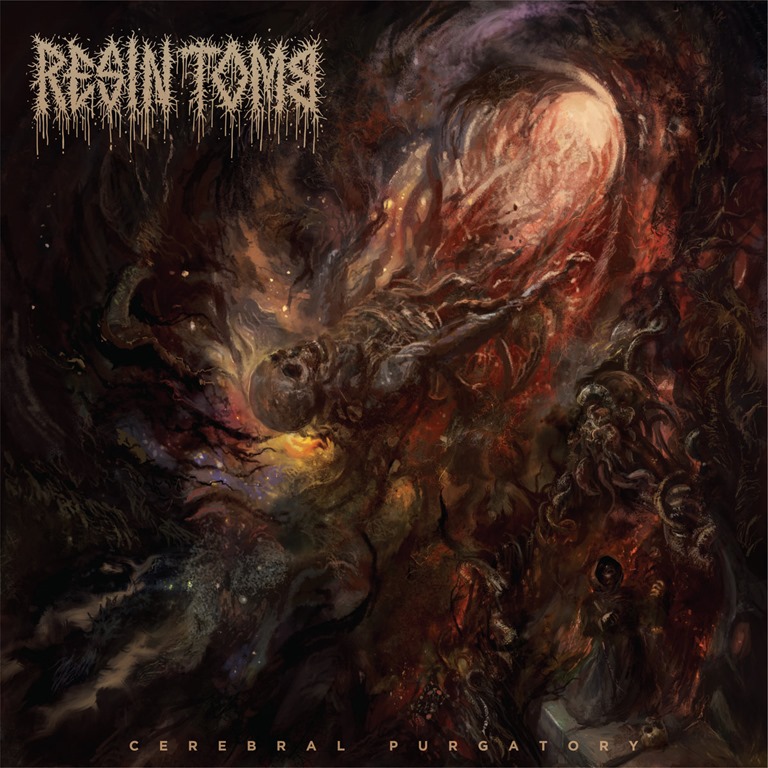
In the face of all of this, you do what you can to get by, and while many will advocate meditation and calming music as an alternative, or supplement, to medication, catharsis can also provide a much-needed means of release. And after releasing a couple of well-received EPs, Australian band Resin Tomb have dropped their debut album, Cerebral Purgatory. It’s a title which pretty much encapsulates the condition of living under the conditions I’ve outlined above – and purgatory is the word, because there is no escape and it feels neverending. The first track, ‘Dysphoria’ perfectly articulates the existential anguish of life in these troubled times. Again, the title is spot on: I frequently see – and have likely made my own – mentions of how we are seemingly living in an amalgamation of every dystopia ever imagined. But what is the psychological response to this? Dysphoria: ‘a profound state of unease or dissatisfaction’, the antonym of euphoria. Much as I do sometimes feel like cheering humanity to the finish line in the race toward self-extinction, for the most part, I feel not simply gloomy or pessimistic, but a deep sense of anguish and anxiety, not to mention powerlessness. And I am by no means alone – although it’s more apparent from time spent on line than conversations with friends, family, or colleagues, perhaps because people tend to shy away from heavy topics for the most part, and instead prefer to shoot the breeze about the weather. But ‘Dysphoria’ is a brief, brutal blast, gnarly mess of difficult emotions articulated through the medium of full-throttle guitar noise and vocals spat venomously in a powerful purge.

As their bio puts it, ‘They’ve forged their own sound which is a remarkably cohesive mix of dissonant death metal, gravelly grind and somehow even thick, blackened sludge.’ And yes, yes they have. And it’s a dense, powerful, racket they blast out. There’s little point in drawing on references or comparisons: there are simply too many, and they all tumble over one another in this cacophony of monstrous metal noise, a flaming tempest of gut-ripping heaviosity.

‘Flesh Brock’ packs tempo changes and transitions galore, packing more into three minutes and eight seconds than seems feasible. And in packing it all in, the density reaches a critical mass which hits with the force of an atomic blast.

Four minutes and twenty seems to be Resin Tomb’s sweet spot, with four of the album’s eight tracks clocking in at precisely that. And when they do condense so much energy and weight into every second, four minutes and twenty seconds affords a lot of room.

The title track comes on with hunts of Melvins, a mess of overloading guitars and a bass so fucking nasty and so forceful it could shatter bones, melding to deliver a colossal bastard of a riff. ‘Human Confetti’ comes on heavier still, pounding away with a pulverising force and playing with elements of discord and dissonance in the picked guitar line – and while the lyrics may be indecipherable, the title alone conjures a gruesome image.

If ‘Purge Fluid’ and ‘Concrete Crypt’ again convey their fundamental essences in the titles alone – and these are absolutely brutal, punishing pieces – the album’s final track, ‘Putrefaction’ absolutely towers over the murky swamp of black metal and grindcore with a dramatic, nagging picked guitar and a cranium-crushing wall of noise. Holy fuck. It hurts. And good. Angry is good, and better to channel that anger into art than knifing people in town on a Friday night. That’s one for another time, perhaps. At this particular moment, we have this – an album so heavy, so violent, it’s an exorcism.

AA

719914

Human Worth – 15th September 2023

Christopher Nosnibor

It may not be apparent from my review output, bur I am uncomfortably familiar with experiencing torpor. That weight that descends like a cloak and simply loving is as much as you can manage, and in no time, half an hour, an hour has elapsed, and… what? Where does the time go? Where does your life go? For many of us, work eats our lives, as does just doing whatever it takes to keep afloat and on top of things. I will admit to being less familiar with abscission, which I had to look up to find that it’s ‘the shedding of various parts of an organism, such as a plant dropping a leaf, fruit, flower, or seed. In zoology, abscission is the intentional shedding of a body part, such as the shedding of a claw, husk, or the autotomy of a tail to evade a predator,’ according to Wikipedia.

I get the sense from listening to Abscission that this shedding is rather more metaphorical, and that the album is more of a work of catharsis, shedding skins and layers of shit, of unwanted emotions, to feel lighter, to emerge somehow freer, less encumbered by emotional baggage. But this is also something else. More than merely a shedding of dead skin, the experience of listening to Abscission is closer to tearing the skin from your body, the flesh from your bones to escape your corporeal being. Bloody, brutal, unspeakable pain.

On Abscission, Torpor bring the weight, the crushing weight that drags you down at every limb, your spine, your guts, your heart. The first track, ‘Interior Gestures’ is pure leaden punishment. It starts with megalithic raging, guitars like slabs of basalt, the guttural vocals growling and snarling beneath it all, before shifting into a dark yet graceful expanse, and for a moment, you can breathe, and feel a radiant energy. There’s something about slow, heavy music which is, in some instances, uplifting, and Torpor’s gentler passages are truly magnificent, delicate, elegant, even.

‘As Shadows Follow Body’ has a few delicate moments, but for the most part, it’s simply devastating. If the likes of Neurosis and Amenra are perhaps obvious touchstones, where Torpor stand apart is that they make both bands sound like PWL era Kylie. This goes beyond heavy. When everything is churning low and slow, you feel your muscles wilt and body sag. It’s how you perhaps imagine being hit by a truck, or the implosion of a submarine where the intense pressure simply collapses your body. I may be alone or in a very small minority in imagining these things, but sometimes, articulating the experience of particularly intense music requires something of a stretch when it comes to articulation, and most similes and metaphors simply fall a long way short.

I can’t decide – perhaps because my brain is melting – if it’s appropriate or ironic that listening to Torpor should induce torpor. I’m feeling numb, weary, my back and libs ache, likely from spending hours observing bad posture practices during my dayjob before returning to the same position to sift take care of life admin and review submissions. And listening to Abscission only seems to accentuate my aches, because listening to it feels like carrying a heavy load, for miles, in intense heat.

‘Accidei’ locks into a grinding repetition that’s reminiscent of early Swans or Godflesh, and crawls sluggish and sludgishly, before the album’s shortest song, ‘carbon’ ploughs into the depths and tears the ground apart.

‘Island of Abandonment doesn’t so much plunge new depths of heavy, as sound like the real-time death of an underworld god. It does pick up the pace around the midpoint, building to a sustained crescendo that feels like a typhoon. By the end of its enormous eleven-minute assault, I find myself at a loss. I’ve been covering heavy music for a long time, and have spent it developing my descriptive vocabulary. But words fall short, so short, in the face of this. This is another world. Enter it at your peril.

AA

a1160466171_10

Warren Records – 25th November 2022

Christopher Nosnibor

While Leeds has a strong reputation and record for emerging noise-orientated rock bands, Hull is proving that it’s not far behind as a spawning ground for purveyors of noise-driven angst and anger.

As was the case in the 70s and 80s, social deprivation proves to be a powerful driver for the creation of art that channels frustration and the whole gamut of expression that comes from dark places, and from adversity. Of course, it’s always the North. Leeds spawned goth, Manchester Joy Division, Magazine, Slaughter and the Dogs, The Durutti Column. Sheffield, too, has a strong heritage of bands known for innovation born out of frustration, with Cabaret Voltaire being a strong starter for 10. Hull, of course, brought us Throbbing Gristle, arguably one of the most groundbreaking acts of the 70s and beyond.

Most punk bands, especially the Pistols, simply cranked out pub rock with a sneer and the guitars turned up. Throbbing Gristle went beyond any conventions of music to create a real soundtrack to alienation.

More recently, we’ve had The Holy Orders, Cannibal Animal, Low Hummer, Parasitic Twins, and many more. And now we have Bug Facer kicking out a disaffected din, and ‘Horsefly’ is one hell of a debut single, and clocking in at over six and a half minutes it’s a behemoth of a track.

The band say of ‘Horsefly’, ‘At its core the track is about struggle. It conjures images of being trapped or stuck in a box or something but we don’t want to give away too much! We try to write music that is evocative and suggestive, not being too direct with our lyrics and ideas as we’d much prefer our listeners to tell us what it is they hear and see as they listen to our tracks. Some people have said it’s like battling through and emerging from a storm, others say it’s like someone has angered the gods.’

The sense of struggle is conveyed keenly here: you feel the pain in your bones, in your muscles, nerves, and sinews. It pulls hard at the soul, at the same time as punching away at the guts with a methodical thud.

It’s a hefty, dirgy trudge that oozes anguish, and if the organic feel is rathe in the vein of Neurosis, the bands it’s closest to are Unsane and Kowloon Walled City. It’s bleak, grinding, stark and brutal. Its power derives not from distortion, or from pace, but from sheer density and crushing volume, and from raw power. It’s the kind of claustrophobic, pulverising heaviness that leaves you aching. This is serious. And Bug Facer are instantly my new favourite band.

13th September 2020

Christopher Nosnibot

Barnyard Baptism’s biographical info is nil, but the cover art to their new EP, 9:58 is probably all the info you need: it’s dark and disturbing, and it’s not entirely clear what you’re looking at beyond a face and a door. Mostly it’s a blur, but a blur that positively screams mental derangement, anguish, psychological torture, distress, and pain.

And this is precisely what Barnyard Baptism articulate with their full-on sonic assault: pain and anguish and a soul-sapping sense of being utterly overwhelmed yet fermenting a frenzied disquiet, burning from the inside is what’s conveyed by the tempestuous tumult that tears from the speaker from the offset, with ‘Dead on the Water’ plunging us deep into the harshest of harsh noise explosion, a blizzard of white noise ruptured by blasting nuclear winds and the occasional piercing shriek of ultra-sharp, shrill feedback that cuts through like a rapier puncturing a gauze drape, tearing to shreds in an instant any smoothness of surface.

‘Negative Headspace’ is a gouging blast of mid-range nastiness, a full-force blast of frequency with a tearing, serrated edge. There’s nothing to be extracted here, no musical revelation: this is nothing but all-out sonic horror, noise on noise.

The title track is mined from a seem of vintage power electronics with an experimental edge, with a thrumming oscillating drone crackling into snarling distortion. As a child, I used to suffer a recurring nightmare, where things would present as line drawings, smooth and silent, before being crumpled like paper and destroyed in a black scribbly mess. These dreams were silent – conspicuously so – to the extent the silence filled my head to a roar, and the crumpling of the lines actually hurt, crumpled my cranium like distortion expressed without sound. These dreams still haunt me now, at 45, and the way these gliding hums crunch into a distorted mess of noise reminds me of that. On a personal level, it’s painful, traumatic. In its own context, it’s still painful and traumatic: this is head-shredding abrasive noise of the highest order, and it hurts, both physically and psychologically.

The noise swells and grows in pace, volume, and sheer nastiness over the course of the last couple of tracks, which bled into one another in a billowing bluster of pulverising distortion.

Barnyard Baptism don’t do breaks or contrast, and there are no tranquil segments or rests here; no spaces between songs, no breaks in which to restore a sense of equilibrium: this is relentlessly brutal, and there isn’t a moment to breathe during the crackling horror of 9:58 – no so much as a moment of calm, and Barnyard Baptism are utterly obliterative.

AA

a3430755877_10

23rd August 2018

Stuart Bateman

How much review do you need of an album called Pain by a band called Immolated Moth? Look at the artwork. You already have an idea of what to expect musically, that’s pretty certain.

According to the blurb, ‘“Carefully constructed brutal fucking chaos” is an accurate description of the sound of Immolated moth. The work of Thom Bleasdale, who had his career as an audio engineer cut short by serious illness, misdiagnosis and mistreatment that should have killed him, Immolated moth is hybrid death metal with an old school feel that is a real expression of true anger, pain, fear and trauma. It does not get any more real than this.’

It’s real, alright. Really pounding, heavy. Really relentless, pulverizing percussion dominates a sludgy mix of really dirty guitars, finished with snarling, guttural vocals. From amidst the raging, uptempo tempest emerge frequent frenzied solos.

The songs may be fast, but they’re not short: opener ‘Suffer in Peace’ is almost seven minutes long and sets the tone. Brutal, dark, menacing and unswervingly relentless, it’s a complete juggernaut of a record. It judders, shudders, throbs and grinds without any real respite.

There’s some weird ZZ Top on speed riffery in the mix on ‘Anger’, before it explodes in a furious flurry or machine-gun drums and wild lead guitar work, and somewhere, a weird sort of groove emerges.

Overall, Pain isn’t an album you listen to for variety, or to admire the subtlety and detail of the production. The emphasis on the mid ranges add to the effect of the lack of variation and builds the cumulative effect of being hammered at a hundred miles an hour without mercy. In short, Pain delivers what it promises.

AA

immolated moth pain cover smaller