Not so long ago, we streamed the video for ‘The Mound’ from the debut double-A-side single by Girls in Synthesis. We’re now pant-creamingly excited to be able to share its partner, ‘Disappear’. Yeah, we like riotous, scuzzed-out punk noise, so get your lugs round this:
Posts Tagged ‘Noise’
Listen: ‘Disappear’ by Girls in Synthesis
Posted: 18 March 2017 in Recommended Streams and VideosTags: Disapear, Girls in Synthesis, Noise, Punk, Single, Stream
0
Relay for Death – Natural Incapacity
Posted: 18 March 2017 in AlbumsTags: Album Review Helen Scarsdale Agency, Collapse, Industrial, Jim Haynes, Merzbow, Natural Incapacity, Nihilism, Noise, Relay for Death
Helen Scarsdale Agency – HMS039
Christopher Nosnibor
We live in a world of noise. We live in a decaying, post-industrial world. The so-called developing world is on an inexorable trajectory toward the same calamitous end, a world of tertiary industry and a level of noise – literal and metaphorical – which the framework of postmodern hinted at and but failed to fully appreciate the totality of its eventuality. To contextualise Natural Incapacity requires a certain grounding in postmodernism and the idea of a society defined by information overload. But, to reframe my comment on the shortcomings of postmodern theory, it essentially fails to account for the impact of the culture on those who find themselves existing in that culture. What have we done in making such technological leaps with so little consideration for the psychological consequences? Has the human mind evolved at a pace correspondent with the technologies we’ve made? What does the infinite noise actually sound like in the middle of that blizzard of information?
Natural Incapacity is an immense work, with a total running time of some two and a quarter hours across its two discs. Housed in a hand-rusted cover produced by Jim Haynes, this is serious art. The album soundtracks not the external noise so much as it does perhaps the internal noise, and the experience of the collapse of everything into an amorphous cyclone of everything happening all at once. The human brain simply isn’t built for the world in which we find ourselves. There’s so much talk of ‘white noise,’ but ultimately, total overload is an entirely different kind of noise, an explosive noise, simultaneously conveyed as the sound of collapse, of panic, anguish, and screaming despair.
Disc one is the shorter of the two, with has a running time of an hour and two minutes. A dark, quiet rumble soon breaks into a dense, harsh wall of sound. Tidal waves crash and planets explode in slow-motion, creating layer upon layer of textured noise that pounds the senses relentlessly. This is heavy, brutal stuff. The violent turbulence is punishing, effecting a psychological disturbance. The moments of calm are but brief and heavy with tension, the suspense of how and when the next wave of noise will erupt. And erupt it invariably does, tearing the fabric of the atmosphere, an annihilative volume of atomic force.
There’s no obvious shift moving onto disc two, but the effect of so much oppressively dense, murky and irredeemably inhospitable noise is cumulative. As the time crawls on, one senses the walls slowly moving closer, the light and oxygen gradually being pushed from the room and the life slipping from one’s soul.
Hums and whirs offer cold comfort in this funnelling fermentation of foul decay as factories collapse in slow-motion under the weight of so-called progress. The absence of vocals renders this even more disturbing, in that there are no obvious signs of human life to be discerned in the churning melee. As such, were reminded of our ultimate obsolescence, and there can be no bleaker prospect than that. Natural Incapacity is nihilistic in the absolute, a soundtrack to the end of time.

Jim Haynes – Throttle & Calibration
Posted: 13 February 2017 in AlbumsTags: Album Review, Ambient, dark, electronica, Helen Scarsdale Agency, Jim Haynes, Merzbow, Noise, Throttle & Calibration
The Helen Scarsdale Agency – HMS040 – 2nd December 2016
Christopher Nosnibor
My first encounter with the work of Jim Haynes (the musician, not the writer who rose to a degree of cult prominence in the 1960s) came when The Decline Effect landed with me in 2011. Haynes’ territory is the dark, the ambient, the subterranean, but Throttle and Calibration is an altogether harsher work, which emerged from Haynes’ 2015 residency at MoKS in Estonia, where he would collaborate with and contribute to Simon Whetham’s Active Crossover series.
As the blub accompanying the release on the label’s website explains, ‘Throttle and Calibration is the first in a series of albums that find Haynes digging through the Active Crossover archive and grotesquely exaggerating the details into exploded compositions of volatile dynamics, nerve-exposed dissonance, caustic shortwave signal abuse, and a considerable amount of scarred metal. Marked as one of the more discordant works to date in Haynes’ career, Throttle and Calibration finds company near the atonal compositions from Hermann Nitsch and the sour, industrial collages that pock the Nurse With Wound catalogue. Previously released digitally on Crónica, Throttle & Calibration is fleshed out with an additional 20 minutes of material.’ This time around, the augmented digital release is also accompanied by a cassette edition. But, sadly, no vinyl, and no CD. Sadly because
As the blurb which accompanies the release intimates, discordant is it, and Throttle and Calibration does, most certainly, slot into the space where industrial and avant-garde intersect, and this reissue, expanded to eight tracks from the original five, is an essential work within its field. The album finds Haynes in exploratory mode, and he delves deep into the granular elements of sound over the course of this challenging work.
A long, buffeting rumble, like a distant train or the sound of wind on a mountain-top (if there is no-one there to hear it, does the wind still roar around the rocks?) is the first sound. The harrowing bleakness is but short-lived. Explosive blasts of noise rip and tear like detonations, atmosphere and ear-shredding eruptions. Small sonic ruptures are rendered at such volume and intensity as to inflict sensory and psychological.
What exactly is this? The Arctic wind ripping through an empty water tower? Or the apocalypse? It could be either, and may be both. It’s disorientating as well as full-on. Throttle & Calibration is an album which places sound under the microscope, so to speak. It’s not microtonal, but it is microcosmic, at least on the one hand. But in placing its focus on a small corner of the scene, Haynes then blows it up to A3 and zooms in 500%. The effect is terrifying, bewildering, intense, and the results are immense. In Haynes’ hands, mundane sounds are reforged and take on sinister dimensions. His addressing them from alternative perspectives – up close, amplified – is the key to building a new understanding.
A quiet rattle is annihilated by a roar which melts all definition into a whirling multitextural aural vortex in ‘Tabula Rasa’, and over the course of the album, Haynes repeatedly drags the listener through a succession of vertiginous sonic sinkholes. Single impacts – origins unknown and undisclosed – resonate and decay slowly n heavy atmosphere. The spoken word introduction to ‘It Doesn’t Matter’ sets an eerie tone, but this again is devastated in a tinnitus-inducing wall of screeding noise worthy of Merzbow at his most brutal.
It takes time and focus to peer through the harsh noise to discern the textures. Like stepping into the dark from a brightly-illuminated interior space, it takes time to recalibrate the senses. There are quieter passages, but they’re no less intense and no lighter in tone. Ominous monotone drones and hums hang for aeons; time is suspended in space.
Neither the full-throttle abrasion nor the shady, moody spells of dank mental torture offer anything by way of respite or levity: Jim Haynes is an artist who dwells in darkness and creates work that ranges from the darkest greys to the pitchest of blacks. Throttle & Calibration stands at the darker, more violent end of the spectrum. Uncomfortable unpleasant, and unforgiving, it’s a well-realised plunge into the bowels of a new shade of, rendered from the terrains of the everyday.

Heavy Baby Sea Slugs – Teenage Graveyard Party
Posted: 8 January 2017 in Singles and EPsTags: Doom, EP, Heavy Baby Sea Slugs, Noise, Punk, Review, Sludge, Teenage Graveyard Party
Heavy Baby Records – 21st January 2017
Christopher Nosnibor
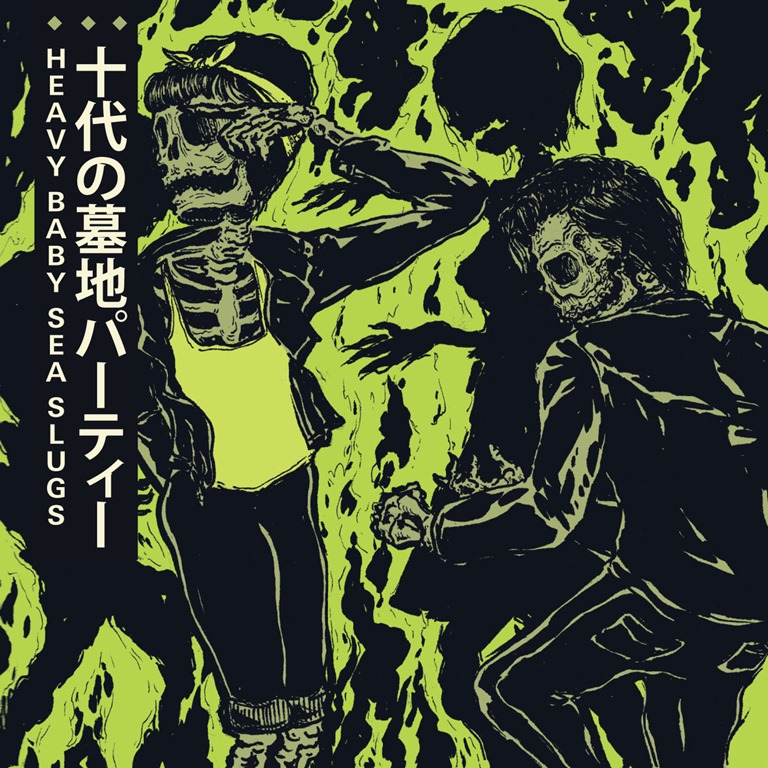
Ok, so I’m not one to judge a record by its cover, but obviously there’s a lot to be said for packaging music in – or with – cover art which reflects the contents in some way. Heavy Baby Sea Slugs’ new offering, the Teenage Graveyard Party EP has artwork which says ‘sixteen minutes of raw, full-tilt sludge-metal racket’, and funnily enough, that’s precisely what it delivers (as one might reasonably expect from a band who previously released an album entitled Fistula Missile and who seemingly enjoy considerably more success in Japan and Taiwan than at home in Texas).
‘King Midas of Shit’ launches the EP with a savage deluge of nasty, gnarly noise, piledriving in at a hundred miles an hour. Talk about a sonic slap round the chops! It’s a frantic, frenetic and stubbornly unpolished aural assault which spits and snarls and spews in all directions.
The title track slows the pace and actually offer some semblance of a tune, with some proper singing and everything – at least until about halfway through when the band put their collective pedal to the metal and thrash their way senseless to the end. Don’t expect any cuddles from the bass-led thunder of ‘Pit Bait’, either. It comes on like a Motorhead 45 being played at 33.
The six-minute closer, ‘Zero-One’ really brings the grind with a downtuned, gut-churning trudge that’s somewhere between early Swans and early Melvins. It’s a gruelling dirge which makes no real attempt to get going, and instead spends is time making threats, with slow, heavy drums, scrawling feedback and yawning bass drone. It’s crushingly heavy, and feels like the soundtrack to an eternity in purgatory.
It may only be sixteen minutes in duration, but Teenage Graveyard Party is a gloriously unpleasant, dirty, mangled mess of noise. Party on, dudes.
Humus – Eterna Condanna
Posted: 29 December 2016 in Singles and EPsTags: Crust punk, D-Beat, Death Crush, Eterna Condanna, Gnarly, Humus, Nasty, Noise, Orchestrated Dystopia, Review, Stream, Thrash
Orchestrated Dystopia – 1st October 2016
Christopher Nosnibor
Another release it’s taken me four months to review, and for no reason than that I’ve been utterly swamped and a little disorganised, both in terms of my time management and my thoughts. Such is the life of an unpaid music reviewer who stumbles in from working the day-job to be greeted by around twenty emails each evening and a bundle of CDs on the doormat, all demanding attention.
Somewhat ironically, this latest offering from Italian band Humus, purveyors of nasty metal noise, is one of the shortest releases – including singles – I’ve had come my way all year, with the running time for these four tracks totalling barely a fraction over five minutes.
We’re in authentically brutal, crusty, grindy d-beat metal territory here. The guitars a dirty, murky, churning mess, the drums a frenzied thousand-mile-an-hour tempest. The bass is all but lost in the frenetic, furious low-fi treble fest, while the vocals are all about that snarling, strangulated, torn-throat demonic rage, the sound of one of Satan’s minions gargling nitric acid while dancing over hot coals en route to a purgatorial abyss.
It’s dark, the sound of burning rage, a blurring welter of relentless noise. Keeping the songs savagely short and the production mercilessly raw, it’s everything you would want from a band who trade in thrashcore crustpunk.

OvO – Creatura
Posted: 17 December 2016 in AlbumsTags: Album Review, Creatura, dark, Demonic, Dio Drone, Extreme, Hellish, Metal, Noise, OvO
Dio Drone – 9th December 2016
Christopher Nosnibor
OvO’s evolution over the last couple of albums has been substantial: the brutal, demonic mania of Cor Cordium was utterly terrifying in terms of just how dark and full-on it was. Not that Abisso was exactly a stroll in the park – in fact, it was truly petrifying – but some of the unbridled power of its predecessor was exchanged for a greater range, and a closer attention to nuance with the incorporation of texture and depth-bringing electronics.
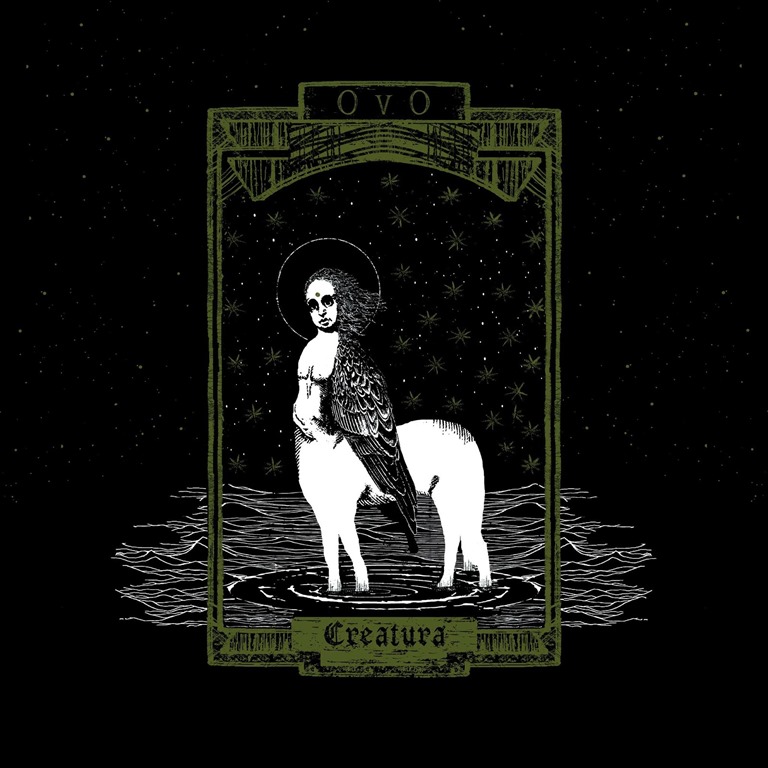
Creatura marks another shift, and yet again, they’ve come up with something that sounds like it is not of this world. Pushing hard through the loud / quiet dynamic – with major emphasis on the loud, of course – the sound is has a dense, industrial quality. Combining live and programmed drums, with the bass and percussion tracks being first recorded live and then looped, sampled, overdubbed, overlayed and generally embellished, mangled and fucked with, it incorporates elements of black and industrial metal, but it’s so much more. And so much more spine-shakingly scary. This is beyond the realms of horror. It’s extreme, for sure. It’s an album that will smash your psyche.
The stop / start drums and snarling bass calls to mind early Pitch Shifter. Above all, it’s the percussion that dominates. The mechanised double-pedal bass drum sound pounds like fury while Stefano shrieks and howls through shards of feedback on opener ‘Satanam’. ‘Eternal Freak’ explodes with drums on drums, the snare sound approximating planets exploding, and guitars like jet engines roar with cranium-cracking intensity. The deep, snarling vocal on the title track is from beyond the bowels of hell and cannot possibly have emerged from the throat of anything with even a strand of human DNA. What kind of creatura is this? It’s a mutant beast from the deepest netherworld, and that’s for sure.
While the bulk of the material is driving and muscular, the sample-strewn experimental breakdown of ‘Matiarcale’ strips things back to a kind of mutant hip-hop. The fear chords which swim around the pulverizing drum track introduce another layer of disturbance.
The appropriately-titled ‘Zombie Stomp’ reveals a hitherto unseen facet of the band, manifesting as a glam rock boogie – OvO style, of course. It’s still loud, hard and heavy, but there’s even an approximation of a vocal melody, albeit one as performed by Alvin Stardust’s reanimated corpse after it’s been possessed by the spirit of Zuul.
‘Buco Nero’ continues in this vein, a post-punk track at heart, with a tune and everything, but churned to a gut-wrenching doom-filled sludge. Counerpart ‘Buco Bianco’ is a techno-disco behemoth, along the lines of Chris and Cosey collaborating with Bathory. It would be a danceable pop tune if it wasn’t so utterly fucked up. The same can’t be said of ‘Bell’s Hells’, which is a minute and a half of thunderous savagery. Closer ‘March of the Freaks’ has hints of Nine Inch Nails about it but the stuttering beats and gnarled vocals make even Broken sound like Soft Cell.
It’s the fact that Creatura so often hints at accessibility which never emerges in actuality which renders it such a fearsome and disturbing work. Whereas Cor Cordium and Abisso were truly other-wordly, Creatura inches close enough to recogniseable forms to offer a warped reimagining of the world we know and as such, is deeply uncanny, in the Freudian sense. Weird, dark and intense, it’s an album only OvO could spew out: it’s also eye-poppingly awesome.
Paul Wirkus – Discours Amoureux
Posted: 14 December 2016 in AlbumsTags: abrasive, Album Review, Discours Amoureux, Elecronica, Electroacoustic, Noise, Paul Wirkus
Edition Beides – beides 2 – 9th December 2016
Christopher Nosnibor
Why am I enthralled by a deep, churning low-end rumble that sounds like a slowed-down washing machine with pops that sound like a ping-pong ball being smacked around? What is it that’s so compelling about a distant sound that may or may not be a sustaining guitar that suddenly breaks into ear-shattering strains of feedback? It’s uncomfortable, it attacks the senses. Perhaps it’s a deep-seated defect which lurks like a parasite in my psyche, and gnaws away invisibly, driving me toward audio works which induce discomfort, craving a psychologically twisted, deviant form of amour. Perhaps I’m just wired differently. The answers to these questions do not lie in Paul Wirkus’ ‘psycho-acoustic essay’, described as ‘a consciously digital ambient album between laptop electronica and field recordings’, which is forged with ‘mental strolls… are combined with real strolls through the green fields of the summery, loud city on the search for security, calm, and a chance to exhale’.
The four tracks on Discours Amoureux offer little sense of comfort, of respite, of security or calm. In fact, it’s a fairly dark and oppressive work from beginning to end, although a sense of exploration, of discovery, does still linger in traces in the corners of the uncomfortable, claustrophobic sonic spaces created by Wirkus. There’s something reluctant, grudging about Wirkus’ stance in relation to his art, and just as there’s little sense of concern for the listener’s reaction to it, there’s equally little sense of context or framing.
Welcome to 1982. I can only assume, in the absence of information, that the track’s title – and the titles of the other tracks – are dates. This first track on Discours Amoureux is in the same kind of difficult noise field as early Whitehouse (although not nearly as trebly and harsh as their work of this time), Prurient, and Merzbow, and as such, evokes the spirit of the emerging underground scene of power electronics as it was in 1982 or thereabouts. Or maybe not. Nevertheless, it’s abrasive and disturbing. The origins of the sounds are unclear, and the sleeve divulges precisely nothing beyond the artist’s name, the album title, record label and track listing. But there’s an organic feel to the slowly-evolving layers on the individual compositions. From the amorphous, shimmering wall of sound emerge moments of outstanding beauty, towering, glistening…. Yet still rough-edged, rusting, with a sufficiently abrasive surface as to scour the senses.
‘1499’ is more overtly electronic. At its foundation, the piece explores resonating notes ringing against one another, the undulating pitch creating a strangely harmonious melody. Incidental clatters and clangs – spanners against scaffolding, the chank of glass – interrupt the flow, and the notes increase in pace and the mellowness gradually is lost to rising tension and ultimately, echoes into the void of a sea of static.
The more overtly ambient ‘2016’ takes the form of a sound collage, with found sounds and field recordings assembled over random percussion and multitonal hums and drones. A gloomy, dense atmosphere descends, encapsulating in sound the long shadows which have cast themselves over the world during a year marked by catastrophic political, economic and humanitarian events. Back to a golden age, and much happier times: 1888. The year in which the great blizzard hit the US, Jack the Ripper began his notorious spree, and the first (known) recording of classical music was made, is represented by a long, sonorous, humming drone, its surface distorted with crackling, clicking. It seems reasonably apposite, intentionally or otherwise. Distant voices, slow, warped, intimate a dark spirituality and an even darker future.
What kind of perverse amour is this? How do Wirkus’ sonic explorations move you? Discours Amoureux is an uncomfortable, unsettling experience which speaks of a dark love, a brutal and torturous love, a love which causes pain, physical and psychological. Yield to it.

Gnaw Their Tongues – Hymns For The Broken, Swollen and Silent
Posted: 5 December 2016 in AlbumsTags: Album Review, black metal, Consouling Sounds, Gnaw Their Tongues, Hymns For The Broken, Industrial, Mories, Noise, Swollen and Silent
Consouling Sounds – 9th December 2016
Christopher Nosnibor
Listening to Gnaw Their Tongues always feels like a dubious pleasure, something that’s almost masochistic. You listen to GNT to channel dark energy, to release bad vibes, for the letting of anguish and pain and anger, for an experience akin to a sonic exorcism. You don’t listen to a GNT album to feel better about life and the world, to lift the spirits. In keeping with Mories’ myriad previous releases under the Gnaw their Tongues and various other monikers, Hymns For The Broken, Swollen and Silent is an album for venting, or when feeling the need for some pugilistic self-flagellation.
Structurally, there is a certain narrative thread which is possible to interpret fromt e tracks and their sequencing. Sonically, this is the sound of hell: Hymns For The Broken, Swollen and Silent is the soundtrack of existence in purgatory.
Woozy, near subsonic bass dominates, while above, impenetrable demonic screams and below, almost submerged, drums like machine gun fire rattle at 250bpm. It’s an unholy racket. ‘Your Kingdom Shrouded in Blood’ brings a vast, cinematic expansiveness to the sound. The drums roll like thunder and crash like tsunami, reverberating through immense canyons, and monastic voices send wordless invocations to the heavens. It’s pompous and bombastic and it works magnificently, as if soundtracking the preface to a climactic battle of mythological proportions, a combat between good and evil where the two sides each summon their ultimate deities.
‘Silent Burned Atrocities’ ratchets up the pain, marrying extreme sounds at extreme volume to extreme tempos, barrages of rapid-fire beats from deep within the morass of noise, snippets of dialogue emerge, to be engulfed in a wall of noise and screams of anguish. ‘Hymns For The Broken, Swollen and Silent’ ventures into the territory occupied by Sunn O))) on Monoliths and Dimensions. The dronesome doom and the creeping fear chords are bathed in a quasi-religious light. Here, with sampled vocals floating in and out between the monumental, crushing beats the sound takes on a different perspective on eternal darkness. But dark it is, and there is no hope of finding hope here. ‘I Have Clad the Pillar in the Flayed Skins’ sounds like a black metal remix of early Swans, a punishing cacophony of noise that’s every bit as torturous as the scene the title conveys. These are the spoils of battle, and there is rejoicing in the bloody scene of victory.
The final track, ‘Our Mouths Ridden with Worms’ is the subterranean song of the dead, the defeated. It’s a dank, dark, lugubrious trudge of a track. Perhaps death is not defeat, but victory: to live in a world where this is the sound of living is a bleak prospect.
Hymns For The Broken, Swollen and Silent is not fun. It is not pleasant. It is not enjoyable. It’s dark, and darker still. It’s oppressive, and terrifying. It’s classic Gnaw Their Tongues.

Martyrdöd – List
Posted: 4 December 2016 in AlbumsTags: Album Review, crust, dark, dirty, List, Martyrdöd, Metal, Noise, Southern Lord, Thrash
Southern Lord – 25th November 2016
Christopher Nosnibor
Anyone who’s been awaiting Martyrdöd’s pop covers album is going to be immensely disappointed by List. However, anyone else who’s on the market for a proper gnarly Martyrdöd album is likely to be happy enough with List. That said, it does mark a clear progression from previous outings. List is very much a more refined work, but of course, these things are relative. Every song still hits at three hundred miles an hour. The drums are still relentless, pounding. The bass is still a snarling throb, partly submerged beneath a messy mas of treble. It’s still as brutal as hell. But there’s a greater sense of focus, and the sound is clearer.
The title track introduces an almost Celtic lead guitar motif and a huge sense of bombast to the full-throttle thrashabout that lies beneath It’s a remarkably structured, and, even more remarkably, melody-focused track, but the demonic vocal snarl is still ever-present and ever terrifying.
‘Över på ett stick’ slows things down and takes on an amost anthemic, stadium rock quality, before ‘Harmagedon’ brings things back to familiar, snarling, dark crust territory. ‘Drömtid’ goes all folk / Metallica by way of an interlude, but it is just an interlude: the barrage that is ‘Intervention’ proves once again that they’ve not got soft, but have simply developed their appreciation of dynamics, texture and range, and it’s reflected in ‘Intervention’, which exploits, if not loud / quiet dynamics, then loud / louder / punishing dynamics and with a degree of intricacy and detail that’s impressive on a technical scale. Rather than diminish the impact, it heightens it.

 Aural Aggravation