Posts Tagged ‘New Order’

Projekt Records – 9th December 2025

Christopher Nosnibor

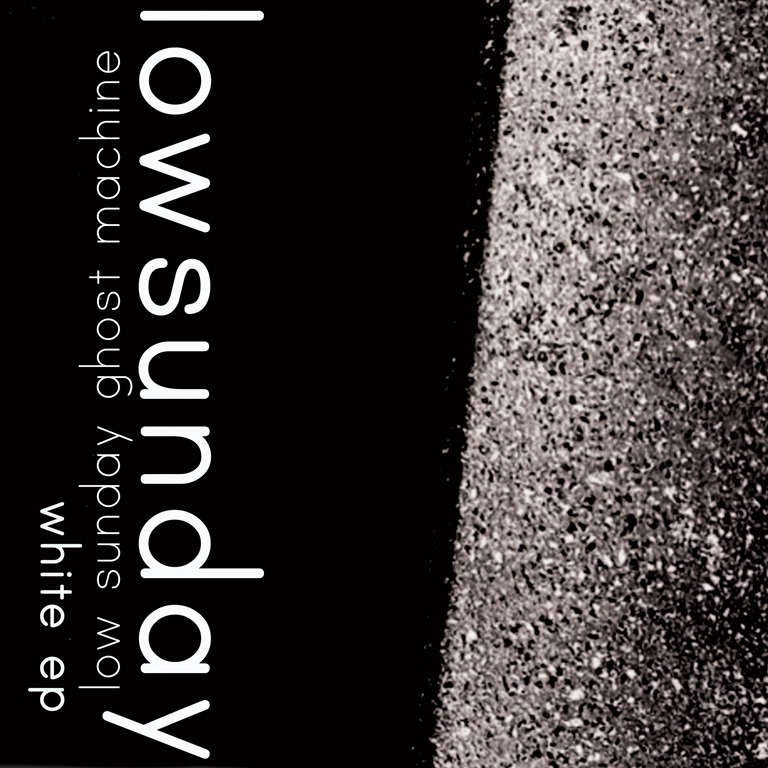
Woah, wait. 1999 is more than 25 years ago? Logically, I can grasp this. But the fact that lowsunday have existed for some thirty years and have been dormant since 1999 meaning this is their first material in over twenty-five years is still difficult to comprehend. It does very much seem to be a more common occurrence in recent years that bands who existed comparatively briefly in the 80s or 90s are reuniting and returning with not only new material, but strong new material. It may be a rather different league, but the last thing I expected last year was a new album by the Jesus Lizard, and that my first gig of 2025 would involve David Yow flopping off the stage and directly onto my face in the opening thirty seconds of the set. Lowsunday formed in 1994: the year Kurt Cobain died, the year I started university, the year of my first job as a reviewer. It feels like another lifetime. It probably does for them, too.

It may be pitched as a blurring post-punk, shoegaze, dreampop, and darkwave, and also as being for fan of The Chameleons, ACTORS, The Cure, Modern English, Clan of Xymox, Then Comes Silence, TRAITRS, but that thumping bass groove and pumping mechanoid drum beat on the EP’s opener, ‘Nevver’ is as trad goth as it comes. But the squalling noise that envelops the vocals – swathed in echo and low in the mix and taking direct cues from The Cure circa Faith and Pornography – is something else, a melding of My Bloody Valentine and The Jesus and Mary Chain with a dose of early New Order, Danse Society, and The Chameleons swirling around in there. And out of this swampy post-punk soup cocktail emerges a song of quality which really recreates that early eighties dark groove.

‘Call Silence’ goes straight for the sound of The Cure circa ’83, the singles on Japanese Whispers. And that’s cool: if you’re going to lift from early 80s gothy pop, you could certainly do far worse than ‘Let’s Go to Bed’ and early New Order as an inspiration – the bassline is pure Peter Hook. The production – and the strolling high-fretted bass work – really hits the spot, although it should be perhaps noted that they really do sound like a band born in 1982 rather than 1994. I guess they were retro before their time.

Paired with chiming guitars, it’s the monster snare smash that really leads – and grabs the attention on ‘Soft Capture’, a song that unashamedly draws on Ride and My Bloody Valentine, and pairs that wash of sound and monotone vocals with a drum sound straight from 1984. The fall from favour of the dominant snare feels like a loss, but there’s no time for lamentations as they pile in with another claustrophobic read goth groover in the shape of ‘You Lost Yourself’. Here., I can’t help but feel the vibes of late 90s goth acts like Suspiria and the scene around that time. It’s well-executed, with fractal guitars tripping over pumping drum machines and throbbing bass.

Closing with single cut ‘Love language’ sees the band strive for low-key anthemic with dreamiest and most overtly shoegaze song of the set. With the vocals drowning in a sea of reverb amidst a swirl of guitars, its detachment is its emotional power, perversely enough. And then, unexpectedly, it stops.

Everything about the White EP is simply magnificent – the way the songs are composed and played, the production, the overall feel. And while retro is all the rage – and has been for a while now, since postmodernism has eaten itself and the entire world has collapsed into endless recycling and nostalgia for ersatz reimaginings of golden bygone times. But sometimes a release will appear, seemingly from nowhere, that radiates a rare authenticity, and reaches the part others don’t. Lowsunday’s White EP is one of those.

AA
756671

Spleen+ (Alfa Matrix) – 1st December 2023

Christopher Nosnibor

Christmas has come early this year, with an absolute deluge of releases landing on1st December, many from acts I like or am otherwise keen to hear. Hanging Freud are in the former bracket, and Worship marks their seventh album release, following 2021’s Persona Normal.

The duo have established themselves as purveyors of premium-quality dark, stark, gothy electro, and with Worship, they solidify their position with aplomb. Persona Normal was recorded at a leisurely pace between 2018 and-2020, and, like so many other releases in the last couple of years, Worship was written and recorded during the pandemic and under lockdown conditions, and the accompanying notes lay out both the contents and context in further detail:

‘The 10 songs featured on this album literally come from a place of contradiction hanging somewhere between courageous vulnerability and fearful resilience, and deal with themes such as collective distress and loss, finding beauty in tragedy or yet questioning about what makes us human in the symbolic contrasts of life and death…. It’s no surprise to hear that this “less is more” introspective ode to melancholia was written in particular claustrophobic circumstances during the pandemic lockdown. “Because of what was going on, we were essentially stuck in temporary accommodation in Scotland, away from our studio and forced into a period unexperienced before. The songs that came out therefore come from a different place. Everything was done within a laptop and is proudly 100% digital. It was recorded and mixed while literally sitting on the side of a bed in a mouse infested apartment…” explains Paula Borges.’

If it sounds like a grim and oppressive set of circumstances for creating art of any kind, then the singles which prefaced the album have set the tone and expectation, while affirming the claustrophobic intensity of the music which emerged from these challenging conditions.

The result is a hybrid of Siouxsie and 17 Seconds era Cure with a hefty dose of New Order’s Movement and dash of Editors circa On This Light and On This Evening. Reference points may be lazy journalism, but they serve a purpose. While this album stands alone like an icy obelisk, singular and a monument to the darkest introversions, some musical context is probably useful for discursive purposes.

The stark ‘Falling Tooth’ is as bleak and haunting as it gets: Paula’s vocals are breathy but theatrical, pitched over a strolling squelchy synth bass and a vintage-synth sound that wanders around over just a few notes, while ‘I pray we keep the world’ is low, slow, sparse, and lugubrious, as well as emotionally taut, and dominated by a truly thunderous drum sound. ‘This Day’ is particularly drum-heavy, withy only gloomy, droning synths sweeping through a heavy mist of atmosphere.

There are some who bemoan the use of drum machines, and who complain that they lack the vibe of a live drummer. Hell, there are contributors to forums and groups devoted to The Sisters of Mercy who question why they don’t get a real drummer, some forty-two years on from their inception. These people are missing the point. Drum machines can do things that human drummers can’t, and one of those is how drum machines can be louder, heavier, more monotonous than a live drummer. And in context for certain music, this can be a real asset, accentuating the sensation of dehumanised detachment of synth music that sits at the colder end of the spectrum. And Worship is one of those albums which will leave you with chapped lips.

It’s against brittle snare cracks and sweeping synths that Paula claws her way through complex emotions, and where the lyrics aren’t immediately decipherable, the haunting vocal delivery is heavy with implicit meaning. It resonates beyond words alone. Everything is paired back to the barest minimum, exposing the darkest recesses of the psyche.

Standing alone as a single, ‘A hand to gold the gun’ was bleak and heavy. Sitting in the middle of the album, this sensation is amplified, accentuated, and the gracefulness of the vocals as they drape around the broad washes of sound which surge and well is that of a dying swan.

‘Her Joy’ is perhaps the least joyful thing you’re likely to hear in a while, and if ‘Beyond’ feels somewhat uplifting, it’s only because it’s a flickering candle flame in an endlessly dark tunnel, as devoid of air as light. The mood is heavy, and presses on the chest, slowly pressing the air out and crushing the spirit, and as the album progresses, the effect is cumulative. By the time we arrive at the piano-led ‘Don’t save yourself for him’, I feel my shoulders sagging and my back hunched forward from the endless weight of this.

Worship is a masterful exercise in poise and restraint, a work which conveys the purest essence of isolation, of desolation.

AA

HFreud

24th August 2022

Christopher Nosnibor

There are certain popular adages which are, frankly, and demonstrably, bollocks. The first is ‘if you can’t do, teach’. Admittedly, the state off education here in Britain means that academics at all levels are forced to teach outside their field with the scantest of time to prepare. I discovered this first-hand while working on a PhD thesis on William Burroughs and postmodernism and being tossed a semester’s teaching on Elizabethan literature. But moreover, most teachers wo get to teach in their specialist areas clearly can ‘do’ having attained a certain level of qualification. Can teachers of musical instruments also not ‘do’? Can diving instructors not drive?

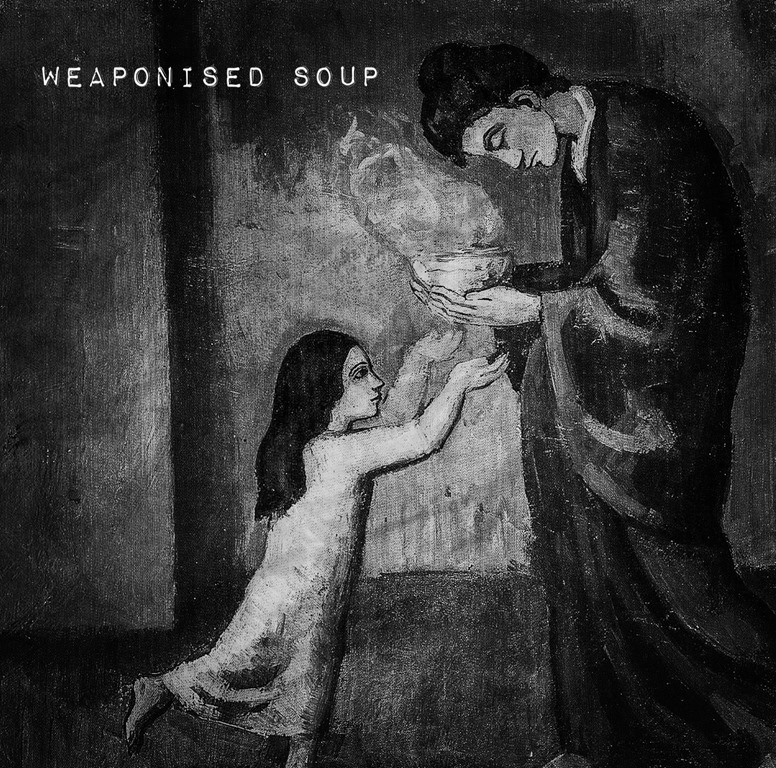
And then there’s the popular notion that music reviewers are failed musicians. Perhaps the people who cast this aspersion should speak to Neil Tennant or more pertinently John Robb, Jim Irvin, and Sally Still. I might not point them in the direction of my own ongoing musical activities so much, but would highlight Oscar Quick, the man behind the ‘Needs More Cowbell’ site, where he posts considered reviews of new releases, who has recently turned in a handful of live shows and delivered the album Weaponised Soup.

In his bio, Quick explains how Weaponised Soup ‘features influences from disco, hip hop, rave and progressive rock, while remaining true to its core 80’s post punk sound. Dealing with Oscar’s experiences with insomnia, this record is a stream of consciousness during those many long nights, covering the extreme highs and destructive lows of staying awake for days at a time.’

As a lifelong insomniac, it’s relatable: the output happens because how else do you distract a fevered, restless brain that won’t let you rest? As you may guess, it’s not only a stylistic melting-pot, but also very much an album that jumps all over the place in a way which conveys the mania and erratic impulses that arise from protracted sleeplessness.

Weaponised Soup Album Cover

Opener ‘I Should Sleep’ sounds like The Pixies, only staggering weary with fatigue and mumbling, slurred, and fugue-like. But if you’re looking for reference points, look no further than the title of ‘Assorted Psycho Candy’, which is, unexpectedly, a remarkably atmospheric, downtempo trip-hop / post-rock crossover that finds Quick picking through a medley off musings. ‘Over the Garden Wall’ is a contemplative wash of Cure-esque synths and packs more than its necessary share of cowbell.

Some songs are more successful than others: ‘Chrysanthemums’ is a weird, almost baggy slice of dance that twitches with paranoia and tension and switches into frenetic territory around the mid-point, but the sub-Goldie Lookin’ Chain white rapping takes some absorption., and the New Order-esque ‘Respect for Dinner Ladies’ brings more Sprechgesang and even straight spoken vocals that likely sit in the Yard Act bracket, and in its simmering tension and up-front awkwardness, by accident or design, Weaponised Soup seems to capture the post-pandemic zeitgeist.

Something clearly changed during lockdown: artists are now talking openly about mental challenges and neurodiversity, and embracing these experiences creatively, and this is reflected in a new wave of music that refuses to be bound by genre, as Andre Rikichi’s wonderfully weird exploratory stylistic explosion on which I wrote only yesterday exemplifies.

As we continue to crawl from under the psychological rubble of the pandemic and successive lockdowns, into a new world that’s not brave, but fearful, tremulous, and ultimately fucked-up and swinging ever further to the right, these are truly terrible times – but as history shows, terrible times tend to spur the creation of great music. With Weaponised Soup, Oscar Quick forges a small but unique space in that fucked-up world, and it’s very much a good thing.

Derby-Uni-UGG-038

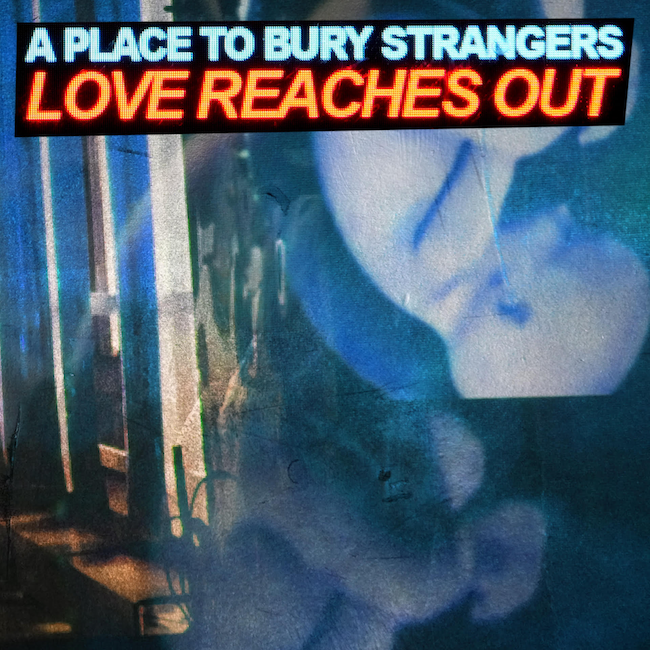
A Place to Bury Strangers find tenderness in the unlikeliest of places with ‘Love Reaches Out’, the fifth single and new music video from their critically acclaimed sixth album, See Through You, out now (digitally) and on March 11th (vinyl) on Dedstrange.

“’Love Reaches Out’ is the hope at the end of the tunnel that concludes this album,” says Oliver Ackermann. “I went through such a traumatic experience writing this record and yet people were there to help me, so this song is about appreciating and thanking them.” With its triumphant marching snare and a hooky bassline, ‘Love Reaches Out’ concludes See Through You on a warm and fuzzy note—though not the guitar kind. No circuit can contain the electrifying joy of two souls united. “Moments like this highlight how much [Ackermann has] grown as a singer,” writes Heather Phares at AllMusic. In her review of See Through You, she praises ‘Love Reaches Out’ as “Ackermann and company’s most empathetic song to date.”

In the music video directed by horror auteur Gabriel Carrier (For The Sake Of Vicious, The Demolisher), the third in a series of horror movie directors the band reached out to, a woman unexpectedly encounters and reaches out to a shapeshifting entity in the most unlikely manner. This entity befriends her after it was left for dead and gives her the support needed to help battle her own anxiety and inner demons. “It reminds us not to turn a blind eye to the small things and that friendships can manifest in the most unlikely ways,” says Carrier.

Watch the video here:

AA

5tqs_APTBSLoveReachesOut

10th December 2021

Christopher Nosnibor

Sense of Scenery first came to my attention way back in 2009 with the release of The Disaster of Imagination which landed with me for review. I fucking loved it, and still love it now: it’s an album that’s stuck with me, and still gets regular play now, although it carries a certain weight of nostalgia now as it comes bearing memories of past, perhaps simpler times, and it also reminds me of people and places, and how things have changed.

But then, it always hit me with a certain level of emotional resonance, there was just something about it.

Sense of Scenery have been slow in their subsequent output: an EP in 2012, a remix EP the following year, and an instrumental single in 2017 has ben the sum of the output prior to the emergence of ‘Through the Walls’ as a single in August as a taster for an upcoming album. And now there’s this, a second single and accompanying B-side.

SOS come out swaggering with bravado about this one, claiming it to be ‘Like a direct injection of Viagra into the flaccid, shriveled wiener of Rock’. Which is pretty fucking bold, however you look at it.

It arrives on a wibbly wave of organ with some warping tape stretches, and a crisp metronomic drum sound, and while it’s immediately apparent that their style is unchanged in its post-punk leanings, it is very much evolved. Sean Douglas’ compositions still revolve around cyclical chord repetitions and choruses that step up the vocals and pack a mean hook, but things are altogether slicker, especially the production.

The drums are bordering on the mechanical, and there’s a tightness and smoothness about the overall sound that brings polish, but more than that, it brings a sense of paranoia and heightened tension. B-side ‘Smokescreen’ really brings this all to the fore, bordering on dance, especially with its blooping synth line, but it sounds like the soundtrack to an 80s car chase sequence, and it’s dynamic and exciting.

AA

a3458767912_10

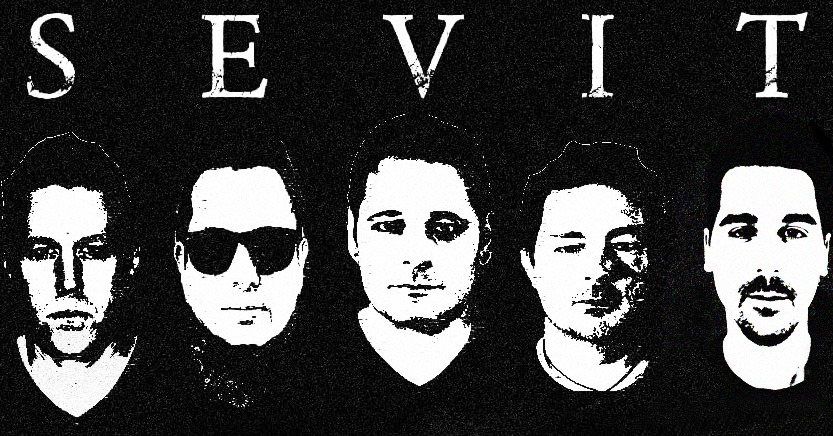
Texas-based darkwave band SEVIT have just unleashed their single & video for the song, ‘It Can’t Rain All The Time.’ This is a conceptual song inspired by James O’Barr’s comic and the movie, The Crow, the character of Eric Draven and his fictional band, Hangman’s Joke.

“I always wanted to embody myself into the character’s mindset and finish the lyrics the way I always wanted to hear them in their entirety. I started to imagine the words I would have written if I was Eric Draven. The Crow was a beautiful film – so much sadness and so much longing, so much heart… When I decided to write this song, I wanted to revisit my hearts emotional vault and I wanted the words to belong to the film’s character, Eric Draven, who I imagined to be dark, poetic, theatrical, daring, passionate and beautiful."  – (Jackie Legos – Vocals/Guitar)

With hints of The Cure and New Order’s ‘Ceremony’ it’s a dark pop cracker driven by the thumping great snare sound. Watch the video here:

AA

7dbbe155-4277-b9da-3c06-a642321d77c3

11th November 2021

Christopher Nosnibor

This time of year, we see a proliferation of poppies and pride, Help for Heroes silhouette logos and ‘lest we forget’ slogans in every direction, and perhaps I’m cynical but so much of this remembrance rings hollow. Sidestepping the debate that recent years have seen poppy pride become a platform for nasty nationalism and Brexity-division, one can’t help but wonder just how much is true remembrance and how much is social media-fuelled one-upmanship, the bigger the poppy the bigger the heart in a display of excessive virtue-signalling akin to being the loudest pan-basher in the street when clapping for the NHS during lockdown.

‘Purple Hearts’ sees Reardon Love – who’ve scored BBC Introducing track of the week – draw inspiration from a human story, specifically that of POW Horace Greasley, who found a certain fame for his claim to have escaped his camp over 200 times to meet with his lover with a chorus line of ‘The Iron Cross cannot contain me’.

I suppose then, this is a wartime tale that espouses the idea that love conquers all rather than tears us apart – and there are heavy hints of New Order and Echo and the Bunnymen about this quintessentially 80s indie-influenced tune. Atop a sturdy bass and nagging guitar line, there are some tidy melodies accentuated by appealing harmonies, making for a catchy tune with an uplifting message pulled from the wreckage of war.

Single artwork

Supernatural Cat – 8th November 2018

Christopher Nosnibor

Eerie strings streak across an ominous low-end throb, transitioning expansive vaporous drones with serrated edges on the album’s first track, ‘Hefy Lamarr’ and it sets the ominous tone for the rest of the album, as piano notes hover in rarefied atmospheres with a slow-decaying sustain carried on a cold, dry echo. It’s minimal, sparse, dislocated, disconnected. There are no sonic hugs on Doppeleben. It’s an album that builds walls, force-fields. Nihilism, isolation, introspection… these are the moods of Doppeleben.

So what do we know about the artist? The Mon is the solo name of a new project by Urlo, best known as the lead vocalist, bass and synth player in heavy trio Ufomammut. Doppelleben is The Mon’s debut album, and, as the press release notes, ‘where Ufomammut create mind-expanding, heavy psychedelic, almost other-dimensional sounds, The Mon by comparison is far more intimate, looking inward, as Urlo explores and examines his inner most thoughts through music.’

And Doppeleben is very much an introspective set, which is far from heavy and as such, it is very much a departure from Urlo’s work with Ufomammut. But heavy is relative, and ‘Relics’ still manages to come on like Ministry on ketamine, with distorted, raw-throated vocals hollering out against a backdrop of plodding percussion and howling feedback. It’s representative, but it isn’t: the atmosphere of Doppeleben recreates the claustrophobic intensity of The Cure’s Pornography, while drawing on the stark discomfort that pervaded the alternative scene circa 1979-1983.

Fear chords ripple, delicate notes drip and drop over slow surges of dark density which rise and swell through interminable sustain. ‘Hate One I Hate’ sounds like Earth circa 1992 covering ‘One Hundred Years’ by The Cure. Devoid of percussion, the glacial synths and thick, crawling guitars coalesce for create a spine-stiffening tension.

With clattering metallic drums battering away in the background, ‘Blut’ grinds hard at a bleak post-punk seam, landing somewhere between Movement era New Order and Downward Spiral era NIN, with hints of Visage’s ‘Fade to Grey’ thrown in for good measure. It’s compellingly intense and makes optimal use of a handful of chords in a descending sequence.

In contrast, ‘Her’ offers a bend of shoegaze haze and Bauhaus-hued art rock as it washes blank curtains of synth and monotone vocals before a cascade of slide guitar swerves its way into the mix. And yet never could it be as far removed from country as the notes bend and glide and slide to fade.

Low, slow, and dark, there’s an oppressive density to Doppeleben which is hard to define and even harder to let go.

AA

The Mon – Doppeleben

16th March 2018

Christopher Nosnibor

I have to eject and check the disc to make sure I’ve not bobbed in New Order’s debut after hitting ‘play’ on this CD. I haven’t, but The Vaulted Skies have that whole c.1980 sound down to a tee, with the clinical rhythms and steely synths shaping the landscape.

The Vaulted Skies – as if the band name wasn’t indication enough – plunder the seam of the dark post punk style that occupied the first half of the 80s, and – while a roll-off touchstones and reference points feels a shade reductive, it’s entirely relevant and appropriate to namecheck The Rose of Avalanche and Rosetta Stone.

The opener, ‘Does Anyone Else Feel(Strange)? culminates in an explosive kaleidoscope of retro synth and thunderous drums that calls to mind ‘Walk Away’ by The Sisters of Mercy and this overtly gothy groove carries through the other three songs on this EP. ‘The Night’ lurches and lunges and bucks over a thick, warping bass groove.

When they slow it down and do the sparse atmospheric thing, as on ‘The Falling Man’, The Cure’s Faith looms large as an influence, with heavy traces of Japan in the mix. Whoever described them as ‘the lovechild of Robert Smith and Boy George’ was at least half right.

And this is where, as a critic, the duel between objectivity and subjectivity sets its markers and gets to tussling. Objectively, it’s derivative and by-numbers. Subjectively, it’s got a gloomy emotional draw and a certain tension. Objectively, it’s well-executed. Subjectively, those nagging guitar parts and basslines hit the spot. So where you do go?

From a purely personal perspective – and if truth be told, and response to music has to be personal – the technicalities and matters of production count for nothing when a work hits and resonates on a personal, emotional level, which is never remotely objective or rational, but always instinctive, gut-driven. And when aspects of my personal life are difficult, I invariably find I’m prone, if not to regression per se, but to a certain tendency toward nostalgia. And all of the acts The Vaulted Skies draw on, intentionally or otherwise, pull me back to being 15-21. My formative years, my musical discovery years, my goth years – years I never fully left.

Do I get a sense of actual nostalgia from this? No. members of The Vaulted Skies probably weren’t born when any of the aforementioned bands were in existence, or even in the early 90s. It’s not their fault they were born too late. They cannot control time or style. But they cannot control their musical output, and it completely does it for me.

AAA

Vaulted Skies

No Sleep Records – 16th September 2016

Christopher Nosnibor

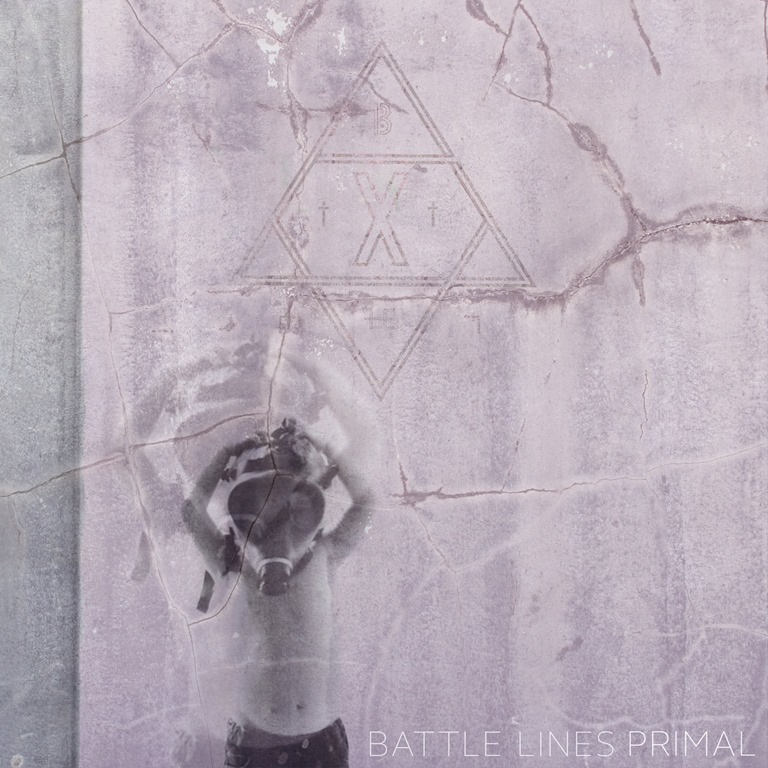
I have to admit, I’d been wondering what was happening with Battle lines. Following the single releases ‘Colonies’ and ‘Hunting’ (split with Post War Glamour Girls), and a storming set at the Brudenell to launch it, there was talk of an album when I chatted with the band afterwards, and then… Well, they seemed to drop off the radar. Carly had mentioned work and all of the things that get in the way of doing things, although it was some time ago, and I’d had a few pints during the evening and what with work and an endless stream of new releases demanding my attention… well, I sort of forgot about things. I’m sorry for the fact that this makes me the same as pretty much everyone else: I blame the ‘net age, the insane pace of our post-postmodern culture, where memories are overlaid and replaced in an instant, buried in the endless blizzard of shiny new things, images, sounds, more bad news and another media frenzy over the latest celebrity scandal. And so, a guilty late review of an album by a band I’m a big fan of.

While I’m looking around at intangibles to blame, I’m also aware that I’m feeding my own anxieties and understanding more the pressure on any artist, in any medium, to devote as much time to promotion as to the production of actual art. It’s all about the momentum! Paradoxically, to weather the storm that is the blizzard of social media, one is required to contribute to it further, and constantly. If you’re out of the public eye, you’re forgotten in a flash. It’s an absurd situation, of course: artists need to retreat in order to produce. In an over-loud world, silence is good, and importantly, silence from a band means they’re likely holed up working on material.

Battle Lines, individually and collectively, have been getting on with their lives, and thankfully, have been doing the things that are important, instead of fretting over their public profile. The press release apologises for their apparent absence, but is matter-of-fact about things:

It’s not a secret that we’ve been very quiet over the last year… There’s no big story, we love each other, we’re as good friends as we’ve ever been. Life has moved on for all of us, and we now reside in New York, London, Brighton and Leeds, geography prevents us from touring, but it can’t prevent us from releasing new music.

And so, while I was busy being distracted, Battle Lines slipped out their debut album, a record I’d waited more years than I care to count for: having first discovered them in their previous guise as Alvin Purple, I’d been captivated by the quality and richness of their dark, post-punk influenced material and the incredibly assured live performances they gave so consistently.

The switch to Battle Lines marked a refocusing: the energy which effused from their earlier songs was directed more inward, and the material displayed an almost ascetic discipline in its execution on those first single releases and in the live shows, more clinical, more icily intense than their previous incarnation.

This is all captured perfectly on Primal. The sparse title track and album opener hints equally at The XX and Closer era Joy Division. But then, glacial electropop undercurrents and thunderous tribal drumming also define the sound. And the sound… the fact they’ve taken their time over this means that the sound is honed to perfection. There isn’t a note out of place. That isn’t to say it’s overproduced within an inch of its sterile life or stripped of its soul: they’ve pulled everything to tight as to render it almost claustrophobically dense, a work which offers an insight into a near-obsessive control over the output. In context, it makes sense:

There’s an honesty about the notes which accompany the release which is at once uncomfortable and refreshing:

Lyrically this was an incredibly dark place to go to, I had come out of a relationship that became mentally abusive; looking back I wondered who I had become in excusing that kind of behaviour. This is what drove me in the album, those darkest moments became a journey of self discovery and a realisation of who I really am and what I deserved.

When life is out of control, what can you do but obsess about the things you can control – your art? But from darkness comes light, and creativity can be so cathartic. As dark as Primal is, it contains some truly beautiful and magnificently uplifting musical moments. Carly’s vocals at times soar so high as to disappear from the register of the average human ear, but ‘Sea of Fear’ is a swelling anthem of a track, and the sunburst shoegaze of ‘Smother’ ripples with the joy of drinking in clear air and rediscovering the potentialities of life.

‘Outsider’ is built around an insistent motoric beat and exploits the quiet / loud dynamic, bursting into explosive shoegaze wall-of-FX guitars which call to mind Ride in their early years, but as is always the case with Battle Lines, Carly’s ultra-high-frequency vocals means they don’t really sound like any of their forebears, or their contemporaries.

Of their single releases, only ‘Hunting’ has made it to the album. This is a bold and admirable choice, and one which makes a statement: a statement which says that \Primal is an album proper, a document, and not a ‘Hunting’ is, of course, a belting wall of noise driven by a twitchy disco beat and shuddering synth with metallic screeds of guitar peeling off a Donna Summer groove, over which Carly comes on like Siouxsie Sioux, breathy and intense.

The album concludes with ‘Riot’, a richly-layered and uplifting song which blossoms in a screed of guitar noise over an insistent rhythm section, the drums and bass tight and locked into a sedate groove.

Primal displays remarkable poise, and as much as its architecture is concerned with the turbulence which inspired its lyrics and overall tone, its coherence and control are remarkable. But rather than feeling soulless in its clinical execution, there’s a clear sense that Primal is about holding it together and showing just what can be achieved through sheer will and determination and the exertion of mind over matter. Despite the obstacles, personal and geographical, Battle Lines have (meticulously) produced a powerful album that was more than worth the wait.


Battle Lines - Primal