Posts Tagged ‘mortality’

2nd October 2025

Christopher Nosnibor

The context for Ashley Reaks’ sixteenth solo album – and his third in three years (not counting the compilation of demos released earlier this year) – is weighty. He has written openly and extensively of his health issues, while sharing images and commentary nocturnal wanderings, and these both inform At Night The World Belongs To Me, of which he writes:

The looming spectre of death and loss haunt the album: Reaks survived two major health scares and a misdiagnosed terminal illness over the last 18 months, experiences that inform the reflective, poetically gloomy lyrics, and the 4 am downtempo grooves. Adding to the sense of loss, guitarist and long-term collaborator Nick Dunne died suddenly at home just one week after completing his guitar parts for the record.

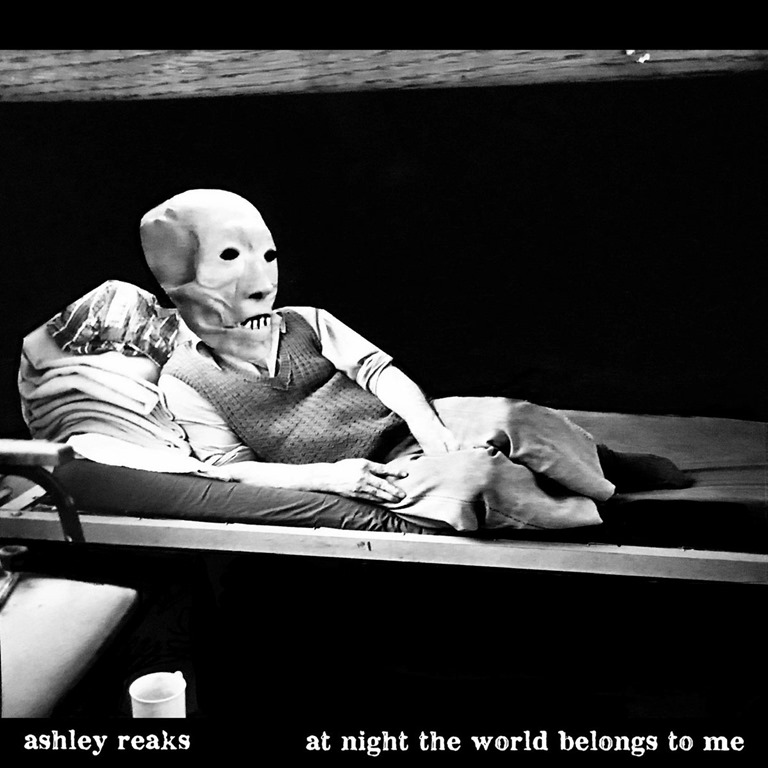
Through all of this, he has continued to collage and write prodigiously, but At Night The World Belongs To Me marks a distinct change of tone from its immediate predecessors, The Body Blow of Grief (2024) and Winter Crawls (2023). The usual elements are all present and correct – the sense of experimentalism, the collaging of genres, melding post-punk, jazz, and dub – but this feels darker, more introspective. The cover art, too, reflects this. While it has the same rather disturbing, grotesque strangeness of his usual work, the grim-looking figure in repose has connotations of ailment, frailty, even the deathbed.

The first track, ‘Playing Skittles With The Skulls and Bones’ has a bass groove that calls to mind The Cure’s early sound, melded to a rattling rhythm reminiscent of ‘Bela Lugiosi’s Dead’. The smooth sax that wanders in around the mid-point provides something of a stylistic contrast, but at the same time, it’s minor-key vibes keep the song as a whole contained within a bubble of reflection, evoking the stillness of night. I know, I’m sort of dancing about architecture here, but something about Reaks’ work prompts a multi-sensory response.

‘Rimmed With Yellow Haloes’ brings soaring post-rock guitars atop of an urgent ricochet of drumming and solid bass. On the fact of it, it’s almost poppy, but it soon shifts to take on a folksy aspect, while Reaks sings of death and funeral pyres, and the refrain, delivered with lilting, proggy overtones, ‘The Lord gave the day to the living, the night to the dead’. In context of the album’s title and theme, there is a tangibly haunting foreshadowing here, a suggestion that Reaks has not only accepted his mortality, but has assumed his place. It’s powerful, and deeply moving. Of course, Reaks can’t help but introduce incongruous elements, with some horns which are pure ska and some super whizzy 80s pop synths providing a pretty wild counterpoint to it all. It’s hard not to smile, because there’s an audacity to this approach to composition and arrangement – a lot of it simply shouldn’t work, but it does, and it’s uniquely Reaks.

The album’s shortest song, ‘Things Unseen’ is snappy, poppy, Bowie-esque, an amalgamation of post-punk and electropop, a standout which is succinct and tight, and consequently, the dark connotations of the bleak shuffle of ‘Life Forever Underground’ – a rippling synth-led tune – are rendered more profound. The sequencing of this album is such that the shifts between songs accentuate their individual impact.

‘Mask the face, unmask the soul…’ he sings softly on ‘Mask The Face’, which has a somewhat spacey Krautrock feel to it – before a guitar solo that worthy of Mark Knopfler emerges most unexpectedly. And as dark as things get here, Reaks never ceases to bring surprises. At Night The World Belongs To Me perfectly encapsulates the reason he’s so respected and critically acclaimed, but orbits light years outside the mainstream. In a world defined by an exponentially reducing capacity for sustained attention, Ashley Reaks makes music that requires real engagement, the musical equivalent of complex carbs and high fibre foods in a processed, white bread culture. But also, contemporary mainstream radio music favours short songs which cut straight to the chorus, where the hook has to land in the first twenty seconds. Here, we have eight songs, all but one of which are over five minutes long. They take their time, they’re expansive and exploratory, there’s atmosphere, there’s depth. And as ‘Eyeing Up The Sky’ tapers away on a buzzing drone, we’re left with much to chew on, much to consider.

AA
a2008509738_10

Negative Gain Productions – 6th June 2025

Christopher Nosnibor

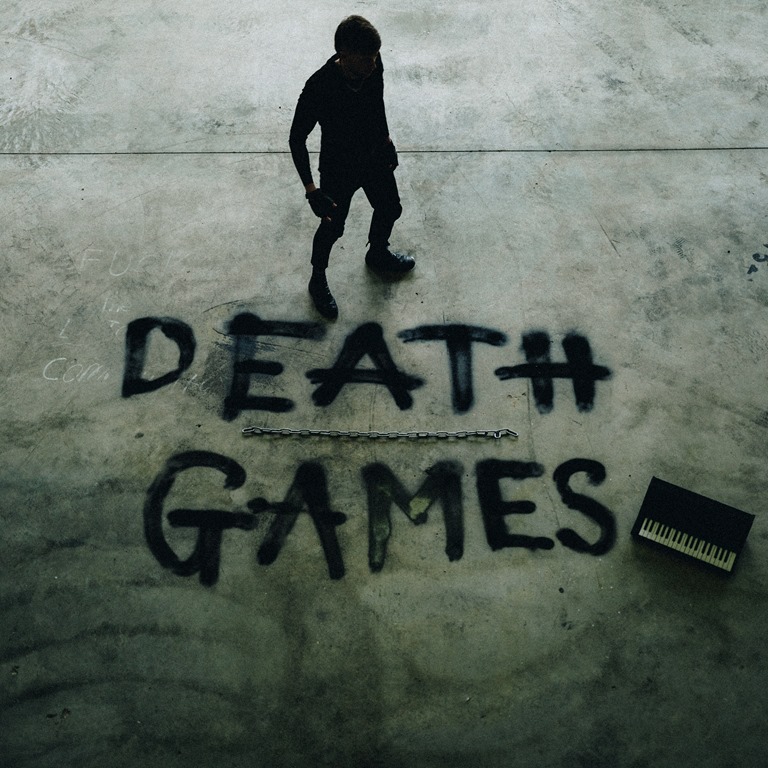
Just as the birds of prey from which they take their name are creatures of the night, so this Irish act – essentially one guy – who draw inspiration from the darker realms of postpunk, goth, and synth-based music are very much dwellers of the dark hours, as debut album Death Games attests, with titles such as ‘Perfect Nightmare’, ‘Tombs’, and ‘Send Me to My Grave’. The album’s themes are timeless and classic, offering ‘a haunting exploration of love, mortality, and the fragile nature of existence,’ while casting nods to touchstones such as Lebanon Hanover, Boy Harsher, and Black Marble.

Lead single ‘Give Me Your Stare’ opens the album in style with a disco beat and throbbing bass giving this bleak, echo-soaked song a dancefloor-friendly groove. The vocals are backed off but ring clear through a haze of reverb, offering a hint of The Cure’s Seventeen Seconds in terms of production values.

AA

The compositions on Death Games are pretty direct: there’s not a lot of detail or layers, and it’s the electronic beats and pulsating basslines which not only define the sound but drive the songs. The sonorous synths which twist and grind over the top of these predominantly serve to create atmosphere more than melody, although haunting, repetitive motifs are commonplace, and the vocals, too, being low in the mix and with a fairly processed feel, are more a part of the overall sound than the focal point.

‘Skin on Skin’ brings a wibbly, ghosty synth that sounds a bit like a theremin quivering over a minimalist backing of primitive drum machine and bass synth, and the likelihood is that they’re going for early Depeche Mode, but the end result is more like a gothed-up Sleaford Mods, although, by the same token, it’s not a million miles away from She Wants Revenge around the time of their electro-poppy debut, and that’s perhaps a kinder and more reasonable comparison. ‘Fevr 2’ brings an increased sense of urgency with skittering bleeps skating around the reverberating drums: it has both an 80s movie soundtrack vibe and a vintage goth disco feel, and despite its hectic percussion and busy bass, ‘Tombs’ conjures a haunting, requiem-like atmosphere.

The ‘death’ thematic may not always be literal, and as much concerned with the death of love and the ends of relationships, but the duality the theme offers serves OWLS well. There’s no denying that it’s both a stereotype and a cliché that an obsession with death is such a goth thing, and OWLS fulfil these unashamedly – but then, why should there be shame? Why is it only goth and some strains of metal which embrace life’s sole inevitability, and explore mortality and the finite nature of existence? Even now, after millennia, we aren’t only afraid of death, but, particularly in Western cultures, we’re afraid to think or talk about it. People passing in their eighties and nineties still elicits a response that it’s a tragedy or that they should have had more time, and I’ve seen it said of people departing in their sixties or even seventies that it’s ‘no age’. We seem to have a huge blind spot, a blanketing case of denial when it comes to death, as if it shouldn’t happen, that it’s an injustice, and that no-one deserves it. But nothing is forever, be it love or life, and while loss – any loss – is painful, it comes attached to inevitability, being a matter of when, not if.

The stark and sombre ‘Send Me to My Grave’ commences a trilogy of dark, downbeat, funereal songs, which grow progressively darker, more subdued, the vocals more swallowed by evermore cavernous reverb. Even when the beats kick in and the bass booms, things warp, degenerate, and seem to palpably decay and degrade. There’s a weight to it, a claustrophobic heaviness, and the kick drum thwocks away murkily as if muffled by earth and six feet under sods. ‘This Must be the End’ is brittle, delicate, the calm that comes with the acceptance of… of what? What comes after the end? It feels like the song, and the album, leave this question hanging with an ellipsis, a suspense mark. It seems fitting, since we simply don’t know. But it does very much leave the door ajar for OWLS’ follow up, and that is something to look forward to.

AA

AAlbum CoverA

14th January 2025

Christopher Nosnibor

They only released their debut single on 1st December last year, and here we are, not quite halfway through January and we’re being presented with single number three.

While Argonaut’s track-a-month schedule for their ‘open-ended’ album Songs from the Black Hat, matching only that of The Wedding Present in 1992, seemed like the pinnacle of prolific – not to mention the ultimate advertisement for the DIY approach – three singles in six weeks must surely have the makings of a record (pun partly intended). As of this moment, though, we don’t know what their longer-term aim is, or even if there is one, beyond releasing new songs as soon as they’re ready, and if that is their MO, it’s admirable. Without the need to work to the schedules – or budgets – or a label, their only limitation is their own time and energy.

I had initially noted, following ‘Scarlet’, and ‘Amber’, a theme of colours linking their songs, but perhaps it’s female names. Or perhaps it’s pure coincidence, and they have simply plucked one-word titles to denote their songs.

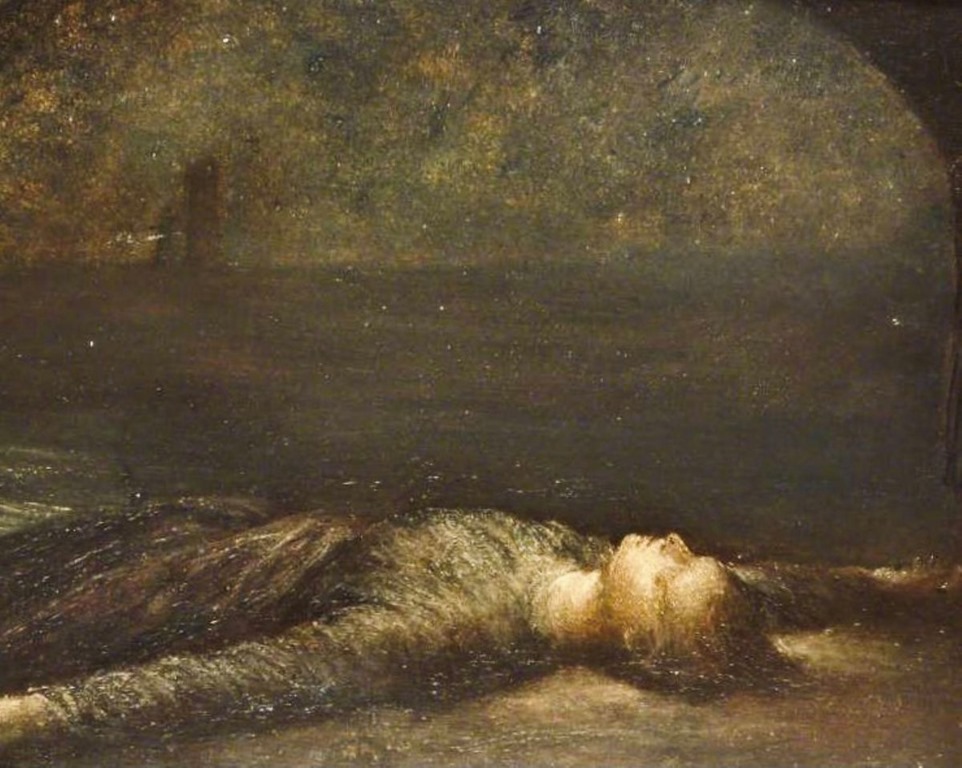
‘Jude’ – which comes with appropriately dramatic artwork, somewhere between swooning gothic drama and pre-Raphaelitism, the source of which I haven’t been able to identify – once again features the voice of poet Monica Wolfe, here whispering, and, as credited, ‘breathing’. These contributions are significant in rendering an atmospheric composition, particularly in the introduction, before the arrival of the piano – of which there are, in fact, two, adding layers to the brooding theatricality of the song, and Stephen Kennedy’s voice.

The feel – particularly in his delivery, with some quavering intonation, and enveloped in a spacious reverb – is very much gothic folk, as he casts introspection, while chasing ghosts.

‘Will the world miss me?’ I whisper

And sigh, as my life drifts away.’

It’s moving, poetic, and powerful, presenting a straight-ahead contemplation on mortality – not in some cheesy ‘romantic’ gothic style, and not in a crass emo way, but a rare sincerity.

Somewhat ironically, in our teens and twenties, we tend to agitate about death, while also treating it with a flippancy, because it’s what happens to old people, but as we grow older, we go out of our way to avoid thinking or talking about it, because as we begin to lose parents, uncles, aunts, and even – increasingly – peers, shit gets more real than we can handle. Invariably, we bury our heads in the sand, shrug off life insurance and toss making wills into the distant future along with pensions, laughing darkly how we never expect to retire anyway.

In the final minute, the song swerves into more electropop territory as the rippling piano combines with a crisp, insistent drum beat. It’s a magical, ethereal moment, which is but fleeting, like dappling sunlight through the branches of trees in a woodland on a breezy day. In many ways, this captures the essence of the song and its sentiment, in its fleeting ephemerality, a metaphor for life itself.

It ends suddenly, with only inaudible whispers fading to the close, and again the metaphor stands. This is perhaps their strongest and deepest release to date, and best absorbed by candlelight, with a large measure of something intoxicating.

AA

a0763472052_10

Karlecords – 12th April 2024

Christopher Nosnibor

This three-way collaboration promises ‘intense, menacing layers of thick drones and alien sounds,’ and comes laced with sadness in the wake of the recent passing of Phill Niblock.

Karlrecords’ statement around this release and how it came to be is simple, direct, and worth quoting here:

In summer 2022, within just a few weeks and by pure coincidence, 2 proposals regarding Phill Niblock albums arrived: one suggesting an overdue vinyl reissue of a CD release (more on that when the time has come for it), the other email was from Anna Clementi saying she and Thomas Stern were working on new pieces that Phill Niblock has written for her … when Zound Delta 2 was complete, Phill sent photographs for the two artworks, we met twice to discuss details, but unfortunately he died unexpectedly early January this year so the album now is, sad as it is, a posthumous release … an intense goodbye from one of 20th century most iconic composers.

While Niblock departure was sudden and unexpected, it’s remarkable that not only had he enjoyed a career spanning five decades and ranging across minimalist and experimental music, film and photography, but that at the age of ninety, he remained prolific until his final days, as Looking for Daniel, released in February, and representing his final compositions, evidences.

Like Looking for Daniel, Zound Delta 2 contains two longform composition, and, again, it’s a monumental drone-orientated work. ‘Zound Delta 2’ is eerie, other-worldly, haunting and atmospheric. Ethereal voices hum and moan, breathy wordless monastic incantations come together and emanate disembodied exhalations as if calling from the other side. No doubt the actual source sounds and the process was quite banal and workaday, but the effect… the effect sends shovers all over and goosebumps pickle in response to this chilling swell of sound. Beneath the moans and cries are slow-turning rumbles and delicate, wisp-like ambience. Everything sounds slowed down and stretched, sound suspended in time and space as they hang in the air. The layers wrap around one another, and while minimal in form, a density of atmosphere builds which makes it hard to catch your breath.

Sometimes, a dream can affect the shape and mood of the entire day which follows, and this has been one of those days for me. More often than not, it’s simply a hangover of anxiety or a sense of doom which looms, but since my wife died early last year, I’ve dreamed of her only rarely, so when I do, the impact is great, and if feels as if she’s speaking to me, even when there’s no obvious message. Invariably, she’s well again in my dreams, or at least looks healthy again, and sometimes, she imparts words or wisdom. But mostly, it feels a if her presenting in my dreams is a reminder, a kind of haunting. The reason I take this diversion isn’t purely a matter of indulgence, but because it’s relevant to the tone of ‘Zound Delta 2’, which creates the sensation of Niblock pre-empting his departure with a recording which sounds as if it’s being projected from beyond. The abstract voices aren’t tortured hellish howls, but the sound of purgatorial lostness, wandering in between worlds, wanting to communicate, to be heard, but without the capacity for articulation.

Perhaps this isn’t the album I should be listening to tonight – but then again, perhaps it is. Culturally, we avoid talk of death, we shield our eyes from it. As the sole inevitability of life, we need to turn and confront it. ‘Zound Delta 2’ is without doubt one of the most powerful, intense, moving and difficult pieces I can recall hearing. It is so, so sad, so far beyond human, so far beyond this realm. It feels like the purest grief, the deepest of sadness, the ultimate release, the sound of being dragged, unsuspectingly, into the spirit realm. Everything collapses and eddies into a disorientating swirl of sound in the tracks final minutes, growing evermore uncomfortable.

‘Zound Delta 2 (Version)’ is fractionally shorter, but no less comfortable. Again, it begins quite gently, almost delicately and emanating an air of tranquillity – but it’s soon disrupted by creeping undertones of distortion. There’s squelching, trudging, sloshing and rumbling discomfort amidst uneasy drones and heavy flutters, and if it’s momentarily lighter than the ‘original’ version, this alternative or second version swiftly evolves to become pure tension. As it progresses, ‘Version’ become more uncomfortable, more distorted, more strangled, tortured, and asphyxiated. I feel my muscles tighten and my head spin. It’s dark, it’s tense, it’s difficult.

Clearly, it would be erroneous to presume that Niblock was aware of his limited time. But something about Zound Delta 2 feels like a planned exchange from a place beyond our experience and understanding. It’s as if he had stepper over some time before, and brought something back and shared it with his collaborators for this work.

Any response to a musical work is personal, subjective. Perhaps my in-the-moment reaction is coloured by timing, by the moment of the now – bad timing. But – BUT… something about Zound Delta 2 is intrinsically hard to manage, touching a subconscious level that really triggers something. As slops and churns wash and eddy around the eternal drones which form the dominant fabric of the album, Zound Delta 2 tugs at our feet and ankles and disturbs the ground beneath our feet. Dark and dank, Zound Delta 2 is not an album to listen to in the dark.

AA

KR115_front