Posts Tagged ‘mood’

26th November 2024

Christopher Nosnibor

Deborah Fialkiewicz has been keeping busy – as usual. Composer of contemporary classical, ambient, and dark noise works both as a solo artist and in various collaborative permutations and guises, she’s back with a new BLOOM release in collaboration with Daniel James Dolby. And it’s a Christmas single.

I’ve never been rabid about Christmas, and the last three years have seen a succession of difficult Christmases for me personally. In December 2021, my wife was diagnosed with stage 4 breast cancer. We weren’t even sure if she would be home for Christmas. She was, but was incredibly weak after three weeks in hospital, and that she was able to sit at the table for Christmas dinner felt like a miracle. We were in shock, and she was clearly unwell. Having made substantial improvements in rebuilding her strength through 2022, she deteriorated with the onset of winter, and again was weak and struggling over Christmas. It still doesn’t seem real that she only had another three weeks. And so Christmas 2023 was the first with just me and my daughter, aged twelve. We made the best of it, but it wasn’t the same. I detail this not for sympathy, but purely for context. It means that while around this time of year it becomes nigh on impossible to avoid festive fervour, with adverts depicting happy couples and radiant nuclear families, all the usual Christmas tunes and an inbox busting with new ones clamouring for coverage, and Facebook friends and work colleagues are dizzy with excitement over getting their decorations up, sorting secret Santa and planning social activities, I’m not feeling much enthusiasm, concerned primarily with getting through it and hoping distant relatives don’t think I’m rude or twatty for not sending cards out for the second year in succession.

When writing about music, I am often – and perhaps increasingly – aware that how we engage with it, how it affects us, is intensely personal and involves multitudinous factors. Sometimes, it’s something as arbitrary as the mood we’re in when we hear a song that will determine our response. And the chances are – and I’m no doubt not alone in this – hearing chirpy tunes when I’m down isn’t going to cheer me up, it’s going to really piss me off, or set me off. It’s impossible to predict. To be safe, I tend to try to avoid Christmas songs, which involves avoiding TV and radio – which is surprisingly easy if you spend large chunks of your time in a small room reviewing obscure music – avoiding shops – manageable – tacky pubs – easy – and ignore review requests for Christmas singles.

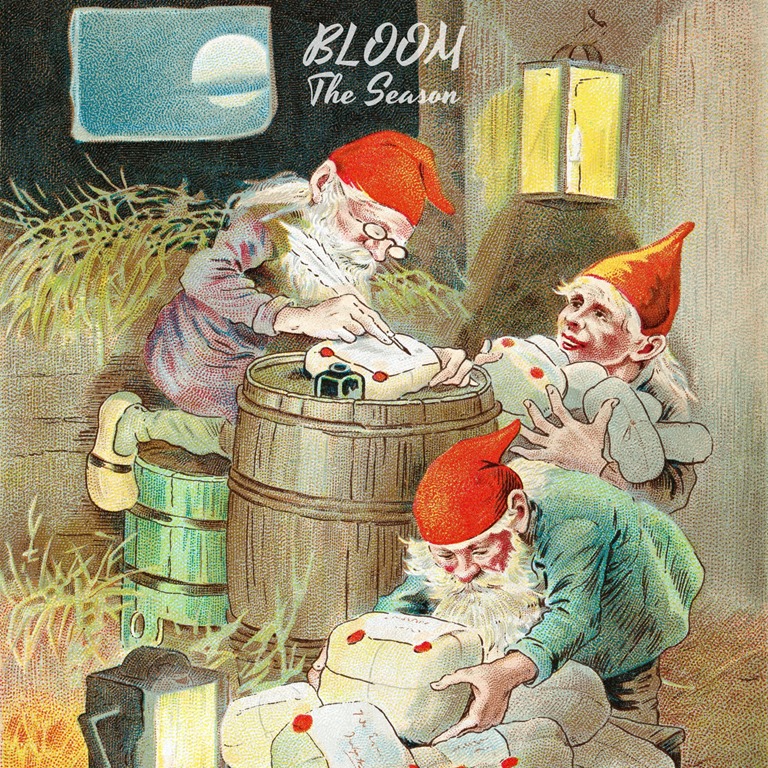
But there is always space for an exception, and Bloom’s ‘The Season’ is it. Deborah may have been posting pics on Facebook of the ‘festive mouse’ in the studio to mark this release, but said mouse is looking over a piece of kit called ‘Psychosis Lab’ made by Resonance Circuits. The cuddly cartoon cover art for this release is misleading, and for that, I am grateful.

It’s five minutes of deep, hefty beats melded to a throbbing industrial synth bass. Atop this thumping dance-orientated rhythm section, there are synths which bring a dark 80s synthpop vibe. In combination, the feel is in the vein of a dance remix of Depeche Mode circa ‘85 or ’86, around the point they began making the transition from bouncy pop toward altogether darker territories. It’s repetitive, hypnotic, pulsating, big on energy. But there are eerie whispers which drift through it all, distant wails like spirits rising from their graves. These haunting echoes are more evocative of Halloween than Christmas – and this is a significant part of the appeal. It’s a curious combination of ethereal mists and hefty, driving dance groove, which is simultaneously uplifting, tense, and enigmatic. It is not schmaltzy, cheesy, twee, or saccharine. It’s the season, alright. The season to be weird, to be unconventional, to accept those darker moods and remember that they will pass. It’s a Christmas anthem for those who aren’t feeling festive. And I will most certainly drink to that.

AA

a3458409831_10

10th May 2024

Christopher Nosnibor

Back in April 2020, writing on the release of their second album, Prepared for a Nightmare, I remarked that it had been four years since their debut, Observed in a Dream, and it had felt like an eternity. And here we are, a further four years on, and ‘A Foretold Ecstasy’ has landed as the prelude to album number three, due in the autumn.

Here, they’re straight in with that tight, solid rhythm section – a chunky bass with a hint of chorus to fatten it out while also giving it that classic spectral goth sound, melded to a relentless four-four metronomic thump, minimal cymbals, no flamboyant fills, just taut, a tense, rigid spine around which the body of the song grows. This, of course, is the foundation of that vintage gothy / post punk sound which originated with The Sisters of Mercy and, thanks largely to Craig Adams – who is arguably one of the greatest bassists of all time by virtue of his simple style of nailing a groove and just holding it down for the duration – carried on in The Mission. The Mish may lack some of the style and certainly the atmosphere and lyrical prowess of The Sisters, but the musical ingredients – and in particular that unflinching rhythm section – are fundamentally the same. And so it is that while the dominance of that thunking bass and bash-bash-bash snare may have become something of a formula, it’s hard to beat and absolutely defines the genre.

Mayflower Madame have always sat more toward The Mission end of the spectrum, whipping up songs which owe a certain debt to Wayne Hussey’s layered, cadent guitar style. But what they bring that’s unique is a swirly, psychedelic / shoegaze hue, a fuzzy swirl of texture and light. There’s a dark decadence, a lascivious richness to Mayflower Madame that accentuates the dramatic aspects of the gothiness: theatrical, flamboyant, but without being hammy or campy. And of course, Trond Fagernes’ vocals drift in an ocean of reverb, and the cumulative effect isn’t simply atmospheric: it carries you away on a sea of mesmeric sound.

With layers of synth which drift like mist across a production that balances dreaminess with a driving urgency, ‘A Foretold Ecstasy’ floats between haunting verses and surging choruses – and it’s hinting at their best work to date.

AA

5tqs_MayflowerMadame1photobyMiriamBrenne650--1

PHOTO CREDIT: MIRIAM BRENNE

Not Applicable – 16th February 2024

Christopher Nosnibor

What we’re given to expect from this three-way collaboration is ‘an album of explorative, freely improvised electroacoustic music by an acclaimed trio of acclaimed genre-defying musicians’. I can’t help but blame the music press – as was, rather than the broken skeleton of what remains of the music press – and streaming algorithms for the obsession with genre. One could probably take it as far back as to the 50s when the press was all over this shocking ‘Beatnik’ counterculture, but to consider more relevant and recent history, ever since the ‘goth’ tag was applied to a fairly disparate selection of post-punk bands – and their fans – categorisation has been the method by which to both shortcut detailed analysis and to market acts. The groupings rarely make sense, or at least never did to me. For example, I loved Nirvana, but had absolutely no interest in, say, Soundgarden or Pearl Jam, who lacked ant of the elements I loved about Nirvana, and to my ear weren’t especially grungy. Bauhaus and the Sisters of Mercy have nothing in common beyond there being an arch, art aspect to their work, and the idea that both Throbbing Gristle and Ministry are ‘Industrial’ is absurd (and while I get that ‘industrial metal’ may be the distinction when considering Ministry, Pitch Shifter, etc,. it’s never rendered any more clear than when the term ‘hardcore’ is used. Many acts claim to be ‘genre defying’, but so few are. That said, the very function of the avant-garde is to defy genre, to smash preconceptions, to push boundaries, to do something different. In the Gloaming, remarkably, is something very different, and is truly ‘genre defying’.

It’s often intriguing to see just what players of such an unusual selection of instruments will produce when they come together and set out with the primary purpose of seeing what happens. Lothar Ohlmeier’s bass clarinet, Isambard Khroustaliov’s electronics, and Rudi Fischerlehner’s drums make for an interesting lineup, and sometimes, even the most experienced musicians will come together and create sound, but it doesn’t really gel. This is most certainly not one of those instances.

The album contains six pieces, and they each explore subtly different musical terrain, seemingly with all participants working on the understanding that less is more. There is a lot of space in which they all breathe and step back from soundmaking to allow the atmosphere to evolve. While the bass clarinet clearly has jazz connotations, this isn’t an overtly jazz album in any sense.

‘Leaf Silhouettes’ is a celebration of discord and dissonance, as clattering drum rattle like bin lids blown down an alleyway in a gale, the squelching electronic sounds conjuring an eeriness amidst seemingly random toots, while ‘Out to Dry’ has an almost sixties sci-fi feel, with hints of the BBC Radiophonic Workshop about the alien ambience, where the electronics take the lead, but remain restrained, with the result being sparse and atmospheric.

If any one of the pieces does have a more avant-jazz feel, it’s the nine-minute ‘Violet Weeds’, where the clarinet tootles and hoots every which way, spreading like tendrils over the bibbling synths. The percussion remains noteworthy for its restraint, as it does over the course of the album. And if ‘End Zone’ employs the same elements, the mood is quite different by virtue of the difference in balance of its instruments. It is, in the main, a subdued, understated piece, but whistles of feedback and extraneous bleeps bringing extra dimensions..

The final piece, ‘Pixel Head’ is a ten-minute monster of a composition, and one which, while spacious, brings so many different ideas and segments that it really does bend the brain.

From the beginning In the Gloaming is a work of intuition, and the interplay between the three musicians is something special.

AA

a1898630103_10

Christopher Nosnibor

It’s a common issue for artists, even those with labels, that a release simply fails to gain traction. There are myriad reasons and multiple factors, and it’s often a combination of them which contrive to leave a release sunk like a stone, dead in the water. It’s rarely a question of quality. Even A-Ha’s ‘Take On Me’ and ‘West End Girls’ by the pet Shop Boys took more than one attempt to break through, despite major label backing at a time when labels would plough absolutely hods of cash into new artists.

Sometimes it’s simply a question of timing: some weeks and months there’s a glut of major releases or releases that otherwise grab the attention that mean some great records slip through the cracks. This month is a classic example, and it seems there are at least half a dozen truly killer releases all landing on the 10th. I can’t even listen to them all, let alone write about them.

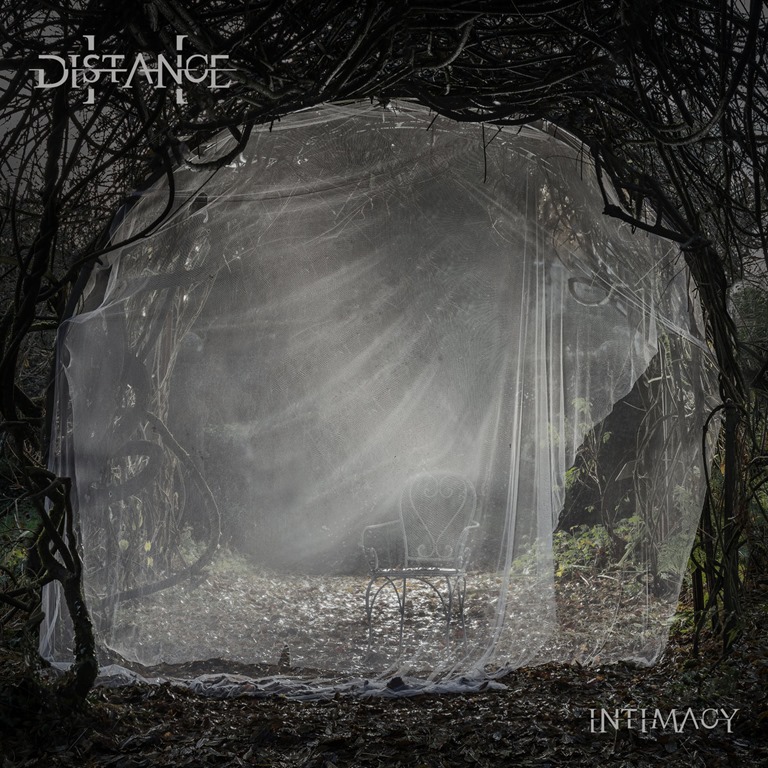
And so it seems to have been the case when Distance H dropped debut EP Intimacy a few months ago. The single cuts released in advance of this EP grabbed my attention, not least the first, Bitch 16’, featuring Ophelia from Saigon Blue Rain. In fact, there wasn’t a weak selection among the three singles: ‘Waters of Woe’ by Distance H feat. Marita Volodina was – and remains, as I described it at the time – ‘vintage goth with a contemporary spin’ and ‘a cracking tune’.

But having failed to make a splash, Intimacy is getting a PR reboot, and it’s a good thing, because the tracks which didn’t get single releases a year ago or whenever, are just as strong, and this makes for a full and founded EP. Casting an eye back to the 80s and 90s when big bucks were doing the rounds, it was often the case that albums would depend on a strong single or two, and that those singles would stand as beacons in set of mediocre slop, or, as was often the case, indulgent turd. It’s rather harder to get away with that ‘lead single’ marketing approach now people can stream the album or hear to by other means in advance without needing to go and check out a listening booth or blag it off your mate.

But Intimacy is truly all killer. ‘Twilight’ is a big, sweeping slab of majestic melancholy, balancing cool synths and chiming guitars that lean on Disintegration era Cure and sits nicely alongside The Twilight Sad circa Nobody Wants to Be Here and Nobody Wants to Leave. It’s a song with a sadness that aches, but at the same time, there’s an ethereal majesty about it, due in no small part to the sweeping, soaring vocals. The epically multi-faceted ‘Waters of Woe’ we’ve already raved about here, but hearing it afresh in the context of the EP, it seems to gain power. The same if true of ‘Reasons to Rush’ which features Liset Alea, combining heavy goth vibes with the electric rush of 90s alternative acts like Curve.

The final track, the epic six-minute ‘Leaden Sky’ now selected to lead the reboot, again features Ophelia on vocals. It’s another gothy epic, clocking in at over six minutes, with a bulbous bass and a wash of echo-soaked guitars weaving a richly textured backdrop cut through with programmed drums which punch out a rolling rhythm. In the context of the EP, it rounds off a big journey ending as it begins, while stepping through some memorable terrain. For these collaborative cuts, Manu H has made some truly immaculate selections. Each of the vocalists brings a subtle but essential twist to the sound, and while tied tightly to the templates of his stated influences (The Cure, Joy Division, Siouxsie And The Banshees, Cocteau Twins, The Sisters of Mercy or The Chameleons), Intimacy sees Distance H emerge victorious by capturing the atmospheric aspects of his forebears without falling to cliché, and the quality of the songs seals it.

AA

a1691727151_10

Gizeh Records – 3rd November 2023

Christopher Nosnibor

While Christine Ott has maintained a steady flow of works over recent years – her fifth album arrives just two years after Time to Die – her latest offering has been a long time in the making. For example, we learn that ‘Die Jagd nach dem Glück’ (The Pursuit of Happiness) is an extract from her original composition for Lotte, mon amour, a film-concert created in 2014 based on 4 short films by Lotte Reiniger, a German director from the first half of the 20th century.’

It’s pitched as ‘a collection of twelve pieces for solo piano, twelve impressionistic miniatures, instrumental and cinematic fractals celebrating the beauty of life…

Éclats (Piano Works) is a kind of mirror image to Chimères (pour Ondes Martenot) (2020, Nahal Recordings).

‘Pluie d’arbres’ introduces the album with magnificently weighted, perfectly paces, rolling notes which balance grace and tension, and it’s a beautiful and engaging composition that comfortably slots into the ‘classical’ bracket not simply by virtue of its being a piano piece, but the delicacy of it all, and the way it articulates changing moods intuitively and with a depth of spirit.

The individual pieces follow one another in such a way as to create the impression of their being written to flow together, and while the tempo and tone may shift during the course of a single piece – there are flurries and flutters, moments of airy levity like the morning sun filtering through a curtain wafting on a gentle early summer breeze, notes coming suddenly in tinkling cascades – the album as a whole feels like a single, continuous piece. Rather than any one track being ‘dark’ or ‘light’, they each run through a succession of sensations, turning on a pinhead from brooding to playful, uplifting to reflective.

There’s an honesty about this, which speaks to the human condition. Yes, you may have good days and bad days, but most days are a series of peaks and troughs, highs and lows, unexpected and near-immediate switches that some about as the result of various but specific interactions – or, indeed, sometimes, a lack thereof. Éclats feels real because it doesn’t try to be any one thing, but more taps into the unpredictability of life. And Ott plays in such a way as to bring all of this out through the music, through her connection with the keys.

At times sad, at times uplifting, at times, it simply is… and this is the real joy of the experience of listening to Éclats. At its lightest, it carries you on rippling sonic clouds and pokes at the sky: at its darkest, it hangs heavy in your stomach. It’s hard not to be drawn in and fully engaged with this set of pieces, and it will take you anywhere if you let it.

AA

Eclats_DIGITAL_Artwork

Cruel Nature Records – 26th May 2023

Christopher Nosnibor

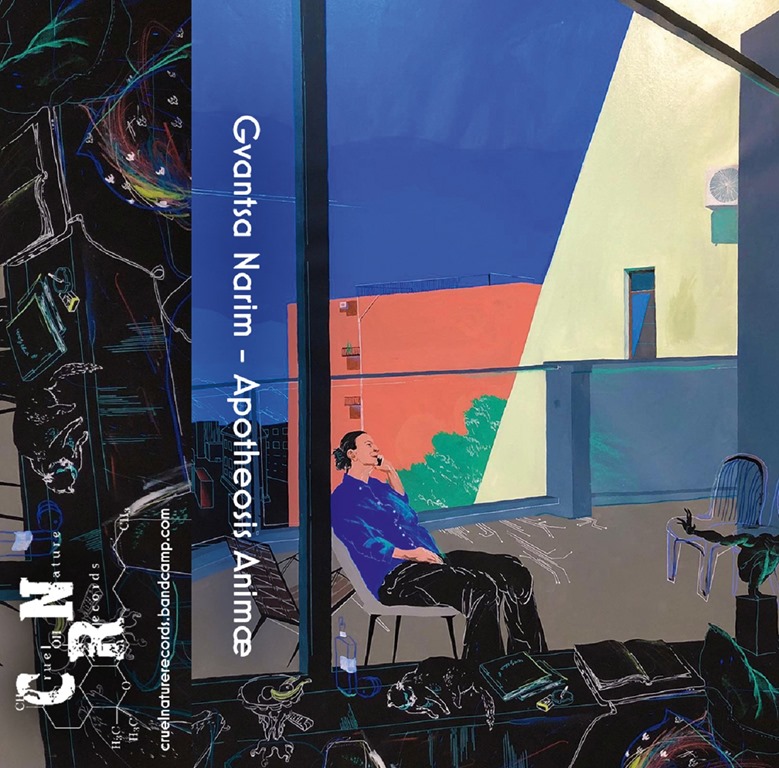
Having recently celebrated a decade of diversity, Cruel Nature Records continue to release a broad range of non-mainstream music – and the range couldn’t be more pronounced than placing two of May’s releases side-by-side: Gvantsa Narim’s latest offering, Apotheosis Animæ exists on another sonic plane form the grating industrial noise of Omnibadger’s Famous Guitar Licks Vol. III. They’re a sort of Yin and Yang: the world definitely needs both, and I personally need both, too, and it’s testament to Steve Strode’s singular commitment to releasing music of quality regardless of style or genre that they can both find a home on the same label.

Apotheosis Animæ, we learn, takes ‘inspiration from religion, esotericism and Georgian polyphonic music’, and that ‘her latest work was written in late 2022 / early 2023 and tells the dark and cold story of winter’.

It seems very much that winter now is not like the winters of twenty or thirty years ago: instead of two feet of snow, we get seven feet of flash flooding here in the UK. And now, despite it being the middle of May, it’s impossible to predict from one hour to the next, let alone from one day to the next if it will feel more like October or February. But despite this, winter not only has timeless connotations, but also, whether it’s sub-zero or only just a bit chilly, the cold winds and long dark nights do have a profound effect on human activity and our lives as individuals. It’s not only psychological; it’s biological and metabolic, and some of this is genetically coded into us from our prehistoric existence all the way through to as recently as just before electric lighting and mains power. There’s a case that says this is where we went wrong, as a species, and for the planet, in evolving beyond lives in tune with nature.

We each have our own unique relationship with winter, and our own associations and reminiscence. While I’m prone to Seasonal Affective Disorder, presenting as low mood and low energy, my wife would invariably suffer a low ebb in health from late October through the February, often suffering back-to-back colds that would drag on for weeks, the lack of daylight dragging down her levels of vitamin D and her immune system struggling to fend off the endless barrage of bugs and viruses that thrive in the cold months, especially when being breathed around in close-packed environments like offices. I fully acknowledge, then, and actually embrace, the fact that I am coming to this album fully loaded with my own baggage which will colour my experience and interpretation. This is a healthy, a function of music, something which can exist as a vessel for us to pour our thoughts, feelings, memories, and traumas into.

The compositions ‘Apotheosis’ and ‘Animæ’ bookend the album, and as the former lifts the curtain, it’s a slow, simple piano that evokes a slowing, a darkening which paves the way for mournful strings and distant echoes of bass and percussion on ‘Sicut Mortuss’ (which I believe translates as ‘like death’ or similar) conveys that paralysing sensation which descends with the darkness; while on the woozy, disorientating ‘Amnesia’, snippets of speech drift in and out, but instead of giving a sense of human connection, as they echo into the droning hum, there is only distance and detachment. Stretching out past the tend-and-a-half-minute mark, it’s hypnotic and unsettling, a little like the point at which you realise you’ve gone a little too far into your own head and need to drag yourself back to life, if only because it’s scary in there and you’ve got to work and at least appear normal.

There are moments of grand, sweeping ambience, soft and gentle, which convey the comforting experience of watching large flakes fall, heavy and silent, settling thick and deep in a silent white blanket; there are also moments of gritty disturbance, swirling glacial winds and shards of ice. ‘Born in the Mist’ is dark and brooding, shapeless, formless, ominous, impenetrable, the howling scrapes that ebb and flow are unsettling and uncomfortable, and it’s evocative; personally, I’m reminded of slogging across mountain tops in the Lake Diastrict in dense cloud and storm-force wind, and no doubt anyone else would being different mental visuals along.

This is where instrumental, abstract music really does come into its own: listener response simply cannot be prescribed, and has to come from within, and for this reason, we will all hear and experience something different. Following on, ‘Stopwatch’ sounds like the clouds lifting and waking up from a daze to remember that you do know how to live, that sense that perhaps hibernation is over and there’s a world outside, and this applies not only to the winter which is determined by the meteorological and astronomical seasonal changes, but the winter of the soul which can chill even deeper.

It’s soft and soporific: ‘Train’ glances and glides with crisp, crystalline tones into the – sadly missed, proverbial – sunset. The fifteen-minute ‘Codex’ is a big, brooding, bruising storm building in the form of a rumbling drone that’s dark as oppressive. Crackles, bleeps and bubbles rise cautiously on the edges of this mass of dense, dark atmosphere. Over time, it throbs lower and slower, and rippling details emerge and float along on the surface – but that darkness, that threat, is always present. At some point, you find yourself lost in the drift, and a slow thumping beat emerges behind a locked loop of synthesised notes… and then it shifts again, reminding us that nothing is ever static, however much it may seem that nothing changes, however much we may yearn to remain in a moment forever.

There are some truly beautiful passages; but they’re tempered by sadness and tension, which conveys the sense of coldness, darkness, isolation, longing that the long dark nights bring – a yearning for warmth, for comfort, for hot, hearty food, the primitive craving to sit beside a roaring fire.

AA

cover

Kranky – 7th April 2023

Christopher Nosnibor

I had been warned. A fellow reviewer who received this before me had said that this album had made him feel ‘unwell’. It was a compliment, of course. This comes as little surprise: Tim Hecker is an artist capable of creating the most intense and all-encompassing experiences, and while the live performance I attended in 2014 may not have made me feel ill, it did make me feel pretty weird, detached, disorientated. As the only artist I have ever known to use more smoke than The Sisters of Mercy and Sunn O))) combined, filling the room to the extent that it was impossible see your own hand in front of your face, let alone the person next to you, Hecker made me feel uncomfortable, and in some way a little scared in a claustrophobic way.

I’ve had a few records which have had a physical effect on me: listening to PJ Harvey’s Rid of Me for the first time with a brutal hangover is one standout experience, its raw and up-front lurching guitars punching my head and stomach simultaneously with puke-inducing results which went far beyond the post-booze discomfort. Because listening to music is not a passive activity, and as well as requiring focus, it would seem also degree of compassion – you feel its force physically as well as psychologically.

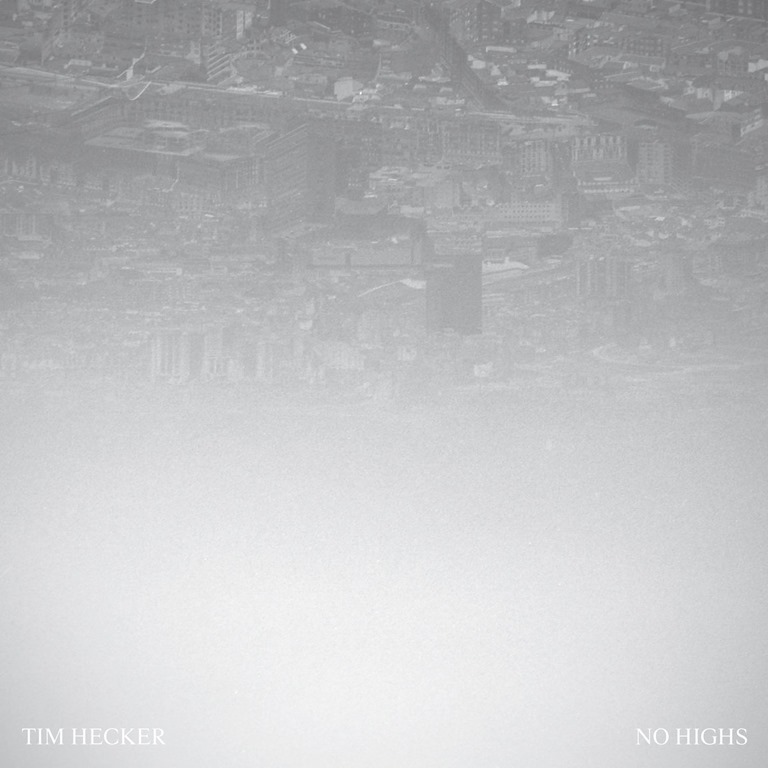
The notes which accompany Tim Hecker’s latest album are bold, to say the least, describing the Canadian composer as ‘a beacon of unease against the deluge of false positive capitalist ambient currently in vogue’ and continues, ‘Whether taken as warning or promise, No Highs delivers – this is music of austerity and ambiguity, purgatorial and seasick. A jagged anti-relaxant for our medicated age, rough-hewn and undefined.’

Clearly, this is exactly what I need, having felt tense and on edge, unable to catch my breath properly for several days now. If the album’s title sets the initial expectation, the track titles reinforce the album’s mood: ‘Monotony’; Pulse Depression’; ‘Anxiety’; ‘In Your Mind’; ‘Total Garbage’ – all the shades of dark, of bleak, of miserable, of self-questioning, panic.

The aforementioned ‘Monotony’ pings a single note back and forth for almost eight and a half minutes. Drones build sonorously behind it and swarm the mind as the volume grows and then shrinks again, and the buzzing and extranea become siren-like. And so, there is movement behind the tedious repetition, but it’s tense and unsettling. Moments of levity which appear to suggest tranquillity is within reach prove to offer nothing but false hope as we’re soon plunged into the gloaming, or otherwise into glitchy, lurching passages of unease. Soft sounds which ought to be mellow and soothing are rendered uncomfortable, or mournful, or both.

‘Lotus Light’ initially intimates a Krautrock pulsation, but some bending frequencies and melting notes swiftly take this trip on a rapid descent. If the lotus flower is supposed to signify rebirth and enlightenment, then this is one which is wilting, poisoned, and if eating the lotus is supposed to provide a conduit to pleasure, this is the soundtrack to picking the wrong plant, as everything rushes forward too fast and you’re not in control. You don’t feel right: you feel drugged, delirious.

‘In Your Mind’ picks and stabs away with tempo changes galore, surging and sweeping this way and that, echoing reverberations around the cranial cavities before booming stabs of synth blast through the drifting haze, before ‘Monotony II’ returns like a waking memory of a traumatic dream from the night before. The trilling saxophone does nothing to calm the mind or the mood. And over the course of more than eight minutes, ‘Anxiety’ recreates the experience if that increasing heartrate and the clenching of every muscle perfectly. That is to say, it’s brilliant, and also brilliantly difficult, and potentially triggering to some. The flickering, fluttering electronic throbs are practically Jean Michelle Jarre reimagined as a fibrillation.

No Highs is a difficult album, but how difficult depends on our headspace: from a certain perspective, it’s a cinematic electronic set, but from various others it’s the soundtrack to being unable to settle, to relentless tension, to jitters and fretting, and worse. The notes oscillate and you clench; sudden spurts of sound burst and you jump momentarily., before ‘Sense Suppression’ pulls you down, slowly, into a sea of sound, before the album drifts away to nothing on the drifting tides of ‘Living Spa Water’.

No Highs is sad and dark and deeply affecting, and not necessarily in the ways you’d expect. Listen and share the suffering.

AA

a2157297652_10

Northern Spy – 24th February 2023

Christopher Nosnibor

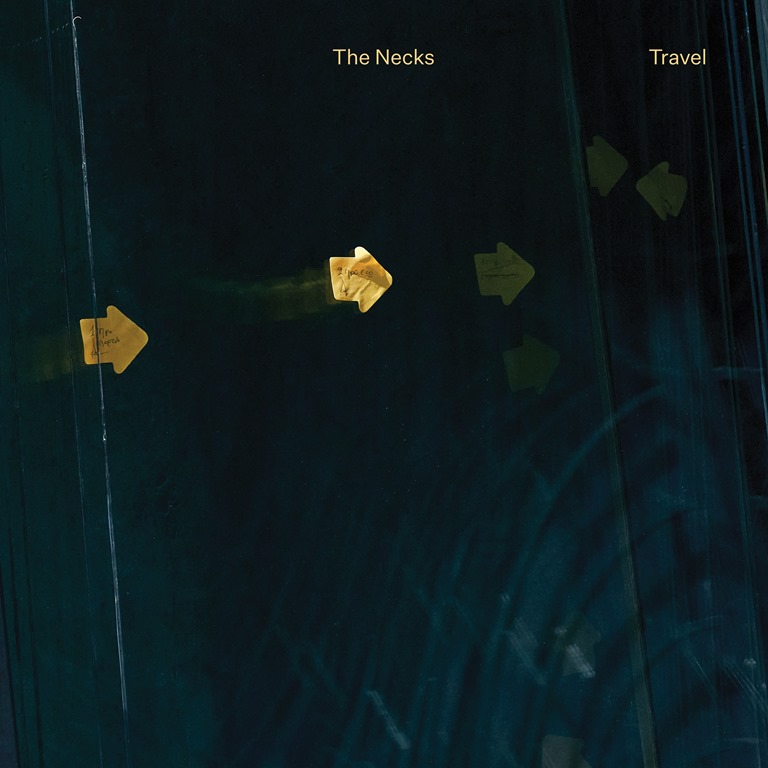
The Necks are never dull: an act that can be depended upon to deliver something different, which is no small feat for a band who’ve been going for more than thirty years. Travel sees them revisit the fundamental methodologies of Unfold, released in 2017 on Stephen O’Malley’s Ideologic Organ label. Admittedly, it’s not an album I’ve revisited all that many times since I wrote about it, but then, that’s true of many records I’ve appreciated. Some of it’s a time thing, but some of it’s an instrumental / jazz thing. I prefer to engage in the moment – and then the moment passes, and I too move on.

Where this album different from the majority of their others is that the format was integral to the form of the content, as the accompanying blurb points out, proving ‘four sub-20-minute pieces – instead of the typical 60+ minute arc for which the band is known – along with an obfuscated track list which leaves play order to the listener’s hand.’

Travel isn’t quite a straight live improv set, but does, they feel, come closest to recreating the live experience, and was recorded – save for some light overdubs and post- production – primarily live. And it’s very much oriented towards slow grooves and rhythmic repetitions. It’s hazy, mellow, almost sultry.

Side one is occupied by the twenty-one-minute ‘Signal’, built around a repetitive bass cycle and some rolling piano that brings with it a classical element, and, propelled by some busy hand drumming which transports the composition some way from what one would ordinarily expect off jazz-orientated works and into the realms of ‘world’ music (a term I try to avoid, with its connotations of western superiority and self-centredness, but sometimes short-cuts are necessary).

On side two, ‘Forming’, which again stretches languorously past the twenty-minute mark, is led by ripping piano, underpinned by some crunching bass stutters and rumbling groans. It’s jazzy in a psychedelic, Doorsy sort of a way. In this sense, it feels more like an extended mid-song workout than a piece in its own right, but it’s both pleasant and tense at the same time as it builds to a crescendo that never fully materialises.

‘Imprinting’, the album’s shortest cut at just over seventeen minutes, brings the multi-layered percussion to a more prominent position, and clanks and trembles along with almost hesitant-sounding keys and twanging strings drift in and out. It’s also perhaps the most overtly ‘jazz’ piece on the album, although it feels stretched out, the pieces pulled apart and as three instruments drift along together on a steady way, the sensation is quite hypnotic.

Organs always create a sense of grand scale and space, and the heavy drone and trill of ‘Bloodstream’ is utterly mesmerising. The piano is soft and ripples along atop the sustained mid-range drone as ethereal notes drift in and out. Part,

The album feels like a moment in time, somehow transient, and yet also something more. Travel may not really go anywhere, but it very much captures a mood – which is, for the most part, whatever mood you project onto it.

AA

Print

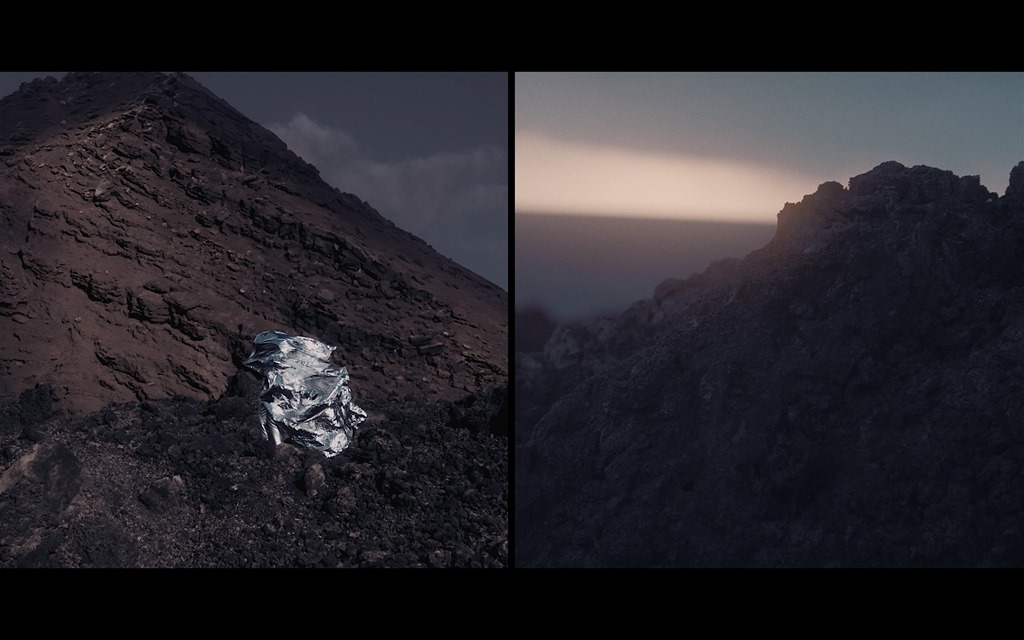
In the magical volcanic landscapes of Lanzarote, Jana Irmert found images for the ideas, moods and feelings that fueled the work on the tracks of What Happens At Night: For me this release is a window through which I could express my thoughts and feelings about our planet in turmoil. Starting out from a point of hopelessness, my fascination with travelling into Deep Time and learning about geologic ages grew. After all, what will be left of us will only be a delicate layer in the rock.“

‘Stratum’, named after the word used in geology for a single layer of sediment, attempts to dissolve time and space, merging the abstract and the concrete. The volcanic landscapes, which are very young from a geological perspective, thereby become a place where human existence plays only a marginal role.

Watch the video here:

AA

Jana Irmert _ Stratum _ video still 2

Temple Invisible have unveiled their arresting new single ‘Over My Feet’, taken from new ‘Chiasm’ EP coming next month.

Fusing chiffon vocals with impending electronic beats, ‘Over My Feet’ comes as the third single plucked from Temple Invisible’s forthcoming ‘Chiasm’ EP, and boasts the breadth of the genre-defying duo.

Showcasing the two-piece’s knack for creating evocative electronic-tinged tracks that are as dark as they are diaphanous, “Over My Feet” feels eerie and overcast yet optimistic and inviting all at once.

Speaking of the inspiration behind the track, vocalist Irina Bucescu explains:

“’Over My Feet’ is like a walk in the forest. It draws its roots from the deep and rich life of the underground — the mycelium. As you progress deeper into the forest, you connect with the life force, inside out, and blend the deeper and more disturbing truths into a multi-layered view of reality. The metamorphosis of death can be a beautiful thing when you walk in the forest.”

With its opening moments unfolding like a silken ballad — gauzy vocals and gentle key taps wind themselves around one another with cushiony ease — the docile ambience is soon underpinned by swirling electro rhythms that steadily threaten to erupt, before overflowing into a meticulous amalgam of rippling instrumentals.

Watch the video here:

AA

thumbnail_unnamed-390