Posts Tagged ‘Lockdown’

17th October 2025

Christopher Nosnibor

…and still, the COVID pandemic continues to yield new offerings, even if some are repackaged, or otherwise documents of events which took place during that strange, strange time. Real live music events were, during those dark days, simply things of memory, which we could only dream of happening again – because, for a while which felt like an eternity, there was no end in sight. Live streaming events were as close as we got. I watched a few, participated in a handful, too, but like having beers on Zoom, as much as they went some way towards filling the gaping chasm that was social life, these things were countered by a certain pang of sadness and consternation, reminding us as they did of what we were being deprived of, highlighting the fact that there is truly no substitute for the experience of live music. I write this as a fairly ardent misanthrope who will sometimes go to quite exceptional lengths to avoid other people. But sharing a room with musicians and people who seek to become one with the sound and the experience is something altogether different. Unless it’s one of those gigs where casuals turn up and yack at one another in loud voices for the duration, of course. I find that this happens less in proportion to the obscurity – and / or extremity – of the music. The more difficult, the more abrasive, the further from the mainstream the artist, the cooler the audience. In this context, Orphax’s audience must be bordering on godlike.

Embraced Imperfections features ‘two live performances recorded during a live video streaming event during the early covid-19 pandemic’, originally released as Embraced Imperfections and Live in your living room, now, remastered, they come as a two-disc release. The title reflects the nature of the recordings – both performances were improvised ‘with various synths, organs, and effects’, and as such are inevitably imperfect. But… how would we know? Artists – musicians in particular – are commonly their own harshest critics. They kick themselves for the most minor flaws that simply no-one else on the planet would notice in a million lifetimes. But still, making peace with and embracing imperfections is a significant step.

The first disc – Embraced Imperfections I – offers forty-one minutes of slow-sweeping organ drone which subtly undulates and quivers, humming on, ebbing and flowing, but in the minutest of microtonal shifts. Above all, it’s a continuous sonic flow, and the shifts in its sounds and structure are made at an evolutionary pace. You don’t listen to music like this to be affected, to feel impact, but instead to be carried along, to feel it envelop you, to wash over you, to experience full immersion. It isn’t that nothing happens… so much as very little happens, and does so incredibly slowly. If listening requires patience, so does the making. It is not easy to hold a single note for long minutes at a time without feeling a certain pressure to ‘do’ something. As this performance evidences, Orphax possesses the Zen-like ability to resist any urge to increase the pace of movement – so much so that time itself seems to stall and sit in suspension here. Even the first fifteen minutes feels like a lifetime, and the secret to appreciating this is to stop listening and simply let it become the backdrop as you slow our breathing and allow yourself to relax. Remember what it is to relax?

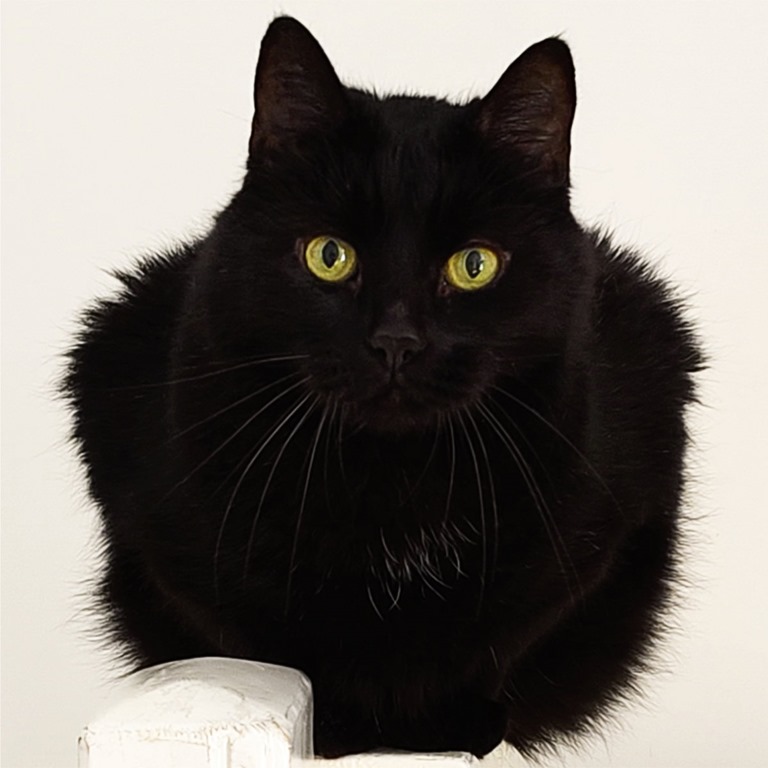
The shorter Embraced Imperfections II, which clocks in at just over thirty-six minutes, is less overtly organ-driven and more constructed around an electronic hum, and it’s dark, claustrophobic. It also feels more low-key, and more ominous. It’s still another extended dronework, the sound of which is absolutely the immersive dronescape, the hovering hum that feels like nights drawing in and claustrophobic depression descending on the dense darkness. It’s a dense, scraping, soporific endless polytone that scratches and hums for what feels like all eternity. While far from accessible or easy listening, it does make for an immersive journey. And cat pics always win… embracing impurrfection.

AA

AA
a0536185753_10

Unsounds – 24th May 2024

Christopher Nosnibor

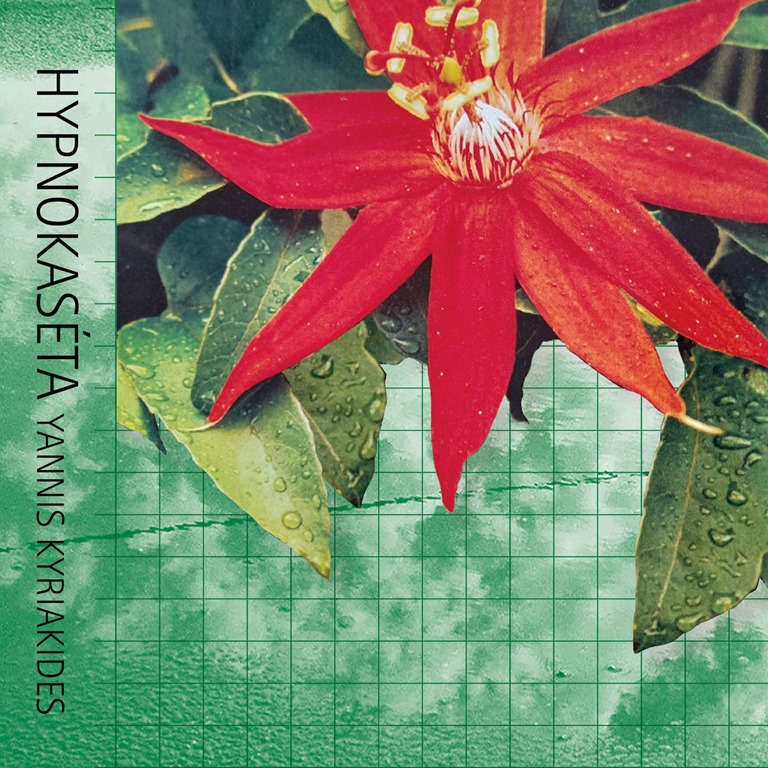
When it comes to being a music writer, for me, at least, perhaps even more of a buzz than getting advance listens of the most eagerly-anticipated releases is being exposed to music I otherwise wouldn’t have. And the nature of the avant-garde means that you have to be in the know to know. Being introduced to the Unsounds label and the work of Yannis Kyriakides certainly opened my eyes – and more so my ears – to a whole expanse of music I assumed must exist, but would have had no obvious means of locating or accessing while going about my ordinary life before.

Although I’ve only dipped in and out of Yannis Kyriakides’ output, more as one with a casual interest than a fan per se, his work has never ceased to impress with its range and constant questing for something different, something new, both sonically and methodologically and “Hypnokaséta (2020-2021) is no exception.

Kyriakides’ introductory notes explain both the concept and the practice behind the recording of the album: “Hypnokaséta (2020-2021) is a continuous set of 16 pieces for string quartet, improviser (playing cassettes and any instrument) and live electronics. The source material is based on dreams that I had during the first few months of lockdown, April-June 2020. Accounts of these dreams are encoded in the music that is played by the quartet and also encrypted in the sound textures that surround this.

“The pieces alternate between quartet as the foreground and electronic interludes, where solos or duos underpin the soundscape. The title of the piece (Greek for ‘sleep-cassette’) refers to a theory of dreams proposed by Daniel Dennett, that says that dreams are loaded into consciousness like a cassette tape during the night and played just before waking.”

It’s longtime collaborator Andy Moor who provides the guitar and tape work on these recordings, and together with Kyriakides’ electronics, which move between shuddering skitters and unsettling scratchiness and quite abstract sounds, when juxtaposed with the strings – which span playful to mournful to droning discord.

The sixteen pieces have been mastered as six separate tracks, but they flow as one immense composition in a continuous state of transition. Within each of the six numbered tracks, the individual segued pieces bear titles, with their time markers also noted. The titles present, if not strictly a narrative, then a guide to the theme, the idea, the inspiration.

‘Hypnokaséta I’ comprises ‘The government’s new cultural scheme’, ‘All roads to the airport are blocked’, and ‘Everyone is nervous, everyone is lost’, titles which serve to encapsulate the events and the sensations they engendered within the populace at the strangeness and uncertainty of lockdown.

‘Hypnokaséta III’ is a stunning work of contrasts, containing as it does the gentle, almost light-spirited string-led ‘The reluctant hotel manager’ and the dramatic, jarring ‘She lifts the mountain’, a dark, alien drone brimming with electronic tension that crackles and tweets. The rapid switches in mood and form recall the sudden and wild extremes I experienced myself during this time: it was impossible to keep up with the constant stream of developments in the news, while at the same time entrapped within the confines of the house, where the world outside felt so very far away, while also having to accommodate the changeable and diverse headspaces of friends, family, and colleagues. No-one knew what the fuck was going on, or how to cope.

There was an air of unreality about it all, and at times it became difficult to distinguish between the bewildering nightmarish reality of the wakeful hours and bewildering nightmarish sleep, and in drawing on dreams in the creation of Hypnokaséta (2020-2021), Kyriakides captures the essence of that abstract space forged in the mind where everything blurs. This blurring and abstraction is also reflected in the titles: ‘The concert promoter complains that not much happens in the piece’ sounds like something that could happen in one of those self-reflective semi-anxiety dreams, and ‘Bridges are being dismantled

across the city’ has an apocalyptic sense of separation, while ‘Body swap opera’, ‘Swimming pool synthesis’, and ‘Mutations on an empty grid’ are altogether more surreal in their connotations.

Throughout the album, the lister is jolted from a moment of tranquil reverie by some abrasive thud or rasp, an unexpected spike in volume, and a turn towards an altogether more disquieting atmosphere.

The composition is nuanced, the placing of the switches and transitions perfectly timed to achieve optimal impact, never allowing the listener to truly settle, to relax, to sit back and enjoy, and the moments of tension are indeed tense; but credit must also go to the performers: the strings are played with a keen awareness of the importance of both dynamics and detail, and Moor, in his capacity of ‘improviser’ brings texture and tone delivered with an infallible intuition. The album’s structures may be subtle, almost invisible, but they’re affecting, and as a whole, Hypnokaséta (2020-2021) is an experience which permeates the psyche in unexpected ways.

AA

a2874939530_10

Spleen+ (Alfa Matrix) – 1st December 2023

Christopher Nosnibor

Christmas has come early this year, with an absolute deluge of releases landing on1st December, many from acts I like or am otherwise keen to hear. Hanging Freud are in the former bracket, and Worship marks their seventh album release, following 2021’s Persona Normal.

The duo have established themselves as purveyors of premium-quality dark, stark, gothy electro, and with Worship, they solidify their position with aplomb. Persona Normal was recorded at a leisurely pace between 2018 and-2020, and, like so many other releases in the last couple of years, Worship was written and recorded during the pandemic and under lockdown conditions, and the accompanying notes lay out both the contents and context in further detail:

‘The 10 songs featured on this album literally come from a place of contradiction hanging somewhere between courageous vulnerability and fearful resilience, and deal with themes such as collective distress and loss, finding beauty in tragedy or yet questioning about what makes us human in the symbolic contrasts of life and death…. It’s no surprise to hear that this “less is more” introspective ode to melancholia was written in particular claustrophobic circumstances during the pandemic lockdown. “Because of what was going on, we were essentially stuck in temporary accommodation in Scotland, away from our studio and forced into a period unexperienced before. The songs that came out therefore come from a different place. Everything was done within a laptop and is proudly 100% digital. It was recorded and mixed while literally sitting on the side of a bed in a mouse infested apartment…” explains Paula Borges.’

If it sounds like a grim and oppressive set of circumstances for creating art of any kind, then the singles which prefaced the album have set the tone and expectation, while affirming the claustrophobic intensity of the music which emerged from these challenging conditions.

The result is a hybrid of Siouxsie and 17 Seconds era Cure with a hefty dose of New Order’s Movement and dash of Editors circa On This Light and On This Evening. Reference points may be lazy journalism, but they serve a purpose. While this album stands alone like an icy obelisk, singular and a monument to the darkest introversions, some musical context is probably useful for discursive purposes.

The stark ‘Falling Tooth’ is as bleak and haunting as it gets: Paula’s vocals are breathy but theatrical, pitched over a strolling squelchy synth bass and a vintage-synth sound that wanders around over just a few notes, while ‘I pray we keep the world’ is low, slow, sparse, and lugubrious, as well as emotionally taut, and dominated by a truly thunderous drum sound. ‘This Day’ is particularly drum-heavy, withy only gloomy, droning synths sweeping through a heavy mist of atmosphere.

There are some who bemoan the use of drum machines, and who complain that they lack the vibe of a live drummer. Hell, there are contributors to forums and groups devoted to The Sisters of Mercy who question why they don’t get a real drummer, some forty-two years on from their inception. These people are missing the point. Drum machines can do things that human drummers can’t, and one of those is how drum machines can be louder, heavier, more monotonous than a live drummer. And in context for certain music, this can be a real asset, accentuating the sensation of dehumanised detachment of synth music that sits at the colder end of the spectrum. And Worship is one of those albums which will leave you with chapped lips.

It’s against brittle snare cracks and sweeping synths that Paula claws her way through complex emotions, and where the lyrics aren’t immediately decipherable, the haunting vocal delivery is heavy with implicit meaning. It resonates beyond words alone. Everything is paired back to the barest minimum, exposing the darkest recesses of the psyche.

Standing alone as a single, ‘A hand to gold the gun’ was bleak and heavy. Sitting in the middle of the album, this sensation is amplified, accentuated, and the gracefulness of the vocals as they drape around the broad washes of sound which surge and well is that of a dying swan.

‘Her Joy’ is perhaps the least joyful thing you’re likely to hear in a while, and if ‘Beyond’ feels somewhat uplifting, it’s only because it’s a flickering candle flame in an endlessly dark tunnel, as devoid of air as light. The mood is heavy, and presses on the chest, slowly pressing the air out and crushing the spirit, and as the album progresses, the effect is cumulative. By the time we arrive at the piano-led ‘Don’t save yourself for him’, I feel my shoulders sagging and my back hunched forward from the endless weight of this.

Worship is a masterful exercise in poise and restraint, a work which conveys the purest essence of isolation, of desolation.

AA

HFreud

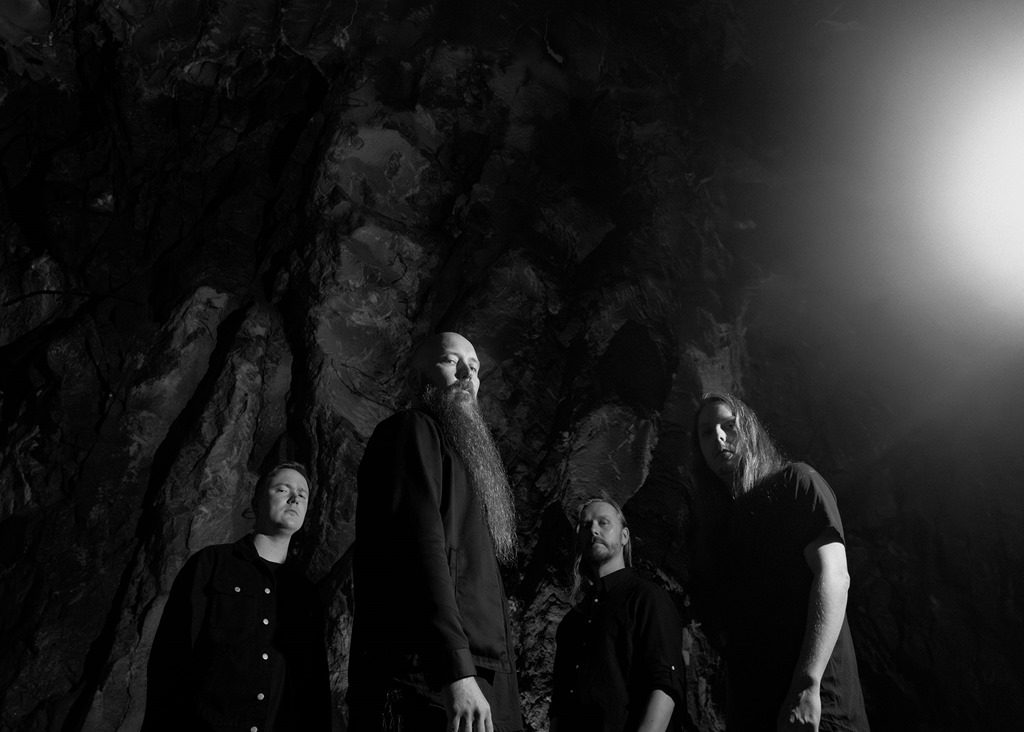
For 14 years Throat have been the sonic equivalent of forcing a square peg into a round hole; often abrasive, causing utmost irritation at times and on a rare occasion a feverishly pleasant dose of brooding darkness in one’s otherwise dull existence.

The peg now fits. We Must Leave You sees Throat dropping pegs of all shape and size through the same hole. The last confines of musical genres are behind them, resulting in an album which can be regarded as the easiest listening Throat has ever presented or simultaneously their most difficult and puzzling work to date.

“’Tiny Golden Murder’ stands as the life and death of the party on We Must Leave You. Already proven to be a floor filler on a few live occasions, it’s easily the closest Throat has ever come to a rock anthem. On the other hand, the refrain “Terminate us all” can be a sharp pill to swallow for the average party people. For Throat, that’s where the real party begins. It’s a last call for alcohol and a last call for everything”, band announce.

Listen here:

AA

Thematically what we have here is a breakup album. Never ones for thinking small, Throat breaks up with the world. Enough is enough. Bring back lockdown. No need for petty social commentary on how the world is burning. Let it burn. Throat is already walking away and it remains to be seen where they end up next. If anywhere.

Breakups always require dramatic music, and We Must Leave You more than fits the purpose. Throat have already hinted at new directions and new sounds on their previous two albums, but here it all breaks loose. Rooted in the same heavy, dark rock sound as always, but a touch of gothic drama from the 80s has been injected to the band’s sonic palette which obviously means a few deeper shades of black. The noise and dissonance remain, but this time it all has been dipped in honey and black grease paint.

We Must Leave You was written over a few years’ time and finally recorded in 2023 at Tonehaven Recording Studiowith Tom Brooke and the band’s own Amplified Human Audio. Once again, Andrew Schneider mixed the album at Acre Audio and Carl Saff handled mastering duties at Saff Mastering. Photography by Dorota Brzezicka and design by Stefan Alt of Ant-Zen.

Bring back lockdown. Bring back isolation. Heaven Hanged sums up these sentiments that are some of the key elements on We Must Leave You. We’re breaking up with the world. It’s not us, it’s you. No, we can’t stay friends. Musically Heaven Hanged offers a glimpse of the album going from morose and goth-tinged sound to more hysterical dark rock ruckus. Our intention has never been to keep treading the same tracks, so the direction of progress evident on the last few releases has brought us to We Must Leave You.

AA

Q6iVQs_Q

Throat photo by Aleks Talve

Möller Records – 23rd March 2023

Christopher Nosnibor

It’s clear that while the pandemic is officially over, collectively, we’re still very much coming to terms with it, and its aftermath. Lockdown, in particular, has had a deep psychological impact, on so many. Everyone’s experience was, and is, different, of course. I have friends who almost deny to themselves that it happened, that it was a dream or something, and for some of us, in some respects, it’s as though it never ended. This is how people deal with shock and trauma.

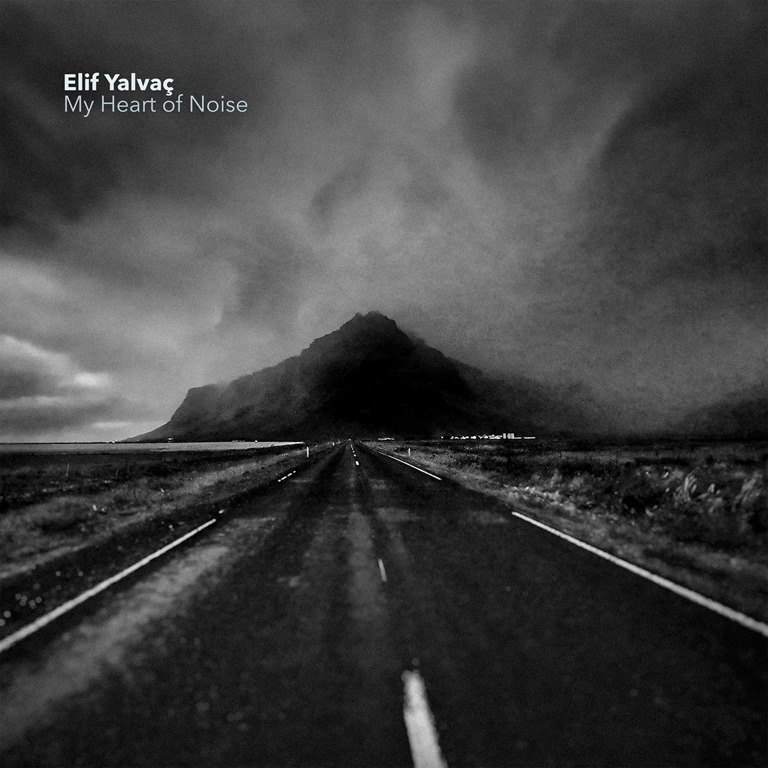
My Heart of Noise is not a pandemic album, a lockdown album, a post-trauma album, but as Elif explains, the album “began with a collection of studio and concert recordings from my travels north before the pandemic. It became like a puzzle: I could hear something special, but also that the pieces didn’t fit together well or feel complete. The breakthrough came in realising that this project was meant to be more about creation than preservation, and that it didn’t need to be a literal document any more. It could still be faithful, but instead to the spirit that inspired this music and my travels in the first place, instead of a particular recording. I created new musical starting points, and invited artists I met on my travels plus others, asking them to choose one to begin to work with together. Some artists incorporated our previous recordings, others set off in a new direction, while I shaped the pieces and found a way to connect them together.”

Recent history, then, is marked not as BC and AD, but BP and AP – before pandemic and after pandemic, and My Heart Of Noise reflects Yalvaç’s attempts to ‘make sense of a noisy world’. And the world is indeed, noisy, and difficult to articulate. There is simply too much noise too much happening all at once. It’s a perpetual sensory overload.

For this, her debut album, Elif Yalvaç involved a number of the people she encountered along the way of her journey, and the title also references this, the way she became the hub in a collective process.

The collaborative aspect means that each track does have a slightly different feel, despite all being centred around eerie ambient soundscapes.

‘Orchestra of Light’, the album’s first track, is a layered composition of dronies and hums and whispers which drift and swirl around some of the mind’s darker recesses. The textures and tones rub against one another and the edges aren’t all smooth, with buzzes and barbed, drilling sounds grating against the grain, meaning there’s a certain friction, a tension, creating a sense of discomfort.

‘Gate Check’, which follows, is softer, but the notes bend and twist and the supple, mellow tones are spun with a sense of the awkward and the uncanny, but nothing so warped as ‘Mielmaisema’, with its collage of human vocalisations and clunking clumps of thuds and thumps Amid whirls and crackles and hums, from which grinding groans of decaying Krautrock creak. It may be less than five minutes in duration but it packs a lot of shiversome strangeness into its short space, in which even chirruping birdsong feels somehow unsettling.

My Heart of Noise is not an overtly collage-based album, but it does assemble many sources and sounds, and often overlaps and overlays them to disquieting effect, and I’m at times reminded of vintage sci-fi and the BBC Radiophonic Workshop.

‘Cloud Score’ sits somewhere between post-rock and classic drifting ambience, while seven-minute closer ‘Taiga II’ very much feels like the lifting of the clouds and the breaking into light, but at the same time feels like a storm building on the horizon, and ‘Dronasaurus’ indicates that it’s not 100% serious 100% of the time.

My Heart of Noise is a restless work, one which ventures and explores, and never for a moment settles into comfort or conformity. It is not an easy album: whenever things feel like they’re settling into something nice, a cloud of disruption and difficulty will drift over and raise a shiver. You can never really settle or feel at ease with My Heart of Noise – but as a representation off life in the world as is, this is a fair summary. Keep your eyes and ears open: there is always something around the corner.

AA

a3629223309_10

17th September 2022

Christopher Nosnibor

Manchester’s Dirty Laces have been away for a while, and not through choice. The pandemic skittled most bands and brought an abrupt halt not only to gigs, but working in general, since most bands don’t live together and when it comes to music-making, it’s simply not always feasible to work remotely, tossing audio files back and forth virtually. I shan’t labour this too hard, but what was The Great Pause for some was The Great Anxietor for many – whether it be because of having no work or being furloughed on reduced pay, or working and home schooling at the same time, or simply dealing with isolation, fear of the virus, or being cooped up with people who weren’t people to be cooped up with, so many of us had something to keep us awake at night and which probably hasn’t fully left us yet.

For many, emerging out of the other side of it all, we’ve found that we’re not the same as before, and there’s some re-evaluation has taken place, albeit not necessarily on a conscious level. Good, I say. Life’s too short to expend what little life you have on pintless crap and people who give nothing in exchange for taking everything.

Recorded in the fallout of the pandemic in solitary rural Wales, ‘Midnight Mile’, essentially speaks of that re-evaluation and the realisation that it’s time to dump the fucking rubbish: the band say the song is about ‘Escaping toxic people, toxic habits, embracing happiness and learning how to ‘free your mind and bathe in love’. It might sound a bit hippie for a band born out of punky garage rock – but ultimately, when you boil it down, punks and hippes alike share the aesthetic of sticking it to the man and people who suck.

This outing is a hybrid of garage and grunge and brings a stadium rock swagger and a dash of industrial and calls to mind Headswim and Filter – it kicks in instantly with a nagging riff and chunky bass. It’s not just the drawling vocal that sounds more American than Mancunian: the production is pretty slick, rendering the gritty, emotionally dense, sincere performance radio-friendly and digestible for a more commercial market – and the big chorus absolutely seals its broad appeal. It’s better than Headswim, but not quite as good as Filter.

AA

Dirty Laces Artwork

5th August 2022

Christopher Nosnibor

Lately, I’ve been seeing people on the Internet bemoaning the number of ‘lockdown’ albums, and even the emergence of ‘lockdown’ novels, questioning the need for anything that recreates, recounts, reflects upon or is otherwise set during the most recent of historical events. They all seem to make more or less the same case – that we all went through it, it was bad enough, and there’s no need to harp on or relive it. But artists tend to process and comprehend the world and their experiences of it through the act of creation, and just because we all experienced the pandemic and various lockdowns, no two people will have had the exact same experience or the exact same psychological response. Besides, isn’t more or less all art some form of response or reaction to the human condition, or otherwise a reflection thereof? No-one beefs about an excessive amount of war novels or poems or various genre novels, like crime or sci-fi or fantasy. Perhaps it’s because they prefer escapism to real life.

As the accompanying blurbage explains, ‘This album is a reflection of the dark days the world has seen in recent years. It’s about the tragedies many of us have faced and the effort to find the will to fight on. We remember those we have lost because it is through them that we carry on into tomorrow’.

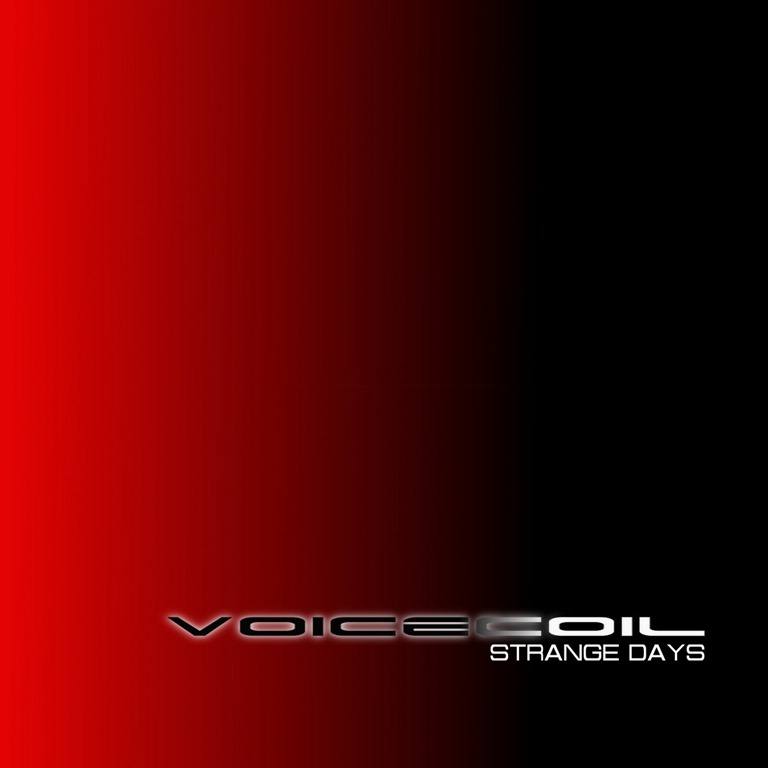
Strange Days is pitched as ‘a symbolic re-birth for the project, returning with a new zeal to create and perform’, and it’s not short on pumping beats and rippling synths. What sets it apart from so many other industrial / electropop / darkwave hybrids is Voicecoil’s vocal: it’s in that gothy baritone region, but for all of that, and the sense of performance and theatre that comes with those well-established genre tropes, his delivery had a certain emotional depth and sincerity that lifts the songs to another level.

So where ‘Versterbrogade’ comes on like a dance remix of a Depeche Mode in terms of its musical arrangement, and the verses observe the popular style of singing in the throat, a wheezy, grit-edged monotone, the verses unleash the hook and some ‘proper’ singing with heart and soul, and in doing so breathes life into the bleak experience of life where days drift and fade into one another. ‘Speak in Sine’ brings a harder-edged beat and a starker atmosphere, and it sits well with the themes of dislocation and alienation which run through the lyrics. ‘No Easy Reply’ is remarkably sensitive, not to mention accessible, and Strange Days has some great tunes, from the expansive, pulsating yet reflective ‘Why’ to the brooding piano-led curtain-closer of ‘Drift’.

While electronic music – particularly of that dark pop / industrial / goth disco persuasion – can often suffer from feeling sterile, detached, robotic, and impersonal, Strange Days is anything but. It possesses a certain warmth, a humanity, that resonates on numerous levels.

AA

a2292779137_10

Lo Bit Landscapes – 7th July 2022

Christopher Nosnibor

Life has felt somewhat relentless of late. I do mean this on a personal level, although this is perhaps as much a result off external factors as anything else. The pandemic turned me into an addict. An addict of 24/7 steaming news, of doomscrolling, of relentless checking of social media. When things are constantly happening constantly evolving, it’s easy to find yourself dragged into the whirlwind, and ultimately to depend on the maelstrom. Silence becomes scary. You’re overwhelmed by the volume of emails, texts, FaceBook messages and WhatsApps and find yourself begging for them to stop, but when they do, you panic that something is wrong, that there’s something more sinister afoot, something isn’t working, or that perhaps you’ve died and haven’t realised.

Lately, there’s been a tidal wave of music that’s been created as a reaction to life in lockdown, to social tension, to the mental health pressures of contemporary living. And I’ve been lapping it up, I’ve been loving it. Because people are bringing issues out into the open, and speaking in their own voice about the difficulties we’ve all been facing, relaying those relatable traumas. But I’ve started to feel more like a silent counsellor rather than a music critic. It’s a truism that a problem shared is a problem halved, unless you’re the recipient of all of the sharing. Sometimes, you need a break. Sometimes, you need to let all the tension go, and to simply float.

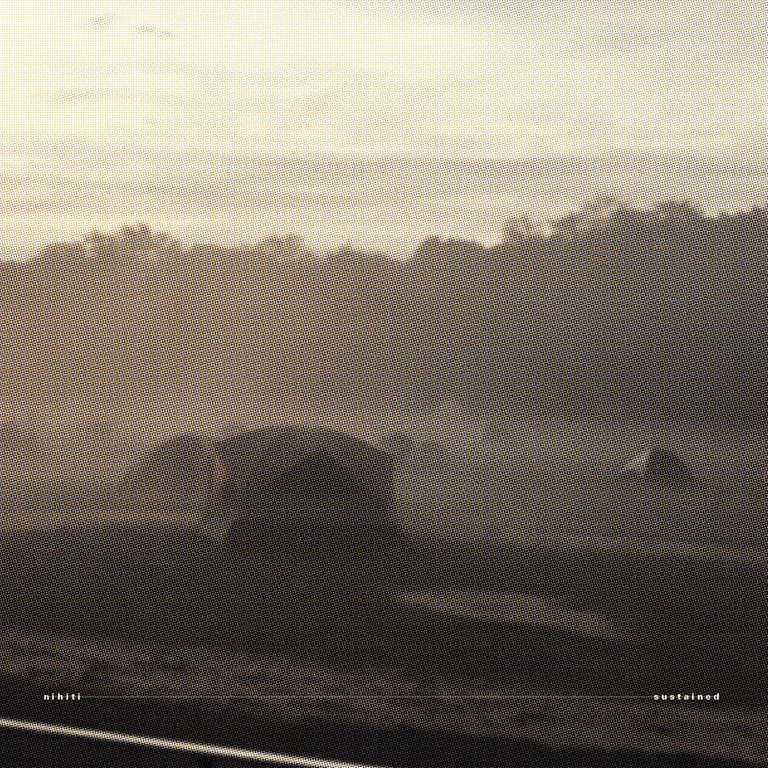
Nihiti’s Sustained is the perfect antidote to all the tension. It consists of three slow-moving ambient works, extensive in their duration. The shortest, ‘Tetrachrome’ is almost ten minutes long, and it opens with the immense, twenty-one-and-a-half-minute soft soundscape of ‘Stellar Observer’. I sit back by candlelight and close my eyes, and feel my jaw slowly unclench, and my shoulder blades gradually begin to loosen. It’s soporific, deep ambience that washes over you and with washing waves of sound and soft, elongated mollifies drones that drift like vapour. It isn’t without turbulence, but said distortion and treble waves crash a way in the distance and charge against a backdrop of slow undulations. The broad, textured sounds are indeed sustained, for what feels like eternities, and the yawn that swells in my jaws is one of relaxation rather than boredom.

There are glitches and switches in ‘If the Colour’ that disturb the flow, and you almost feel yourself tripping momentarily, like a sleep twitch, but things soon right themselves again, and you resume your calmness, despite scratchy samples and moments of dissonance, because in the overall sensory experience, Sustained is slow and gentle.

Breathe it in, absorb the vapours. Ignore the distant voices as they whisper and echo, and assume they mean no harm, despite the darkening sky toward the end. Let it simply hang in the air: sit back, turn down the lights, and tune in to your inner voice instead of the inaudible mutters. Trust your instruct. Trust the space. Absorb the calm.

AA

a0264725976_10

June 2022 – Ten Foot Records

Christopher Nosnibor

Most bands start out splurging output and slow down over the course of their career. Percy aren’t most bands, and over the last decade have accelerated their output. And also, contrary to the common trajectory, instead of mellowing, they’ve got angrier, gutsier, ragier. Monorail really does find them at the top of their game, bursting with zeal and brimming with vitriol, kicking arse like never before.

‘Chunks’, premiered at their recent York show supporting Percy slams in hard and angular, landing between Grotesque era Fall and Truman’s Water. Jagged, jarring, it’s a full-throttle it’s an instant headache. ‘We’re all just chunks in gravy’, Colin Howard snarls and sneers, and it’s punchy – a very different kind of throbbing gristle. There’s no let up as they pile into the scorching ‘I.C.U.’ and it’s immediately clear that Percy have hit a new level.

They haven’t changed fundamentally: they’ve always been sociopolitical, and they’ve always cranked out driving riffs with a choppy, discordant edge, accentuated by Howard’s Mark E Smith influenced slightly nasal sprechgesang, and there’s a clear continuity that’s run from their self-released 2013 debut album, A Selection of Salted Snacks, through their debut album proper, Sleepers Wake on the esteemed Mook label and 2020’s Seaside Donkeys, which featured the Brexit demolition anthem, ‘Will of the People’.

Monorial isn’t so much about evolution or progression as it is about hitting that sweet spot – which really isn’t so sweet. In other words, their two years out from gigging during a tumultuous time socially and politically has seen them really hone their frustrations into their most attacking material yet. Same style, same form, just harder, faster, more pissed off. It’s not only their best work to date, but it’s absolutely essential listening, especially for those who still reminisce about John Peel and the golden age of indie, because these guys are everything you could want and Monorail has future cult classic written all over it.

AA

Percy-2

5th May 2022

Christopher Nosnibor

The pandemic may be over – or not, depending on your viewpoint or your government – but there’s no question that the pandemic affected us all in some way, shape, or form, and that as much as people are getting on with their so-called ‘normal’ lives, we’re not all fully over it. Some of us may never be.

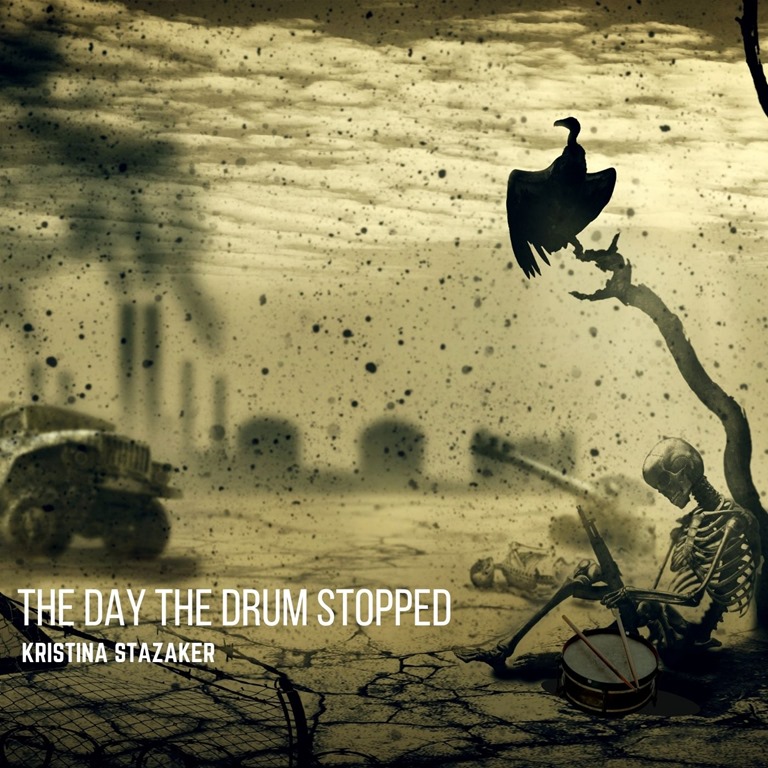
‘The Day the Drum Stopped’ was penned during the height – or depths, depending on your perspective – of the UK pandemic lockdown, and captures the instantaneous psychological spasm of the moment everything halts abruptly. ‘The Day the Drum Stopped’ is perhaps another way of phrasing ‘the great pause’, and it was a strange time to say the least.

For many – not least of all musicians, those in hospitality and retail – everything stopped. For others, who continued to work from home, while also trying to manage home-schooling, the pause was less pronounced, marked more by the absence of people and traffic in the street when venturing out for the prescribed daily exercise or trip to the local supermarket in the hope of scoring both loo roll and pasta. But no question, it was strange, a plunge into the unknown, the unpredictable, and this was a cause of major anxiety for so, so many.

Kristina Stazaker has articulated this succinctly and in a most accessible fashion on her new single, propelled by some sturdy percussion and ‘builds up to a powerful ending where the drums restart and the electricity of life flicks into action again’. It starts with a solid march, before loping away like a galloping horse, and there’s optimism there, as Stazaker remains positive that ‘the drums will come back again’, and it’s a rush and then… it stops, and you’re left, vaguely nonplussed, wishing there was more. Which seems like life, really. Cracking single, though.

AA

 Artwork - Kristina Stazaker