Posts Tagged ‘Jazz’

Not Applicable – 16th February 2024

Christopher Nosnibor

What we’re given to expect from this three-way collaboration is ‘an album of explorative, freely improvised electroacoustic music by an acclaimed trio of acclaimed genre-defying musicians’. I can’t help but blame the music press – as was, rather than the broken skeleton of what remains of the music press – and streaming algorithms for the obsession with genre. One could probably take it as far back as to the 50s when the press was all over this shocking ‘Beatnik’ counterculture, but to consider more relevant and recent history, ever since the ‘goth’ tag was applied to a fairly disparate selection of post-punk bands – and their fans – categorisation has been the method by which to both shortcut detailed analysis and to market acts. The groupings rarely make sense, or at least never did to me. For example, I loved Nirvana, but had absolutely no interest in, say, Soundgarden or Pearl Jam, who lacked ant of the elements I loved about Nirvana, and to my ear weren’t especially grungy. Bauhaus and the Sisters of Mercy have nothing in common beyond there being an arch, art aspect to their work, and the idea that both Throbbing Gristle and Ministry are ‘Industrial’ is absurd (and while I get that ‘industrial metal’ may be the distinction when considering Ministry, Pitch Shifter, etc,. it’s never rendered any more clear than when the term ‘hardcore’ is used. Many acts claim to be ‘genre defying’, but so few are. That said, the very function of the avant-garde is to defy genre, to smash preconceptions, to push boundaries, to do something different. In the Gloaming, remarkably, is something very different, and is truly ‘genre defying’.

It’s often intriguing to see just what players of such an unusual selection of instruments will produce when they come together and set out with the primary purpose of seeing what happens. Lothar Ohlmeier’s bass clarinet, Isambard Khroustaliov’s electronics, and Rudi Fischerlehner’s drums make for an interesting lineup, and sometimes, even the most experienced musicians will come together and create sound, but it doesn’t really gel. This is most certainly not one of those instances.

The album contains six pieces, and they each explore subtly different musical terrain, seemingly with all participants working on the understanding that less is more. There is a lot of space in which they all breathe and step back from soundmaking to allow the atmosphere to evolve. While the bass clarinet clearly has jazz connotations, this isn’t an overtly jazz album in any sense.

‘Leaf Silhouettes’ is a celebration of discord and dissonance, as clattering drum rattle like bin lids blown down an alleyway in a gale, the squelching electronic sounds conjuring an eeriness amidst seemingly random toots, while ‘Out to Dry’ has an almost sixties sci-fi feel, with hints of the BBC Radiophonic Workshop about the alien ambience, where the electronics take the lead, but remain restrained, with the result being sparse and atmospheric.

If any one of the pieces does have a more avant-jazz feel, it’s the nine-minute ‘Violet Weeds’, where the clarinet tootles and hoots every which way, spreading like tendrils over the bibbling synths. The percussion remains noteworthy for its restraint, as it does over the course of the album. And if ‘End Zone’ employs the same elements, the mood is quite different by virtue of the difference in balance of its instruments. It is, in the main, a subdued, understated piece, but whistles of feedback and extraneous bleeps bringing extra dimensions..

The final piece, ‘Pixel Head’ is a ten-minute monster of a composition, and one which, while spacious, brings so many different ideas and segments that it really does bend the brain.

From the beginning In the Gloaming is a work of intuition, and the interplay between the three musicians is something special.

AA

a1898630103_10

Transcending Obscurity Records – 10th November 2023

Christopher Nosnibor

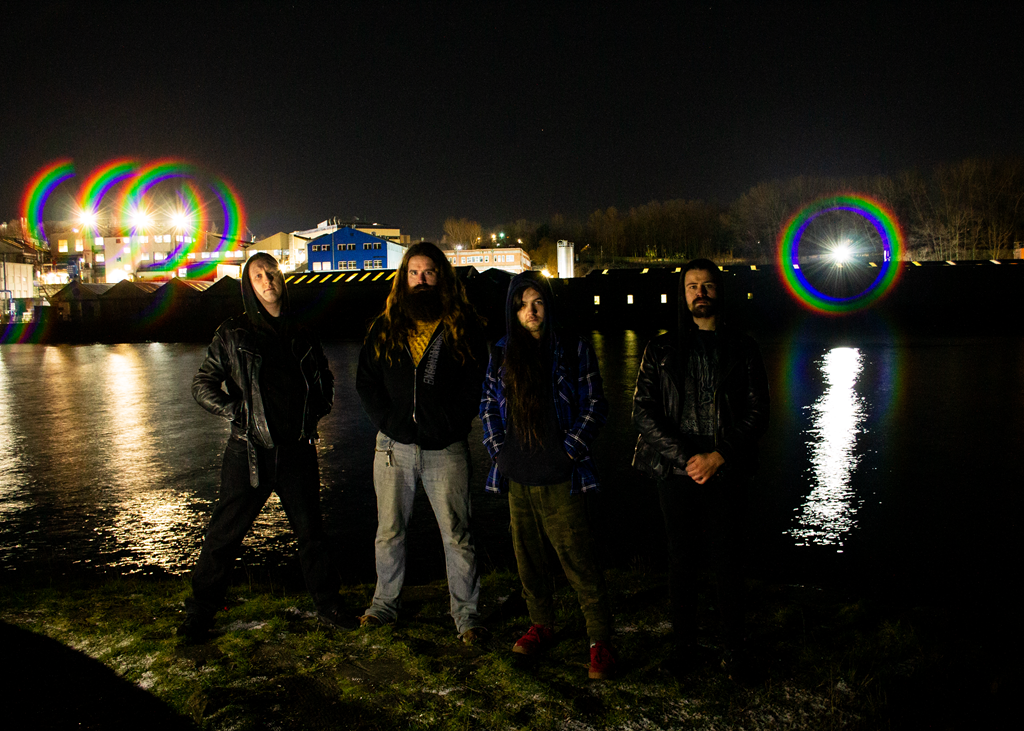
Somehow, despite James Watts having about a dozen musical projects on the go, with each touring in support of recent releases in addition to running a label, Newcastle quartet Plague Rider have come together once more to record a new album. It’s been out a few weeks already, but now, in addition to the myriad packages which include all the merch bundles you could possibly want and more besides, from mugs to denim jackets, it’s available on some pretty lurid-looking coloured vinyl. One might describe the retina-singeing flame-coloured hues of the disc as intense, which is fitting, given not only the album’s title, but its contents.

All of the various outfits featuring Watts are at the noisy end of the spectrum: the man has been blessed – or cursed – with vocal chords which have the capacity to evoke the darkest, dingiest, most hellish pits of hell, and the ability to transform the least likely of objects, like radiators and so on, into ‘musical’ instruments capable of conjuring the kind of noise that would bring forth demons.

Whereas Lump Hammer are devotees of relentless, repetitive riffs, and Friend are heavy buy dynamic, Plague Rider are… Plague Rider.

This isn’t just about Watts, though: guitarist Jake Bielby is of Dybbuk, and ex-Live, Lee Anderson (no, not that one) on bass is ex-Live Burial, and ex-Horrified), as is Matthew Henderson on drums. They make for one mighty unit, who, according to the accompanying notes, exist to weave together ‘vile, repulsive, and challenging death metal music whose original influences are now twisted and decomposed beyond recognition. Sure, you can find bits and pieces here and there, traces of hair, fingernails, broken teeth fragments, but overall their music is too far gone for any obvious comparisons. And that’s only remarkable because it adds an element of uniqueness and unpredictability in their music, a rare thrill to be derived from this style these days.’

There is so much going on all at once, it’s brain-blowing. It’s not technical metal, because it’s simply too raw, to ragged, and it’s not jazz, because, well, it’s just not – but they apply the principles of jazz to extreme metal, resulting in a mess of abrasion that’s… I don’t know what. I’m left foundering for marks and measures, for adjectives and comparisons and find myself grasping at emptiness. ‘Temporal Fixation’ explodes to start the album, and within the first three minutes it feels like having done six rounds in the ring. It’s as dizzying an eight minutes as you’ll experience. When I say it’s not technical, it’s still brimming with difficult picked segments and awkward signatures – but to unpick things, the technicality is more jazz-inspired than metal, the drums switching pace and fitting all over. The vocals are low in the mix, lurching from manic frenzy to guttural growling at the crack of a snare.

And at times, those snare shots land fast and furious, but not necessarily regularly. The rhythms on this album are wild and unpredictable – but then the same is true of everything, from the instrumentation to the structures. The mania and the frenzied fury perhaps call to mind Mr Bungle and Dillinger Escape Plan, but these are approximations, at least once removed, because this is everything all at once.

It’s as gnarly as fuck, and if ‘An Executive’ is all-out death metal, it’s also heavily laced with taints of math rock, noise rock, jazz metal and grindcore. It’s a raging tempest, an explosion of blastbeats and the wildest guitar mayhem that sounds like three songs all going off at once, and that’s before you even get to the vocals, which switch between raging raw-throated ravings and growls so low as to claw at the bowels. The sinewey guitars and percussive assault of ‘Modern Serf’ are very Godflesh, but in contrast, immediately after, ‘Toil’ is rough and ragged, and dragged from the raw template of early Bathory.

The lyrics may be impossible to decipher by ear, but thanks to a lyric sheet, it’s possible to excavate a world that’s broadly relatable to the experience of life as it is: ‘Psychically exhausted / Yet still plugged in and wired’ (‘Temporal Fixation’);

‘An Executive’ nails the way corporate speak has come to dominate everyday dialogue:

‘Chant the slogans

With conviction

Doesn’t matter

What we tell them

All that is solid melts into PR’

Fuck this this shit and capitalism’s societal takeover. As if it’s not enough to dominate the means and the money, the cunts in suits are taking over the language, too. But they’re not taking over Plague Rider. No-one is touching them as they lay convention to waste with this most brutal album. ‘The Refrain’ takes the screaming noise to the next level and brings optimum metal power for almost ten minutes before, the last track, the twelve-and-a-half minute ‘Without Organs’ is grim and utterly relentless.

With Intensities, Plague Rider deliver a set that lives up to the title. It’s utterly brutal, frantically furious, and devastatingly dingy. It’s almost impossible to keep up with the rapid transitions between segments, and it’s likely many will move on swiftly because it’s simply too much. But that’s largely the point: Intensities spills the guts of dark, dirty metal. Utterly deranged, this is the best kind of nasty.

AA

band photo

Ni Vu Ni Connu – 2nd November 2023

Christopher Nosnibor

While the late 80s and early 90s saw the absolute peak in format-driven consumer exploitation, with the major labels finding evermore extravagant and ostentatious ways pf presenting a single or an album to boost its chart position by milking hardcore fans who would buy every format for the sake of a bonus track, a remix, or a poster, there’s been a strong return for physical releases in recent years. Admittedly, the days of CD singles packaged in tri-fold 12” sleeves, cassette singles in album-sized boxes, 12” boxes in which to house a series of CD singles, albums released in boxes as six 7” singles, and the like are well over, the fetishisation of the object is very much enjoying a renaissance, most likely as a reaction to the years when everything became so minimal and so digitised that no-one actually owned anything.

This was a bleak period. As someone who had spent a lifetime accumulating books, records, CDs, even tapes, I found it difficult to process. I had grown up aspiring to own a library and a wall of records, and found myself foundering, drifting in a world where entire lives were condensed to a playlist on a phone and a few kindle picks. I’d walk into houses – admittedly, not often, since I’m not the most sociable of people – and think ‘where’s the stuff?’ Stuff, to my mind, is character. It’s life. People would endlessly wave their Kindles and tell me ‘it’s just like a book!’ and rejoice at their Apple playlists on their iPods because they had their entire collections in their pocket and no clutter. I suggesting I should clear out my ‘stuff’, these techno-celebrants were missing the point, and continue to do so. Rifling through a collection, finding lost gems, engaging in the tactility, remembering when and where certain items were purchased is an integral part of the experience. My collection isn’t simply a library of books and music, it’s a library of memories.

In more underground circles, the existence of the artefact remained more consistent, perhaps because more niche artists and labels always understood the relationship between the artist and the consumer as conducted via the medium of the object. The release of this epic retrospective as a 4-LP box set is, therefore, less a case of getting on board with the Record Store Day vinyl hype in the way that HMV are now carrying more vinyl – at £35 a pop for reissues of 70s and 80s albums you can find in charity shops and at car boot sales for a fiver (and you used to be able to pick up in second-hand record shops until they died because no-one was buying vinyl), and more a case of business as usual.
a2289573057_10

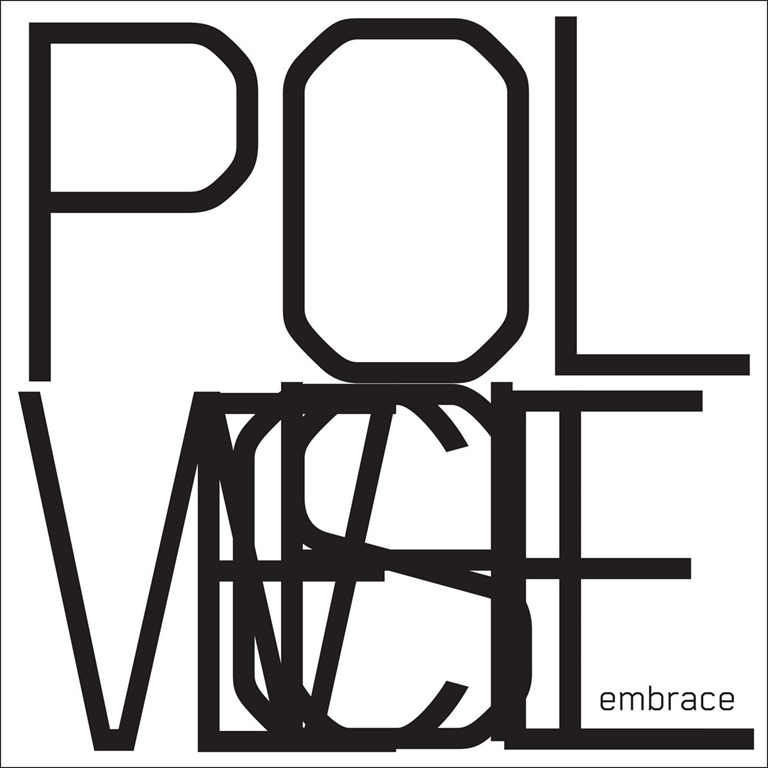
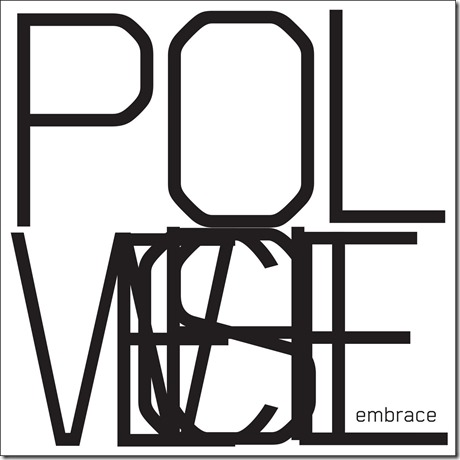
Vienna- and Berlin-based ensemble Polwechsel have a thirty-year career to reflect upon, and with a substantial back-catalogue to their name, and it’s a landmark that truly warrants a box-set retrospective. Although it’s not a retrospective in the conventional sense: this is a work created in collaboration with a selection of instrumentalists and improvisers who share their exploratory mindset. Traditional compilations feel somewhat lazy, and are ultimately cash-ins which offer little or nothing new to the longstanding fan. And so this set serves to capture the essence and style of their extensive catalogue, rather than compile from it.

There’s a lot of ground to cover, too. As the accompanying notes detail, ‘Vienna- and Berlin-based ensemble Polwechsel have been making music at the interface of collective improvisation and contemporary composition. With their changing cast, the group have been at the forefront of musical experimentation, from style-defining works in reductionism in the 1990s, which concentrated on silence, background noises and disruptions, to a change in direction in the 2000s, which saw the introduction of traditional musical aspects such as tonal relationships, harmony and rhythm. Through varying constellations, instrumentations and collaborations, Polwechsel have developed a unique body of work that has firmly established them as one of the driving forces in contemporary music-making… Their music has mostly straddled a line between contemporary music and free improvisation, and is characterized by quiet volume, sustained drones, and slowly developing structures.”

And so it is that for EMBRACE, Werner Dafeldecker, Michael Moser, Martin Brandlmayr and Burkhard Beins are ‘joined by a roster of likeminded guest musicians and former band members to perform a series of new pieces reflecting the whole breadth of their musical investigations.’

‘Jupiter Storm’ is spacious, spatial, strange and yet also playful, an assemblage of sounds that lurch from serious and atmospheric to sleeve-snickering toots and farts, and everything in between over the course of its eighteen minutes, with slow—resonating gongs and trilling shrills of woodwind and plonking random piano all bouncing off one another, while the bass wanders in and out of the various scenes in a most nonchalant manner. On ‘Partial Intersect’, drones and hesitant drones occasionally yield to moments of jazzification, parps and hoots and squawks rising from the thick, murky sonic mist which drifts ominously about for the track’s twenty-minute duration.

Sides C and D contains ‘Chains and Grain’ 1 and 2, again, longform pieces almost twenty minutes long, comfortably occupying the side of an album, are the order of the day. Clanking, clattering, chiming, bells and miniature cymbals ring out against a minimal drone which twists and takes darker turns.
cover

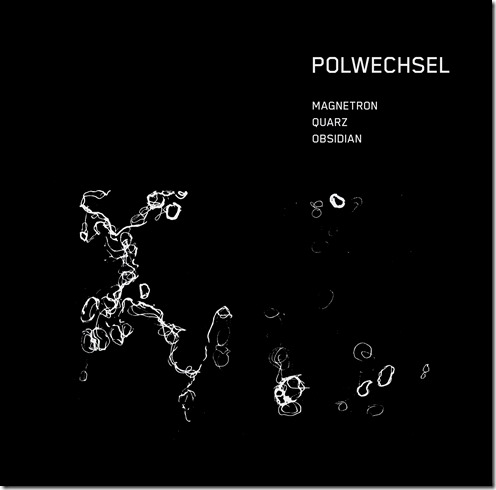
The tracks with Andrea Neumann are eerie and desolate, and occupy the third album. These pieces are different again, with the two ‘Magnetron’ pieces building from sparse, moody atmospherics to some piercing feedback undulations. The shrill squalls of treble, against grating extraneous noise, make for some tense listening. The second in particular needles at the more sensitive edges of the nerves. ‘Quartz’ and ‘Obsidian’, are more overtly strong-based works, but again with scratches and scrapes and skittering twangs like elastic bands stretched over a Tupperware container. The fourth and final album contains two longform pieces, with ‘Orakelstücke’ occupying nineteen and a half minutes with creaking hinges, ominous tones, and a thud like a haunted basketball thwacking onto a bare floorboard. There are lighter moments of discordantly bowed strings, but there’s an underlying awkwardness with crackles and scratches, muttered conversation in German. The fifteen-minute ‘Aquin’ is sparse, yet again ominous and uneasy, majestic swells of organ rising from strained drones and desolate woodwind sinking into empty space.

The set comes with a thirty-two page booklet containing essays Stuart Broomer, Reinhard Kager and Nina Polaschegg (in both German and English) and some nice images which are the perfect visual accompaniment to the music, and while it’s doubtless best appreciated in luxurious print, a digital version is included with the download.

EMBRACE is a quite remarkable release – diverse and exploratory to the point that while it does feel like an immense statement reflecting on a career, it also feels like four albums in their own right. It’s a bold release, and an expansive work that certainly doesn’t have mass appeal – but in its field, its exemplary on every level.
Panurus Productions – 6th October 2023

Christopher Nosnibor

Heavy music doesn’t have to be po-faced or excessively serious, and there have been a few comedy metal and noise bands through the years. Lawnmower Deth are one which swiftly spring to mind, but the likes of Municipal Waste, and lesser-known acts like Grindcore Cakemakers also make hard noise while being a far cry from the existential rage more commonly associated with their genres. And that’s good. The world needs variety, and there’s more than one way to alleviate the grimness of life on this sorry planet.

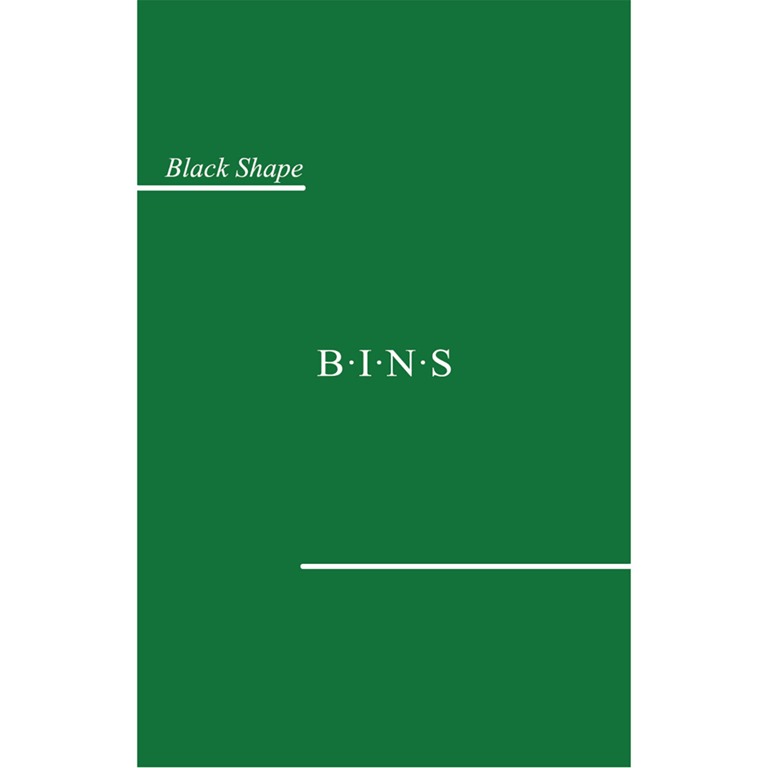
This album from Black Shape is perhaps the absolute antithesis of Godflesh’s seminal Streetcleaner. With the lumbering weight of a runaway bin lorry, Black Shape rumble their way through eleven tracks of bin themed absurdity, utilising their knack for writing material that is as colossally heavy as it is varied and comedic. Most of the tracks are around the two-minute mark, with just a couple of four-minute outliers. On the surface it’s a whole mess of noisy shit, but closer listening soon reveals a wildly varied album which incorporates jazz, spoken word, nu-metal, rap and thrash.

‘The Beast from the North East’ is a dirty, shouty punk effort – more Anti-Nowhere League than The Pistols. Dense, muscular, with filthy sludge guitars, pant-soiling bass, and a wild solo which occupies half the song’s duration. The production is rough and raw, and this works in its favour: the guitar on ‘I Wanna be a Binman’ positively tears from the speakers, and it’s like being at a gig and standing so close to the PA that your nostrils vibrate. If you’ve never done it, you need to at least once, although earplugs are recommended. You still feel the force without fucking your hearing for the rest of your life. It’s a throbbing stomper reminiscent of Ministry circa Psalm 69. Only instead of burning for the needle, it’s a hard craving for lugging refuse. They pillage every style going here: ‘Dogshit Bin Juice’ takes a turn for the choral in the verses between ball-busting glam stomp riff breaks. It’s hilarious, but also makes you think. You sometimes hear that binmen are pretty well-paid. But would you do this, for any money?

If ‘Put Me in the Bin’ is the most overtly old-school punk cut, the recording is again more industrial, which couldn’t be more at odds with the offbeat, off-the-cuff lyrics, while ‘Once a Binman, Always a Binman’ throws a curveball with a gentle intro and unlikely lift of ‘Love Lift us Up Where We Belong’ before going full-slugging nu-metal / grunge crossover, with the meaty heft of Tad bringing the blue collar grit to proceedings. There are some moments of astute observation and social critique which land quite unexpectedly, but it just goes to show that it’s a mistake to write of a so-called ‘comedy’ album – or indeed any comedy – as shallow, lacking in content, or emotional depth. ‘The Story of How I Died’ brings lilting harp and Pam Ayres style narrative.

Beyond bin-related themes, this is not an album that’s predictable in anyway, lyrically or stylistically, with piano ballads pressed against squalling hardcore assaults. And because of the punk / thrash / metal leanings, and the overall daftness of many of the lyrics and the overall concept, Black Shape’s musicianship is likely to be overlooked. But the range is a measure of immense versatility and competence. Black Shape are the Bill Bailey of dustbins, and BINS is a work of sheer brilliance.

AA

a2313098061_10

343 Collective / Broken Soundtracks / Jam Recordings –15th October 2023

The arrived of this album piqued my curiosity for a number of reasons, and one of the first things I felt compelled to do was unravel, or at least understand, the context of the title, since it seems to connote being the music which accompanies a movies. On my journey, I discovered that in film, a score is, at least according to Masterclass.com, ‘the specific musical piece or incidental music that accompanies a scene or moment in the film, and a soundtrack is the compilation of songs and sounds that comprise all of the film’s music. Scores are usually created by one or more composers, while soundtracks typically feature songs by different bands, artists, or musicians.’

But equally, a score is notation, usually in manuscript or printed form, of a musical work, believed to derived from the vertical scoring lines that connect successive related staves.

This album is neither notation nor featured as part of any movie – at least, not one that’s been produced yet.

The ensemble founded by Jon Dawson, and John Bundrick as a side project to Third of Never has expanded considerably, now standing as a six-piece, with this outing features additional contributions from Rabbit (The Who), Steve Kilbey (The Church) and Doug McMillan (The Connells), and was recorded alongside the forthcoming Third of Never album.

They describe the album as ‘a lysergic mood journey of epic proportions’, and advise that it be listened to ‘all at once, in the dark, accompanied by someone you trust, and a lava lamp.’ Well, it being a wet night at the end of September, it’s been dark since before 8pm. I’m alone in my office, and in the absence of a lava lamp, I have a couple of candles lit, and as such, my listening experience and ultimately my review are in the spirit of the album and its intentions – penned in a single sitting, straight through, no pauses, no rewinds, no munching popcorn. Just the quiet sipping of an Islay single malt.

To describe it as ‘epic’ isn’t hyperbole, but a statement of fact: the scope and impact of Original Score is vast. There’s no delicate, slow-building introduction: ‘Attention’ says a voice urgently but dryly, before a sound-collage begins to layer up before our very ears, and that rapidly evolves into a space-age jazz workout with rolling piano and hectic drums driving through fluttering cut-ins and cut-outs, and everything’s happening at once, for a time pinned together by a crunking, choppy bass before ethereal voices float in a chorus of reverb to carry it all away. Done differently, it could be a chaotic disaster, but it’s more Burroughs than Beefheart, and in filmic terms feels like the accompaniment to a three-way-split screen with rapid intersections and scene changes across all three.

Perhaps it’s the power of suggestion, or the potency of the whisky, but Original Score does feels like a very visual audio.

Because of the fact the eleven pieces are segued to form one continuous work, if you’re not actually looking at the CD display, there’s no way of really knowing when one ends and the next begins: because the individual tracks aren’t linear or overtly structured, the transitions between them are seamless.

There are some uplifting, light-hearted passages, and some incredibly dark, almost spooky ones, as haunting voices float hither and thither over wailing guitar feedback, undulating organ notes, and ponderous bass, fractured, treated vocals adding to the unsettling disorientation.

There’s a strongly proggy space-rock vibe, and the quavering keys and strolling bass segments lean heavily towards that seventies sound. I’m not well enough versed to differentiate Yes from King Crimson, but these are the touchstones that spring to mind, melted into Hawkwind wigouts. At times, the images it conjures are of spinning through space, hurtling headlong into the void; others, simply of a band on a massive stage with a drummer and three percussionists, multiple keyboardists with tassled sleeves delivering fifteen-minute solos to a Woodstock-sized crowd, with bearded guys in flares utterly losing their shit. It may be all of this and more, or none of these things when it comes to your own experience.

And this is, undoubtedly, the beauty – and artistic success – of Original Score. It’s the real-time unravelling soundtrack to the movie that you picture in your mind’s eye.

AA

a1597649542_10

Sub Rosa  – 22nd September 2023

Christopher Nosnibor

So many reissues recently have taught me a valuable lesson. I don’t know nearly as much music as I thought I did. Of course, it’s impossible know all the music, and despite feeling I’m reasonably knowledgeable, and compensating what I don’t know with enthusiasm. Time was, I was worried about knowledge gaps: they made me feel stupid, ignorant, and I’ve spent evenings with people who have reeled off bands in genres I’m interested in and not recognised the name of a single one, let alone heard them. I felt like a fraud claiming to be a music enthusiast and worse still, a music writer (I never proclaim to be a music journalist. I write about music, and do so very much from a personal perspective. Sometimes, I stab at maintaining an element of objectivity, but the appreciation of art isn’t objective. As I’ve written elsewhere, the reason we appreciate art is because of the feelings it stirs in us, the way it speaks to us, not first and foremost because of its technical proficiency.

This is a lengthy circumnavigation to the confession that Die Anarchistische Abendunterhaltung completely bypassed me in the day – in fact, until today, the week of the reissue of their 1995 self-titled full-length debut. I suspect that they didn’t get much coverage in the UK music press, and this was still a while before the advent of the Internet as we know it – and I was a relatively early adopter, setting up my eBay account in 1999 following the demise of Yahoo! Auctions.

As the accompanying bio outlines, ‘The band consisted of four young, ‚classically derailed’ musicians who played their own compositions exclusively their with acoustic instruments such as violin, cello, clarinet and accordion… Their work contained influences from Roma music, Eastern European folk, klezmer and jazz, but was performed with the energy, rebellious spirit and Sturm und Drang of a bona fide punk band. DAAU was part of the fertile Antwerp scene, which also produced dEUS, Zita Swoon and Kiss My Jazz, and soon signed an international record deal with Sony Classical.’

dEUS may have briefly made a mark here in the UK in indie / alternative circles, but the others, not so much, and I suspect that even with its first vinyl pressing, this re-release will likely have a bigger landing in Germany and, indeed, the rest of mainland Europe, than this pitiful island that still celebrates Britpop, and which spent 1995 dominated by turgid sludge by the likes of Oasis, whose pinnacle release (What’s the Story) Morning Glory? and Blur’s Great Escape (which was anything but great); the best we got was The Bends, while Robson and fucking Jerome dominated the singles charts for half the year. As if we needed further proof that we’re a small, crappy island with an overinflated sense of self-importance that the longest hangover from the Empire ever. It’s embarrassing, as is the fact that this domestic Brit-centric bullshittery has denied us introductions to many great bands. Die Anarchistische Abendunterhaltung is a perfect example.

It’s perhaps not hard to grasp why this extravaganza of neoclassical extravagance and its wild woodwind and unpredictable compositional forms didn’t grab the attention of the British Music press, but they missed a work that’s hugely innovative and belongs to no one genre. It’s wild and it’s challenging , but these are positives.

Die Anarchistische Abendunterhaltung is droning strings, it’s by turns melancholy and slow, and remarkably lively. It’s an untamed beast almost with a life and energy all of its own. But the compositions aren’t in sequence!

‘V Drieslagstelsel’ is the first track, the first of five ‘Drieslagstelsel’ pieces, and it’s followed by the frenzied yet droning folksiness of ‘II Drieslagstelsel’: it’s pretty, but it’s strange. Or, it’s pretty strange. I’m on the fence, while it sounds like they’re stripping the fence with some frenzied violin work. ‘III Drieslagstelsel’ scuttles in with some cheeky chamber stylings before popping in all directions, and it’s kinda cheeky – and perhaps tongue-in-cheeky – jaunty, incredibly busy, and extremely varied. It isn’t the kind of explosive, head-spinning jazz I sometimes find myself wrestling with here, but it covers a lot of terrain in just five and a half minutes, with stage musical qualities pushing to the fore before dipping back down to something altogether less ‘production’ orientated. The last of the ‘Drieslagstelsel’ sequence is ‘I Drieslagstelsel’, and following the frenzied strings and dramatic orchestral sculptures of ‘VI Drieslagstelsel,’ it’s a compact piece of neoclassical music which fulfils the oft-underrated and oft-overlooked purpose of entertaining. It’s a fun and often frivolous piece, in parts a wild hoedown with wind instruments, with an eye-popping energy which delves in to drones and darker territory at times.

What happened to IV? Maybe it doesn’t matter. Rounding the album off is the eleven-minute ‘Doorloop’, which appears to be a traditional track, and its slow, drawn-out notes are funereal at first, before thing go g=crazy and there are even vocal.

Over the course of these six pieces, Die Anarchistische Abendunterhaltung brings massive range. Back in 95, I probably wouldn’t have appreciated it, and nor would anyone else I knew. But here we are, looking at an accomplished album with much texture and range.

And now, I appreciate it. Perhaps I wasn’t ready, perhaps it was out of step with the times for all but a few – and even fewer here in Britain – but Die Anarchistische Abendunterhaltung is a remarkable album, and one which is timeless.

AA

a3688988726_10

Neurot Recordings – 29th September 2023

Christopher Nosnibor

I’m finding myself on something of a Neurot trip this week, following my fervent frothing over the mighty new album by Great Falls. As if to prove that the label has been putting out outstanding records for a very long time (and with unstinting singularity, presenting a broad stylistic range, too: this is anything but heavy), twenty years on from its original release, Grails’ debut is getting a reissue. While the nice coloured vinyl pressings (in ‘Coke bottle clear’ and ‘beer’ hues) aren’t necessarily for everyone, the release does afford a timely opportunity to reflect on the debut release of a band who have gone on to forge a significant and varied career, with their latest album – number eight – being released next month.

Steve Von Till’s comments about hearing the demo for the album, on which the offer of’ the release was made, reminds us of the musical landscape of the time in 2002: ‘Most instrumental music at the time was trying to emulate Godspeed You! Black Emperor or Mogwai, but this was different. This seemed to have elements from more diverse sources that I loved such as Dirty Three, Comus, Richard Thompson, and Neil Young, not to mention, who in hell would dare to cover Sun City Girls?’

There was a lot of instrumental post rock around, and while there was a wealth of great bands around, locally as well as nationally and internationally, it’s fair to say that a large proportion of it was much of a muchness, with myriad explorations of chiming guitars and slow-building crescendos.

The prominence of acoustic guitars, softly picked and strummed, and rather unconventional use of violin creates an unusual dynamic on these compositions, which tend to be sparse in arrangement and with considerable space between both the instruments and the individual notes, and the crescendos are few and far between – the first doesn’t arrive until over halfway through the third track, the slow, meandering ‘The Deed’, when the swell of guitar pushes upward through yawning strings and finally the full drum kit crashes in. But the impact is less from whacking on the gain on the instruments, but the musicians utilising the dynamics of playing, and the simple equation that playing harder is louder. Against the prevailing tide of pedal boards as big as drum risers packed with effects, this stands out as being not only very different, but bold, the emphasis on the tones and timbres of the instruments in unadulterated form, the sounds the result of technique.

The soft piano of ‘In the Beginning’, when paired with picked guitar has an almost pastoral feel; the heavy smack of a drum feels incongruous before a soft yet almost clumsy waltz emerges briefly, and structurally, the pieces seem to belong more to jazz than anything else, although ‘Space Prophet Dogon’ (the Sun City Girls cover) draws together elements of Celtic-influenced folk and psychedelia, and goes for a long toe-tapping groove over a crescendo by way of an extended climax. It takes a certain courage to fly in the face of fashion in such an obtuse fashion, as well as to play in such an intimate way that you can hear the sweep of a finger across a fret, where natural reverberations become as integral to the sound as the notes themselves. This is nowhere more apparent than on the hyperpsarce intro of ‘Broken Ballad’, a sedate almost country-tinged tune and one of the album’s more conventionally-shaped pieces. The slowly-unfurling ‘White Flag’ shares a certain common ground with later releases by Earth: slow, spacious, revolving around a simple, picked guitar motif, but it does swing into an exhilarating full band finale that’s different again.

Closer ‘Canyon Hymn,’ presumably a reference to Laurel Canyon, the name of the and when they recorded the demos which would become The Burden of Hope, is by no means an anthem or a theme, but encapsulates all aspects of the album’s range within a soothing five minutes. If the title, The Burden of Hope, implies a certain weight of responsibility, the music it contains sees that hope take wings. Twenty years on, The Burden of Hope sounds uplifting, and still fresh.

AA

cosmicimg-prod.services.web.outlook

zeitkratzer productions / Karlrecords – 22nd September 2023

Christopher Nosnibor

SCARLATTI represents something of a departure for zeitkratzer, the neoclassical collective headed by Reinhold Friedl, master of the prepared piano and a renowned avant-garde composer in his own right. While their performance and recordings usually focus on modern composers and avant-gardists spanning Stockhausen and John Cage via Whitehouse and Lou Reed, with a reinterpretation of Metal Machine Music, here they turn their attention to the altogether more historical figure of Domenico Scarlatti (1685-1757). He is best known – although this is relative – for composing some five hundred and fifty-five keyboard sonatas, and his being a progenitor of classical music. But a large portion of his work went unpublished in huis lifetime, and much has only been available sporadically since.

As the notes which accompany the album explain, ‘Little is known about Domenico Scarlatti… His music is, so to speak, left to its own devices: free, cheeky, playful, sonorous, surprising… Harmonically strolling again and again into unforeseen regions, the ear leads, not the theory; and also the fingers get their right: playful and haptic it goes. Scarlatti explained, “since nature has given me ten fingers and my instrument provides employment for all, I see no reason why I should not use all ten of them.”

But Scarlatti does not contain music by Scarlatti. Instead, the six tracks presented here are all composed by Friedl in response to Scarlatti’s work.

As such, this is much a celebration of Scarlatti’s ideas and approach to composition and so the explanation of the process and thinking behind it bears quoting: ‘Freedom, friction and listening pleasure instead of convention: “He knew quite well that he had disregarded all the rules of composition in his piano pieces, but asked whether his deviation from the rules offended the ear? He believes there is almost no other rule than that of not offending the only sense whose object is music – the ear.”

‘Reinhold Friedl applied this principle and composed the music for a choreography by dance company Rubato. Dance music drawn from Scarlatti, who was so inspired by dance music. The material of the piano sonata F-minor K.466 is twisted anew in all its richness, shifted back and forth, declined, frozen, noisified, sound structures extracted, floating. Those who know the sonata, will more than smell it’s [sic] shadows.’

The six pieces are indeed varied, in terms of mood and form. ‘lias’ is booming, droning, woozy, slow discordant jazz, low, slow, and with lengthy pauses. It’s not something anyone can dance to, and rather than light and playful, it feels dark and sombre. This is less true of the altogether sparser, but stealthily atmospheric ‘muget’.

‘pissenlit’ blasts in with churning industrial noise, a snarling blast that lurches and thunders, crashes and pounds withy relentless brutality. It’s clearly as far removed from the music of the seventeenth century as is conceivable, but beside the lilting piano and quivering, droning strings and subsequent stop-start levity of ‘reine des prés’ the sequencing of the pieces serves to highlight Scarlatti’s versatility, if not necessarily his predilection for playfulness. The playfulness manifests differently and unexpectedly here: ‘pissenlit’ is in fact the French word for ‘dandelion’, a plant often associated with a certain element of fun, of lightness, so the fact that this piece is three and a half minutes of gut-punching abrasive noise worthy of Prurient or Consumer Electronics is illustrative of the disparity between expectation and actuality.

Discord and discomfort abounds as drones and strings tangle amongst one another, heaving and wheezing and occasionally offering glorious, sun-hued vistas through the breaks in the widely varied forms, which feel elastic, and as if Friedl and co are stretching the fabric of the material to see just how much it will give. And it turns out, there is a fair bit of room. ‘reine des prés’ explores space, the gaps and pauses between the notes, and feels like a sort of musical cat-and-mouse which would equally work as soundtrack piece, but it has a cartoonish quality which means it’s more Tom and Jerry than anything else. But it is by no means flippant, throwaway. Entertainment is serious business, after all.

‘violette des marais’ brings pomp and drama… while the final track, ‘astis’, is skittish, playful but also frustrating in its hesitant, halting structure.

Scarlatti is interesting, entertaining, and bold, going out on a limb to present such an unconventional interpretation of a historical artist’s career. But this is largely the purpose of zeitkratzer: together, they re-present music, excavating the archives but presenting them through a prism of contemporary and avant-gardism, with jazz leanings but without being jazz in the way most would interpret it. In short, zeitkratzer continue to push and redefine musical boundaries, and long may they do so.

AA

a1585066167_10

Tzadik Records – 8th September 2023

Christopher Nosnibor

Everything seems to trigger some recollection or another. This is perhaps one of the greater pleasures of interacting with art in any form. As a child, I recall an old bagatelle board sitting in the shed. It always struck me as a quaint item – essentially a wooden board with nails stuck in it, some kind of hybrid between billiards and pinball, with a pile of very heavy, marble-sized metal balls.

If this triggered recollection seems random, that’s because it is, something beyond my control. But then despite everything, it comes to seem relevant, as Vol. 16 – which presents, as the press release puts it, ‘Big Band interpretations of John Zorn’s Book of Bagatelles’. It goes on to explain how ‘Zorn commissioned London-based Jewish composer, Eastmond to make an album from a selection of his 300 pieces: Book of Bagatelles. Arranged for 12 Musicians, the ensemble features some of Europe’s most celebrated creative musicians and improvisors alongside young rising stars of the UK scene.’

My musical palette has certainly expanded through the years, and I have JG Thirlwell to thank for this, as well as Gallon Drunk, for opening my eyes to wild and near infinite possibilities in terms of incorporating orchestral and brass elements into rock and guitar-based music. Everyone needs a route in to forms which aren’t readily digestible and certainly aren’t the norm for most.

There is nothing that’s especially digestible about this raging, ragged, woodwind-blasting behemoth, and that’s as intended. Actually, that’s not entirely true. There are moments, near the start, of the ten-minute opener, ‘Bagatelle #256’ which are immensely palatable in a smooth jazzy way, the kind of smooth jazzy way that might have you nodding along, and your friends saying ‘nice’ in a raspy whisper. But while there are some toe-tapping moments, the majority of this release is eye-popping, bursting as it is with some crazy shit that flies off in all directions at once.

There are some monster stomping moments, ‘Bagatelle #78’ is a proper full on dinosaur thump, and contrasts with the meandering drone of the next track, ‘Bagatelle #143’.

It’s all going on here, and sometimes it feels as if it belongs to a cartoon soundtrack, while at others it sounds like all-out sensory overload. There are some rather nice moments, expansive explorations of soundscapes while afford periods of laid-back-reflection. But then, there are as many moments of truly crazy shit, with everything exploding everywhere, highlighting insane range of this album.

If the climax of ‘Bagatelle #143’ would sit comfortably in the soundtrack to a cartoon, the start of ‘Bagatelle #63’sits in the bracket of headache-inducing wild jazz frenzy. And that’s something that this album quite unexpectedly highlights – the way in which there is no way of predicting the highs and lows and insane range that this album presents. When it’s chilled it’s nice; when it’s racing all over the shop, it’s fucking mental.

The Bagatelles – Vol.16 is all over the place, and it’s a truly wild ride. It goes from oompah to film soundtrack in an instant, and it’s impossible to keep up. And that’s its appeal.

D6944EF4-5344-4CFA-995A-487CC27D5BA4

The Quietus

Christopher Nosnibor

It’s not that I like to brag, but I’ve been writing about Sly and the Family Drone since 2012, when they blew me away at the Brudenell in Leeds, with a chaotic, percussion-heavy, audience-participation-led performance (and since when my writing has improved and I’ve become a shade more sensitive, perhaps). Witnessing Matt Cargill standing aloft on a stack of amps while surrounded my members of the crowd battering drums distributed by the band was one of the most exhilarating experiences of my life, and I was an instant convert. In some respects, I was fortunate to witness it: in a recent interview, Cargill was at pains to stress that it’s one of those spontaneous things: “It doesn’t happen at every gig,” he warns. “And I don’t want it to become a thing that people expect or are disappointed when we don’t do it. There are times I’ve seen people write, ‘Bring your drumsticks!’ I’ve never said that and I don’t want you to do that! If we were doing it every night people would be, like, ‘Oh, fuck off! They’re doing their schtick.’”

It’s this spontaneity and true commitment to improvisation that is a significant part of the band’s appeal. You never know quite what you’re going to get, and there’s a sense that nor do they: it all unfolds in real-time.

Their subsequent releases since my introduction in 2012 have never disappointed, and for me, at least, the best thing about Sly is that they embrace the difference between the live and recorded media. As such the recordings are the recordings, the performances are the performances. Explaining the difference to The Quietus, Cargill says “It was nice to be able to do all that spatial and stereo stuff which we wouldn’t be able to do live,” he says. “Because of mics on drums and stuff, it just doesn’t really work in that way. So we were able to spend a bit of time just working on that and doing some quite weird-sounding drum stuff which I’m really happy with.” The same article also explains, ‘The passages of manipulated drumwork are bookended by the band performing together in full skronking and lumbering flow and, in a move that vaguely echoes the ecstasy of their live sets’ endings, it finishes with a warm and symphonic cacophony of horns. “It’s kind of a pieced together track but I think it works as an entire piece,” reflects Cargill.

They have forged a career – or perhaps eked one, on the breadline, with a cult reputation which exceeds the returns a fringe act can attain in this crappy climate, a climate whereby post-Brexit overseas travel is prohibitive and not just financially – from being far out. Embracing elements of jazz and noise and a whole spectrum beyond, it’s fair to say that this is an act who plough their own furrow, and for that, respect is due, and them some.

This latest release is – as ever – an interesting one. It’s a limited lathe-cut 12” released via The Quietus, a publication with an immense reputation for its championing of the weird and the wonderful, and which perhaps more than any online publication with a significant readership plugs the gap left when Sounds, and then Melody Maker ceased to be. For non-subscribers, it’s available digitally via the usual platforms.  The ones I don’t use or advocate. But I digress. ‘And Every Knife In This House Is Mine’ is Sly at their best.

As a single track – less a composition than an exploration – with a running time of twenty minutes, it’s an EP or an album by some bands’ standards, but what it ultimately is is an immersive experience which sees them make the most of having access to studio facilities to push their sound further in different directions.

It’s a shrill, rippling wave of feedback that pierces the eardrums in the opening seconds which announces its arrival before a tempest of crashing drums, wayward brass and extraneous noise deluges in, and more happens in the first forty seconds of this tune than the entirety of many albums. Shortly after, it settles into a thunderous groove, the rhythm section grindingly heavy while wild horns – Kaz Buckland’s alto sax and James Allsopp’s baritone sax interplay is a back-and-forth that is timed with perfect precision.

There’s a lot of reverb, and a lot of space here. They pull back from the brink of pure chaos and meander through some expansive gentler passages, before, each time, exploding into a wild crescendo. It’s hard to differentiate snarling electronics from barking vocal yelps , and there isn’t a second where there isn’t something happening. It’s impossible to maintain a commentary on this sequentially.

A tumult of noise, bleeps and glitches, bloops and whirls, all fuse to form a wild cacophony, and it’s pure bliss to yield to this sonic tidal wave. But over the course of the track’s twenty minutes, there are constant ebbs and flows, the lower-level churning swashes rendering the louder segments and extended crescendo’s all the more impactful.

Things get decidedly Throbbing Gristle around the midway point, with swampy electronics and groaning low swoons taking things down, disrupted by random clatterings of percussion, before things take a turn for dark around the fifteen minute mark, with drones that sound like a 747 heading towards the ground in a nosedive… and then the climaxes with an extended jazz frenzy, and… woah.

Running through every form and texture, Every Knife In This House Is Mine is both exhilarating and exhausting… and everything you would expect from Sly and the Family Drone, and all that jazz.

AA

SlyAndTheFamilyDrone_Flat_copy_1669300606_crop_550x550