Posts Tagged ‘Industrial’

11th November 2024

Christopher Nosnibor

13x is reborn – or perhaps reanimated, resurrected, something – as dEddGvRL, and the title of gives a hint as to its tone and themes of this this seven-track release.

As she summarises in the accompanying notes, Anhedonic Succubus is ‘More a collection and recovery from extreme trauma over the past couple of years. Fake friends, S.A, declining mental health, alienation, despair, suicide, revenge….’ As such, this is music that’s issuing forth from a dark and difficult place, and there’s not only no escaping the fact – it’s necessary to take this head-on. There are doubtless many who will find these subjects triggering, but life does not come with trigger warnings, and a key function of art is to get to grips with life in all its complexities, all its pain and ugliness. And in connecting with art which does this, we strive to find ways to navigate life and the traumas it puts us through.

From a creative perspective, many artists channel their own experiences – however painful – into their craft as a channel of catharsis, a release, a way of comprehending or coming to terms with things. All of this is clearly an oversimplification of a complex relationship between an artist and their art, the nature of the creative process, and the way an audience – an infinite array of individuals rather than a collective with a single, fixed perspective – receive and respond to said art, in whatever medium. But I tentatively step towards Anhedonic Succubus with this preface because it’s particularly pertinent.

As has been the case with work as 13x, dEddGvRL channels considerable pain and anguish into these works – something which represents a continuation of the inspiration behind much of the previous work as 13x. But dEddGvRL plunges deeper into those dark places, and the eclectic sample credits feature some illuminating inclusions:

Drums on "Ophelia: Drained" taken from Tool "Die Eire Von Satan"
"Deathbearing Machine: Killng December" contains a segment from Charles Manson’s interview with Dianne Sawyeri
Cock Speech on "Sterben, Kranke Fotze" – "Female Trouble" (John Waters – 1974)
"Scared Of This Place" – Johnny Depp in Court
Catwoman (1968) appears on "Valenbitch"

‘Ghosts of My Body’ starts the set off quite gently, as it happens: dark, atmospheric, yes, but not without a certain levity, with hints of early-80s Cure B-sides and a dash of Disintegration, until the fizzing, distorted spoken-word vocals bring a more unsettling aspect. It creates a sense of detachment, which is likely almost entirely the objective, given the context.

Slow, sparse, murky, ‘Ophelia: Drained’ is reminiscent of Nine Inch Nails circa The Fragile. The tension builds and the percussion tears through the surface of a swirling wind and things start to get darker fast from hereon in.

Based on the context and the content, one may be forgiven for expecting more rage, more abrasion, more visceral noise, more attack. But Anhedonic Succubus is harder and heavier in its absence: instead of exploding outwards with a brutal sonic assault, dEddGvRL keeps things contained, introspective and seething. The effect is disturbing and menacing. Electronics buzz and hum around distorted vocals, and the percussion, too, is restrained, subdued. Things crackle and glitch, stutter and clatter, and the atmosphere is claustrophobic, oppressive.

When things do get noisier, on ‘Fuck What You Kill’, it really hits hard, and that’s before one reflects on the perverse implications of that title and hookline. But even then, the noise is sociopathically restrained, and pinned to a hypnotic repetition. The technoindustrial stomp of ‘Scared of This Place’ is by far the most accessible – and uptempo – track on here, and it works well and is well-placed, providing a late – and unexpected – rush of energy, before ‘Valenbitch’ leads the way to the exit in a relentless churning grind.

Anhedonic Succubus is heavy, but not in overt or conventional ways: instead, as the title threatens from the outset, it slowly sucks the air and energy, dragging the listener into dEddGvRL’s hellscape. It’s a tough listen, but artistically, it’s a success, delivering on its promise.

AA

a1542349256_10

Intro: Christopher Nosnibor

Interview: John Wisniewski

Images: individually credited, via Foetus.org

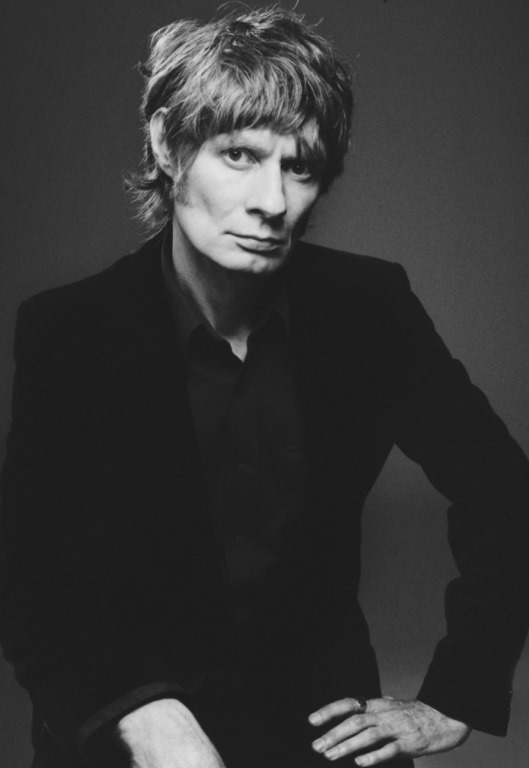
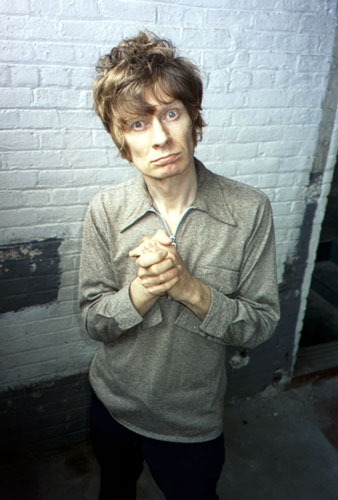
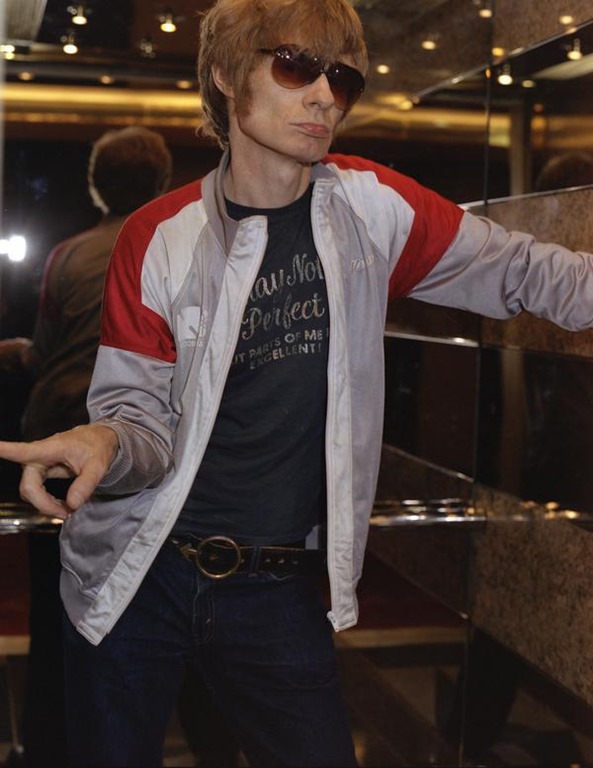
It’s been over forty-five years since Melbourne-born James George Thirlwell washed up on English shores, and having played some keyboards on the album No Cowboys by post-punk act PragVec in 1980, he embarked on what would become a truly remarkable and lifelong musical journey of his own.

Along the way, he’s released no fewer than eleven studio albums under an array of variants of the Foetus moniker, not to mention quite literally dozens of other musical vehicles from big band (Steroid Maximus) to more experimental instrumental work (Manorexia) and almost everything in between, not to mention powerful collaborations with Marc Almond (Flesh Volcano), Jim Coleman (Baby Zizane), Lydia Lunch (Stinkfist), and the late Roli Mosimann (Wiseblood), to name but three of many. And then there are the numerous scores… and yet whatever he turns his hand to, his work has a certain distinctive style, a sense of drama.

Foetus may have been on hiatus since 2013, but at the age of sixty-four, Thirlwell is showing no signs of slowing down. John Wisniewski managed to catch a window in the man’s relentless schedule to ask about his myriad projects past, present, and future…

JW: Did you formally study music, JG?

JGT: I briefly learned cello and percussion when I was a kid. But I was very slow with sight reading.

Later I just taught myself everything from instruments to recording, programming, scoring etc.

Tell us about your first music project, Foetus. What did you want to present?

The initial catalyst for Foetus was to create something totally by myself, where I played wrote and produced everything, as a reaction to the democracy of playing with other people. I wanted to make the music in my head and the music I wanted to hear. I also wanted to create artifacts, a work of art as a multiple where everyone owned an original. It took me a long time to be able to fully realize what was in my head. I’m still not always successful with that transfer process.

How did the Lydia Lunch collaboration come about?

I knew Lydia’s work and was introduced to her when she moved to London in about 1982 through the Birthday Party. At first she asked me to write her a press bio as I had been writing fanciful bios for the Birthday Party! First I played sax with one of her projects which we toured with in Sweden. Then we started writing songs for something called The Hard Diamond Drill, which was never realized. Then we created Stinkfist and went on to make Immaculate Consumptive. We became involved romantically and moved to NYC together. I was with her until about 1989 / 1990.

Any favorite music artists?

Many favorite artists, it changes daily. I become obsessed with someone for an afternoon. I like to hear new things all the time. I am a cultural sponge. I publish a monthly playlist on my Tumblr blog. https://jgthirlwell.tumblr.com/

What inspires you to create?

Everything. I have so many ideas, it is an infinite renewable resource. I also have a hungry legacy and I have to make sacrifices to its insatiable maw.

Another legendary early collaboration was with Nick Cave. How did that one come about?

The Birthday Party broke up. Nick was looking to work with other people and we were friends. We wrote the music for one song together, which was Wings Off Flies on the first Bad Seeds album. When he came to record that album I went to some sessions, but drifted away as I was in the midst of a big bout of recording of Foetus material, the sessions that became the Hole album. A bit later we had the Immaculate Consumptive project – Oct 1983.

Do you like collaborating with other artists?

I have gotten better at it.

tumblr_lqecdl1bnu1r26hzho1_1280

Photo by Marylene May

What was the experience like working with Marc Almond and Trent Reznor’s material?

Marc is very open minded and works very fast and is excited by music that challenges him and stretches the boundaries of what he has done. So that is stimulating. For Trent I remixed two of his songs, “Wish" and "Mr Self Destruct". I did my work on it, mutating the original material. he wasn’t involved. He liked what I did.

Do you like to work within different genres of music?

You may have noticed one of the hallmarks in my music, is that I combine multiple styles often within one song.

What are you working on now?

New Xordox album Terraform, Venture Bros Volume 3 and Foetus HALT should all be out in 2025.

Also under way are two albums of symphonies for chamber orchestra, and album of soundtracks I have written for Ken Jacobs. An EP with Laura Wolf, a triple box of music I created for sound and art installations. Hopefully another Archer soundtrack album. And much more.

Why do you have so many projects on the go (and how do you manage it)?
I like to work in a lot of styles and on a lot of projects in different forms – solo pieces, ensemble pieces, multi channel, electronic, acoustic, vocal, instrumental. Concert works, classic songs, scoring. I have a lot of ideas to get out of my system. There’s no one project that can harvest everything. There are things that I get out of my system with Foetus which are totally different to the place I am in when I create a sound installation, or a soundtrack,

My projects are usually staggered, which is to say a lot of projects in different states of completion. So I shunt them all along and they get completed in different paces. Then new ones sprout up. I couldn’t just work on one thing.

AA

2009-jgthirlwell-circa-2

Do you ever take time out and what do you do to unwind?
Yes I stop to watch movies, see art and travel. But my work is perpetual motion, I don’t need to unwind from it. I believe in being creative every day. That’s also manifested on ideas I have for visual art, photography etc
>
I’ve read elsewhere that the upcoming Foetus album, as the title alludes, is slated to be your last. What can we expect from it?
Tying up forty five years of Foetus is no mean feat and I have been working on it for seven years. There are parts that make it seem like a continuum and other parts that have never been done in the Foetus context. It’s going to be epic.

AA

Catch up on JG Thirlwell’s output on his Bandcamp page.

2010-jgthirlwell-circa-2

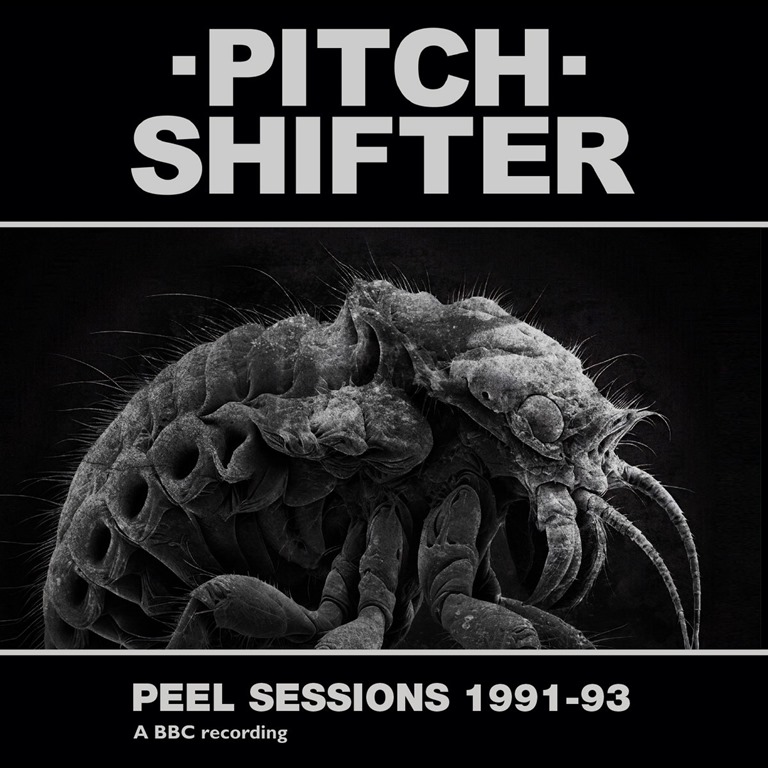
Cold Spring is extremely proud to announce the first ever release of the legendary BBC radio sessions that the seminal Nottingham-formed industrial metal act Pitchshifter recorded for the late, great John Peel in the early 1990s.

These ultra heavy tracks were recorded over two sessions at the iconic BBC Maida Vale Studios on 28th April 1991 and 30th March 1993 and were sourced directly from the BBC Archives (with thanks), with careful remastering for CD and vinyl.

The 1991 session was recorded during the same period that saw the release of the band’s debut album, ‘Industrial’ (Deaf Records/Peaceville), with the 1993 session recorded around the time of its follow-up, ‘Desensitized’ (Earache).

“If you look on your Pitchshifter album sleeves, you will see that we always credited John Peel,” states frontman JS Clayden. “He was instrumental in getting the band out there and often played our music on the radio when no one else dared. The ‘Peel Sessions’ we did were a great honour and every time I met John he was always such a great guy…a legend.”

Founded in 1989, Pitchshifter’s early music can be described as heavy industrial metal, with the band long cited as one of the originators of the self-termed ‘Death Industrial’ genre along with Godflesh. These sessions and their first two albums define that classic period, before the group shifted towards the beat-driven, crossover industrial style that they are best known for.

Ahead of the release, the Peel Session version of ‘Gritter’ can be heard here:

AA

a3964039450_10

Majestic Mountain Records – 10th October 2024

Christopher Nosnibor

The Sisters of Mercy have a long history of unexpected covers, and a not only that, but of really ‘making them their own’, as you’ll hear TV talent show judges froth at contestants. Notably, among their B-sides, BBC sessions and live sets, they’ve covered Dolly Parton’s ‘Jolene’, ‘Emma’ by Hot Chocolate, ‘Gimme Shelter’ by The Rolling Stones, and Kylie’s ‘Confide in Me’. All great songs, all completely Sistersified, irreverent, but in no way sacrilegious.

When it comes to other bands covering The Sisters (obviously, I’m not meaning tribute acts here, a topic I’d perhaps rather avoid right now)… it tends to be metal bands doing pretty predictable and incredibly straight, faithful renditions, cranking up the distortion and giving the vocals some growl. Paradise Lost’s well-known rendition of ‘Walk Away’ is exemplary, in that it really brings precisely nothing. For this, I have to hand it to Lambchop for their stripped-back country rendition of ‘This Corrosion’, which succeeds in making the wildly bombastic epic something completely different, while still retaining something of its core essence. Such achievements are rare.

So here we come to this take on The Sisters’ 1984 single, ‘Body and Soul’: the band’s first release on Warners and their first recording in a 48-track studio. It was also, notably, the first to feature Wayne Hussey, and marked a radical shift from its predecessor, the seething alternative dancefloor monster and arguably definitive single, ‘Temple of Love’.

Critics and fans alike seemed rather underwhelmed at the time, and while it was a fixture of their live sets though ’84 and ’85, it’s not had many airings since their live comeback in 1990. And yet, for me, it’s a song which holds a unique pull which is hard to describe. The cascading lead guitar line, lacing its way across a busy, detailed, yet still nagging and repetitive bassline, and Eldritch going for a more melodic vocal style makes it something of an anomaly in the Sisters’ catalogue. It also contrasts with the rest of the tracks on the 12”: ‘Train’ is a blinder, murky, urgent, echoey and strung out, while ‘Afterhours’ is a truly unique classic, and the 48-track rerecording of ‘Body Electric’ is strong. In this context, I can appreciate why Vessel may have been drawn to the song.

Credit where it’s due, they’ve made a really decent fist of it, too. Sure, they’ve kind of metalized it a bit, but not in a way that’s big on cliché. And it’s not a completely blueprint copy with just a bit more distortion and growl, either. They’ve slowed it down a bit, and in doing so, succeeded in emphasising the guitar detail to good effect. If anything, this comes on more like Godflesh than any generic goth / metal, the thick, sludgy bass trudges along while the guitar rings harmonic, controlled feedback. The drum machine – an essential component here – follows the pattern of the original, but slowed and with more space and reverb, again, Godflesh and early Pitch Shifter come to mind. The vocals are gravelly, but not overtly metal and work well, especially with the harmonies in the chorus.

It does perhaps seem curious that this should be culled form a concept album but as the band explain, “It’s interesting that a cover song was able to fit the narrative of a concept album so well. I’m a huge fan of The Sisters Of Mercy, and was listening while working from home and taking breaks between writing for the new album when ‘Body And Soul’ spoke to me so directly. It was saying exactly what I needed to hear, what I wanted to say, and that was how the story of The Somnifer ends.”

For context, we learn that ‘Musically, The Somnifer merges the epic drama of Candlemass and Cathedral, the cosmic psychedelia of All Them Witches and King Buffalo, and the aggression of hardcore and crossover scenes, all tied together with the timeless spirit of classic heavy metal.’

It may well be interesting to hear this within that wider setting, but for now, as a standalone – and I write as a huge Sisters fan – that this is, for me, one of the best Sisters covers I’ve heard. The cover art is a nice tribute to one of the Sisters’ best sleeves, too.

AA

462703274_1067006528763433_7149155280560932979_n

COP International – 6th December 2024

Christopher Nosnibor

What a year this is proving to be for bands who have lain dormant, at least on the studio front, for quite literally decades. And when it comes to Red Lorry Yellow Lorry, it really has been a long time. The last Lorries release was an ultra-limited gig-only affair back in 2015, with just 50 copies pressed for Leeds in the August and 100 for Valencia the following month. Said EP featured two new songs, ‘Safe as Houses’ and ‘Piece of my Mind’, which were listed as being from the ‘forthcoming album Strange Kind of Paradise’. Time passed, and it really didn’t look like the album would ever see the light of day. But now, this official EP presages its arrival in February 2025, some thirty-three years since they called it a day with Blasting Off (1992).

The Lorries always stood apart from their contemporaries: whereas the Leeds post-punk scene of the early 80s clearly favoured black in every possible way, the band’s guitar sound was steely grey and like scraping metal, and paired with murky bass and relentless percussion, they forged an industrial clang that, was the perfect mirror to both the landscape and the times. Chris Reed’s baritone was less theatrical and more gnarly and angry-sounding than your archetypal goths which would follow. Fans will already know and appreciate all of this, but with so much history – and so much time having passed – some context is worthwhile, especially for those unfamiliar.

During their 80s heyday, they built a catalogue of outstanding 12” releases, with some of their best cuts not on the albums, and with Driving Black, they’ve added another. It contains six tracks, with two mixes of the title track – I gather the original will feature on the album – long with a mix of the as-yet-unreleased ‘Chickenfeed’. ‘Safe as Houses’ and ‘Piece of my Mind’ finally get to be heard – and owned – by more than 150 people, and hearing them again in this context reminds me of the buzz I got when first heard them almost a decade ago: they’re unmistakably RLYL, and if they’re more in the vein of the material on Blow and Blasting Off, the one thing that’s remained consistent throughout the band’s entire career is their sonic density, that claustrophobic, concrete-heavy heft, with ‘Piece of Mind’ being a solid mid-tempo chugger and a grower at the same time. It seems that the two tracks from the 2015 EP didn’t make the album cut – but this can be seen as good news, if they have material of this quality going spare. The same is true of ‘Living With Spiders’, a frenzied track which has spindly guitars crawling and scratching all over it. It would be a standout, but the consistency of quality across the EP means it’s one more cracking tune.

The strangest thing is how time – or our perception of time – seems to become evermore distorted. Perhaps some of it’s an age thing, but… I remember at the time, The Sisters of Mercy’s release of Floodland was hailed not only as the rebirth it was – stylistically and in terms of commercial success – but as a huge comeback after a great absence. But Floodland arrived only just over two years after First and Last and Always. Even more remarkably, I seem to recall the release of Crawling Mantra under the name The Lorries that same year was considered something of a comeback and a departure, even though Paint Your Wagon was released only the year before. The world seemingly lost the plot when The Stone Roses delivered The Second Coming after a five-year gap (and they really needn’t have bothered). And now, while Daniel Ek is advocating the production of ‘content’ on a constant basis, we have bands putting out their first new material in an eternity, and rather than having forgotten about them, fans are fervent – and rightly so.

Chris Reed’s reuniting with David ‘Wolfie’ Wolfenden – Leeds alumni who first appeared with Expelaires in 1979 along with one Craig Adams, who would do a stint as a member of The Mission’s touring lineup – is most welcome, because they’re simply a great pairing, and this is nowhere more apparent than on lead track ‘Driving Black’, which is vintage Lorries, kicking off with urgent, driving drums, before the throb of bass and rhythm guitar and a sinewy lead guitar, sharp and taut as a tripwire cut in and casts a thread right back to their earliest work in terms of style and structure.

The parallels between now and the 80s are uncomfortable; we may have ditched a Conservative government, but workers are still feeling the pinch, and global tensions are off the scale. That the BBC’s apocalyptic movie Threads is getting only its fourth screening – to mark its fortieth anniversary – feels worryingly relevant. And so it is that Red Lorry Yellow Lorry still sound essential and contemporary is equally testament to their songwriting and delivery, and the bleak times in which we find ourselves. Putting the social and political backdrop to one side, the Driving Black EP is an absolute triumph. There are no half-measures, nothing is weak or half-arsed, and it’s – remarkably – as if they’ve never been away.

AA

Red-Lorry-Yellow-Lorry-_Driving-Black_-EP-3000-Cover

Former LORDS OF ACID vocalist, Mea Fisher is back unleashing the inner demon with her new single featuring En Esch (Slick Idiot, <PIG>, Pigface, ex-KMFDM). ‘Devil Inside’ is a twisted and delicious siren-like song where distorted guitar riffs, metallic percussion, and dystopian synth bring deep, dark fantasies to life. Written originally by Mea and strictly made for Lords of Acid, she has refined and transformed the song into a creation that is distinctively hers. Its heavy metal elements fused with a trance-inducing dance beat truly sell the feeling of traversing through the underworld’s hottest night out. Méa easily takes charge—her spellbinding vocals whispering temptation and commanding attention in the same breath. “There’s a hunger that lies,” she admits, “and you hold the key.”

Mesmerizingly, Méa calls fans to follow her and “take a bite of forbidden.” En Esch’s guttural, gruff backing vocals light the whole thing aflame. Danny Lohner (Nine Inch Nails) also lends his guitars to the track.  The seductive, Luciferian qualities of ‘Devil Inside’ compel listeners to close their eyes, lose themselves to the beat, and indulge in their deepest desires.

Check the video here:

AA

ed7e1c64-bd6b-529d-b152-d5795e48c59e

October 2024

Christopher Nosnibor

Having just effused over the benefits of Bandcamp Friday, as well as wrestled with the overwhelming volume of notifications and review submissions, this one lands as the kind f curveball only the likes of Foldhead are likely to deliver, in that this is by no means a new release. Beserk Pinball Machine / Quasar Delirium was in fact first released back in 2021, as something of an archival recording: ‘Recorded in 2015 for a tape label that ceased to exist prior to the intended release date. The 25 copies that had been made were distributed at the Experimental Yorkshire festival which took place at Hebden Bridge Trades Club on 21 July 2018’ And now the Bandcamp page has been refreshed, with ‘two new mixes + a new piece.’

I’m not sure if ‘beserk’ is an intentional variant of ‘berserk’, but I’m going to assume it is. The etymology of the word ‘berserk’ is quite fascinating. The word itself means ‘out of control with anger or excitement; wild or frenzied’, but its origin lies in the reverence the Saxons held for bears. ‘Berserk’ translates as ‘bear shirt’, and berserkers were the warriors placed at the front of a battle formation: their job was to chew their shields, gnash their jaws and foam at the mouth like frenzied bears in order to share the shit out of their opponents before the charge.

This release is every bit as scary and unpredictable as a frenzied bear, and certainly inflicts a bear-like mauling on the senses, being particularly brutal on the ears, and on the lower intestines for that matter.

The opener and lead track, ‘Beserk Pinball Machine’ is an absolute noise monster. There are – sort of – vocals in the mix, but they’re distorted and largely buried beneath a deluge of mangled noise, churning distortion and feedback all mixed together to forge the nastiest mess of trebly sonic ruination. It’s just shy of fifteen minutes shattering, explosive, convulsive digital meltdown which makes Merzbow sound mellow, and Kenji Siratoi supremely calm in comparison. Paul Whatshisface, having previously been a member of Smell & Quim and Swing Jugend – as well as occasional noise duo …(something) ruined has had a long career operating in harsh noise circles, and this is both noisy and almost unspeakably harsh. The noise frenzy ends abruptly, but there’s a spell of low-level hum at the end which offers some respite, however much the not-silence nags.

‘Quasar Delirium’ is appropriately titled: another quarter of an hour of brain-melting, tinnitus-inducing noise squall. Only this has more fizz, more squeal, more laser bleeps, more treble, and more feedback, more melting circuitry, all against a backdrop of churning cement-mixer grind, washing machine spin-cycle metallic reverberations. The experience is how I imagine standing next to a massive propeller engine without ear defenders, while a Star Wars type laser-gun battle takes place all around – while buildings explode and collapse all around, and there is nowhere to hide.

The concept of remixes in this context is rather amusing, and ‘Machine Pinball Bezerk’ and ‘Delirium Pulsar’ are more about fucking shit up even harder than remixing in the more conventional sense. ‘Machine Pinball Bezerk’ sounds like an atomic bomb: it’s noise on the scale of the scene in Threads where the buildings are decimated by a wall of white-hot flame. It’s a scene that seems to last an eternity despite being maybe five minutes at most. The fifteen minutes of ‘Machine Pinball Bezerk’ feels like a lifetime and you can almost feel the tinnitus coming on after just five minutes, while your brain melts and trickles out of your ear.

‘Delerium Machines’ delivers more of the same, the most pulverising, excruciating blasting racket. It hurts, and the overall experience is disorientating: an hour and a quarter of the most abrasive, churning noise imaginable. It’s not Harsh Noise Wall, but there’s not much variety, either, meaning that this release is a relentless assault that will likely leave you wilted, drained by the end – and that’s assuming you can still hear.

AA

AA

a1518553209_10

Kalamine Records – 14th September 2024

Christopher Nosnibor

Whether it be solo works ranging from ambience to classical, or collaborations running the full gamut in the electronic field, Deborah Fialkiewicz’s output in recent years has been nothing short of prodigious, and spanning as many forms as her work does, there is never a dull moment. This latest work, under the POOCH moniker, in collaboration with Dan Dolby (Bassist in Mastiff, Noisemonger in Catafalque and Sulphur Nurse) is no exception. It offers a set of eight dark, stark electronic compositions which owe a considerable debt to early industrial and electronic works, bringing a combination of dark atmospherics and nagging beats. Although entirely instrumental, we’re in the kind of territory occupied by the likes of Cabaret Voltaire, Test Dept, and Chris and Cosey’s Trance.

As an opener, ‘Hades’ is as dark and subterranean as the title would suggest, a bleak, murky pulsation squelching around and leading the listener down, down, down. It serves as something of a primer, a mood-setter, but doesn’t fully prepare one for the altogether steelier, starker, more rhythmic and percussion-driven pieces which follow.

The title track pairs a dense, dirty bass with clattering, metallic percussion which assails the mind like a concerted assault with the contents of a cutlery drawer, and it bashes away relentlessly for four and a half minutes straight. On paper, it might not sound much, but as an experience, it’s pretty hard-hitting. Built around short, clipped repetitions, it creates a suffocatingly claustrophobic aural space. The word ‘pooch’ evokes a cuddly companion, something friendly, but there’s nothing cuddly or friendly about this, a listening experience closer to being whipped with a chain than fussing a canine buddy.

Each composition bears a one-word title (‘GameBoy’ being a forced blend-word (it doesn’t really qualify as a portmanteau) in order to maintain the theme. Funtime bit-tunes are bent with glitches and warping drifts of darkness here, before things begin to slide further into beat-orientated minimal techno.

The steady beat which dominates and defined the spartan ‘Quazar’ is almost soporific: the track assumes something of a background position as it clicks along nonchalantly, with a low, unshifting drone hovering just around the level of register. Nothing happens. It doesn’t need to. And while the thunder which heralds the arrival of ‘Midnite’ might initially serve as an alert, the piece soon melts into abstraction. The final track, ‘Stimpy’ may be missing Ren, but hits hard, built around a strong, thudding beat and looped electronic undulations.

For all of its cuddly connotations, Pooch is a pretty dark album. To my mind – and it could be to my mind alone – music which is heavily beat-orientated and instrumental feels impersonal somehow, and I find it somewhat disorientating, disconnecting, alien. And so it is that the pounding beats of Pooch leave me feeling somewhat dazed, detached, even dizzy. But it’s impossible to deny the detail, the quality of the execution, or the fact that this is an outstanding work.

AA

cover

Christopher Nosnibor

Well, this one landed unexpectedly. It’s a welcome arrival, although taking a second hit of material from Uniform’s latest and quite possibly most brutal and challenging album to date does feel like an exercise in Masochism. It’s also a superb example of alternative marketing, landing this alternative version of American Standard less than a month after the album’s release, on digital and tape formats.

Context, from Uniform’s bandcamp: ‘A companion piece to American Standard, Nightmare City is essentially the same record devoid of the rock elements. By removing the presence of traditional instruments, the synths, lap steel, and pianos that sit beneath the surface of the proper album are allowed room to breathe and speak for themselves. The end result straddles the worlds of Basic Channel influenced dub, Tangerine Dream inspired soundscapes, and brutal death industrial.’

It’s a bold move, befitting of Uniform, a band who have relentlessly pushed themselves to explore ever-wider horizons, switching from their original drum-machine driven raw industrial noise to adopting live drumming, undertaking a number of collaborative projects with the likes of The Body and Boris, and especially befitting of this album, where Michael Berdan tore away the last vestiges of artistic separation to rip off his skin and purge the rawest emotions stemming from his dealing with Bulimia.

Nightmare City is another step towards stripping away the layers and presenting the naked self. ‘The bedrock of American Standard stands upon the Nightmare City. It’s not the happiest of all places, but understanding the landscape yields its own rewards,’ they write alongside the Bandcamp release.

One thing about being in a band – even if there are only two of you – is that there’s somewhere to hide, somewhere to transfer the focus. Hell, even performing solo, if there’s noise, there’s something take shelter behind. I’ve always thought that solo acoustic and spoken word performers were the bravest: there is simply no place to hide, and nothing to blur or mask any fuck-ups. Nightmare City isn’t quite solo acoustic, but it is seriously minimal.

Removing the ‘rock’ elements to reveal the bare bones of the songs shows the inner workings of Uniform, and they’re unexpected, to say the least. One would expect them to build up from the elements of drums bass, guitar. But this leads us on a different journey.

Punishing riffs and pulverising percussion, rather than supple layers and swirling instrumental ambience. As the band put it, ‘Although the finished product stands as a culmination of cohesive sounds, the individual threads that weave songs together often provide necessary nuance and exposition all of their own. Each isolated stem might be part of a greater story, but the whole cannot stand as intended without a complex series of seemingly disparate elements.’

Hearing the swirl of these ‘seemingly disparate elements’ feels like hearing the ghost in the machine, a haunting, eerie, ethereal echo, which barely seems to correspond with the structured framework of the final versions of the songs. One might almost consider this a palimpsest, an album beneath the album, submerged by process of layering and erasure. The tracks are – and I shouldn’t be surprised, but still I find I am – completely unrecognisable. Instead of being the punishing beast the album version is, ‘American Standard’ sounds more like one of the epic instrumental segments of recent SWANS works. There’s a muffled thud like a heartbeat on ‘This is Not a Prayer’ which possesses something of a womb-like quality, while ‘Clemency’ feels like a moment caught between heaven and hell, soundtracking the struggle of being pulled between the two in some purgatorial space as ceremonial drums hammer out a doomy passageway and spluttering vocals spew raw anguish.

In common with American Standard is the darkness which looms large, the tension, the suffocating gloom, the discomfort which dominates, and hearing this spectral echo of the album brings a fresh understanding and appreciation of the process and the depth of layering and everything that goes into their material. ‘Permanent Embrace’, too, sounds both like an ascent to the light and a sepulchral sigh, a funereal scene in which the grave suddenly opens like a sinkhole sucking everything down into the bowels of the earth.

Nightmare City is appropriately titled: it is a truly hellish, tortuous listening experience – but at the same time quite remarkable. Uniform, in their quest to do something different, to push themselves and in refusing to conform to genre conventions, continually find new ways to articulate the pain of the human condition.

AA

a1449843444_10