Posts Tagged ‘Industrial’

Industrial rock insurgents Jesus on Extasy (JoE) are back – darker, heavier and more relentless than ever. Led by founding member Dorian Deveraux, the band has returned with an uncompromising sound that pushes their signature mix of industrial beats, searing guitars and raw emotion to the next level.

JoE have issued ‘Somewhat Happy’ as a new single today, with Deveraux deeeming it “the apocalyptic post breakup song you didn’t know you needed.” Describing the song as a paean to “how to move on after a traumatic relationship that left your world in shambles, when you’re starting to get clarity and see your ex-partner for who they really are,” the song can be seen as lyrically related to ’Soul Crusher’ its heavy-hitting predecessor released in July.

Like that single, ‘Somewhat Happy’ offers a further brutal preview of what is to come on the forthcoming new JoE album, Between Despair And Disbelief, which is out on 12th September via Metropolis Records. Giving fans a tantalising taste of their second coming with the single ‘Wide Awake’ in 2023, the band then signed to Metropolis Records to issue ‘Days Gone By’ VIDEO in late 2024, followed by ’Soul Crusher’ VIDEO. All three have been heavier, more intense and unapologetically aggressive than ever before. “It looks like the world is going to hell. We might as well deliver the soundtrack for that,” adds Deveraux.

Check it here:

AA

2025 shows with Die Krupps
27th August  KORTRIJK (BE) DVG Club
2nd September  WARSAW (PL) Hybrydy
3rd September  KRAKOW (PL) Hype Park
7th September  LJUBLJANA (SI) Orto Hall
9th September  BUDAPEST (HU) Dürer Kert
11th September  PRAGUE (CZ) Rock Cafe
16th September  STOCKHOLM (SE) Nalen
17th September  COPENHAGEN (DK) Pumpehuset
20th September  UDEN (NL) De Pul
21st September  LONDON (UK) The Dome
24th September  PARIS (FR) Petit Bain

2026 shows with KMFDM
21st February  OBERHAUSEN (DE) Kulttempel
22nd February  EINDHOVEN (NL) De Effenaar
25th February  LAUSANNE (CH) Les Docks
26th February  WINTERTHUR (CH) Gaswerk
27th February  MILAN (IT) Legend Club
6th March  BERLIN (DE) Gretchen
8th March  LEIPZIG (DE) Moritzbastei

AA

20f31803e5da8a61854d2b6246685b88e044a6a4

US electronic musician and vocalist Mari Kattman has issued a video for ‘Typical Girl’, the opening song on her new album Year Of The Katt, released in late June by Metropolis Records. The clip was shot in downtown Providence (Rhode Island) by Mark Allison of @401FilmsPVD.

“Typical girl. People say it constantly, so much so it feels almost criminal to be female by birth,” Kattman states when explaining the meaning of the song. “Like it’s vulgar or something to carry characteristics that are even remotely female. That it makes you difficult, unlovable or crazy when it’s not packaged up and tied with a pretty bow or something. There are so many misunderstandings about what it is to be a woman.”

AA

1294d110ff8d8524f83699accd7bc97e5d071859

AA

Kattman has recently announced a UK tour in October 2025 as the special guest of Assemblage 23, the electronic act founded in 1988 by Tom Shear, who is Kattman’s collaborator in the electronic duo Helix and her husband. Dates are as follows:

15th October  BRISTOL Exchange
16th October  MANCHESTER Rebellion
17th October  GLASGOW Ivory Blacks
18th October  SHEFFIELD Corporation
19th October  LONDON The Dome (downstairs)

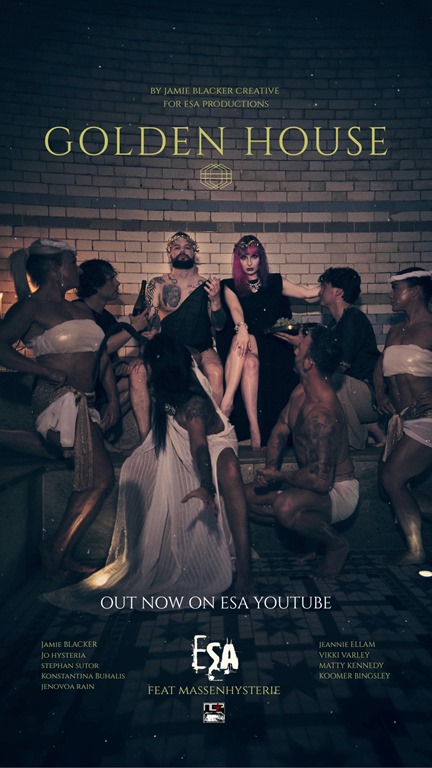
British artist J. Blacker, mastermind of ESA, has released a powerful music video for ‘Golden House’. The song is taken from the artist’s new album Sounds for Your Happiness, released on July 5th via Negative Gain Productions.

The new single and music video for ‘Golden House’ is an erotically charged, Roman tragedy inspired slab of pumping dancefloor power. Featuring Jo Hysteria from Massenhysterie on vocals, the video for ‘Golden House’ is a cynical POV on the infamous Roman rulers; Nero & Caligula (played by Jo Hysteria and Jamie Blacker respectively). As we witness their hedonistic and power hungry daily affairs (which include a servants wrestling match and body builders performance) before accompanying Nero and Caligula as they travel into modern times and seek to satisfy their hunger for pleasure.

AA

Inspired heavily by the pomp of the 1979 film Caligula, the video features competition winning body builders Jeannie Ellam and Vikki Varley alongside Jenova Rain and Stephan Sutor as the video Finale’s Insurgents, looking to swipe the ‘throne’ from the naive and arrogant Nero & Caligula.

The context that inspired this piece is the realisation that even after 1548 years since the demise of the infamous Roman Empire, the elected powers in place will still conduct themselves in the same way..and that abuse of power pays no real attention to time periods.

The single for this club edit of the track and music video is available from today (July 18). Whilst the original version of this track (which includes a historic re-telling of these two Emperors by Konstantia Buhalis) is featured on ESA’s album Sounds for Your Happiness, released on July 5th.

Sounds for Your Happiness is yet another milestone in the creative universe of ESA. Striking and thought provoking visuals, enormous electronics and powerful messages is always expected from an ESA release..Sounds for Your Happiness does not disappoint with any of these ingredients.

With this album, J Blacker paints ESA as a sinister technology company, with the musical structures from the album, utilised to create an emotional response from its listeners, which is transferred as energy to run the simulation we all live in. Its a nod to shows and films such as Severance and Soylent Green.

Musically, Sounds for Your Happiness is a bleak and furious slab of electronic meat. A journey of EBM / Industrial / Black Metal / Dark Ambient / Power Noise / Punk / Techno and Goa, the album is as ambitious as it is exhilarating and genres merge seamlessly into an energetic free-fall of sonic chaos.

Get plugged in and let the happiness wash over you.

GOLDEN HOUSE VIDEO PROMO PIC (1080 x 1920 px) - 1

Mortality Tables – 11th July 2025

Christopher Nosnibor

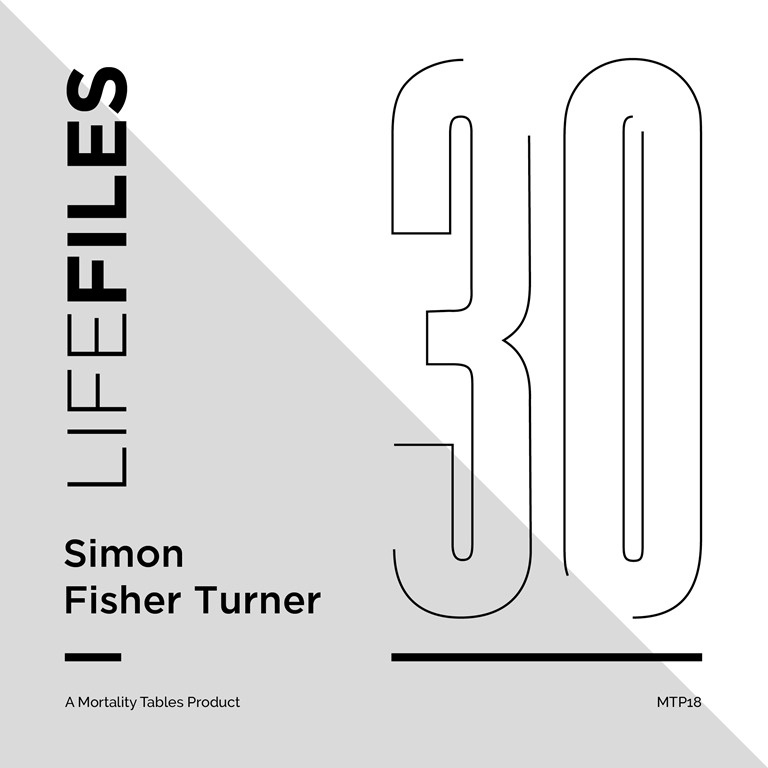
And so it is that the third season of Mortality Tables LIFEFILES series – and, indeed, LIFEFILES as a project, closes as it began just over two years ago, with its thirtieth instalment coming courtesy of Simon Fisher Turner. As such, this release is appropriately titled.

The premise of the series, which we’ve covered quite extensively here over the course of its running, is that curator and Mortality Tables label owner, Mat Smith, furnishes an artist with a field recording for them to more or less do as they please. Some of the reworkings and manipulations have been quite radical; others, less so. But what each has offered is a snapshot of a particular place at a specific time, reimagined and retold at distance by a third party. If this sounds rather absurd, it’s worth considering that this is essentially how history is formed – by the interpretation and re-presentation of primary source material to create a linear narrative. But how much can we trust the narrator? Even that primary source recording is just that – a recording. It is not the actual event. Therefore, with each revision, there is a move further away from the actual event. There evolves a certain historical layering, not so much akin to the degradation of a photocopy of a photocopy, but a drawing of a drawing, subject to ever-increasing distortions, deviations, corruptions.

As the accompanying notes inform us – quite factually – ‘The LIFEFILES series commenced in March 2023 with a piece by Simon Fisher Turner made using sounds recorded at an exhibition of works by the Memphis collective at Milton Keynes Gallery. The series concludes with a final piece from Fisher Turner, again using sounds recorded at Milton Keynes Gallery, this time at an Andy Warhol exhibition.’

This piece is only a little over eleven minutes long: a single or EP rather than an album – but Simon Fisher Turner packs a lot into that time. It begins with the slow-echoing of voices, a low mutter, the sound of voices, perhaps, chattering in a gallery – slowed and distorted, there’s a sense of discomfort, of the unheimlich, before a mid-range chimes in and hovers. So far, so ambient – but then some crushing percussion batters in and from nowhere things go a bit Test Dept. Trudging industrial beats slog away relentlessly, and they’re multi-layered and multitracked and hammer away from all angles in surround sound. There are some lulls, some drops in pitch and volume, occasional rests in tempo, even – but this is first and foremost a full-on beat assault. The speakers crunch and crackle and the beats thump and stomp.

Glitching, grinding bass enters the fray around the mid-point, albeit briefly, before swiftly vanishing, replaced instead by a subsonic sonar – and then things really get ugly. There’s a violence to this beat-driven blast, which even during the moments where it’s taken down a notch or three, there’s a sense of menace, something underlying that’s uncomfortable. The delicate chiming of a singing bowl or somesuch in the last couple of minutes, even when it yields to a quiet, low rumble, does little to dissipate the tension which has built – and built. But in the end, as is always the case, the ultimate end is silence. And so it is that the circle finally closes.

AA

AA

cover

Industrial rock insurgents Jesus on Extasy are back – darker, heavier and more relentless than ever. Led by founding member Dorian Deveraux, the band has returned with an uncompromising sound that pushes their signature mix of industrial beats, searing guitars and raw emotion to the next level.

JoE have just dropped the heavy-hitting ‘Soul Crusher’ as a new single, with Deveraux stating that “it’s a post-breakup song dealing with the feeling of reality kicking in after you’ve basically mourned the loss of a loved one. You start to see them for what they really are and you start wondering if any of it was even real or if you’ve been gaslighted all along. I’d be lying (mostly to myself) if I told you the song isn’t autobiographical. It was written in the aftermath of a pretty dark period in my life and was an outlet to deal with the trauma.”

‘Soul Crusher’ offers a further brutal preview of the forthcoming new JoE album, Between Despair And Disbelief, out on 12th September via Metropolis Records. Giving fans a tantalising taste of their second coming with the single ‘Wide Awake’ in 2023, the band subsequently signed to the label to issue ‘Days Gone By’ in late 2024. Both were heavier, more intense and unapologetically aggressive than ever before. “It looks like the world is going to hell. We might as well deliver the soundtrack for that,” adds Deveraux.

JoE will tour Europe with Die Krupps in September, on which fans can expect an unrelenting live set packed with new material and reimagined classics, proving that their resurgence is built. With a harder edge and a fire that refuses to burn out, JoE fully intend to leave an everlasting mark on the alternative rock landscape.

AA

e96253e40adb8a4e3375e174950d4097a53058b8

JESUS ON EXTASY | 2025 photo by Marina Päsler

Negative Gain Productions – 25th July 2025

Christopher Nosnibor

It’s been three years since Curse Mackey delivered Immoral Emporium. Three years may not be a long time, but a lot can happen in three years – and it has. And very little of it has been good. There has always something about industrial music – something I’ll unpick in a moment – which has displayed a sense of the apocalyptic, to the extent that at times it seems to almost bask in it. And that is not a criticism. The end is nigh, and while it’s always a question of ‘when’ rather than ‘if’, we seem to be ever closer to the brink of total annihilation. These are dark times, which call for dark music.

Industrial has come to mean many things, in terms of musical forms over the years, while Throbbing Gristle were the progenitors of all things industrial, technological advances saw acts more interested in pursuing more structured works with tape loops and drum machines, eventually giving us the more electro-orientated strain of industrial that became synonymous with Wax Trax!, and, subsequently, industrial metal, not least of all due to Ministry’s evolution from one to the other. Curse Mackey’s work very much belongs to that late 89s / early 90s Wax Trax! domain.

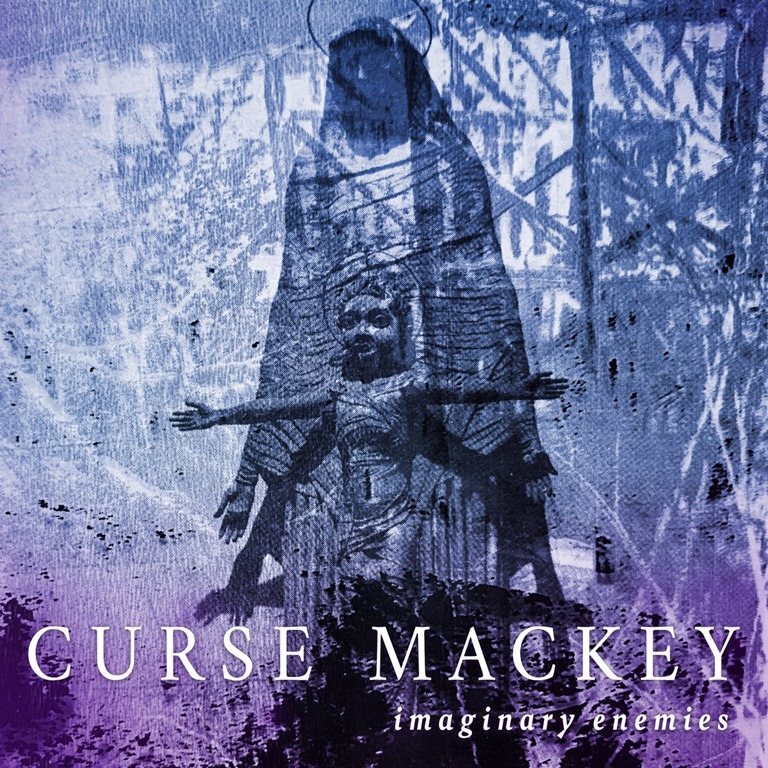
Concluding the trilogy which began with 2019’s Instant Exorcism, Imaginary Enemies promises to be ‘his most intense and intimate album to date… A bleak, beautiful meditation on paranoia, grief, and the ghosts we conjure from within’.

And so it is that the listener is lead into the album by route of looped samples, layering across one another, before a pounding beat crashes in, and Mackey, accompanied by a low, thumping synth bass groove, sets out his stall with ‘pressure points’, ‘psychosis’, and ‘decay’ delivered with a processed growl. There are many layers to the arrangements, creating simultaneously an expansive and claustrophobic feel. Single cut ‘Vertigo Ego’ swiftly plunges into darker, denser territories: brooding and ominous, Mackey’s vocals are a barely audible whisper. It sounds tormented, stressed, anguished.

AA

If ‘Discoccult’ and ‘Time Comes Clean’ (which calls to mind early (electropop) Ministry and Trudge era Controlled Bleeding) find us in fairly familiar industrial territory, something about the production imbues the material with a suffocating intensity. More often than not, there’s a brightness, a crispness, something of a ‘digital’ cleanness about the genre. In contrast, the sound here is murkier, more ‘analogue’ in feel, alluding to eighties synth music – something I’ve never been quite able to pinpoint as a listener and critic rather than a producer.

One can reasonably assume that album centrepoint ‘Blood Like Love’ makes a reference to Killing Joke’s ‘Love Like Blood’, even if only in title, but sees Curse lean towards gothier territories, stark, brooding, yet ultimately layered, graceful, with synth melodies and dramatic piano weaving around the samples and mechanised beats.

AA

The second half of the album locks into an atmosphere that’s less aggressive and attacking, and more brooding, moody, and introspective, and as such, marks a clear departure from its predecessors. What’s more, it works well, with the more uptempo title track marking a high point in the album, sitting comfortably alongside some of the more contemporary goth classics with its nagging, reverb-heavy guitar line and pulsating bass all held together by that classic, relentless, drum machine sound.

For my money, it’s Curse Mackey’s best release to date.

AA

a1263141378_10

The Helen Scarsdale Agency – 23rd May 2025

Christopher Nosnibor

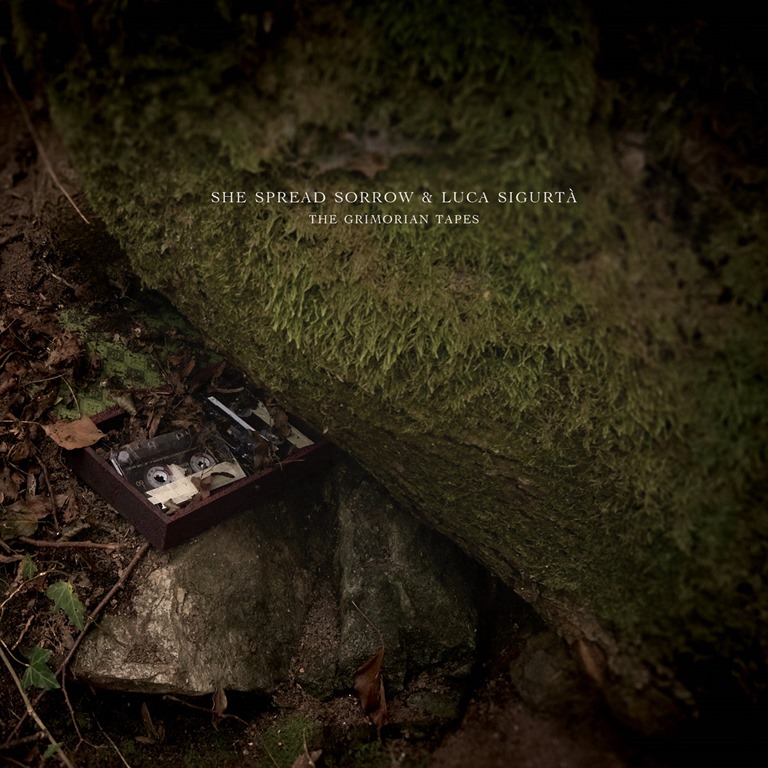
The pitch alone is harrowing: ‘“Don’t be scared by death,” Alice Kundalini (aka She Spread Sorrow) calmly instructs at the beginning of her collaborative Grimorian Tapes with partner Luca Sigurtà. Her words slither from her lips with a subtle, sinister unease, compounded by the unsettling quality of her whisper. The fear of death, this most profound condition, has long been a subject of philosophical, spiritual, and existential inquiry. To fear death is undeniably human; to transcend that fear is often seen as reaching a higher plane of existence. At least, that’s the intention behind the rituals, the spells woven into the fabric of The Grimorian Tapes.”

I myself have spent a lot of time contemplating death, and the fear of death, especially of late. We are all scared of death, particularly in Western culture. When my wife was diagnosed wit stage 4 breast cancer, where it had spread to her bones, I was terrified, not only of losing her, but of waking up to find her dead in the bed beside me. What do you do in that situation? I did not want to see her dead, and she did not want me to see her dead. Thankfully, she made it to a hospice for her last day, but I lived for a year under the shadow of that ‘what if…?’

You might think that her passing brought peace, but it did not: instead, I have spent many mornings twitching and drenched in sweat lest I should die and leave our daughter an orphan, being thirteen. This is not a call for sympathy – simply as summary. It’s hard not to be scared by death, inevitable as it is.

For additional context, it’s worth delving into the details of the album’s inspiration, a large portion of which comes form The Black Pullet, ‘an 18th-century French grimoire filled with instructions for making talismans and magical artifacts’. We learn that ‘Kundalini weaves her own take on the book’s esoteric themes into the shadowy tape loops that comprise The Grimorian Tapes. The Black Pullet is a detailed guide into alchemy, divination, and occult practices, with a particular focus on harnessing hidden forces through the construction of specific objects imbued with magical power. Though Kundalini doesn’t practice these rituals per se, she finds a deep, poetic resonance with these ancient teachings. The allure isn’t in the performative aspect of these rituals but in the seductive power of its symbols and ideas, which speak to a long-forgotten language of metaphysical mystery. It’s this sense of transmutation, hidden knowledge, and occult wisdom that lends The Grimorian Tapes its dark, ritualistic intensity.’

And so it is that ‘grimoire’ introduces the album with a dark etherality, whispered vocals, the words indecipherable. Echoing amidst rumbles and a persistent drone which ebbs and flows. It’s compelling, and enticing, but at the same time, unsettling. It’s the fear of the unknown, of course: the esoteric and other-worldly and anything that speaks of a realm beyond one’s ken is always difficult to assimilate. This, in a nutshell, is the appeal of horror, because a lot of us find entertainment in being scared. It’s the same reason people go on rollercoasters. Being scared half to death reminds you that you’re alive. And The Grimorian Tapes is pretty scary, in the suspense and horror sense.

‘initiatory’ rumbles and hovers dark and murky, sonically entering the domains of Throbbing Gristle, and again, the whispered vocals are menacing, and reminiscent of Prurient’s Cocaine Death, while ‘the stairs’ brings a hint of disturbing playground, psychological derangement, the other ‘other side’ we’re all so afraid of due to a lack of comprehension. And the further this album progresses, the more uncomfortable and unsettling it becomes, the further it extends beyond the domains of the ordinary, the mainstream comprehension.

‘babele’ is a dank, muddy morass of sound over a slow thudding heartbeat rhythm, while ‘kirtan’ brings flickering, stuttering beats, while again leading the listener through hair-prickling terrain, with triffid-like stem-clattering and gloomy swirls and abstract vocals. ‘we worship you’ plunges deeper into a darker space, with sputtering electrostatic sparking, and gargled vocals, deep and robotic, growling, threatening and emanating from another place, another world, one beyond reach. ‘me and I’ churns like slow machinery, and is industrial in the primitive sense. Again, the way we have come to understand ‘industrial’ has evolved: Foetus is a far cry from Throbbing Gristle, and both are a world away from NIN and Ministry. But The Grimorian Tapes takes us right back to the origins of the genre.

This is one dark and difficult album, heavy and suffocating and uncomfortable from beginning to end. Two thumbs up. And now I need to lie down.

AA
a0844152259_10

With roots dating back to the early days of the industrial rock scene, the US band 16Volt also crossed over into related genres as soon as group founder Eric Powell signed his first record deal in 1991 while still in his teens.

Brand new single ‘White Noise’ is taken from a long-awaited album by the band entitled ‘More Of Less’. Scheduled for release on 25th July, it is their first full-length record since 2017, when Powell put 16Volt on a hiatus that lasted seven years.

“‘White Noise’ is a song about feeling unheard, when your voice gets drowned out and it seems like you can’t get a word in or no-one is listening to you,” he explains. “To others, you become just white noise, that static sound of nothingness.”

The single follows just two weeks after a first ever (and already sold out) vinyl pressing of Wisdom, the group’s 1993 debut album. Powell’s reactivation of 16Volt in 2024 had been marked with the release of Negative On Arrivals, which combined songs from the group’s previous two records in 2016 and 2017.

AA

a0405086268_10

Limited Edition 7" Dubplate / DL Blank Records – 13th June 2015

Christopher Nosnibor

Tobias Vethake aka Sicker Man has spent a quarter of a century doing things differently – differently from other artists, and differently in terms of his own sound and approach to making music.

As his bio points out, ‘as our world changed a lot during the last 25 years, so did his music. On his last release, KLOTZ WENZEL VETHAKE, the interaction with other musicians and the political dimension of a musical wake-up call became a main focus… The single „Gravy Train / Hollowed“ marks a new and fresh look at both, his musical history and present. It features Sicker Man’s love for dub, noise and electronic music as well his passion for classical composition and spiritual jazz… ‘Stop The Gravy Train / Hollowed’ feels like a collaboration of Moondog and The Bug’

It certainly does. For these two pieces, Sicker Man has enlisted saxophonist Matze Schinkopf, and

How many ideas is it possible to pack into four and a quarter minutes? With ‘Stop The Gravy Train’, Sicker Man manages more ideas per minute than it’s possible to even begin to count. The piece starts with a low, grinding bass and industrial hums, before the saxamaphones enter the mix, interweaving through and across one another. They trickle smoother, teasing with points and counterpoints, laid-back and mellow over the simmering rhythm section, the bass and the beats building currents beneath. Around the midpoint, the piece makes a change of trajectory, the gentle jazz giving way to something altogether more urgent and driving, locking into a robust groove with low saxophone punching rhythmically and in syncopation with the whip-cracking snare and palpating kick drum.

‘Hollowed’ is different again: a swampy surge of seething electronica, a morass of meshing noise – at least to begin, and then it melts into a rather pleasant swaying jazz work, a clip-clip beat nodding along nicely. Swells of noise bubble and surge, but don’t quite break through, and industrial grooves settle in while the saxes tootle off in different directions, hither and thither to brain-melting effect.

‘Genius’ is a word which is chronically overused and often severely misapplied. Is this a work of genius? Maybe not, but it’s got to be close. There’s no question that it’s wildly inventive, and unexpectedly listenable, while challenging every musical preconception.

AA

a1110512025_10

Room40 – 9th May 2025

Christopher Nosnibor

Merzbow is an artist who requires little to no introduction, and one with a catalogue so immense – with in excess of five hundred releases credited – it’s beyond daunting for not only a beginner, but even a keen noise-lover. This is the reasons I personally own very few releases, and have only picked up a few incidentally along the way.

As Masami Akita approaches seventy, and Merzbow marks forty-five years of noise, this output shows little sign of abating, but it does seem an appropriate time to reflect on some previous releases which may be considered either ‘classic’ or ‘pivotal’. 1994s Venereology has been receiving some retrospective coverage of late, revered largely on account of its reputation for being the loudest, harshest thing ever, ever.

But here we have a reissue of The Prosperity Of Vice, The Misfortune Of Virtue, released a couple of years later, a much lesser-known work, but still during what’s broadly considered to be the golden era of the 90s, and, as the accompanying notes suggest, it’s ‘one of a series of unique editions from his vast catalogue that reveals a side of his practice often under represented.’

During the late 1980s and into the 1990s, Masami Akita was sometimes working on film and theatre music. In this space he created a series of recordings that capture the full scope of his sound worlds.

Given the nature of these settings, his compositional approaches were varied, seeking to create both intensely crushing walls of sound and more spatial, and at times rhythmic, pieces that plot out an approach to sound making which atomises his universe of sound, and uncovered the singular detail that is often consumed in the whole.

The Prosperity Of Vice, The Misfortune Of Virtue is the soundtrack to the theatre piece Akutoku no Sakae/Bitoku no Fuko by Romantica. Based on Marquis de Sades’s Historie de Juliette ou les Prosperités du vice & Les Infortunes de la vertu, this recording was originally released with limited distribution and remains one of the lesser available Merzbow recordings.

Completely remastered and contains an additional cut from those original sessions, this reissue of The Prosperity Of Vice, The Misfortune Of Virtue presents nineteen blasts of noise and rumbling and shrieking, scraping discord and dissonance. Many of the pieces are brief – a couple of minutes or so – and there is so much texture and tonal rage here, its sonic vision is remarkable. To many, of course, it will just ne noise – horrible, nasty, uncoordinated noise. But listen closer, and there is a lot happening here. The noise is, indeed, nasty, and the output is, brain-blasting chaos, for sure. But what these untitled pieces showcase is an intense focus and an attention to detail which is so much more than brutal noise. The Prosperity Of Vice, The Misfortune Of Virtue is, comparatively speaking, not that harsh – although when it is harsh, it’s absolutely next-level brutal with shards of treble exploding in walls of ear-shredding punishment. It contains a lot of clattering and crashing, like bin lids being dropped, and cyclical, thrumming rhythmic pulsations. There are tweets and flutters, bird-like chirrups flittering above cement-mixer churning grind with gnawing low-end and splintering treble, overloading grind and would oscillations.

The Prosperity Of Vice, The Misfortune Of Virtue is the sound of a man pushing all the buttons and turning all the dials at once and seeing just how far he can tweak them. There are moments of minimalism, of slow, stuttering beats, of mere crackles, passages one might even describe as ambient – a word not commonly associated with Merzbow. But the way in which The Prosperity Of Vice, The Misfortune Of Virtue explores these dynamics, and contains quieter more delicate segments, not to mention some bleepy electronica that borders on beat-free dance in places, is remarkable: while so much noise is simply repellent to anyone who isn’t attuned to it, The Prosperity Of Vice, The Misfortune Of Virtue offers engagement and offers openings to listeners with a broader interest in experimental music.

Eclectic is the word: we hear a chamver orchestra at the same time we hear strings being bent out of shape and what sounds like a Theremin in distress. While a fire alarm squawks in the background. This is everything including the kitchen sink. Imaginative and experimental, it’s noise with infinite dimensions.

AA

RM4195 front