Posts Tagged ‘Indie’

20th April 2018

Christopher Nosnibor

I was on the edge of my seat for a cover of Inner Circle’s 90s reggae-pop classic when this landed with me, but on balance, this offering from Windsor-based quartet Saharas is better.

It’s vaguely horrifying to consider the notion that anything jangly and melodic indie with a tense, post-punk undertone, reminiscent of the class of, oh, c2003 or 2004 may qualify as connoting a certain nostalgia. But then, nostalgia is a vague and intensely personal sensation. Being the age I am, I’m probably more likely to feel pangs for 1994 than 2004. And yet, 2004… pre-family, disposable income, part-time work… strolling down to my local record shop mid-morning on a Monday and splurging disposable income on the latest vinyl… Yeah, I can buy into a nostalgia for that, as I recall strolling home with releases by the likes of Editors, Interpol, She Wants Revenge, The Organ, stowed in a nice square carrier bag. I miss it. The likelihood is that someone 10 years younger will feel a nostalgia for whatever they were doing in 2004 (which may well have been a variation on the same thing).

‘Sweat’ very much captures not only the sound, but the energy surrounding the zeitgeist of the first few post-millennial years, which blended a certain optimism with the pessimism of almost twenty years previous. It boasts a spectacularly nagging chorus-soaked guitar-line that hints as much at Yazoo’s ‘Don’t Go’ as Editors’ ‘Munich’.

It’s all extremely fitting for the current climate: dark times call for dark music, and also inspire a yearning for better times. The early years of the millennium, by which time the euphoria of Labour’s 1997 landslide had slipped into a malaise even before the recession hit, echoed the wilderness of 30 years previous. In 2018, 2004 looks like a hoot.

But most importantly, it’s a cracking tune with hooks galore, and it would be so in any decade.

AA

Saharas - Sweat

Now this, we dig. Berries have announced the release of their new single ‘Wild Vow’ – the first track taken from their second EP, which sees the band further explore their unique take on riff-driven rock with even more grit and confidence. ‘Wild Vow’ boasts big riffs and choruses and further highlights the clever musicianship, weaving guitar and basslines and well-considered dum patterns that this exciting three-piece are becoming known for.

Get your lugs round ‘Wild Vow’ here:

Berries have some live dates coming up, too:

5th July – Headline Single Launch Show with Scruff of The Neck Records at The Old Blue Last, London with The Opera Comic + Rylands Heath, Free Entry.

22nd July – Tramlines Fringe Festival for Northern Crossroads Promotionsat The Church House Inn, Sheffield.

19th August – The Soup kitchen with Scruff of The Neck Records supporting Proletariat + King Kartel, Manchester.

8th September – The Finsbury, Gigslutz Promotions, London


Berries Wild

17th April 2017

Stop me if you’ve heard this one before: because neither music reviewing nor cranking out postmodern novels no-one reads doesn’t pay the bills, like most writers and people slugging along in the lowest reaches of the music industry – personally, I like to pretty it up by describing it as ‘operating at a grass roots level’ – I’m compelled to endure the drudge of corporate life to survive. After a bad day at the office – which is every day – I like the fact I can either escape into discovering brilliant new music. Equally, it’s immensely satisfying to savage a release just because I can’t get away with calling my boss a cunt and the rage has to find some outlet.

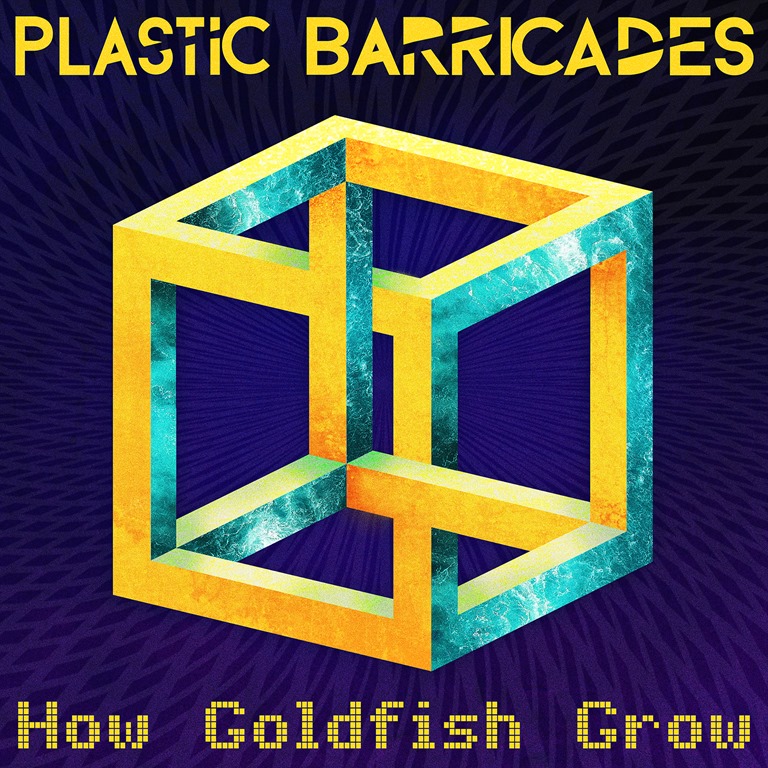
So here I am, unwinding with a pint of homebrew and among the email stack that’s perhaps even more terrifying than my inbox at work, and Plastic Baricades present themselves. I really shouldn’t like this: the band cite an incongruous list of influences including Radiohead, Oasis, The Shins, Biffy Clyro, Coldplay, Muse, Razorlight, and Nirvana.

They’re pitches as being ‘romantic and honest, gloomy and curious, melodic and melancholic’, a band who ‘chronicle life in the troubled yet fascinating XXI century with painstaking sincerity.’ No question: these are troubled and fascinating times. If we entered the new millennium with a sense of trepidation, there was no way anyone could have predicted the shitstorm that is Trump and Brexit and… well, the list goes on.

‘How Goldfish Grow’ is a supremely summery tune with a feelgood vibe. It’s built around a nagging guitar line and buoyant bass groove, and with a huge, hooky, singalong chorus, infectious may be a cliché but the most appropriate word going to describe ‘How Goldfish Grow’.

Plastic Barricades

Schoolkids Records – 22nd April 2017

Christopher Nosnibor

As I kid – and especially as a teenager – I thought I knew everything, and that anyone over 30 was ancient, a has-been and that it was impossible to be cool past a certain age. But even then, I envied some of the older people I knew – largely through music and record shops – who had seen punk and new wave bands I’d got into in their heyday (or at all).

Hindsight is indeed wonderful, especially when viewed from a vantage of being older and wiser – and while the early 90s felt exciting for someone who was properly old enough to go to gigs on their own on turning 18 in 1993, it’s only really now that it’s possible to really reflect on the fact that there are people in their teens and 20s who will forever curse having been born too late to experience the grunge explosion first hand.

Bettie Seveert aren’t a grunge band, but it was on going to see Dinosaur Jr – who, despite having been around a lot longer, really got to ride the crest of the grunge wave – at Nottingham’s Rock City touring ‘Where You Been’ in February 1993, that I first encountered Come, and (then) Melody Maker darlings Bettie Serveert.

24 years on from that gig and a full quarter century from their debut album Palomine, and the Amsterdam-based act deliver their tenth album: it’s a respectable and steady work-rate by any standards, and what matters is that ‘Damaged Good’ is a great alternative rock album, which displays a neat pop sensibility without in any way being cheesy, corny or lightweight. Released in Benelux last September, it’s now getting a full global release, and this is definitely a good thing. While they may not have received the press backing, or replicated the success of Palomine commercially, creatively, Bettie Serveert have still got it.

Opener ‘B-Cuz’ brings the bounce, not to mention a blend of 60s pop and punk energy and makes for a neat entry to the album. ‘Brother (in Loins)’ brings a darker, post-punk atmosphere and twists in element of 90s alt-rock to a song that has the disco pop groove stylings of Blondie. Elsewhere, there’s a purity and innocence about the vintage indie stylings of ‘Whatever Happens’, and the shuffling beat and darker undercurrents which bubble beneath the buoyant bass of ‘Unsane’ calls to mind ‘Gran Turismo’ era Cardigans. Again, this is a good thing.

In fact, there are no bad things about Damaged Good. The eight-minute ‘Digital Sin Nr 7’ finds the band indulging their more experimental and considerably noisier side, but holding it all together with a tense bass groove. ‘Love Sick’ with Peter de Bos is a driving grunge pop belter: not a song that sounds like it belongs in the 90s so much as a timeless hook-filled cracker of a tune. And herein lies the key to what makes Damaged Good not just good, but great: it’s an album of songs, and while varied in style, the quality is both high and consistent. Songs matter, and there isn’t a dud to be found here.

Bettie_Serveert_-_Damaged_Good_(cover).jpg

Christopher Nosnibor

There’s a perverse irony in my presence at this show in my capacity as correspondent for Aural Aggravation, a site devoted explicitly to music that’s underground and obscure. This is not least of all because I’m old enough to remember when the NME was a key publication for giving coverage to bands who were not only unknown and obscure, but often likely to remain so. In moving with the times, the NME has metamorphasised into a free, glossy, picture-rich publication that’s far more likely to feature Beyoncé than Bell Monks or break_fold. In fact, Bell Monks and break_fold won’t get a look in, and it’s not because they’re not artistically interesting or of merit. And as for feature-length reviews, forget it. All of which is partly the reason for my doing what I do.

Any show which sells out a series of 1,800 or so capacity venues is not underground by definition, and likewise any event sponsored by VO5. Still, it’s as much an indication of the nature of the music industry now that for tours to be feasible for even moderate-sized acts, they need corporate backing and to shift a shedload of merch. And of course, the corporate backers need to break into large markets. In other words, it’s economic, and it goes both ways.

So why am I here? In a word: Cabbage. It’s fair to say they’re a fairly unlikely breakthrough act. Manchester’s answer to Fat White Family, the band, who’ve been unequivocal in their opinions on The Sun, nationalism and Brexit, pithily describe themselves as ‘neo post-punk’ (most certainly not to be confused with the New Wave of New Wave) and are as far from the kind of aural chewing gum that’s sadly become synonymous with indie in the second decade of the second millennium.

I’m not about to pretend to be down with the kids: the venue is rammed with teens and student types, with older folk – and by the looks of things, some parents of the student types – hanging back. Because I’m not down with the kids, I can safely say I’m sure there was never as much cleavage on display when I used to go to gigs in my university days. But then, that’s perhaps because I never went to trendy gigs like this, who knows? Anyway, my knowledge of Rory Wynne prior to my arrival extends to a cursory Google search which tells me he’s an up-and-coming teenage indie rocker. Rory plays with a full backing band. Who knew? They’re conspicuously absent from his press shots. As a band, hey have a good energy, and Wynne looks to be enjoying himself up there. Musically, his up-tempo guitar-led alt-rock is perfectly passable, but does essentially sound like every early 90s US alt-rock act boiled down to its most generic form, and his cliché guitar-lofting poses get tired quickly. The set also has a rather strange ending: he thanks the crowd – who have been pretty tepid in their response – before launching into an instrumental number. A minute or so in, he carefully putts his guitar down and tosses his pick into the rows. Moments later, the rest of the band follow suite, toss their pics and wander off looking a bit confused.

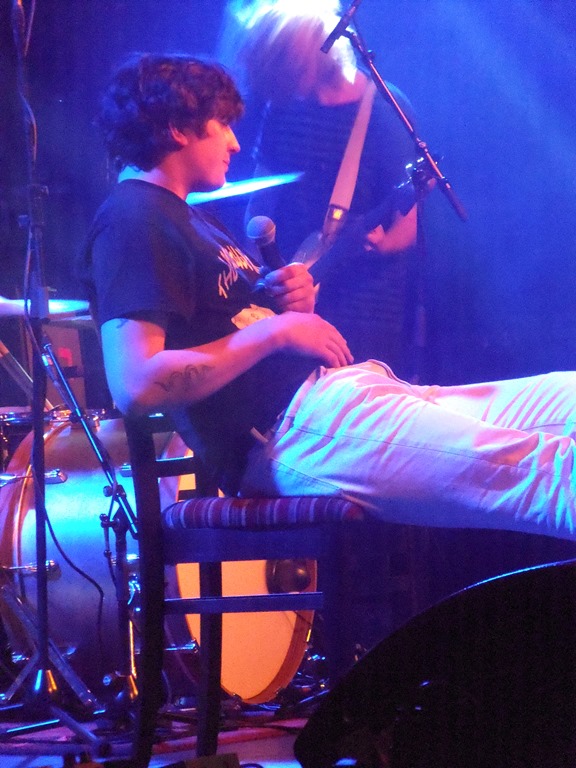
Cabbage, as one would expect are by far the most challenging, and exhilarating, act on the bill, and on account of that, all the more surprising for their inclusion. Is this what the kids are into? I’d like to think so: it gives me hope that songs like ‘Uber Capitalist Death Trade’ could be anthems for a generation. But I rather suspect that more of the oldies present have turned up for them, their enthusiasm for new music reignited by a band who combine the angular, jarring guitar lines of early Fall albums with a snotty punk thrash, while also evoking the spirit of The Stooges. The bass is nostril-vibratingly booming, and there’s an attacking edge to the sound even in this aircraft hangar of a venue. Many of their songs are brash, juvenile, perverse in a puerile way, but there’s a strong sense that they’re fully aware of this and are revelling in the awkward shock value of singing about necrophilia and masturbation. They’re shambolic / not shambolic – which is to say, they play like they don’t give a fuck, but are still tight, and can nail a motorik rockabilly groove with the best of then: Babyshambles they’re not. A week or so back, Lee Broadbent was in a wheelchair having fractured his pubic rami in a bizarre wall-leaping accident. Tonight, he manages to limped onto the stage and limp about a reasonable amount, but performs most of the set seated, sneering and snarling atonally from a slouchy, reclining position. But even this is an inverse type of showmanship, and contrasts with Joe Martin’s spasmodic flailings. Shirtless and scrawny, he comes on like Iggy Pop. They deserve a way more visible show of appreciation from the crowd: one girl is up on someone’s shoulders and a few people are bouncing around, but most are static and either filming or texting on their phones.
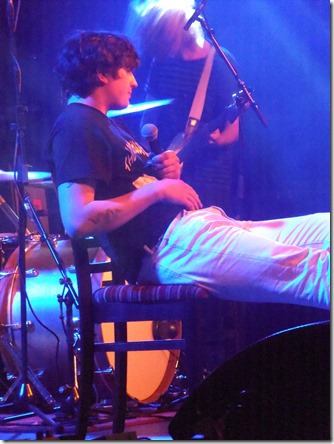
Cabbage

Cabbage

There’s a rush toward the front of the stage immediately after their set, but what I witness next is truly horrific: the audience finally start getting animated. There are people dancing and singing along – to the Courteeners, whose ’19 Forever’ is playing over the PA. People are snapping and filming the stage and grabbing selfies – while the crew set the stage for the headliners. There are whoops as each vocal mic is checked. And then the band walk on, half-hidden behind smoke and… well, the crowd mostly get back to standing around, snapping photos and WhatsApping with their mates.

Live, Blossoms are quite a different proposition from their recorded output. If their studio presents them as dark-hued indie, then live it’s the darkness that comes to the fore. The enter to a pulsating synth throb by way of an intro to ‘At Most a Kiss’.

The thunderous, steely electro groove is swiftly dampened by a so-so vocal and a bouncier pop tone. I don’t want to be too harsh in my critique of Blossoms, and will admit to having a soft spot for them, with a greater appreciation in light of their live show. They do have dynamic range and some solid, insistent basslines. They do convey a certain broodiness. The jiggish guitar line on ‘Blow’ has hints of The Sisters of Mercy’s ‘First and Last and Always’ about it, and there are three girls, about a third of the way back, up on people’s shoulders, arms waving arabesques: it’s starting to resemble a Mission gig. And the reference isn’t entirely out of place: with their accessible, anthemic sensibilities, Blossoms live call to mind the lighter end of the mid-80s goth spectrum, the point at which it had transitioned from post-punk to indie-goth.
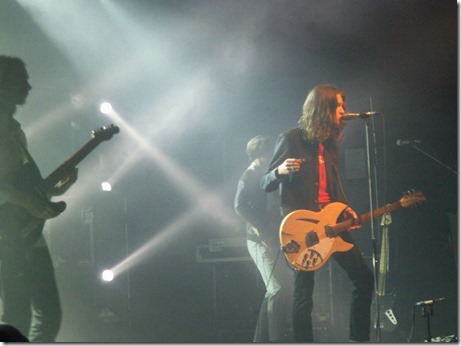
Blossoms

Blossoms

I glance around the venue from the front row to witness an ocean of lofted phones. In fairness, they are visually striking and snap well. With dense smoke and dazzling spots and strobes casting the band in silhouette, they’ve got the Sisters’ visual stylings nailed: musically, however, they’re more Rose of Avalanche than Doktor Avalanche. On balance, it would be churlish to begrudge them: Blossoms’ music may be steeped in the music of thirty years ago, but it’s distinctive in the scheme of the commercial musical landscape of 2017.

We love  a bit of Soma Crew here at Aural Aggravation. ‘Got it Bad’, which prefaces the release of their new album, is perhaps the most definitie statement of their sonic capabilities yet. Check it hre:


Happy Happy Birthday To Me Records – 18th November 2016

Christopher Nosnibor

I’ve been a fan of The Wedding Present for a long time. That said, I did rather lose track of their output at some point. It happens. For some reason, I felt that they’d somehow become mired in a template-based middle-ground. Nevertheless, one of the things I always admired about the band was their ability to constantly reinvent themselves while still sounding like The Wedding Present. Going, Going… released in Europe in September and now receiving a US release, is a perfect exemplar of the way in which they achieve this: it’s an immense 20-track double album, full of overtly Wedding Present songs and songs that explore a host of different forms.

The dense guitar trudge which drives the post-rock instrumental of ‘Kittery’, the opening track on Going, Going… does not sound like The Wedding Present to my ears. But it is compelling. ‘Greenland’ features a female radio voice reading out co-ordinates over a thundering drum beat and very little else. It sounds more like Shellac than The Wedding Present. And yet, as a slow-building rumble of noise builds in the background before the track fades out slowly without anything actually happening, it shouldn’t come as a surprise: The Wedding Present called in Steve Albini to rework breakthrough single ‘Brassneck’ from their 1989 album Bizarro¸ and he ‘recorded’ one of their biggest albums, Seamonsters in 1991. The Wedding Present also covered Pavement long before Pavement were cool – before anyone had even heard of them, in fact.

In some respects, given David Gedge’s longstanding interest in the obscure and his impressively long career spent cultivating a distinctive sound has paved the way for tis radical departure. Because, while words like ‘workmanlike’ and ‘jangling’ have long been associated with the band, they’ve always been more than their critical reception, and have long gone out of their way to do something outlandish or perverse – like a single a month for a year. Put another way, The Wedding Present have always espoused the indie aesthetic on the absolute sense, in that they’ve always indulged their contrary side because, well, simply, they can.

With a haunting, wordless, female vocal and soaring post-rock guitar sound, ‘Marblehead’ is a far cry from the twangy, three-chord thrashabouts that are the band’s trademark, and the string-soaked, piano-led chamber orchestra piece that is ‘Sprague’ finds Gedge lead his crew – not to mention their fans – further from familiar territory.

It’s not until the fifth track, ‘Two Bridges’ that we get a song that showcases Gedge’s familiar gruff northern tones amidst a choppy guitar attack. It’s a thick, rough and ready and in many ways primitive indie tune that could only come from one band, even when it lumbers off on an extended riffy workout after a couple of minutes. What we can take from this is that while The Wedding Present can sound like pretty much anything, no-one else can make songs that sound like The Wedding Present. There are plenty of thumping guitar tunes – more carved from the hefty riff-driven template of Seamonsters and beyond than their jangly indie early years – and they’re decent tunes. ‘Bear’ is one of several classic examples of the Pixies-like grungers which exploit the quiet/loud dynamic. Lumbering riffs about, driving the lurching alt-pop of ‘Fifty-six’ and the all-out stomp of ‘Emporia’, which is pretty heavy and fires up a roaring guitar racket while retaining a keen sense of melody.

‘Secretary’ brings some jangle, but also a fuckload of noise all bound up with a post-punk sensibility and a jarring angularity that’s unexpectedly exhilarating, while ‘Bells’ is a standout by virtue of simply being a great song with a cracking melodic hook.

Who would have thought that some 30 years into their career, The Wedding Present of all bands, would produce something as ambitious and as impressive as this? If anything, rather than being an exercise in indulgence for the band and a drag for the listener, Going, Going… is as strong as anything The Wedding Present have ever released, and the longer format finds Gedge really going all-out to try new sounds and shapes. It’s also an album which reveals a band really concentrating on tight and varied songwriting, and when paired with a focus on tone and dynamics it makes for an unexpectedly great record.


The_Wedding_Present_-_Going_Going_1200_1200

Telephone Records – 8th July 2016

Christopher Nosnibor

Wakefield-born and Glasgow-raised Martin Creed probably has a fair few detractors. The Turner Prize has a peculiar tendency to wind people up, art fans and critics and the general populace alike And so, while in art circles he’s known as a self-effacing, playfully provocative artist, to many, he is known as being the 2001 winner of the Turner Prize-Winner, who became infamous overnight for his installation piece, Work no. 227: the lights going on and off.

For many, such a work would be an unbearable albatross, but Creed is one of those people who’s always onto the next thing before the dust has settled around the thing before, and he’s a true polyartist, who has, seemingly, no fixed medium of choice, instead preferring to let his creative impulses flow through whatever medium he feels fits best. And throughout his career, the ever-idiosyncratic Creed has made music, with Thoughts Lined Up representing the latest in a long line of releases.

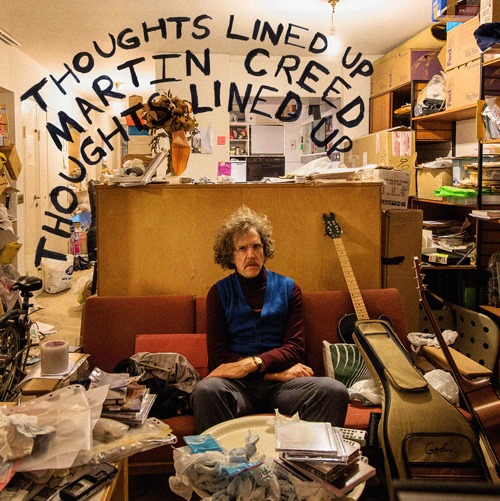
Judging by the cover image, and Creed’s spectacularly diffuse output, the title seems rather incredible. By which I mean, it’s hard to believe he could line up his thoughts in a queue for the checkout: this is a man who thrives on chaos, disorder, who eschews organisation and conformity in favour of free-flowing creativity, anarchy and all things random.

The title makes more sense in light of the artist’s own explanation of its meaning, which is refreshing in its simplicity: “It’s called Thoughts Lined Up because that is literally what it is,”, he says, “just all these bits – these thoughts – put in a row one after the other, trying not to worry about what they add up to. Most of it started as audio notes recorded on the Tube or in the street – just little everyday mantras that you say to yourself as you go along; things that come up in your head, and that help keep you going, or that sometimes you want to go away…”

And so, the end product is an album that in many respect is a one-stop compilation, a work which wouldn’t be much further from a concept album if it tried – unless that concept was a haphazard collection of songs thrown together and sequenced one to twenty-four out of conventional and commercial necessity. One kind of gets the impression that if all of the album’s songs could have been arranged to play simultaneously, then that’s how they would have been presented. The thoughts are lined up, in a sequence, but this isn’t a linear album or a collection of songs unified by anything beyond the mind from which they emerged.

According to the blurb, the album was Recorded at ArtSpace, Brixton, and mixed by Liam Watson at Toe Rag Studios, the album was recorded to 1-inch tape in one week just before Christmas 2015, and mixed with sonic impresario Liam Watson, in glorious mono, on the ex-Abbey Road EMI desk at Hackney’s legendary, analogue-only Toe Rag Studios. Yes, mixed in glorious mono. On the one hand, given the audio technology we have now, however much one may adore the inimitable sound of analogue, to master an album in mono is simply perverse. On the other, it’s another manifestation of Creed’s rejection of convention, and at the same time can be seen as an observation on the way listeners actually hear music nowadays: just as everyone seems to be obsessed with shooting optimal quality photos with digital SLR cameras only for them to be viewed on piddly mobile phone screens via Facebook, so the idea of superior audio recordings to be consumed through shit iPod phones, laptop and mobile phone speakers seems absurd. And Martin Creed revels in those absurd contradictions, and does so with grace and humour, and not with one eye firmly set on the mass markets.

And so, the songs are amusing, entertaining, whimsical, wonky. Some sound half-finished, many evoke the spirit of the Bonzo Dog Band, while others call on psychedelic folk traditions, and other still call to mind the choppy sound of the early Fall albums, and Creed is unafraid of cumbersome or cliché rhymes. It’s a haphazard, hit-and-miss affair, but it’s zany and it’s fun and Creed’s singularity and disregard for marketability is admirable.

https://player.vimeo.com/video/167247762

MartinCreedAlbumArtworkSmall_1

Martin Creed Online

Makkum Records – MR18 – 11th June 2016

James Wells

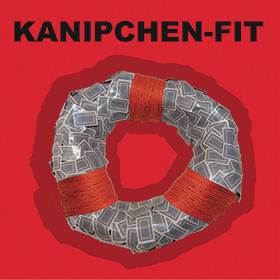
Having existed in a number of variant forms since formation their formation over a decade ago, Kanipchen-Fit is currently Gloria (vocals), Empee Holwerda (guitar and vocals) and Frank Sloos (drums). Unfit For these Times Forever marks an evolution from their 2010 debut, not least of all because it features live drumming, which brings a very different dynamic to the sound.

But before we get to the sound, Unfit for These Times Forever is released on CD, DL and double 7”, and the physical formats come in a gatefold sleeve with a pop-up centre. It’s novel, and it’s also rather cool. The music’s pretty cool, too. Showcasing a dark post-punk infused indie rock sound. ‘How to Display a Flag’ is choppy, urgent, and is representative of the trio’s hefty sound with echoes of Husker Du and Gang of Four, combining ragged urgency and a funk edge. Holwerda’s guitar sounds like bass and guitar simultaneously.

Lyrical abstractions and oddness abounds, but these aspects are tempered by a personal and social sensibility. But then, Gloria’s background is in poetry and spoken word, and her background lies with New York performance collective Pussy Poets. ‘Residue’ finds Gloria unravelling her relationship with possessions that connect to people and the past in the context of peoples’ perceptions of others. ‘I wore my father’s jacket, it itched / I scratched, I got a rash / So I stopped wearing it,’ she recounts. There’s genius in the simplicity and the humanity of the words. Indeed, more than anything, what radiates from Unfit for These Times Forever is a sense of sincere humanity, and it’s paired with a quirky humour which isn’t only charming, but ensures the songs never move into the realm of po-faced politicking. Slanting guitars skew and jangle through the angular pop stylings of ‘Opening Ceremony’, and there’s even a hint of XTC and Pavement about closer ‘Unfit’, rounding off a record that balances unique and quirky with accessibility and depth. It has immediacy, but more than enough substance to give it durability. In other words, it’s got the lot, and is one of these rare beasts which functions – and succeeds – on every level.

Kanipchen-Fit  - Unfit


Kanipchen-Fit Online