Posts Tagged ‘Human Worth’

Human Worth – 14th November 2025

Christopher Nosnibor

Human Worth seems like a comfortable place for the latest album by sludge behemoths GHOLD. The band has forged a remarkable career to date, with each album showing development and progression, building on previous works – and as they’ve been going for some thirteen years now, that’s some significant expansion. PYR (2016) saw the duo expand to a trio, and Stoic explored the potentials of the three-way interplay in much greater depth. INPUT>CHAOS took the band in a rather different direction, fully embracing the avenues of straight-up noise while bringing, at times, almost accessible shades to the monstrous riffery that defines the GHOLD sound. So many bands spend their entire career recreating their first and second albums because they’re so desperate to appease their fanbase, and while that might be alright for acts who’ve sold their soul and their lives to major labels and likely have no say in the matter, any act who has artistic freedom who peruses such a creatively limiting course is likely doing it for the wrong reasons.

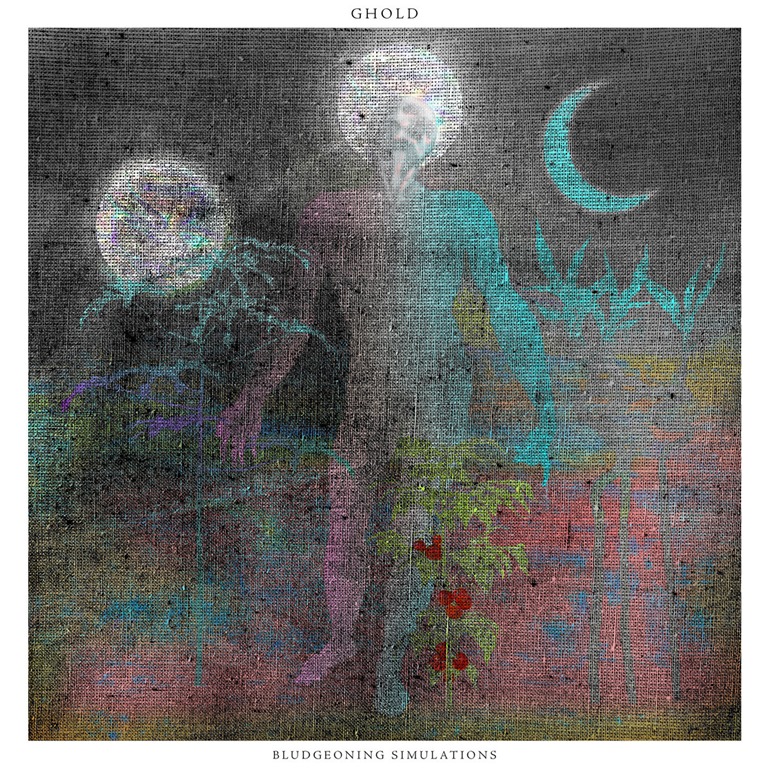
GHOLD’s unpredictability, then, is a strong positive. And Bludgeoning Simulations is bursting with surprises, and none greater than the tremulous piano opening on the first track, ‘Cauterise’. It’s tense and dissonant, but at the same time, soft, reflective… and then the monstrous, churning riff crashes in and lays waste to everything which stands before it. The guitar and bass are welded together tight to forge a solid wall of sound, and it’s delivered with attack., a raw, barrelling intensity. You don’t just hear the volume from the speakers: you feel it.

Without a moment’s pause, a thick, lumbering bass riff crashes in hard, and leads ‘Lowest’ into spectacularly Sabbath territory – it’s hard and heavy, but also captures both raw contemporary feel and that vintage 70s sound. Sabbath as played through a filter of Melvins goes some way to explaining where they’re at. It sound like abrasive hardcore played slow.

The ridiculously long and sludgy single cut, ‘Place to Bless a Shadow’ s a beautiful slow-burner, expanding everything they’ve ever done to a new and remarkable breadth. There’s detail here, and deep, dark, whispering atmosphere, before ultimately, after some sparse, slow-building tribal beats and simmering tension, not to mention vocals that start gently but gradually come to resemble the rage of Trent Reznor on The Downward Spiral, they finally go full Melvins sludge mania just after seven and a half minutes. It’s heavy, and it’s wild. And – alright, sit down and take it – it’s solid GHOLD.

‘Fallen Debris’ is a fast-paced, buzz driven blast, and a contrast in every way – hard, driving, it’s a tabid blast of a punk / gunge / metal hybrid that hits like a kick in the stomach. Whipping up a stomach-churning maelstrom in the last couple of minutes, we find GHOLD hitting peak energy, before the slow-churning Sunn O))) ‘inspired ‘Leaves’ drifts in and drives hard. It’d s heavy as fuck. And it hurts.

There are no simulations here: this real bludgeoning, from beginning to end. Bludgeoning Simulations is heavy, and make no mistake, there are no simulations here: this is fucking REAL. The album’s second monumental beast of a track is the groaning, droning, nine-minute monster that is ‘Leaves’, and it’s nine minutes of sepulchral doom fully worthy of Sunn O))). It’s heavy shit, alright, but the reason it hits so hard is because of the context: Bludgeoning Simulations is remarkably nuanced, inventive, a questing work that seeks new pathways, new avenues, and shows no interest in genre boundaries of conformity. ‘Rude, Awaken’ brings the dingy riffs that will satisfy thirsty ears, but again, there’s a stylistic twist that’s truly unique, in a way that’s not even easy to pinpoint. It’s simply something different.

Bludgeoning Simulations is inspired, and inspiring, and finds GHOLD conjuring sonic alchemy with a visionary take on all things doomy, sludgy, low, slow, and heavy.

AA
a0166716374_10

Human Worth – 11th July 2025

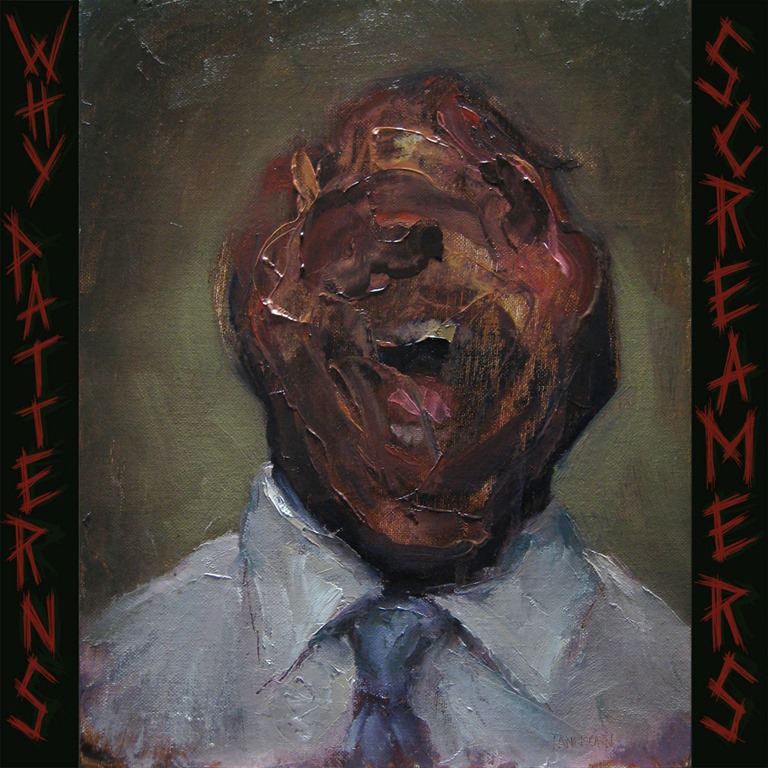
Why Patterns’ latest offering marks something of a shift from Regurgitorium, released back in 2022. I say ‘back’ in 2022 because it feels like a lifetime ago. Some of that is, admittedly, due to personal circumstance, but for most, 2022 was a very different time. We still weren’t all that long out of lockdown, for a start. We were still coming up for air, and finding our way – and likely crawling our way back to the office, while a lot of shops still had their Perspex screens in place. I remember in the checkout queue in Aldi just willing these weird cunts who had seemingly either forgotten the preceding year and a bit, or had lost all sense of how to engage, by looming and leaning over and pressing too close would fuck off. I revisit the context of the last album because it somehow managed to capture the mood in some obtuse way, and when I wrote ‘It’s fucked up. It’s deranged. It hurts,’ I could as easily have been referring to life itself at that point in time.

Screamers is different again. Or, if not so much, different, compressed, compacted, distilled, the intensity amplified by the concision of the tracks.

The crunchy, gnarly bass still dominates, and it’s snarling away and tearing strips straight out of the traps on the frenzied ‘After the Bullfight’. Clocking in at a mere minute and forty-seven seconds, it’s noise rock smooshed down to the tight parameters of grindcore, and with insane amounts of reverb, the stuttering, stammering vocal yelps from Doug Norton, the man behind the ‘Mouth Sounds’ owe an equal debt to Suicide and The Cramps, and this may be the spawning of industrial psychobilly as a new genre. Everything is overloading, the speakers are crackling with megawattage overload, and when ‘Clown in a Housefire’ blasts in, you actually begin to wonder if it’s supposed to sound like this of it your gear’s fucked.

One may cling in references to the Jesus Lizard and all the rest, but really, this sounds like a psychotic reimagining of early Blacklisters – specifically early because of THAT bass racket. But whereas Blacklisters were, and remain, quite song-orientated, at least structurally, Screamers sees Why Patterns take their template and smash the living fuck out of it by throwing it against a brick wall and stomping on it until there is nothing but splattered pulp. None of the songs – I mean, they’re not really songs, more demented blasts of discord played at three hundred miles an hour, all of the instruments playing at angles against and across, rather than with one another, the vocals the sound of a breakdown in real time. And listening to this as bombs and missiles are going off everywhere and no-one knows what is going on anywhere, I fin myself listening to this tumultuous mayhem and thinking ‘yep, they’ve done it again. This is the closest I’ve heard anyone articulate this moment.’ I mean, they don’t really ‘articulate’: as the title suggests, Screamers is a raw, primal scream. It’s a frenzied, lurching, gut-punching racket that rattles the bibs and kicks the balls, hard. Pleasant, it is not. Especially that grungy bass that churns the stomach.

There aren’t really any riffs: it’s just a relentless assault of jarring noise. ‘Nervous Laughter’ brings hints of the latest mclusky album, but does so with menace, malice, and a hint of the unhinged, and following on ‘Wind Up Chattering teeth’ is a minute and six seconds of rabid raving. It’s almost enough to make you want to puke.

Then there’s ‘Club Foot By Kasabian by Blacklisters’. It extends the joke of the original – since the Blacklisters song, ‘Club Foot By Kasabian’ wasn’t a cover, and had nothing to do with Kasabian, and so it is that ‘Club Foot By Kasabian by Blacklisters’ is a minute and a half of squalling, brawling, guitar-led abrasion. It’s somewhat reminiscent of Castrovalva in its deranged intensity, and frenzied, squawking disregard for decency. The title track is fifty-two seconds long. It’s rabid. It has to be heard to be comprehended.

The last track, ‘Buffoons and Barel Organs’ is both the longest and most structurally coherent. ‘Why do I cross the road? Why do I cross the road? Because I’m a fucking chicken!’ Norton hollers amidst a raging tempest of bass and drums.

Screamers is certainly appropriately titled. Every song is a brief but blistering assault. It’s full-on, and will melt your face, and as such, I wholeheartedly recommend it, unless you’re a wuss.

AA

AA

a3117811268_10

Human Worth – 6th June 2025

Christopher Nosnibor

Where does the time go? No, really? I’m not just stunned by the fact we’re a week into June already, but the fact that it’s been six years since the last Lower Slaughter album, and nine years since I missed their show in Leeds with Working Man Noise Unit supporting because I was watching Man of Moon play to a nearly empty room across town instead. That’s almost a decade I’ve spent being frustrated by my inability to clone myself, and I find it hard to let these things go.

They’ve undergone some changes since their last outing – changes of the nature which would have terminated, many a band. Their bio traces a raid succession of personnel switches:

Following the departure of long-time vocalist Sinead Young, their surprise return in 2024 saw the remaining former members unveil a new line-up, welcoming James Gardiner to the fold on bass, and with previous bass player Barney Wakefield switching over to vocal duties. Upon Gardiner’s addition, a considerably more expansive sound has emerged, bringing the band’s now recognised output of what the Quietus once referred to as ‘lurching noise-rock’ to new exciting heights, all the while set against an equally more confident and expansive dynamic, reinforced by the chemistry of Graham Hebson and Jon Wood, who remain tighter than ever on drums and guitar respectively.

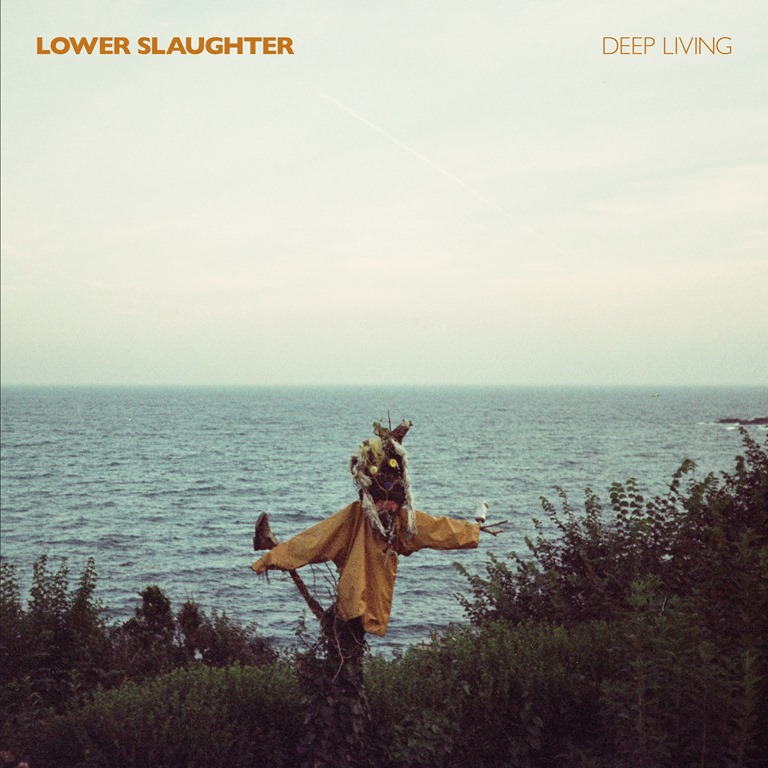
And so seemingly miraculously, they’re still here. Thus, we arrive at Deep Living, a colossal twelve-track document of the new Lower Slaughter, a release of blistering overload dominated by rolling percussion and thick bass. It’s varied, to say the least, and most certainly does not pursue the most obvious or commercial avenues. It was certainly worth the wait, and we’re most grateful that they are still here. And because it’s being released by Human Worth, 10% of all sales proceeds donated to charity The PANDAs Foundation – a trusted support service for families suffering with perinatal mental illness.

After a good couple of minutes of rolling, tom-driven percussion and muted vocals which sit partially submerged beneath a fat, fuzzed out bass ‘Year of the Ox’ suddenly slams the pedals on and erupts and Wakefield roars in anguish, ‘My eyes! My eyes!’. ‘Take a Seat’ is quite different, more overtly mathy, post-punky, and more accessible overall, despite its hell-for-leather pace and wild energy, and there’s a bit on jangle to altogether mellower ‘The Lights Were Not Familiar’ that’s a shade Pavementy – but it’s Pavement as covered by Fugazi. And the guitars sound loud. In fact, everything on Deep Living sounds loud, and what’s more, the recording and mixing work done by Wayne Adams (Petbrick/Big Lad) captures and conveys that it such a way that it feels loud, like you’re in the room with the backline practically in your face. This is nowhere more apparent than on ‘Dear Phantom’, which has something of a Bug-era Dinosaur Jr vibe to it – and the big grungy riff is magnificent. Then halfway through it goes slow, low, and sludgy – and that’s magnificent too.

Balancing melodic hooks and some quite breezy indie / alt-rock with some hefty, heavier and hugely overdriven passages, Deep Living has some range.

The six-and-a-half-minute ‘Memories of the Road’ is a slow-burning epic that builds to a roaring finish, and makes for a standout cut. It’s a trick they repeat on the title track which brings the album to a close.

In between, ‘Hospital Chips’ brings pace and jittery tension via thumping bass and jarring, sinewy guitars, and straight-up punk brawlers ‘The Bridge’ and ‘Motions’. All the range, but it’s the fact there are tunes galore that make Deep Living a cracking album.

AA

Lower Slaughter LP.indd

Human Worth – 18th April 2025

Christopher Nosnibor

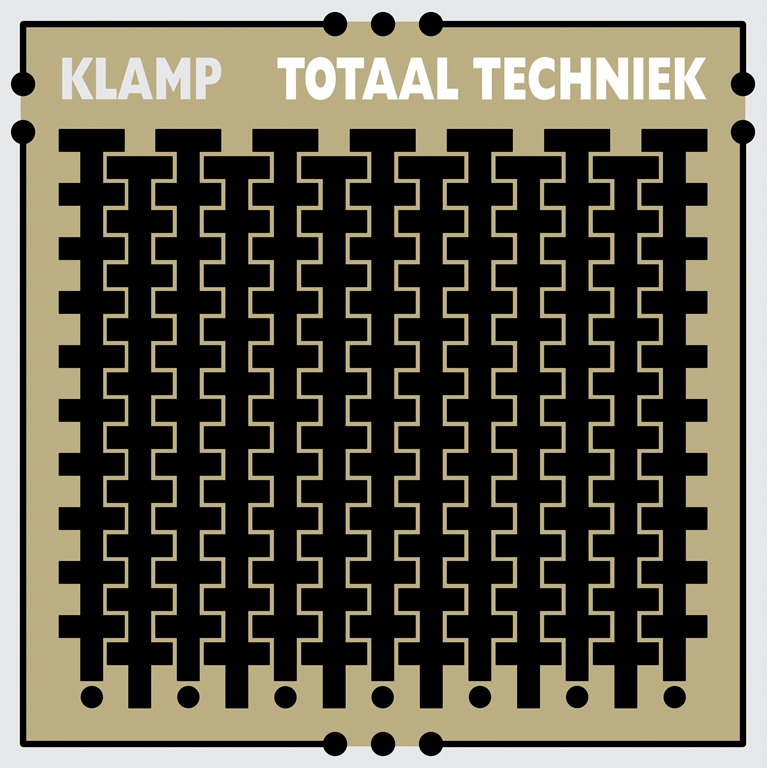
Given the event it supposedly commemorates, Good Friday has always seemed like a rather strange choice of name to give to the day – although I suppose for Christians it’s good because without it the religion probably wouldn’t exist. But this year, Good Friday actually lives up to its name, with the ever-dependable Human Worth dropping its second new release in a fortnight, this time in the form of TOTAAL TECHNIEK by KLAMP.

KLAMP first emerged in 2020, with the upfront Hate You, and since then, they’ve evolved considerably. Less a band and more of a fluid and ever-expanding collective, the original trio consisting of Jason Stoll (Sex Swing / Mugstar / JAAW), Lee Vincent (Pulled Apart by Horses) and Greg Wynne (Manatees) has now swelled to a lineup of seven performers, with Adam Devonshire (IDLES), Matthew Parker (Tall Ships), Rachael Morrison and Wayne Adams (Petbrick / Big Lad) having joined their ranks, along with a host of others who have contributed to this second album while passing through.

When approached in the right way – that is to say, with an open mind – collaboration can yield not only works which are greater than the sum of the parts, but unexpected results, as fresh input and different perspectives can throw wide open the doors to new ideas and possibilities. The converse of this is when a collaboration finds those involved arriving with egos fully inflated and preconceived ideas, and they simply stifle one another into playing to form. It’s abundantly clear that KLAAMP foster a spirit of experimentalism, a willingness to try things out, and see what transpires. The list of genres and influences, direct or implicit, noted in the liner notes is immense, and a reminder of why genres are not really the friend of artists who go with the flow of whatever happens creatively. But rather that dwell on that excessively, I’m simply going to replicate the ‘FFO’ list which accompanies the release, because it not only illustrates the stylistic range TOTAAL TECHNIEK offers, but also sets the scene in terms of expectation: ‘Swans / Sonic Youth / Black Sabbath / Godspeed You Black Emperor / Mark Lanegan / Einstürzende Neubauten / The Fall / Sunn O))) / Wire / Aphex Twin / Portishead / Godflesh / Earth / My Bloody Valentine / Gnod / Anna Von Hausswolf / The Bug and more… ‘ In other words, while there’s a lot of heavy and noisy stuff happening, there’s a whole lot more besides.

This means that the appropriately-titled ‘The First Song’ commences the set not with skull-crushing heavyweight riffery, but a subtle sense of ambience. Drones hover ominously, while chittering extranea evoke almost jungle-like sounds while distant beats flicker and echo like a collapsed synapse before they strickle into a drifting, psychedelic indie dream. There may be hints of later Earth about it, but ultimately it’s mellow and shoegazy, and while the pedals kick in just shy of the five minute mark, it’s steering hard in the vein of desert rock with an easy-going vibe, even with the raging vocals which are practically submerged in the mix. As it carries you along on its warm currents, there’s no frustration that this isn’t the heavy shit they’d promised. It’s simply good music, and has atmosphere and texture.

‘Zpine’ brings motorik drumming, a hint of Pavement crossed with Stereolab, with some noisy guitars slashing and splashing cross the solid, sequenced groove, while the vocals are harsh and ragged. The mid-section goes full Hawkwind, and the weirder and more wide-ranging it gets, the better it gets, too.

The album’s shortest song, ‘Wet Leather’ is a bass-led Krautrock-influenced psych-hued droner that bounces along nicely, and while it does kick off heavy a minute or so in, it mostly kinda comes on like The Fall circa Code: Selfish but with guitars from early Ride swirling all over.

‘Leprozenkapel’, the fourth track – which marks the end of side one – brings the rage and the noise and the throbbing noise, and it’s dark and heavy, and in some respects calls to mind late 80s Ministry as it pounds and snarls. Those drums, totally overloading with distortion and a metallic crunch… this is mean and brutal, while the eight-and-a-half-minute ‘The Crying Towel’ is different again, and altogether kinder. This is good: we need more kindness right now. And at some point a couple of minutes in, the ball-busting, super-weighty riff comes in, and there it is. But there are layers, texture, elements of shoegaze and more atop the lumbering rockout riffery. There is a lot happening here, and KLAAMP balance e it all perfectly.

Things shift towards menacing, doomy black metal on ‘Evil Pipe’, but the album ends – with another epic track in the form of the seven-and-a-half-minute title track, that comes on like a meshing of Joy Division or early New Order – particularly with the drumming – and Doves, before going full Melvins. And it somehow works. Of course, Human Worth would never release a crap album, but TOTAL TECHNITECH is truly outstanding. It’s not just the concept,  but in the delivery, and it’s all killer.

AA

HW044_KLAMP_TOTAAL TECHNIEK_CoverArtwork

Human Worth – 11th April 2025

Christopher Nosnibor

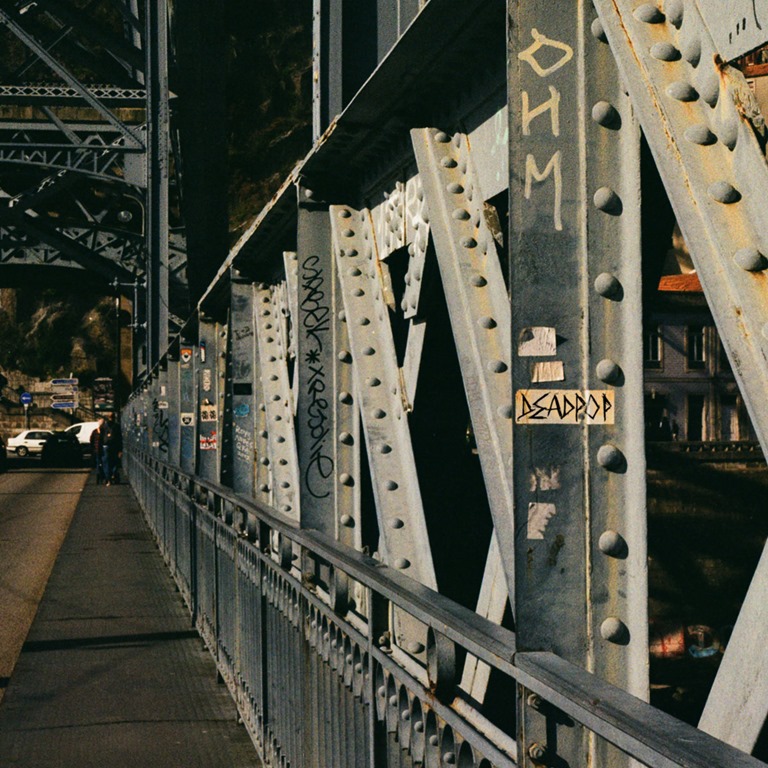
Name three great but seemingly disparate acts for a collaboration, and the chances are that no-one, but no-one would pick Ghold, Bruxa Maria, and Test Dept. But here we are with the arrival of Ohm by Deadpop, which promises ‘Hard hitting & riff heavy sludge rock’ out of London.

It’s a pretty far-out work, it has to be said. Riding in on a siren-like wave of noise, ‘Saboteur’ announces the album’s arrival loudly and intensely, and it makes you sit up, alright, and your eyes pop when the guitars slam in after some forty seconds – which is a long time when it comes to listening to twitching, glitching feedback. The bass and drums meld together in a thick sludge of overdrive.

I’m not sure what the two parts of ‘Tomahawk’ are about – although it’s probably more likely to be a punk thing or the missile than expensive steak, and they bleed together for forge six minutes of thunderous racket which takes me back to circa 2009 when bands like Pulled Apart by Horses, Blacklisters, Chickenhawk (later rebranded as Hawk Eyes), and These Monsters were exploding on the Leeds scene. Sure, there’s been noisy shit in circulation forever, and grunge may have opened the doors to a wider, more mainstream, audience, but the indie charts and John Peel’s radio show was chock-solid with wayward guitar-driven racket. Human Worth have championed big noise from day one, but have perhaps leaned toward a different shade – or perhaps there hasn’t been anything quite of this nature released recently. And am I really feeling nostalgia for circa 2009? Well, actually, perhaps I am. It was sixteen years ago, after all. Kids doing their GCSE exams weren’t even born then.

I digress – as usual – but it’s relevant when positioning this release, an album that brings the kind of big sonic mayhem that feels less common now, and in context, feels quite different from anything else that’s been released recently. ‘Tomahawk II’ adds the percussive frenzy of Test Dept to the party, calling to mind early releases like the ‘Compulsion’ 12” and Beating the Retreat.

‘Third Metal Wheel’ is a lurching cacophony of lumbering guitars, layers of echoed vocals, and thunderous drumming, the outcome being something akin to Melvins current releases, and while the monster riffology of ‘Dirt Cheap Rage’ provides but an interlude at under two minutes, it’s well placed ahead of the experimental oddity of ‘Disgrace’, which straddles sludge rock, heavy psychedelia, and punk.

The six-and-a-half-minute ‘Yesterday’ summarises the album, really: a thick, full-heft riff slogalong that pounds away, relentlessly, it calls to mind Melvins, but also encapsulates the spirit of all that is stoner, sludge, and doom in a capsule.

The album’s final track, ‘Skygrave’ delivers a driving finish, a blistering blast of full-on, speaker-shredding distortion, with some brief warping samples and disturbances thrown in for good measure, and it’s a truly brain-melting occurrence. If on the surface, Ohm is just another sludgy / stoner noise, the actuality is so much more: this is an album that brings a certain experimental bent, on top of all the riffs. And yes, it does bring all the riffs. And that’s a fact. Ohm is a heavyweight riff-slugger – and that’s a fact, too. This album is a beast.

AA

a3570033219_10

Human Worth – 7th March 2025

Christopher Nosnibor

I hate to moan, I really do. No, really. But January has a tendency to be pretty shit, being cold, and dark, and bleak, and twice as long as any other month and having to turn on the lights at midday and crank up the heating and just wanting to hibernate, and the bills keep on coming but payday is still a lifetime away. But this January, January 2025… just fuck January 2025. It felt like the end of the world even before Trump took office, and now, as California burns and the UK is hammered by one of the worst storms on record, the end of the world looks positively appealing.

I’m not one to pray, but if I was, I would be praying for just one sliver of good news – and this would have been the answer to my prayers. Because a new release on Human Worth is always good news.

Things have happened in the Cassels camp sin the three years since their last album, A Gut Feeling:

“Close to burnout from heavy touring, the brothers Beck returned to their Harringay warehouse practice space. Jim, tired of his last record’s overtures at pop culture, got very into Converge. New songs came: heavy, and weird. Gone are the sharp-tongued character sketches, replaced with a heady cocktail of philosophy and body horror. Ditched, too, are the flirtations with mid-aughts indie rock and electro. On Tracked in Mud, we’re treated to something bigger. Wilder. More… elemental. This is a record about humanity’s disconnection from nature, after all.”

You might be forgiven for thinking that the cover art, so similar to that of A Gut Feeling signifies a neat continuation. It does not. While the sharp angularity of their previous works remains present, Tracked In Mud marks a distinct departure, and the newfound weight is immediately apparent on ‘Nine Circles’, which brings the riffs. Not that you’d necessarily describe their previous output as jaunty, but this hits hard, bursting with disaffection and blistering noise and collapsing into a protracted howl of feedback.

‘Here Exits Creator’ crashes in like a cross between Shellac and Daughters (thankfully minus the dubious allegations) – sparse, twitchy, drum-dominated spoken-word math-rock with explosive bursts of noise, before locking into a sturdy motorik groove.

The songs tend to be on the longer side on Tracked In Mud, with the majority extending beyond the six-minute mark. This feels necessary, providing the space in which to explore the wider-stretching perimeters of composition, and to venture out in different directions. Each song is a journey, which twists and turns. Midway through ‘…And Descends’, there’s a momentary pause. ‘Can someone change the channel, please?’ asks Jim, with clear English elocution, which could be straight from a 70s TV drama – and then spurts of trebly guitar burst forth and lead the song in a whole other direction. It lists and lees and veers towards the psychedelic, but then slides hard into a monster sludge riff worthy of Melvins.

‘…And Descends’ spits venom in all directions, and it’s tense as. The headache that’s been nagging at me half the day becomes a full temple-throbber as I try to assimilate everything that’s going on here. I’m not even sure what is going on here, but it’s a lot. ‘Two Dancing Tongues’ is almost jazzy, but also a bit post punk, a bit goth, its abstract lyrics vaguely disturbing in places… and then, from nowhere, it goes megalithic with the sludgy riffery.

Tracked In Mud is by no means a heavy album overall in the scheme of things – it’s as much XTC and Gang of Four as it is anything else, but equally Therse Monsters and early Pulled Apart by Horses – but it is an album that packs some weight at certain points, and explores the full dynamic range. There are moments which are more Pavement than Converge, but it’s the way in which they bring these disparate elements together that really makes this album a standout. The stylistic collision is almost schizophrenic at times, but, to paraphrase the point rendered in the most impenetrable fashion by Deleuze and Guattari in Anti-Oedipus, schizophrenia is the only sane response to an insane world, and this has never felt more true.

Tracked In Mud is crazy, crazed, disjointed, fragmented. It’s not a complete departure from what came before, but it is a massive leap, a gigantic lurch into weightier territory. It’s a monster.

AA

HW043_Cassels_TrackedInMud_DigitalArtwork

Human Worth – 15th November 2024

Christopher Nosnibor

They’ve been around for a while now, but as yet, there hasn’t been another act quite like Sly and The Family Drone. They’re one of those acts that straddle so many different boundaries and function on so many different levels, they’re impossible to pigeonhole and impossible to pin down. They make serious art delivered with a quirky, tongue-in-cheek sense of humour, and their live performances are celebrations of community and whacky while simultaneously being genius performance art improvisations. I’m by no means being superior when I suggest that a lot of people simply won’t ‘get’ them, and it’s obvious as to why they’re very much a cult thing. But that they’ve managed to sustain a career operating on a DIY basis, booking their own tours, etc., for well over a decade is testament to both the appreciation there is for them on a cult level, and to their sheer persistence and insanity. And their last release was a lathe-cut album containing a single twenty-minute jazz odyssey released via The Quietus.

Moon is Doom Backwards – a wheeze of a title which is factually inaccurate, and of course they know it – is a classic example of the absurd humour which is integral to their being, and it’s a joy to see that they’ve come together with Human Worth, a label I’ve filled many a virtual column inch praising, for this release. And because it’s on Human Worth, a portion of the proceeds from this release are going to charity.

The album, we learn, was recorded ‘exactly three years ago at Larkins Farm’. That’s quite a lag, but this does often seem to be the case when it comes to homing works of avant-jazz noise-drone. They describe it as ‘a patient, stalking, lurking thing. A properly noir thing, as notable for its long stretches of quiet atmosphere as it is for its pummeling skronk. Sly’s is a strange sort of quietude, though. A “drums heard through the wall”, “disquieting electrical hum” kind of quiet. An “eavesdropping PI”, “solo sax on rooftop” sort of quiet. An attention-grabbing kind of quiet so engrossing that, when our fave neo-jazz wrecking crew actually gets to wrecking – and they still wreck real good – we’re caught off guard, wrong-footed, defenseless. We get run the hell over by The Family Drone’s quintet of bulldozers.’

None of this should come as a surprise to anyone who’s been acquainted with them for any period of time. Because whatever one expects from Sly and the Family Drone, they’ll probably deliver, but simply not in the way one expects it.

Containing seven pieces, mostly around the three-to-five-minute mark, Moon is Doom Backwards is more conventionally ‘albumy’ – whatever conventional means when it comes to any format now. And there is, indeed, a lot of quiet on this album, much hush. There are many segments where not a lot happens, or simply a solo sax rings out into a slow-blowing wind of reverb.

‘Glistening Benevolence’ is underpinned by a mesmeric, tribal beat and crooning sax and wiffle of woodwind, at least until the percussion rises into storm-like crashes and the percussion surges around the mid-point, before it tapers, and then splashes to a halt. And then there is quiet, for quite some time, until the drums blast back and there is a sound like an elephant braying in pain. So far, so Sly. It’s pummelling percussion and frenzied honks and toots, parping and tooting in all directions which blast from the speakers on single cut and shortest track ‘Going In’, after which darkness descends. The inexplicably-titled ‘Cuban Funeral Sandwich’ has too much percussion and it too overtly jazzy to be ambient, but it’s a low-key, meandering piece that feels far too improvised to qualify as a composition and it certainly brings the atmosphere – a dark, oppressive one, which gradually builds and horns hoot like ship’s horns and clattering cans rattle with increasing urgency – before another abrupt halt.

If ‘Joyless Austere Post-war Biscuits’ may seemingly allude to some kind of Hovis-like cobbled-street and open-fire nostalgia, the actuality is altogether darker, as more sax flies into the sky on an upward spiral of infinite echo and the drums – building, building, to a crazed frenzy, but at a distance – create a palpitation-inducing tension, before ‘The Relentless Veneration of Bees’ – something which really should be a thing, along with the outlawing of pesticides – wanders absent-mindedly into an arena or ambient jazz, where the drums hang around in the distance somewhere.

There are shooting stars and percussive breakdowns amidst truly tempestuously frenzies jazz experimentation, and ‘Guilty Splinters’ is the perfect soundtrack to this. The closer, ‘Ankle Length Gloves’ is perhaps the most unstructured and uncomfortable of all here: amidst wheezes and drones, it’s the sound of creaking floors and subdued wailing utterances… and nothing but a buffeting breeze.

Moon is Doom Backwards is certainly their sparsest, most atmospheric, and least percussion-heavy album to date, but it really explores in detail and depth the relationship of dynamics, and pushes out into new territories. And while it’s still jazz, it’s jazz exploded, fragmented, dissected, and reimagined.

AA

AA

HW038_Sly&TheFamilyDrone_DigiCoverArtwork

Human Worth – 18th October 2024

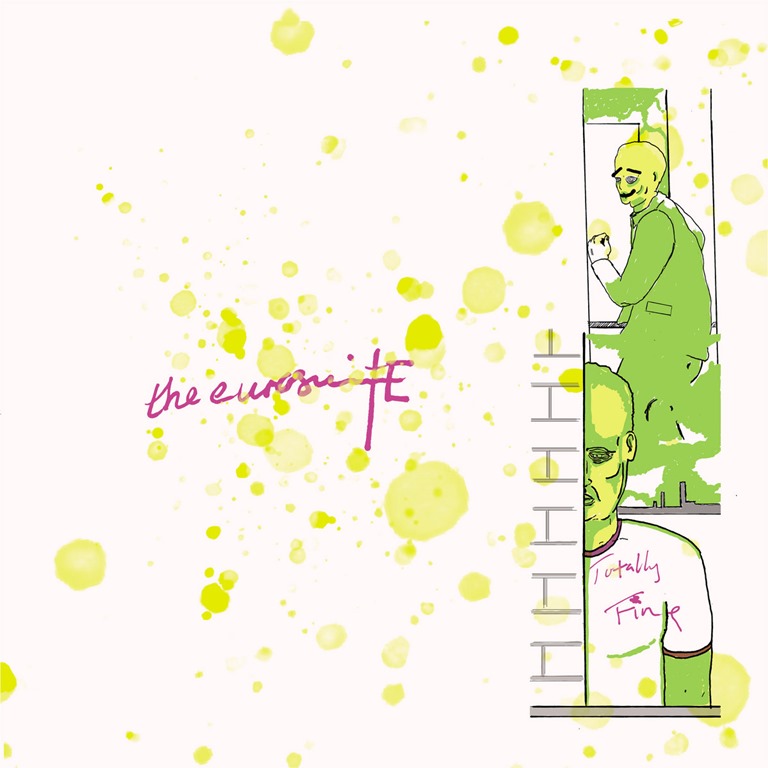
Sorry, not sorry, as they say. In the spring of 2023, off-the-wall supergeroup collaboration featuring members of USA Nails, Nitkowski and Screen Wives, The Eurosuite, released their third album, through Human Worth. They were so sorry, they’ve done another. Only this time, they promise, it’s different.

As the accompanying notes explain, ‘Produced by Wayne Adams (Petbrick / Big Lad) at Bear Bites Horse Studios, the band have taken a different approach from their maximalist output on their second LP Sorry – do less. Where the songs on Sorry were built from a variety of jams, band member ideas, traded demos and looped phone recordings, the 10 songs within Totally Fine were all built and mercilessly edited from a full band improvisations, with individualism, indulgence and egos set aside to better serve the songs… That spirit of minimalism is threaded through each track, which veer from sinewy post punk (‘Crustacean Blue’), throbbing death disco (‘Antimatter’) and something between driving krautrock, surf rock freakouts and an evil version of the B52s (‘12 Diphthongs’, ‘Houseplants’)’.

Sorry was a cracking album: that’s essentially a fact. It still is. But it was seeing them live that they really clicked for me: something about that manic energy in the room, the way each member of the band bounced off one another, if felt as if there was something happening in real-time that went beyond the recorded work.

Here, all of the same elements are present: fizzling synths, jerky guitars, sudden thundering bass runs, changes of tempo, blasts of noise, beats that flit from disco to industrial pounding, and vocals which swing from half-spoken to shouty – and that’s only in the first couple of songs, with a combined running time of less than five minutes. But there’s a newfound focus and intensity, and well as, perhaps a greater separation of instruments which lays the components elements more evident.

There seems to be an emerging subgenre of weird, quirky, jerky noisy shit that’s a bit mathy but with some fried electronics and simply prone to exploding in any direction without a moment’s notice, and it’s noteworthy that both The Eurosuite and Thank, prime exponents of this wide-eyed demented frenzied kind of racket have both found homes at Human Worth. The label’s always had its ear to the ground and its tendrils out for noisy stuff with something different about it, and this feels like an emergent form.

Somewhere in the recesses of my overcrowded memory, there’s a vague recollection of an interview with a band sometime in maybe the late eighties – it may have been a grebo act like Gaye Biker on Acid on how the future of music might be weird, like ‘people playing bits of toast or whatever’ (the quote is from memory, since I’m buggered if I can find it on the Internet and don’t have a month spare to look through books and press cuttings for the sake of fact-checking a detour in a review for an album due out next week). Anyone who’s seen Territorial Gobbing will likely agree we’ve reached that point. But with the likes of Thank and The Eurosuite, they may not be quite that far out, but they’re pretty damn far out in terms of the way their compositions leap and lurch all over, and are simply so far removed from more conventional song structures with verses, choruses, mid-sections, even bridges and pre-choruses or whatever that song forms are being pushed to new limits. And this is exciting and brain-bending in equal portions.

Perhaps this is the culmination of everything that’s preceded it. Perhaps it’s a reaction to the crazy, overstimulated world we live in. Perhaps it’s the soundtrack to emerging from the other side of postmodernism. After all, postmodernism was deemed a ‘schizophrenic’ culture by Deleuze and Guattari in their seminal work, Anti-Oedipus¸ suggesting that schizophrenia is the only sane response to a deranged world. And perhaps this is the proof.

Totally Fine as a title intimates a breeziness, but the kind of airy offhand response which often masks a darker truth. Not that Totally Fine is a showcase of frenetic flailing and pedalling in all directions, and as such has a groundlessness to it. It’s the sound of searching, of grappling with reality, and the very concept of reality.

Some of the songs are barely a minute long: ‘Crustacean Blue’ brings a stuttering blast of a riff that lasts for a mere fifty-five seconds, electronic squeals adding that all-essential eye-popping dimension, and only ‘Reflection Monster’ runs past three minutes. ‘Bellyache’ is one of the most ‘conventional’ songs on the album, and comes on a bit like Suicide and early Cabaret Voltaire with a hint of Throbbing Gristle.

Somehow, by stripping things back, they’ve cranked up the claustrophobia and amped the intensity. There are some dark, low, grinding grooves and some manic hollering vocals on display here, and they do define the album – but that defines it more is the audacious racket, the wild anti-structures, the sheer imagination.

Clawing my way through ‘Bagman’ ‘Earworm’ I can feel my blood pressure increasing as the manic noise amps up… and up. But I’m totally fine. Really, I am. Totally Fine.

AA

a0485217786_10

Human Worth – 5th July 2024

Christopher Nosnibor

Almost four years on, and still the shadow of the pandemic hangs over us. The way in which this manifests varies widely, and it feels as if it could yet take considerably more time yet to unravel the traumatic aftereffects. During the time people were forced to stay inside, many found themselves looking inside, too – inside themselves – and finding darkness and demons, and a whole lot more besides. Many were forced to face these alone, without the usual support mechanisms – support mechanism which may no longer be accessible, or even exist. The new normal in which we find ourselves is nothing like the one which seemed possible at the time, and that vague hope people clung to of emerging in a better world has been utterly devastated since, not only by global wars and accelerating climate change, but in the everyday, which simply feels like a battle for survival so much of the time, with the cost of gouging crisis, a mental health crisis, a collapsing NHS, decimated public services… the list goes on. Things have changed radically, but not for the better.

Pascagoula’s second album, For Self Defence, is a thorny thing which grew over the pandemic years and has taken some time to reach fruition. It’s not unusual in itself for an album to take four years from conception to release, but as we learn of this particular album, the circumstances and timing unquestionably influenced the end result:

‘The title of the band’s second album For Self Defence was decided upon in 2020 – It seemed fitting considering what was happening in the world then, and remains bitterly relevant now. Pascagoula remained in their secret tin-foil prefab shelter in Brighton (near Europe) and reflected the tightening chaos and hardship of the world outside. The nine songs on their second album are sharper and more barbed, more violent and vitriolic, and more cruelly calculated than before. Songs about past traumas, regrets, anxieties, damaging relationships, mental illness, the bad choices we make in life, and their consequences. It’s no easier in here than it is out there.’

Perhaps unsurprisingly, then, For Self Defence is hard-hitting, harrowing. The title tracks opens the album and its slow and heavy, but not in a raging deluge of distortion way, but more glacial math rock in the vein of Kowloon Walled City, and the tone of For Self Defence is very much in the vein of the slow, thick-timbred, gritty, granular metal with a really earthy, organic feel of Neurosis and a number of other Neurot bands.

Then again, ‘Insecurity Breach’ is a straight-up shouty noise song with lumbering bass and grungy guitars, evoking the sound of the underground in the early 90s – not grunge, but all of the mangled noisy shit you’d find in tiny venues and released on microlabels that only managed a handful of releases, and the album seems to get darker and denser and dirtier as it progresses. ‘Valve Kilmer’ is a title worthy of those niche 90s acts, too, or the numerous post-millennium noise acts emerging from Leeds.

And while such a title hints at there being humour to be found here, the off-the-cuff flippant wordplay is at odds with the overall mood. In keeping with the way in which For Self Defence shares much commonality with that early 90s scene, so it is that what the album conveys is inner turmoil, conflict, and yes, angst, articulating emotions which words alone cannot convey via the medium of churning guitars and a howl of anguish. ‘Consultants of Swing’ (boom boom) mines a seam that carves its way from the Jesus Lizard to Blacklisters, tossing in some noddlesome proggy post-rock elements into the gnarly noisy math metal mix. The result is dense, tense, and claustrophobic. This isn’t music that’s intended to make you feel at ease, and it doesn’t. You feel that knot in your chest tighten and the tension in your shoulders grow to a persistent ache, as if carrying a heavy load.

Since seemingly forever, there have been those who have decried the death or guitar music, who have declared it redundant, insisted that rock’s dead, grunge is dead, that metal is passé. Nothing could be further from the truth. These instruments, and these genres, are where people turn when looking to vent these most difficult emotions, when seeking release, catharsis. For Self Defence is pure catharsis, rabid in its intensity, foaming in its fury, exhausting in its weight: ‘Mournography’ brings the slugging monotony of early Swans, and Godflesh, and by the time we arrive at ‘Eternity Leave’, we’re ready for it. Relentless, raw, For Self Defence is quite simply a monster.

AA

HW035_Pascagoula_ForSelfDefence_CoverArtwork