Posts Tagged ‘Foetus’

Foetus has unveiled the first material from the forthcoming final album. When JG Thirlwell told us at Aural Agravation  it was going to be ‘epic’, he wasn’t kidding. AS if we ever thought he might have been.

‘Succulence’ is featured on the imminent new Foetus album HALT. All instruments on this track played by JG Thirlwell except drums, which are played by Brian Chase of Yeah Yeah Yeahs. Play it LOUD!

AA

8596317461801017532

For the first single from Marc Urselli’s Best of Ramones Redux that will be released parallel to the forthcoming MER Redux Series instalment Marc Urselli’s Ramones Redux, Canadian space metal legends VOÏVOD have teamed up with no less legendary Australian post-punk vocalist JG THIRLWELL (FOETUS) to pay a mind-blowing tribute to the most fitting RAMONES’ classic ‘Zero Zero UFO’. The original of the song was released on the US punk rockers’ eleventh full-length Brain Drain (1989).

VOÏVOD comment: “One of the proudest moments of my life was when Joey Ramone gave a shout-out to Voïvod on stage in Montreal in 1994”, drummer Michel “Away” Langevin reminisces. "I’ve been a fan of the Ramones since their first LP, so you can imagine my excitement when Marc Urselli approached us to cover a song for this album. When he mentioned that collaborations were part of the concept, I immediately thought of JG Thirlwell who has been a good friend since the ’80s. While we could have recorded any of their songs, I’ve always dreamed of playing ‘Zero Zero UFO’. I was so excited about the opportunity that I might have played it a bit fast, making it challenging for Snake and Jim to fit every word in. Fortunately, Marc’s production really makes the track shine, and we’re thrilled with the final result. Enjoy!”

VOÏVOD have written metal history since their founding in Jonquière, Quebec in 1982. The Canadians starting out as a thrash band with strong hardcore punk leanings that was considered “experimental” or “progressive” right from the start. Their highly unique sound somehow survived multiple changes and shifts in style as well as changes in the line-up that have left drummer Michael “Away” Langevin as the remaining original member. There could hardly be a better choice for a homage to the RAMONES and the track ‘Zero Zero UFO’ than VOÏVOD. The Canadians were early adopters of a bizarre futuristic space style in artwork and lyrics, and they have already stunned the world with their daring and successful cover of PINK FLOYD’s ‘Astronomy Domine’.

Australian vocalist James George “JG” Thirlwell has become a most influential artist after moving to London, UK in 1978, where he founded FOETUS as the first of many musical projects with a broad stylistic range that includes post-punk, industrial, and trip hop. Under a variety of pseudonyms such as Clint Ruin and Frank Want, he collaborated with artists such as Marc Almond, THE THE, and Nick Cave among many others.

Check their rendition of ‘Zero Zero UFO’ here:

AA

74345a73-f87c-b660-11db-79eb86528cee

Metropolis Records – 7th March 2025

Christopher Nosnibor

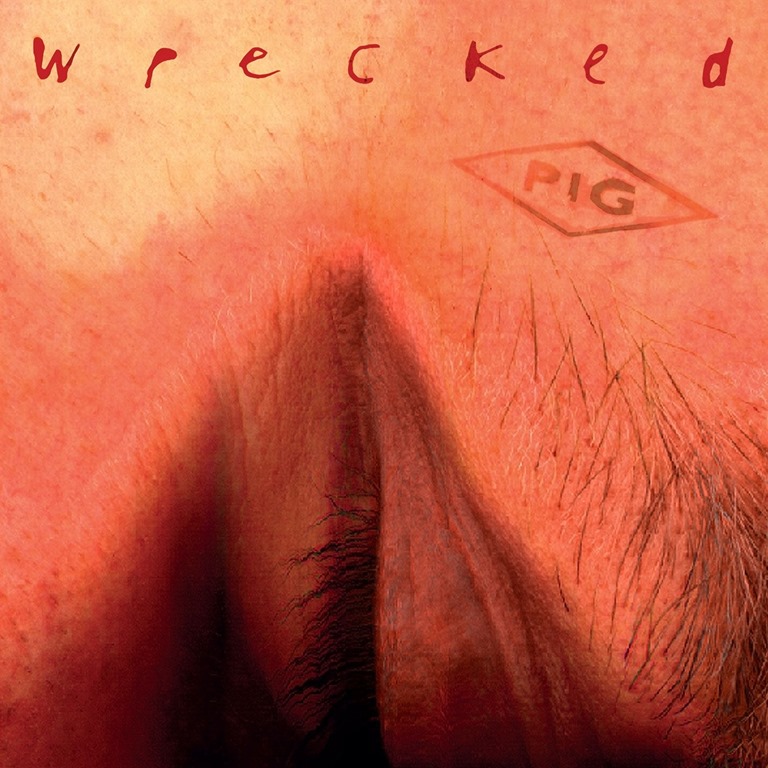
As Metropolis continue with their run of PIG reissues, the arrival of the remastered Wrecked reminds us of the run they had in the 90s. Having hardened up the sound showcased on debut album A Poke in the Eye… and follow-up Praise the Lard, and having toured with Nine Inch Nails in the Downward Spiral tour, PIG found themselves signed to Trent Reznor’s Nothing label for the release of Sinsation (1995), which melded the more experimental aspects of The Swining and Red Raw & Sore from a couple of years previous and cranked up the guitars – and the sleaze and depravity – to eleven. And after Sinsation came Wrecked, and having returned to Wax Trax!, in the US at least, the album was released first in Japan in ’96 and the US a year later with a substantially different tracklisting – and was an absolute bastard to get here in the UK in either form.

This version brings together the tracks which featured on both the original Japanese edition – which was criminally missing ‘No One Gets Out of Her Alive’ and ‘Contempt’ – and the American edition, which brought ‘The Book of Tequila’ and ‘Fuck Me I’m Sick’ in their place.

Wrecked very much represented PIG at their wildest, most wide-ranging, and arguably their heaviest. The title track drifts in on some mellow steel guitar country vibes and ambient chilling… and then gets gnarly with gritty industrial rigging and snarly vocals that are quintessential PIG. Raymond Watts may not have been in the best place during this period, but creatively… the music he was making was something else, and Wrecked stands up just as well now as it did on release. I’ve mentioned previously that PIG stand apart from their contemporaries, and while Watts was a touring member of Foetus in the late 80s and worked with JG Thirlwell when PIG was born, as well as being a member of KMFDM for a time, as much as those elements of aggrotech and industrial metal are core to the sound, Watts took it somewhere else entirely. Where? It’s hard to say: PIG’s work simply doesn’t conform to any genre forms or models – PIG just are PIG. While a couple of tracks had been previously released in different forms – the original versions of ‘Find It, Fuck It, Forget It’ and ‘Blades’ appeared on The Swining, released only in Japan in 1993 (prior to a 1999 US reissue) – it would be wrong to suggest that their inclusion on Wrecked suggested a lack of material, given just how radically different these versions are. The same is true of the reworked version of ‘My Sanctuary’, which appeared on Praise the Lard: expanded, more grandiose, more everything, the ‘Spent Sperm Mix’ taking the track to preposterous heights while audaciously combining industrial, techno, and gospel with orchestral strikes galore.

Since the US and Japanese editions included various alternative mixes, it would have been nice to see this version feature all sixteen tracks featured on the 2017 tour edition, which is arguably the definitive edition. But what we learn here is that you can’t have everything, and this edition at least has the majority of the prime cuts. Sequentially, it follows the Japanese edition, with the tracks which featured on the US release at the end.

The drumming on this album is brutal, choppy, the guitars cutty, stuttering, heavily distorted, but with a bright, clear, digital crispness that really slice hard. Watts growls, snarls and sneers, dark and salacious, and everything about Wrecked is harsh and ugly. ‘Find It, Fuck It, Forget It’ is a full-throttle beast of a track, with a sample-laden breakdown in the mid-section, with snippets of reports on American obesity and the like (in place of the sped-up snippet of ‘The Dance of the Sugar Plum Fairy’ on the original), and it’s pretty dark and unforgiving.

‘Blades’ is one of the greatest tracks ever recorded by PIG or anyone – it’s one of those songs that just does something to you. The ‘Slash Mix’ on here may not be the best version – for my money, I prefer the more orchestral original, but this rendition is dense and girthy, and fits with the sound of Wrecked. Then there’s ‘Save Me’, the album’s slowie, and so, so powerful. It takes ‘anthemic’ in a whole new direction.

Watts has always made music with a boldly theatrical approach to the industrial template – and Wrecked really turns up the dial on everything – density, volume, aggression, intensity, and this expanded reissue is an essential document in the broader industrial oeuvre. It’s also an outstanding album in its own right.

AA

67fd98d7819df26e756c1ecba56842acbbd35016

Metropolis Records – 10th January 2025

Christopher Nosnibor

According to their bio, ‘Morlocks are a Swedish act who combine elements of industrial rock, neo-classical, darkwave and metal with epic production values to create an exciting hybrid sound. Having issued the long-awaited and well received album Praise The Iconoclast in late 2023, they subsequently promoted it with two US tours in 2024, both in support of their friends and occasional collaborators KMFDM.’

Asked about the inspiration behind the song, the band state: “Watch the world from a distance. Get angry at first, but also inspired. Take the darkest parts of it and twist them into something weird, beautiful and batshit insane – something that you could either dance to, brood in the shadows to or scream at the top of your lungs at the moon. Preferably all of the above. Everything can be turned into art, and art must hurt. Situation normal: all fucked up.”

‘Everything can be turned into art, and art must hurt’ is a phrase which stands out here. It may seem somewhat dramatic, but to summarise Buddha’s teaching, ‘all life is suffering’, or ‘life is pain’, and the function or art – true art – is to speak in some way of deep truths of what it is to be human. Art must therefore, reflect life and capture something of the existential anguish of the human condition. If it doesn’t, it isn’t art, it’s mere entertainment. And if the idea that ‘Everything can be turned into art’ may superficially seem somewhat flippant, a diminishment of serious matters, if the work is, indeed art, and not entertainment, then the obverse is true: using the pain of life as source material is the only way to interrogate in appropriate depth those most challenging of issues. In other words, making art from trauma is not reductive or to cheapen the experience – but making entertainment from it very much is.

There’s a snobbery around what constitutes art, even now, despite the breakthroughs made through modernism and postmodernism. It’s as if Duchamps had never pissed on the preconceptions of art for the upper echelons of society who still maintain that art is theatre, is opera, is Shakespeare, that art can only exist in galleries and is broadly of the canon. This is patently bollocks, but what Morlocks do is incorporate these elements of supposed ‘high’ art and toss them into the mix – most adeptly, I would add – with grimy guitars and pounding techno beats. Art and culture and quite different things, and those who are of the opinion that only high culture is art are superior snobs who have no real understanding of art or art history.

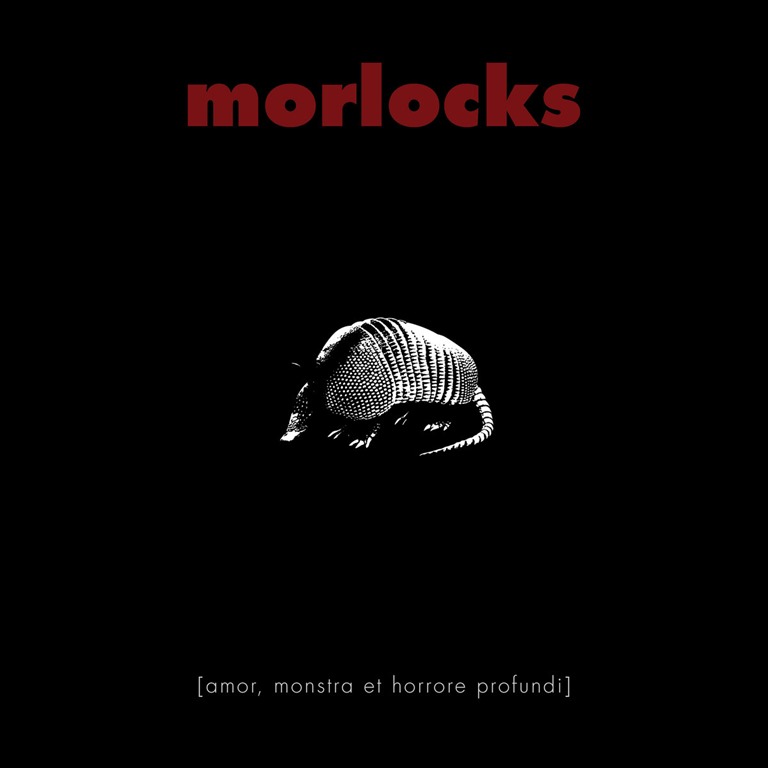
The five songs on Amor, Monstra Et Horrore Profundi are therefore very much art, although that doesn’t mean they don’t also entertain. ‘The S.N.A.F.U. Principle v3.0’ arrives in a boldly theatrical sweep of neoclassical strings and grand drama – and then the crunching guitars, thumping mechanised drums and raspy vocals kick in and all hell breaks loose. Combining the hard-edged technoindustrial of KMFDM – which is hardly surprising – with the preposterous orchestral bombast of PIG and Foetus bursting through and ascending to the very heavens, it’s complex and detailed and thrillingly dramatic, orchestral and choral and abrasive all at once.

With tribal drumming and bombastic, widescreen orchestration, ‘March of the Goblins’ has a cinematic quality to it, which sits somewhat at odds with the rather hammy narrative verses. It seems to say ‘yeah, ok, you want strings and huge production and choral backing to think it’s art? Here you go, and we’re going to sing about radioactive dinosaurs like it’s full-on Biblical’. It’s absurd and audacious, and makes for a truly epic seven and a half minutes of theatrical pomp that’s admirable on many levels. Ridiculous, but admirable.

‘The Lake’, split over two parts with a combined running time of over ten minutes explores more atmospheric territory, with graceful, delicate strings, acoustic guitar, and tambourine swirling through swirling mists before breaking through into a surging tower of power, melding crunching metal guitars with progressive extravagance, and medieval folk and martial flourishes.

Amor, Monstra Et Horrore Profundi is remarkably ambitious and unashamedly lavish in every way. Quite how serious are Morlocks? They’re certainly serious about their art. But while delivered straight, one feels there’s an appropriate level of knowingness, self-awareness in their approach to their undertaking. And that is where the art lies: theatre is acting. The stories told are drawn from life, and resonate with emotional truth: but the actors are not the action, and there is a separation between art and artifice. Amor, Monstra Et Horrore Profundi is something special.

AA

a2788665137_10

COP International – 31st December 2024

Christopher Nosnibor

The adage that you should never judge a book by its cover is a nonsense, and certainly doesn’t apply to records. I was instantly drawn to Stoneburner’s ‘New Year Same Fuckin You’ for its referencing – by which I mean almost direct lifting – of the artwork for the Foetus All Nude Review ‘Bedrock’ 12”, one of JG Thirlwell’s first forays into the ‘big band’ swing sound back in 1987.

It transpires they’ve got form: previous releases ape the fourth Foetus album, Nail, as well as Big Black’s Atomizer, and no doubt other releases reference things I’m unfamiliar with, as it’s impossible to know everything within another’s sphere of reference, and Stoneburner have released a hell of a lot in a comparatively short time. But I always maintain there’s more honour in being up-front in acknowledging one’s influences than trying to hide them, and have all the admiration for Stoneburner for their unashamed referencing. By now, we all know – or should know – that there’s nothing news, so better to front up and embrace the fact instead of feebly proclaiming artistic innovation.

The solo project of Steven Archer, best known for his work with the electronic rock band Ego Likeness, as well has is abstract electronica project ::Hopeful Machines::, he’s one of those creatives who simply gushes new material.

For ‘New Year Same Fuckin You’, Archer has enlisted Rodney Anonymous, Matt Fanale, and Mark Alan Miller, and it’s something of a departure from the majority of the Stoneburner catalogue, which, while very much given to industrial leanings, also place considerable emphasis on atmosphere and drama (in the way JG Thirlwell and Raymond Watts do, setting Foetus and PIG apart from the majority of the field). There’s no such subtlety here: ‘New Year Same Fuckin You’ is a balls-out blaster.

The track is pitched as ‘a rallying cry for a time when so many feel defeated and powerless. A time when giving up seems easier. But when I think of those who marched across the bridge in Selma, knowing full well what was waiting for them; when I think of the women who sacrificed everything for their autonomy; when I think of every brave soul who stood tall against oppression, I know this: we owe it to them to rise again.’

It’s a strong sentiment delivered at a time when mood and energy feels like it’s at an all-time low. It’s hard to recall a festive season that’s felt less festive, and celebrating extravagantly with gifts and feasts has felt quite wrong while the world is at war and hyperconsumption continues to drive climate change. What are we actually celebrating here? The idea that we’re ‘doing it for the kids’ rings rather hollow when you know that every overpriced piece plastic of tat stuffed in a stocking is another nail in the coffin of the future they’ll inherit.

And this brings us to the gimmick of New Year’s resolutions. How many last past the first fortnight of any given new year? Mostly people seem to resolve to get fitter, and take out gym memberships with good but misguided intent. Gym conglomerates rub their hands as they make half the year’s profits in a week or so, knowing that the regulars won’t be complaining of overcrowding again come February. Most goals set are as pointless as they are unattainable., but how many set themselves the target of being less of a cunt in the coming year, eh? Eh? Yeah – New Year Same Fuckin You.

This is a full-throttle raging technonidustrial banger, and curiously, as much as it’s in the vein of KMFDM and the entirety of the Wax Trax! catalogue with its pounding, hard-edged disco beat and snarling synths and mangled vocals, I can’t help but be reminded of ‘It’s Grim Up North’ by the JAMMs.

As an anti-trend anthem, with it’s ‘Fuck you! Fuck you! Fuck you!’ refrain, ‘New Year Same Fuckin You’ is the perfect counterpoint to all of the motivational guff that circulates all year round but becomes particularly prevalent at this time of year as every agency going advertises to appeal to your shame – shame for your indulgence, your weight gain, your slacking, your failure to move forward in your life goals – in an attempt to take your money and convince you that spending with them will make your life better. Yes, fuck you! Get a grip. You want your life better? Start by taking control of your own direction, instead of paying for apps and influencers and life coaches to tell you what you already know. Need reminding that this is the true way forward? Listen to this on repeat for an hour daily.

AA

a1200904832_10

Intro: Christopher Nosnibor

Interview: John Wisniewski

Images: individually credited, via Foetus.org

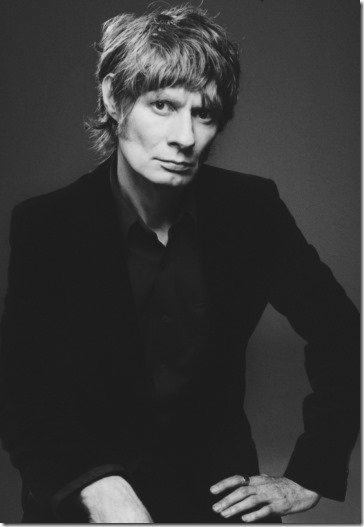
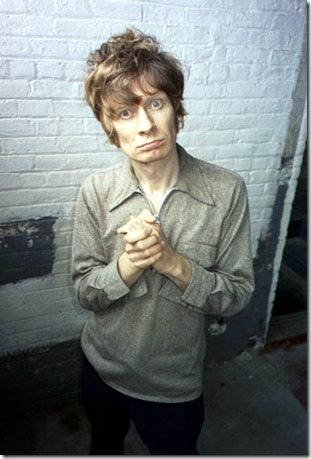
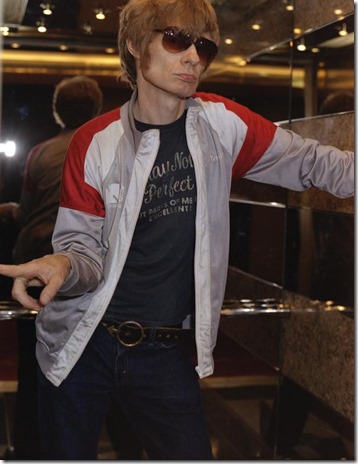
It’s been over forty-five years since Melbourne-born James George Thirlwell washed up on English shores, and having played some keyboards on the album No Cowboys by post-punk act PragVec in 1980, he embarked on what would become a truly remarkable and lifelong musical journey of his own.

Along the way, he’s released no fewer than eleven studio albums under an array of variants of the Foetus moniker, not to mention quite literally dozens of other musical vehicles from big band (Steroid Maximus) to more experimental instrumental work (Manorexia) and almost everything in between, not to mention powerful collaborations with Marc Almond (Flesh Volcano), Jim Coleman (Baby Zizane), Lydia Lunch (Stinkfist), and the late Roli Mosimann (Wiseblood), to name but three of many. And then there are the numerous scores… and yet whatever he turns his hand to, his work has a certain distinctive style, a sense of drama.

Foetus may have been on hiatus since 2013, but at the age of sixty-four, Thirlwell is showing no signs of slowing down. John Wisniewski managed to catch a window in the man’s relentless schedule to ask about his myriad projects past, present, and future…

JW: Did you formally study music, JG?

JGT: I briefly learned cello and percussion when I was a kid. But I was very slow with sight reading.

Later I just taught myself everything from instruments to recording, programming, scoring etc.

Tell us about your first music project, Foetus. What did you want to present?

The initial catalyst for Foetus was to create something totally by myself, where I played wrote and produced everything, as a reaction to the democracy of playing with other people. I wanted to make the music in my head and the music I wanted to hear. I also wanted to create artifacts, a work of art as a multiple where everyone owned an original. It took me a long time to be able to fully realize what was in my head. I’m still not always successful with that transfer process.

How did the Lydia Lunch collaboration come about?

I knew Lydia’s work and was introduced to her when she moved to London in about 1982 through the Birthday Party. At first she asked me to write her a press bio as I had been writing fanciful bios for the Birthday Party! First I played sax with one of her projects which we toured with in Sweden. Then we started writing songs for something called The Hard Diamond Drill, which was never realized. Then we created Stinkfist and went on to make Immaculate Consumptive. We became involved romantically and moved to NYC together. I was with her until about 1989 / 1990.

Any favorite music artists?

Many favorite artists, it changes daily. I become obsessed with someone for an afternoon. I like to hear new things all the time. I am a cultural sponge. I publish a monthly playlist on my Tumblr blog. https://jgthirlwell.tumblr.com/

What inspires you to create?

Everything. I have so many ideas, it is an infinite renewable resource. I also have a hungry legacy and I have to make sacrifices to its insatiable maw.

Another legendary early collaboration was with Nick Cave. How did that one come about?

The Birthday Party broke up. Nick was looking to work with other people and we were friends. We wrote the music for one song together, which was Wings Off Flies on the first Bad Seeds album. When he came to record that album I went to some sessions, but drifted away as I was in the midst of a big bout of recording of Foetus material, the sessions that became the Hole album. A bit later we had the Immaculate Consumptive project – Oct 1983.

Do you like collaborating with other artists?

I have gotten better at it.
tumblr_lqecdl1bnu1r26hzho1_1280

Photo by Marylene May

What was the experience like working with Marc Almond and Trent Reznor’s material?

Marc is very open minded and works very fast and is excited by music that challenges him and stretches the boundaries of what he has done. So that is stimulating. For Trent I remixed two of his songs, “Wish" and "Mr Self Destruct". I did my work on it, mutating the original material. he wasn’t involved. He liked what I did.

Do you like to work within different genres of music?

You may have noticed one of the hallmarks in my music, is that I combine multiple styles often within one song.

What are you working on now?

New Xordox album Terraform, Venture Bros Volume 3 and Foetus HALT should all be out in 2025.

Also under way are two albums of symphonies for chamber orchestra, and album of soundtracks I have written for Ken Jacobs. An EP with Laura Wolf, a triple box of music I created for sound and art installations. Hopefully another Archer soundtrack album. And much more.

Why do you have so many projects on the go (and how do you manage it)?
I like to work in a lot of styles and on a lot of projects in different forms – solo pieces, ensemble pieces, multi channel, electronic, acoustic, vocal, instrumental. Concert works, classic songs, scoring. I have a lot of ideas to get out of my system. There’s no one project that can harvest everything. There are things that I get out of my system with Foetus which are totally different to the place I am in when I create a sound installation, or a soundtrack,

My projects are usually staggered, which is to say a lot of projects in different states of completion. So I shunt them all along and they get completed in different paces. Then new ones sprout up. I couldn’t just work on one thing.

AA
2009-jgthirlwell-circa-2

Do you ever take time out and what do you do to unwind?
Yes I stop to watch movies, see art and travel. But my work is perpetual motion, I don’t need to unwind from it. I believe in being creative every day. That’s also manifested on ideas I have for visual art, photography etc
>
I’ve read elsewhere that the upcoming Foetus album, as the title alludes, is slated to be your last. What can we expect from it?
Tying up forty five years of Foetus is no mean feat and I have been working on it for seven years. There are parts that make it seem like a continuum and other parts that have never been done in the Foetus context. It’s going to be epic.

AA

Catch up on JG Thirlwell’s output on his Bandcamp page.
2010-jgthirlwell-circa-2

Metropolis Records – 23rd August 2024

Christopher Nosnibor

Even at their commercial peak, PIG releases weren’t all that easy to come by, at least here in the UK, despite some of them being on big labels with big distribution. PIG – the project of London-born Raymond Watts – is an act which can legitimately claim to be big in Japan while largely unknown at home.

My own first encounter was seeing them support Nine Inch Nails on The Downward Spiral Tour in Wolverhampton in 1994. I was in the middle of my A-level exams, but no way was I going to miss NIN. I didn’t even know who the support were, but witnessing the heavy grind of PIG, with pigs’ heads on poles at the sides of the stage, as their lanky singer writhed his way through a gritty set was an absolute revelation. The set’s opening song stuck with me, but it was some years before I would actually source a copy of Red Raw and Sore, on this new site called eBay. The debut album, A Poke in the Eye…. With a Sharp Stick and the ‘Sick City’ 12” were fairly easy to find at record fairs around 1994, as Wax Trax! vinyl was available in abundance, and often cheaply, too, but anything else? Pretty much impossible to find. And so it was that PIG felt like a near-mythical act, and despite having played these big shows with NIN, still no-one was really aware of them.

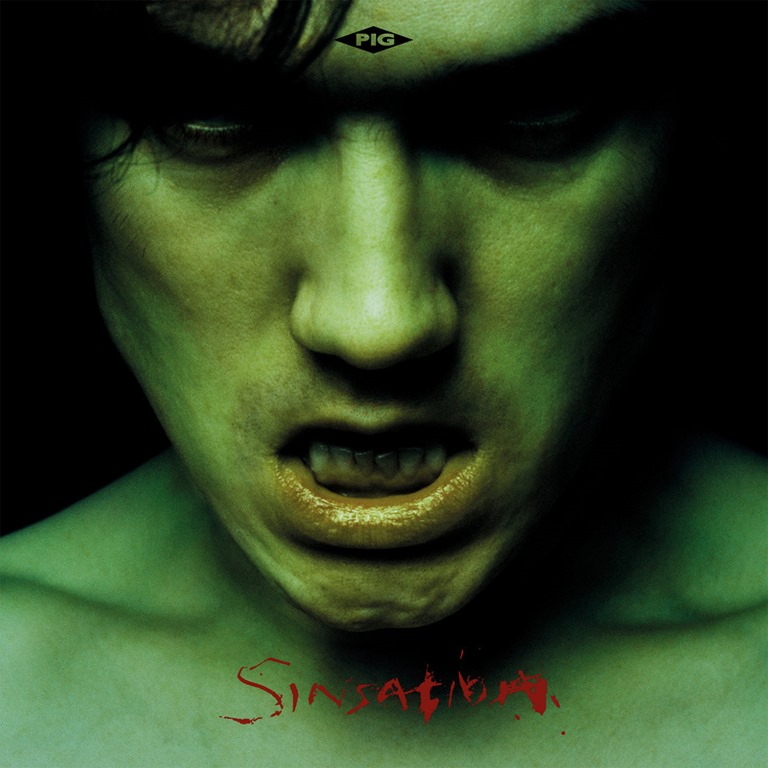
Sinsation was released first in Japan in 1995, and a year later in the US, and on learning of its existence, I got my local record shop to order it in, but had to wait literally months for it to arrive on import. Oh, but it was worth the wait. It delivered all of the theatrical pomp that defined A Stroll in the Pork, but cranked up the dirty industrial guitars and found Raymond Watts in top form with his extravagant wordplay. In short, it reset the bar, not just for PIG, but for what ‘industrial’ music could be. This wasn’t just hard and heavy, but also playful, witty, intelligent, and still dark, seething.

The cover alone is striking. Watts’ image is a standard feature on all PIG releases, but whereas more often than not he is depicted looking buff or brooding, the sickly green hue is unsettling – and slamming in with a series of orchestral strikes and a low, grumbling bass before hitting full-on industrial anthem mode on the first track, the six-minute ‘Serial Killer Thriller’ (the chorus of which provides the album’s title), it’s immediately apparent that Sinsation is something special (and not something sad…).

Admittedly, despite this being an album I’ve played to death over the last thirty years, apart from a few tracks being a few seconds different in their duration, I can’t discern any huge differences between this remastered version and the original: there are, perhaps, more details revealed in the mix, but then, the production on the original was impressive, and again, I’ll come back to that word, ‘detail’. There’s a lot happening; samples, snippets of bits and bobs, strings, multi-layered vocals… A touring member of Foetus early in his career, with JG Thirlwell involved in the early singles and debut album, Watts clearly learned much from Thirlwell, as well as his early involvement with KMFDM. Sinsation felt like the point at which he brought these two aspects together in perfect balance while simultaneously realising his own unique sonic vision. The result was a set of hefty, driving songs, exploding with ideas and noise, and so many layers, so much going off all over the place. It was bold, audacious, and while it’s easy enough to say that it’s a bit Foetus, a bit KMFDM, it goers so far beyond these points that comparisons are a diminishment of Watt’s achievements here.

Sinsation is certainly the first PIG album to showcase the full range of styles and compositional aspects Watts has in his locker, and as such, represents something of a creative peak.

While nominal single ‘Painiac’ (an early version of which was the lead track on a Japanese-only EP, and a video for which got a few spins on MTV on the album’s release) is a throbbing industrial beast of a tune, ‘Golgotha’ is a dark, semi-ambient interlude which sits between the driving snarl of ‘Hamstring on the Highway’ and the swaggering industrial-strength glam-tinged gospel-infused dark pop of ‘The Sick’, which would provide the blueprint for the PIG renaissance which started with The Gospel in 2016. ‘Analgesia’ is a magnificently atmospheric piano-led instrumental which incorporates elements of ambient and electronica and extraneous noise ‘Volcano’ is serpentine and sleazy, with some audacious orchestral work in the mid-section which take the bombast of Foetus’ Nail to another level, while ‘Hot Hole’ drives hard and heavy with pulsating electronics colliding with hefty chugging guitars and ferocious beats.

For the many who likely missed this the first time, this re-release provides the opportunity to make acquaintance with one of the definitive PIG albums, and for those already familiar, it’s a timely reminder of the incredible journey that has been PIG’s career to date, while offering the first chance to get it on vinyl. Almost thirty years on from its first release, Sinsation still sounds phenomenal – insanely ambitious, utterly deranged, and in a league of its own, quite unlike anything else before or since, even within the PIG catalogue.

AA

a2059987689_10

Everest Records

Christopher Nosnibor

Guess it pays to learn to trust your sources: if I’d seen pics of these guys or simply seen mention of this release in passing, passing is precisely what I’d have done, without a second thought. It would have vert much been my loss.

A skim over the press release cause me to take pause as I read that ‘Two Dogs are Beat Keller on guitars and Joke Lanz on turntables and voice, both based in Berlin. An uncompromising union of two musical individualists who are shaking up the noise world.’

Shaking up the noise world, are they? In that case, I’m all ears to hear what these two Swiss musicians who ‘oscillate between perfect dissonance and intelligent harmony’, and who, ‘with their stripped-down instruments, Lanz and Keller create a unique language somewhere between pavement poetry and free improvisation.’ The pair both have impressive resumes, which even mention artists I’ve heard of.

‘Mom’s Birthday’ is the first track and lead single from their debut album, Songs from the Trash Can. It’s a short (sub-two-minute) glitched-out collage of whacky shit which finds Lanz half-speaking, but almost shouting, about the events which befell him on waking, namely his inability to find his toothbrush or toothpaste. But, here’s the real wince moment: he got drunk and forgot his mum’s birthday. Ah, shit. So he sings an off-key rendition of ‘Happy Birthday’ by way of a belated apology. As you do when you’re probably still drunk from the night before.

‘Mom’s Birthday’ is discordant and chaotic and sits very much at the experimental end of noise: it’s also very much of the lineage from early 80s tape-looping noisemaking – think Foetus’ Deaf!.

It’s a fitting companion to ‘In the Pub’, the quirky track that’s available to stream as a taster for the album, which, with tongues firmly in cheeks, pokes droll fun at English pub culture with an astuteness of observation that should shame most natives, and in just two minutes, they capture the reasons why I avoid town pubs and miss Europe, and why these guys are great.

AA

Two Dogs (uncredited photo)

Bearsuit Records – 31st August 2022

Christopher Nosnibor

I may have mentioned it before, but I always get a buzz when I see a jiffy marked with an Edinburgh post stamp land on my doormat mat and I realise it’s the latest offering from Bearsuit records. Because while whatever music it contains is assured to be leftfield and at least a six on the weirdness spectrum, I never really know what to expect. That lack of predictability is genuinely exciting. Labels – especially micro labels which cater to a super-niche audience tend to very much know their market, and while that’s clearly true of Bearsuit, they’re willing to test their base’s boundaries in ways many others don’t dare.

Andrei Rikichi’s Caged Birds Think Flying is a Sickness is most definitely an album that belongs on Bearsuit. It doesn’t know what it is, because it’s everything all at once: glitchy beats, bubbling electronica, frothy screeds of analogue extranea, mangled samples and twisted loops and all kinds of noise. As the majority of the pieces – all instrumental – are less than a couple of minutes long, none of them has time to settle or present any sense of a structure: these are fragmentary experimental pieces that conjure fleeting images and flashbacks, real or imagined.

‘They Don’t See the Maelstrom’ is a blast of orchestral bombast and fucked-up fractured noise that calls to mind JG Thirlwell’s more cinematic works, and the same is true of the bombastic ‘This is Where it Started’, a riot of rumbling thunder and eye-poppingly audacious orchestral strikes. Its counterpart and companion piece, ‘This is Where it Ends’ which closes the album is expensive and cinematic, and also strange in its operatic leanings – whether or not it’s a human voice is simply a manipulation is immaterial at a time when AI—generated art is quite simply all over, and you begin to wonder just how possible is it to distinguish reality from that which has been generated, created artificially.

Meanwhile ‘At Home I Hammer Ceramic Golfing Dogs’ is overtly strange, a kind of proto-industrial collage piece. ‘What Happened to Whitey Wallace’ is a brief blast of churning cement-mixer noise that churns at both the gut and the cerebellum. Listening, you feel dazed, and disorientated, unsettled in the stomach and bewildered in the brain. There is simply so much going on, keeping up to speed with it all is difficult. That’s no criticism: the audience should never dictate the art, and it’s not for the artist to dumb things down to the listeners’ pace, but for the listener to catch up, absorb, and assimilate.

‘Player Name: The Syracuse Apostle’ slings together some ominous atmospherics, a swampy dance beat and some off-kilter eastern vibes for maximum bewilderment, and you wonder what this record will throw at you next.

In many respects, it feels like a contemporary take on the audio cut-up experiments conducted by William Burroughs and Brion Gysin in the late 50s and early 60s, and the titles only seem to further correspond with this apparent assimilation of thee random. I suppose in an extension of that embracing of extranea, the album also continues the work of those early adopters of sampling and tape looping from that incredibly fertile and exciting period from the late 70s to the mid-80s as exemplified by the work of Throbbing Gristle, Cabaret Voltaire, Test Dept, Foetus. These artists broke boundaries with the realisation that all sound is material, and that music is in the ear of the beholder. This strain of postmodernism / avant-gardism also follows the thread of Surrealism, where we’re tasked with facing the strange and reconciling the outer strange with the far stranger within. Caged Birds Think Flying is a Sickness is an album of ideas, a pulsating riot of different concepts and, by design in its inspiration of different groups and ideas, it becomes something for the listener to unravel, to interpret, to project meaning upon.

Caged Birds Think Flying is a Sickness leaves you feeling addled and in a spin. It’s uncanny because it’s familiar, but it isn’t, as the different elements and layers intersect. It’s the sonic representation of the way in which life and perception differ as they collide.

AA

a3019257531_10

Metropolis Records – 27th May 2022

Christopher Nosnbor

We’re playing serious catchup here: the band have been on such a (bacon) roll of late that I’ve struggled to keep abreast of their output. It’s quite a contrast to the early post-millennium period, which saw the emergence of Pigmartyr / Pigmata in 2004 or 2005 (depending on your location), fully five years after Genuine American Monster, followed by silence until 2016. It looked for all the world as if Watts was washed up, wiped out, sunk, spent, stopped. The phoenix-like re-emergence with first The Diamond Sinners EP, followed by The Gospel flexed muscles only hinted at on the tentative collaborations with Marc Heal and Primitive Race the year before, and found Watts reinvigorated, revelling in the glammier aspects of industrial sleaze and going the whole hog on the alliteration – and it turned out to be just the (re)beginning. It turns out that next month will see the release of The Merciless Light, the fifth PIG album in six years, and it lands hot on the heels of Baptise Bless & Bleed.

Like many recent PIG releases, this EP features four new tracks, accompanied by remixes of three of them, and the lead track is that quintessential PIG hybrid of low, pulsating synth that bubbled, bumps, and grinds while Watts croaks and groans breathless sleazy and seductive about pain and crucifixion, before it bursts into a bombastic blast of extravagant gospel propelled by a thudding kick drum and chugging guitar with serrated edges.

For all of the crossover with KMFDM and various other industrial contemporaries, not to mention Watts’ formative work alongside JG Thirlwell, the bottom line is that PIG sound uniquely like PIG, with a uniquely hybrid sound of techno and industrial at its heart, but then with glam, goth, and gospel all whipped into the mix, while thematically, it continues the thread that runs from ‘Shit for Brains’ on the 1988 debut single.

‘Shooting Up Mercy’ marks a change in tempo, slowing things down and ramping up the gospel chorus, before throwing in an extravagant guitar break of Slash proportions. There really is never a dull moment, and on this outing, Watts has gone proper maximalist, and it’s delightful, despite / because of its dark overtones.

The remixes are tidy enough, particularly the eight-minute reworking of ‘Tarantula’ that trudges and thuds along with bleeps and squelches along the way, before hitting a deep slow dance groove; it’s the most restrained track on the release, but has no lack of grunt or grind, and the solid chorus remains intact and infectious, reminding us – as if we needed it – that Watts has a knack for a hook, meaning that with this latest offering, we are indeed blessed.

AA

a2781746490_10