Posts Tagged ‘Experimental’

keitkratzer productions (zkr0020) (CD) / Karlrecords (KR027) (Vinyl) – 26th February 2016

Christopher Nosnibor

Reinhold Friedl’s keeping it in-house with this one, with the Zeitkratzer collective which he helms performing a reworking of one of his own pieces. Kore is a development of his earlier Xanakis [a]live! (2007), which was an homage to French-Greek composer Iannis Xanakis. Originality may be dead, but artistic evolution is not, and here we see Friedel engage fully with the organic processes of influence and appropriation, and the idea that a work is never complete but continually subject to re-evaluation, reinterpretation, reconfiguration.

Pained screeching of tortured strings, form long, agonized screams and wails. On the lower register, cavernous rumblings and ominous echoes. It quakes and trembles and teeters and bucks, crashing and lashing, a sustained and calamitous wall of sound akin to how one may reasonably imagine a galactic storm. And it goes on for what feels like an eternity, light years of shuddering textural depth stretching out and fully enveloping the senses.

While the CD track-listing shows ‘Kore’ as being presented in just two parts, its mastering in fact replicates the vinyl edition’s four sides, with each piece between 11 and 16 minutes in length. As a single entity, it crashes and grates, squalls and shrieks, grunts and groans. And it never lets up, a sustained crescendo of sonic and psychic disturbance, a tempest of clashing noise, a raging storm.

The segmented arrangement works well: for while ‘Kore’ is clearly a single body of work, there are distinguishable differences between the four tracks. The second is comparatively quieter and less intense than the first, but the tones still forge sharp shards which slice into the cerebellum. Trilling and tweeting shrilly in the upper reaches of the spectrum, dark scrapes create perilous undercurrents which build in density.

Vast crashes of sound, immense gongs of violence slice the atmosphere in the third, more percussively-orientated part. It shudders and heaves, before finally screaming onwards through the tumultuous final 11 minutes. A blasting wall of noise which assails the listener with all sounds all at once, it’s an immense sound and an immense sensation that sounds like no orchestral work you’re likely to have heard before, and, quite conceivably, nothing else you may have experienced, period.
Zeitkratzer - Kore

zeitkratzer Online

Britney – Britn3y

Posted: 16 February 2016 in Albums
Tags: , , , , , , ,

Superstar Destroyer – 11th March 2016

James Wells

Not so much a drone as a collective groaning sigh prefaces the thunderous barrage of brutal rage that splits the speaker cones with pummelling drums and bursts of screaming vocal anguish and stop/start guitar judders. ‘Fully Ben’ assails the lugholes like Truman’s Water having been tortured, brutally murdered, butchered and cast forth to crawl around in purgatory. Fuck me. Three minutes in and I’m dizzy, punch-drunk, giddy and utterly bewildered – in the kind of way I like. And that pretty much sets the tone for this most manic, frenzied albums.

Where do you even begin with this white-hot torrent of noise? The tempos, man! The jolting, jarring, spasmodic guitars! What is this? It’s not metal, that’s for sure. Noisy math-rock? Math-rock is about intricacy, and this is intricate in terms of structure and changing tempos and time-signatures, but at the same time, it’s violent, frenetic. The vocals aren’t your regular shouty, screamy effort, either– this is the sound of pure mania, derangement to the power of 10. Not so much psychedelic as psychotic, the songs – the majority of which clock in at under two minutes – melt into one another, a crazed blur of spasmodic noise.

It’s intense, but not conventionally heavy: the guitars are warped, elastic, and don’t rely on hefty distortion. ‘Neon Python’ sounds like a collision of early Pulled Apart by Horses and second-album These Monsters – only with more drugs. Seriously, what are these guys on?

There are occasional breaks – ‘Sleep Now Dogman’ provides two minutes of respite in the form of some woozy percussion-free experimentalism while someone chunders their guts up, presumably a physical reaction to the exertion of the preceding track – but ultimately, this is beyond full-on, Especially after the, er, ‘interlude’.

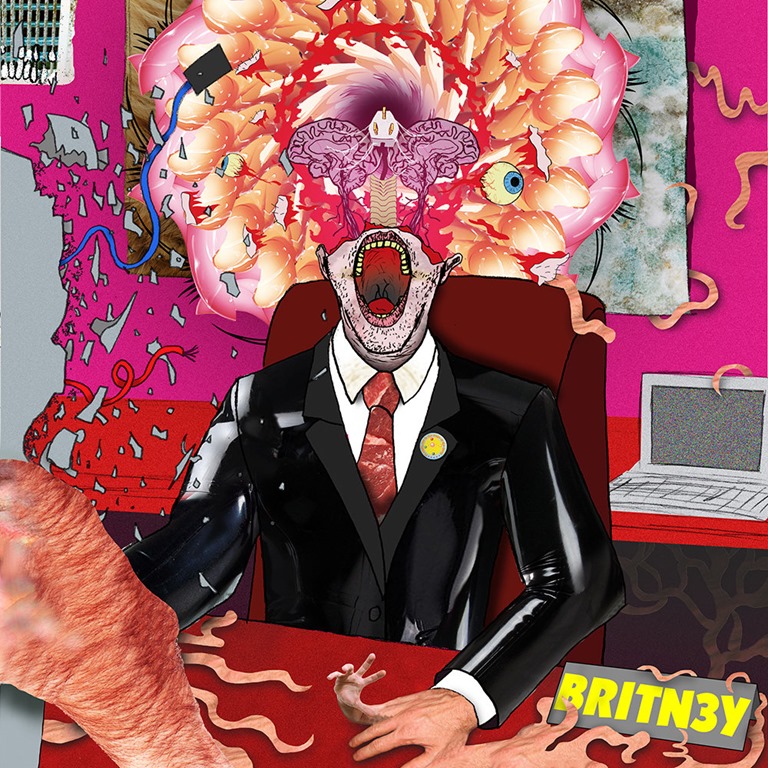
‘Boss Moggy’ goes electro-math-screamo – or something and ‘Gum’ ups the tempo and the racket even further, achieving the effect of a sonic blizzard. You don’t know where you are or what you’re listening to, it’s a total whiteout. Britn3y isn’t an album – it’s a convulsive, abrasive explosion of noise, the aural equivalent of someone’s brains bursting from their skull while they twitch uncontrollably having been connected to an open mains electrical circuit. In short, it sounds exactly the way the cover looks.

If you’re in any doubt, I mean it’s good. Mental, but really, really good.

Britn3y

Britn3y by Britney Online

clang records – clang032

Christopher Nosnibor

Stan Brakhage was an experimental filmmaker who sometimes closely shot glass objects. A huge influence on Frasconi, who sometimes makes music with glass instruments. The album title is a play on words, in reference not only to his artistic forebear but also the cracked quartz crystal bowl which was used to make this 20-minute musical work.

Having previously given the instrument a rather too vigorous workout during a rehearsal, Frasconi decided to explore its absolute limits. As Frasconi himself observes, ‘Glass is fragile. Glass is easily broken. Most glass instruments ignore these fact and instead focus on the material’s delicate beauty’.

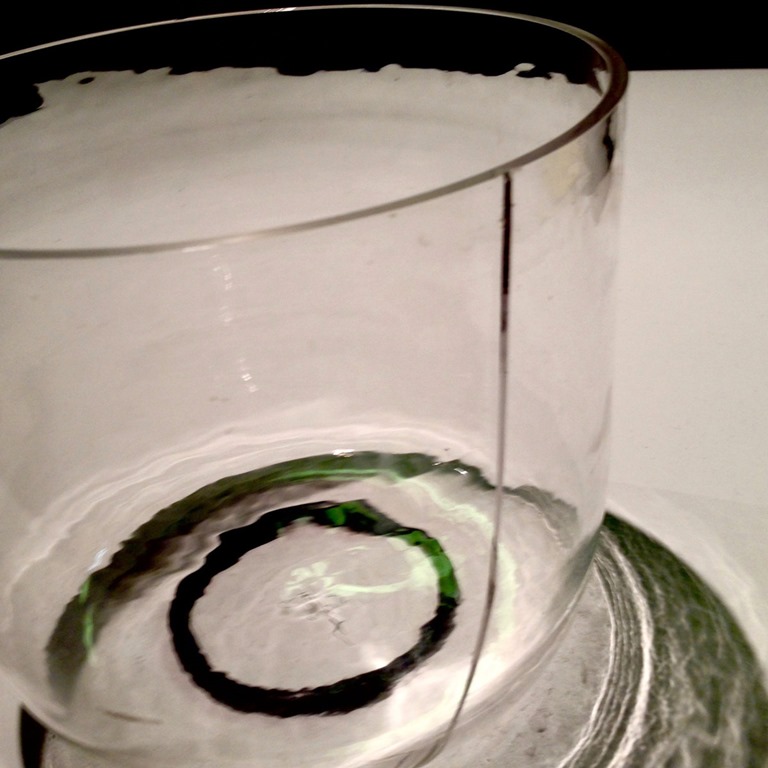
Standing Breakage captures the artist’s efforts to complete the job he unintentionally began when the instrument – pictured on the front cover – became fractured. Ironically, despite labouring at the fracture in order to bring about the bowl’s ultimate destruction, he failed to achieve the desired moment of breakage. As such, for all its fragility, the glass held firm against a sustained assault.

An awareness of the circumstances of the album’s creation is, in this instance, integral to its appreciation, first and foremost, because if you didn’t know it was made using only the sounds created with a glass bowl, you would never guess that it was made using only the sounds created with a glass bowl. Because it doesn’t sound like it was made using only the sounds created with a glass bowl. In fact, it doesn’t sound like anything organic, or even of this world.

Standing Breakage finds Frasconi create an intriguing blend of chimes, rings, swirls and twangs, scrapes and chatters. Heavy, bulbous bass tones resonate, twisting and spinning upwards. Percussive thumps and sounds like scraping violin strings all emerge from the single instrument under the musician’s interrogation. Clanging, gong-like sounds crash. Eerie sounds that defy any obvious description, and sound alien and other-worldly in their origin drift. Booming synth-like notes balloon outwards, expanding in the air.

Tension mounts and builds. You sit, teeth on edge, fists clenched. You’ve no idea what will come next. You will twist and squirm. You’ll conjure myriad images in response to the strange sounds. But never once will you think ‘this sounds like someone pissing about with a glass bowl with a crack in it.’

Miguel Frasconi

Miguel Frasconi’s Website

Gizeh Records – 12th February 2016

Christopher Nosnibor

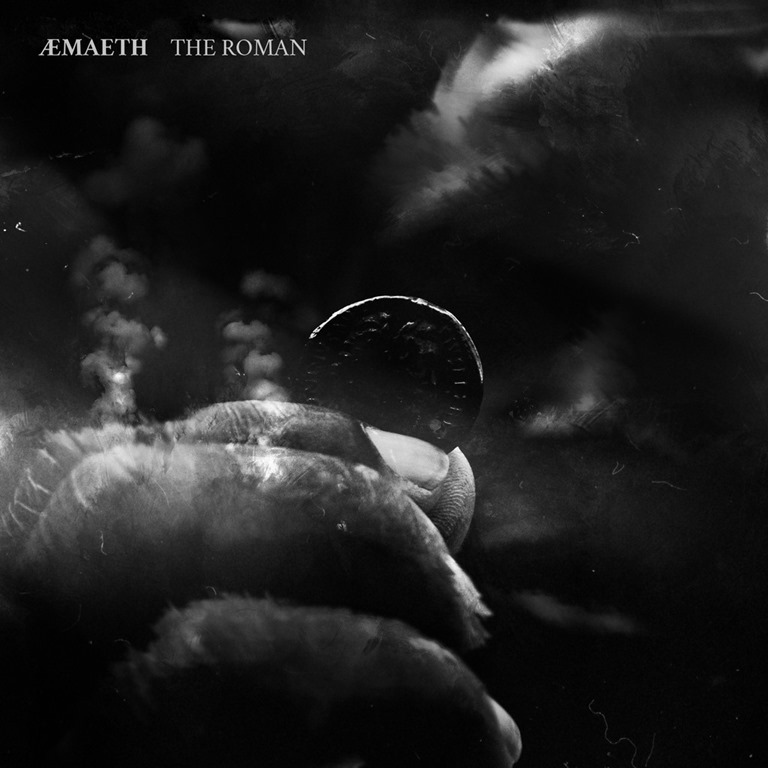
Æmaeth is the project of Owen Pegg (A-Sun Amissa / Hundred Year Old Man), and he’s already scored a number of films. Independent flick The Roman is a silent work which to which ten segments of improvisational drone-based passages played on guitar and piano were composed by way of an accompaniment.

Since the film premiered in May 2014, its soundtrack has been evolving, developing, accruing layers and details, until finally, the ten pieces came together to form a fluid, brooding sequence that stands as a whole, and as a powerful sonic journey. It’s fitting for a film which is no gung-ho Hollywood take on history based on a succession of cast off-thousand battle scenes. Simon Rawson’s movie, shot in Yorkshire, is outlined as a story of two men, lost, who are ‘challenged and tested by nature, each other and the inner most conflicting primordial affiliations with man’s body and mind’.

Pegg’s soundtrack conveys so much, its dark, tense tones resonate as they connote psychological drama. The battles fought within the mind, the conflict and the uncertainty. The barren, unforgiving landscapes, shadowy woodlands and bleak moors. These are the scenes portrayed within the compositions, which are spacious, often sparse. Delicate piano notes drift airily but ponderously, gradually eclipsed by deep, dark, thunderous rolling drones, stormy and threatening. At times, the sheer weight and density of the ominous tones are oppressive, the sounds so large as to create a sensation of a pressure being applied to the skull.

That isn’t to say the soundtrack lacks subtlety: far from it. There are passages of quiet, so hushed as to compel the listener to strain their ears listening for some faint sound – and invariably, there is something, something small, soft, indistinct. Or there are layers of sound, often in the upper frequencies, needling the senses, tugging at the peripheries of the psyche, somewhere in the background or half-hidden, off to one side. These, like the brief moments of light which occasionally present themselves, are integral to the soundtrack’s dynamics, and the power of its effect.

There is torment, there is discomfort. There is also an ever-present sense of danger, sometimes distant, sometimes heart-stoppingly close.

The final passage, the nine-minute ‘Neptune’ is vast, built on a slowly turning vortex of sound. A rumbling rhythm lingers as it pulses just beneath the surface of its soft tonality and offers a hint of redemptive relief at the conclusion of a journey which is most worthy of the term ‘epic’.

Æmaeth - Roman


Æmaeth – The Roman at Gizeh