Posts Tagged ‘Experimental’

24th February 2023

Christopher Nosnibor

This Oxford based act describe themselves as ‘Techno Western New Wave Electroclash’ and ‘Synth lovers’. Unfortunately for me, this description conjures images of moustachioed hipsters circa 2009. The pair may well, be, choosing to keep their mugs off the record, and I’m all too aware of just how the field of instrumental electronic music is very much the domain of middle-class white guys tinkering with expensive toys. This lack of cultural diversity may be a leading factor in there being so much sameness stylistically.

Sameness isn’t really a criticism one could level at this album, for while it does assimilate many common tropes of contemporary synthesizer music – in that its inspirations are often retro in origin – stylistically, Errors offers a broad range.

‘Science of Errors’ is a punchy piece of electropop with some big, bold proggy sections that surge along in a rush, and it’s a strong start. ‘Conga Cop’ is very much a tune of 80s TV show vintage style. It’s extremely busy in terms of arrangement, stabby synths shooting over a hectic rhythm and samples flying around there and there, before going altogether more minimal on ‘Phil D’Ophear’, a much darker slice of techno where the dense bass dominates. Elsewhere, ‘Wibli Wobli’ packs a driving, energetic groove.

Errors is big on ideas: it’s positively bursting with them, and consequently, there is a lot happening, sometimes, if not all at the same time, then densely packed together, to the point that sometimes it feels as if there’s too much happening. And not all of the ideas necessarily work perfectly: the Clangers whistling over a microtonal waltz on ‘Satomi’ is novel and fun, but little more, but it’s Bruno Muerte’s willingness to experiment and the mix-and-shake approach to making music that’s a large part of the album’s appeal.

As they write in the accompanying notes, ‘One of the basic rules of the universe is that nothing is perfect. Perfection simply doesn’t exist without errors.’ It’s refreshing to hear: Errors, then, is not a quest for perfection, but a celebration of imperfection and the joy of being creative. And ultimately, it’s joy that Errors brings.

AA

a2776445249_10

Karlrecords – 10th March 2023

Christopher Nosnibor

When I started out reviewing, I always thought how cool it would be to get to hear new releases by acts I like in advance, and to opine on the latest releases by acts familiar to many. But I’ve come to realise that the real joy – and what I now see as my purpose – is to discover and share new and lesser-known artists. It is a gift which keeps on giving, for I hear so many people in my demographic moan about the lack of any decent new music. It’s simply not true: they’re just not looking in the right places (and their idea of ‘decent’ music tends to be rooted in their youth and coloured with nostalgia, which is sad really. Opening one’s ears and opening one’s mind is the key to keeping young. Or something). Of course, it’s always subjective, but there is a rare exhilaration and delight in – after all this time – hearing something that doesn’t sound like anything else.

And so here we have the debut EP from Sara Persico, which prefaces a full album in the pipeline. It doesn’t remind me of anything – but it does give me a rush, but also chills me to the bone.

It’s dark and it’s stark, and it’s challenging.

According to her bio, she was ‘born and raised in Naples, Berlin-based sound artist/vocalist Sara Persico cut her teeth experimenting on the fringes of Naples’ fiery underground experimental/noise scene, developing a technique that would integrate her voice with analogue electronics, field recordings, and samples.’

Fiery would be a fair description of the six tracks on Boundary, released on cassette. It’s big on bass and beats. Big big big. The percussion bashes at the cerebellum and kicks the cerebral cortex, while bass resonates through every fibre of the body. This dense and weighty stuff. It’s the elements of dance music slowed to a glacial crawl. Instead of making you want to move, it absolutely freezes you solid, tense, immobile. And as for Persico’s voice – it’s something else. She sounds tortured, trapped, and transcendental.

Stripping things back to a stammering, glitched drone on ‘Exit’, she switches between ethereal lilt to banshee howl, and the two are overlaid in a sonic collage that’s compelling and terrifying simultaneously. ‘Under the Raw Light’ is tense, aggressive, even, in its ferocious beats and Persico’s voice that sounds as if it’s coming from the other side, frenzied, tortured. In contrast, the closer, Umbilical’ is a disconcerting spoken word work pitched against a thudding heartbeat and muffled bass. It leaves you feeling… what? Detached, in some way.

Despite being built around familiar elements, Boundary doesn’t sound like anything else, and launches Sara Persico as a unique and exciting voice.

AA

KR107_front

Christopher Nosnibor

Bubblewrap Collective – 3rd March 2023

Ritual Clock may sound like some gloomy metal act, but is in fact a post-rock duo consisting of Daniel Barnett, formerly of Samoans and drummer/producer Andrew Sanders.

2021 saw them release two full-length albums, Divine Invasions and A Human Being Is The Best Disguise, a reworking of the debut album, with new lyrics and vocals by writer and comedian Autumn Juvenile, followed by a cover of R.E.M.’s Orange Crush, plus the meditative collaboration Witaj w Domu with Polish photographer, Michal Iwanowski.

They explain that “‘Left Behind’ wouldn’t exist without the influence of George Harrison and The Brian Jonestown Massacre. The song revolves around a sitar-like guitar line that we knew we wanted to have constantly looping to create a meditative drone. The lyrics are a collage of different lines and ideas that when brought together create a story of a long-forgotten ‘saviour’ that’s coming back but nobody needs them anymore.”

It is indeed an epically spacious drone-based compensation, and possesses a distinctly 90s feel – thankfully more the kind of stuff you’d hear on Joh Peel than Kula Shaker, despite its trippy eastern vibes. It drifts and meanders in a sedated fashion for its five-and-a-bit minute duration and it’s kinda mellow but kinda spaced and dreamy and vaguely disorientating. Not bad at all.

ME LOST ME led by Newcastle-based artist Jayne Dent announces a new album RPG via Upset The Rhythm on 7th July, and is touring across the UK including support dates with Pigs x7 (dates and details here). RPG (recorded in Blank Studios with Sam Grant of Pigs x7) is ME LOST ME’s fourth outing as a collective, having transitioned from an ambitious solo project in 2017, Jayne now regularly collaborating with acclaimed North-East jazz musicians Faye MacCalman and John Pope.

ME LOST ME delights in experimenting with songwriting and storytelling, creating a beguiling mix of soaring vocals and atmospheric electronics that playfully weave together disparate genres, drawing influence from folk, art pop, noise, ambient and improvised music. Hauntological in part, RPG is concerned with tales and with time – are we running out of it? Does insomnia cause a time loop? Do the pressures of masculinity prevent progress? Jayne Dent asks these questions and more on RPG, her homage to worldbuilding and the story as an artform, calling back to those oral traditions around a campfire, as well as modern day video games – bringing folk music into the present day as she does so.

Watch the video here:

AA

Ad9FKX6g

Photo credit: Amelia Read Photography

14th February 2023

Christopher Nosnibor

Having first encountered Deborah performing as one half of dark ambient noise duo Spore, I’ve discovered she’s nothing if not prolific, and having hit the classical charts with one recent album and released not one, but two new albums in the last few weeks, it’s hard to keep up, not only with her vast output but the stylistic range. Daughters Of The Industrialists is one of those new albums, and one which again presents a very different musical face.

Daughters Of The Industrialists couldn’t be further from the sound of Spore. The track tiles radiate a glowing warmth which translate in their sound, too. The first of the album’s ten compositions, ‘Sparkle’ does exactly that, a soft a mellow sonic hue rippling in slow waves and gradual washes, and ‘Angel’ is every bit as delicate and skyward-facing as you might expect. The same goes for ‘Dazzle’, a composition which exudes tranquil, calm, and soothing vibes but becomes increasingly busy, hinting at both 80s electronica and the vintage sounds of Kraftwerk and Tangerine Dream.

With no accompanying verbiage, Daughters Of The Industrialists is an album which very must stand to speak for itself. And it’s an album with sonic range and one which stretches out in many directions. A number of the compositions have been released previously as standalone singles via Bandcamp, including the ponderous, reflective ‘Mothtail’ a slow and wistful work built around drones and a swelling digital breeze – but collected here into an album context, everything fits into place with a sense of unity and coherence, with the majority of the pieces being concisely contained between three to four minutes in duration, meaning nothing feels overdone or stretched out to outstay its welcome.

‘Pixel Eye’ possesses space-age qualities despite its having been forged while rooted the spot, and there is much activity here.

‘Orange’ is sparse and contemplative, and while the flickering, misty ambience of ‘Callisto’ and Orb-like bleepery of ‘Waning Moon’ set their sights on the vast expanses of space, what really stands out is their organic feel, a sense of connecting with nature as well as the cosmos. It’s this sense of being attuned to the natural world and its cycles, and of being at one with the earth and in turn the space beyond that feeds through the six-and-a-half-minute closer, ‘Crystal Rain’. Here, slow, turning drones intertwine in a slice of truly classic ambience, and it’s so very soothing, and conveys a sense of vastness, of space. And in doing so, the album concludes by transporting the listener somewhere beyond the confines of four walls and reminds us that there is something outside, and beyond. Go, explore.

AA

a2647674050_10

25th November 2022

Christopher Nosnibor

Two years on from when I covered Open to the Sea’s Another Year Is Over, it transpires that Milan-based Matteo Uggeri and his cohorts are back with Tales from an Underground River. A lot has happened since then – and yet in many ways, not a lot has, and for some of us, it feels as if lockdown never ended.

Governments and employers seem to be content to peddle the idea that with vaccines rolled out and restrictions lifted, the switch had been flicked that restores normality – so much for the endless talk of a new normal not so long ago. This is likely true of some things, primarily retail and public services, but then, many office workers have only returned on a part-time basis, if at all. For me, personal circumstances have meant not at all, which is welcome – much as I miss people, I don’t miss those people.

I digress, but this context is what I bring in terms of my reception to this album, which was, recorded over the course of a couple of years, starting in the Winter of 2019 and spanning the pandemic period – a time that has drifted into near-unreality and feels almost dreamlike, unreal. And this is very much the sensation that Tales from an Underground River creates. Listening to it feels like listening to a dream.

The text which accompanies the release, they’re at pains to point out, is not a press sheet, but a diary, and that makes sense, as it charts the album’s long and convoluted evolution. It certainly isn’t a sales pitch. But then, art shouldn’t be about sales pitches: creatively, the journey to the end result – if indeed it even is the end result – is far more interesting, and of significantly more value.

Beginning life as two long and multi-layered sets of improvisation with piano, guitar and synths recorded by Enrico Coniglio, it was then completely reworked by a process of additions and subtractions by Matteo Uggeri, and over time, incrementally, it was picked apart and broken down into thirteen relatively short pieces, where soft, rolling piano and mournful brass merge with the sounds of thunder and rain and a host off subtle field recordings which add delicate layers to the sound. And they’re segued together in such a way as to render the album one continuous piece in a succession of movements.

The mood transitions incrementally through the segments, and the titles are beautifully descriptive: I found myself forming mental images of scenes while listening, the music providing the soundtrack to a slowly unfurling movie in my mind’s eye – a movie brimming with scenes of nature, as ‘Pebbles Clink, Fluffy Echoes Make the Air Colder’ and ‘Pebbles Clink, Fluffy Echoes Make the Air Colder.’

Indeed, reading the lengthy titles in sequence conjures a semi-narrative in itself. At times ponderous, contemplative, brooding, at others with flickering sun offering hope – sometimes within the space of a single piece, as on ‘Limpid Lights Dig Words in the Rocks’, you feel yourself carried on a current through different terrains and landscapes. ‘Emotions and Thoughts Climb over Years and Years, Always the Same’ brings droning guitar textures and a rather darker hue of ambience with post-rock leanings, and Tales from an Underground River is an album where the movement and changes never cease over the course of its journey. At times eerie and unsettling, at times ominous, and at others – for wont of a better word – cheerful, it’s a magical piece of creativity that shows vision and was very much worth the three years of work.

AA

cover

Cruel Nature – 6th January 2023

Christopher Nosnibor

It’s something of a relief to discover that Score’s seventh long player for Cruel Nature isn’t some gentle exercise in self-help and mental health wellbeing, or otherwise the soundtrack to some existential post-pandemic breakdown – because the former are utterly fucking nauseating, and the latter, while I’m all for those primal screams of anguish, which I often find relatable, at least to an extent, variety isn’t only the spice of life but the key to staying within the marginal parameters of sane in an insane world. No, COPE, recorded in six weeks at the end of 2022, which somehow feels like a long time ago now already, takes its title from Julian Cope.

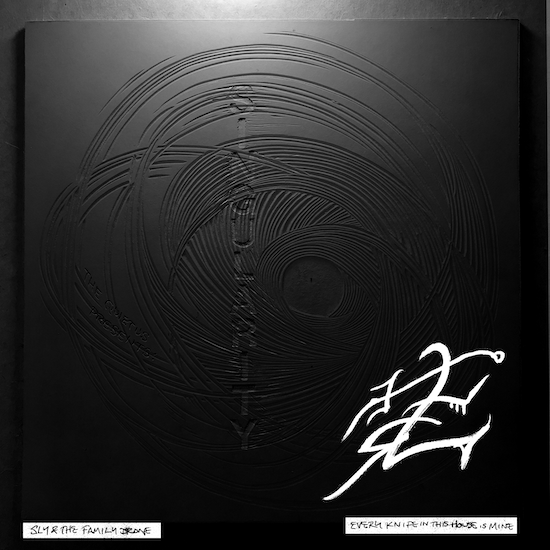
As the blurb explains, ‘the album was directly inspired by the musical descriptions to be found in the autobiographies of Julian Cope: Head On and Repossessed. Using Cope’s impassioned words as instructional starting points for each track, COPE references Mott the Hoople, Patti Smith, CAN, Duane Eddy, The Doors, Suicide, Dr John, Sly & The Family Stone and more.’

Julian Cope of one of those people who I’ve long been somewhat perplexed by, and, truth be told, haven’t spent too much time investigating, either musically or biographically. He has always struck me as having a career less centred around his relatively low-key musical output following a degree of commercial success with The Teardrop Explodes, and more around the fact that he’s Julian Cope. Some may want to set me straight on this, but right now, I don’t need to hear it, and a familiarity with the source material shouldn’t be a prerequisite of my ability to critique the work at hand, which interestingly, in drawing on his biographies, only serves to further indicate that Julian Cope spends more time writing about being Julian Cope than making music I need to hear.

COPE is a document to creativity under intense circumstances. To quote from the accompanying notes, COPE was ‘recorded as it was written, in one or two takes in a tiny garage and drawing on an old quote from the arch-druid himself as a creative manifesto: “It had to be very cheap, very fast, very loose. I needed to be an ambassador of looseness”’… ‘COPE is an exercise in embracing limitations and existing in the moment, a lyric-less love letter to Rock ‘n’ Roll itself, and a one-word command to the fried modern human.’

Containing nine instrumental compositions, COPE is a pretty demented journey, an absolute rollercoaster of a ride, that swings between psychedelia and krautrock, twangy desert rock, swampy jazz, with the six-minute ‘Brick’ bringing it all together with a Doorsy kind of trip with the added bonus of some woozy brass in the mix. ‘On The One’ goes deep into a funk workout that grooves hard, but ‘Old Prick’ stands out for its darker post-punk feel that suggests it could almost be a Psychedelic Furs or The Sisters of Mercy demo. The twelve-and-a-half-minute ‘Softgraundt’ is more than just expansive in terms of duration, and is a multi-faceted musical exploration that wanders hither and thither, shifting, evolving, a dozen or more songs in one. And perhaps this is the key to COPE – both the album, and the man. It’s everything all at once, and it’s more than you can really keep up with. It’s a challenge, and one I’m not entirely sure I’m up to, but there’s never a dull or predictable moment here.

a1384536327_10

Christopher Nosnibor

The third – or fourth, depending on your source – album by electronic duo Akustikkoppler, is a work of starkness, of austerity, and a collision of vintage and contemporary, and quite the contrasting experience.

The cover looks like a photo I may have taken from my daily wanderings. I’m not saying it’s a good cover or a bad cover, this is merely an observation. The duo would likely say the same about the cover itself. It’s a snapshot that speaks for itself of the nature off people in our all-waste capitalist society.

I feel an almost inevitable shiver of nostalgia listening to this, despite the fact that the album’s style and sound predate my musical awareness. Instead, it makes me feel a nostalgic tug for my teens, when I was introduced to all of the weird and wonderful, experimental and starkly harsh music that had emerged in the late 70s and early 80s, to which Alles Muß Raus demonstrates a clear lineage.

As the blurb explains, ‘Inspired by the rough commercial industrial surroundings of Schusters Studio back then in Hamburg, Alles Muß Raus was produced on vintage and modern equipment. The two artists combine past and future to a sparkling, shimmering darkness.’ And industrial it is – not in the Ministry sense, but in the spirit of the early innovators utilising primitive synths, drum machines, and tape loops. And it ignites a spark of excitement, in that even now, this kind of music doesn’t sit comfortably with anything in the sphere of ‘normal’ music. The nostalgia, then, is in remembering how hearing TG, Test Department, DAF, et al for the first time completely changed my world, and my concept of what ‘music’ could be.

The analogue drum machines, mixed to recreate the sound of the late 70s and early 80s with a dominant synthetic snare is a defining feature. The first track, ‘Entrümpelung’ is a head-cracking, gut-smashing sub-bass groove that’s anything but vintage and pulls you in before the bass-driven churn of ‘Mitnahmequalität’ steps boldly into grinding, bass-led Throbbing Gristle-influenced industrial. In contrast, ‘Mittenmang’ is almost playful, with tempo changes and some d‘n’b rapidfire drumming bouncing alongside some busy, bloopy electronica. One of the shorter tracks, ‘Horses And Carriages Burn’ hints in the direction of The Cure’s ‘Carnage Visors’ while recreating the spirit of ‘Pornography’.

Entirely instrumental and assimilating so many disparate elements, despite some insistent grooves and accessible, melodic ,moments, Alles Muß Raus certainly isn’t a pop album, but contains many elements of electropop, even if the shade is turned down to twelve. While Kraftwerk may be an obvious touchstone, the vibe that radiates from Alles Muß Raus is much more DAF, with insistent, snare-driven beats driving relentlessly to define the sound and structure of a varied and meticulously arranged set.

AA

a1894982188_10

Mille Plateaux – 20th January 2023

Christopher Nosnibor

Less than a year on from Faces & Fragments, Neuro… No Neuro are back again with another substantial instalment of scratchy, glitchy electronica that’s rich in retro vibes.

Each piece is short – around two minutes – and drifts into the next. As the air floats past carrying soft analogue notes on a gentle waft, you suddenly realise you’re already five tracks in. It’s not that Compartments is undemanding, so much as that it’s subtle, meaning that it circulates in the atmosphere without dominating your headspace in an intrusive fashion.

The beats are backed off, even as they stutter and troll, flicker and jar. There’s a softness about the sounds and the way these woozy, warped snippets trickle together that’s almost soporific, especially when tinkling chimes cascade in ripples.

The Mille Plateaux website describes Compartments as Kawaii-Glitch (Kawaii being the Japanese culture of cuteness), noting that ‘The very artificial glitch aesthetics are not, as usual, depicted by a cold and sterile feeling; but quite contrary have the qualities of an artificial sweetener… Be careful when associating kawaii with just sweet, innocent or cute notions… just as Anime often masks grown-up topics with ‘childish’ surface structures, the album underlies a soft darkness & melancholy. Sometimes the unspeakable comes in disguise. Like the fashion style Yami-Kawaii, a bizarre mixture of kawaii-aesthetics with questions of depression and suicide, this album offers a mixillogical splice of life in which every second might take a turn into the irreal and eerie. To make distinctions between what is real and what are delusions, dreams or nightmares, emotional highs and lows, becomes impossible. In some sense it is ‘too much’ while still minimalistic in style.’

On the penultimate track, ‘Just Crumbling,’ things seem to come apart at the seams as stammering beats fly away from sounds firing in all directions like breaking springs. The temperature drops further at the finale, as those split sprockets echo into the cold night air and as the final sounds of the bonus-length last track, We’ll be Seeing You Soon’, which clanks and echoes for a fill four minutes, fade away, I sit, full, aurally content and calm… and worried. What subliminal toxicity has this album dispersed internally? How will I feel about Compartments once I begin to process and digest its multi-faceted contents? I don’t know but then, I don’t know if II trust what I heard, or my instincts on how to react. There is definitely more to Compartments than first meets the ear.

MP53_front