Posts Tagged ‘EP Review’

Southern Lord – 4th December 2020

Christopher Nosnibor

High Command’s new release on Southern Lord drags me back to a point of debate I’ve covered variously over the twelve years I’ve been doing this reviewing thing: what distinguishes a single from an EP, an EP from an album? And aren’t EPs and mini-album’s the same thing? It may be so much hair-splitting and semantics, and about as important as genre boundaries in the scheme of things, but… well, High Command, being a crossover of thrash metal, punk, and hardcore, are a cause of consternation on that front too.

The two tracks on this digital single, which prefaces the 7” EP release due early next year via Triple B records, are fast, furious, gnarly, and there’s no question over their thrashiness.

‘Everlasting Torment’ may not be literal in its title, being a short, sharp four-minute attack of overdrive, but it does pack all the melodic fretwork, thunderous drums and mega-fast plectrum flashing of something purgatorially thrashy, while counterpart – or B-side, if you will – ‘Sword of Wisdom’ penetrated with a raft of sudden tempo changes and pierces with the lunge into a monster guitar solo.

It’s a whole lot less sludgy and perhaps less Ministry and a lot less industrial than its predecessor, although the key trappings are all in place.

However you position it, this release brings a full-range display of some pretty frenzied fretwork which is driven – hard, and fast – by a strong, dynamic rhythm section that packs all the power, and if any of it threatens to slide toward cliché, the execution and sheer brute force are more than enough.

338308

APF Records – 27th November 2020

James Wells

Sometimes, there’s just no substitute for a full-tilt, balls-out, gut-churning sludgy grindcore for providing that release. There’s something strangely soothing in the relentless blastbeats, the mangled-to-fuck guitar attack, the guttural growls of pain, anguish, and all-out fury. Corrupt Moral Altar get catharsis, channelling every last ounce of rage into fast and furious sonic blitzkriegs, and three years on from their second album, Eunoia, this five-track EP suggests they’ve distilled and bottled three years of fury into seventeen minutes of brutality.

For the most part, it’s pretty much business as usual, in that everything is a pulverizing blast whereby everything thunders and pounds away at a hundred miles an hour, each song leaving you feeling like you’ve been used as a punching speedbag for three and a half minutes. Five songs may not sound like much, but when punishment is delivered at this pace, and with this much force, it’s exhausting. You only have to hope that ‘Cathedral of Porn’ isn’t intended as a tune to wank to.

The intro to ‘Spirit Breaker’ marks a distinct change in tone and tempo, with chiming, post-rocky guitar, before, perhaps inevitably, it gets grimy and nasty and completely full-on. There’s a grand swathe of semi-choral vocals which ring out over the punishing double-pedal drumming and heavy-grind guitars, and it’s a surprising but rather moving shift, and it closes in a more contemplative that returns to the atmosphere of the opening. It’s by no means wimpy, but does abundantly demonstrate that CMA are far more than one-dimensional rage-merchants.

AA

a0919813581_10

19th September 2020

James Wells

We love an unsolicited approach from bands who just bung all the press blurb and links on a message via FB. Because we’re not already so swamped we can’t read even a quarter of the emails we get sent, which means in terms of listening and coverage – maybe 10% on a good month.

We’ll forgive Swedish psychedelic act Melody Fields, though, since their brand of swirling, paced-out psychedelic shoegaze has heavy hints of early Ride and Chapterhouse as well as more recent acts like The Early Years, but then there are also vaguely baggy hints that call to mind early Charlatans. So when they describe themselves as ‘No retro, no seeking for effects’, and as a band with ‘a depth and a substance in their song writing, that feels unique in an ontherwise effect seeking scene’, my instinct is to ask if they’ve really done their research.

There are heavy far eastern influences in the serpentine guitar lines which they describe as ‘LA meets mystic Far East meets melancholy North’, as much reminiscent of The Mission’s drawing on Led Zeppelin as anything else and it’s not shit it’s just derivative.

The title track captures a hazy 60s vibe – a blandly generic assimilation of the era and the style, there’s a hippy-trippy wide-eyed wonderment spun into its folk-infused pickings, before the pleasant but predicable and somewhat turgid ‘Painted Sky’ brings Black Angels drone into a slow-mo collision with plodding Kula Shaker indie. There are some nice harmonies, but not nearly enough to make Melody Fields special.

AA

Melody-fields-12inch_Album_3mm_spine-FINAL.indd

28th August 2020

Christopher Nosnibor

In a format frenzy reminiscent of Mansun back in the late 90s and around the turn of the millennium, which saw the band release around two albums’ worth of material as B-sides over the course of just three or four years, this is the first of a two-part double EP release from Londonites Latenight Honeymoon. It’s a set that wasn’t only written and recorded during lockdown, but that is a product of lockdown in it lyrical explorations, manifesting as a raw, vivid, visceral and personal working through the anxiety, tension, anguish, and insomnia of living life in social separation.

The band’s biographical details may be sparse, and if on one hand it may be frustrating, it’s maybe a strong positive, in that the focus is on the music itself. Does anyone actually need to know who does what? No, of course not: that’s all ego. The singer doesn’t have a conventionally musical voice, but does have a way for delivering a lyric – which always worked more than adequately for Morrissey, Mark E. Smith, and John Lydon, among many others. Rock, pop, and punk aren’t about perfect pitch, but about communicating in a way that registers on an emotional level. And here’s a lot of emotion on the songs on offer here, to the extent that I do feel like I’m being dragged through someone’s lockdown trauma and the correspondent emotional ups and downs as I listen to this EP.

Lead track, ‘Afterglow’ has a certain swing to it, a post-punk indie cross with a dash of funk and blue-eyed soul infused into the spring-stepped guitars that bounce, crisp and clean, over a light-footed rhythm section. The band describe the song as ‘an ode to all the healthy relationships transformed into nightmares thanks to the unprecedented times we find ourselves in. Communicating so inhumanly via the phone screens we are chained too,’ [sic] and it’s likely universally relatable. Hands up who doesn’t miss people, or at least some people?

‘If it’s not your fault / then it must be mine’ the singer sings on ‘B.S.T.’, a heavy hint of resignation in his voice, and it’s a lack of conviction and a sense of hollowness that colours the lines ‘Oh baby please don’t worry / I think were both gonna be alright / in spite of tonight / 2020 / How could you do this to me?’

The vocals are particularly raw and ragged on ‘[What If?]’, landing somewhere between Kurt Cobain and Shane McGowan as he hollers every last ounce of anguish and a piano played heavy-handed hits the mark as the lyrics reprise the chorus of ‘Afterglow’, while referencing Shakespeare’s ‘Sonnet 18’ and Tennyson. There’s no shame in poeticism or literary referencing, and it rounds off the EP nicely.

Given that they’ve already scored some high-profile support slots, this EP is bound to only enhance their reputation and solidify their fanbase, and deservedly so.

Stream the EP by clicking the image below.

BST EP final

7th August 2020

Christopher Nosnibor

Having built themselves a solid fanbase since their formation in 2017, with a series of single and EP releases, supported by some live shows primarily in their regional territory of Kent, Salvation Jayne have been going from strength to strength.

As has been the situation for so many bands, lockdown has put paid to pretty much all activity: gigs simply can’t happen, rehearsal rooms and studios have been closed, and it’s not been feasible for many artists to record at home for various reasons, not least of all not being allowed indoors together.

Despite all of the hot air and rhetoric and the unprecedented use of the word unprecedented, the 1918 so-called Spanish flu pandemic bears remarkable similarities to the present, and it’s like we’ve learned nothing in the last century. However, two major differences are that in 2020, we have the Internet to connect us, to spread misinformation, and to perform live streams and so on, and exchange chunks of audio.

For Salvation Jayne, exchanging chunks of audio wasn’t conducive to the creation of new material, but did facilitate a quite unexpected project, whereby other people could put their spin on cuts from the band’s back catalogue by means of some remixes.

For this project, they’ve enlisted a diverse array of collaborators: John Tufnell (Saint Agnes) – Black Heart; Jericho Tozer (SKIES) – Coney Island, Baby!; Eden Gallup (Violet Vendetta) – Cortez; Sara Leigh Shaw (The Pearl Harts) – Juno; Fuji Hideout – Tongue Tied, Tiiva – Jayne Doe. And at launch, they donated the proceeds of sales from Bandcamp to Refuge.

Witnessing bands so sorely deprived of income using their art for the greater good has been one of the most heartwarming things about lockdown: infinitely more meaningful than clapping for NHS workers in a display of virtue-signalling solidarity, artists making genuine sacrifices for charities spanning foodbanks, support for the homeless and mental health support shows where the real heart is. It’s always the grass roots acts passing up on Royalties, too, not fucking Bono imploring punters to donate, and that’s significant too. This is real charity.

It also matters that the product is of a certain quality, and this really is there: these remixes showcase the breadth of Salvation Jayne’s material, which may be rooted in solid alt-rock with more classic twists, but are well-suited to adaption.

The Saint Agnes Lockdown remix of ‘Black Heart’ explodes in a blast of abrasive noise and steers the song into a kind of early 00’s Pitchshifter industrial noise and distortion space, with pounding percussion and slabs of overdriven guitar backing Chess’ fuzzed-out vocal. With more disco-orientated verses, it shouldn’t work, but it does, and what’s more, it packs some real groove.

The Pearl Hearts’ take on ‘Juno’ is another stomper, disco beats cranked up to industrial strength, and this take also has a much harder edge than the original, and it works surprisingly well, as does ‘Coney Island, Baby!’, when SKIES sub the post-punk feel of the original version with something slower, heavier, more industrial, then sling in some epic strings on top. The result is pretty spectacular.

‘Cortez’ is a standout in the SJ catalogue, and to hear it pumped up, grooved up, and sped up is a major rush, and the same is true of ‘Jayne Doe’, released in May of this year and here given a radical and full-on dance reworking. It may divide the fans but it’s important that the band continue to push their parameters instead of limiting their horizons. Ultimately, this is what the remixes EP is all about: Salvation Jayne may be a rock band with a certain post-punk leanings, but above all they’re a band who don’t want to be pinned to a style, and a band with range, and these remixes showcase both the sound and progressive attitude perfectly.

AA

a3147981244_10

28th August 2020

Christopher Nosnibor

Spar Marta’s Facebook page defines them by what they’re not rather than what they are. Specifically, the quintet – consisting of Ieva Aleksandrovičiūtė, Luke Wilson, Conor ‘Corndawg’ Taylor, Sam Liddle, and Dan ‘Danno’ Purvey – are at pains to point out that they are not an acid jazz trio. The fact there are five of them is a significant clue, but, it has to be said, three of them do have beards… and y’know, nothing says jazz like beards, right?

This six-tracker, which features previous singles ‘The Postman’, ‘Frey’, and ‘Let is Go’ (which has absolutely nothing to do with the Disney smash Frozen – thankfully) showcases a mighty guitar-driven sound tempered by a keen sense of melody and a vocal that’s got guts and sass in equal measure. Recent years have seen a real surge in exciting female-fronted hard rock bands, who punch hard and pack some killer tunes.

With Leeds titans Black Moth having called it a day, the arrival of Sky Valley Mistress, and now Spar Marta is more than welcome.

It’s ‘The Postman’ that opens – or, more accurately, rips things open – with a hefty blast of overdrive, a busy, cyclical riff and gritty rhythm guitar. The shift to a ska-influenced riff for the middle eight is unexpected, but equally unexpected is the fact that it not only doesn’t suck, but actually works, and when they lumber back into the full gut-punching riffage, it hits even harder and calls to mind The Pretty Reckless at their best.

As the nagging mid-tempo ‘Let it Go’ demonstrates, they’ve got a real knack for dynamics, a clean, buoyant verse ‘I’ll never let you go’, Ieva Aleksandrovičiūtė sings, and it sounds like as much of a threat as a promise of support, and it’s all driven home with a full-throttle riff-mongous finale that fills the final minute.

What we get from this EP is the work of a multi-faceted band who’ve got an ear for an accessible alt-rock tune in the Paramore vein: ‘Frey’ is very much representative, being a bit more arena / Kerrang! radio friendly and suggests they’ve got the capacity to reach a much wider audience – but it’s when they put the pedal to the metal and rage hard they’re at they’re best by far, and ‘Take Control’ brings the fretwork fury propelled by some hefty drumming.

Closer ‘Run’ is a real beast of a closer, beginning with a soft, tripped-back intro that hints at something wistful, transitioning through a succession of segments to culminate in a raging, rip-roaring climax, all the while keeping one ear on the melody and filtering some palpable emotions through it all. It’s accomplished work, and while the production is full, it’s not excessively polished, meaning the songs are delivered with bite, and the passion behind them is very much to the fore.

Stream by clicking the image below.

118424237_3302531303127605_2486036806050645192_o

4th August 2020

Christopher Nosnibor

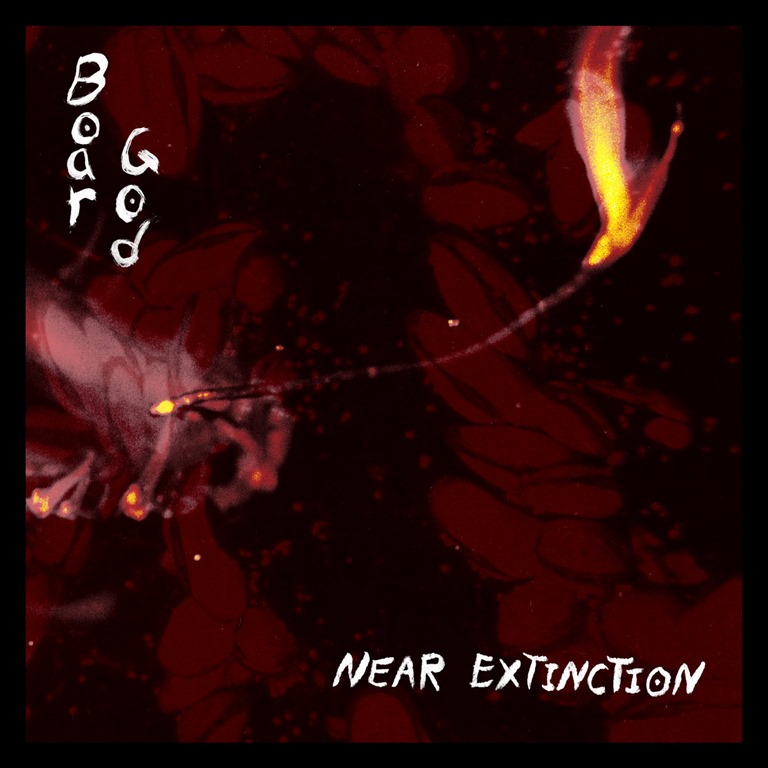
In the ever-expanding world of microgenres based on hybrids and crossovers, Montreal-based trio Boar God may be onto something as close to unique as you could imagine, describing their style as drone-punk. That said, drone takes many forms, ranging from the elongated notes that tend to feature in electronic works, to the dirgy, doom sustain of Sunn O)), with the kind of Psychedelic drone of The Black Angels in between.

Boar God’s sound belongs to none of these areas, and as such, does stand apart as different. The EP’s four tracks all sit around the six-minute mark, and blend driving alt-rock with a dash of shoegaze, and amp it all up with a spiky edge that’s as much post-punk as punk, but then I’d always say it’s the attitude that counts more than the sound in defining what’s punk.

Echoed tremolo tones shimmer like a heat-haze around guitars that scratch like sandpaper on the intro to ‘Life Eternal’. It’s a long, gradual build. The tempo quickens as the bass begins to run, faster and faster, the guitars chiming and swirling before everything breaks into a punchy clamour of everything, with Eric Bent’s vocals adding to the urgency. If it’s reminiscent of anything that immediately springs to mind, it’s Trail of Dead.

‘Azrael in Crisis’ goes all-out for the epic, with atmospheric synths swirling and wafting in the background, but still remains tightly-structured and punchy and dominated by a gritty guitar and booming bass. The energy is tempered by a chill, a bleakness, reminiscent of early Joy Division (think the outtakes that appeared on Still). The production is murky, and this is actually a good thing, as its low-budget, unpolished feel gives it an immediacy as well as replicating the late 70s’ / early 80s 8-track recording sound.

The pace and the angst are amped up on ‘The World Set Free’, a pounding amalgamation of Killing Joke and Red Lorry tallow Lorry, and again, it’s the thick, floor-shaking bass that defines and dominates the sound. Things take a twist for the gothic around two-thirds in, and as the fractal guitars glisten, the song acquires a dream-like quality.

Everything comes together at once on the closer, ‘The Tar Pits’, which locks into a motoric groove and drives it home with a searing guitar break and shrieking strains of feedback.

I know I’m a complete sucker for this kind of new-wave stuff, but as dark, angry, claustrophobic and steely-grey musings on loss go, Boar God bring a rare intensity on Near Extinction.

AA

a0466997498_10

Christopher Nosnibor

8th November 2019

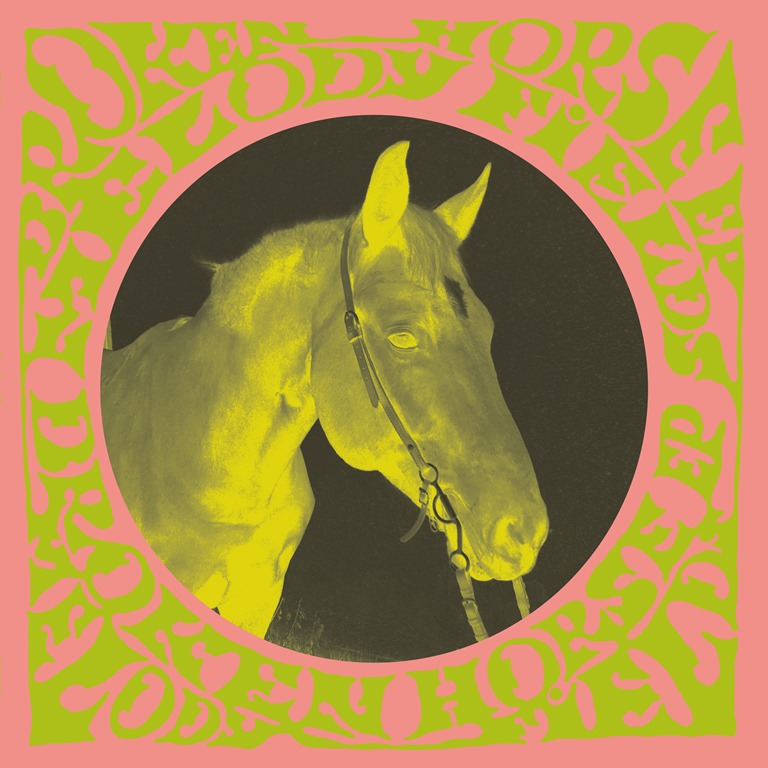
The bio bit tells me that ‘NAUT is a 5 piece dark rock band from Bristol, whose shared love of classic rock and metal, alongside reverence for the post-punk pioneers of the late 70s and 80s makes itself known from the start. Their songs switch from raw tribal tom beats to uplifting anthemic synth in a moment, but always stay danceable and perhaps most dangerously, catchy’.

Fan comments on their bandcamp shed a little more light on their sound, observing the band’s ‘unique ability to recreate the original sound and feeling of 80’s uk goth rock. Sisters, Red Lorry Yellow Lorry, the Rose of Avalanche, early Nephilim…’ and their offering ‘the perfect mix of Post Punk with old school Goth Rock… Killing Joke meet The Wake & Love Like Blood.’

It’s no secret that I’m a rabid Sisters / Lorries / Nephs / KJ fan, but it’s equally documented that I consider most of the bands who’ve taken them as influences are generic and derivative, and that includes the mid-late 80s acts like Rose of Avalanche who traded in diluted forms of blueprint-based accessible alternative rock. This means I’ve no idea who The Wake or Love Like Blood are, but judging by the referential monikers, I probably don’t need to.

The EP’s title track kicks things off with a classically ‘gothy’ rhythm that’s dominated by a quickfire snare attack and defined by spindly guitars, trebly and awash with chorus. And talking of Chorus, it does boast a strong, hooky chorus, and there’s real energy behind it, which pushes it over the line from template-based to credible and sufficiently possessed of a band identity while still very much drawing well-studied inspiration from their precursors.

‘Spirit Horses’ steps down both the tempo and the individuality, and there’s a chord progression that’s lifted straight off The Sisters’ ‘Marian’, but the third and final track, which slows the pace further to a sluggish mid-tempo resembles ‘Blasting Off’ era Lorries, and works remarkably well with a looser feel but a grainy greyness that brings a certain weight.

On the strength of this outing, Naut are at their best when they go deeper and darker, and if they continue to evolve their songwriting in the directions demonstrated here, there’s a good chance they’ll break out beyond the trad-goth scene and into wider alternative circles.

AA

NAUT

8th December 2019

Christopher Nosnibor

The latest release from Yorkshire electronic noisemaker Foldhead comes with no information whatsoever. It features just one track, and laser synth sounds throb space-age pulsations into a void of distant dissonance and static air. Voices crackle somewhere almost subliminally as if tapping into the mutter line. Change the frequency. Same distorted, indecipherable message. Feedback. Hiss. Hum. Extraneous noise. Sounds like something… something indefinable. Something out of range. Something unsettling. Not painful, but uncomfortable.

At the four-minute mark: silence. Is that a low rumble or simply the heating and my laptop’s hard-drive?

The ponderance is disrupted by crawling, squalling extranea, a mess of feedback and treble, scrapes and hovers, a mid-range, mid-air act of defiance against comfort. The volume takes unexpected incrementals steps upward, while the stuttering rotary stammerings continue to churn and thrum. Faint trills of treble and low-level grinds emerge and fade. The swell of sound is increasingly unsettling as the volume and density increases… ad then, an abrupt end. Silence. This is how it ends. This is how everything ends.

Now, I like noise, but am often relieved in some sense when it ends. Foldhead’s latest isn’t as oppressive as that, but there is a certain sense or the pressure lifting after the end. It may only be ten minutes in duration, but Radio Dust MAG 4.wav has a certain sonic intensity from which there is no escape until that silence descends.

AA

Foldhead - Dust

29th November 2019

Christopher Nosnibor

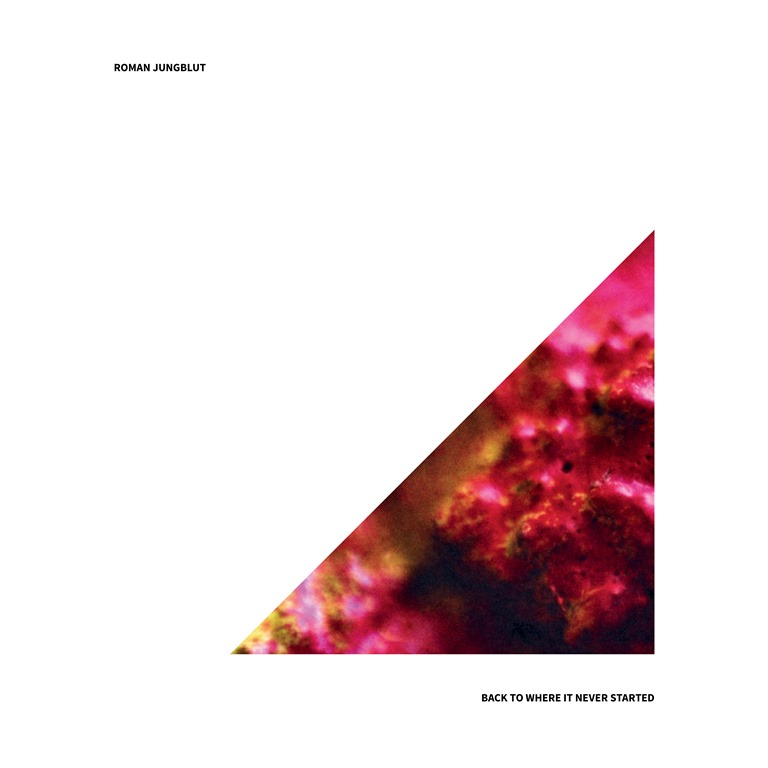
For me, there are few things worse than a story untold and only alluded do. Tell it or don’t! The press release for Cologne-based Roman Jungblut’s solo debut tantalisingly informs us that ‘His mainly improvisational musical live performances – in varying constellations since 1996 – are temporarily reduced to a few selected appearances in Cologne since 2009, due to reasons’. First and foremost, of course, my thoughts are with the artist: we all have our reasons for done – for not doing – things. Sometimes, they’re painful, or we simply don’t want to talk about them. But a story-half-told can lead to speculation. Not that I’m about to speculate on anything here, and shall instead focus on the sonic document presented in the form of Back To Where It Never Started, which comprises four pieces which explore a broad territory in a short span of time.

The blurb goes on: ‘After a ten-year full abstinence of recorded output besides contract work – and only ever having released music as a member of bands or collectives – Roman finally found it to be inevitable to not only release some music, but to do it as a solo artist, not hiding behind a pseudonym, an ensemble or even ironic distance. “Back to where it never started” is the first product of a long time filled with lots of artistic and personal moments of growth, of finding the courage for imperfection and embracing the potential of constraints’.

The most striking thing about the EP is its diversity.

‘Detox – Retox’ packs a lot into just five minutes, as a trilling top synth that surges and builds tension suddenly gives way to a plunging, thumping bass pulsation that’s low and low, and registers around the lower abdomen, before spiralling scraping drones evolve around it, conjuring a cinematic, texture-heavy soundscape that resonates in ever-expanding ripples.

‘78-7-88’ is radically different, a piano-led piece that’s almost jazzy in its stylings – but not so jazzy as to be irritating. Long, drawn-out notes hang and taper over the jaunty, mellifluous babbling backdrop, while ‘Einsicht’ is a space-age bloop-out, with whistles, bleeps, and whirrs hovering in zero-gravity slow-mo.

The final composition, the eleven-minute ‘Two for Tooth’ takes the form of a sparse yet layered ambient work that gradually grows warmer as it develops, slowly and subtly, around a rippling repetitive wave.

In some respects, the fact the set tapers out after so many shifts and ups and downs feels vaguely disappointing, but ultimately, its slow ebbing departure seems fitting as the listener’s journey ends with Jungblut meandering toward the horizon.

AA

RJ01_front