Posts Tagged ‘electronica’

Ipecac Recordings – 13 October 2023

Christopher Nosnibor

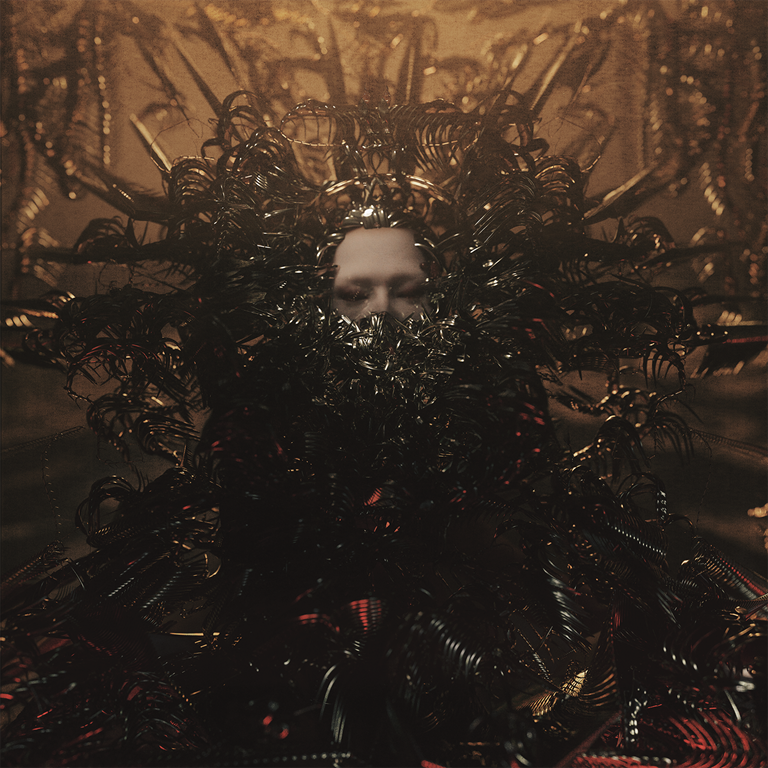
Having recently aired the video for the last single cut from Venera’s eponymous debut, in the form of ‘Ochre’ featuring HEALTH, I was feeling energised to explore their eponymous debut.

As their bio outlines, “Venera enigmatically launched their debut single ‘Swarm’ in July. No information, no pre-sale, simply the three-minute single released in tandem with a mysterious screed and a pulsating black-and-white video directed by EFFIXX.”

Some of the excitement is dulled by the unveiling which followed, as the band subsequently revealed themselves as James Shaffer (Korn) and Atlanta-based composer/filmmaker, Chris Hunt. Why? Not because I’m down on Korn: they’re an act I’ve never really felt any gravitation towards. Wrong place, wrong time. But essentially Venera are another supergroup / side project for a major act, which means they’ve already got a head start which places them head, shoulders, and torso above pretty much any other ‘new’ band. What’s more, several guests join Hunt and Shaffer on Venera. Drummer Deantoni Parks (Mars Volta, John Cale) plays on ‘Erosion’ and ‘Disintegration,’ HEALTH’s Jacob Duzsik contributes vocals on ‘Ochre’ and Alain Johannes lends his voice to ‘Triangle.’ The album was self-produced.

Should it matter? Probably not: I judge any music on its own merits, but I am aware that music doesn’t necessarily reach an audience or receive exposure based on the same criteria.

But here we are, and on merit alone, Venera is a strong album: dark, atmospheric, electronic and often beat-driven, but with layers of noise. It couldn’t be much further from Korn, stylistically. The album has range, too: ‘Erosion’ is like minimalist drum ‘n’ bass contrasts powerfully with the surging, enigmatic ethereality of ‘Ochre’. ‘Triangles’ finds Alain Johannes deliver a magnificent vocal that sits somewhere between Scott walker and David Bowie, crooning and emoting over a slow, dense backing of thick but dispassionate 80s synths reminiscent of The Sisters of Mercy’s Floodland. Clocking in at under four minutes, it feels as if it’s only just beginning to take form – not so much unfinished, but it just could do with there being… More.

‘Disintegration’ transitions between bombastic doom and frenzied blasts of noise, an enigmatic pancultural implosion that hints at Eastern influences, but also melts in droning sonorous low-end synths, and percussion that sounds like a brutal attack. In the context of this week’s world news, it simply makes me feel tense, but it’s but a brief passage before it shifts to clattering jazz-inspired energy rattling around amongst the drift. ‘Holograms’, featuring VOWWS is perhaps the album’s biggest surprise: a slow-burning ethereal and dreamy trip-hop song with a vaguely industrial / gothic edge, it’s supremely well-realised and has immense radio potential.

As a critic, declaring something to be ‘good’ or ‘not good’ feels somewhat redundant, like a teacher leaving comments on a piece of homework. Technically, this is good. Sonically, it’s good. The songs – where there are songs – are good: atmospheric, evocative, haunting – while the same is true of the instrumental passages. Venera succeeds sonically, and as a significant departure for its contributors. And perhaps, over time, I shall come to appreciate it more personally. But first impressions are conflicted: I like it, I like what it does, but I simply don’t feel an emotional connection, there’s nothing that elicits a physical pull in my chest or in my gut.

AA

746105

Rocket Recordings – 6th October 2023

Christopher Nosnibor

Time was when I found a certain excitement and even a solace in a good dystopian novel. There’s always the question of nature vs nurture when it comes to the development of a child to adulthood, and my tendency to gravitate to the darker aspects is likely at odds with my incredibly mundane middle-class upbringing in the rural backwater of Lincolnshire. Or perhaps that was precisely its origin. What may present superficially as an idyll proves under scrutiny to be an inbred place with a smalltown mentality and has been a longstanding Tory stronghold. Being primarily agricultural, the county had the largest Polish population on account of the seasonal harvesting work. But the locals don’t like these foreigners coming over and stealing the jobs we won’t do, so… It’s probably best to start with the digression rather than veer off course later, and the purpose of the digression was to respond to the context of Teeth of the Sea’s latest effort, their sixth, and by their own claims, ‘most outlandish’ album.

To expand the detail of the context, it’s worth quoting from the accompanying blurbage rather than attempting to paraphrase it: ‘In Frank Herbert’s 1973 novel Hellstrom’s Hive, the Dune writer tells of a sinister narrative surrounding the maverick scientist Nils Hellstrom, who has created a meticulously constructed Hive underneath his Oregon farmhouse. Therein, he oversees a subterranean order of 50,000 insect-human hybrid life-forms. Ultimately his plan being for the inhabitants of the Hive to usurp humanity and take over the world. The decade thus far may not have seen anything quite so daunting, but it’s provided more than its fair share of challenges. Yet in such dystopian environments, Teeth Of The Sea flourish. This band has created a kaleidoscopic inner world all its own in Hive, their sixth and most outlandish album.

I spend the entirety of the first track, ‘Artemis’ being frustrated by my inability to place the origin of the nagging motif which is central to the tune, to the extent I stomp my feet and roar at the ceiling, neither of which helps. But things move on swiftly with the space-age stomp of ‘Get With the Program’, the vocals low in the mix beneath a conglomeration of a bubbling repetition and some gyrating dives, dominated by a sturdy four-four bass drum beat.

If ‘Butterfly House’ is overtly in the style of commercial dance circa 2005, it’s equally classic electro, reminiscent of Ladytron, but with frenzied fretwork dominating the midsection. Nevertheless, it’s dreamy, mellow – and quite the contrast from the quasi-industrial percussion-based attack of ‘Liminal Kin’.

No-one could accuse Teath of the Sea being predictable or derivate here, and the diversity of Hive spans post-rock ambience and progressive rock, and the nine-and-a-bit minute behemoth ‘Megaframa’ goes full Chris ‘n’ Cosey electro-driven dance. It’s beaty, it’s groovy, but it’s got weirdness woven through its fabric.

The final two tracks, ‘Powerhorse’ and ‘Apollo’ are both mellow, but once again couldn’t be more different, with the former bringing an ambient drift before the later fades into the sunset with melancholic picked guitar and unexpected but emotive trumpet. On paper, this probably bears the making of an incoherent mess, but nothing could be further from the truth: the contrasts are complimentary, and there’s a flow which brings the album together. It’s not mere crafting or composition, but a work of sonic alchemy.

AA

630014

‘Panic’ is the new single from DC goth rockers The Neuro Farm. The song is inspired by a childhood episode of fevered delirium, and it will be featured on their next album planned for 2024.

The Neuro Farm is a darkwave gothic rock band based in Washington DC. Combining vocal harmony with soaring violin melodies, driving rhythm guitar, and ethereal sonic textures, their music has been described as hauntingly beautiful. The Neuro Farm draws on influences such as Joy Division, Radiohead, Nine Inch Nails, Siouxsie and the Banshees, Sigur Ros, Chelsea Wolfe, Portishead, and Rammstein.

Listen here:

AA

a3842352669_10

AA

489859

ZOHARUM – 17th October 2023

Christopher Nosnibor

It wasn’t so long ago that I’d arrive home from work and struggle to open the door for the pile of jiffy bags which had cascaded through the letterbox while I was out, and that I’d regularly receive vinyl for review in the mail. The pandemic and the spiralling coast of everything really kicked that into touch. The sheer volume was quite overwhelming at times, but I do miss it, and the occasional delivery of a physical copy of a release reminds me why.

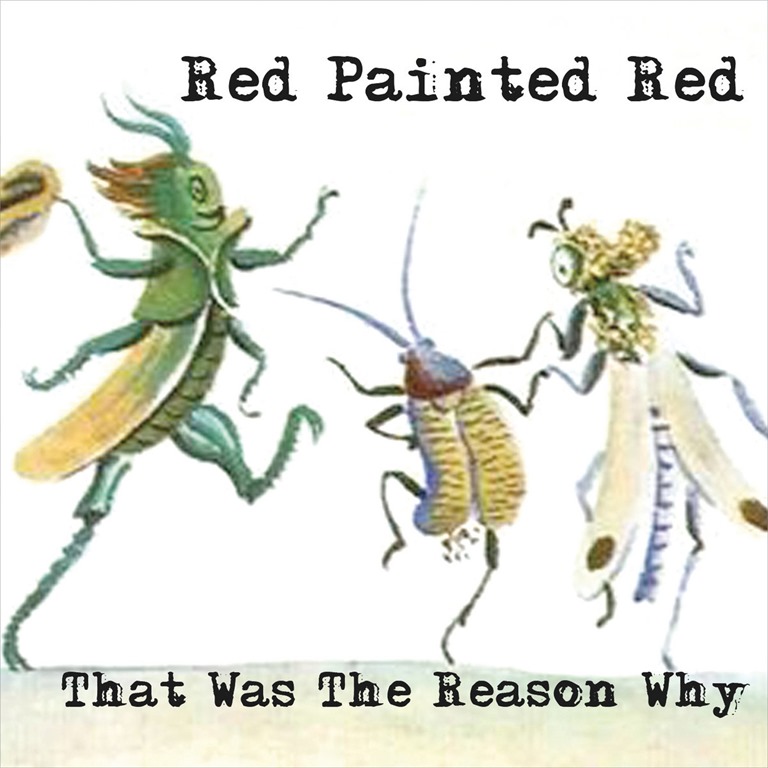
My copy of That Was the Reason Why was accompanied by a stack of wonderful postcards for a start: a strange array of scenes printed on thick card with a matte finish they’re fantastic. And so is the CD’s tri-fold packaging, which includes the full album lyrics, which I read through as I’m listening to the album. Yeah, yeah, I’m old – at least according so some people. But yes, I grew up with physical media and am comfortable with that as I read the contents of the truly beautiful sleeve. This is what people who don’t do, and have never done, physical media are missing out on. The fact is that music is, or at least is at its best, a multi-sensory, inter-dimensional experience. I took this for granted when I was younger. I’d go to record shops in town and but records and tapes, and later CDs, and spend hours looking at the artwork and pouring over the lyric sheets.

Starting with beeping keytones and with an ominous keyboard score, ‘Human Condition’ is dark and dense and builds a palpable tension as the glacial robotic vocals enunciate the stark declarations of ‘Self-mutilator. Mother. Arsonist. Materialist. Abuser. Assassin. Scientist. Charmer. Harmer. Narcissist. Artist. Redeemer. Explorer of the fauna’ on a loop that becomes more chilling with each cycle. Creepy is the word, and the bass and drums build as the track progresses, along with the extraneous noise that sits behind the nagging motif.

‘Astronauts’ cuts a sound collage which overlays a strolling, bass-led groove that’s almost proggy, and over that, Yew spins semi-narrative lyrics with cool detachment.

That Was the Reason Why is an unusual blend of experimentalism, cut-ups, collaging, and trippiness, which incorporates elements of a range of genres but belongs to none. The synthiness of the sultry ‘Come to Me’ is almost Vangellis-like, while ‘Knife’ is sparse, atmospheric electronica that’s oddly reminiscent of Kate Bush, at least in Yew’s delivery, and it’s magnificently melodic and dreamy in a melancholic sort of a way, and ‘Silence’ brings discord, abrasion and snarling zombie backing vocals tearing through a hybrid post-punk drone that sounds like a collision between The Doors and Toyah. ‘Dances’ is altogether weightier, and brings hints of Swans circa Children of God. But for all of its diversity and divergence, there is a strong homogeneity to the album as a whole, and it works well.

Samples of narrative and dialogue, and snippets of all sorts come together to conjure a disorientating reflection of the world and somewhere beyond – sometimes exterior, sometimes interior, bringing inner space and outer space into the same frame. Breathy, ethereal, yet tense and claustrophobic, That Was the Reason Why is a dialogue of inner turmoil, an exploration of liminal spaces, and an unstintingly intriguing and unusual work.

AA

a2407616562_10

Front & Follow / gated canal Community – 6th October 2023

Christopher Nosnibor

When Front & Follow called it a day as a label, it was a sad day, and their subsequent emergence from the mothballs for the Rental Yields series was extremely welcome. This was a project that came from the heart and really showed what F&F was all about – yes, music first and foremost, but also community. By working with a certain network of artists, the label built a community of its own, but there was always a sense of locale which was integral to this, and this is what compelled label-leader Justin Watson to resurrect the label to release a series of fundraisers to help raise money to tackle homelessness in Manchester.

This is a project which has clearly taken on a life of its own, and it seems unlikely that when first touting the idea, Justin could have ever seen the deluge of contributions which would pour in over the coming months. He writes, ‘Over 100 artists are involved (the spreadsheet is fun), each one tasked with creating a new track from the sounds created by someone else –we are then collating the tracks and releasing them over 2022 and 2023… This is VOLUME FIVE –THE FINAL VOLUME. 19 tracks, 38 wonderful artists. All money raised will go to SPIN (Supporting People in Need), whose purpose is to feed, shelter, clothe and generally support the homeless and people in need of Greater Manchester.’

This release simply shouldn’t exist. Homelessness shouldn’t exist, either. Levelling up my fucking arse. This government can’t even manage the basics, and while the imminent cancellation of the stretch of HS2 between Birmingham and Manchester is making all of the headlines and the government are refusing to comment on the ‘speculation’ about the inevitable, insisting that there are many other projects which are equally essential to the plan to provide the north with the same quality of life available to those in the capital, the fact that homelessness remains such a huge issue in Manchester is evidence that they’re not receiving the finding they need either. It’s not just Manchester, but charity begins at home and people can only do so much, so it stands to reason that F&F should donate to a local charity.

The one positive outcome of a truly depressing situation is that all five of the Rental Yields compilations is absolutely superb, and this fifth and final one is a glorious showcase of predominantly regional talent from a city with a long history of producing outstanding music, alongside Leeds. While it’s fair to say that much of this musical output has been born from frustration, it only serves to demonstrate just how much the north has contributed, and continues to contribute, to the nation’s creative output. And a nation without art… is simply dead. Over the last nineteen years, which I’ve spent living in York, I’ve often said that the best thing about living here is its proximity to Leeds. The city’s music scene is phenomenal, and where in London could you watch local / national / international touring bands while supping local ales for four quid a pint?

So, while the fact of the matter is that there should be no need for this album in terms of its social motivation, Rental Yields Volume Five is ultimately yet another essential release in terms of the fantastic music it showcases. More than any of the preceding editions, it’s a murky, atmospheric collection.

I’d been bobbing along nicely to the mellow drift before the penetrating feedback blast that heralds the arrival of ‘Rental Yields Weekend in Manchester Mix’ by Dan Gusset vs Omnibadger. Had to be these buggers, of course. Regular contributors / usual culprits, they bring another layer of discomfort to the party. It’s like Test Dept’s ‘Unacceptable Face of Freedom’ for 2023, a punishing, sample-filled industrial racket that tells it like it is, and without compromise. We live in harsh times, dominated by harsh language from government, and if ‘and then it was gone’ by gormless vs Distant Animals is superficially buoyant, the underlying stains of noise are dark and turbulent and this is the noise that fills our heads day in, day out, as we walk down the street. There is no escape, only the delusion. There is plenty oof harsh reality to be found on here, with thick bass blasts dominating Repeated Viewing vs Four Italian Pep Pils’

Most of the contributors on here are new to me, but as has been the case with all of the previous instalments, the quality of consistency is remarkable, and it’s incredible to think that this is a compilation assembled from open submissions. Rental Yields Volume 5 feels more like a film score than anything else, the tracks showcasing a cohesion and unity our government could only dream of. But then, this what happens when artists come together for a cause. And coming together is the crux here. The entire Rental Yields series is essentially about unity, and also about compassion. The government, and the capitalist world at large needs to learn from this. In the meantime, this glorious compilation provides a much-needed salve to the muscle-twitching rage the societal situation elicits. It’s yet another great album from Front & Follow, who deserve to hang up their virtual boots after this.

AA

dQGDqHAA

343 Collective / Broken Soundtracks / Jam Recordings –15th October 2023

The arrived of this album piqued my curiosity for a number of reasons, and one of the first things I felt compelled to do was unravel, or at least understand, the context of the title, since it seems to connote being the music which accompanies a movies. On my journey, I discovered that in film, a score is, at least according to Masterclass.com, ‘the specific musical piece or incidental music that accompanies a scene or moment in the film, and a soundtrack is the compilation of songs and sounds that comprise all of the film’s music. Scores are usually created by one or more composers, while soundtracks typically feature songs by different bands, artists, or musicians.’

But equally, a score is notation, usually in manuscript or printed form, of a musical work, believed to derived from the vertical scoring lines that connect successive related staves.

This album is neither notation nor featured as part of any movie – at least, not one that’s been produced yet.

The ensemble founded by Jon Dawson, and John Bundrick as a side project to Third of Never has expanded considerably, now standing as a six-piece, with this outing features additional contributions from Rabbit (The Who), Steve Kilbey (The Church) and Doug McMillan (The Connells), and was recorded alongside the forthcoming Third of Never album.

They describe the album as ‘a lysergic mood journey of epic proportions’, and advise that it be listened to ‘all at once, in the dark, accompanied by someone you trust, and a lava lamp.’ Well, it being a wet night at the end of September, it’s been dark since before 8pm. I’m alone in my office, and in the absence of a lava lamp, I have a couple of candles lit, and as such, my listening experience and ultimately my review are in the spirit of the album and its intentions – penned in a single sitting, straight through, no pauses, no rewinds, no munching popcorn. Just the quiet sipping of an Islay single malt.

To describe it as ‘epic’ isn’t hyperbole, but a statement of fact: the scope and impact of Original Score is vast. There’s no delicate, slow-building introduction: ‘Attention’ says a voice urgently but dryly, before a sound-collage begins to layer up before our very ears, and that rapidly evolves into a space-age jazz workout with rolling piano and hectic drums driving through fluttering cut-ins and cut-outs, and everything’s happening at once, for a time pinned together by a crunking, choppy bass before ethereal voices float in a chorus of reverb to carry it all away. Done differently, it could be a chaotic disaster, but it’s more Burroughs than Beefheart, and in filmic terms feels like the accompaniment to a three-way-split screen with rapid intersections and scene changes across all three.

Perhaps it’s the power of suggestion, or the potency of the whisky, but Original Score does feels like a very visual audio.

Because of the fact the eleven pieces are segued to form one continuous work, if you’re not actually looking at the CD display, there’s no way of really knowing when one ends and the next begins: because the individual tracks aren’t linear or overtly structured, the transitions between them are seamless.

There are some uplifting, light-hearted passages, and some incredibly dark, almost spooky ones, as haunting voices float hither and thither over wailing guitar feedback, undulating organ notes, and ponderous bass, fractured, treated vocals adding to the unsettling disorientation.

There’s a strongly proggy space-rock vibe, and the quavering keys and strolling bass segments lean heavily towards that seventies sound. I’m not well enough versed to differentiate Yes from King Crimson, but these are the touchstones that spring to mind, melted into Hawkwind wigouts. At times, the images it conjures are of spinning through space, hurtling headlong into the void; others, simply of a band on a massive stage with a drummer and three percussionists, multiple keyboardists with tassled sleeves delivering fifteen-minute solos to a Woodstock-sized crowd, with bearded guys in flares utterly losing their shit. It may be all of this and more, or none of these things when it comes to your own experience.

And this is, undoubtedly, the beauty – and artistic success – of Original Score. It’s the real-time unravelling soundtrack to the movie that you picture in your mind’s eye.

AA

a1597649542_10

Sinners Music – 30th September 2023

Christopher Nosnibor

As the album’s title suggests, this is not Andy & Grace’s first work together, but does come after some time since their last collaboration. By ‘some time,’ I mean a long time. Like two decades long. As the bio which accompanies the album outlines, they first met in the late 1990s ‘as founding members of the ambient chillout band Chillage People’, under which moniker they played ‘long, improvised sets in sweaty chill-out rooms in gloomy Sheffield clubs’ and resulted in the album Solid Water, released in 2001.

There’s much of the intervening time unaccounted for, presumably because life. So many creatives in all media seem to suddenly disappear from view. Work, families, and ordinary everyday adult pursuits take over and there simply isn’t the time or the energy. Some accept this comfortably, even embrace it, others wrestle with the opposing forces of creative juices fermenting and slowly gnawing at their guts while enduring.

Whatever the reason for the gap in his musical CV, recent year have seen Andy becoming a part of the Electronic Music Open Mic (EMOM) movement, appearing at venues around the North of England playing with his modular synthesiser. This is where Sinner Records come in: Ian J Cole is also a face on the EMOM circuit, a musician in his own right, who recently established Sinners Records. And let’s not forget Grace – that’s Grace Griffin, who at the time of joining Chillage People, was already a highly sought-after live sound engineer, working with some of the biggest names in the music business.

‘You name them and it’s a fair bet that Grace will have worked with them,’ says the bio. On top of that, and being ‘an accomplished musician with a gift for crafting fascinating textures and grooves, she is also an adept photographer and video editor.’

She’s remained engaged in music. There may be a worry that after twenty years and their lives having taken such different trajectories, reconvening would bee awkward, but the clue is in the title, really: Reunited speaks of coming together, coming home and picking up where you left off. And listening to Reunited, for all its crazy crossover and stylistic divergences, it feels like an album that has been dying to get made, whether they knew if or not before they started work on it.

Over the span of thirteen pieces, the pair explore a host of soundscapes and varying moods, all incredibly rich in atmosphere, shifting constantly. The first of these, ‘Deady Long Legs’ transitions from shifting sands of electronic noise to somewhat unsettling echo-drenched ambience, eerie chimes and shooting stars spinning off course against a warping backdrop of slow-melting vintage synth tones and shuffling groundworks, and there’s a lot going on here. It’s an album dominated by rippling waves and space-age spins, and there are some tracks which find the pair go full dance – or EBM or EDM or whatever it is in America. The beats aren’t often dominant, but they are frequently driving. At times, the tones are brittle, reducing from full range to clipped, tight compressions mingling with undulating synths forge cinematic techno.

There are moments of expansive tranquillity, such as ‘Sad Major’, and this is an album that places tone and texture to the fore in terms of the way the sounds are sculpted into songs. It’s immersive stuff, and on a number of occasions I find myself zone out, not through boredom but the music enveloping my mind and body. And perhaps some tiredness, too. But ‘Forty Winks’ a bleepy wakeup, and one suspects the title is a reference to Josh Wink.

Reunited is the sound of old friends coming together and finding they still have an intuitive connection. There are some neat grooves – like the buoyant almost funk-tinged workout of ‘Groovy Machine’ and the stuttering harder beats of the mellow ‘Mallets of Entanglement’, and there are elements of playfulness in evidence, as on the skittering ‘Wasted in Da House’ and the irreverently-titled ‘When A Seagull Ate My Icecream’ – which reminds me of the time a giant cockerel nicked my baguette, but that’s a story for another time.

Reunited is a cohesive work which strolls through numerous different terrains of electronica, and shifts from light to dark, but mostly ambulates the spaces in between in fine style.

AA

Andy _ Grace Cover

Cruel Nature Records – 28th July 2023

Christopher Nosnibor

The Sargasso Sea is a unique place on earth: situated within the Atlantic ocean, it is the only sea without a land boundary – a sea within an ocean, in other words – its borders defined by sea currents. Its name is derived from to the vast ‘sea’ of free-floating seaweed called Sargassum which occupies the space, and it’s an ecosystem like no other, the aquatic equivalent of the Amazon. And yet its existence appears to be considerably less well-known, despite the success of Jean Rhys’ 1966 novel, Wide Sargasso Sea, which has been adapted for film, stage, TV, and radio and has been lauded as a pivotal work of postcolonial feminism. And it’s this book which I think of when I hear the word ‘sargasso’ – although clearly, it has absolutely no bearing on this album. What even is a sargasso sky?

The liner notes paint the scene, where ‘A sargasso sky shimmers above a twilit American shoreline, slipping in & out of time. Via a way slowed down take on jazz fusion, limpid pools catch its reflection, ebbing & flowing with the soon to come stars… The cover images taken at Marblehead, Massachusetts depict something of the aura of an area that H.P. Lovecraft considered life-changing. Step into the sea & sky….’

There are many layers, then, to this release, which extend far beyond the surface of the music itself. But when it comes to the music, Colohan presents ten pieces, all comparatively concise (only four extend beyond the five-minute mark, and none reach beyond eight), and the form is ambient yet structured, with rippling washes of synth gliding over the mellow mists of sound which float invisibly through the air. Despite its title casting its eye above the horizon to the sky, parts of this album is given to a preoccupation with the water, still, as exemplified by titles such as ‘Sacred Teeming Waters’ and ‘Longshore Drift’.

Whereas much ambient music is formless, abstract, the instrumentation vague, on Sargasso Sky, David Colohan offers musical works with structure, and with the implementation of identifiable instruments.

‘Longshore Drift’ is led by sparse piano, backed by a sliding, bulbous synth bass that’s extremely eighties in sound, and elsewhere on the album, long resonant voices dominate, from flute to organ. These are clearly synth voices, sounds conjured digitally in response to creative needs but also evolving technology facilitating new music. There are some bold drones which surge and swash on ‘Anoint’, and ‘Summers Old as Stars’ brings late 70s and early 80s synth stylings to the fore, with hints of Tubular Bells and Vangelis, and the myriad music of this era which remained anonymous. But for all that, Sargasso Sky is subtle and it’s still not overtly electro for the most part, and it’s not of the prog persuasion either. But what is it? Certainly, there are parts which do very much pursue progressive forms, and Sargasso Sky is very much an exploratory work: spacious, undefined by limits of composition or instrumentation.

AA

a2197923751_10

nynode intermedia – 7th July 2023

Christopher Nosnibor

Sometimes, a title just captures the imagination. And in some respects, art – be it a book, an album, or a movie, will take one unawares in the same way as a new person. Sometimes, it’s something unexpected at precisely the right time, discovering something you don’t even know you need until it’s there. To select a quote from what may appear to be an unlikely source, ‘just when you least expect it, just what you least expect’, sang The Pet Shop Boys on ‘Love Comes Quickly’. It’s a great line because it so succinctly summarises the unpredictable nature of life, and this wordy title tripped a similar trigger, which, I accept is uniquely personal…. But then, in the personal lies the universal. It must be so true for many that we’ve met the right person, but at the wrong time, for whatever reason.

And so it is that I’m spiralling on a chute of reflection, a wall of mirrors inset with faded and distorted memories of people I’ve met and lost along the way as I begin to ease myself into what ultimately proves to be a remarkably diverse album, with deft compositions flitting between retro electronica, sparse techno, trance and shoegazy electrombience – and a lot more besides. Other times, mood-dependent, I may find the perceived lack of identity frustrating, the gentle mellifluousness without any obvious focus nigglesome, but right here, right now, I’m ready to experience transportation. And having emerged from a journey for the artists, If We Had Met Earlier Things Might Have Turned Out Differently feels like a suitable soundtrack.

As the accompanying notes recount, ‘Hours of recorded improvisations were arranged afterwards to slowly shape what would be the new sound of the duo. After three years of experimenting and writing various compositions the album slowly began to unravel itself and took its final form. Eleven unique pieces — deep explorations of sound — that all have their own story to tell are assembled in this collection of snapshots from the past years.’

In some ways, then, If We Had Met Earlier Things Might Have Turned Out Differently is more of a work of sculpture than composition, moulding and shaping the recordings into pieces with form and structure. Rising from a mist of gentle ambience, ‘Arbour’ soars, but is pinned down by a solid martial drum and ambulant, bulbous bass.

Listening to the ominous discordant experimentalism of ‘X’, I reflect on the fact that there was a time I’d have found this boring, just as I’d have cringed at anything remotely jazz-flavoured and sneered at anything overtly dance, before the clattering mess of ‘Techno | Hovestaden’ arrives, chanking and chiming over some ponderous keys, rippling piano, and evolving drones. In the background, as the piano plays mellow chords, there’s a banging tune giving it large way off in the distance, and it’s like hearing a neighbour’s music through your own. It’s irritating, but it’s real: as William Burroughs wrote, ‘life is a cut up’.

‘Ghost’ is suitably eerie, and ‘Shinjuku’ goes all-out tweaking electro, straddling late 90s dance and new age which just shouldn’t work and I should detest, but having lived through this and experienced a somewhat fractious relationship with tunes like ‘The Sun Rising’ and ‘Sadeness Part 1’, I’m rather more at peace with the incorporation of diverse elements to conjure sensations of spaciousness and spirituality, as long as they don’t involve pan pipes. Gotta have limits, y’know. This doesn’t actually sound like these musical forebears, but it feels as if there’s a certain context and progression at play here. The present only exists because of the past.

We’re plunged back into ominous drone territory with ‘Odessa’, and its warping grind which quavers up and down is most unsettling, building to a droning roar that’s hard not to equate to missiles and jets as the oppressive buzz grows louder.

The looming brass and slow, deliberate percussion of the spacious ‘Noon’, as it trickles slowly toward the album’s soft ending, with clattering percussion slowly marking a long wind-down before ‘Tide’ smoothy washes everything away to a smooth, blank state once more.

So what does this say? It says Hellas have conjured a majestic work from – well, who knows what source material? How much of this album came to fruition in the wake of its recording? And how much does it matter? It’s not as it’s an AI work, contentiously bypassing human input: pianist Peter Sabroe and drummer Jeppe Høi Justesen, with the assistance of producer Brian Batz have created something with personality, intricacy, depth. If I’d have heard it ten years ago, I’d have hated it: now… it reaches me. It’s an accomplished work, subtly complex and possessing significant depth. It’s amazing how things can turn out.

AA

NNI003_art

7th July 2023

Christopher Nosnibor

A year after unveiling ‘The Nature of Light’ with the promise of a debut album in September 2022, Celestial North’s Otherworld is finally with us. With the title track and ‘Yarrow’ having also built a level of anticipation, it’s left like an album that’s been a long time coming.

Some things simply cannot be rushed, and Otherworld is appropriately-titled, as Celestial North creates songs which sound as if transported from another world, and another time. A she says of the album’s evolution, “I imagined that I was time-traveling through different and exciting worlds. Wandering through the ancient, sacred stone circles at Machrie Moor and then jumping straight into an underground rave in the forest.” And on Otherworld, she transports the listener on these journeys alongside her.

The album opens with the sweeping dreampop of ‘Are You Free’, which begins as a spoken word piece with misty synths, her Scottish accent strong and honest, before piano ripples in and she slides with grace and elegance into her lilting singing voice. It’s a question phrased as a statement, and I suppose it serves to remind us that whatever society’s constraints, we can, to an extent, choose our freedoms.

And yet, for all this ethereality and otherness, Otherworld has a deep-seated earthiness or sense of nature flowing through it. I don’t mean it feels like Celestial North is connected to nature: she is nature, and channels it through her ever molecule.

Raised in Scotland and now residing in Cumbria, Celestial North channels her natural surroundings and their rich, ancient history and heritage. Many artists have promotional photos shot by standing stones and in stone circles, but she describes her music as ‘pagan euphoria’, and listening to Otherworld, you feel that this isn’t image or posturing: these are the spaces where she belongs, and draws the energy from these places. Some – many – will likely dismiss the notion, but many of these locations do possess a unique and indescribable power that goes beyond mere awe. Castlerigg, near Keswick, is one which surprises me every time I visit; yet I have also felt something, like a crackle of electricity, on stumbling upon a minor circle, only half-intact, while in Scotland; the landscape was barren, and gorse had grown beside it, but the full circle was marked by a ring of nettles and a chill ran over me. These are the sensations which emanate from Otherworld.

Her piano-led rendition of REM’s ‘Nightswimming’ is a magnificently-realised slice of quintessentially dreamy indie. Ordinarily, I’d question placing a cover as the third track on an album, but context counts: this featured on a lauded and band-backed charity compilation released by God is in the TV – but moreover, it just works. ‘Olympic Skies’ is breezy, wistful, easy, airy, with a lilting melody that brings folk and dreamy indie into perfect alignment.

The aforementioned title track packs pitter-batter rhythms and sweeping synths and soaring backing vocals which wrap themselves around a fragile, yet confident-sounding lead vocal as it floats on air, before the more overtly 80s electro-sounding ‘Restless Spirit’, another paean to freedom, this time driven by a thumping dance beat. Her voice is unique and complex: it’s quiet, reserved, breathy, with hints of Suzanne Vega and The Corrs, but also Cranes’ Allison Shaw but also Maggie Riley on ‘Moonlight Shadow’. It makes for compelling listening, especially on songs like ‘The Stitch’, which convey powerful, wild-outdoors Celtic pagan vibes – but again, in an understated fashion. ‘Yarrow’ plays the album out with a rolling piano-based post-rock piece that’s sedate and soothing. Otherworld avoids the bombastic clichés which tend to mar much so-called pagan folk or electronic folk: many acts overdo the gothic leanings, and go for bold (melo)drama, which feels contrived and emotionally empty, simply because it’s trying too hard.

For Celestial North, it all comes naturally, and the dancier elements feel comfortable because one doesn’t get a sense of the artist trying to be simultaneously ‘hip’ and ‘deep’; this is simply her music, her style. Otherworld demonstrates that ‘powerful’ doesn’t have to be heavy or hard, and that ‘light’ doesn’t have to mean lightweight or flimsy. It’s accessible, but complex, deep but not dark or difficult. Sit back and let it carry you.

AA

856085