Posts Tagged ‘electronica’

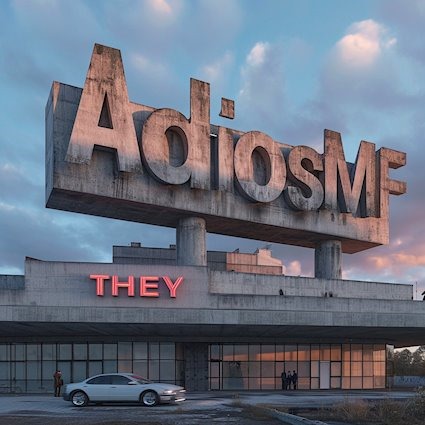
Adios MF is a musical collective spearheaded by Nathan Keeble carving fresh dark wave and electronica sound the underground of Sheffield. Their latest single, ‘They,’ was recorded between Brooklyn and Brixton, serves as a sonic manifesto of what’s to come. Their music defies categorisation, blending elements of post-punk, electronica, and avant-garde into a sonic tapestry that’s uniquely their own.

With sleek production by Nathan Saoudi and Richard Wilson yet coursing with enough detail and character to set it apart, with this impish 80s beat, sinewy guitars, metallic dapping keyboards, and sample loops, it forges a uniquely futuristic sound that’s at once both familiar and yet mirrors the churn of the cityscape.

With a sound that hints at the influence of acts like Human League, Depeche Mode, Kraftwerk and Molly Nilsson, the vocals are addictive and almost mechanical, driven with hooky melodic ticks that sink their nails into and won’t let go, and yet the lyrics reside with a disquiet at the creeping gentrification of urban redevelopment “They built a Starbucks on my street” and reference to shadowy figures who might take you away. It hints at a dark underbelly and Sci-fi dystopia where your every action is being watched.

ADIOS MF say “’They’ is a Kitsch byproduct of existence amid the constant churn of urban development and the persistent buzz of drilling. It was written as a tonic to the realisation that resistance is futile; you must simply acquiesce to the world of urbanism and let it carry you along on its unpredictable journey, set to a naughty 80s beat.”

We dig it here at Aural Aggro, and you can get your lugs round it here…

Partisan – 17th May 2024

Christopher Nosnibor

It feels like no time at all since I was reviewing the cassette release of Lip Critic II, and that their ascent from self-released EPs and cassette-only albums on microlabels has been astoundingly rapid, but time has a way of playing tricks when it comes to perception: Lip Critic II was, in fact, released almost four years ago. And now, signed to Partisan and having gained significant traction playing SXSW, with the NME claiming bragging rights for giving them a cover feature a few months ago, as well as a five-star review last November, they’re certainly breaking through. There’s no question that it’s entirely deserved, either: despite being overtly weird and clearly non-mainstream, they’re a quintessential cult alternative band, the likes of which gain substantial hardcore followings and are revered long after their passing.

With a lineup consisting of two drummers and two synths, Lip Critic are no ordinary band, and they produce no ordinary music, and Hex Dealer is a schizophrenic sonic riot. It’s a bit cleaner, the production rather more polished, but fundamentally, it’s the same deranged percussion-heavy cacophony that Lip Critic have always given us, and it’s still true that most of their songs are short and snappy – around two-and-a-half minutes. Consequently, Hex Dealer is aa succession of short, sharp shocks, like poking a socket with a wet finger. The whole thing is a spasm and a twitch.

‘It’s the Magic’ brings together a smooth croon that has hints of Marc Almond and some shouty rap mashed together with some Nine Inch Nails industrial noise and some woozy hip-hop beats and some aggressive drum ‘n’ bass, all in under four and a half minutes.

Lead single ‘The Heart’ is a standout, for is frenetic, kinetic energy, and its hookiness, but it’s a question of context: it’s a blissed-out pop tune in comparison to the blistering percussive onslaught and distorted dark hip-hop blast of ‘Pork Belly’, a cut that takes me right back to the early 90s, specifically the Judgement Night soundtrack. Single ‘In The Wawa (Convinced I Am God)’ is entirely representative of the album as a whole, compressing all of its warped elements into a noisy, spasmodic, hi-NRG two minutes and nineteen seconds. Crazed, hyperactive, it’s explosive and it’s unique.

It’s a rock album with rap trappings. It’s a rap album with rock trappings. It’s a mess and shouldn’t, doesn’t, work. Only, it does. And with ‘My Wife and the Goblin’, they introduce some gnarly noise which isn’t metal by any stretch, but it certainly gets dark near the end. I say ‘near the end’, but it’s only a minute and forty-one and it’s a real brain-melting mess of noise.

If the beats to grow a little samey over the duration of the album, the counterargument is that the thrashing percussive attacks give the set a vital coherence. Packing twelve tracks into just over thirty minutes, and more ideas per minute than any brain can reasonably be expected to process, Hex Dealer feels like Lip Critic’s definitive statement.

AA

a4093774739_10

5th April 2024

Christopher Nosnibor

It’s been almost four years since I encountered Alaxander Stordiau, when I covered the single release by The Original Magnetic Light Parade, a collaboration between Stordiau and Edinburgh man, Harold Nono, on perennially oddball label Bearsuit Records.

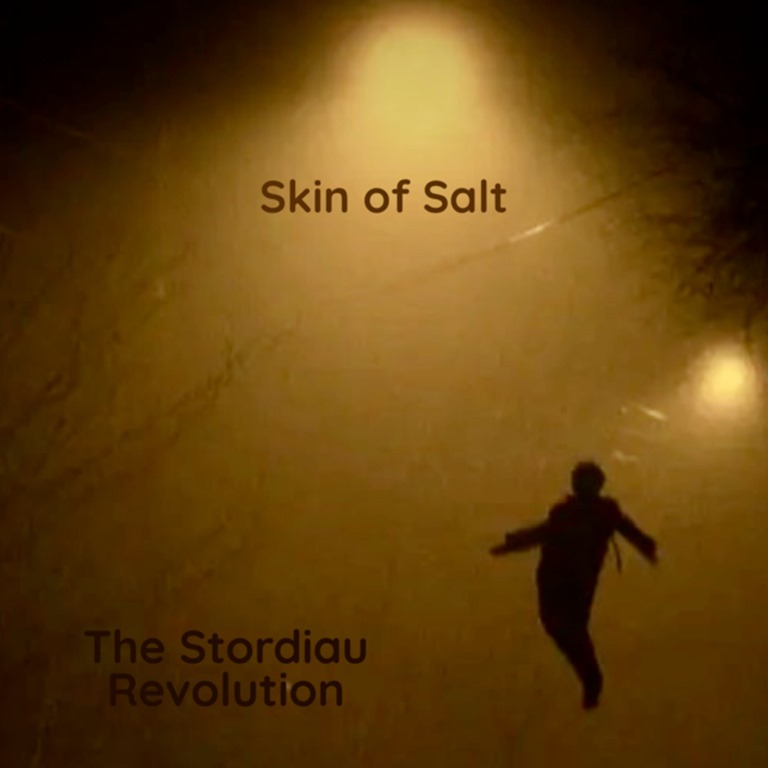
With minimal info about that release – and not much more about this one, I’m mostly left to grapple with the music as it presents itself, with minimal content. This is good: and so is this EP.

A brief Internet delve uncovers that the material on this this EP was initially released a year ago, as part of an album-length work bearing the same title, slipped out on Soundcloud. Now, there are plenty of albums I think would have made decent EPs – or 7” singles – but there’s no reason to believe Stordiau has whittled this set down due to any issues with quality, and it does seem that it’s often easier to pitch an EP than an LP in our attention-deprived times. If I were to go all-out on a personal obsession, I’d make a greater deal of the fact that this four-track cut has aa running time of twenty-three minutes. There’s nothing to suggest Stordiau is a fan of William S. Burroughs or otherwise beholden to the ‘23 Mythos’, but the fact it does have a playing time of twenty-three minutes was of note to me, simply because. The twenty-threes just keep on coming.

And so to the music itself. ‘Fear Merges Easily’ is something of a teaser, an introduction, an atmosphere-builder, with wavering synth undulations creating a nice, even flow over a shuffling beat that sits off in the background. It’s got groove, but it’s subtle, and overall, it’s pretty mellow. It doesn’t ‘do’ much: one gets the impression it’s not supposed to, and nor is it necessary for it to do more. It’s vaguely background, it has some classic eighties electro and krautrock elements to it, and enough texture to keep it engaging.

‘Hearing the House Breathing’, stretching out to almost eleven minutes is the centrepiece and defining track here, and what’s interesting is how it’s centred around a core motif and built upon a solid spine of subdued beats, pulsating bass, and nagging synth shapes, but shifts and moves through a succession of segments. It’s dancey, but at the same time, it isn’t. and there are gasping, whispering vocals wheezing beneath the waves of undulating analogue ripples. Around the mid-point, it breaks into a more energetic mood, the bubbling synths bouncing over a lively robotic electro beat dominated by the whip-cracking snap of a vintage drum machine snare sound. Everything gets quite busy, and a shade hazy around this point, there’s a lot going on, and not all of it synchronous. I can’t be alone in finding this kind of busyness induces not a trance-like state, but one of feeling dizzy and vaguely overwhelmed, an experience not dissimilar to sitting in a busy pub or coffee shop and being unable to focus on reading or the conversation in front of my face for the distraction of all the babbling noise filling the air all around.

Things take a turn for the eerie, the proggy, the spacey, on the trilling title track, where a creeping dark chord sequence sits beneath altogether more vibrant tones, before giving way to a sloshing ebb and flow overlayed with some barbed organ, and there are moments here that remind me of Gift by The Sisterhood, Andrew Eldritch’s project between phases of The Sisters of Mercy: specifically, the notation the chilly closer ‘Rain From Heaven’. Closing off, ‘The Sting of the Lie’ is a relentless, cyclical composition over which blasts of wavering, quavering keyboards wander and spin.

Skin Of Salt brings together a range of elements, and not always comfortably. But why should music be comfortable, why should it always be easy, accessible? What’s wrong with discord and dissonance, lumpiness, discomfort? Why, nothing, is the answer. Life is brimming with discord and dissonance, lumpiness, discomfort. And without these elements, this would just be a bland hybrid of dance and ambient. Thankfully, it is so much more. Skin Of Salt isn’t mere mental chewing gum, but something which requires some proper chewing and a slow digestion.

AA

artwork-album_Skin-Of-Salt

Janka Industries – 3rd May 2024

Christopher Nosnibor

Once again, I find myself tussling with a jazz album and in a quandary as to quite what to make of it. For many, many years, I was absolutely certain I detested jazz. Until, that is, having been introduced in my line of work to acts like The Necks, I came to learn I’d simply been exposed to the wrong kinds of jazz. The weirdy, noisy, cacophonous kinds of jazz made sense in context of my appreciation of mathy noise rock, and wasn’t such an immense leap from Shellac to be incomprehensible. Like any genre, or even tea or coffee, it’s all about finding a point of entry, a flavour that suits your palette. I used to hate both tea and coffee, having been given the former with full-fat milk and sugar and the latter in the form of a fairly weak blend with milk but no sugar, and they only really clicked when I ditched the sugar and discovered Earl Grey, and that you could have really dark-roast coffee with no milk and a shovel-load of sugar. So, you know, you find your thing.

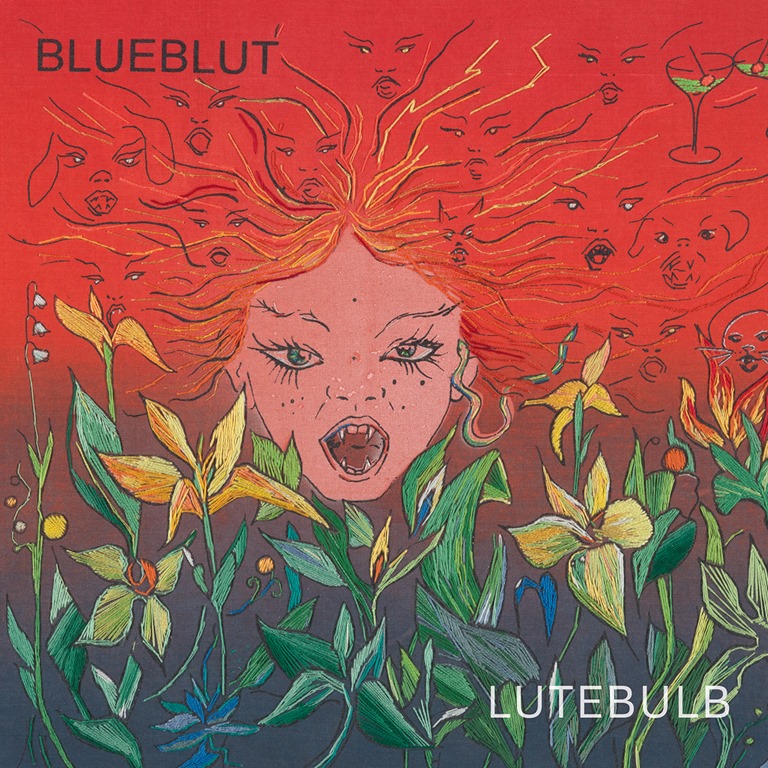
And then along comes Lutebulb, by Blueblut.

The blurb isn’t wrong in describing Blueblut’s lineup as ‘highly unusual, bringing together ‘three musicians acclaimed for exceptional contributions to their respective spheres in experimental jazz, electronica and rock.’ It’s a jazz-centred fusion, for sure, but it’s not jazz fusion as one tends to think of it, and certainly not as I’ve come to understand it. So what is it? As we learn, ‘Lutebulb is the fabulous culmination of ten years of intensive touring, with the Vienna based trio of Pamelia Stickney (theremin, vocals), Chris Janka (guitar, loops, samples) and Mark Holub (drums, vocals, percussion) socking it to global audiences with an international polystylistic musical language which takes in improv, jazz, avant-rock, ska, folk and Krautrock among other elements.’

There’s certainly a lot going on: initially, it comes on a bit laid back, not so much loungey as a smug muso pop collision of jazz and Latin dance, and I suppose the title, ‘Cocktail’ is something of a giveaway as to its swinging party vibes, but then shit happens – particularly some pretty crazy guitar work, and the percussion goes big and suddenly the party’s been crashed by a towering riot of sonic chaos, before suddenly, the entertainers seemingly remember themselves, pull their ties straight again and try to pull together some semblance of a funtime groove.

This sets the album’s template, really. Tracks tend to begin a bit kinda loose, a bit kinda boppable, a bit pool party fun times, albeit with some weirdness in the way the rhythms and the notes don’t quite chime in the conventional ways, and you wonder if it’s maybe the punch or the heat, but the tempo drifts a bit, first one way, then the other, and then maybe something doesn’t quite feel right, and it certainly doesn’t sound right and… what is going on? The room’s spinning and there are all sorts of random noises and you can’t tell if it’s people losing the plot or if some chickens have escaped and the sky’s falling in.

‘Aumba’ starts rather differently, a gentle piece led by acoustic guitar that brings a more reflective atmosphere, but it takes a hard swerve, the pace picks up, there are choral chanting vocals and then a handbrake turn into buoyant math-rock territory before some truly frantic fretwork. And because more surprises are needed, from nowhere, we get a crooning lyrical ballad in the last couple of minutes.

There’s unpredictable, and then there’s Lutebulb, which emerges with a fourteen-minute centrepiece of oddball experimental jazz that mashes absolutely everything together: one minute, I’m reminded of America’s ‘Horse With No Name’, the next, it’s Paul Simon’s Graceland and a Joolz Holland world music extravaganza. Then, somewhere in the midst of it all, we get the jazz breakdown with erratic percussion and space, dogs barking, and then, something else again. Led Zep riffage. Noise. More dogs barking. Every time I leave the house, the streets and parks and fields are like bloody Crufts, and the headfucking noise that’s emanating from my speakers – mostly a horrible conglomeration of barking and a strolling bass is making me angry and tense. And then the last piece, ‘Kaktusgetränk’, incorporates a familiar and popular jazz piece I can’t place or be bothered to research because by now I can’t decide if I need a lie-down or a massive gin.

With Lutebulb, Blueblut have created one of the most wildly varied – and in places, difficult, irritating, random – albums I’ve heard in a long time. I neither like nor dislike it: it has some truly great moments, and it has some not great moments. But when you throw this much into the blender, it’s to be expected, and I’d like to think that this kind of reaction isn’t entirely unexpected. The musicianship is outstanding, and their capacity to switch style, tempo, form, is something else, and the results are enough to leave anyone punchdrunk.
Blueblut – Lutebulb cover 1240px

‘Ride Or Die’ is the first single release in nearly two years by Swedish post-punk/goth icons Then Comes Silence. It is also an opening statement of intent from their stunning new album, Trickery, which is out on 5th April, with vocalist Alex Svenson stating: “Friendship is love. It is important and worth fighting for. It’s ride or die."

Indeed, much of Trickery celebrates friendship, unity and the feeling of belonging to a tribe, with TCS explaining that “being a part of the post-punk and goth scene is a great privilege. After being on the road for so many years, we have experienced caring and welcoming audiences, both old and young, some with a similar background and some just for the love of the music and the culture that comes with the lifestyle. Uniting and harmonising with other people, we feel an incredible community together and it is a feeling that is both priceless and a blessing."

Trickery is also the audio definition of triumph over adversity. Backtracking to 2022, on the eve of their first-ever US tour and eager to promote their just released ‘Hunger’ album and its 2020 predecessor ’Machine’, TCS were suddenly and unexpectedly reduced to a three-piece. Would their famed darkwave wall-of-sound still work in a trio format? Fortunately, the answer was resoundingly positive, so much so that they resolved to continue with this slimmed-down line-up on a permanent basis, a period that has already included further US and European tours, followed by their return to the studio to make Trickery.

The inadvertent metamorphosis of the band has also led to a different way of creating new music. In order to capture the heart and essence of the trio’s live prowess, Trickery was recorded in just three days in Kapsylen Studio in Stockholm. With Jonas Fransson (a band member since 2015) laying down an energetic punk backbeat and sleaze punk fan Hugo Zombie (a 2018 recruit) providing inventive and rhythmic guitar lines, the main focus remains on singer and bassist Svenson, the sole surviving founder member from the band’s 2012 debut album. His velvety croon and solid bass lines are enhanced on ‘Trickery’ by retro synth sounds reminiscent of his recent solo futurist wave project, Neonpocalypse. "The electronic elements are essential to ‘Trickery’," he adds, "but are also a salute to punk music, the cradle of Then Comes Silence and the cradle of post-punk.”

Founded by Svenson in 2012 and touring frequently to promote three albums released in quick succession, TCS soon found a large audience in Germany. Signing to Nuclear Blast in 2016 for the release of Blood, their fanbase widened as they shared stages with artists such as A Place To Bury Strangers, Chameleons and Fields Of The Nephilim and performed at festivals all over mainland Europe. Firmly in the vanguard of the new generation of post-punk, darkwave and goth artists releasing high quality new material, they work hard to promote it and are recognised as a leading live act in their genre. They have also built a significant UK following and 2024 has already seen them play a sold out London show at the 229 venue.

TCS recently signed to Metropolis Records for the worldwide release of Trickery.

Check ‘Ride Or Die’ here:

AA

f92b31c72652a59790319d3c3fe0b4c85d445aa7

Dret Skivor – 2nd February 2024

Christopher Nosnibor

Nostalgia sucks. On so many levels, nostalgia sucks. It’s something which looms a longer, darker shadow over life with ever years that passes, as every memory recedes further into the past until eventually it tips over the horizon, beyond sight, to a distance whereby its very happening takes on a dream-like quality and you begin to question if the even was real or imaginary, a myth which has grown from the creeping spores of hazy recollection.

I was probably ahead of the curve when I began feeling pangs of nostalgia on moving to secondary school in 1987. Nostalgia wasn’t big business then, and didn’t even strike me as something that so many people felt deep pangs of back then, although perhaps shows like The Golden Oldie Picture Show which I would often watch with my parents after coming home from Cubs should have given me a clue as to how adults mire themselves in their past. It was on reaching my thirties when I began to separate from my peers who constantly bemoaned the state of music, now there was no good new music, how it had all turned to shit since they left school.

Today, I took myself for a quiet pint, only to find myself eavesdropping inadvertently on a couple of old bastards complaining how there’s no proper music anymore, how it’s all 70s and 80s bands which headline Glastonbury and it’s all rap like 10-bit and one began spouting on how he saw Dave Grohl’s band, Metallica, on TV and wasn’t into it. Then they raved about Pink Floyd and The Eagles and now awesome they are, and how their songs are ‘minutes, minutes long… And then there’s a guitar solo. And Dire Straits… and how Blondie’s career ended with Parallel Lines, but they did this comeback song, like Duran Duran. I wished I was deaf, and congratulated myself for not being so painfully moored to the past – or so ill-informed.

But for all of this, I feel a pang of sadness on the arrival of a new Legion of Swine release. I miss Dave Procter’s presence in the UK for a start, surely one of Brexit’s biggest losses, at least on the underground music scene. I miss his crazy noise shows, particularly back when he would don a latex pig’s head and lab coat to crank out harsh noise. I have a particularly fond memory of our two collaborations, but especially the room-clearing effort where I yelled like a maniac as he ambulated the venue with a portable speaker emitting screeds of feedback in the middle of the afternoon.

Beyond this particularly personal context, of course, the latest offering from Legion of Swine is by no means a nostalgic work, although it does explore wibbly analogue synth and lasery sounds which hark back to the early 80s, when primitive synths were becoming widely available. But then, it equally passes nods to early Tangerine Dream, and to the bubbling pink noise and synthy waves of Throbbing Gristle early Whitehouse. But, on balance, the listening experience alone does not evoke nostalgia. What the hovering hums do evoke is a sense of awkwardness, if difficulty.

Legion of Swine’s output has never been about commercial success, but noise for the sake of simply making. Art as it should be. It it’s for the benefit of Legion of Swine first and foremost, for whom it’s entertainment. It’s for the benefit of an audience as a secondary concern, and the number of people who are likely to be entertained by this is few. But it’s a storming album, which really explores tones and texture. Consisting of a tow longform tracks each with a running time around twenty minutes, it’s an evolutionary piece, and within each continuous composition, the various segments flow from one to the next.

It reminds us of the fundamental difference between albums made up of ‘songs’ and shorter pieces and longform works, in that the former can contain ideas and concepts in a compartmentalised way, with no necessary correspondence between them, while the latter is a journey, and requires an altogether different level of focus and concentration in order for it to work as such. Gloopy alien soundscapes and long, low, ominous drones are rent with laser blasts and trickling ominous electronics worthy of some vintage sci-fi works, and ‘jag hör röster’ is a lot less overtly noise-orientated than previous Legion of Swine releases and live outings, sitting very much within the domain of dark ambience rather than abrasive noise. But it’s well-executed and with occasional blasts of overloading, needles-into-the-red distorting drone, it’s not as mellow as all that, with skronking feedback and earwax-vibrating buzzing and an array of organ-vibrating oscillations pouring their way into your ears. ‘hör du röster?’ is absolutely head-melting thick, buzzing noise abrasion all the way, a monstrous wall of distorted drone amped up to the absolute max, with surging, sloshing swells of dense analogue noise, and a relentless barrage at that.

Uncomfortable as always, under ytan ligger nåt is one hell of a racket. All hail the Swine!

AA

a3325660179_10

Lake of Confidence – 15th December 2023

Christopher Nosnibor

Having worked for far too many years in financial services in order to pay the bills, ‘terms and conditions’ is a term that weighs heavily on my soul and my psyche. All that small print… the devil is in the details, and there’s a good reason customers often feel swindled by the inclusion of impenetrable clauses written in language which only someone with an advanced degree in legalese could even begin to decipher. The title, then, brings fitting connotations to a complex and detailed work, although, mercifully, it’s more rewarding than frustrating and doesn’t leave you feeling bamboozled and shafted over.

Label Lake of Confidence – which sounds like it’s on the moon – informs us that ØrsØ’s debut EP ‘is a reflection on our civilization, offering a gripping critique of consumable culture and post-social network alienation.’ They also describe his style as a fusion of ‘experimental music, indietronica, dark wave and English-speaking pop’, and ‘English-speaking’ is right: ‘Unreal Moment’ has the nagging industrial-strength electro pulse of DAF paired with the electro pop layering of early Pet Shop Boys, topped with a vocal delivery that alludes to the monotone nonchalance of The Flying Lizards.

ØrsØ’s brilliance lies in his ability to amalgamate such a range of elements while still keeping the compositions relatively simple, structurally and in terms of things happening at any given time. These songs – and they very much are songs, even if conventional hooks and choruses aren’t dominant features – are clever and carefully constructed. ‘Dancing Girl’ has something of a recent Sparks vibe about it, while he channels shades of Bowie in the vocals, and this is accentuated on ‘To Yourself’, which could be an outtake from Outside.

The EP’s five tracks showcase the work of an artist who possesses a high level of musical articulacy, matched by a high level of experimental curiosity. There isn’t a weak track here, and significantly, no two tracks are particularly alike: the last of the five, ‘Follow the Wind’ brings a more overtly dance feel, with a pumping bass beat and rippling, trancey synths, but at the same time, there are hints of The Human League and Visage in the mix.

In an ocean – not a lake – of retro-tinged, vaguely dark-hued synthy pop, ØrsØ’s ‘Terms and Conditions’ stands out as being more detailed, more nuanced, and more inventive in its assimilation of wide-ranging elements – and the results are accomplished.

Cruel Nature Recordings – 24th November 2023

Christopher Nosnibor

Spanish electronic musician Julio Tornero has been producing minimal techno, IDM and experimental music since 2015. He’s one of those people who has a million different projects and as many different pseudonyms, also recording as Dark Tibet, Oceanic Alpha Axis, Sequences Binaires, with his work published by a multitude of labels including Fmur, Intellitronic Bubble, Detriti, Phantasma Disques.

I never cease to be amazed by artists who simply effuse and froth with creative output: how do they do it? How do they have the time, let alone the headspace? Given the economics of art in the 21st century, the likelihood of a life on the further recesses of obscurity in the most obscure of genres could provide a living seems improbable, but then to have the capacity to produce art after the slog of a day-job seems almost superhuman. And this, this is not just some easy, off-the-cuff, going-through-the-motions half-arsed toss-off.

Tierra de Silencio is pitched as ‘A homage to the formative years and evolution of electronic music’, with nods to Nurse With Wound and other progenitors of that nascent industrial sound, which was born primarily out of a spirit of experimentalism, and a desire to be different, facilitated as it was by emerging technology.

It’s perhaps hard to really assimilate now how the late 70s and early 80s witnessed a technology explosion, which not only witnessed the advent of new synths and drum machines, but saw them become available on a low-budget, mass-market basis. But while many bought them up and started making synth pop, some oddballs did what oddballs always to and decided to push the kit as hard as they could. And some of the results were utterly deranged. Tape loops and all kinds of messing yielded results with varying degrees of listenability, from Throbbing Gristle to NWW to Foetus and Cabaret Voltaire.

With only four tracks, this is one of those albums which would lend itself to an extravagant 2×12” release, with a track per side, since these are very much longform works, with ‘Duermevela’ stretching out beyond seventeen minutes, and the title track lasting more than a quarter of an hour. But if the expectation is for a set of compositions which are primitive, difficult, and in some way steeped in nostalgia for that early 80s noise, this isn’t that album. Despite the analogue feel, Tierra de Silencio finds Tornero exploring the spirit of the period, rather than striving to recreate the sound.

The first track, ‘Metamorph’ splashes in at the dancier end of the spectrum with some hard groove vibes. Fast, urgent, flickery, and glittery, it’s a shimmering curtain of electronica which ripples over a driving, dynamic beat that doesn’t let up. It’s got heavy hints of DAF, but it’s still not without a taste of Yello or Chris and Cosey. And it keeps on going for eleven and a half minutes. In time, the beat peters out and we’re left in a whirlpool of fizzing electronics.

The aforementioned ‘Duermevela,’ the album’s second track, draws on 70s electronica, with endless bubbling, rippling synths and incursions of altogether harsher sounds. Blasts of dark noise deluge over the bleak explosions of dankness. The beats are busy, and also metrononomic, and the effect is mesmerising.

Something dazzles for a moment. Then the lights flicker. What is this? This is likely panic. Negatividad Absoluta binks, bonks, bleeps and tweets, and the atmosphere is 70s sci-fi, something on the cusp of strangeness, jarring, alien, robotic. There are crunches and fizzes, crackles of distortion, and top-end tones ping back and forth like ping-pong.

Tierra de Silencio is very much an album which pushes an experimental vibe, while maxing out on what feels now like more contemporary dance tropes, largely on account of the rippling synths and glooping repetition. But it also incorporates elements of Kraftwerk and early Human League in its deployment of those vintage synth sounds and layerings. It’s an intriguing and entertaining work, and it passes hypnotically in what feels like no time at all.

AA

AA

a0904785816_10

Spleen+ (Alfa Matrix) – 1st December 2023

Christopher Nosnibor

Christmas has come early this year, with an absolute deluge of releases landing on1st December, many from acts I like or am otherwise keen to hear. Hanging Freud are in the former bracket, and Worship marks their seventh album release, following 2021’s Persona Normal.

The duo have established themselves as purveyors of premium-quality dark, stark, gothy electro, and with Worship, they solidify their position with aplomb. Persona Normal was recorded at a leisurely pace between 2018 and-2020, and, like so many other releases in the last couple of years, Worship was written and recorded during the pandemic and under lockdown conditions, and the accompanying notes lay out both the contents and context in further detail:

‘The 10 songs featured on this album literally come from a place of contradiction hanging somewhere between courageous vulnerability and fearful resilience, and deal with themes such as collective distress and loss, finding beauty in tragedy or yet questioning about what makes us human in the symbolic contrasts of life and death…. It’s no surprise to hear that this “less is more” introspective ode to melancholia was written in particular claustrophobic circumstances during the pandemic lockdown. “Because of what was going on, we were essentially stuck in temporary accommodation in Scotland, away from our studio and forced into a period unexperienced before. The songs that came out therefore come from a different place. Everything was done within a laptop and is proudly 100% digital. It was recorded and mixed while literally sitting on the side of a bed in a mouse infested apartment…” explains Paula Borges.’

If it sounds like a grim and oppressive set of circumstances for creating art of any kind, then the singles which prefaced the album have set the tone and expectation, while affirming the claustrophobic intensity of the music which emerged from these challenging conditions.

The result is a hybrid of Siouxsie and 17 Seconds era Cure with a hefty dose of New Order’s Movement and dash of Editors circa On This Light and On This Evening. Reference points may be lazy journalism, but they serve a purpose. While this album stands alone like an icy obelisk, singular and a monument to the darkest introversions, some musical context is probably useful for discursive purposes.

The stark ‘Falling Tooth’ is as bleak and haunting as it gets: Paula’s vocals are breathy but theatrical, pitched over a strolling squelchy synth bass and a vintage-synth sound that wanders around over just a few notes, while ‘I pray we keep the world’ is low, slow, sparse, and lugubrious, as well as emotionally taut, and dominated by a truly thunderous drum sound. ‘This Day’ is particularly drum-heavy, withy only gloomy, droning synths sweeping through a heavy mist of atmosphere.

There are some who bemoan the use of drum machines, and who complain that they lack the vibe of a live drummer. Hell, there are contributors to forums and groups devoted to The Sisters of Mercy who question why they don’t get a real drummer, some forty-two years on from their inception. These people are missing the point. Drum machines can do things that human drummers can’t, and one of those is how drum machines can be louder, heavier, more monotonous than a live drummer. And in context for certain music, this can be a real asset, accentuating the sensation of dehumanised detachment of synth music that sits at the colder end of the spectrum. And Worship is one of those albums which will leave you with chapped lips.

It’s against brittle snare cracks and sweeping synths that Paula claws her way through complex emotions, and where the lyrics aren’t immediately decipherable, the haunting vocal delivery is heavy with implicit meaning. It resonates beyond words alone. Everything is paired back to the barest minimum, exposing the darkest recesses of the psyche.

Standing alone as a single, ‘A hand to gold the gun’ was bleak and heavy. Sitting in the middle of the album, this sensation is amplified, accentuated, and the gracefulness of the vocals as they drape around the broad washes of sound which surge and well is that of a dying swan.

‘Her Joy’ is perhaps the least joyful thing you’re likely to hear in a while, and if ‘Beyond’ feels somewhat uplifting, it’s only because it’s a flickering candle flame in an endlessly dark tunnel, as devoid of air as light. The mood is heavy, and presses on the chest, slowly pressing the air out and crushing the spirit, and as the album progresses, the effect is cumulative. By the time we arrive at the piano-led ‘Don’t save yourself for him’, I feel my shoulders sagging and my back hunched forward from the endless weight of this.

Worship is a masterful exercise in poise and restraint, a work which conveys the purest essence of isolation, of desolation.

AA

HFreud

Metropolis Records – 3rd November 2023 (Digital) / 17th November 2023 (CD)

Christopher Nosnibor

Ian Ross’ electro-industrial project Flesh Field emerges, quite unexpectedly, from almost two decades of dormancy, twenty years in mute, to deliver ‘A concept work with each of its ten tracks representing stages of political radicalisation and violence, Ross states in the CD booklet that “believing falsehoods because those falsehoods reinforce our preferred narratives is not harmless. Promoting falsehoods to benefit your faction is not harmless, particularly in a well-armed society. If we remain locked in our own echo chambers, inevitably there will a voice of the echo chamber that speaks in the language of mass murder, believing it justified. This album describes that tragic inevitability.”

It’s not hard to ascertain ‘why now?’ While I’ve long become weary of the endless and continuing stream of ‘lockdown projects’ emerging, it’s a fair assessment that the pandemic did change everything. Confined, pressurised, and subjected to a relentless bombardment of news media, government ‘information’ and directives, and often with only social media for company beyond the four walls of home imprisonment, people struggled to separate fact from misinformation and conspiracy, reality from fiction and imagination.

I first really noticed the echo chamber some time before, in 2016, with the Brexit referendum in June, swiftly followed by the election of Donald Trump as US president in November. Both results seemed not only implausible, but nigh on impossible. No-one I knew or spoke to supported either as far as I knew – why would anyone vote for either of these outcomes? But against a backdrop of simmering tensions and social divisions and a general melee of things being pretty fucked, these seemingly unimaginable things came to pass. I would subsequently learn that relatives had voted in favour of Brexit ‘to see what would happen’. Fucking Boomers who won’t be around to live through the worst of the fallout. And this is how it goes when you have ageing populations and a swing towards the right in uncertain times. People seek to protect their own interests rather than the greater good. It doesn’t necessarily mean that echo chambers perpetuate falsehoods, but they do most certainly create confirmation bias, foster complacency, and distort reality by creating a bubble. And now… there is no way Ross could have predicted the dark turn that would assail the Middle East just a few short weeks ago. The divisions surrounding this conflict reverberate around the globe. And we watch. And we watch. It’s simply more TV, more unreality to many.

During Flesh Field’s protracted period of inactivity, their work continues to spread, like a fungus, or to perhaps use an analogy more akin to their own spheres of reference, like a virus, numerous tracks from their catalogue were placed in the soundtracks of films including the just released The Mill, TV shows such as True Blood and video games like Project Gotham Racing. Sometimes, being away is the best promotion.

But there couldn’t be a more appropriate time for Flesh Field to return, and Voice of the Echo Chamber is a powerful document reflecting these difficult times. The opening track, ‘

Crescendo’ stars strong, with a cacophony of babbling voices, before thunderous percussion and bold orchestral strikes build big drama. Not since Red Raw and Sore by PIG have I been struck by such a grand intro to an album, and this melds driving metallic guitars, industrial-strength techno beats and seething bombast. It’s a strong cocktail and one that hits the listener right between the eyes, paving the way for a set of ten insistent tracks all driven by loping sequenced synths and thudding hefty beats pushed to the fore and pumping, pulsating hypnotically. The are choral bursts woven into the dense fabric of the compositions, as well as strings and piano and incidental noise: ‘Catalyst’ crunches in with a harsh mechanised grind which gives way to a filly cinematic string segment before the pounding beat slams in and things get dark, like an industrial reimagining of Holst’s ‘Planets’ suite. The vocals are low in the mix and low in the throat. The delivery means the lyrics aren’t always especially audible, but the sentiment and energy is relentlessly loud and clear amidst the grunt, grind, and crackle.

‘Arsenal’ goes big, a gritty anthemic chorus paired with a crunchy industrial verse that draws together elements of NIN, KMFDM, and PIG, to big, big effect, being both attacking and cinematic at the same time. There’s plenty of attack here, but equally, Voice of the Echo Chamber is big on bold, widescreen, cinematic segments. ‘Manifesto’ is a monster, with all the guitars, all the orchestral work, and a relentless beat that hits hard and heavy and it all comes together to create a big, big sound. The pounding ‘Soldier’ is really big on impact, and contrasts well with the brooding, slow-crawling ambience and piano atmospherics of the unexpectedly gentle introduction to ‘Rampage’.

There’s a certain sense of uplifting empowerment to be found in the chorus of the last track, ‘Reset’. Ewe need this glummer of optimism in the face of so much relentless bleakness and gut-crushing darkness, which ends with more crowds, more shouting. You flinch and stall, because it’s too close, too real.

In places harsh and stark despite its enormity, Voice of the Echo Chamber is a strong, relentless, unyielding blast. I feel that this is a time to sit back, let things repercuss in their own time, and step back while Ian Ross blasts distortion, vitriol, and amplifies self-loathing with brutal force. Feel it.

AAAA

a2435923100_10