Posts Tagged ‘electronica’

Not Applicable – 4th March 2022

Christopher Nosnibor

Instant disorientation is the effect of hitting ‘play’ on Isambard Khroustaliov’s Shanzhai Acid. What the hell is this? Woozy drones and amorphous waves or warping wisps ripple and blur, and hums like a swarm of drunken bees weave precariously through an alien soundscape. I’m accustomed to experimental and sci-fi, but this… This, I was not fully prepared for. By fully, I mean at all.

It’s vaguely sci-fi in its strangeness, and I find myself blinking and bewildered in a lack of comprehension as to what it’s all about.

Welcome to the world of artificial intelligence, which may well be intelligent, but in a way that’s so artificial as to have taken leave of intuition. To unpack that, the liner notes explain that Shanzhai Acid is an album ‘produced through artificial intelligence design and interaction with modular synthesisers. Reminders of the complex, granular music of Autechre, Fennesz’s reimagined environments, the deconstructed dance music of Lorenzo Senni, and the expanse, gestures and sheer reach of Gerard Grisey’s spectral master-work: Les Espace Acoustiques, Shanzhai Acid exists in its own intersection of art, design, music and technology where process and function are transcended to produce an album of extraordinary auditory allusions’.

My initial reaction was, if I’m honest, ‘hell yeah!’ Because innovation in music seems to have slowed so badly over the last decade. No, that’s not my ageing and being stuck in the past. I’m not saying there’s been no good or exciting new music. But innovation stalled: I believe that to be pretty much fact. Because it’s pretty much all been done by now. Guitars have been taken to their limits and beyond, meaning most significant advances since the late 70s have been driven by the use and abuse of technology, and while hip hop and dance music have certainly exploited technology, we’ve not seen anything as radical as the advances made by Throbbing Gristle and the like in the last forty years.

There are points during Shanzhai Acid that both Throbbing Gristle and certain dance tropes are evoked, with crackles and fizzes and static shudders and glitches pop and hum and there is circuitry in interplay, whirring and wowing. It’s hard to tell how much meaning to attach to the titles of these pieces, or even how seriously to take it. But then serious music can have a playful element, and ‘Experts v. Shamans’ sounds like R2D2 in communication with a nightmarish fairground ride. It’s a journey – and a disorientating one at that – that leads to the seven-minute slow-grinding drone and stirring swirls and hums that build layer upon layer on ‘Meanwhile Cephalopods’. Meanwhile, cephalopods what? No, there is no what. It simply is.

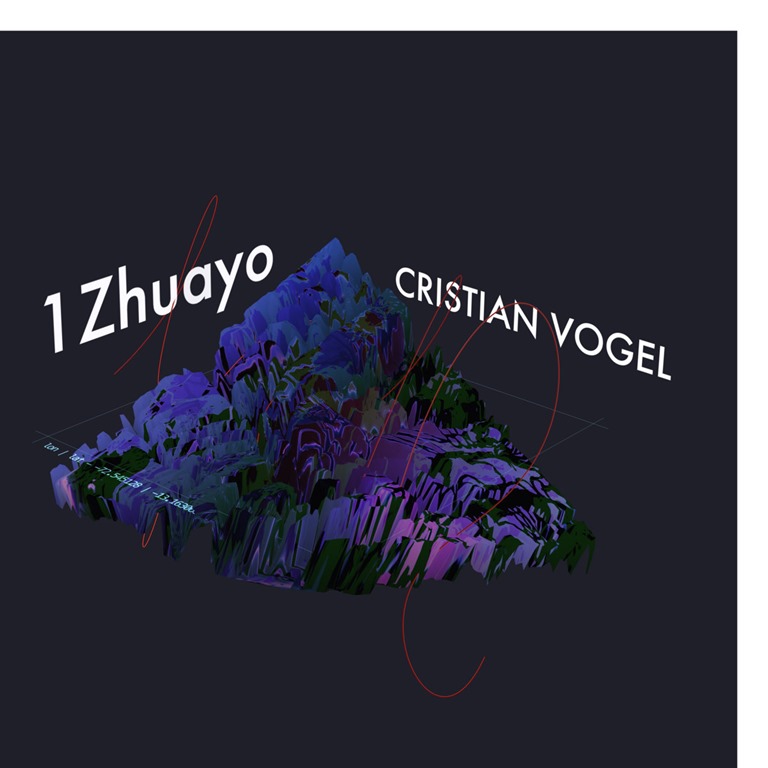
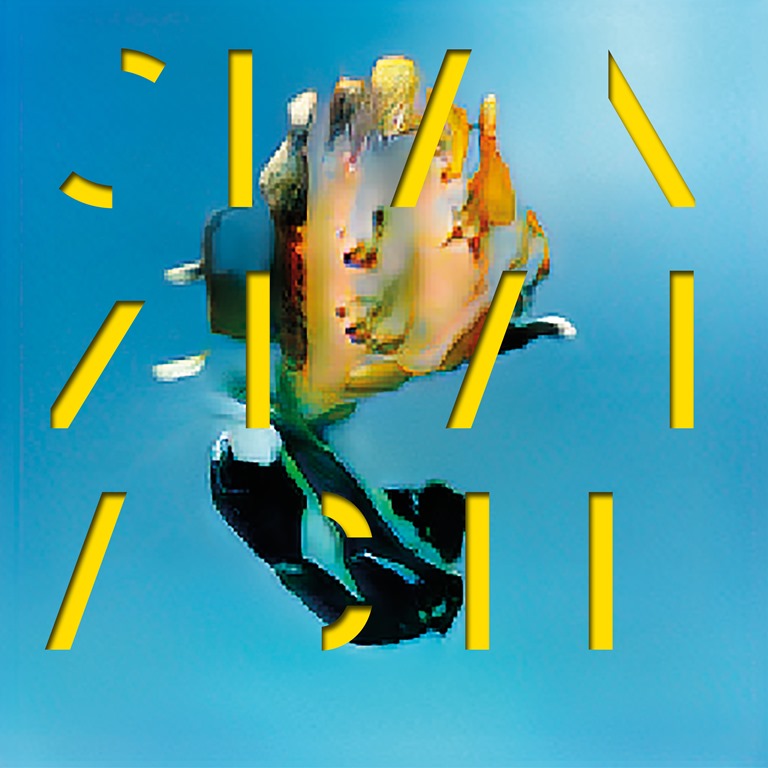
Shanzhai Acid is a remarkable abstract work that delves into microtonal and glitch territory, swerves wide into drone and ambience, and scratches at the shores of early industrial and vintage avant-garde. With such wide-ranging elements scrunched together, it’s a unique hybrid and a refreshing, if at times challenging listen. And while you should supposedly never judge a book (or album) by its cover, Shanzhai Acid sounds like the cover looks.

AA

Shanzhai Acid album cover 6000px RGB

Lifted from their recent AA-approved Slowburn EP, Dissonance have released a lyric video to accompany the Smoke and Mirrors Mix courtesy of James Reyna, aka Melodywhore.

It’s a slowburn indeed, and you can watch it here:

http://a%20href=

AA

a3299441169_10

Audiobulb Records – 2nd March 2022

Christopher Nosnibor

Experimental and underground music, particularly of the electronic persuasion is a broad field, but, it would seem, a small world.

During lockdown, the Nim Brut label hosted a series of virtual gigs, where performers would submit sets accompanied by visuals, and the resulting streams were varied and eclectic, in the best possible way, presenting the full breadth of the melting pot of a diverse and disparate milieu. As is so often the case with events of this ilk, everyone was not lonely accommodating, but welcoming toward one another, celebrating the differences in style and approach.

Feast 5, back in August of 2021, was a belter, and not only because as half of …(Something) Ruined I got to unleash new brutal noise in a safe environment, but got to do so alongside some remarkable artists, notably Omnibael, who have featured a number of times here. Also on the bill was a performance so brief as to barely be an interlude, something I described as a ‘shifting wave of glitchronic ambience’ courtesy of Neuro… No Neuro, of whom I knew nothing, until today, when on the arrival of Faces & Fragments in my inbox, I learn that NNN is ‘a moniker of the electronic musician Kirk Markarian, an avid synthesist, drummer, abstract painter, and graphic designer residing on the alluvial plain of the Sonoran Desert, in dry and dusty Tucson, Arizona’.

The title is a fitting summary of the album, both its input and outputs, and the lived experience of listening to the thirteen pieces, which are as much collages as compositions.

As the liner notes explain, ‘Each track illuminates fragments of memory and speech, as they wander out of focus in the growing aperture of time.’

As such, each piece is formed, sculpted and layered, from an array of sounds and sources, snippets, and scatterings, fleeting and ephemeral; chiming notes ring out over soft washes, sporadic glops and plops, like drops of water falling in a cave, overlaid with brief fragments of voices. On ‘Everybody is Out to Get You’, those voices slow, distort, blur, into a nightmarish nagging. It drags on the psyche, against a skittering, jarring backdrop what warps and tugs unsettlingly, and makes for awkward, queasy listening.

Neuro… No Neuro’s own comments on the album’s formulation and function bring us closer to the heart of the state of confusion it creates, explaining, “Each track shares the ‘fragments’ of speech/memory, the growing aperture of time and loss of thought. While forming sentences via type has not declined (because there is time available), speech and recollection are steadily decaying into simplified phrases and poor playback for quick address.’

As William Burroughs said, the function of writing is to ‘make us aware of what we know and don’t know we know’, and this was particularly pertinent in the context of the cut-up texts he produced, essentially collages of other texts designed to recreate the real-time experience of memory and sensory awareness, and the simultaneity of events. We do not live in linear time; we experience multiple sensations simultaneously; thoughts, sounds, conversations, things happening around us all occur on the same timeline, in layers, and our memories record these experiences. This is the sensation that Neuro… No Neuro recreates with Faces & Fragments, from the stop start jittering of ‘Slice of Mind’, to the trickling sedation of ‘And the Energy Goes Back to the Ground’.

The faces blur into anonymity after a while; people look alike and are strange or strangely familiar, and things can get confusing after a while. Faces & Fragments may not – and probably doesn’t sound just like your internal monologue or the soundtrack to your life, but structurally, the resemblances are clear once you step back and reflect. Our thoughts are a jumble of intrusions and overlaps, with memories and recollections triggered by the most random associations and events, sometimes with seemingly no trigger at all, and all flitting through at the same time as you’re watching TV or scrolling through social media shit on your phone as messages and emails ping in and there are conversations and the radio or TV is dribbling away while dinner’s bubbling away in the oven. Life never stops: it happens constantly and all at once, overlapping, overwhelming. Faces & Fragments is a slice of life.

AA

AB119_front

Postpunk-darkwave-electro trio VONAMOR presents their pulsating and enthralling new single ‘You the People’. Recalling the best dark pop of the ‘80s, this is the second taste of their impending debut VONAMOR album, an 8-track collection produced by Lucio Leoni and being released via Time To Kill Records (TTK).

The hypnotic fast-paced videoclip features dystopian imagery depicting the messed-up and borderline world in which we live. The sound weaves together stories of men, power and protest worldwide to sharp dialogue between male and female, voiced in English and Italian. Colours and pounding images mesh with archive footage of clashes between people and power, men and progress, technology and freedom, as flashes of our modern world strike your retina.

“Through our darkwave music and words, we search for the question, the ambiguity, the multiform influence of a variety of demons. We feel the urgency of questioning ourselves, our fellow human beings and the reality around us," says Giulia Bottaro.

“At first it may seem you are watching the videoclip for ‘You the People’, but the more you go on, you may feel that the video itself is watching you – and you are there, at the very intersection between we and you, between past and present, between desire and fear, between sound and colour.”

‘You The People’ underlines VONAMOR’s dialecticism and style, as well as their will to convey originality and sensuality, even when menacing, with passion and intensity. Eternally playing with words and sounds, they never lose sight of the rhythmic, Dyonisian and captivating soul of their electro dark, post-punk vision.

VonaMOR 2

This single follows the lead track ‘Take Your Heart’, which has been met with international acclaim, and its intriguing video, directed and edited by Fabio Santomauro. Last year, the trio released the singles ‘Never Betray Us’ and ‘Fast-Forward Girl’.

VONAMOR is made up of sisters Giulia Bottaro, Francesca Bottaro and Luca Guidobaldi, with Francesco Bassoli and Martino Cappelli joining the trio for live performances. The band’s roots date back to 2016 in Rome. Initially focused on communicating images and composing scores for short films, they morphed into the trio we know today with their style, literary echoes, imperious art-pop and enigmatic aesthetics.

“VONAMOR is an escape plan, our treasure island, a thick and savage jungle that gives you the chance to let your prayers and whispers reverberate like a church. We used the music in this album to walk paths that we hadn’t known before, to connect Rome to Paris to Berlin to Beijing, to mix techno music with folk, to let our voices and bodies mingle and dance to an incredibly weird yet familiar beat, and finally to search for a boom of love and light into the dark of our everyday life: yes, VONAMOR is a boom!” says Luca Guidobaldi.

Watch the video here:

AA

vON PPL

Dret Skivor – 4th February 2022

Christopher Nosnibor

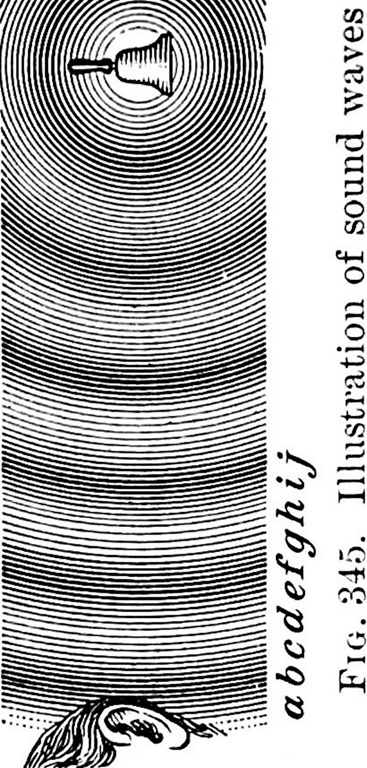
Either delayed or having skipped January, Dret Skivor’s latest monthly instalment marks quite a shift from December’s spoken word / harsh noise assault. Fern’s Illustration of Sound Waves belongs to the field of sonic microanalysis: specifically, as we learn from the minimal notes which accompany the release ‘The source of inspiration and foundation for the entire compilation have been the possibilities and limitations of the buchla 208c’. The ‘legendary Music Easel instrument’ is a modular device, and a fucking expensive piece of kit to boot. And yet it, like any other instrument, device, or programme, has its limitations.

Tonal range isn’t one of them, and nor is its capacity to create eerie electronic soundscapes, and there are plenty of both on Illustration of Sound Waves. I would perhaps be interested to hear of Fern’s frustrations, and also his motivation for this intensely-focused exploration of the buchla 208c. Many such releases offer extensive explanations of the process – sometimes to the point of excess,

‘Closed Geometry (Circle)’ bleeps and blips, while ‘Action & Reaction’ paints a haunting scene, based around sharp needles of feedback and warping, curved drones. ‘Blame the Wires’ is a classic modular synth noodle, a cyclical, repetitive motif looping hypnotically over a subdued echo of a beat, pulsing gently in the background. ‘Apparatus A’ sinks deep into the depths of swampy murk. The beats are subdued and muffled, and the entire EQ is pitched into lower and mid-ranges. There’s a slow, growling oscillation somewhere deep in the mix, and it’s a grating, Suicide-like drone that sneers and snarls on the heavyweight ‘Way of the Waves’; waves that pulse and grind and groan and thicken and envelop.

There feels like there’s a distinct and definite trajectory to the album, as the sound grows darker and denser as it progresses: this changes with the pairing of the final two pieces, which mark a rapid return to bubbling, bleeping circuitry and sound, in many ways, like an escalating meltdown of circuitry. This feels like a fitting finale to the album, as well as an apt conclusion as we melt into the waves, drowning slowly in a sea of static.

AA

a0490863369_10

Cleopatra Records

Christopher Nosnibor

Well, this is pretty fucking intense. Released to promote the duo’s new album, ‘Hear My Call’ is a beast. The verses are queasy, ominous with a hushed, almost strangulated tension. In contrast, the choruses are utterly pulverizing in their weight and density: there’s nothing hushed about them, and the tension is released in a chthonic snarl. The vocal transition is remarkable, as Lilith gears down an octave at least and flicks from anguished to a raging demon spewing toxic flames from the very bowels of hell. The crossover between electronica and black metal is almost schizophrenic, but Luna 13 render it in such a way that it’s perfect, that switch that happens at an imperceptible trigger lands with eye-popping precision, and the video, directed by Vicente Cordero (Stabbing Westward, Filter, 3TEETH) is a magnificent visual reflection of the music.

For a start, there’s splattered gore galore, as Lilith Bathory sloshes around in a bathtub that’s initially brimming with rose petals but before long it’s a streaming splatterfest where said tub is brimming with blood. She twitchily dials the telephone… and it transpires she’s not calling The Samaritans, but instead she connects on a hotline to Satan, and it cuts, and she’s a roaring, horned demon, and to the side, Dr Luna yanks a huge phallic lever that seemingly drives this whole whorl of chaos that’s blackened beyond black, the sound of scorching incineration.

A lot of so-called ‘occult’ and ‘Satanic’ shit is – well, shit – corny, half-baked, a bit laughable, at least to anyone not already invested, and you wonder how people take so many of these bands seriously. Not so Luna 13: this shit is truly terrifying. There’s no denying that some off the elements are perhaps cliché; masks, blood, and so on and so forth, but it’s all in the execution. Sonically, and visually, they’re full-on, and fearsome.

AA

740148

Oregon-based electronic act, Luscious Apparatus has just unveiled their debut single, ‘Infiltrate.’

‘Infiltrate’ is about domestic violence, the kindness of strangers, and helping someone escape from an abusive relationship. The lyrics were triggered by an article that offered an excruciatingly detailed account of the horrors inflicted upon one of the victims of Brian Warner, aka Marilyn Manson.
The song speaks to the often terrible and destructive power wielded by abusers. It attempts to inspire hope and strength for anyone who has found themselves in an abusive situation and are trying to find their way out of the fog.

Check ‘Infiltrate’ here:

Luscious Apparatus blends cinematic soundscapes, synths, shoegaze textures, and syncopated percussion, to create a sound best described as Electrogaze or Noir Pop.  Founded by Jack Norton as a studio project in 2019, the Portland, OR based act evolved during the great plague of the early 2020s with the arrival of Sandi Leeper on vocals. Catherine Hukle, a guitarist from Seattle, moved to Portland, providing the band’s signature walls of sound. Daniel Henderson joined on drums in late 2021. All members are active in writing and producing for LUSCIOUS APPARATUS.

Luscious Apparatus’ roots are spread wide throughout the post-90’s post-punk scenes. They incorporate everything from goth and industrial to indie rock, electronica, and trip-hop. Influences are broad: from Nine Inch Nails to Garbage. Joy Division to Massive Attack. Gary Numan to My Bloody Valentine. Frontline Assembly and Delerium.

dfa2e915-4ed6-f76a-763b-c37c6b3598a8

11th January 2022

Christopher Nosnibor

Curse my brain. It’s so unhelpful at times. When Tim Hann – aka break_fold – emailed me his new single release, I managed to misread ‘Welwala’ as ‘Welawala’, and immediately my mental jukebox struck up ‘Summer Nights’ from Grease. ‘Tell me more’, you say?

Uh-huh, ok. Having recently connected with analog horizons, with whom this is his second release ahead of the fourth break_fold album, scheduled for release towards the end of 2022, Tim’s been gaining traction with support for previous singles ‘Meanwhile.. Up in Trump Tower’ and ‘Variant’ from BBC 6 Music DJs Gideon Coe and Steve Lamacq.

As is common for Hann, it’s a TV series that in part inspired the composition: on this occasion, it’s the sci-fi show The Expanse as well as Blanck Mass’ Calm with Horses film soundtrack (as far back as the debut album by I Concur, Hann was drawing on The Wire among his wide-ranging sources).

Gary Numan-esque synths and that crisp crack of a vintage drum machine snare sound. Beneath the bold strikes builds first a later of bass, then a bubbling synth loop, and then the drums kick up a notch and beat harder. As the elements layer up, the track takes on new depths and grows in intensity. The dropdown is perfectly timed, and from there it builds again. Compositionally it’s magnificent, and there’s a lot of action and dynamic work packed into three-and-a-half minutes. It’s tight, and the production is poised, just-so, and it all comes together with a precision that at the same time feels intuitive, and it’s that intuition that really gives it some force as it pushes the listener along in its swelling current.

As the press release explains, ‘Welwala is about seeing something from two different points of view. It is structured around two contrasting synth lines with focus shifting between them, evoking both optimism and threat. These are layered with an insistent drum track in a sequence that hints at narrative evolution.’ So, a bit like ‘Summer Nights’ then. I mean, ok, not musically, but my misread was right about the telling the story from two different perspectives, right? Right?

AA

a2453954432_10

26th November 2021

James Wells

This one’s been a looooong time in the making. Like so many other creative projects, the pandemic compelled Frank Svornotten to get his shit together to revive a project that to all intents and purposes was dead and buried, and to see it to completion.

As the bio that accompanies Retroject explains, ‘Retroject is an album that was begun in 2001 but has just seen the light of day in 2021. Some of the songs may feel nostalgic and dated and that is because, well, they are!!! An excess of free time during the Covid-19 pandemic eventually grew tiresome and monotonous. So, it was decided to finish the album that had begun many years prior!’

Much as I sympathise with all of the people unable to work during lockdown, and all of the furloughed workers who struggled on reduced salaries, I can’t help but be a shade envious of all of these people who found themselves with an abundance of free time to explore creative avenues. Having a dayjob that meant working from home was entirely feasible, meaning that it was business as usual, but with home schooling on top thanks to the closure of schools, I found myself with less time than ever, and I couldn’t even go to a gig or hit the pub to unwind after.

Retroject certainly isn’t an album to unwind to, either. It’s a gnarly electogoth effort, with hefty dollops of early NIN and the signature Wax Trax! electro sound providing much of the influence there. ‘W.H.A.T’ could easily be mistaken for an outtake from Ministry’s Twitch, and would also have easily made the cut for a Wax Trax! single release in the late 80s / early 90s, while ‘Love, Hate and Machines’ really brings that KMFDM vibe and slams it in hard with some cybergoth dance grooves. Elsewhere, ‘Train Song’ is pure pop and is more Aha than aggrotech.

Some of the tunes may sound a shade dated (‘Mysterious Angel’ sounds like Depeche Mode circa 1981, which is particularly eye-opening for material from 2001), but then again, there are acts still cranking out material that sounds exactly like this, and there are some real industrial stompers along the way, and these never tire or grow old, regardless of the instrumentation, regardless of how tinny or trebly the synths sound. What matters, ultimately, are the songs, and Retroject packs some real bangers, propelled by throbbing synths and splenetic rage.

AA

a3867323310_10

Everest Records – 14th January 2021

Christopher Nosnibor

Language is fluid, it evolves. Sometimes I appreciate that, and like the fact. Other times, this is something which can be intensely frustrating, and it seems the meaning of hypernormal has evolved – seems to have been reconfigured, rechannelled – with remarkable rapidity. Initially, it was something of a colloquialism, an on-trend sassy term to describe something that was so normal it was beyond bland.

The connotations of the scarily mundane, the individual who was so lacking individuality that they made clones appear unique, which emerged late in the first decade of the new millennium remained largely stable until Adam Curtis delivered his seismic three-hour documentary in 2016, which espoused the theory that HyperNormalisation is a process whereby a mundane, readily-digested version of life and society has been superimposed over the complex world by those in power. And so according to this, we now live in a ‘fake’ world. And this concept of a constructed reality overlaying the true reality seems unsettlingly feasible. What, and who can you trust or believe? Trust no-one; believe nothing.

Perhaps because I think too much and don’t sleep enough, I’ve wondered ever since I was a child if the world we live in is real, or if we’re all figments of our own imagination, and if reality is a construct. Yes, I experienced existentialism combined with some kind of take on The Matrix at the age of five. But I digress, and there is a point to all of this, and that is that nothing is fixed, nothing is certain. We know so little, we don’t even know ourselves.

Pless’ hybrid sound is absolutely not normal, and it’s certainly not normal beyond normal so as to be the next level of mundane; but nor does it feel entirely like a carefully-constructed fiction which bears the ultimate lie. That said, there is a certain element of deception here: the façade of simplicity, of minimal, semi-ambient electronica belies the detail and complexity of these layered compositions, and as such, it’s something not normal, disguised as something that resembles normal, or at least familiar. Ultimately, it’s something else entirely; something mellow, something layered, something dark and something light. All of this filters into cognisance in the first piece, the slow-paced, semi-abstract ‘Azure’, whereby spectral synths drift around a metronomic drum and ever-moving bass tones.

The drum sound is noteworthy: it’s somehow immediate, up-front, and dry, as well as reverby, landing between Joy Division and Duran Duran.

The synths of ‘La Cienaga’ lean towards A Flock of Seagulls, but the stuttering drums and stammering incidentals contribute to transporting this track to another place entirely, one filled with dark shadows cast by brooding electropop and darkwave. Meanwhile, the six-minute ‘La Grenouille Volante’ has a bass that thrums like an engine throbbing at the dark heart of its soft ambient washes and distant drums. Around two-thirds in, it unexpectedly revs up a gear, and while the same, the additional volume translates to additional intensity, too.

The haunting, spectral organ drone of ‘Ante finem’ is blasted through with hefty tribal percussion, gradually shifting to a slow, deliberate bass-driven trudge, while ‘Fog City’ is every bit as murky and disorientating as you would likely imagine, with vocal samples and reverberated snare cracks echoing through stark synth stabs, and ‘Hot God’ comes on like a collision between Kraftwerk and DAF with a dash of early New Order, mining a deep seam of late 70s/early 80s electronica. The final track, the ten-minute ‘Reodorant’ is a dark-ambient epic in every sense, deep, moody, a little unnerving.

Each of the pieces shifts as it progresses, and evolves over the course of its duration, often subtly, twisting through expansive soundscapes front one plateau to another. Under the cloak of minimalism is shrouded considerable detail, and a quite remarkable focus on texture and movement. Even in the most stagnant of moments, there isn’t an element of stillness here. It may be cold, it may be distanced, but it’s also quite its own work. Normal? What even is that anyway? Stark, sparse, yet so, so rich, with Hypernormal, it becomes clear that Pless is more.

AA

a2732208461_10