Posts Tagged ‘electronic’

Nahal Recordings – 10th April 2020

Christopher Nosnibor

Because detail is important, let’s begin with the parenthesis. The label’s press release announces ‘We teamed up with the extraordinary French ondist Christine Ott to create an unprecedented album entirely made with Ondes Martenot, one of the very first monophonic and experimental synthesizers in history’, resulting in ‘a cosmic journey of layered waves of sound’.

Maurice Martenot’s invention may not have acquired the popular status of the theremin, but Christine Ott’s instrument of choice is nevertheless significant in the evolution of sound generation as one of the very first monophonic and experimental synthesizers in history back in 1920.

Chimères begins with a pause, at least metaphorically: ‘Comma’ is six minutes of instrumental hauntology, as the notes trail, taper and quaver into still air and silence. As the album’s title suggests, this is a curious hybrid work, and while perhaps less monstrous than all that, the Ondes Martenot conjures strange, otherworldly sounds that are, at times, quite unsettling as they yawn, quiver, and squelch into seas of reverb. At times resembling analogue synth sounds, and at others approximating strings and even woodwind, the

‘Todeslied’ is the sound of disembodied spirits flittering around in the physical world, a phantasmagorical freakshow of sonic ectoplasm which gradually bubbles its way through a succession of bursts and plumes via something semi-industrial into a tranquil sunlit meadow of sound. Meanwhile ‘Sirius’ brings some deep ambience, while the eight-minute ‘Eclipse’ brings swirl of darkness that’s more of a sucking black hole than a fleeting dimming of light, building to a whupping rotary sound and blizzard of bleeps in the final minute.

It’s a lot to take in, and closer ‘Burning’ is a magnificent if slightly disorientating combination of slow-glooping electronica and orchestral chamber music. It isn’t easy to assimilate, but it is wonderfully executed, and once you can overcome the unfamiliarity of the form, there are some magical moments to be discovered.

AA

a3802769926_10

The Crescent, York, 14th March 2020

Christopher Nosnibor

It doesn’t seem real now. It was the night before everything changed, before everything changed again a couple of days later. While cancellations were accelerating, advice and clarity was sparse, and what constituted ‘the right thing’ was very much a matter for debate. The Crescent were very much doing ‘the right thing’ based on the advice: punters were steered to washing their hands on arrival at the venue: those without e-tickets advised to pay by contactless card, while also paying contactlessly at the bar, being served by staff in gloves, pints being served in cans or single-use plastic vessels. Social distancing wasn’t yet a specific thing, and there was scant information which suggested that in excess of 15 minutes in close proximity may increase the risk of transmission. We greeted with elbows and nods. In the main, we respected the guidelines.

I’d be interested to know how many of those who attended have subsequently fallen sick with Covid-19. Not all of us were in the ‘young’ demographic; none of us was being wilfully irresponsible. The virus has become divisive in the way that Brexit was: on social media, in particular, anyone leaving the house risks being subject to vilification, abuse, and even police interrogation. We now live in a climate of fear – an unprecedented climate of fear, dominated by an unprecedented overuse of the word ‘unprecedented’.

The middle of March: a mere month ago, but another lifetime. Gig attendances were already beginning to drop off sharply as the fear spread. And with everything amping up, there was a certain sense of occasion about this: I sense that many of use attended as much out of a sense of solidarity and support: solidarity and support for the bands, the venue, the local scene, and one another. And because we knew, if only subconsciously, that the opportunities to convene like this would be numbered. Gatherings like this are what keep communities together, and keep many of us sane. I’m elated to see numerus friends, including some I’ve not seen in far too long: we catch up about parenthood and our concern for our elderly parents under the creeping shadow of the virus. We drink beer, and we watch bands.

Viewer haven’t been out in a while, and apart from time down the pub, have almost been on a self-imposed isolation for I don’t know who long. I’m not even sure Tim Wright would notice a 12-week lockdown. But here he is, hunched over a laptop, cranking out beats and backings and migraine-inducing visual backdrops while AB Johnson – still suffering the effects of concussion and sporting a black eye and struggling to remember the lyrics after a recent accident involving his face and the pavement – pours every ounce of energy into his performance. They’re the primary reason I’m here, and given the quality of the songs, the visuals, and the people they’ve dragged out of the woodwork, every moment is a joy. Johnson’s lyric sheets are scattered around the stage and his difficult relationship with mic stands is evident tonight. But despite any shakes or glitches, they remain one of the most essential acts around, and just need for the world to catch up.

DSC_3727[1]DSC_3723[1]

Viewer

Soma Crew are showcasing (another) new lineup tonight, with a minimal drum set-up and lap steel dronage and slide bringing new dimensions to their deep psych chugging repetitions driven by varying between two or three guitars. My notes begin to descend into sketchy incoherence around this point, but the memory-jogging ‘RRR’ reminds me that they’re masters of the three ‘r’s – repetition, repetition, repletion, and they slug away at three chords for five or six minutes to mesmeric, hypnotic effect. It seems that every time I write about Soma Crew, I remark that they’re better every time I see them. And yet again, it’s true. They’re denser, more solid, more muscular, and tighter than ever, and on this outing they feel like a band who should be playing to way bigger crowds, capable of holding their own at the Brudenell or the Belgrave.

DSC_3730[1]

Soma Crew

Leeds’ Long-Legged Creatures are new on me, and they impress, with a fluid bass and big washes of texture defining the sound. An eletro/post-rock/psych hybrid, they lay down some hypnotic grooves, and my sketchy, increasingly beer-addled notes remind me that their performance is frenetic, kinetic, with some strong – and complex – drum ‘n’ bass / jazz drumming driving the songs.

DSC_3746[1]

Long Legged Creatures

Things take a major left-turn when some poet guy steps up to the mic and spews lines and rhymes like John Cooper Clarke on a cocktail of drugs. A spot of digging suggests he may be Joshua Zero, but I may be wrong. He’s a compelling presence, though: he’s wild, he’s crazed, and his staggering vitriolic attacks are in stark contrast to the coordinated post-rock jams of the band. It’s as exhilarating as it is unexpected. It’s great.

Maybe you had to be there. Maybe you were better avoiding it. But I’ve no regrets. I miss gigs, I miss pubs, I miss live music, and I miss people. At least my last experience of all of these was truly wonderful and encapsulated everything I love about this.
13th March 2020

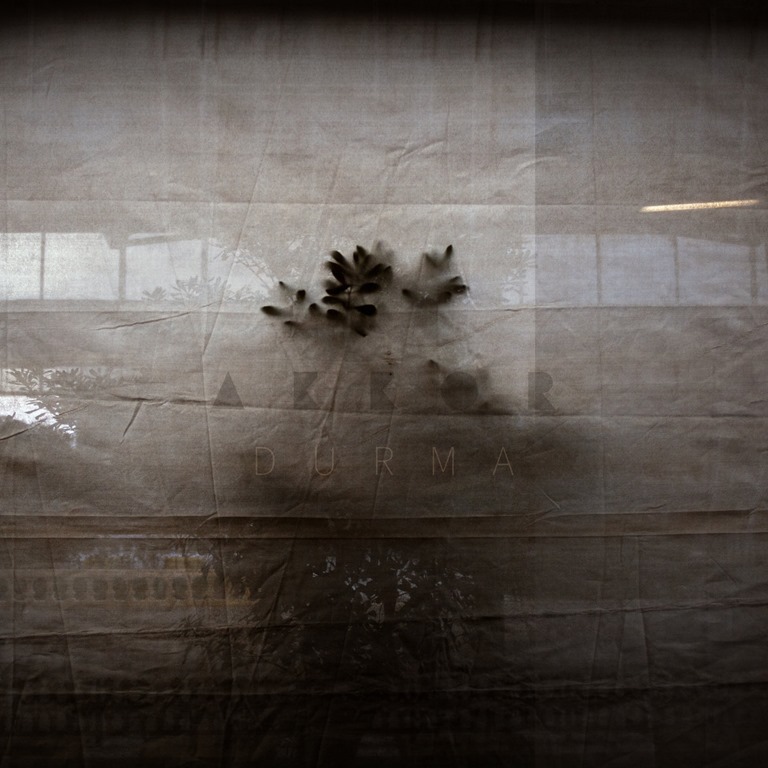
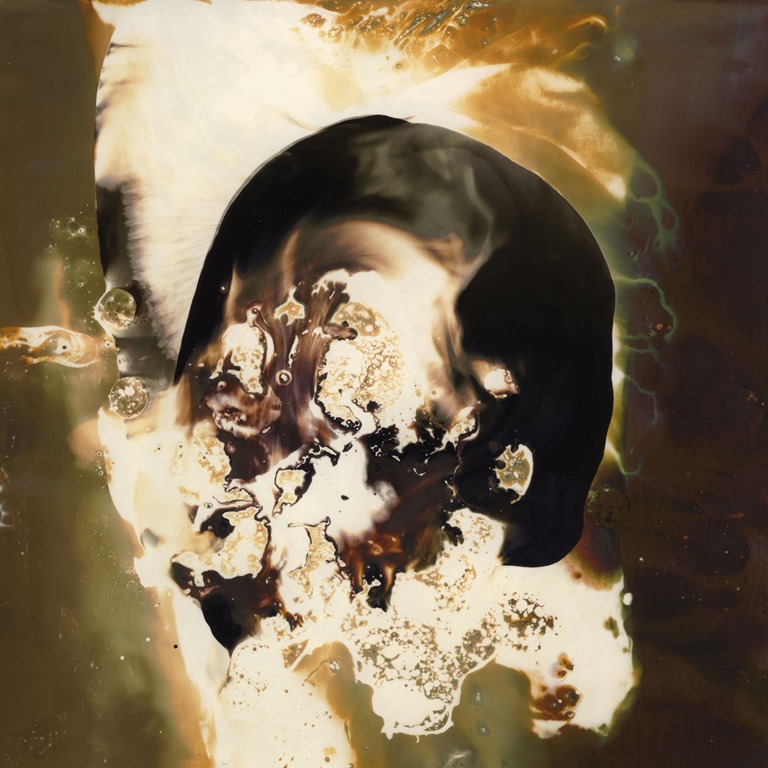
Following on from the single cuts ‘An’ and ‘Zabt’ in January and February, Turkish musician Akkor unveils the full-length album in the form of Durma, which promises ‘an electroacoustic narrative in a progressive cinematic sound universe through piano, synthesizers, soundscapes and recorded/found noises’.

What these releases hinted at, and which the album confirms, is that Akkor’s approach to combining found sound and electroacoustic arrangements are subtle, seamless, even. Rather than collaging cut-up fragments and snippets across one another to disorientating effect, Akkor processes everything, hard, smoothing it together to form a whole that’s textured but remarkably coherent. That there’s an overtly structured feel to the album, with piano motifs and defined beats holding things together is the key here.

The ten-and-a-half minute title track which opens the album is a spacious ambient work that rumbles, scrapes and soars towards the stratosphere before the thudding electro beats kick in and pull it back towards the ground. It’s mellow and expansive, but there’s a solidity at the core of the cloud-like drift.

It sets the tone and the form nicely. With all but one of the seven tracks stretching past the five-minute mark and the majority in the six to ten-minute range, Akkor isn’t afraid to explore, to give his ideas and the sounds that carry them room to breathe. And Durma is one of those albums that’s best experienced as a whole, not because of continuity or flow, but because it sits together as a single piece. And when heard as such, it’s an absolute pleasure.

AA

a0820826066_10

This is it Forever – 14th February 2020

Christopher Nosnibor

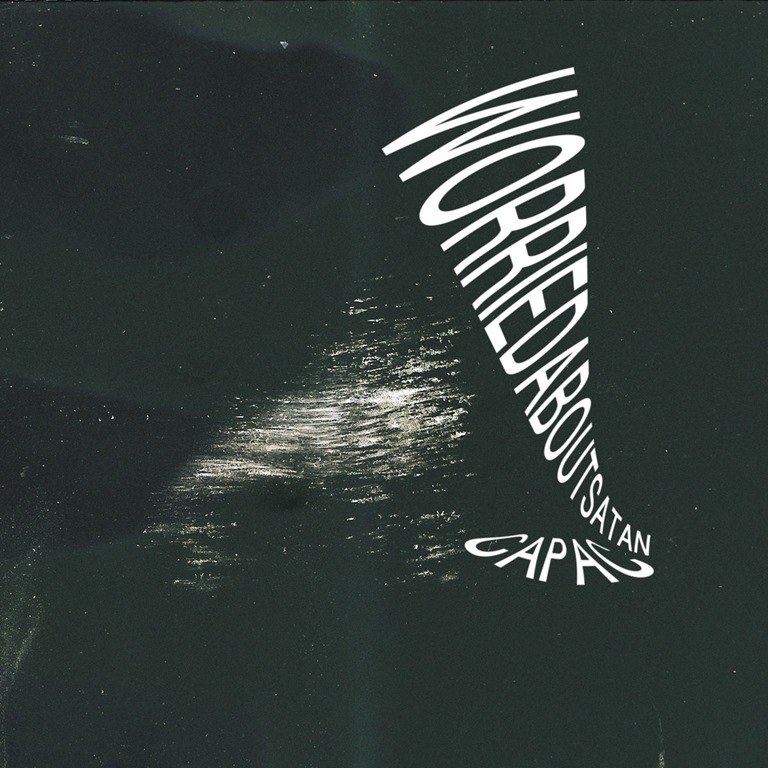
Since whittling down to just Gavin Miller, worriedaboutsatan’s outut has positively exploded, with the latest offering, which Miller describes as ‘quite an experimental little thing’ sees him share a tape – a side each – with Capac.

‘Orion’ is indeed quite experimental, and marks something of a departure for Miller, transitioning through a sequence of passages that rupture forth unexpectedly. At its heart, the piece is appropriately spacey, with squelchy quirts of analogue phase illuminating the smooth, slow-moving expanse of soft drones. It’s dense and atmospheric, and distant rumbles of thunder register like planets colliding way off in other solar systems before heraldic horns and full galactic marching band parades it way through. Gunned down in a blitzkrieg of lasers and noise, leaving an expanse of desolation, a near-emptiness.

Capac’s ‘A Well-Turned Suite’ is altogether darker, an eerie discord creating an ominous atmosphere. The four-piece describe themselves as creators of ‘sonic explorations of the murkier spaces in and between “new music”, and there’s certainly an exploratory quality to this fourteen-minute aural ambulation. At first there is calm, sustained notes that hover and hum for an age, stretching time itself. Gradually, cracks and fissures begin to appear in the smooth surface, and wheezing organ notes begin to twist and disconnect, and over time, the tension rises as atonality takes over. Muffled beats stutter and thump anxiously, and the sloe fade leaves only the whisper of the breeze.

It’s an intriguing release, and the two pieces are unusual and more than contrasting enough to sustain the interest for the duration.

AA

WAS and Capac

Monotreme Records

Christopher Nosnibor

I met my wife as she now is online back in 2000, before it was the done thing. Online dating didn’t exist, and we got chatting in Holechat, the band’s official online chatroom. We were both there because we had an appreciation of Hole, oddly enough. But Celebrity Skin has always been a point of division, in that it was my point of departure, with single ‘Malibu’ being a significant factor. To my ears, it was, and remains, the sound of selling out, and while pop is by no means is dirty word for me, it represented a slide into lazy, poppy commercial rock. From the band that brought us the snarling, spitting mess of noise that was ‘Teenage Whore’, this was the work of a band who’d completely lost their bite.

This is the personal context for my engagement with Stumbleine’s cover of ‘Malibu’, released as the second taster of the forthcoming album ‘Sink Into The Ether’, which promises ‘a deep submergence within a celestial upper region somewhere beyond the clouds’, and on this outing, ‘a lush ambient electro cover of Hole’s ‘Malibu’ featuring Elizabeth Heaton of Midas Fall on vocals’.

According to Stumbleine, ‘Hole’s ‘Malibu’ is the perfect balance of bittersweetness, a golden soundscape of serene melancholy. Tracks which illustrate that symmetry between light and dark are timeless to me, they mirror life with piercing clarity.’

That’s clearly a different perspective on the song from the one I have, and clearly informs this breathy, slow-unfurling drifter of a tune that bears negligible commonality with the original bar the lyrics. It’s slowed to a dripping mellowness that’s pleasant on the ear, but so prised apart and washed-out it’s bereft of chorus, hooks, or any other memorable moments. And in context, it’s nicely done, but it’s perhaps less of a cover than a reworking that’s 99% Stumbleine and 1% Hole. In this instance, that’s not such a bad thing.

Christopher Nosnibor

The Wonkystuff nights to date may have been a shade sporadic, but that’s what happens when the organisers have day-jobs and families, and more importantly, what they’ve lacked in regularity, they’ve more than compensated in quality, and that’s a major reason why there’s such a respectable turnout to a gig midweek, mid-January, in York. There’s also the warm, welcoming vibe: these nights may be musical showcases, but they’re also a coming together of an oddball community, where we’re all misfits together and it feels good and feels like home. Tonight’s lineup – as usual – demonstrates John Tuffen’s skill for bringing together acts who provide a satisfying balance of contrasting and complimentary.

It’s the Wonkystuff House Band – a collective rather than a fixed entity, tonight comprising Tuffen alongside Ash Sagar and Simon Higginbotham – who warm things up with a set consisting of permutational repetitions delivered by multiple vocals, delivered in a drab monotone over repetitive beats. Comparisons to Can, Cabaret Voltaire circa ‘Nag Nag Nag’, The Fall, Flying Lizards, Girls vs Boys, Young Marble Giants, and the more contemporary Moderate Rebels all make their way into my notes as I watch them crank out vintage synth and drum machine sounds. Cyclical bass motifs and whizzing diodes fill the air as they sit and twiddle knobs and read lyrics from clipboards and the historical leaps into the present for a while.

DSC_3198[1]

Wonkystuff House Band

The start of TSR2’s set crackles and pops fireworks. The trio hunch over customised kit with wires all over to create warped undulations and machine gun fire beats that batter the speaker cones. The set builds into a dense, murky trudge. The second track, ‘What will be’ is more co-ordinated than the opener, and is solidly rhythmic, mechanoid and spacious, and metamorphosises into some kind of glam reimagining of Kraftwerk via DAF. Heavy echoes and tribal beats dominate the third track, and they very much find their groove at this point, at least for a spell, before the construction grows shaky despite solid foundations. Perhaps it’s the sheer ambition of layering up so much at once that’s difficult to keep together. Despite this, the discord and dissonance are part and parcel of an intriguing set.

DSC_3201[1]

TSR2

Rovellasca takes the stage, quietly and understated and stands behind a bank of kit. So far, so standard. The set begins with deep, dark, rumblings, and very soon builds into something shatteringly immense. It’s dense. It’s loud, and fills the room like a thick, suffocating smog. The sound is thick, immersive. Time passes. Unexpectedly, elongated mid-range notes sound out and the underlying dense noise builds. I’m no longer listening: my entire body is enveloped. This is the effect of sonic force. Noise wall without the harsh. Burrs of static, pink and brown noise lurk in the immense billowing noise. The shifts are subtle, and gradual, but present over the course of the single, continuous half-hour piece. People start to become visibly uncomfortable after a time others vaguely bored. I’m loving it, and could listen all night. A slow fade to finish. The hush is deafening.

DSC_3204[1]

Rovellasca

It’s a hard act to follow, but See Monstd – the new musical vehicle of radiofreemidwich’s Rob Hayler is an inspired choice, in that it represents something completely different that thus prevents any risk of comparison. There’s a lot going on here: the set starts with a sample, then breaks into what my notes describe as ‘wtf noise’. It subsequently settles into heavy harsh ambience, with dense, grating drones providing the body of sound, with swerves off trajectory for spells of audience participation, with a phone being passed around for members of the crowd to repeat lines from the sheets circulated prior to the set. This is one of those performances where you never know quite where it’s going to go, and is all the better for the element of unpredictability.

DSC_3212[1]

See Monstd

And this, in a nutshell, is everything that’s great about the Wonkystuff nights.

After sharing the track ‘Dysfunctional Helper’ in late January, Joni Void – the avant-garde electronic project of Montréal-based composer Jean Cousin – is unveiling a second song entitled ‘Abusers’ from his forthcoming album Mise En Abyme. ‘Abusers’ highlights Cousin’s ability to craft gorgeously layered sonic collages, dextrously incorporating minimal percussive elements and melodic tones sampled from Ai Aso’s ‘Most Children Do’ with vocal contributions from fellow Montréal artist Sarah Pagé. Minute snippets of sound fit together in tight sequence, eventually giving way to stretched vocal arcs that remind us of the organic, deeply human instincts that root Cousin’s digital explorations.

Listen to ‘Abusers’ here:

AA

Joni Void

Rocket Recordings – 22nd February 2019

Christopher Nosnibor

Evolution – that’s perhaps the only word when considering Teeth Of The Sea. Their career is defined by it.

Their BandCamp biography gives some sense of context: ‘Since their formation in 2006, London-based Teeth Of The Sea have metamorphosized into the most adventurous psychedelic rock outfit in the UK. Taking on board influences like Morricone, Eno, Delia Derbyshire, Goblin, and the Butthole Surfers, they’ve arrived at an incendiary sound that marries the aural enlightenment of an avant-garde sensibility with the reckless abandon of trashy rock & roll.’

It was with Your Mercury that I joined the trip, sold instantly by ‘The Ambassador’ with its overloading noise intro, spiralling into a slow-paced desert rock weird out.

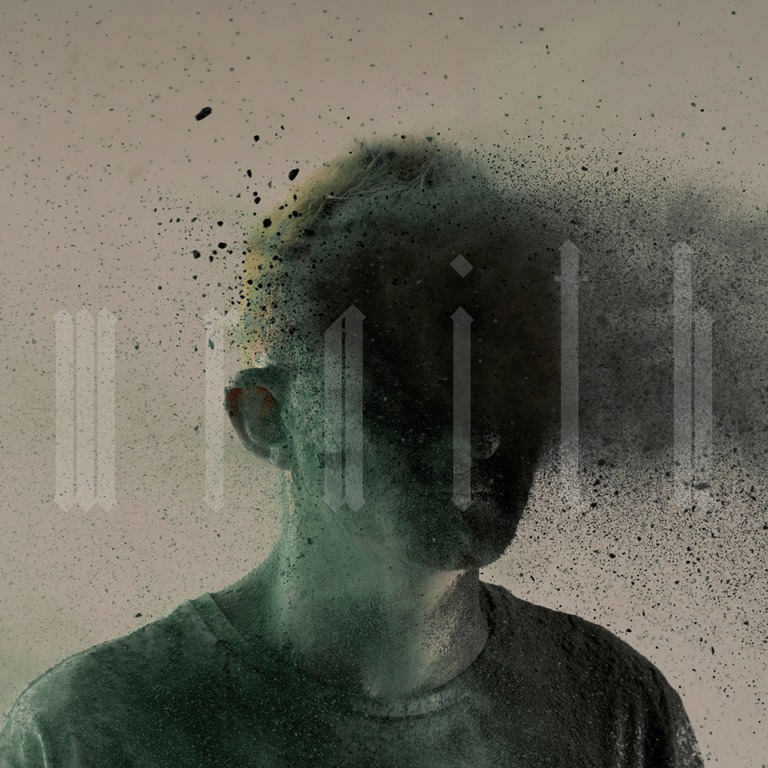
Each release has been different again, and so there’s nothing of that ilk to be found on Wraith, an album that’s slanted more toward the electronic end of the spectrum, although the guitars, while far from prominent, are very much integral to the texture and depth. But this being Teeth of the Sea, it’s a bit of everything all at once, and this is apparent from the very first track: ‘I’d Rather, Jack’ brings a sonorous bass and droning synth together over a thumping industrial disco beat with crashing snare that stutters and glitches all over, before jazz trumpet and a space-rock guitar fire off on different trajectories. It’s rare for such a maelstrom of ideas and forms to whip together into anything other than a horrible mess, but Teeth of the Sea manage to blend the ingredients into something far greater than the sum of the parts, the atmosphere shifting from oppressive to uplifting.

There’s some of the old Ennio Morricone vibe about the spaghetti western sunset guitar twang of ‘Hiraeth’, before snaking drums and twisted allusions to Asian musical motifs was in and out of expansive layers of brass on ‘Burn of the Shieling’.

There are hints of Tangerine Dream and expansive synthy electronica about compositions like the buoyant, spacey, retro-futurist ‘VISITOR’ and ‘Gladiators Ready’, which combines the tweeky, bleepy Roland sound that echoes Josh Wink’s remixed ‘Higher State of Consciousness’ with some gritty guitar noise off in the background. Equally, the forms belong equally to post-rock, and whereas peers Vessels have gone all-out techno and ditched any vestiges of their origins, TOTS succeed in creating the most dazzling hybrid, discarding nothing and instead assimilating an ever-widening range of elements into their work. There’s so much detail in every bar, from blurred, muttering voices buried in the mix to synth incidentals and shifting reverbs that it’s impossible to take it all in, and oftentimes, Wraith is an overwhelming experience.

The centrepiece of ‘Her Wraith’ and brief counterpart ‘Wraiths in the Wall’ explore more minimalist approaches, the forms vague and vaporous, as echoing piano notes hang in the air over mournful trumpet. Pulling back on the prominent beats and instead allowing ponderous strolling basslines to wander to the fore, they’re as intangible as the album’s title suggests.

An album this eclectic and uncategorizable rarely feels cohesive, but Wraith feels more like a psychotic mind-journey than an album. And it’s nothing short of epic.

AA

Teeth of the Sea - Wraith

Forking Paths – FP0015 – 5th October 2018

Christopher Nosnibor

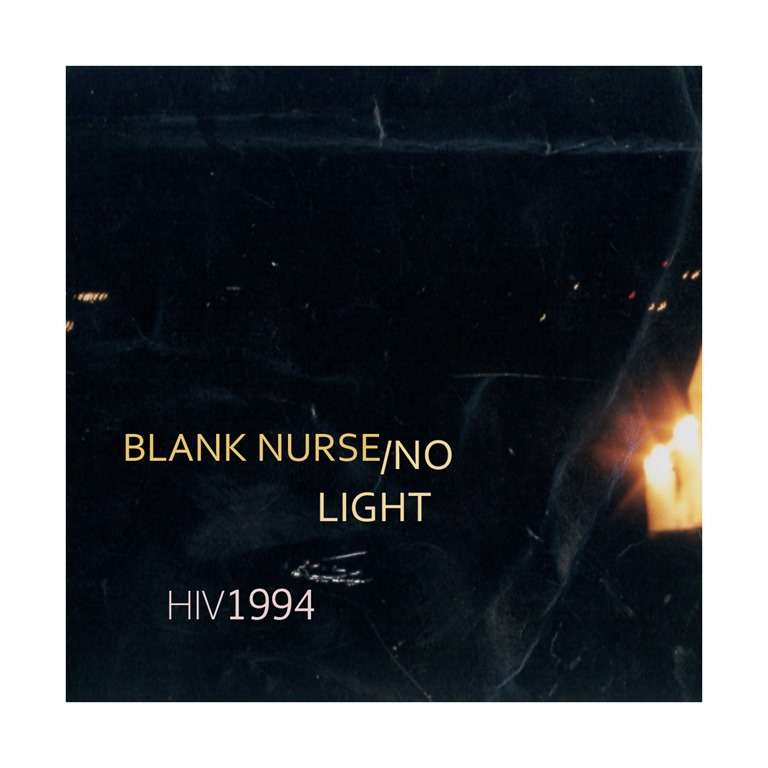
The title has very personal origins for Evan Davies, the man who records under the Blank Nurse / No Light moniker. A sufferer of Pure OCD – a form of OCD which manifests with no external behaviours or rituals, with the compulsions being mental rather than physical – and depression, Davies spent his teenage years tormented by the fear of HIV infection.

HIV 1994 sees Davies confront and channel the experience creatively, using what the press release describes as ‘often-overwhelming mental health issues’ to create song which are ‘like exorcisms for emotions and memories’. The context suggests that this was never going to be an ‘easy’ album, and however deftly Davies combines his wide-ranging and, in the face of it, incongruous and incompatible influences, which span ambient and neoclassical, hardcore, black metal, noise, and house, the clashing contrasts would be awkward enough without the anguish behind the compositions themselves. And so it is that on HIV 1994, Blank Nurse / No Light hauls the listener through an intense personal hell.

‘Blood Fiction’ begins with a collage of voices and extraneous noise before lilting string glissandos and a soft bass steer toward a calmer, more structured path. It provides a recurring motif, but one frequently interrupted by passing traffic and low rumbling noises. And so gentle tranquillity and ruptures of disquiet are crunched into one another before ‘Mocking of the Ghost of Crybaby Cobain’ really ratchets up the intensity with unsettling collision of styles, with pounding industrial percussion and expansive electronica that’s almost dancey providing the backdrop to the most brutal screaming vocals. It actually sounds like an exorcism. Or Prurient with more beats.

And it only gets darker, more disturbed and more disturbing from here: the lyrics are unintelligible, guttural screams of pure pain, and the tunes mangled to fuck, glitchy, twitchy anti-rhythms hammer around behind quite mellow synth washes. ‘Flu Breather’ sounds more like a demon dying of plague in a nightclub conjured in a nightmare, or, perhaps more credibly, the outpouring of indescribable, soul-shredding anguish that cannot be articulated in any coherent fashion.

There are some straight-ahead, accessible moments amidst the cacophonous chaos: ‘Outside the Clinic is a Hungry Black Void of Nothingness’ is a brooding electro-pop piece with a real groove and a narrative of sorts, and calls to minds Xiu Xiu, while ‘No Ecstasy’ goes all Wax Trax!, coming on like late 80s Revolting Cocks . But these tracks are very much the exception, as the majority of the others twist, turn, break and collapse in on themselves. Redemption and light are crushed and swept way in a succession of disconnections and claustrophobic dead-ends. It’s deeply uncomfortable from beginning to end, and much of it sounds like opposing sonic forces at war – which probably makes this a successful work, providing a deep insight into the tortured mind of the artist.

AA

Blank Nurse

Panurus Productions – 19th November 2018

Christopher Nosnibor

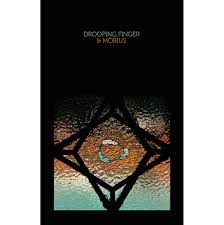
What have we got there, then? It would appear to be a collaborative release from Drooping Finger and Möbius, utilising the former’s lo-fi minimal electronic drone as a setting for the latter’s looped wordless vocal textures.

I must admit that I’m unfamiliar with ‘Newcastle gloomlord’ Drooping Finger, but ‘melancholic vocal duo’ Möbius I am aware of. Their first collaborative work, imaginatively titled Drooping Finger & Möbius is pitched as combining their talents, and consists of their set at The Gosforth Hotel’s Sumner Suite and material recorded during a session at First Avenue Studios in Heaton.

And what does is give us? The BandCamp write-up tells us that ‘Guttural gurgles are embedded in glacial electronics whilst siren songs tumble overhead. The tones hover above the murk at times whilst disappearing into its eddies at others as the collaborative trio draw you into their bleak atmospherics’. And all of it’s true. Although mostly it’s the murk that dominates, with sounds and tonal ranges all but buried beneath a sonic smog.

The live side, (at least corresponding with the cassette release) containing one track simply entitled ‘Sumer Suite’ is first, and is 26 minutes of dark ambient rumblings and janglings and mid-range drones, punctuated at first by stuttering, echoic beats, a shifting soundscape of disquiet. Ominous hums and swells of distant thunder provide the backdrop to disembodied, angelic voices low in the mix and veering between euphoric grace and the anguish of entrapment. Sonorous low-end booms out like a warning signal and cuts through the rising cacophony. But this is not a linear composition, there is no obvious trajectory: instead, the objective is the creation of atmosphere, and while it does naturally ebb and flow, peak and trough, the sustenance of tension is the priority here. Amidst slow crashes and waves of darkness emerge… nothing but nerve-tingling tensions, and even as the piece faded to silence, its hard to settle completely.

The studio side – again, consisting of a single track called ‘Stung’ which spans a full half an hour – provides more of the same, and with similar sonic fidelity at least on my speakers. Heaving drones like distant passing motorcycles drift in and out of range. Ghostly voices drift around nerve-chewing mid-range drones that shimmer and churn like foam on sand. On and on. Again, it doesn’t go anywhere, but that it’s the intention: it funnels and eddies to immersive effect. The tension builds not by any increments within the music, but by accumulation.

It’s a lights off, candle lit, eyes closed type of album, whereby there are no dominant features, and barely any features at all. In context, features are surplus to requirement: Drooping Finger & Möbius makes its presence known subtly, indirectly, creeping under the skin and weaving its dark magic subliminally.

AA

Drooping Finger   Mobius