Posts Tagged ‘Discord’

Cruel Nature Records – 1st August 2025

Christopher Nosnibor

If ever an album was appropriately titled, this is it. Obliteration is from the Sunn O))) / Earth end of the slow and heavy spectrum, with everything low and grinding and dense and seeping along at a snail’s pace – but it’s also so very different. The eleven-and-a-half-minute ‘Teeth’. which raises the curtain on this colossal work, trudges along, thick and murky, the guitars like sludge, overlaid with the most haunting, ethereal vocals, like spirits ascending to the heavens – or perhaps more accurately, fleeing the molten torment of the volcanic pits of hell. The quieter passages ripple gently, but there’s something off-key and off-kilter that proves unsettling, a discordance which isn’t quite right.

The album is described as ‘a visceral, atmospheric journey shaped by improvisation, deep literary roots, and a shared affinity for both crushing heaviness and ghostly ambience’, with the notes going on to add that ‘vocalist and instrumentalist Amanda Votta draws lyrical inspiration from classic rock icons and poets alike – Led Zeppelin, Stevie Nicks, Carl Sandburg’s poems ‘Alone’ and ‘The Great Hunt’, along with Sylvia Plath.’

If none of the influences are immediately apparent, it’s likely because influence can be subtle, more a process of osmosis and assimilation rather than being about emulation. Drawing influence from Led Zep doesn’t have to equate to epic solos and using ‘baby’ a thousand times. And so it is that The Spectral Light suck all of those influences into a swirling vortex.

The churning ‘Branch’ is wild: ZZ Top on acid, Led Zep in the midst of a breakdown, riffs played at a thousand decibels through shredded speakers and melting amps. But it also spins into cracked post-rock territory over the course of its disorientating nine minutes.

Make no mistake: this is a monster: ‘Moonsinger’ warps and bends and it’s emotionally gutting in ways that are difficult to articulate. It touches the core of the very soul. The title track is defined by a dense, metallic churn… and yet there is still a delicacy about it. It’s dark, disturbing, ugly, and yet… beautiful. There is nothing else quite like this. And the dark, airless trudge of Obliteration feels like a black hole… and I find myself being dragged into its eternal depths.

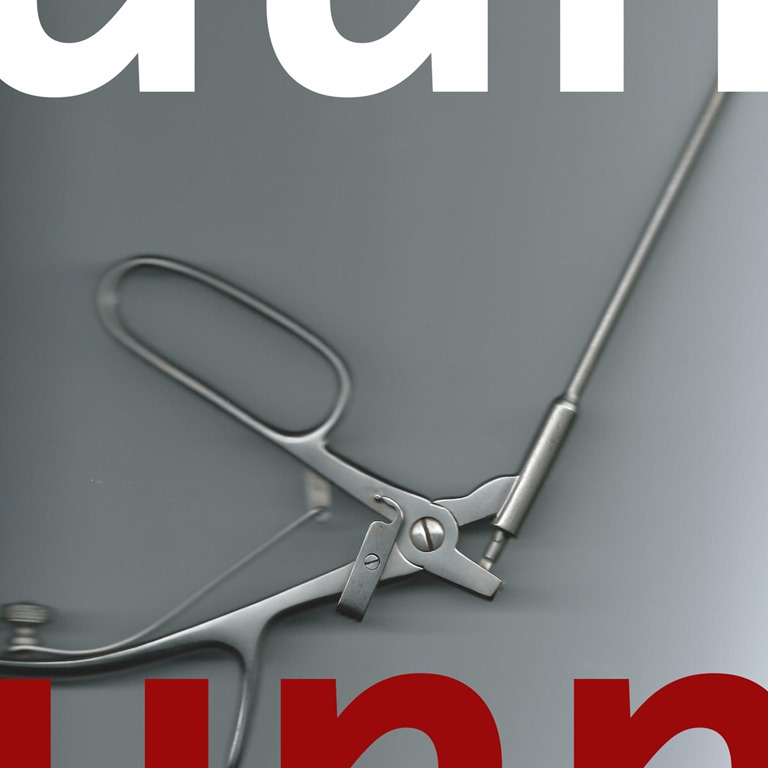
Ahead of the album’s release, we’re privileged to be able to offer a video exclusive for the album’s final track and choice of lead single, ‘Whisper Surgery’. You might want to pour a big drink for this one.

AA

AA

AA

a1781525944_10

28th March 2025

Christopher Nosnibor

In the early days of the Internet, although graphics were basic and the majority of sites were predominantly text, weird shit proliferated in a different way from the way it does now. Sites like rotten.com, active from 1996 to 2012, homed the kind of gruesome, graphic, morbid stuff that had the potential to traumatise a person for life, although there were very few videos online in the late 90s. However, one video which achieved notoriety was the ‘Traingirl’ footage, in which a woman is seen stepping onto a train track directly in front of a speeding train. And yes, on seeing the title of this new release from Hull noisemongers Bug Facer, that was almost immediately where my mind went.

The EP’s title perfectly encapsulates the unstoppable sonic squall of the music it contains: three wild, jolting, jarring sonic blasts that hit hard.

The band say of the release: “On this EP, we tried to emulate the energy we have at our live shows – like a big wall of noise and chaos. By recording everything in one room, all playing together at the same time, you can capture that energy of a live show & the chemistry unlike when you’re getting into overdubs. Compared to our 1st EP Triple Death, we’ve changed a lot as a band & finally we feel people can experience the energy of our live shows on record”.

Having witnessed one of their live performances late last year, I can vouch for this. The production is unpolished, bringing the immediacy of the live show, and the volume, too. Man Killed by Train FEELS loud.

They’ve certainly had an eventful journey to arrive at this point: starting out in 2022 as a duo, they subsequently expanded to a quartet, yielding the Triple Death EP and Lord of the Rings-inspired single cut ‘Fiery Demon Attacks Old Man on Bridge’ – and now they’re down to a three-piece following the departure of co-founder James Cooper. But this has seemingly resulted in a newfound focus, and as is often the case with the power trio format, the individual members play harder and louder to compensate the absence of that second guitar or whatever it may be.

‘Coke Cola Shop’ tears out of the speakers to deliver two minutes of discordant sonic chaos with crunchy bass, screaming guitar, and frenetic percussion. There’s some shouting going on in the middle of all of it, too.

‘Spinosaurus’ may be mellower at first, hinting at a swirling psychedelic space-rock groove, but it never really settles, instead lurching restlessly here and there and ultimately coming on more like Fugazi than Hawkwind. And then they really let fly for the finale: ‘Sweat Pea’ is simply explosive, with tom-heavy rolling drums driving a serrated buzz of guitar. The bass is so immense, so dense, it makes your stomach lurch. It’s a full-on pileup where punk, noise rock, sludge, and dirty metal collide, and petrol tanks explode and there’s broken glass and broken bodies and carnage all over. It’s raw, savage, completely without compromise – or a chorus in sight – and without question their strongest statement to date.

AA

BugFacer_ManKilledByTrain_artwork_1080sqr

Christopher Nosnibor

My openness to different genres has expanded substantially in the fifteen years since I began reviewing as a ‘proper’ thing fifteen years ago, although it’s perhaps only more recently that I’ve come to truly be accommodating of, and even appreciate, overtly jazz works. It’s been quite a journey. But I still very much have limits of what I can handle, meaning I can dig Cinema Cinema’s free jazz period and the warped rackets of The Necks and Sly and the Family Drone, and recently, I’ve dug the new album by Anna von Hausswolff, but not Trondheim Jazz Orchestra & The MaXx. But I haven’t witnessed this kind of stuff live, really.

Presented with a rare opportunity to get out for some beer and live music, and with travel options rather limited, I found Leeds and York offering slim pickings for tonight, and since I wasn’t on the market for third-generation ‘nu’ metal, I elected to make a trip to Hyde park Book Club, a venue I know and like, despite the long hike from (and back to) the train station, and haven’t visited since August 2020, when Talkboy played an acoustic set. Those inter-lockdown socially-distanced seated gigs where going to the bar was against the rules were strange and feel like another lifetime now.

It’s also been a long time since I spent any real time in Leeds, with recent trips being confined to car / train – gig – home: today, I got to spend an afternoon wandering between pubs, and sitting and reading and people watching over a few leisurely pints. Living in the rather conservative, white, middle-class and socially un-diverse York, I’d forgotten about Leeds, fashion… There are still hipsters, lot of hipsters… and beards, lot of beards… and also mullets… Above ankle drainpipes… Cropped vests… Flat caps… and moustaches: lots of moustaches.

Leeds trio Slozbo Kollektiv are first up, and they serve up a set of the kind of clean, crisp, technical noodling that never really seems to get going or take form. or find a groove… Initially, I’m struck that the drumming is as tight as fuck and the way he handles his sticks is something worth watching. He uses an array of broken cymbals to create a whole host of far-out percussive effects, laying one atop the snare to create a different kind of clatter… But then how tight is the playing when there are no rhythms to speak of, only rattles and bursts of percussion? The set is defined by so much discord and busyness… I find my thoughts becoming as fractured as the compositions. There are, it would seem, extremely tight structures here, but they’re chaotic, esoteric, and non-linear…. Playing two guitars and a horn simultaneously… How many notes can they fit into a bar? Vocals seem fairly redundant, and I come to thinking that they sound like shit musicians pretending to be good ones by playing as many notes as fast as possible and not knowing when to stop. It made for the longest 40 minutes ever.
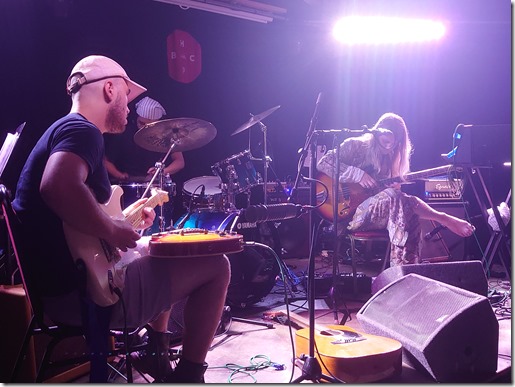
IMG_20230711_201549

Slozbo Kollektiv

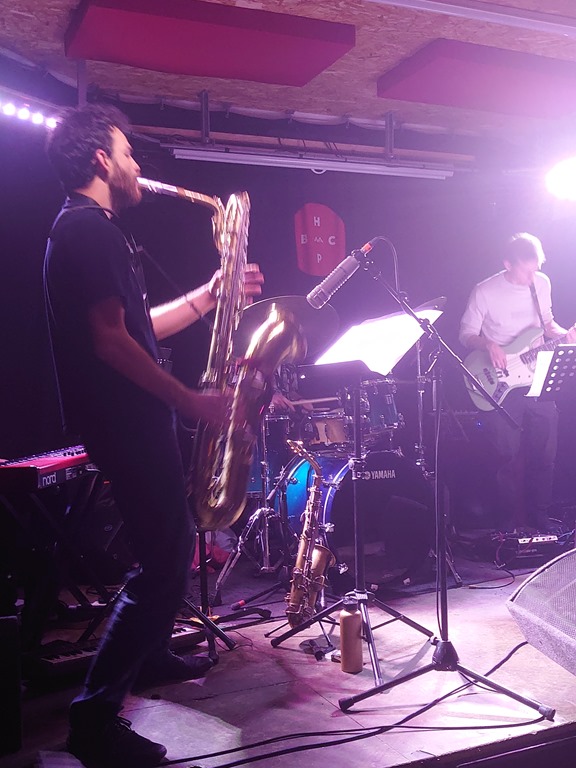
Fergus Quill’s ensemble features the same fascinating drummer, and the bassist from Slozbo Kollektiv is the keyboardist, and again he removes his sandals to play. Compared to Slozbo Kollektiv, this lineup brings more groove, more noise, and a bit of space rock, but still a lot of wanking with the added ‘bonus’ of some big ska overtones. No. Just no. And using your thigh as a mute for a sax? Also no. It does kinda work, but looks ridiculous. Fergus’ counting on of not only the tracks, but each section after a meandering detour gets tiresome and predictable, too.
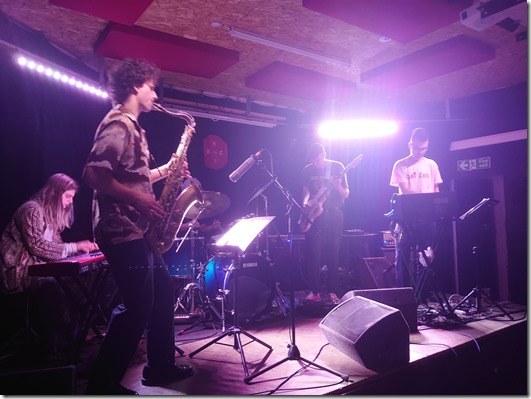
IMG_20230711_210034

Fergus Quill

Selecting lineups for gigs is not easy: a little bit of range can make for great energy and an interesting night, but too diverse and it simply doesn’t work. A lineup of similar bands is sure to draw punters who will likely appreciate all the bands on the bill, but can lead to a surfeit of sameness, something which can happen in any genre, but was particularly prevalent during the post-rock explosion circa 2004. By the time you’ve stood through three instrumental post-rock acts with their extended passages of chiming guitar interspersed with crescendos, you’re weary of it all by the time the headliners take the stage.

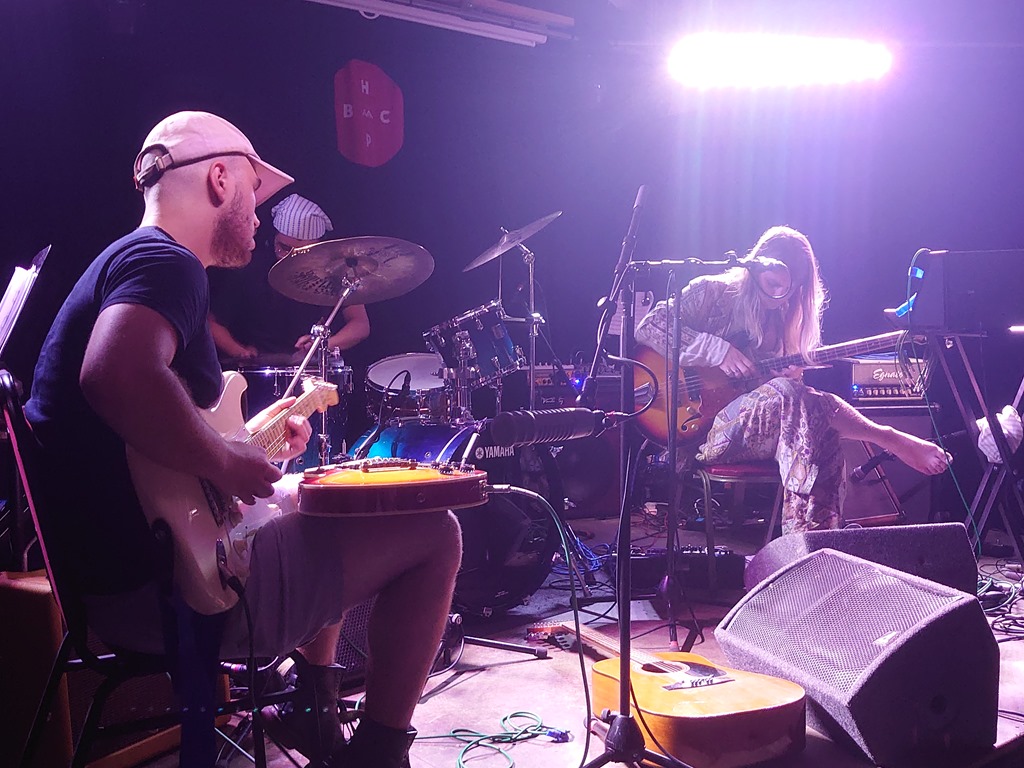
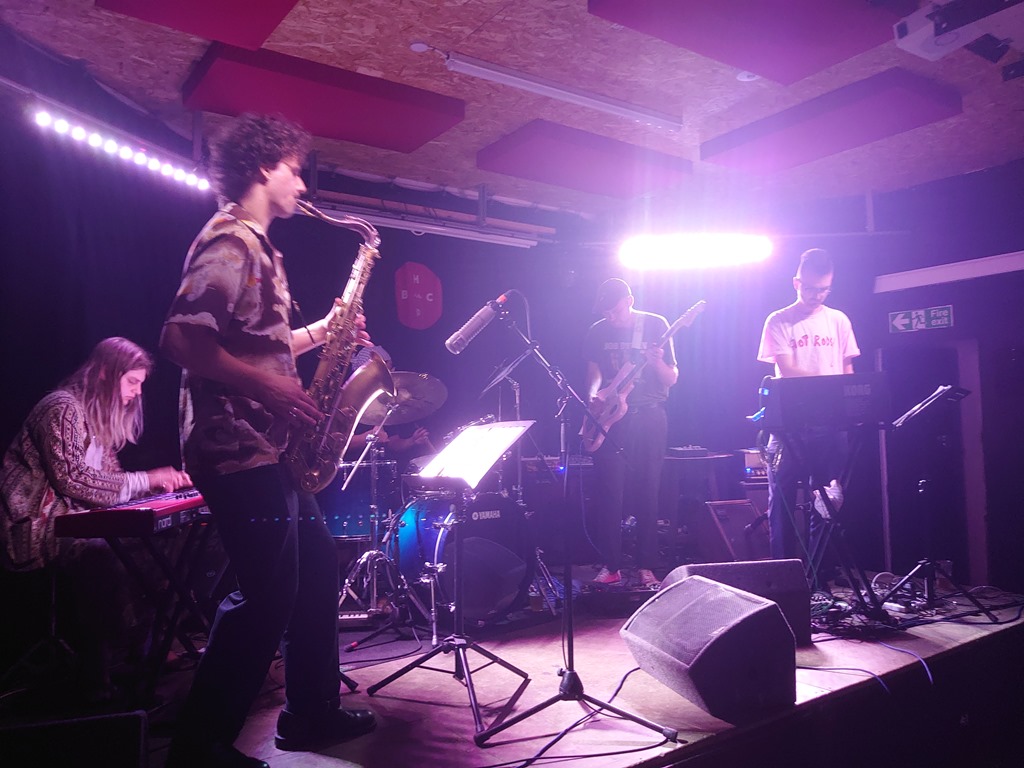
And so it is when Shatner’s Bassoon take the stage. I’m flagging, all jazzed out. Their material – and tonight they’re airing new material ahead of recording it for their forthcoming album – is more structured, atmospheric, building and forming shapes. There are some solid rhythms, moments where they actually settle into something for a time, instead of a constant explosion of sound in all directions all at once. They’ve clearly put the rehearsal time in, and there are all the tempo changes, enough to give you whiplash as they leap and lurch from one segment to another. People are really wigging out down the front, albeit mostly members of the support acts. It all starts to get a bit much after a time: they deal in discord, and the guitar sounds like twanging elastic bands. It’s when I see a guy nonchalantly bopping along from one space to another while clicking his fingers by way of applause I decide I’ve had enough.
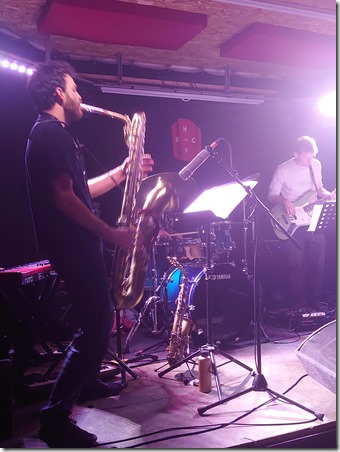
IMG_20230711_220713

Shatner’s Bassoon

There’s no knocking their musical proficiency or adeptness in their field, but there’s noise and there’s noise, and it’s just how I’m wired that once thrills me and the other bewilders, and when you’ve got a bunch of people on stage all playing as hard and loud as they can but not, seemingly, all playing the same tune, I find it hard to dig. For all that, it was good to get out, and they definitely put on a show.
Christopher Nosnibor

Over recent months – and more – we’ve unravelled the series of releases by experimental oddballs Kröter, via their affiliation with the king of quirk, Mr Vast, formerly of cack pop maestros Wevie Stonder, aka Wevie De Crepon. You can never have too many side-projects, offshoots, and affiliated acts, and so it is that Kröter-associated Hunger give us Wollufos. (Hunger is Christoph Rothmeier & Jörg Hochapfel; Rothmeier is the other half of Kröter along with Henry Sargeant, aka Mr Vast). This is their eighth self-distributed album, and their first on vinyl.

Have you managed to keep up so far? Good, because it’s only going to get more complex and convoluted, because these guys are a prolific, self-contained community cranking out endless oddities, and Wollufos is no exception. They pitch it as ‘mixing fake folk acoustic instrumentation like banjos and open tuning guitars with Harry Partch-style homemade devices’. Fake folk?

From the springy sproingy lo-fi shuffling synth whackout of the brief intro piece that is ‘Zwergenfieber’, it’s immediately apparent that this is going to be a substantial serving of quirky, off-the-wall music that doesn’t conform to any conventions, even their own. The Berlin-based duo work across time signatures and genres at the same time, with some woozy, warpy synths and picked guitars existing in the same space but seemingly playing different songs. Then there’s the leaning towards titling their quirky, heavily rhythm-orientated instrumental ditties in French.

‘Mambo Momie’ is an exercise in bleepy motoric minimalism, and the album is brimming with minimal beats and squelchy synths, as is nowhere more apparent than on the strolling ‘Sunset Sling’. When it comes to making music with all the bells and whistles, Hunger take this quite literally: download bonus cut ‘Schuhe aus Brot’ sees them pull out all the stops to create something that borders on the overwhelming, with additional droning horn sounds and blasts of noise on top of the stuttering, clamorous percussion, before winding down to trickling chimes.

There’s some kind of half-baked wonky country / space crossover on ‘Chariot de Pipi’, and the atonal, off-key pickings of ‘Macramée Cramée’ are truly brain-bending. And then there’s the twelve-minute ‘Hundenebel’, a quivering proggy space-rock workout that makes optimal use of space and distance and of Daniel Glatzel’s clarinet to forge a vast sonic vista. Great, yawning siren wails rub against bubbling synth swells, and there are so many contrasts, to may layers, so many juxtapositions.

Why do we find discord so difficult to process? Even while I enjoy it, I find that numerous things that are seemingly disconnected or otherwise independent create something of a sensory overload that isn’t always entirely pleasurable, and can at times prove quite disorientating and uncomfortable. It messes with our orientation and equilibrium, trips our sense of balance and spins us off centre. Wollufos will leave you dizzy. At times it’s quite bewildering, but it’s never dull or lacking in inspiration.

AA

a2004897443_10

1st May 2020

Christopher Nosnibor

Pocket Signs is Sly & the Family Drone’s Matt Cargill and UKAEA’s Dan Jones, and according to Matt’s mail, Signs of the Times was ‘fired out in an afternoon with the aid of lager and pepsi max. Lights out, volume up, watch yer face bins.’ He describes it as the result of ‘plugging in all the objects and making a haunted, sprawling, disorientating racket. Blown out electronics, lacerated drums, churning bass and crumbling voices’. Which means I know I’m going to love it, along with at last 50 other people.

The album features two longform tracks, each a magical, mystical 23 minutes in duration, and like the times in which they were created, they’re a confusing mess of incoherence, a fractured and nonsensical sonic collage.

‘What About Obedience?’ starts out with what sounds like an engine roar – but not a real engine, so much as an engine on a racing console game. Then a deluge of clanks, bleeps, whirrs, clicks, pops, shoot-‘em-up laser guns and twanging elastic bands melting in a nuclear storm all pile in, more or less simultaneously and it feels like watching the news while scrolling through social media (as I do around five every evening while cooking dinner). The experience is utterly bewildering and to even attempt to unravel it all is futile, because the world has truly gone mad.

Searching for structures in this chaotic morass of noise is like trying to find logic in the UK government’s strategy for loosening lockdown, but there are some amazing moments to be found here, as snippets of tunes and spacey krautrock synth motifs emerge briefly from the blistering howl of undifferentiated nose that funnels like a gale.

Gurgles and glops and electronic extranea combine to forge an aural blitzkrieg that could easily be the soundtrack to a digital apocalypse. Everything swirls and melts into a maelstrom that builds a physical mass and hits with an impact that’s more than simply sensory.

Where do you go from a piece that concludes with a sustained squalling blast of white noise that leaves you with the sensation of the end of days? More of the same, of course: ‘How to be Saved’ begins with a series of murky vocal samples, echoed and overlaid, atop burrs of electronic discord, and in no time at all, later upon layer of dissonance has emerged to forge a raging torrent of noises. Feedback strains and scrapes, sharp and metallic with knife-like edges while surging currents gurgle and synth sounds squelch and quirt, titter and tweet around a vortex. Abstraction and chaos reigns, pulsing, bouncing, screaming and bumping in all directions. At time, the melee is impenetrable, bewildering, as it echoes around your cranium. Voices emerge and fade again at random: seemingly, everything is at random, and it’s a glorious headfuck. Not so much a dronewerk as a metadrone assemblage, it’s a wild and brain-frying journey, this may just be the perfect soundtrack to the now – or it may just tip you over the edge.

Oh, and the cover art is truly special.

AA

cover

Grimoire / Buzzhowl Records – 27th September 2019

Christopher Nosnibor

The second album from Baltimore trio Gloop is noisy, messy, manic. The liner notes describe it as ‘a splattering Jackson Pollock painting of a full-length record’, and refers to their sound as ‘a kind of skewed rock music that recalls Shudder to Think, and the Pixies at their harshest and weirdest’.

It is harsh, but that harshness doesn’t come from heaviness, but from a chaotic squall of treble and wildly unpredictable song structures. It’s got the punk spirit and some aggression in its execution, but not exactly post hardcore, either, but a jarring, jolting racket that has many of the hallmarks of math-rock played in such a way as to sound perpetually out of time and out of tune with itself. It’s skewiff, not in a slacker Pavementy way, but in a demented, all-over-the-shop demented Trumans Water way. If I say it’s enough to give anyone a headache, it’s by no means a criticism: we’re attenuated to tune into regular rhythms, accordant tonality, tunes. Smiling Lines has none of these, breaking every last rule of musicality by pulling apart the very fabric of rock music and stretching it, twisting it, tearing it, stomping on it, before examining the stained tatters and deciding ‘yes, this is what we were after.’

Dom Gianninoto’s vocals are kinda shouty, but he’s given to shriek, whoop, and holler and pitch up to falsetto at any instant, adding to the crazed unpredictability of it all. Smiling Lines is the sound of wide-eyed, frenzied derangement, a relentless rollercoaster, a furious flurry of frets. It’s a short, sharp shock, and it’s fucked-up, but it’s ace.

AA

Gloop - Smiling Lines

Bearsuit Records – 20th April 2018

Christopher Nosnibor

Try as I might – and I do, I really do – I find it impossible to avoid words like ‘weird’ ‘whacky’, and ‘oddball’ in reviews of anything released on the Edinburgh micro-label Bearsuit Records. This is no reflection of a lack of vocabulary on my part: it’s simply what they do. Every boutique label needs some kind of signature or house style, and a micro-label really needs a niche. Bearsuit specialise in stuff that’s so far out it’s beyond.

Fear of the Horizon is actually pretty conventional by Bearsuit standards – but these things are all relative. ‘Eamon the Destroyer’, the album’s first cut, arrives in a flourish of expansive prog-rock guitar and twittering electronics, all on top of a thumping beat that’s pure dark hip-hop. And then the guitars really takeover and we’re in territory that’s suspiciously close to be being categorizable as ‘rock’. But then ‘The Positive Approach of Talkative Ron’ swings into view in waltz-time and goes all weirdy… and then there’s whistling and another epic guitar solo.

Pancultural influence are infused within the glitching electronic fairground fabric of ‘Woman With the Plastic Hand’, with its stuttering beats and woozy organ sound, while ‘Vandal Schooling’ brings with it a crunch of industrial noise and stabs of bold orchestral brass, taking a sharp turn from abrasive to mellow around the mid-point and locking into a metronomic hard, industrial-disco flavoured groove near the end. For the most part, though, the sounds are soft-edged, mellow, supple, analogue.

‘The Horizon Project’ brings together mellow and woozy, its mellow motifs and nod-along beats cracked with a stylophone break and underlying hiss of distortion. It runs contra to the chilled beats and quite accessible lead melody.

‘Weird’ ‘whacky’, and ‘oddball’… they’re all entirely appropriate adjectives, but fail to account for the depth and range of Fear Of The Horizon. As hard as it may be to take seriously an act going by the name of Bunny & the Invalid Singers, there’s real merit to this work that goes far beyond the superficial quirkiness. ‘Weird’ ‘whacky’, and ‘oddball’ don’t convey the wistfulness, the melancholy, the nostalgia, range of emotions, moods and mindsets.

This is where I should sign off with a suitably witty flourish, or some pun-based punchline, but such flippancy would be to only further undermine the true merits of an album which clearly shows no fear. Fear Of The Horizon is a fun, entertaining, and enjoyable work but don’t let the oddness and goofiness lead you to believe it isn’t serious, or art. Because it’s most definitely both.

AA

Bunny & the Invalid Singers – Fear Of The Horizon