Posts Tagged ‘dark’

11th November 2024

Christopher Nosnibor

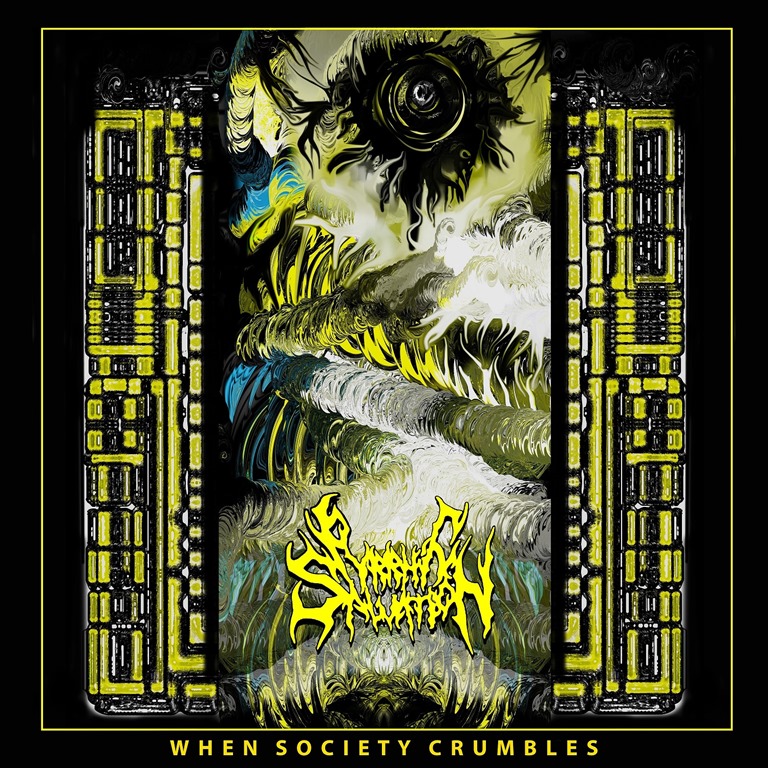
13x is reborn – or perhaps reanimated, resurrected, something – as dEddGvRL, and the title of gives a hint as to its tone and themes of this this seven-track release.

As she summarises in the accompanying notes, Anhedonic Succubus is ‘More a collection and recovery from extreme trauma over the past couple of years. Fake friends, S.A, declining mental health, alienation, despair, suicide, revenge….’ As such, this is music that’s issuing forth from a dark and difficult place, and there’s not only no escaping the fact – it’s necessary to take this head-on. There are doubtless many who will find these subjects triggering, but life does not come with trigger warnings, and a key function of art is to get to grips with life in all its complexities, all its pain and ugliness. And in connecting with art which does this, we strive to find ways to navigate life and the traumas it puts us through.

From a creative perspective, many artists channel their own experiences – however painful – into their craft as a channel of catharsis, a release, a way of comprehending or coming to terms with things. All of this is clearly an oversimplification of a complex relationship between an artist and their art, the nature of the creative process, and the way an audience – an infinite array of individuals rather than a collective with a single, fixed perspective – receive and respond to said art, in whatever medium. But I tentatively step towards Anhedonic Succubus with this preface because it’s particularly pertinent.

As has been the case with work as 13x, dEddGvRL channels considerable pain and anguish into these works – something which represents a continuation of the inspiration behind much of the previous work as 13x. But dEddGvRL plunges deeper into those dark places, and the eclectic sample credits feature some illuminating inclusions:

Drums on "Ophelia: Drained" taken from Tool "Die Eire Von Satan"
"Deathbearing Machine: Killng December" contains a segment from Charles Manson’s interview with Dianne Sawyeri
Cock Speech on "Sterben, Kranke Fotze" – "Female Trouble" (John Waters – 1974)
"Scared Of This Place" – Johnny Depp in Court
Catwoman (1968) appears on "Valenbitch"

‘Ghosts of My Body’ starts the set off quite gently, as it happens: dark, atmospheric, yes, but not without a certain levity, with hints of early-80s Cure B-sides and a dash of Disintegration, until the fizzing, distorted spoken-word vocals bring a more unsettling aspect. It creates a sense of detachment, which is likely almost entirely the objective, given the context.

Slow, sparse, murky, ‘Ophelia: Drained’ is reminiscent of Nine Inch Nails circa The Fragile. The tension builds and the percussion tears through the surface of a swirling wind and things start to get darker fast from hereon in.

Based on the context and the content, one may be forgiven for expecting more rage, more abrasion, more visceral noise, more attack. But Anhedonic Succubus is harder and heavier in its absence: instead of exploding outwards with a brutal sonic assault, dEddGvRL keeps things contained, introspective and seething. The effect is disturbing and menacing. Electronics buzz and hum around distorted vocals, and the percussion, too, is restrained, subdued. Things crackle and glitch, stutter and clatter, and the atmosphere is claustrophobic, oppressive.

When things do get noisier, on ‘Fuck What You Kill’, it really hits hard, and that’s before one reflects on the perverse implications of that title and hookline. But even then, the noise is sociopathically restrained, and pinned to a hypnotic repetition. The technoindustrial stomp of ‘Scared of This Place’ is by far the most accessible – and uptempo – track on here, and it works well and is well-placed, providing a late – and unexpected – rush of energy, before ‘Valenbitch’ leads the way to the exit in a relentless churning grind.

Anhedonic Succubus is heavy, but not in overt or conventional ways: instead, as the title threatens from the outset, it slowly sucks the air and energy, dragging the listener into dEddGvRL’s hellscape. It’s a tough listen, but artistically, it’s a success, delivering on its promise.

AA

a1542349256_10

Founded in 1994 by the Vancouver, Canada-based duo John Morgan and Tod Law, Unit:187 spent less than a year in their studio and playing live at local clubs before landing a record deal with 21st Circuitry Records. A solid debut album entitled Stillborn followed in 1997, with the promotion for it taking in several west coast tours that gained the band a respectable fanbase throughout North America.

Loaded followed a year later, featuring new band members Jed Simon (guitar) and Byron Stroud (bass) of Strapping Young Lad and produced by that band’s leader (and future prog icon) Devin Townsend. The album yielded instant industrial classics that included the title track and a remix of the song ‘Stillborn’ by Rhys Fulber (a member of Front Line Assembly and the producer of Fear Factory at that time).

The third Unit:187 album, Capital Punishment (2002), utilised the electronic programming and production skills of Chris Peterson (also of Front Line Assembly) on several tracks. Its title song kicked off proceedings with a killer groove and mix by Anthony Valcic (a producer of both Skinny Puppy and Front Line Assembly), the group’s trademark synth riffs, movie samples and driving guitars blazing full-tilt from the start right through to the conclusion of the album.

2010’s Out For Blood saw adjustments to the group line-up, with Chris Peterson becoming a permanent member and guitarist Ross Redhead (Decree) also joining. The album marked a turning point, as they worked tirelessly in the studio to produce raw heavy music that punched fist-first through what they perceived as ‘goth euro-cheese’ by coming up trumps with a solid dose of old-school industrial that hadn’t been heard in years. Mixed by producer Kent ‘hiwatt’ Marshall (another Skinny Puppy cohort), Out For Blood pulled out all the stops to sonically pound eardrums into a memorable pulp, while simultaneously offering its listeners sweet melodies to sing along with long after their sound systems had failed from transistor overload.

Unit:187 singer and frontman Tod Law sadly passed away in 2015, but left a legacy of music that has inspired the band to finally move forward. Now fronted by former backing singer Kerry Vink-Peterson, their upcoming KillCure album continues to pack attitude and punch, albeit with a dancefloor friendly edge. An opening salvo from the record, ‘Dick’, has been made available today as its first single.

Listen here:

AA

a3126642444_10

Cruel Nature Records – 25th October 2024

Christopher Nosnibor

In the debate of nature versus nurture, it’s noteworthy how many artists find themselves influenced in no small way not only by their formative years, but also the place or places where they grew up. There’s an entire thesis to be made from this, but here I make the observation because on Allens Cross, Empty Cut – a duo consisting of Douglas Fielding-Smith and Robert Bollard – have forged a work ‘Inspired by their childhood growing up in Birmingham they blend together all their experience and inspirations to create a noise that holds a heavy solid groove mixed with harsh noise and fuzzed out reverbed bass, topped with psychedelic synths, and chopped and screwed vocals.’

Birmingham, the city which gave us Black Sabbath and UB40, the second largest in England, with a population of over two and a quarter million, and has long been renowned for its diversity, and is a truly multicultural melting-pot. It’s perhaps unsurprising that cities like this – in contrast to so many predominantly white, often middle-class towns – are the source of musical innovation: throw in an element of social deprivation, the frisson of frustration driven by class and cultural disparity, and inevitably, this backdrop will fuel the fires of those with a creative bent.

Allens Cross is exemplary: as the blurbage summarises, ‘mixing together drums, bass, samples, effects and vocals they have created a sound that incorporates punk, hardcore, electronica, jazz, drum’n’bass, experimental-industrial and shoegaze.’ It’s one of those that on paper probably shouldn’t work, but thanks to the dexterity if its creators, works far beyond imagination.

It grinds in on a sample looped and echoed across a dirty bass and slow-building beat… and then everything slides into a doomy, sludgy sonic murk. ‘Bloodline; makes for a dank and difficult opening, five minutes of feedback and dinginess sprawling and lunging this way and that, culminating in a manic howl driven by frantic percussion and driving bass.

‘Fidget’ whips up a howl of feedback against a juddering stop/start bass, and with shouty vocals low in the mix, it brings a quintessential 90s Amphetamine Reptile vibe with a hint of Fudge Tunnel… until things take a detour into dub territory in the mid-section. When the noise blast returns, it hits even harder.

With none of the album’s eight tracks running for less than five minutes and the majority straying beyond six, it feels like there’s an element of slog, of punishment, inbuilt. ‘The Well Beneath’ certainly mines that dark seem of metal that plunges underground, but with the contrast of jazz drumming and some quite nifty bass work, at least until they hit the ‘overload’ pedal and everything blows out with booming distortion.

If ‘Fluff’, by its title sounds cuddly, like a kitten, or a bit throwaway, like that which you’d sweep up from the corner or the room, the reality is quite the opposite: a six-minute seething industrial sprawl, it’s slow-burning, dark and menacing, and a clear choice of lead tune… Not, but then again, with an echo of Eastern promise and a certain ambience, and the strains of feedback a way in the distance, it perhaps is the most accessible cut on the album.

We’re proud to share a video exclusive of ‘Fluff’ here:

AA

Elsewhere, ‘Hymn to Then’ pitches cold synths and rolls of thunder to conjure dark images, a stormy backdrop to an eye-opening hybrid of prog rock, industrial, and krautrock: the result isn’t only epic, but conjures images of Dracula and unseen horrors with its icy atmospherics, while the last track, the eight-minute ‘Shatter’ begins with an eerie take on Celtic folk

Allens Cross is a highly imaginative work, an album that draws together a broad range of styles in a cohesive form. Its impact lands by stealth, building as it does across a range of styles, often creeping under the skin, unexpectedly, to register its effect. Sparse synths laser-cut across distorted, arrhythmic percussive blasts, as a low-level crackle and hum of distortion hovers around the level of the ground. Fractured vocals add to the disorientation, and the experience is uncomfortable. You cower, and will for release, not because it’s bad, but because it’s intentionally claustrophobic, torturous, and so well executed.

This is perhaps a fair summary of Allens Cross as a whole. It is not, by any means, an easy listen. Enjoyable would be a stretch. But it is utterly compelling.

AA

a3947501964_10

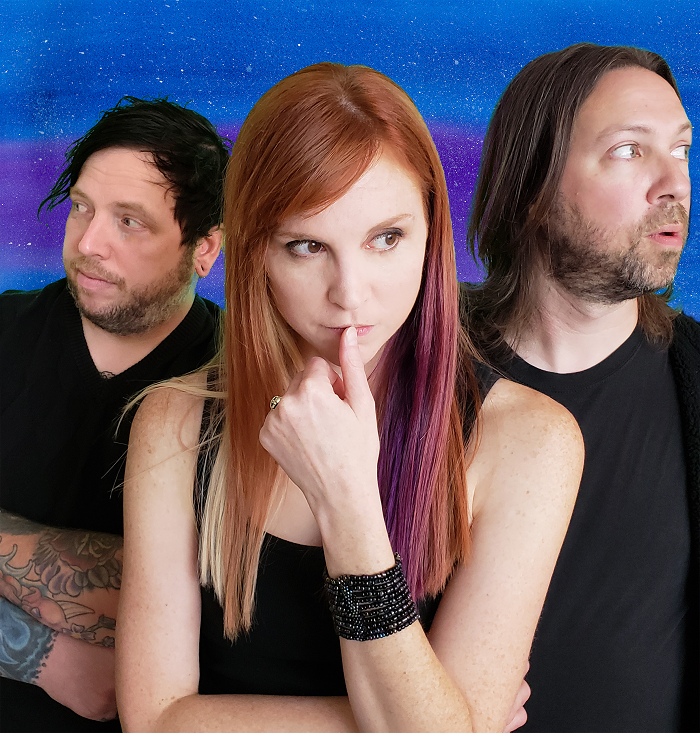
Following in the wake of their North America Tour 2024, Synth pop trio BEBORN BETON drop the second single ‘My Monstrosity (EMMON Remix)’, taken from the forthcoming new EP To the Stars, which has been scheduled for release on November 22, 2024.

BEBORN BETON comment: “When searching for artists to remix a track from ‘Darkness Falls Again’, we had one goal in mind: to collaborate with incredible female producers and performers whose work we admire", vocalist Stefan Netschio explains on behalf of the band. " While some were unavailable or tied up with other projects, we were thrilled to be able to collaborate with two of our favourite artists. One of whom is the immensely talented Swedish artist Emma Nylén, known as EMMON. She has re-imagined our track ‘My Monstrosity’ with her unique artistry, breathing new life into it with her beautiful and energetic remix. We could hardly wait for you to hear it, and here it is!”

Listen here:

AA

a0681355494_10

Panurus Productions – 24th August 2024

Christopher Nosnibor

I take heart from discovering that Panurus Productions are as far behind on their PR as I am on my emails and messages. Even if it weren’t for the relentless flow of submissions – I’m looking at an inundation of around fifty a day, via email, messenger, and all the rest, even drops of CDs through the letterbox – there’s still that matter of… life. It consumes all of your time, and it wears you down. It’s an endurance test. Just living is a full-time job. No, it’s more than that. It’s exhausting, draining, it saps your very soul. On a personal level, just the day to day is too much at times for reading emails and listening to submissions. Throw in a dayjob, life and a single parent, and bereavement on top, and simply opening all the email submissions become too much. So arriving at the most recent Shrimp album around two months after its release, I feel ok about that – and by ok, I mean pleasantly calm, which is a rare sensation in the main.

Fucking hell. It’s a monster. It packs four tracks, the shortest of which clocks in at just under twenty five minutes. It’s more than a monster. It’s a skull-crushing leviathan. It will leave feeling week and so drained. It makes predecessor Mantis Shrimp sound like Barry Manilow.

They promise ‘a sprawling mass of free-form guitar, vocals (an associated miscellanea), effects and percussion’, whereby ‘the listener is thrown about the room with the sound, as the initial dirge collapses into a frantic scramble of activity, glitch and movement as the various pincers and claws dart out from the sonic mass. The sound field shifts as elements are isolated or the entire band is channelled through the snare, sometimes in line with the music and others completely of its own accord. Not even the platform you are listening from is stable.

‘Hidden Life’, with a running time of forty-one and a half minutes is an album in its own right. And it’s dropping tempo mood-slumping jazz with stutter percussion, at least at first. Before long, a slow-driving riff grinds in, and shortly after, it slumps into a drone and a feedback wail, while snarling, gnarling, teeth-gnashing, demented vocals rave dementedly amidst a tempestuous cacophony of… of what, precisely? Cacophonous noise. Everything is a collision, a mess, every second is pulled and pummelled, and it’s like The Necks on acid, only with chronic roar and an endless raging blast bursting every whichway, amidst howls of feedback.

Then you realise that this is only the first track and you’re already physically and mentally exhausted. You are absolutely on your knees here, battered, bruised, ruined by the noise, and still the frenzied furore continues.

There’s mellow, trippy, almost jazz vibe which lifts the curtain on ‘Leaf-like Appendages’, another epic track – but then they’re all epic, all challenging. ‘Maximum Sanity’ brings maximum pain and derangement, as howls and sputters from the very bowels of the very depths squall in anguish. James Watts has a rare talent for creating the most chthonic tones

Brine Shrimp trills and shrills, quills and spins in so many directions. It’s not only a mess of chaos, but a truly wild, and at times hellish, mess of chaos. It’s heavy, and it hurts. It’s Shrimp erupting like the Godzilla of the crustacean world: a monster in every way.

AA

a0473555031_10

COP International – 6th December 2024

Christopher Nosnibor

What a year this is proving to be for bands who have lain dormant, at least on the studio front, for quite literally decades. And when it comes to Red Lorry Yellow Lorry, it really has been a long time. The last Lorries release was an ultra-limited gig-only affair back in 2015, with just 50 copies pressed for Leeds in the August and 100 for Valencia the following month. Said EP featured two new songs, ‘Safe as Houses’ and ‘Piece of my Mind’, which were listed as being from the ‘forthcoming album Strange Kind of Paradise’. Time passed, and it really didn’t look like the album would ever see the light of day. But now, this official EP presages its arrival in February 2025, some thirty-three years since they called it a day with Blasting Off (1992).

The Lorries always stood apart from their contemporaries: whereas the Leeds post-punk scene of the early 80s clearly favoured black in every possible way, the band’s guitar sound was steely grey and like scraping metal, and paired with murky bass and relentless percussion, they forged an industrial clang that, was the perfect mirror to both the landscape and the times. Chris Reed’s baritone was less theatrical and more gnarly and angry-sounding than your archetypal goths which would follow. Fans will already know and appreciate all of this, but with so much history – and so much time having passed – some context is worthwhile, especially for those unfamiliar.

During their 80s heyday, they built a catalogue of outstanding 12” releases, with some of their best cuts not on the albums, and with Driving Black, they’ve added another. It contains six tracks, with two mixes of the title track – I gather the original will feature on the album – long with a mix of the as-yet-unreleased ‘Chickenfeed’. ‘Safe as Houses’ and ‘Piece of my Mind’ finally get to be heard – and owned – by more than 150 people, and hearing them again in this context reminds me of the buzz I got when first heard them almost a decade ago: they’re unmistakably RLYL, and if they’re more in the vein of the material on Blow and Blasting Off, the one thing that’s remained consistent throughout the band’s entire career is their sonic density, that claustrophobic, concrete-heavy heft, with ‘Piece of Mind’ being a solid mid-tempo chugger and a grower at the same time. It seems that the two tracks from the 2015 EP didn’t make the album cut – but this can be seen as good news, if they have material of this quality going spare. The same is true of ‘Living With Spiders’, a frenzied track which has spindly guitars crawling and scratching all over it. It would be a standout, but the consistency of quality across the EP means it’s one more cracking tune.

The strangest thing is how time – or our perception of time – seems to become evermore distorted. Perhaps some of it’s an age thing, but… I remember at the time, The Sisters of Mercy’s release of Floodland was hailed not only as the rebirth it was – stylistically and in terms of commercial success – but as a huge comeback after a great absence. But Floodland arrived only just over two years after First and Last and Always. Even more remarkably, I seem to recall the release of Crawling Mantra under the name The Lorries that same year was considered something of a comeback and a departure, even though Paint Your Wagon was released only the year before. The world seemingly lost the plot when The Stone Roses delivered The Second Coming after a five-year gap (and they really needn’t have bothered). And now, while Daniel Ek is advocating the production of ‘content’ on a constant basis, we have bands putting out their first new material in an eternity, and rather than having forgotten about them, fans are fervent – and rightly so.

Chris Reed’s reuniting with David ‘Wolfie’ Wolfenden – Leeds alumni who first appeared with Expelaires in 1979 along with one Craig Adams, who would do a stint as a member of The Mission’s touring lineup – is most welcome, because they’re simply a great pairing, and this is nowhere more apparent than on lead track ‘Driving Black’, which is vintage Lorries, kicking off with urgent, driving drums, before the throb of bass and rhythm guitar and a sinewy lead guitar, sharp and taut as a tripwire cut in and casts a thread right back to their earliest work in terms of style and structure.

The parallels between now and the 80s are uncomfortable; we may have ditched a Conservative government, but workers are still feeling the pinch, and global tensions are off the scale. That the BBC’s apocalyptic movie Threads is getting only its fourth screening – to mark its fortieth anniversary – feels worryingly relevant. And so it is that Red Lorry Yellow Lorry still sound essential and contemporary is equally testament to their songwriting and delivery, and the bleak times in which we find ourselves. Putting the social and political backdrop to one side, the Driving Black EP is an absolute triumph. There are no half-measures, nothing is weak or half-arsed, and it’s – remarkably – as if they’ve never been away.

AA

Red-Lorry-Yellow-Lorry-_Driving-Black_-EP-3000-Cover

24th May 2024

Christopher Nosnibor

Welcome… to The Royal Ritual! I simply felt the urge to open with that. It felt necessary, if only to me. But if you can’t please yourself…

In my case it’s something of a belated welcome, having been aware of the act and its founder, David Lawrie for quite some time, but having only recently come around to the actual music, with my introduction being their recent show in York. There’s something to be said for hearing a band live first, without knowing the songs, rather than the other way around: if they can grab you in that twenty minutes or half an hour, when you’re not necessarily primed to absorb songs and details, then there’s a strong chance they’ve won a fan, provided the recordings are up to scratch.

Where The Royal Ritual really stand out live is with the use of live guitar, which brings the benefit of not only an immediacy and human aspect to the predominantly digital music, but an additional body on stage, which creates not only a visual balance but a greater sense of movement.

Recorded, these elements are less essential, and the songs here are clearly the product of extreme focus and a meticulous attention to detail. When I wrote in my review of the York show that The Royal Ritual sound ‘produced’, I observed that ‘their approach to production owes more to the methods of Trent Reznor as pioneered in the early 90s on Broken and The Downward Spiral, balancing gritty live guitars with synths and fucked-up distortion and harnessing their tempestuousness in a way that creates a balanced yet abrasive sound.’ And so it is on record, also.

Pleasure Hides Your Needs is The Royal Ritual’s second full-length release, following MARTYRS in 2022. A lot has happened, and much has changed since then, and the project, born in lockdown, has evolved significantly – as have many of us. Life is different now: that’s a fact.

We learn that ‘Pleasure Hides Your Needs sees David contemplate his own life and experiences, adopting a distinctive, more personal tone than the expansive and outgoing approach of MARTYRS: “Pleasure Hides Your Needs is much more introspective when compared to the social and political commentary of MARTYRS,” says David. “For me, it is about the closing of three distinct chapters of my life. Finding the common threads through each of those chapters in order to represent them sonically, and in a consistent way, was a really interesting challenge – if at times quite emotionally exhausting.”

Life is exhausting, in every way, but there’s a tense energy to Pleasure Hides Your Needs. It builds from the instrumental intro piece, ‘Shadow Self’, where crashing waves erupt from soft ripples, dark rumbles and inaudible muttering contrast with chimes, before ‘Vantage Point’ opens a broad sonic vista paired with a solid kick drum beat. Just as it’s leaning into the proggier end of alternative rock, a gritty guitar kicks in and the mood immediately turns darker.

‘Fifteen 14’ lands as an unexpectedly pop tune, with a solid chorus, which softens the arrival of the album’s nine-and-a-half-minute centrepiece, ‘Sinner Gambler Fugitive’, which really does run the gamut for range, a sonic and emotional rollercoaster. It’s ‘Modes of Violence; that goes full industrial, with a metallic smash of a snare and snarling bass providing the backdrop or Lawrie’s wrought vocal as he wrestles with a veritable tempest of emotion, before he hollows himself on the bleak, minimal title track.

The album as a whole is more geared toward tension than release, always simmering but rarely bursting the floodgates. Muted isn’t the word: it’s more a case of clenching tightly to maintain a grip of control for fear of what may erupt otherwise.

Pleasure Hides Your Needs is dark and exploratory, but still eminently listenable. As The Royal Ritual evolves its sounds and expands its horizons, there remains much potential to explore myriad paths in the future, and recent touring will likely serve to open new avenues of exploration.

AA

a0879761406_10

With their final single in advance of their new album, the melancholia driven mid-tempo track ‘But Today’, 

Soror Dolorosa present a different facet of Mond. Illuminated by a visualiser, this song channels classic Wave sounds into an expression of sorrow and regret. ‘But Today’ is taken from the forthcoming new full-length of the French post-punk gothic rockers, which is entitled Mond (the German word for ‘Moon’), and has been slated for release on October 4, 2024.

Check it here:

AA

Soror Dolorosa comment: “The last advance single ‘But Today’ is also the final song on our new album and one of my favorites so far”, mastermind Andy Julia writes. “Creating the different phases of the song was the result of a magnificent teamwork. It gave me particularly great pleasure to get my vocals and the choirs into harmony with the keyboards that you can hear in the chorus. This might well be our most progressive track on Mond that also has the most complex structure. We felt thrilled when we noticed that the complexity was not mitigating the efficacy of the groove and the brilliance of harmonies. Our producer James Kent told us: ‘This reminds me of the Fields of the Nephilim, what a smash!’. All of us in the band were rather thinking about Depeche Mode when we designed the sound and that particular tone of the guitar riffs. I could hardly visualise this song more efficiently than by unveiling the artistic process behind the creation of the cover artwork for Mond that was inspired by my muse. At the beginning of the shooting we had this idea of creating a mysterious character like the myth of the Ancient Greek seer Pythia. Therefore, we began to work with poses of a veiled lady who utters prophecies while having divine visions in a state of trance. Yet with the passing of each hour, the spirit of the moon goddess came over us and Angélique’s naked body finally reflected the light of the stars that are falling apart somewhere between the flame of the sun and the cold nocturnal light of the moon in a perfect symbiosis.”

AA

7061539a-2aa7-a712-bae1-fd68e1b8e9a6

Dret Skivor – 6th September 2024

Christopher Nosnibor

Traditions are important: they’re grounding, they give us a sense of comfort and safety in their familiarity. In times of tumult, of confusion, during difficult times, they offer a raft to cling to in a sea of unrest. I’m not referring solely or specifically to old traditions, either, especially not the ones where Christianity has usurped pagan tradition, only for these traditions to in turn be usurped by the mechanisms of corporate capitalism. Christmas is the kind of tradition that should be tossed on the fire. What we need is to establish new traditions, traditions which are personal and meaningful – anniversary gigs or meet-ups, for example.

On a personal level myself, since one of the last holidays we made as a family saw us meet my late wife’s step-mum on Lindisfarne on August bank holiday week, and we had been due to stay there in accommodation with a view of the castle, we instead scattered some of her ashes with that view of the castle, and visit the spot around the same time each year before going to the pub we lunched in on that last visit. On the one hand it’s sad, but in such a magnificent and historically-rich location (we got married in Northumberland, and had Lindisfarne fruit wines obligingly delivered directly to the venue across the causeway), this new tradition of ours feels right, and in many ways positive.

The same is true – albeit in a different way, of course – of the traditional reconvening of the pairing of Procter and Poulsen. Something was written about it once, I seem to recall. Two friends, who see one another infrequently, but always make some noise together, and release the results, at some point or another. This is the kind of tradition which possesses real meaning, a symbol of connection. In a way, whatever music the session yields is irrelevant: this is about ritual, and interpersonal resonance.

As the title suggests, this is their eighth collaborative release, and contains two longform tracks, each occupying a full side of a C40 cassette, this time released in a limited edition of six.

There’s no way you’d describe the devastating soundtrack to nuclear annihilation that is ‘A’ as ambient: distorted, mangled vocals crackle out from the howling wails of feedback torn from shredded circuitry in a heavy gale which carries pure devastation. Once that raging storm dissipates, we’re still left with the sonic equivalent of a nuclear winter, the sounds drifting over shattered remains, fragments of things which existed before. Glitching beats fizz out in crackling walls of noise and fizzing distortion. Bleeps and wibbles pop and buzz and there are moments where it’s possible to catch a short breath. Sometimes it’s almost dubby, but it’s always a desert. It’s always desolate. The atmosphere is always thick, uninhabitable.

‘B’ is dronier, buzzier, more overtly electronic – but more like a giant bee hovering in suspension – sedate, bur trapped. As the track progresses – at least in terms of duration – it seems to degenerate, forms disintegrating, fracturing, crumbling, degrading. It’s not done elegantly, aesthetically, but presents as a greyening mess of murk and twisted wires, indistinct moans and Triffid-like clicks and clacks. It’s oppressive, and feels like crawling through the soundtrack to being a survivor of the apocalypse in a bleak 80s dystopian series.

Nothing is comfortable. Nothing is right. Tension and darkness are all around: every inch of this experience is eerie, uncomfortable. You don’t want to be here – but there is no escape. This is sheer horror, without words.

The shuffle into some sort of 80s industrial experimentation with a scratching guitar and stammering heartbeat percussion which soon slips into fibrillation, which comes to pass close to the end, only renders the experience all the stranger, before birdsong and groans hint that perhaps, this is it – you’re here, you’re dead. Perhaps we are all dead already, and life is an illusion. Perhaps this would be for the best.

AA

a3358540954_10

Petroglyph Music – 25th August 2024

Christopher Nisnibor

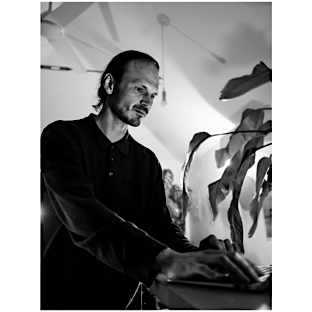
Deborah Fialkiewicz, who I first encountered performing as one half of her noisy dark ambient duo SPORE, is one busy and highly prolific creator, who not only manages to whip musical work spanning contemporary classical to ambience from out of the air at a remarkable pace, but clearly thrives on collaboration. This latest one, with German sound sculptor Wilfried Hanrath, is a further example of the way in which the coming together of artists with slightly different background and musical bents can make for unexpected – and brilliant – results.

As the accompanying notes explain, ‘the album starts with Deborah’s wonderful piece ‘Love’ and ends with Wilfried’s interpretation of it – ‘Love in other words’… The eight tracks in-between are based on noisy, dark ambient drones Deborah provided. Wilfried, inspired by a short trip to the sea, added to these by playing his synthesizer in the beautiful seaside resort. The result is a melange that combines the influences that both bring into this project to something larger than its components.’

Having recently returned from a week by the sea – on the Cornish coast – I can certainly vouch for the replenishing, refreshing, and inspirational qualities of the sea. Living inland and in climes which are perpetually humid and polluted, one immediately notices the difference in air quality when in the presence of a sea breeze.

As collaborations go, this is a particularly interesting one, not only musically as of and in itself, but it’s difficult to separate out what each of the contributors has brought here.

Fialkiewicz’ opening composition is gentle, combining tweaks, tweets, and twitters over the picked strings of a chamber orchestra of sorts, and a billowing wind which fills the background. It’s simultaneously sedate and mournful, and ends feeling unresolved.

Fialkiewicz’ capacity for conjuring dark drones is well-documented, primarily with her work as one half of Spore, but just how much manipulation they’ve been subjected to at the hand of Hanrath – which should really be an album title for a future collaborative / remix work of his – is impossible to determine. This is how collaborations should be, really: the aim should be to achieve a blend, to, and to conjure something which is neither one party nor the other. LOVE fits this criteria: it’s not about who does what, specifically, but the overall listening experience being something different, which is neither one artist or the other, but what they create in combination.

Following ‘Love’, ‘Oneness’ marks a complete shift in every way: it’s a bubbling quickfire electro piece that pretty much brings Kraftwerk together with Gershon Kingsley’s ‘Popcorn’. This numerical sequence of pieces, which runs from ‘Oneness’ to ‘Eigthness’ is an evolutionary, exploratory series, the majority of which are an expansive seven or eight minutes in duration and really mine a deep seam of bubbling, squelchy electronica which becomes increasingly engrossed in the quite granular details of the interplay and interaction between tone and texture, but without venturing fully into the dots-in-front-of-the-eyes details of the truly microtonal.

Slow winds and wide washes define the soundscapes offered here, and I suspect these are the foundations Fialkiewicz provided before Hanrath began to add his spin to them, with stabbing strikes and all kinds of digressions and generally unpredictable incidents which change both the course and the mood of the pieces.

‘Threeness’ is a particularly layered piece, ominous and brooding at first and subsequently, but interrupted by wibbling bleeps, a hint of an R2D2 seeking escape from the haunting confines of the track’s opening. Nothing is quite as it seems, and nothing feels quite right here.

‘Fourness’ is a torturous mess of oscillating drones and groans pitched against a mangled sampled vocal loop, and as one of the album’s darkest and most uncomfortable pieces, it’s very much in the vein of Throbbing Gristle. But suddenly, emerging from the frothing tempest of noise emerges a piano which brings tranquillity to provide balance. And this is where LOVE exceeds. There is a lot going on, and it’s an album which really revels in its contrasts and its manifold depths. This means that overall, and in context, LOVE is a standout work which conforms to no set parameters, doesn’t really sit anywhere, not least of all within the realms of expectation.

AA

a0291842123_10