Posts Tagged ‘dark’

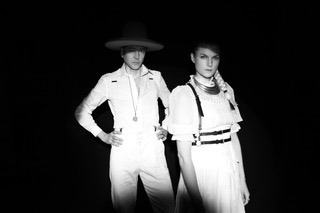
Glasgow based darkwave/post-punk duo Hanging Freud have just unveiled their sixth full-length album Persona Normal. The band states:  "We were living between the UK and Brazil, going back and forth. These were two societies going through extreme change. The whole world was changing in a way that felt scary."

Some themes of Persona Normal deal with detachment, dissociation, what it means to be human, political issues and about strong, irrational cults. These are approached in tracks like “I beg you” and “We don’t want to sleep”. Persona Normal is also a record about transformation, and growth, accepting losses and coming to terms with the loss of innocence.

Persona Normal is available now in physical and digital formats on HANGING FREUD’s label, Tiny Box. Persona Normal was written produced and recorded by the duo with mastering duties from James Plotkin (Khanate).

They’ve released a video for ‘Antidote/Immune’ by way of a taster for the album: watch it here:

AA

2a713878-401e-8f16-2ae7-681be464c5d6

Tartarus Records – 28th May 2021

Christopher Nosnibor

Then a release comes pitched as ‘FFO Gnaw their Tongues, Lustmord, Haxan Cloak, etc’, you know it’s going to be pretty fucking gnarly and pretty fucking heavy, not to mention dark. The band describe themselves as ‘a vessel of auditory violence whose sole purpose is to exist in this place and moment in time. It is an overwhelming form of aural terror conveyed through primal and mechanical means, conjoining visceral matter of an organic origin with that of an abiotic one. These together fabricate an entity focused on the seething aspects of interminable dread and the humiliation of flesh’. Holy fuck. I’m simultaneously quaking and on the edge of my seat for this.

I’m not entirely sure what ‘larynge’ is, and even the Internet has been of minimal assistance, and the connotations of ‘golden dirges’ in my mind says probably more about me than a band whose name in the current climate makes me think of blood clots. In other words, none of the prefatory encounter is anything but bleak in the way it sets expectations for the album, and Golden Dirges, Molten Larynges is, indeed, a challenging work.

It’s harsh, it’s noisy, it’s hellish, a purgatorial racket that combines extraneous noise, guttural snarls, and ritual beats. It’s fucking nasty, the soundtrack to the most torturous horror imaginable. Imagine being skinned alive and flayed with torches as flames rise all around, and you’re being watched by razor-toothed beasts, pale, emaciated, and brutal, s pat of the most gruesome ritual you can conceive. Your eyes are stretched open and you’re forced to watch your own chest being torn open and your ribcage prised apart as your exposed heart quivers and pulsates in its cavity. Your halfway to experiencing Golden Dirges, Molten Larynges.

Harsh blasts of noise surge like a tide at the start of ‘Devour their Bodies Saturated with Brine’, before an explosion of demonic noise simply shreds everything as the ritual ceremony builds to its most brutal climax as chthonic entities revel in the bloodshed.

And there is absolutely no respite, no retreat, no light. Most of the tracks are under five minutes, but they each feel like an eternity. ‘Our Torches Soaked in Oil’ conjures a descent into an abyss both in title and sonically, but the clunking percussion, cutting through a dank morass of swirling noise is disconcerting, before the vortex of dark noise yields to a spitting demon spewing venom from an unexpectedly gentle piano. It’s but a brief respite before the industrial churn of ‘Rattling Mutter’ brings a wall of noise and anguish that redefined punishing.

Golden Dirges, Molten Larynges is a different kind of heavy: it’s certainly not metal, and nor is it industrial or power electronics. It’s also blacker than black. This is beyond. It’s

the sound of the earth being pulled apart – not by horses, but by Satan’s slaves. It’s like being dragged by barbed hooks buried into the chest and back over rough terrain if burning coals. It is all the torture, all the pain, the soundtrack to the catalogue listing of atrocities that make up the second half of 120 Days of Sodom. As the gut-hammering percussion resonates against a grumble of anguished muttering and screaming agonies on ‘A Thicket of Abrasions and Broken Wounds’, it becomes fully apparent the sheer extent of this album’s relentless abrasion and its capacity to plunder previously unseen depths. There is no preparation for this: it redefines torture.

AA

a2071770922_10

13th April 2021

Christopher Nosnibor

I love an album that carries a warning. In the case of SINthetik Messiah’s full-length debut, Ambient Noize, we’re advised ‘Caution: When listening to the album with headphones the music may cause a form of psychosis, listen with caution’ (although we’re also advised that ‘All music on this album is meant to be listened to through headphones’. Is the Messiah wanting to fuck people up? Or just warn off the kind of people who may not appreciate an album ‘inspired by Ambient and Drone music from around the world’?

The album’s eighteen tracks are simply numbered, AN01-AN18, and due to the multitudinous influences absorbed within its fabric, while all existing within the broad sphere or dark ambient and drone, there is a considerable diversity on offer here. It’s rich in atmosphere, deep, dark, and dense.

If the title seems perhaps like a contradiction, the pieces tend to be either one of the other, and sometimes a collision of both, and while the ambience is often of a darker, rather more eerie persuasion, the noise is dense, abstract, and sometimes harsh.

‘AN01’ arrives with a low, sonorous drone and a crackle of degraded samples, and slowly throbs and eddies in a cloud-like drift, and the tracks run through in a seamless sequence that feels like a continuum. ‘AN03’ slithers and slides, the rasping breath of a dragon that rumbles and bursts before diminishing slowly to silence. ‘AN04’ plunges cavernously deep, dark depths, while a sing-song vocal sample collides with billowing harsh noise on ‘AN05’, while ‘AN06’ gyrates in slow-mo around a deliberate beat, and while there’s a speculative, shifting aspect of the album, there’s also a certain trajectory, and it’s downwards and into darkness from hereon in, as dank rumblings dominate the ever-more oppressive soundscape.

‘AN09’ marks a shift, with something of a folksy element, and with brooding strings alluding almost to a ‘Black Sails’ shipwreck pirate folk vibe, spun in with something more Japanese in origin, and it’s here that the album begins to develop new layers of interest.

And so it goes.

But what of process? It wasn’t perhaps as mystical as all that, when we learns that ‘the album’s creation, by Cajun front man Bug Gigabyte used vst synthesizers, field recordings and Garageband’s Electronic instruments on the Iphone’. Guess it just goes to show you don’t need the best kit and a full studio to capture something intense or professional-sounding. But then, ‘Grammy – nominated engineer, Joe Haze (The Banishment) then mastered the album by recording every track onto tape at 30 IPS (inches per second) and then mastered the audio through analogue gear.’ This isn’t turd-polishing, but an indication of the way some pro finishing can make all the difference. Then again, I’m not sure of the difference to be made to this…

Ambient Noize is challenging, as it’s intended to be. It has some great moments, and also moments that drag you down into dark places…

AA

a2627592000_10

Clicks are now releasing a video clip for the track ‘Dropdead’, which once again stresses the sharp ironic humour of the Polish electro project. ‘Dropdead’ is the third single taken from the forthcoming new full-length "G.O.T.H.", which has been scheduled for release on April 16.

Watch the video here:

AA

CLICKS_00_album_cover

Christopher Nosnibor

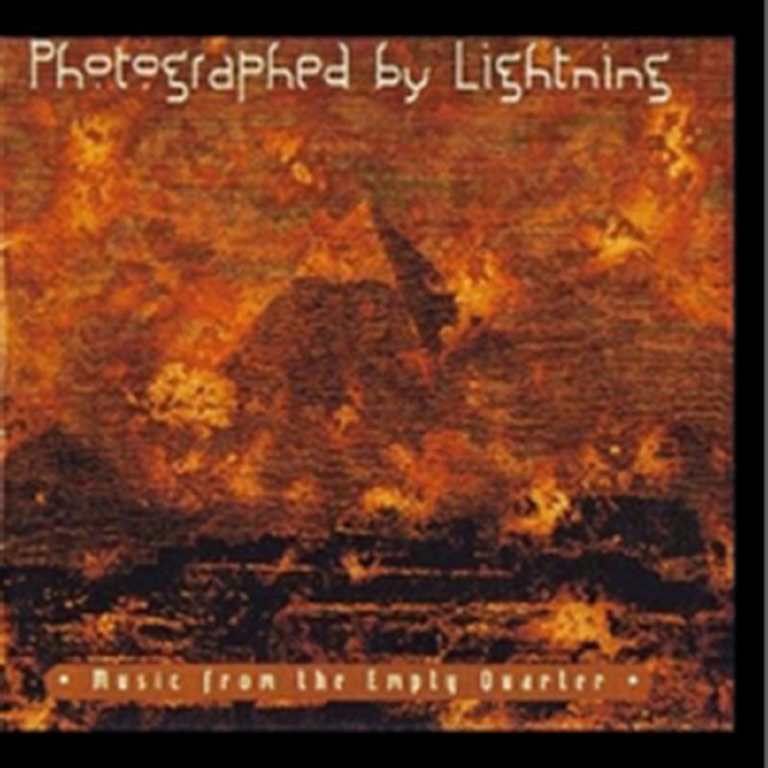
Originally released in 1999, Music from the Empty Quarter was Photographed by Lightning’s fifth album. The band described it as ‘their Troutmask Replica, their Tago Mago’, forewarning the listener that it’s ‘a monstrous slice of avant jazz, musique concrete Lovecraftian horror and should under no circumstances be listened to while under the influence of ‘substances’, and it’s immediately clear why. Like Trout Mask, it seems to be an album intended to be as difficult and challenging as possible, the sound of four musicians playing four different tunes in different keys and time signatures at the same time.

A strolling bassline stops and starts, runs and halts against a thunking beat. Everything’s up to the max, resulting in a slightly fuzzed-out sound, murky with the edges frayed by distortion. And over all of it, horns honk and parp, weaving weird patterns. This is the first of the four parts of ‘Al Azif’, scattered at strategic points across the album, with the same nagging bass motif recurring on each, as if in some attempt to give some sense of structure or cogency to the deranged, sprawling mass of weirdy noise. While three of the four parts are comparatively short, ‘Al Azif 4’ is a colossal twenty-one minutes in duration, but there’s a hell of a lot to wade through before – namely the whole of disc one.

‘Reptiles Invent The Amniotic Egg’ is a slow-trudging grind, somewhere between Justin Broadrick and Kevin Martin’s GOD, and SWANS, and ‘Foehn’ occupies similarly dark, weighty territory. Meanwhile, ‘Pop Song’ stands out as the most accessible track here, a snappy number with an actual semblance of a tune that’s reminiscent of early Public Image – but after a minute and a bit, they’re done, and back to making the most chaotic racket going with the frenzied discord of ‘The Assembly of Membranes’, and taking things up a notch on ‘Timing of Cellularisation’ which sounds like The Fall playing next door to Merzbow, and they’ve both left the door open and you’re standing in the corridor between the two.

By the time you’ve been battered by the murky wasteland that is the noodling delirium of ‘Mosses Invade the land’, with its impenetrable vocals, and the unexpectedly folksy lo-fi indie of Sugar Fist – part Silver Jews, part Syd Barrett, you arrive dizzied and dazed at ‘Al Azif 3’ with a strange sense of déjà-vu, before disc two arrives with more of the same – literally. That sensation of being on an endlessly recurring loop is a headfuck almost on a par with Rudimentary Peni’s Pope Adrian 37th Psychristiatric, but perhaps more realistically an approximation of The Fall’s ‘Bremen Nacht’ repetitions on The Frenz Experiment and accompanying 7”.

The demented, snarling vocals, that gibber and gnash away into the drifting fade of horns is most unsettling as disc two gets dubby and deranged on the fourth instalment, and after the brief interlude that is ‘Hypoxia’, the fifteen-minute title track is a yawning, droning swirl of somnambulance, a ritualistic swell and groan with laser rockets arcing over its bubbling, swampy expanse.

This is fucking heavy stuff: not heavy in the metal sense, but in the sense that’s it’s relentlessly oppressive and lasts an eternity. It’s absolutely bloody great, but it’s also probably the soundtrack to life in purgatory. You have been warned.

AA

a1100566683_10

ant-zen – 18th February 2021

Christopher Nosnibor

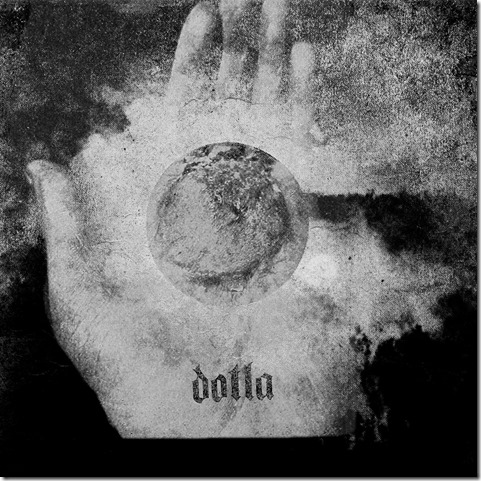
Dotla finds ‘accidental one-man project’ kojoohar reunited with purveyors of experimental hip-hop ködzid goo to deliver a follow-up to their 2019 collaborative EP, ‘Дотла’.

The blurb promises ‘heavy lyrics spiked with solemn images and numerous literary references’; and a work of ‘dark, dystopic angst pop with deep aesthetic lyrics and unrelenting vocals… delivered in a blank monotone.’

Now, I’ve long maintained that how and why we respond the way we do to certain music is subconscious, subliminal, psychologically or even genetically embedded. I’ve never found myself able to connect with disco or funk, but music that’s chillingly bleak and inhuman resonates to my very core. And shit, is this bleak and inhuman.

My inability to even vaguely comprehend the actual lyrics is completely immaterial: the characteristically hard-edged Slavic consonants lend themselves perfectly to that detached, monotone delivery, in a similar way to that in which Germanic languages do, and that harshness is much of the appeal of bands like DAF and X-Mal Deutschland (bit not Rammstein, because they always sound like a parody of that Germanic strain of industrial to my ears. I’m not saying I need my Industrial to be po-faced, far from it, but one should be able to take serious music seriously – and kojoohar × ködzid goo are seriously serious, in the best possible way).

Dotla is all the monotone, all the monochrome, thudding industrial beats hammer slow and hard through murky sonic wastelands. It’s unforgiving, relentless: there’s not much light or variation in mood here, and that’s the beauty of it: this is not an album designed to entertain. By the fourth track, the mangled droning trudge of ‘burelom’, you already feel the walls closing in and the light growing dim.

Whereas there’s a popular perception that the heaviest, most oppressive music exists within the domain of metal, electronic music at its darkest, sparsest and most monotonous is, if anything, more intensely claustrophobic.

The production on dotla is also a factor: there’s a lot of low end, rumbling, droney bass, but more than that, there’s a lot of murk. Dotla applies the values of black metal to industrial hip-hop. The drums and vocals are muffled, and there’s, a thick haze that hangs over the whole thing, and cumulatively, it’s almost suffocating. There’s no space or air between the instruments or the notes: everything condenses to form a thick, noxious cloud and a sound so thick and impenetrable it’s nigh on impossible to penetrate and separate the component parts.

The result is like the suction or air from the lungs, the endless battering of blunt objects, and the slow, wading through sludge trudge of ‘typh’ is exemplary. It’s not pleasurable – in fact it slowly grinds the life out of you – but successfully articulates in sonic from every last ounce of the life-sapping oppression of the drudgery of corporate conditioning and governmental oppression, of life. ‘plot’ is the sound of defeat, of self-loathing, of emptiness, of dehumanisation. Feel the pain. Immerse yourself in it. You deserve it.

AA
a0292046476_10

Born of the long dark winters of Norway Årabrot was too black for metal and too avant-garde for punk so it forged its own path. Hewn from empty roads and the cold impenetrable depths of the fiords of its home.

A Norwegian Gothic, tales sung and stories told in screams and whispers. With its steel guitar, a steely gaze a sneer and

a Stetson, Årabrot is the bastard offspring of Billie Holiday and Elmore James. It is The Velvet Underground if Johnny Cash was a member and Nico was able to sing. It is Camus, Sartre, Poe and Burroughs cut-up and regurgitated in an unholy erotic mass. It is all the great bands you haven’t even heard of. It is you. It is here it is now and there are other bodies to bury. Årabrot is not fucking around.

Årabrot is Kjetil “Tall Man” Nernes and Karin “Dark Diva” Park. They live in the Swedish countryside with their two children in the old church that they own. Rock’n roll is their religion.

Discussing their two part short film Kjetil comments,

It is the tale of Årabrot, preachers of rock’n roll. The videos are shot in the church where we live and its surroundings, our neighbours and friends as the congregation. Karin is 8 months pregnant. If you want to know what Årabrot is all about this is where you want to start. Brilliantly directed by Thomas Knights and Kassandra Powell of Obscure Film Collective.’

Watch the video now for part 2, ”Hailstones For Rain / The Moon Is Dead’ here:

AA

thumbnail_FY7A9632 ret

5th March 2021

It’s Friday afternoon: it’s been a tough week in a succession of tough weeks because lockdown, home working and home schooling since January has felt like an eternity. But arriving at the weekend alive and intact as the rain stopped and the sky cleared felt like some small-scale event, and an uplifting one.

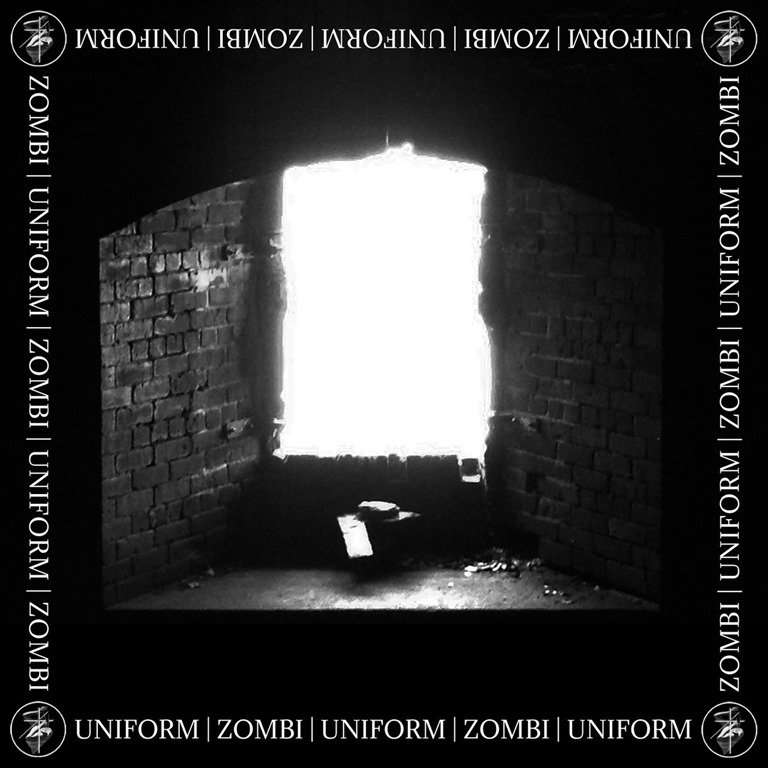
Cracking open a beer, I experienced a brief moment of okayness: nothing nearly as extreme as euphoria, but something above calm. In the current climate, what could be better? What more could I ask for? The answer lay in my inbox with an email informing me that ‘Today Uniform launches an ongoing series of remix collaborations with digital releases exclusively on Bandcamp. Kicking off with Uniform X Zombi, new releases between Uniform and another artist remixing each other will continue over the coming months. In this first installment, Zombi gives Uniform’s ‘Shame’ an ominous rework and Uniform gives Zombi’s ‘XYZT’ a searing spin’.

It may seem perverse that I should experience such a surge of excitement at the prospect of being assaulted by gnarly noise, but there’s an inexplicable thrill with imminent catharsis, which of course is realised with the achievement of said catharsis.

The Zombi remix of Uniform’s ‘Shame’ isn’t a disappointment, but it’s not the raging racket one would anticipate. Everything is pulped down to a murky swamp of malevolence, Michael Berden’s vocal a slowed-sown metallic slur that finds itself enveloped in slow, gloomy synths that drone and grind as the drums plod dolorously. At times reminiscent of The Cure’s Carnage Visors, it melts toward abstraction, but the atmosphere is dank and oppressive. It may not be cathartic, but it is suffocatingly dense. It’s pretty much the perfect remix in that it isn’t kind or reverent, and instead takes the original material in a completely different direction, while still preserving its essence – in this case, the bleak anguish and soul-crushing nihilism – of the original.

Uniform return the favour by mangling the expansive math-tinged progressive ‘XYZT’ from Zombi’s last album 2020. The soaring guitars and intricate ‘Tubular Bells’ like synth motif is compacted down to a grainy murk of distortion, propelled by a hectic, stammering beat that’s pure tension. Again, it doesn’t bring the catharsis, but it does bring a whole lot of shade and discomfort. It seems right for the times: nothing is certain, it’s impossible to really settle and the light at the end of the tunnel remains shaky and may yet still be just a guy with a torch who’s lost. As we all are. But at least more Uniform provides some solace.

AA

a2725916400_10

29th January 2021

Christopher Nosnibor

My wife detests The Twilight Sad. I love The Twilight Sad, and am prone to crying at their gigs. I’ve also been called a cunt online for suggesting the intensity of their shows may be akin to witnessing Joy Division at their peak (a suggestion I still stand by: James Graham is capable of conveying a rare emotional intensity in his performances that’s compelling, and at times, borders on the disturbing). They’re a band that are divisive beyond Marmite, but elicit a level of devotion from their fans that’s truly fervent.

When it comes to covering a band that inspire such passion, it’s a big, big challenge, and a huge risk – one of those moves that could be absolute fucking suicide, or inspire career-defining awe.

The last time I wrote about National Service, a four-piece band consisting of Fintan Campbell (vocals/guitar), Daniel Hipkin (bass/vocals), Iain Kelly (guitar/vocals) and Matthew Alston (drums) back in November on the release of ‘Caving’, I actually compared them to The Twilight Sad, so this feels like a much a test of my skills as theirs – and it’s perhaps worth noting that this is the last in a series of cover releases from Fierce Panda, which has also featured Moon Panda, Desperate Journalist, and China |Bears.

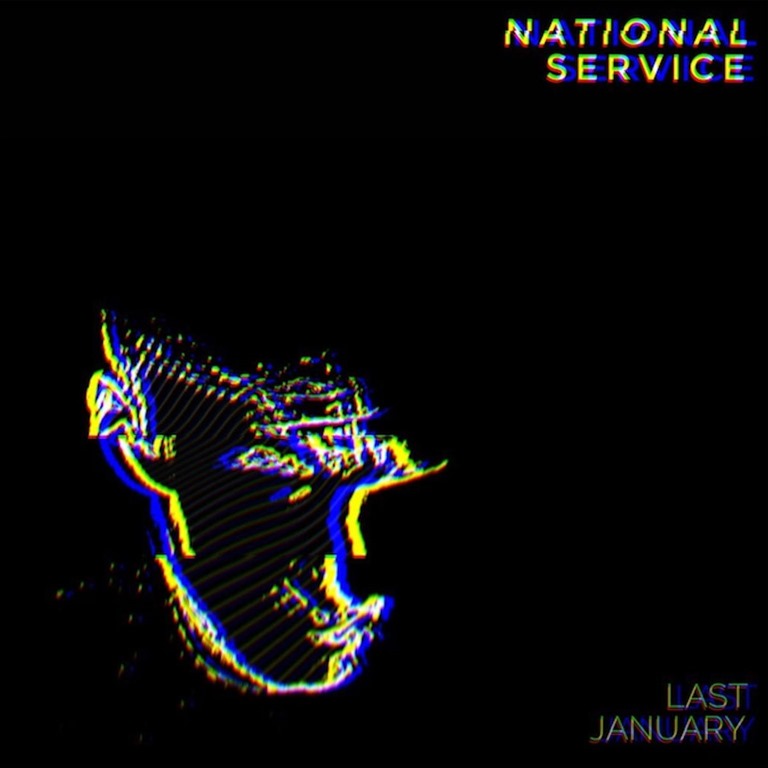
Now, you should never mess with perfection, but with their glacial, stripped-back, minimalist take on the song, National Service really capture the wintery melancholy of the original. The dark beauty of the lyrics, which blend sadness with a certain distanced, twisted psychopathy is conveyed with a sincerity that transcends the ethereal atmosphere.

The absence of the soaring finale may come as something of an anticlimax, but this is a well-conceived and magnificently-executed cover, and the distinctive, even slightly unusual vocals delivery, with a certain twang on the higher notes, are well-suited to the song, stamping a unique marker on it while accentuating the multifaceted layers embedded within the song’s dark spirit.

AA

Single cover

Cae Gwyn Records – 22nd January 2021

Christopher Nosnibor

It’s dark. It’s winter. We’re in lockdown – again / still. Whatever cheer Christmas and the prospect of new year brought – and let’s face it more than cheer, it was a flicker of false hope, or worse still, a diminutive moment of delusional hope – has faded with the return to work (from home) and (home) schooling and the prospect of socialising, pubs, and gigs but a snuffed candle for the foreseeable, meaning that the jaunty Christmas tunes that assailed us last month can well and truly delete themselves while we get back to reality.

‘Doppelgänger’, the debut single from IsoPHeX, aka 19-year-old Cian Owen from Anglesey, it pitched as ‘brooding electronica of the highest order’, and it fits the bill and no mistake.

If you’re expecting – or wanting – more dark ambient, you’ll likely be disappointed, although ‘Doppelgänger’ brings atmosphere in spades, and one that’s cold and dark.

It may only be three minutes an eighteen seconds in duration, but ‘Doppelgänger’ melds an array of styles, incorporating hip-hop and sparse electro to create something that’s simultaneously bleak and dynamic, as chilly synths wrapped like mist around a hectic beat: uptempo hip-hop or downtempo drum ‘n’ bass? Who cares? Despite the urgent pace of the stammering rhythm, ‘Doppelgänger’ is sparse, minimal, and edgy, a twitchy trip through dark alleyways at night, tense and paranoid. Is there something there? Or is it all in your head? Keep one eye over your shoulder. Keep moving. Trust no-one. Apart from me, of course, when I tell you this is a killer tune.

bAF3hL-z