Posts Tagged ‘dark’

Bizarreshampoo – 11th August 2021

Christopher Nosnibor

The last time we heard from Ukranian purveyor of brutal noise, Vitauct, it was the scouring noise abrasion of Breaking Bad back in the spring of 2020; before that, it was the split album with Crepuscular Entity in December 2019. It turns out there’s a whole lot of activity that’s happened in between, including a fair few split releases, and this latest offering is yet another, this time with Georgia-based ცოდნის მფლობელები, an artist who, in his own words ‘uses field recordings to create tracks that try to communicate different states of mind’, and explains that within his work, ‘there is a certain tension and expectation next to a piano taken from some informal performance.

The release is available on double cassette and CD, although the way it’s laid out would also lend itself well to four sides of vinyl, with each artists contributing two fifteen-minute / side-long compositions, alternating, with Vitauct occupying sides A and C, and ცოდნის მფლობელები occupying sides B and D.

The first piece, ‘Search’ is perhaps more ‘Destroy’: a tearing wave of harsh noise that simply blasts the sense for quarter of an hour straight with barely no perceptible variation, it’s practically HNW, bar some subtle shifts and reverberations of pain echoing in the background. It howls and screams, but mostly it’s like the sound of ground zero of an atomic bomb, and it just goes on, and on, without mercy, shredding the air and blasting away at the organs from the inside.

‘თვალთვალი’, the first of the two tracks from ცოდნის მფლობელები, offers a quite different tone and atmosphere. The sound is murky, swampy, almost subaquatic in its drowned muffledness, and there’s a low, slow, rhythmic rise and fall like a tidal current that drags you along in surging increments, pulling, then releasing a little, before pulling again. It’s dense – suffocatingly so – and gurgles, dark and abstract while creating some kind of sensory deprivation that becomes more intense and unnerving the longer it persists. Everything slows. Nothing happens. It feels as if time has stalled, and you’re hanging in suspended animation, unable to speak, unable to move, incapacitated and simply floating, paralysed. You start to find interest in the most granular detail, in the same way you wonder if you need to go over parts of a wall you’ve just painted because you can’t be sure if you’ve missed a bit or it’s just drying faster than other areas. You wonder how long you will remain trapped here, if the nightmare will ever end, if, indeed, you will ever escape to the surface. It’s a long and torturously slow fifteen minutes, and when it does finally end, you’re left feeling limp, drained.

And then it’s back for round two: with ‘Uncertainty’, Vitauct brings a crackling fizz of overloading static and digital distortion that sounds like your speaker cones are torn. It’s a tonal / textural combination that’s almost guaranteed to disrupt the equilibrium because it simply sounds like everything is fucked – both your equipment and your hearing – and sets a churning in the pit of the stomach. This could perhaps be some kind of auditory trick of sorts that sets the listener off balance, like an infection or damage in the inner ear. It’s painful, but as an example of devastating mid-range harsh noise, it’s outstanding.

‘იდეოლოგიის მეტრონომი’ is the final piece, another fifteen minutes of murky, bubbling babbling. This time, it feels speeded up, and the bubbling babbling sounds like a large gathering of people, chattering excitedly underwater, while a stream of analogue synth streams and stammers in a sustained state of agitation. It’s an unheimlich, otherly experience that’s unsettling and uncomfortable – which is a fair summary of this release as a whole.

If its hour duration seems daunting, in some respects I suspect that’s part of the intention: this is not a release for noise casuals, but that hardcore who have real staying power and probably something of a masochistic streak. For such a niche genre, the amount of material it has yielded – and continues to yield – is astronomical, and it’s not always easy to differentiate the quality form the lethargic, but as we’ve come to expect from Vitauct and his pairings, this is strong stuff.

AA
a3215801437_10

Ventil Records – V026 – 4th August 2021

Christopher Nosnibor

Ultimately, it’s apparent now that social media changed everything. But one thing specific was the relationship between artist and audience. Historically, the distance between the two was clear and also integral. The last, ten to fifteen years hasn’t only seen that separation eroded, but a certain expectation that the artist should engage directly with the audience via online platforms, be it social media or a blog maintained as a part of their website. As a marketing tool, it makes sense, but it’s hard not to feel that something has been lost along the way. Is it right that the artist should be made accessible, or that there should be an expectation of there being some kind of quite direct interaction? It’s not even necessarily about maintaining a persona or a degree of enigma: many artists are introverts by nature, and don’t create art to stand in the limelight in front of it. Many artists create to escape something, or simply to expel or have an outlet for that which they cannot convey by any other means.

I’m often not particularly communicative myself. I don’t want to talk about it, whatever it is – assuming I even know. I simply want to write or make ‘music’. But I did, recently post on Facebook about how I often berate myself for not being as productive as I would like to be. People were largely sympathetic, but few, it would seem, truly ‘got it.’

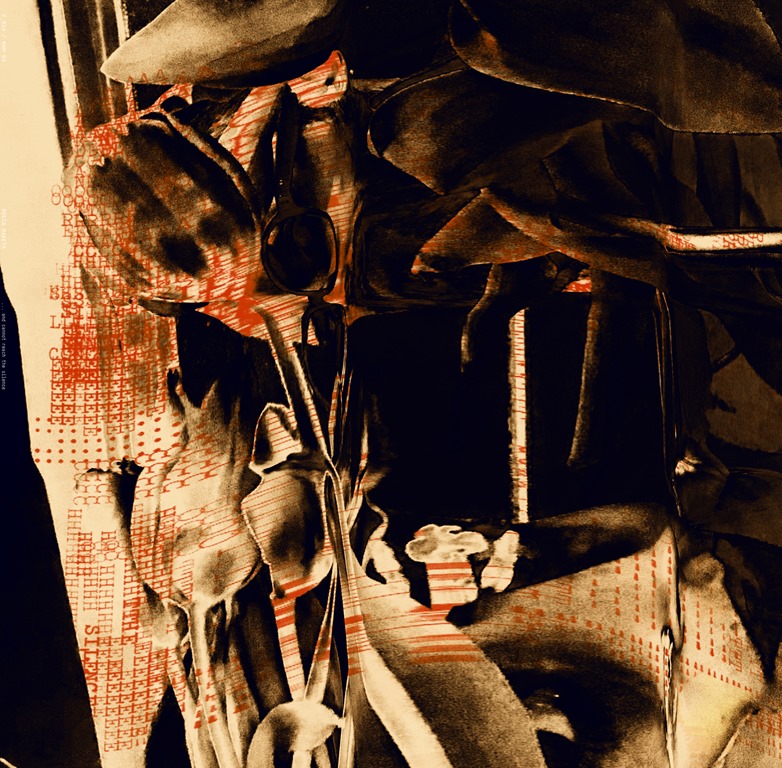
One artist who truly does understand that eternal restlessness is polyartist Maja Osojnik, and her quest for creativity is unstinting. Having been involved in several visual exhibitions, a live stream, and various compositions in recent months, she’s also recorded an album with collaborator Matija Schellander to deliver the debut Rdeča Raketa (Red Rocket) album.

This album is both very ‘now’ and also very much an expiration of the human condition, specifically its failings and how communication is key, but very much prone to failure.

As the liner notes outline, ‘…and cannot reach the silence deals with the current world of misunderstandings, communicating past each other, willingly and unwillingly overlooking or ignoring each other’s meanings via various fast-paced forms and platforms of communication; and, with that, the tightening of incompatible parallel “realities.” It explores forms of violence; physical and verbal, external and self-inflicted. It explores forms of power; the dangerous thin line between giving power to and giving power over oneself, and forms of subjugation and addiction on both societal and, more significantly, on interpersonal levels. “… Look at us! Beasts, bottomless pits, never to be full! To be fulfilled. Glued onto each other in sweat, a never-ending pain and evenly spread, at all times…”

They go on to ask, ‘In those dark, dystopian lyrics, full of questions, such as “What is being said and what stays unspoken? Who does it refer to? Who is protecting whom? For what reasons? Who is being addressed or what needs to be considered?” the wish, the need and the struggle for self-empowerment, honesty, love and reconciliation is exposed or, at the very least, nourished.’

All of this resonates, and deeply. Only yesterday, I had been considering how depth of conversation seems to have evaporated. People have neither the time more the attention. Conversations were often cut short or curtailed or otherwise hurried back in the days of the office, but that was nothing compared to thee standard one- or two-line text exchanges, comments shared by Skype or Teams. We – collectively – don’t really ‘talk’ anymore. We’re paranoid, time-deprived, stressed. We’re also so polarised and entrenched in our oppositional viewpoints that there is no debate, only division. And with social media, 24/7 scrolling news and infinite notifications from apps, there is no respite – ever. There is no silence, wherever you may seek it.

The three longform compositions on …and cannot reach the silence are heavy and rich with atmosphere. The first, the ten-minute ‘the night is spilling across the room…’ approaches by stealth. A low, slow, ominous drone, intercut with aberrant thuds and squelches. An artisanal, wordless voice drifts in, and it’s haunting, ghostly, otherworldly. What does it mean? The lyrics, sung in a detached tone, are stark, bleak: ‘You were unspoken / She was born already broken….’ Eventually, the words drift out into a wordless undulating hum and the world slowly disintegrates.

The disintegration continues through the lumbering lurch of counterpart composition ‘…like gasoline’. Its slow, yawning rhythmic intonations evoke the heavy grind of SWANS circa 1986, relentless, booming, droning, and it’s the perfect backdrop to Maja’s semi—spoken vocal delivery. She’s robotic, inhuman, empty, even when articulating human emotions – ‘I want to you so bad, I want you so bad,’ she repeats at one point. But is it want, or is it need? Something less about choice or desire, and more about emotional survival? ‘I am tired’ she repeats, over and over, in tones ranging from weary to frustrated, defeated to angry, and you feel it – you know it. The articulation is comparable to one of Bruin Gysin’s permutational poems: only, instead if rearranging the words, the emphasis changes in order to find different meanings of the same words. This one resonates. The tiredness saps your life and saps your soul, and you feel the differences between ‘I’m tired, please leave me be,’ and ‘I’M TIRED! FUCK OFF AND LEAVE ME ALONE!’

The third and final composition, ‘waiting it out’, is fifteen and a half minutes of ominousness. The vocals are all but submerged, a babble beneath the undulating drone and trilling. Synths crank up and head for take-off as they stray into the heavily phased world of early industrial and power electronics, a wheezing wall of wailing synths puffing and groaning and bleeping and whirring and all converging in a seething sonic mound. Towards the end, it ventures skywards in a succession of laser-guided rockets arcing into the sky.

…and cannot reach the silence is an album with an immense range, and an understated intensity – and a magnificent artistic achievement.

AA

KT.eps

Hallow Ground – HG2104 – 13th August 2021

Christopher Nosnibor

There are few things in life you can really rely on, but Hallow Ground is one of them, if you’re seeking music from the darker side. The clue’s pretty much in the name here: this is pretty dark. Of course it is. It’s also quite an interesting and unusual blend of styles and sounds, for while this forty-minute, seven-track work is predominantly instrumental and ambient in its leanings, it pushes wider and deeper than that, to span a range of territories, with often quite unsettling results.

DarkSonicTales is a project by Rolf Gisler, who was granted an artist residency in a 300-year-old farmhouse in the Swiss countryside in autumn 2019, by the label. How this sort of thing comes about, I’m not really sure, but there it is. I am a shade covetous of artists who get dedicated time and space to work on their art in whatever medium, because the simple fact is that in ordinary life there never seems to be enough time. For anything. And creativity requires headspace and time, both of which are rare and precious commodities.

Rolf seems to have made the most of his time, and the result is an album that’s varied in terms of form and tonality, which makes for a fascinating listening experience. From the mellow chiming of the short intro piece, ‘Info Pandemie’, to the eight-minute drone-swirl of ‘Best Buddies’ that drags the album to a slow-simmering conclusion in a bilious fog of sonic drift, DarkSonicTales is a deeply exploratory piece.

‘I Still Believe’ is a long, slow-burning, low-key, low-tempo gothy tune, where Gisler whispers in a baritone croon over a delicately picked guitar that’s hauntingly atmospheric and pinned down by a distant but insistent drum machine, its cracking snare cutting through the sonic haze.

‘Best Buddies’ brings the finale, and there’s a stuttering heartbeat drum flickering like a palpitation against the slow, majestic musical backdrop.

In some respects, it’s a challenge, simply because however much the album leans towards electronics, the way the instrumentation is used is so widely varied this feels like an album that’s harder to accommodate far more than it actually is. Somehow, the pieces of the jigsaw fit together.

AA

a4220900238_10

Misanthropic Agenda – MAR057 – 7th July 2021

Christopher Nosnibor

The title of Dave Phillips’ new album is quite explicit: it’s an album dedicated to death. He explains this in the liner notes, ‘not death the spectre that installs horror and fear in many (in the western world), nor death the enemy of the (western) for-profit medical system, but death as part of a cycle, like birth. death the only certainty in life. dying, like living, as something that can be done well – or not. death also something that can be a release, a relief, a liberation, the end of suffering, a freedom.’

The album, which he directs the listener to play as one continuous session, was inspired by his father’s illness, deterioration and death, and being his carer for the 15 last months of his life, and was, poignantly, sent off to press in early June 2021, when his father died. This clearly makes To Death an incredibly personal work.

Perhaps predictably, To Death is a dark album. Predictably, not primarily because of the subject matter, but because my last encounter with Phillips’ work – 2014’s Homo Animalis – was pretty dark, too, although he’s done a hell of a lot since then. And for Phillips’ observation that death can be ‘a relief, a liberation, the end of suffering, a freedom’, death is rarely seen as a cause for elation or celebration in the human psyche, particularly in the west, where there is a deep-rooted fear of death, and a culture that promotes prolonging and preserving life at all costs, regardless of quality. Death is perceived as a loss, something devastating, and to be avoided at all costs, and I’m forever presented with news items and comments on social media about people who have died in their 70s or 80s – particularly during the pandemic – having been ‘taken before their time’. But when is their time? Everyone has a time, and everyone has to die of something, and the state of denial about the inevitability of death is psychologically detrimental.

But as the title of the album’s second track says it so succinctly, ‘fear of death = fear of life’. A life lived in fear of death is no life at all. Of course, an awareness of death is something else entirely. You have to take some risks to know you’re actually alive. How many people say on their death bed that they were glad they did nothing in case it killed them? There’s a clear theme to this album, both sonically and in the tiles: ‘everyone dies, not everyone lives’ is the perfect encapsulation of Phillips’ ethos. It also manifests as a dolorous booming drone like a ship’s horn juxtaposed with maniacal shouting, distorted and raw, and very much in the vein of Prurient. As such, Phillips articulates beyond words and reaches into the very core of the psyche.

Ominous drones that hum and buzz hover unsettlingly and uncomfortably, eddying around whispered words, barely audible during the ten-minute first track, ‘a cycle completed’. What is it about whispers in darkness that we find so unnerving? Gradually, ponderous bass notes and dubious creaking sounds enter the mix as the drones become more tense and eerie.

The third piece, ‘to death we all go, the sooner the better’ is filled with agonised shrieks and howls and pain and anguish – and the title conveys a sentiment I can truly buy into. Humanity is a scourge, and the worst of all plagues on the planet.

Listening to the album in a single sitting is certainly a powerful experience, and there is some dense, challenging noise, and things grow darker and doomier as the album progresses: a stark piano note chinks out and is quickly submerged in a wheezing drone and more muttered narrative on ‘real catastrophe’ which plunges deep into underground rumblings. ‘We are the virus…’ he whispers amidst a soup of spectral voices. ‘The real catastrophe is that humanity continues.’ Phillips’ apparent misanthropy is hardly unjustified: in the scheme of all eternity, it’s taken us but the blink of an eye to render countless species extinct and decimate countless ecosystems. In nature, other species don’t destroy their own habitat. Even viruses and parasites evolve to achieve maximum replication without destroying their hosts. It’s simply not in their interests. The common cold is the most successful virus of all time because it’s highly contagious but rarely kills its host, other than by complications. The more hosts available, the times it can reinfect, the less work it has to do to propagate itself.

Siren-wailing undulations lead us to ‘the other side’, a groaning, wheezing croak of a composition built on repetition before finally, the title track crawls to the finish – and having made it, I can die happy.

Some speculate that death is not the end, but the likelihood is that it is, and regardless of spiritual belief, physically, it is. And why should that be such a bad thing? All things must end, and it’s a matter of when, rather than if. Live life: accept death.

AA

dp to death digi w newest corrections

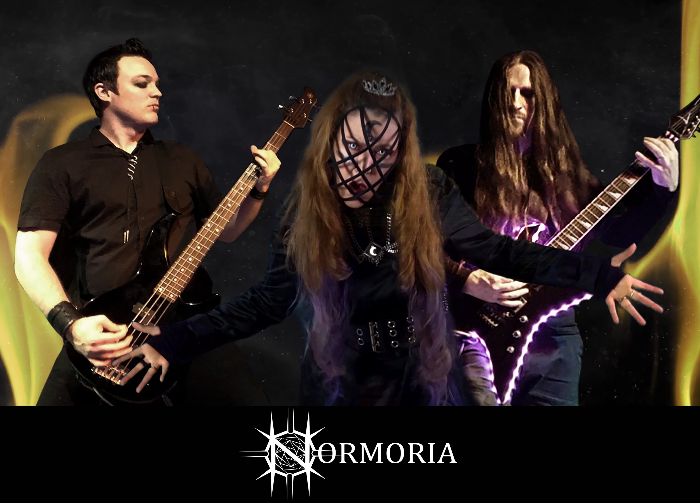
Swedish/American dark electro/industrial band, Normoria has unveiled their new video, ‘Land Of The Rich’ from their latest EP, Voyage.

The band say: ‘Land Of The Rich’ is the new music video taken from our latest EP, VOYAGE, and it highlights how incredibly divided the US currently is. While the rich keep getting richer, and most Americans are struggling to get by in a country in distress. Booming vocals, punkish guitars and intense bass are part of what makes this track one of this dark electro Industrial band most energetic and in your face songs!

Watch the video here:

Normoria is an American/Swedish band whose seductive sound is a fusion of many elements: primarily dark electro and rock-Industrial. The music is a big blend of dark styles, amplified by Johan’s rumbling bass and Gustav’s enigmatic guitar, as well as their charismatic frontwoman Angel Moonshine’s versatile vocals, and dramatic aesthetics. Expressive power, hauntingly catchy melodies, and a combination of obscure energized sounds, are signature features of the band that combined make Normoria distinct and outside of the traditional.

64329b38-b244-de41-ec07-2e083c06a104

Khatacomb – 7th July 2021

Christopheer Nosnibor

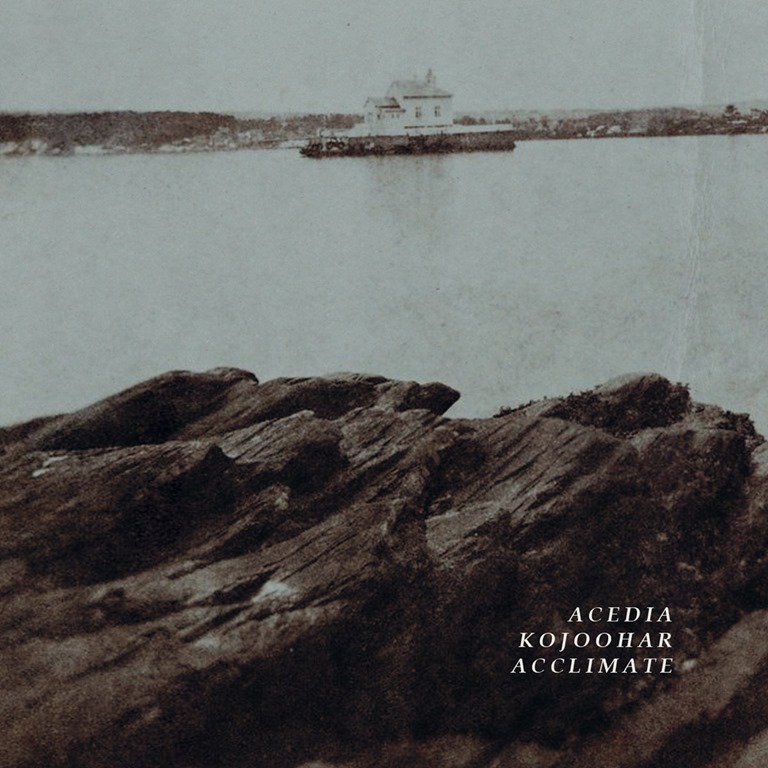
Some artists clearly thrive on collaboration, throwing themselves fully into the possibilities and potentials ideas from other quarters offer. Ukrainian experimentalist Kojoohar, aka Andrii Kozhukhar, is clearly one such artist, with the self-explanatory Split– a collaboration with fellow Ukrainian Acedia and New Zealander Acclimate – is his second release of the year so far.

Split is something of a celebration of darkness, and a coming together of artists with fundamentally divergent styles, and its finding a home on Ukrainian label / webzine Khatacomb is no coincidence, given its commitment to ‘covering various manifestations of Ukrainian post-industrial music, from dark folk to experimental electronics, and art in general’. It’s an immense departure from anything Kojoohar has done before, with his 2019 and 2021 collaborations with ködzid goo exploring the realms of industrial and avant-garde hip-hop.

The way Split is split is interesting in itself, with four solo Acedia pieces, one Acedia and Kojoohar composition, and a brace from Kojoohar and Acclimate, making it very much an album of three segments – and as such, split.

In context, the vocal element of Acedia’s contributions come as something of a surprise: against minimal, stark electronic backing, with snaking percussion and strong snare sounds that cut through, Acedia delivers a vocal that’s glacial yet warm in its human vulnerability. Ugh, comparisons feels like lazy journalism, but serve their purpose: Depeche Mode, Ladytron, and New Order’s Movement coalesce in the tone and style on these chilly tunes.

‘You’re already dead’ she intimates in a blank monotone on the cold as ice ‘Cocoon’, and the insularity closes in as each song progresses: ‘Slaughterous Game’ is as dark and dangerous as it gets, so cold that it strikes chill to the very marrow. It’s bleak but bold, and the four Acedia cuts feel like an EP in their own right.

I can’t help but feel that this release would work best in physical format, either as n album with the Acedia tracks on one side and the rest on the other, or as a pair of 12” to give each segment clear separation.

Acedia with Kojoohar conjure some darkly dreamy drone with ‘Forget my Name’, with its rolling, woozy bass and whipcracking snare that slashes away at a slow pace, and dark gets darker with ‘Enwomb’, the first of the pieces jointly forged by Kojoohar and Acclimate. It’s nearly ten minutes of ambient drone that billows and rumbles while treble bubbles and bounces eddy this way and that amidst the grumbling mid-range fog. Sparks fly and stutter incidentally but without effect, and the horizon grows broader in the face of this vast vista despite the grumbling discomfiture and whispering in tongues. It’s unsettling, a squirming, churning, twisting and turning with no breaks in which to find a position that’s comfortable. The same is true of the final track, the second Kojoohar and Acclimate cut, and it’s a cut that cuts deep: serrated edges burr and saw away, and tribal percussion thuds away insistently against subdued but wince-inducing trails of feedback.

None of this is comfortable; none of this is easy. But it’s a contrasting set that strains the edges of convention to create something quite, quite different.

AA

a4099095908_10

16th July 2021

Christopher Nosnibor

One of my mates enjoys expounding on the opinion that all band names are inherently and fundamentally crap, at least when taken on face value and interrogated for their meanings and connotations. He invariably takes it back to The Beatles – a shockingly bad pun if ever there was one, and I would have to say that point is hard to argue. It’s not even especially clever.

Any band with a one-word name prefixed with ‘the’ is, unquestionably terrible (even allowing for the fact that The Melvins is purposefully bad), and existing and acts who’ve added a definite article have gone rapidly downhill on doing so – take The Offspring, for example. But maybe not so much The Verve, because they were gash to begin with, with their overblown, flappy indie shoegaze flailings.

Recently, we discussed Death by Unga Bunga and Ender Bender, and unanimously agreed that they were both terrible names. But then, objectively, pretty much every band name – even your favourite – is poor and difficult to defend.

But we were divided over Weston Super Maim, which he deemed a bit shit, and which, objectively, is based on a terrible half pun that only UK residents and only then a percentage will grasp. But, despite knowing this, I can’t help but find amusement and a certain admiration for it and the audacity.

Their latest offering, the 180-Degree Murder EP isn’t so much a source of amusement, but more of a brutal industrial battering. Tom Stevens (All Of Space, Brown Stratos) teams up with US-based Seth Detrick of Los Angeles thrash outfit PDP to handle vocal duties. It’s an EP in the 80s tradition, where two tracks too long for a 7” would make up a 12” release. The two tracks on offer here both extend beyond the six-minute mark and pack all the punch.

It’s been a long time in the making, as the press release details: ‘Written as a single track, 180-Degree Murder traverses caveman heaviness, tech-driven grooves and shifting melodic patterns to create an immersive experience that rewards multiple listens. The writing process for the EP began in 2019. By the time the pandemic hit, an early instrumental draft had already been recorded, but it wasn’t until Detrick joined the project in June 2020 that things really began to take shape. Making use of extra time at home in London during the first UK lockdown, Stevens retracked instruments for the EP at his home studio while Detrick developed lyrical ideas and vocal patterns from his home in Eugene, Oregon. Vocal tracking was completed in early 2021, and the mix not long thereafter.’

‘180 Degree Murder’ is a cacophony of hard slabs plus squalling bleeping fretwork, roaring, ground-razing vocals and an air of explosive violence as guttural roars set against the most pulverising of riffs. Strapping Young Lad is the comparison that comes to mind, but then there’s also the relentless mechanised industrial blast of Wiseblood and Swans that’s also hard to ignore. Oh yes, this is hard and heavy, alright.

‘We Need to Talk About Heaven’ offers a graceful intro and the breaks are remarkably light and melodic in context, but the chug never stops, and cuts loose into violent distortion-driven fury at precisely those crucial points, and it’s not for wimps. In fact, it may only be some fifteen-and-a-bit minutes in duration, but 180 Degree Murder is a savage and brutal affair.

AA

236758

Gates of Hypnos  – 4th July 2021

Christopher Nosnibor

This is a split release by, as the title suggests, Sado Rituals and Mass Grave, who each bring approximately twenty minutes of harsh noise wall to the dark, antisocial party.

Sado Rituals’ ‘Funeral Pile of the Nameless’ is a murky cloud of tearing, rumbling devastation.

As I listen, I contemplate whether they mean pile or pyre, but conclude it maters little, especially not least of all to the couple of hundred people who will even ever hear it. We’re in ultra-niche territory here, and no mistake. But it’s a niche filed with a truly hardcore following.

It’s deep, dark, dank, a rumbling morass of formless darkness that billows and rumbles, and over the course of its precise twenty minutes, it sucks the fucking soul from you as it churns away at the guts without shift and without mercy. It feels like standing beneath the rotors of a helicopter, or on the edge of a cyclone spiralling down and drawing all matter into the pits of hell, the sonic equivalent of a black hole. A vortex of bleakness, of dense matter without form. And then, bang on the twenty-minute marks, it stops.

As purveyors of self-labelled ‘blackened noise wall’, Mass Grave’s nineteen-minute gut churner sounds like the tail end of a piano being rolled down a flight of stairs, a rolling crash of dissonance. It’s even darker and dinger than Sado Rituals’ contribution, a low rumble reduced to a slow, low drone that gradually warps as it billows like smoke from a fire on a wrecker’s yard, all types burning and cars slowly melting in the suffocating black smog.

The lack of treble on these two pieces tempers the harshness, in many ways: it’s a real gut-rumbler but neither track feels particularly attacking or abrasive: it’s a noise wall, and no mistake, but one which is more designed to smoother and suffocate than penetrate the flesh and the psyche with its harsh intensity. It’s still punishing, and it’s still gnarly as fuck, and its power lies in just how oppressive, stifling, the two pieces are.

AA

a3190939614_16

5th June 2021

Christopher Nosnibor

The only way to remain sane through all of this madness is to embrace it, or at least some of it. Then again, ( kröter ) have been ahead of the curve in the madness stakes for some time, as the conveyor-belt of releases over the last couple of years have shown, since they were all culled from some epic sessions around 2018.

*f is their third album of 2021, and the sixth album to be culled from these sessions. Remarkably, rather than a random collection of offcuts and flow-sweepings, it contains some of the most outstanding material yet, and one has to wonder how much did they actually record?

They’ve spent a lot of time sifting through the material and chopping it into tracks and sequencing them into albums – with varying degrees of cohesion – but as they note, ‘as usual, there are no second takes in this pond. All is nutritious, spiraling and slowly growing legs.’ These legs are long and hairy, and the sprawling eleven-minute ‘Trajectory’ is a dingy, dirgy grind dominated by a crunchy, dirty bass groove and plodding beat. It’s kinda post-punk, kinda no-wave, kinda noise-rock, and if there are moments when Mr Vast’s vocals hint at a Jim Morrison-esque swagger, the whole thing reminds me most of Terminal Cheesecake, for those who can handle an obscure reference point.

‘The Letter’ is swampy, minimal, meandering, while ‘The Rock’, another low-oscillating slab of dark industrial-leaning synth is propelled by clattering percussion and features snarling, growling manic vocals. Vast is a versatile vocalist, even if on this set his delivery isn’t particularly angled towards melody, as he drones and yelps and drawls and yowls all kinds of atonality over repetitive electronic grooves.

It all comes together on the eighteen-minute ‘casper hauser in the mirror’, a thumping, humping, ketamine-paced motoric industrial jazz odyssey. Vast sounds utterly deranged as his voice wanders lost, aimless, as he half speaks, shouts, raps and yawns out abstract lyrics that drift out in a drift of reverb. Again, around the six minute mark, it sounds like Kraftwerk fronted by Jim Morrison circa LA Woman, and yes, it’s a pretty fucked-up experience, and the atmosphere is not only intense, but also dizzying, bewildering in its hypnotic pull. It transports the listener to another place, out of mind if not out of body, conjuring an almost trance-like experience. It may be some kind of woozy, weirdy, hippy shit, but it’s also affecting. There’s much to be said for the power of repetition, and this just goes on, and on… and on. It’s not nightmarish as such, but it is trippy and disorientating.

This is a fair summary of the album as a whole: *f really does pack in the weird shit, and if the initial tone is one of quirky, oddball fun, the overarching experience is rather darker. The disorientation it creates is less kaleidoscopic joy and more the nausea of excess, and a kind of unsettled bewilderment. ( kröter ) depart from Hunter S. Thompson’s adage that when the going gets weird, the weird turn pro, and instead forge their own path, whereby when the going gets weird, the weird gets even weirder, and a few shades darker, too. Which is cool, because who wants their weirdness to be predictable, after all?

AA

a2240317846_10

Empty Quarter – 1st June 2021

Christopher Nosnibor

The latest instalment in the reissue series of albums by oddballs Photographed by Lightning is something of a departure from its predecessors – but then, each album marks a different departure, and if one thing this contemporary appraisal of their back catalogue highlights is that they never stated still or retrod ground, which each release existing in a completely different realm from those which came before.

Recorded in 2002 and released in 2004 and considered by the band to perhaps be their strangest offering (and it’s got some tough competition), it lists as its inspirations the works of Kenji Siratori, Friedrich Nietzsche, Suehiro Mauro, Georges Bataille, J G Ballard. I’m often particularly intrigued when a band’s citations are literary, or otherwise non-musical, perhaps because in some respects, while there is naturally much crossover between all creative disciplines, literary influences tend to be more cerebral, ideas or concept-based over sonic. When a bands say they’re influenced by Led Zeppelin, you can probably hear certain stylistic elements in the composition: but you’re not going to hear elements of Ballard in the guitar technique of any band – although with a substantial catalogue of releases to his credit, Kenji Siratori is a notable exception to the rule, particularly as the experimental Japanese polyartist’s forays into extreme electronica and harsh noise in the vein of Merzbow actually do very much resemble his literary works also as a brain—shredding sensory overload.

This is certainly a fair summary of the experience of this album: the title track, a mere intro at under two minutes, is a blend of scratchy, synthy noise with extraneous elements collaged here and there.

‘The Embryo Hunts in Secret’ and ‘Putrid Night’ are both a sort of psychedelic new wave collision, and with the wandering basslines that veer up, down, and everywhere amidst treble-soaked chaos, the effect is disorientating dissonant, as if everything is slowly melting or collapsing in on itself. Everything is murky, dingy, kinda distant-sounding and discordant. Take ‘Kundalini Butterly’ – a spiralling kaleidoscopic mess or scrawling feedback and a bass that sounds like an angry bee bouncing around inside an upturned glass, coming on like Dr Mix covering Cabaret Voltaire’s ‘Nag Nag Nag’.

Blood Music is noisy, but it’s not straight-ahead guitars noisy: instead, it’s a mangled menage of bits and bobs hurled together – not clumsily, but then, not delicately, either, with pulsing washes of rhythm throbbing and crashing all around. It gets weirder and darker as they plunge into ‘My Hole’, where the bass bubbles and throbs beneath a continuous stream of trilling distortion, synth whistles and wails, and there’s a lot of overloading, whupping distortion that derails the helicotoptoring synths and froth and foam that sloshes around at the lower end of the sonic spectrum. ‘Dark Sun’ goes kind of industrial with a hefty, thunking beat, with a relentless, distorted snare, low-slung, booming bass and heavily treated vocals, and there’s chaotic piano all over the place: the emphasis is very much on the dark here.

Dave Mitchell’s lyrics are, we’re led to believe, to have been inspired by whatever he was reading, but buried low in the mix, bathed in reverb and given a grating metallic edge, he sounds like a malfunctioning Dalek chanting incantations. To be clear, that’s by no means a criticism.

Final track, ‘Frame’ is more overtly ambient, but dark, with a certain industrial hue as it shifts to pound out a relentless beat against braying sax and a whirlpool of aural chaos: I’m not about to suggest that PBL were going through any kind of NIN phase, but there are hints of parallels with The Fragile in places here.

Everything about Blood Music is seemingly designed to challenge, to present the music in the least accessible way possible – and it’s far from accessible to begin with, for the most part. The dark density of the sound is heavy, and there’s something quite deranged about the album as a whole, in a way that’s hard to define… but deranged it is. Which seems a pretty fitting summary of the band’s catalogue as a whole: the only thing you can really predict is their unpredictability.

AA

a3521472505_16