Posts Tagged ‘dark’

Christopher Nosnibor

That there is a shortage of grass-roots venues is a widely-reported fact, and the last year and a half has only exacerbated what is, put bluntly, a crisis in the music industry. At the heart of it all, the problem is is that we exist under capitalism. Art and capitalism simply aren’t compatible. We therefore have a model whereby venues need to book acts who will bring punters who will pay for tickets and spend money over the bar. But how do acts who simply don’t have an established audience, or are unlikely to ever attain that kind of audience reach whatever audience they may have? How do acts who need the exposure get the exposure in the first place? The system is flawed. However, recent years have seen the emergence of a different kind of venue, with rehearsal rooms doubling as gig spaces. They maybe small, but that’s for the better – gigs with an audience of maybe 20 people don’t need a lot of space. Unlicensed, BYOB means no overheads or costs there, and because these spaces make their money by other means, any takings from gigs are simply a bonus. They also tend to benefit from being on industrial estates, meaning there’s less risk of neighbours complaining about noise, meaning the only downside is that they’re not so often in prime city centre locations. But how many small venues are these days?

Places like CHUNK and Mabgate Bleach in Leeds and Hatch in Sheffield have led the way, and now Tower Studios in Stone, a little way out of Stoke-on-Trent, presents a ‘proper’ gig following one shot for online streaming as part of the last FEAST event (with FEAST being very much something born out of lockdown with a series of streaming events).

For a place a bit off the beaten track, it’s stunning. Scratch that: by any standards, it’s stunning. A rehearsal space with a stage and meticulously maintained, it’s something else. The PA speakers are halfway down the room in the main room and face the stage, doubling as monitors, meaning the band get to hear the ‘out front’ mix instead of the monitor mix. There is a second, smaller room, but we’re in the main room tonight for a lineup of noise and experimentalism, and if the audience isn’t huge, at least they’re receptive.

Omnibael open with an ear-bleeding blast of space rock feedback with industrial percussion worthy of Godflesh. Jase plays pedalboard predominantly. Brief moments swerve into black metal, but it’s mostly just a relentless barrage of noise. The third track goes a bit Sunn O))), with big hefty power chords paving the way for more raging metal noise. The duo’s experimental explorations may yet to have found a firm stylistic footing but this outing is perhaps their most focussed and most intense live workout yet as they continue to evolve.
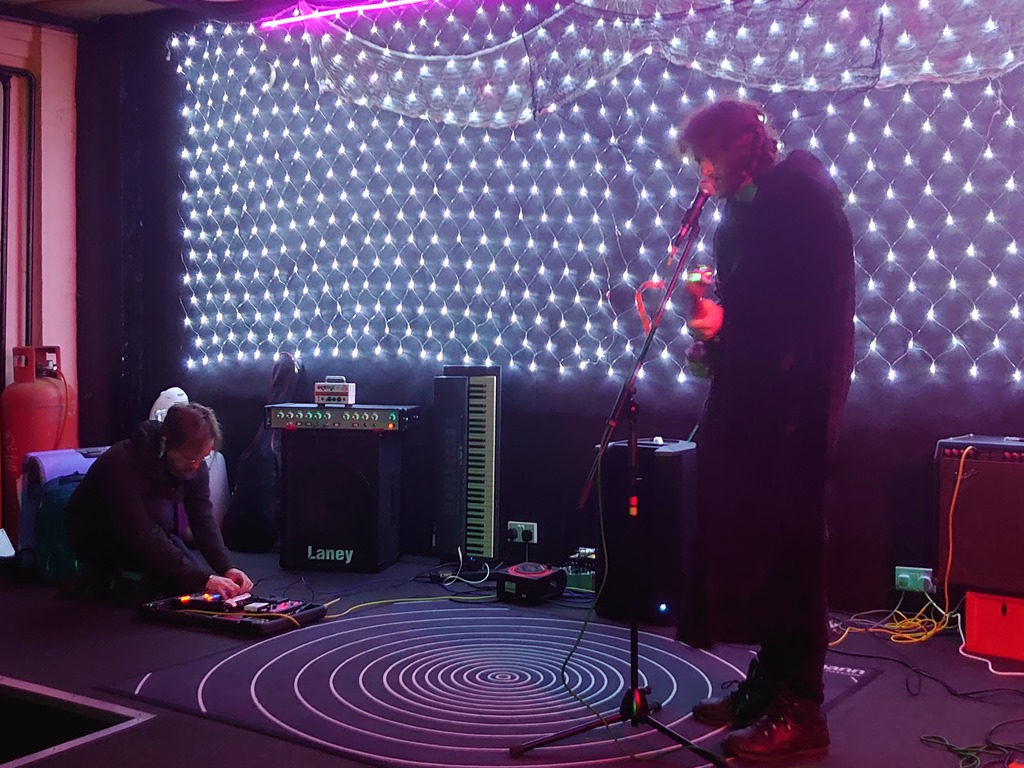
DSC_0831

OMNIBAEL

The second act, Vile Plumage, make like performance art, but struggle to keep straight faces, like they know this is audacious and preposterous. The gloved hands over faces cover grins disguised as menacing smirks. Stop start blasts of noise judder and thud. A rattling bean tin. We got given pebbles to toss into a bowl, and it was all quite bizarre and confusing, but entertaining in a strange and ritualistic way.
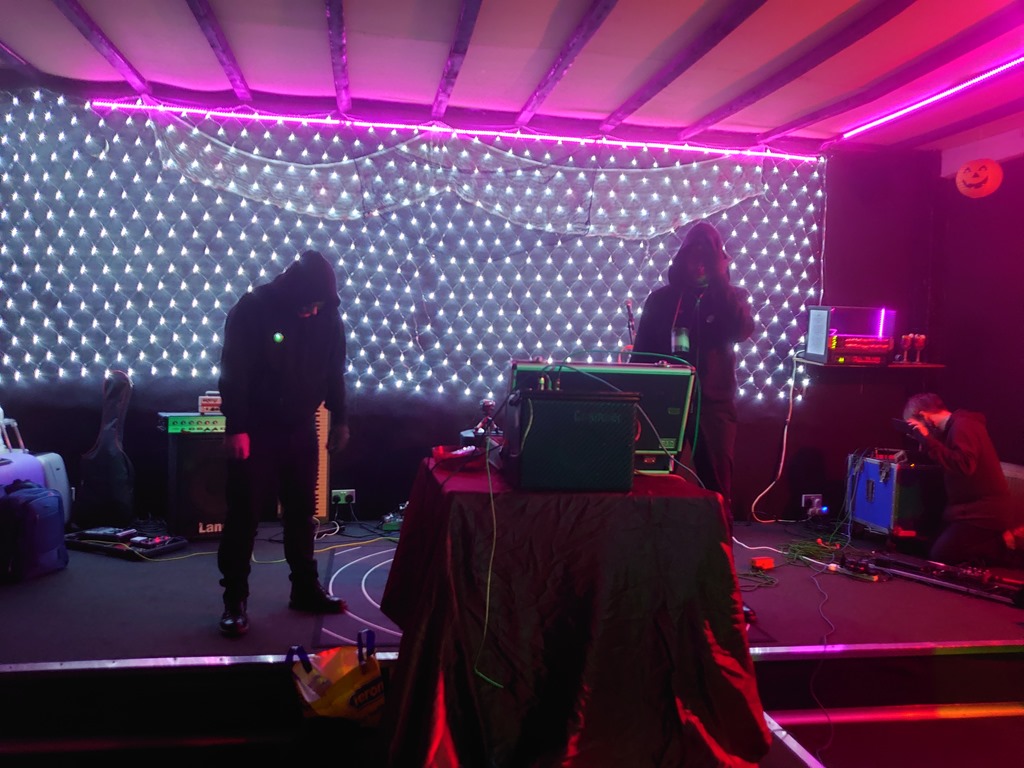
DSC_0832

Vile Plumage

I must have zoned out or blanked out for the next twenty minutes. Something about some guy cranking out electronic noise reminiscent of early Whitehouse while shouting torrents of vitriol and profanity through squalls of feedback, I don’t know much and I can’t comment on whether or not it was any good. But I think it happened.

Garbage Pail Kids is an experimental duo which features Theo Gowans, aka Territorial Gobbing – meaning that anyone familiar with the scene will have an idea what to expect –namely anything as long as its experimental, noisy, and improvised – and Basic Switches, the experimental side project of Leeds indie act Cowtown. Weirdy drones and feedback strongly reminiscent of Throbbing Gristle dominate the set. There’s echoed vocal oddness and endless pulsations with phasers set to warp and stun. Crazy headgear is of course a signature, and the headgear is particularly crazy here. The ‘anything goes’ oddity is nonstop, and at one point we find Theo playing keyboard barefoot while ululating wildly. It’s a complete headfuck, but a brilliant one.
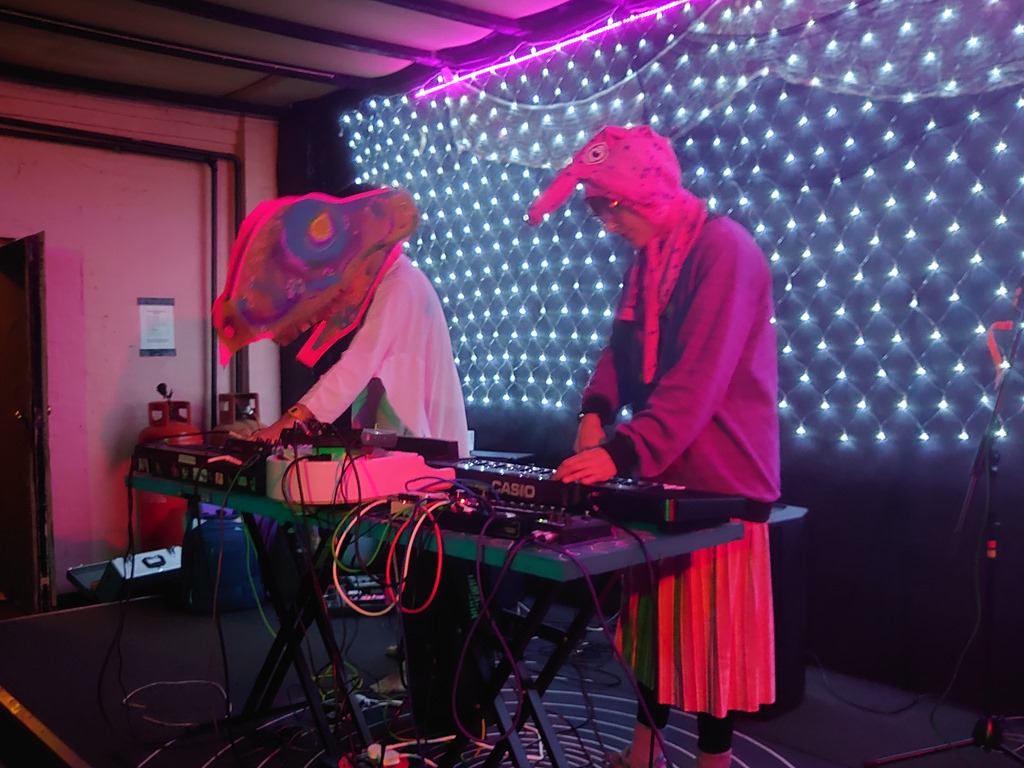
DSC_0836

Garbage Pail Kids

Final act Ashtray Navigations are far easier on the ear. Predominantly dominated by dark, ambient sounds and gentle ripplings, although these are ruptured by dense synth bass and crushing beats. They venture deep into prog and space rock with vintage drum machine sounds: the snare is pure Roland 606. The set builds with some bumping bass that’s more akin to Chris & Cosey’s Trance era works. After a guitar string change that does slow the momentum just a little, the last piece combines the throb of Suicide with extravagant prog guitaring. It works primarily because of the blistering volume that’s utterly gut-trembling.
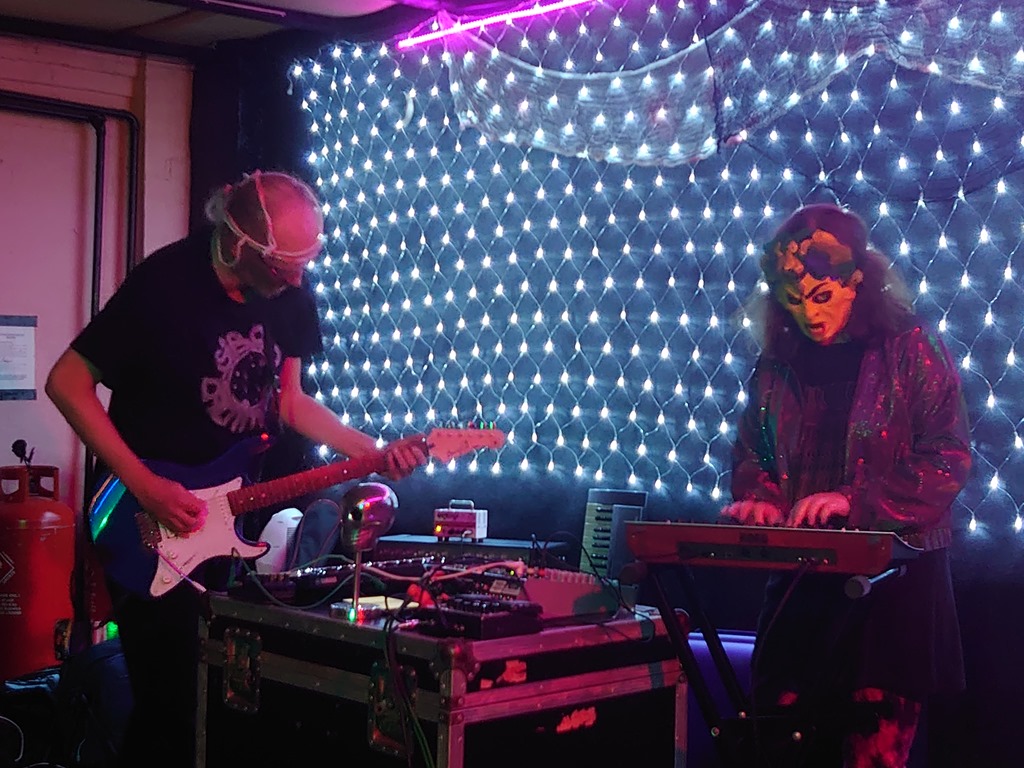
DSC_0847

Ashtray Navigations

It makes for a great end to a great night, offering a selection of sounds that have enough in common to be complimentary, but different enough so as to snag the attention. With any luck, this will become the blueprint for nights to come.
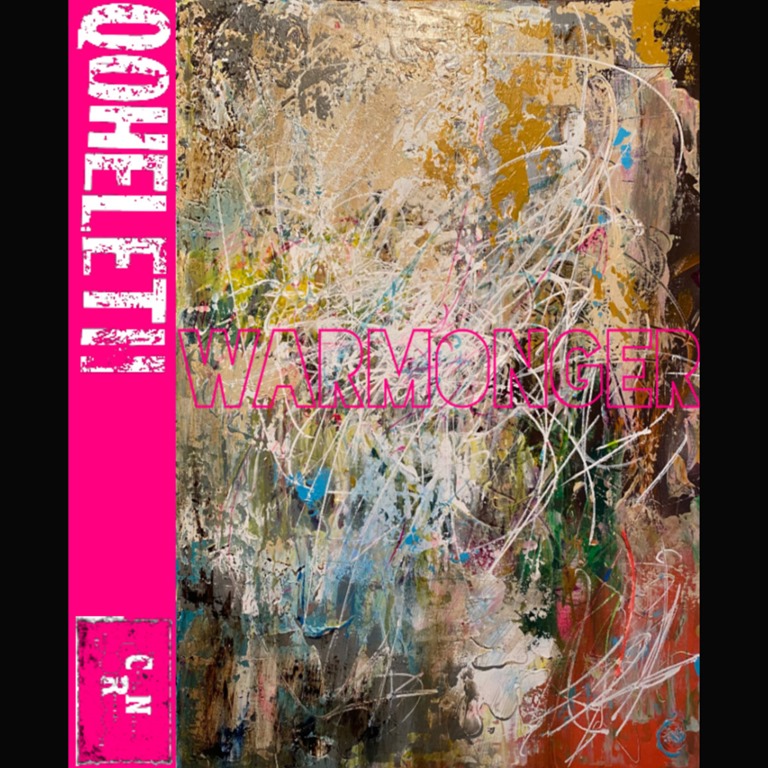
Hailing from Charlotte (USA), Qoheleth is built from the last remaining scraps of their sanity (Jeremy Hunt, Mike Strickler, and Caiden Withey). The resulting sounds and sights of the collective are rooted in upheaval: loud, obnoxious, and discomforting. Throughout their five year existence, they have focused on three central tenets: pushing the musicality of noise to its limits, never standing in one place for long, and continually asking questions.

Their newest album, Warmonger, explores the American love affair with violence. What happens when a country is: founded in violence, endowed with a mythos that both ignores and celebrates destruction, and continues to perpetuate it, over 200 years later? The American Dream is a violent one. What happens next?

Warmonger reveals a more communal aspect of QOHELETH, as they invited friends to lend their vocals and noise-making talents to the party. Artists E.B. Taylor, K, Juan Carlos Lopez, and Jon Michael help broaden the sonic palette of previous albums, offering their own perspectives on what violence hath wrought.

At the core, this record is one of lament, anger, and grief, tinged on the edges with hope. If there’s a path towards life and well-being for all, it has to start with a reckoning. This is ours.

Watch ‘The Means Undid The Ends’ here:

AA

a2312463737_10

Today, Danny Elfman has debuted a brand new Xiu Xiu remix of ‘Serious Ground,’ one of the songs initially featured on Elfman’s acclaimed new double album Big Mess [ANTI- / Epitaph Records]. The track serves as an experimental reinterpretation, pairing Xiu Xiu’s signature industrial noise sensibilities with chopped samples of Elfman’s original vocals and instrumentation.

Listen to the remix here:

http://a%20href=

AA

5tqs_DannyElfmanXiuXiu

‘People’ is the first video from Flood Twin, the eponymous full length debut album from this determined, disturbing Atlanta trio. It was directed by Dean Carr, known for his work with Tool, Marilyn Manson and scores of others. The album was recorded at Madison Studios, in their hometown, produced by lead singer and bassist Grant W. Curry, an alumnus of New Orleans cult rockers Pleasure Club.

The opening track and lead single, ‘People,’ introduces the album and the band with a powerful swagger: howling guitar feedback and a “let’s get this mother started” kick drum pulse gives the bass an opening to set the tone for the album, hammering home a jarring bottom whereupon Hedberg conjures the demented surf guitar nerve-twitch of the early Cramps and their Australian disciples, the Birthday Party.

It’s one hell of an introduction and a hot taster for the album. Watch the video here:

AA

Flood Twin 2 pc Brian Manley for email

Panurus Productions – 1st October 2021

Christopher Nosnibor

It’s a cliché to say ‘I don’t know where the time goes’, and it’s often, if not an outright lie, then at least somewhat disingenuous. Between dayjob work, school runs, cooking, other domestic chores, gigs, occasional TV, and writing reviews, it’s pretty obvious to me and most people who know me where my time goes. I know where my time goes. This doesn’t make it less of an issue. The fact I’ve been chipping away at this particular review for days, even weeks, adding a few words here and there, is testament to the time-deficient lifestyle. I can’t even quote remember where I was going at the start of this by the time of the finishing point, but ultimately, I suppose the point is that time is something that is ephemeral, fleeting, something of which we’re all too often acutely aware and are in thrall to and yet at the same time, it is simply a construct by which to structure our existences.

This split release on Newcastle cassette label Panurus Productions promises ‘two sides of bleak catharsis on this transatlantic split from Petrine Cross and Tower of Filargyria.’ And that is precisely what it delivers, with three tracks from each artist, both of whom scour the depths of darkness in contrasting and complimentary ways.

Black metal may have relatively modern origins in musical term, but its murky invocations speak of something altogether more ancient, and Petrine Cross has a way of transcending time and genre, taking the standard tropes and merging them with atmospherics so dark and dank as to blur to near-ambience. The muffled production values which are core to the genre are something not only embraced here, but utilised to create a distancing and a sense of ‘otherness’: this isn’t drums, guitars, vocals, it’s a dense wall of sound that envelops your entire being, and smothers the senses, stifling, suffocating, like a cloud of mustard gas.

There’s a point near the end of ‘Sobriquet’ where everything simply erupts into an explosive crescendo that hits like a bomb, and the sound is like mud, dirt, rocks and splintered body parts – being splattered in all directions from an immense crater. You’ve no idea of the song’s lyrics or real meaning, only the impact of this devastating moment. But there’s light. The third and final PC cut, ‘The Grecian Bend’ seems to offer glimmers from amidst the murk, with some delicate wisps and washes of sound. There’s a rare subtlety and delicacy about this that resonates on a subconscious level.

Tower of Filargyria, apparently referencing ‘the medieval term meaning love of money or silver, rail against their monumental namesake, produce three tracks of sample laden anti-capitalist black metal’. We have to take this on trust, of course, as what this manifests as is a blistering assault of guitars so trebly they hurt and snarling vocals with so much reverb everything clangs into a mesh of noise, the drums thumping away somewhere low in the mix like a pillow thwocking around in a washing machine.

Samples of lectures and speeches dissecting the beast of capitalism abound, and the semi-ambient opening to the third and final ToF track, the eleven-and-a-half-minute ‘Capitalfascist State Apparatus’ (no question about the sentiment / agenda there) works particularly well in the way it draws the listener in – which makes the ‘metal’ section all the more disappointing, being quieter, and of a very different sound quality. It feels more like a demo than a finished take – but for that, it’s true to black metal production values, and it’s one of those songs that gets better as it goes on, and builds and builds to a roaring crescendo of howled, raw-throated vocals and thundering percussion amidst a squall of guitars and feedback. It’s a real whorl of noise and comes on full-throttle, and this – THIS – is the release. It’s been a long time in coming.

Catharsis is hard to beat, but the downside is that it’s often hard to know how to manage the drop, the slump which follows – and it inevitably does. This split release is all the catharsis, and it’s one the listener can project onto and draw inwards from. It has immense (dark) force: the only slump is for the listener on the realisation that after forty-five minutes of immersion in the gnarliest, most painful depths of anguish, it’s over.

AA

cover

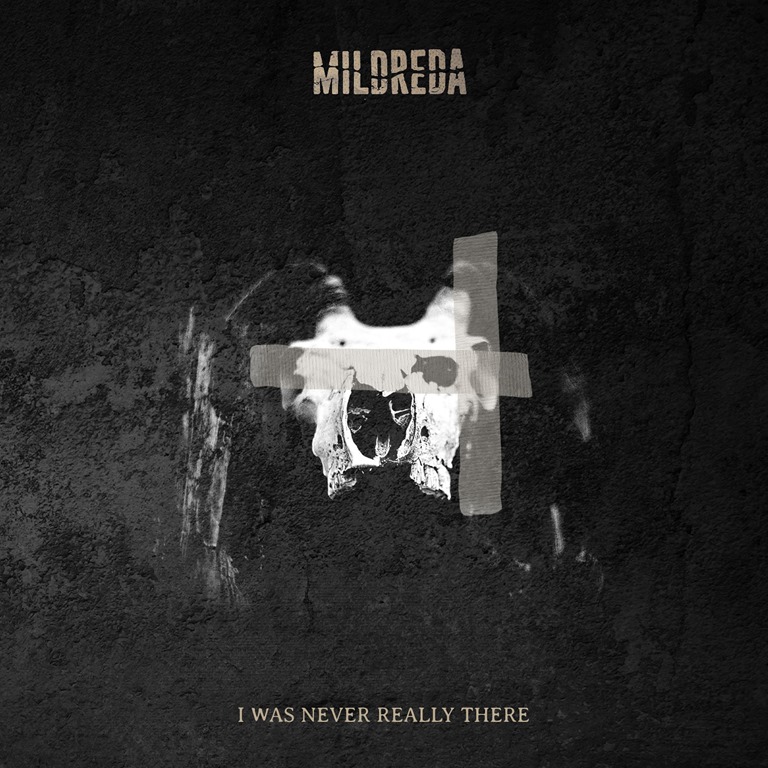
In the wake of the release of their critically acclaimed physical debut full-length I Was Never Really There, Belgian dark electro trailblazers MILDREDA are now unveiling the illuminating video clip ‘Inner Judgement’. The single had scored #4 in the German Alternative Charts.

MILDREDA comment: "The ‘poisonous muse’, who casts her dark shadow across I was Never Really There and who made her first visible appearance in the ‘Liaisons Dangereuses’ video, now returns to full view in the ‘Inner Judgement’ clip", explains mastermind Jan Dewulf. "This enigmatic being remains cool and impassive in the face of all the anger and biting frustration that push this song forward."

Watch the single here:

AA

C3M6WCN0

Hallow Ground – 10th September 2021

Christopher Nosnibor

Breathing is important. If this sounds flippant or facetious, well, perhaps it is a little, but there is a more serious undertone. It’s something we do subconsciously, and something we take for granted will just happen as our brain keeps the bellows pumping. We only really notice breathing when something disrupts it, it becomes laboured, or we’ve exercised hard.

And yet the importance and benefits of controlled breathing as part of meditation, for managing anxiety, and for dealing with panic attacks is widely documented and promoted. But even for those who have been taught the techniques, how often do we remember to deploy them at moments of peak crisis? Moreover, beyond those specific settings, breathing properly is something that’s chronically neglected as we slouch over our keyboards, taking short, shallow breaths that fail to fully expand the lungs and oxygenate the blood stream.

The ever-innovative and ever-intriguing Lawrence English’s Hallow Ground debut finds the composer working ‘exclusively with an organ for four compositions that are exercises in »maximal minimalism,« as their creator himself notes in a nod to Charlemagne Palestine, who coined this term.’ The liner notes explain further that ‘While it seems somewhat fitting that those four pieces based on a steady flow of air were conceived and recorded in a situation of accelerated standstill caused by a respiratory disease, the Room40 founder is not so much concerned with capturing the zeitgeist than rather incorporating the spirit of time itself. »It is a record about presence and patience,«’.

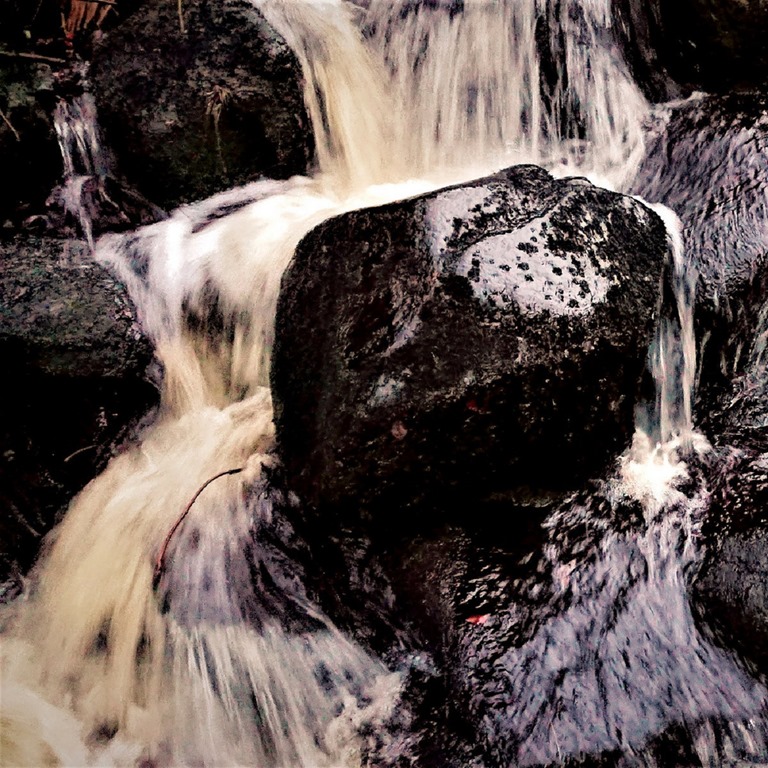
Patience is indeed required when listening to Observation of Breath. It stands to reason that there is a concerted focus on elongated, quivering drones, and the first of the four pieces, the ten-minute ‘The Torso’, with its dank, dark rumblings and extraneous interference carries sinister allusions, particularly when reflected upon in context of the album’s cover art. The torso may well house the lungs, the system of breathing, but all too often finds reference in stories of murder and dismemberment, and we’ve all wanted to strip off our own skin at some point, right?

The theme continues its trajectory in the titles of ‘A Binding’ and ‘A Twist’ which follow. These are short pieces, both sparse, droning works that are overtly organ, with the latter in particular taking the form of a gloomy funereal church recital. There’s nothing like a funeral to make you contemplate your breaths, and to consider how many you may have left in your body. Perhaps this is one of the reasons we ignore and avoid thinking about breathing: the moment we notice it, be it short or irregular, we worry, in the same way as we panic about palpitations. To become cognisant is likely to observe an irregularity, a difficulty, in a most fundamental function, and rightly or wrongly, doing so reminds us of our mortality. We hate to be reminded of our mortality: it terrifies us half to death. The irony.

In context, the album’s finale, the twenty-minute title track, which occupies the entirety of the album’s second side, on which all elements of the previous three compositions coalesce and distil into something monumental and epic. Not a lot happens: it’s simply a quavering continuum of sound that undulates and eddies slowly, unfalteringly, less like a stream than a crawling flow of larva. But to go with the flow is to fully engage with the album and its slow-shifting textures. It’s perhaps around halfway through ‘Observation of Breath’ that I finally realise I am becoming aware of my breathing at last. Conscious, I slow it, inhale to full expansion through the nose, hold, then equally slowly release out through the mouth.

Observation of Breath is a well-realised exploration of expansive territory in altogether smaller detail, and one that offers more the more you allow it to become a backdrop.

AA

HG2103_Cover_English_Final_def_def.indd

16th September 2021

Christopher Nosnibor

Instead of submitting to the endless flow of media panic and hunkering down in his house during the pandemic, Stuart Chalmers went rather more off-grid, spending the last year in a camper van, exploring the Pennines and North York Moors.

The Heart Of Nature is the last in the series of the Swarmandal-focused albums, a celebration of nature’s elements, inspired by this period of a closer proximity to nature. Stuart recounts how the experience brought him closer to ‘the natural world and its rhythms/cycles’, and given him ‘a sense that nature can be calm but also intense and full of violent energy’. He goes on to explain that ‘The making of this album through the autumn/winter with the change in weather along with my laptop dying, the heater failing and the van breaking down has been a tough experience,’, adding, ‘it’s been one of the hardest albums for me to finish’.

I’m no advocate of the training mantra ‘no pain, no gain’, but do often find – and I speak from experience here – that the art that emerges from the most challenging of conditions is not only the most satisfying to produce, but so often has the greatest impact and resonance. The heart and soul that goes into a work shines, amplified, in the output.

The six pieces on The Heart Of Nature are based on the elements and raw materials occurring in the natural world: earth, wood, metal, fire, water, air. The first of these, ‘Earth’, powerfully captures the turbulence and variability of nature, and is dominated by a grumbling, rumbling, the shuddering subterranean sound of tectonic displacement, that gradually fades as a slow-picked guitar emerges and a hesitant sun rises over a barren. Scene. Beneath the supple chimes and grating discord and scraping drones that lumber and lurch. It sounds, and feels, immense, something bigger than sound alone, than the artist alone, and it’s an intense and difficult seven minutes that introduces the landscape of the album.

‘Wood’ is more of a collection of found sounds, with animal calls and chattering birds, pattering feet, paired with extraneous sounds and a clattering, clanking beat that’s some way from nature. Things become quite tribal, the metallic chanking speaking more of humankind’s relationship with nature than of nature itself, while ‘Metal’ creeps into dark ambient / industrial territory, with ominous whisps drifting around and the clanking precision – but it’s on ‘Fire’ things intensify, with the crackle of flames yielding to the harsh clatter of industrial percussion. There are hissing surges of sound rushing like gas bursting from ruptured pipes, and it’s not until ‘Water’ that the album introduces some sense of calm following a long journey navigating troubled spaces.

This only highlights the idea behind the album, that of the violent energy of nature. We seem to have idealised nature as that idyllic country setting, as something that merely exists for our wellbeing or profit, and in doing so diminishing the forces of nature – typhoons, cyclones. tsunamis, earthquakes, blizzards, floods. We are in denial somehow over the extent to which we are at nature’s mercy. We build flood defences, structures to prevent longshore drift and the collapse of cliffs, but ultimately, we’re powerless against time and tide.

‘Nature doesn’t need us, but we need nature’, Chalmers remarks, and I can’t help but agree: nature would in fact be better off without us, and the acceleration of climate change is concrete evidence of this. If nature destroys us, it’s because we’ve brought it upon ourselves by fucking with nature – and if one thing is clear, nature will always win. Whatever damage we’ve wrought, it’s simply suicide. The planet will still exist long after we’ve vacated, long after it’s inhabitable by human life. Humanity will eventually go the way of the dinosaurs, but nature will still be here.

The emptiness of the final track, the seven-and-a-half-minute ‘Air’’ is the perfect summary. The wind buffets against everything in its way and sparse notes hang in post-rock drift. It’s a beautiful piece of music, but it’s also sparse and melancholy, and with a certain Western twang, it carries the bleakness of the wild frontiers, reminding us of the adversarial relationship between man and nature, and the need to respect the wonder.

AA

a0127569496_10

24th September 2021

Christopher Nosnibor

Pink Turns Blue have been around practically forever, having formed in 1985, and while they may not be widely regarded among the first wave of goth acts, they very much emerged from that milieu as a duo with a drum machine, and what they’ve achieved over so many of their peers while lingering on the peripheries is longevity. Having re-emerged in 2003 after an eight-year hiatus, they’ve continued to mine the classic post-punk seam that’s distinctively theirs, due in no small part to Mic Jogwer’s vocals. And of course, what goes around comes around. Their return in the early years of the new millennium was well-timed, coinciding with the point at which the post-punk renaissance bloomed with the likes of Editors and Interpol breaking through. There were of course countless also-rans, and bands who emerged but failed to fulfil their promise, but nevertheless, time has proven that the style has remained current, and the darker the times, the greater the craving for dark tunes, and this is where Pink Turns Blue really prove to be as contemporary and vital as ever.

Their eleventh album was written, recorded, mixed, and mastered during lockdown in their Berlin studio, and the first thing that strikes about Tainted is just how bleak it is. It’s achingly majestic, it’s magnificent, and possesses some wonderful hooks and choruses, but there’s an all-pervading atmosphere of sadness, of melancholy that’s draped over every beat and radiates from every note. Glimmers of positivity are dampened by an air of resignation, optimism doused with defeat. The next thing that soon becomes apparent is just how consistent the album is. It’s not only all killer, but had a remarkable cohesion. It’s true that that for cohesion you might interpret sameness, and they do operate with a fairly limited sonic palette. One suspect this is at least in part the result of the material being the product of three guys in a studio without any external input or interference.

But working within such limitations places the focus on the songwriting, on the tunes, on the delivery, instead of throwing in all sorts of fancy stuff.

The guitar to opener ‘Not Even Trying’ evokes the into to ‘Severina’ by ‘The Mission’, and it’s got that same solid four-four strike on every beat bassline that Craig Adams made his signature back in the early days of The Sisters of Mercy, and which has become something of a defining feature for so many gothy post-punk bands, and it makes the song an instant grab. ‘I’m not even trying’, Jowger admits blankly, as if admitting defeat from the outset, and setting the pessimistic tone that echoes through single cut ‘There Must Be So Much More’. It’s a song of yearning, of questing, and of determinism, and a song Editors would have likely killed to have penned for one of their first two albums.

This isn’t an album of depression, but the sound of downward-facing defeat, of staring at the ground and wondering where it all went wrong. ‘Never Give Up’ encapsulates the conflict, the inner turmoil of staring emptiness and defeat straight in the face and realising there are only two choices. But to never give up is not a positive thing, merely the stubbornness that comes from not knowing what else to do.

The bass and guitar are melded together in a tunnel of chorus and reverb, and tied to a relentless drum track, and it’s gripping and compelling. ‘Why Not Save the World’ has heavy echoes of mid-80s Depeche Mode and would sit comfortably on a She Wants Revenge album, while ‘I’m Gonna Hold You’ comes on like New Order as covered by A Place to Bury Strangers, with a nagging bass and brittle guitar that grips hard.

Just as Robert Smith can make a skippy pop song sound tear-jerkingly sad, so when Jowger sings of the joys of ‘a new day’, it’s with a wistful melancholy that aches deep and you feel something tug in your chest as you swallow it down, that inexplicable sadness. ‘Listen to the bumble bee’ he sings on ‘Summertime’, and it’s carried a way on a chiming jangle of guitars that are so wistful, while the tone is of deep nostalgia. A perfect sunny day can have its joy marred by the realisation that it isn’t quite as perfect as sunny days of a time gone by, happy, carefree times that will forever be trapped in the memory as magical, but now faded and never to be recreated.

The song structures are comparatively simple and straightforward, and built around repetitive chord sequences and guitar motifs, and there’s nothing fancy about any of the playing – which is absolutely key to the success.

Any fan of Interpol or Editors would do well to explore Tainted – but then again, so would any fan of not only post-punk, but anyone with ears and with a heart and soul. It’s a masterful work in music of the mood. The mood is low, the mood is sad, and this is an album of real depth that speaks and resonates beyond the immediate.

133936

6th August 2021

Christopher Nosnibor

It’s not always easy to remember – what you’ve said to whom, what you’ve written before, if you’ve really experienced something or simply dreamed it. You’d think it would have become easier with not really going anywhere or speaking to anyone for a year and a half, but in my experience, the opposite is true. Everything blurs. So if I’ve mentioned any off this before, if I’ve touched on how electrogoth releases often clump together, or how genre tropes can so often be so much meh, then I apologise, but only a little. Reviews are, after all, personal, a personal response to musical release, and objectivity only cuts so far., meaning that this personal response, well, it’s all spilling from a review-a-day brain, dayjob and parenting and the confusion of every day melting into the next. It’s been a relentless barrage of bad news in the media, as well as from friends and relatives. By no means has all of the anguish and suffering been attributable to the virus – more often than not it’s been collateral resulting from lockdowns and a sustained sense of panic. We’re biologically designed to experience fear in short bursts. Fight or flight. To be trapped, immobile, powerless, is beyond comprehension, and there is no space to process grief and trauma in a normal way.

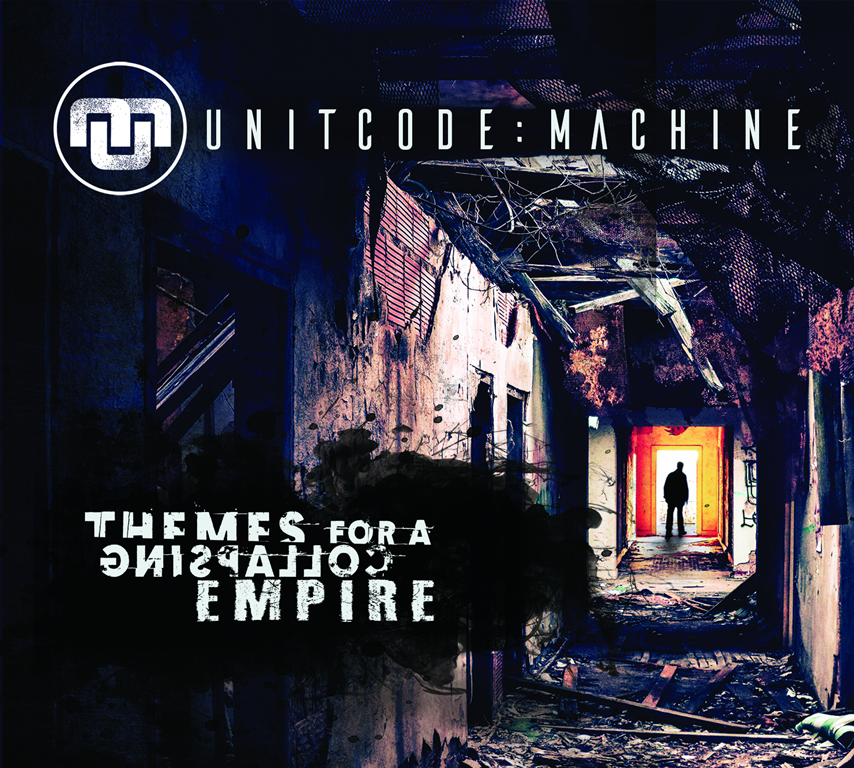
It’s against this backdrop that Eric Kristoffer developed the new unitcode:machine album, Themes For A Collapsing Empire. It’s very much an example off utilising a creative outlet as a form of therapy, with the blurbage describing Themes For A Collapsing Empire as ‘a journey through the mind of Eric Kristoffer after a series of tragic events that 2020 brought. It explores a path of loss and regret, and struggling to cope with such stressful personal events while also trying to endure a global pandemic’.

Electro-industrial isn’t a genre one immediately associates with emotional resonance, but with Themes For A Collapsing Empire, unitcode:machine really strike a level that balances thumping beats and melodies that convey the human aspect of the lyrical content. That said, the stark, mechanised percussion and cold synths highlight the bleakness of it all – and by it all, I do mean it all. Step back and survey the scene: August 2021 versus two years ago. It’s a different world, and so many have lost so much – not just loves ones, but connections, livelihoods, sense of self and place in the world. Where is it all heading? Where will it end? Will it end? With climate change an inescapable backdrop to societies which have never been more divided, how do we return from here? Do we? Can we? It’s not just an empire that’s collapsing, but – not to be overly dramatic – human civilisation itself. Themes For A Collapsing Empire feels like an essential soundtrack to this existential anxiety. Stark and dark, it’s reflective, paranoid, gloomy, and it’s very much song-orientated, with kicking choruses being a defining feature.

‘Falling Down’ is a clear standout, but there are plenty of strong tracks and easy single selections alongside it: Themes For A Collapsing Empire packs in the hooks and solid choruses, but without being remotely lame or overtly commercial – and that’s a real skill. Everything just flows, while at the same time punching you in the face.

With nine tightly-structured songs all clocking in under four-and-a-half minutes, Themes For A Collapsing Empire feels like a concise statement, and an album with strongly-defined parameters and an intense focus, with the end result being all killer.

AA

035223