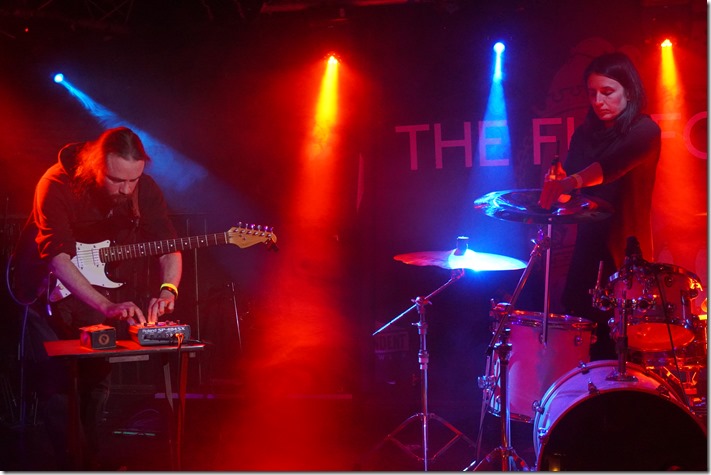
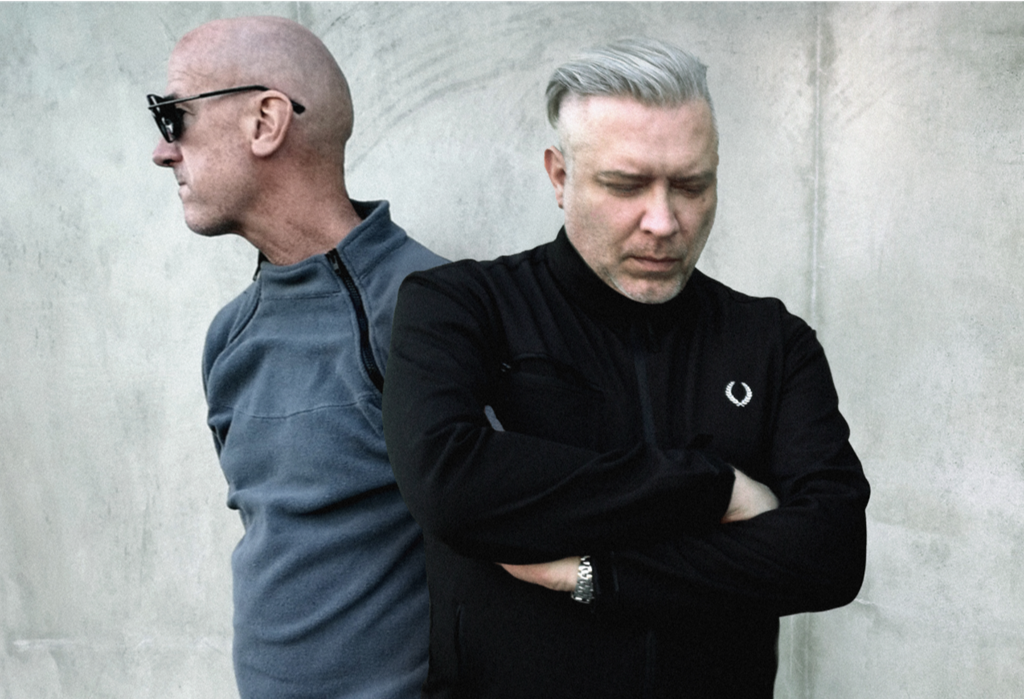
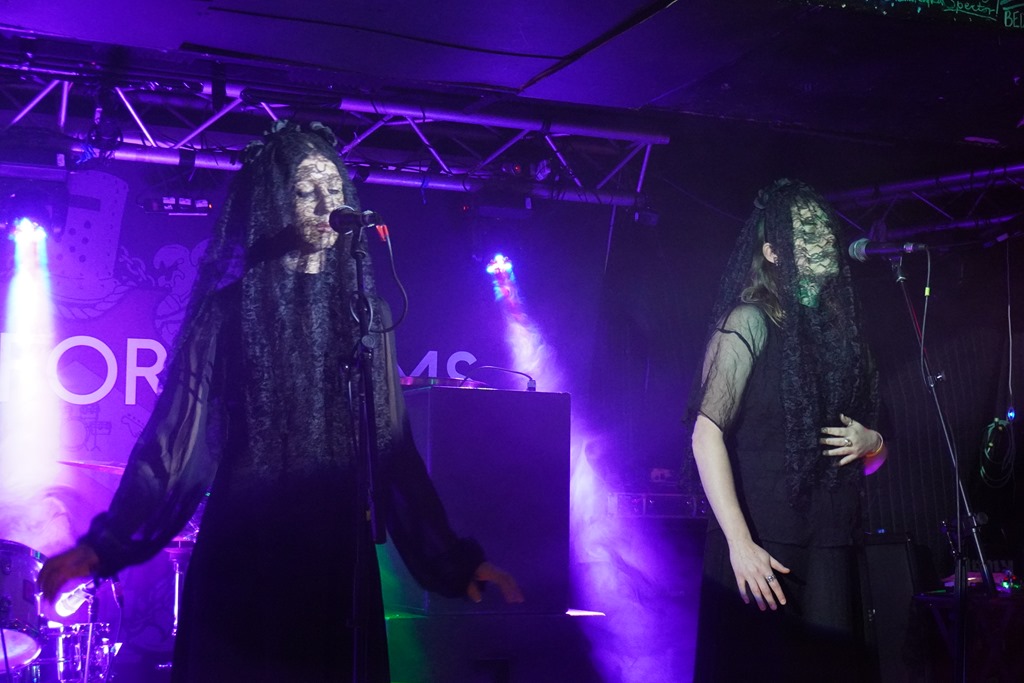
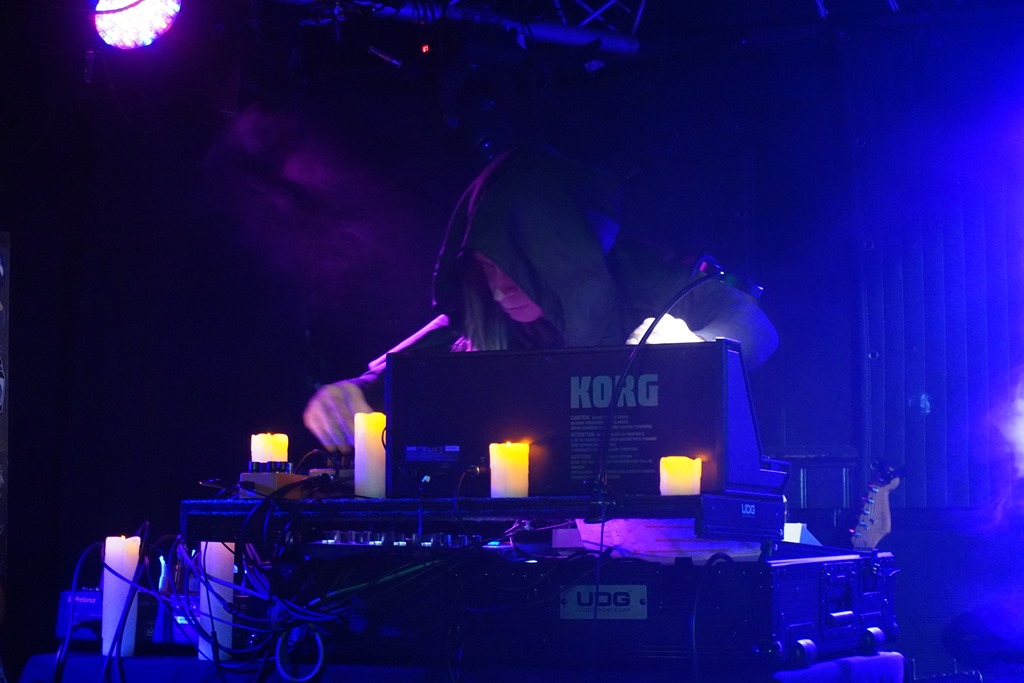
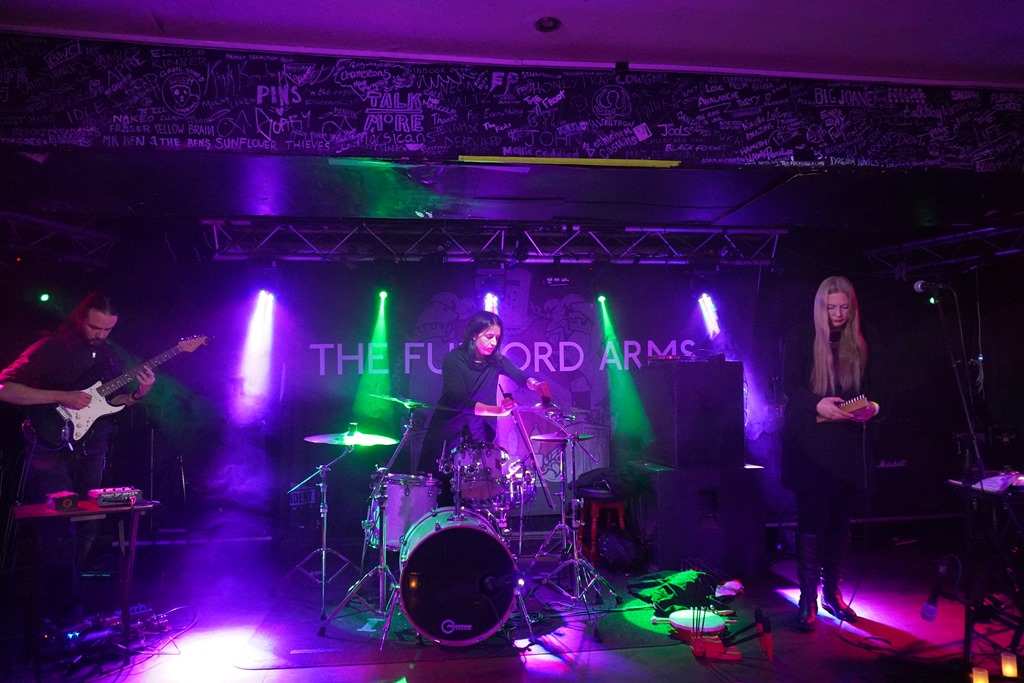
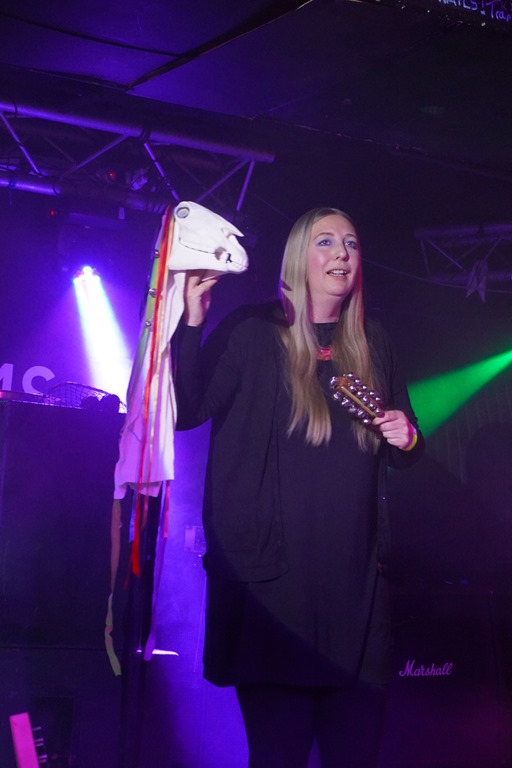
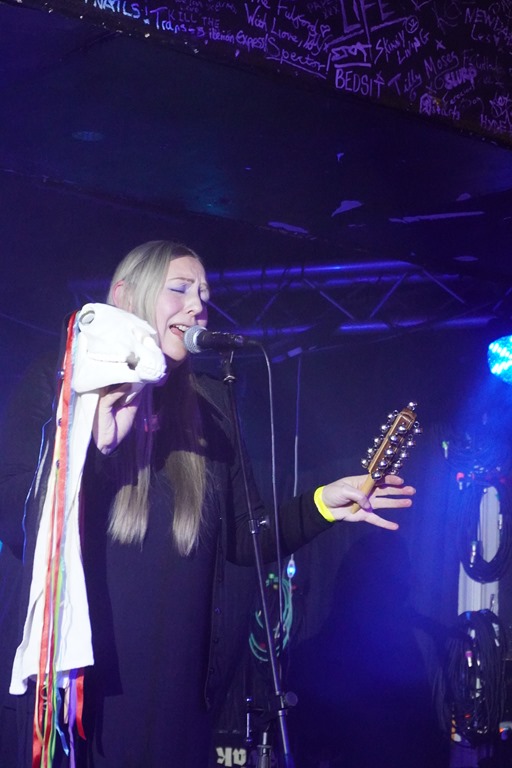
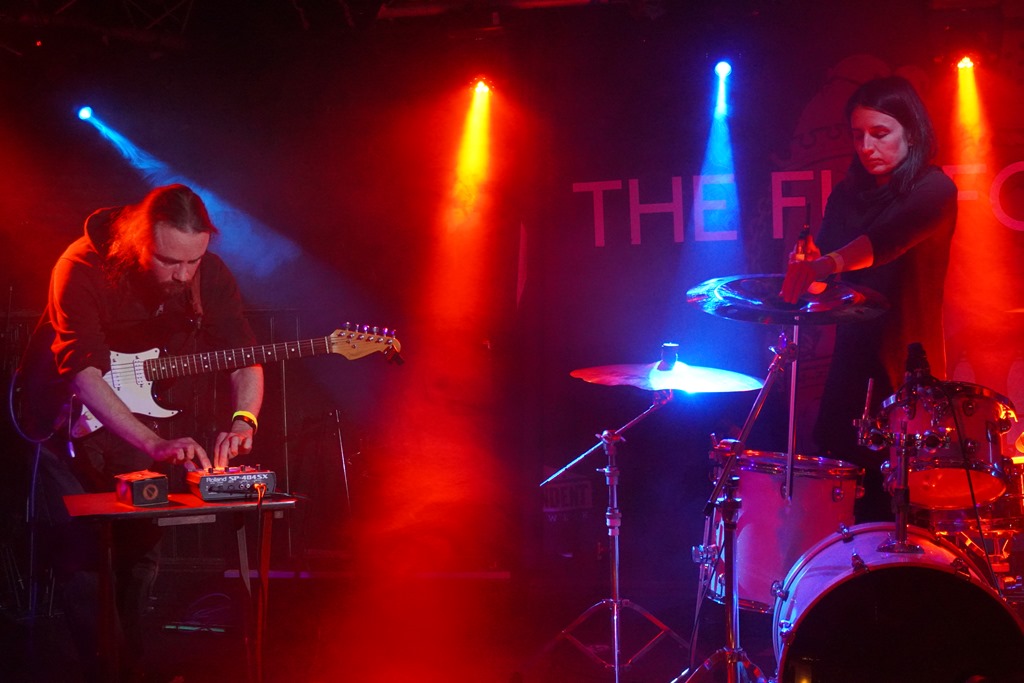
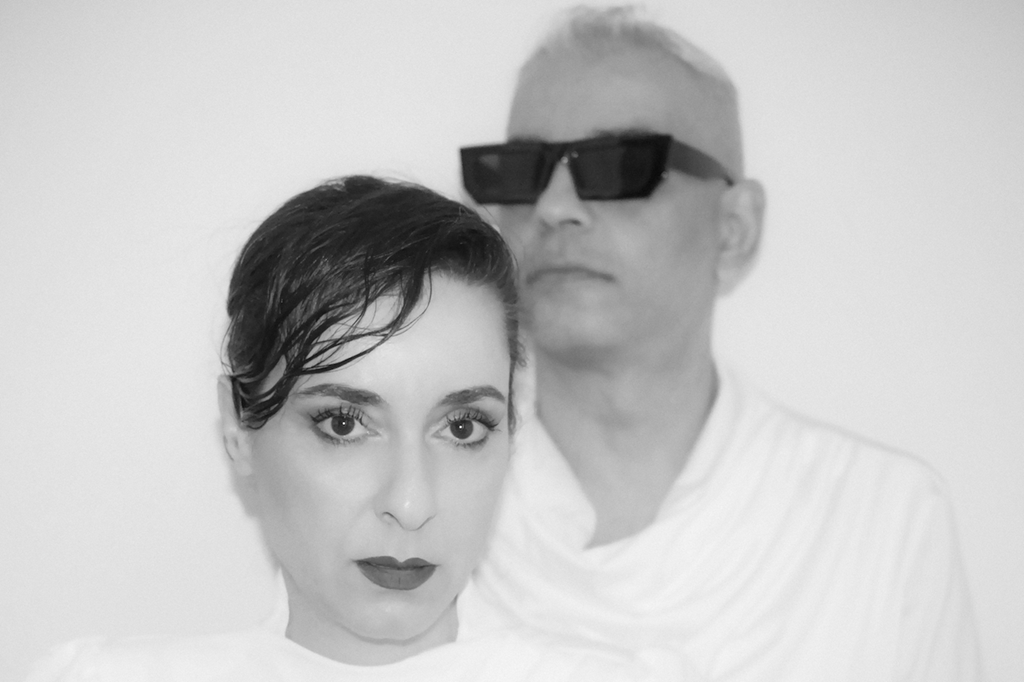
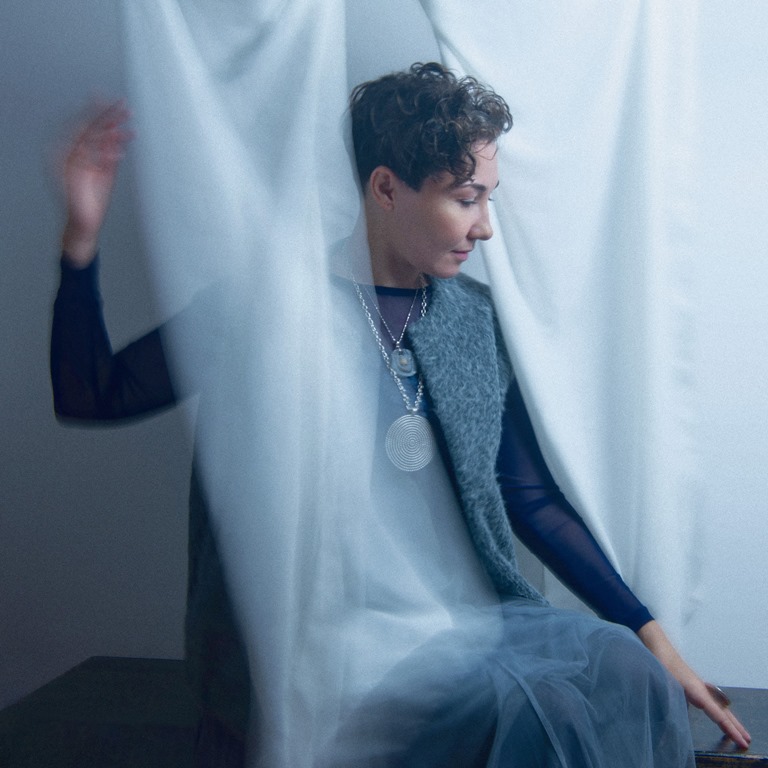
OMEN CODE unveil the new track ‘Ultra Fear’ as the next single lifted from their forthcoming debut album Alpha State, which has been scheduled for release on December 5, 2025.
AA
OMEN CODE comment: “I had orginally planned to use ‘Ultra Fear’ for my previous music project”, mastermind Kevin Gould reveals. “The pace is quite low key again, but the sequence layers fill it out nicely. The lyrics have an abstract but also quasi religious feel. Back then, I had put some angry, shouted vocals over the track. Then Agi came along and did his ‘new vocalist’ thing. He basically rescued the track. We wanted the chorus to have a distant and alien tone so used a lot of treatments and vocoder. There is nothing like a machine telling you that ‘God is near’.”
It’s been two years since Deep Cross delivered Royal Water, and now they return with the enigmatically-titled Scaffolded Dawn.
As the accompanying notes outline, ‘Utilizing treated vocal drones, tape, modular synth and an array of found sounds, on the new album, Deep Cross delivers seven tracks of heavy Devotional Electronics. Blistering and crude yet ecstatic and sacred, Scaffolded Dawn focuses on transition points where tempers blur beyond ideas of convention. In each track discomfort, overcoming, decay, lure, attraction and beauty inhabit an axis of equal reign where multitudes thrive.’
As a taster for Scaffolded Dawn, they’ve landed a video for the track ‘Ranine Copper’. With hints of The Walking Dead, it’s suspenseful, disturbing, and very, very dark.
We love dark here at Aural Aggravation, so we are immensely proud to premiere this video. Brace yourselves.
Love a few drones, me. Aural ones, not the buzzy buggers that tossers fly about for fun, or the nasty ones that undertake military operations and shoot the shit out of people and places. But places… places are important, the way they are so closely connected to memory, the way they evoke recollections of experiences… memory fades over time, but placers can so often provide triggers. The blurb for A Votive Offering register a deeper meaningfulness on account of the way the significance of place bears weight. I find myself; yearning for places I half-remember from childhood. My memory is a databank of random shots, from standing stone circles in Scotland and in the south, to a metal sign with a bullet hole in it, somewhere isolated on Dartmoor.
And so we arrive as A Votive Offering, and I shall quote in full from the Cruel Nature site here:
4 years since 2021’s Tethered Tales, the latest album by Deadman’s Ghost for Cruel Nature, uses drones, dark folk sounds, old samples and electronic beats to coalesce around a central theme. Each track in this collection evokes an obscure place in the Irish countryside with connections to folklore. Tucked away amidst today’s regimented rural landscape, small pockets of wilderness survive; vestiges of another era hidden behind roadside hedges and across farmer’s fields. These include the ruined cottage of a clairvoyant healer; a pair of standing stones believed to be oracles; a well which cures madness; and a cave where offerings were once left for ancient spirits. The songs presented here are paeans to these liminal spaces, and are infused with recordings taken there.
The first of the album’s seven compositions, ‘Chtonic Currents’ combines hovering hums, sonorous drones, gongs, bells, chimes, and special abstraction which occasionally builds to immense levels. ‘The Speaking Stones’ is ominous, heavy, and brings ominous waves of noise which wash over resonant, droning vocals.
There are samples on ‘The Man Who Felled the Fairythorn’, and one can’t help but contemplate the sad situation of Sycamore Gap. Or perhaps that is just me. The surprise here is that things suddenly take a turn for the heavy with throbbing industrial grooves cutting in.
A Votive Offering is dark.While twitters and chimes abound, dark surging, sonorous drones dominate, and weigh heavy over the sci-fi intimations tracks like ‘Biddy Early’s Potion’, where hints of Westworld twang, and hang ominously.
Gulls craw and waves splash on ‘Lunnaigh Dunes’, and a certain sadness pervades, inexplicably, dragging at the guts and lying heavy. Life was simpler once, and no so long ago. Nostalgia now is not what it was. And suddenly a drone grinds dark. The dynamic of A Votive Offering is one of continued motion, which keeps it interesting, but it’s also haunting.
A Votive Offering as a whole is haunting, but also strange, abstract, otherworldly. Ultimately, it’s… different, and an album get lost in.
The brainchild of US drummer/multi-instrumentalist Rona Rougeheart, SINE has released a new single entitled ‘Succumb To Me’ on Metropolis Records today. Co-produced by Rougeheart with Curse Mackey (Pigface) and mastered by Mark Pistel (Consolidated, Meat Beat Manifesto), the song mixes industrial sounds with dirty disco and rhythmic sub bass to form the perfect definition of what she refers to as her signature genre, ‘electronic boom’.
“While working on my next album, I decided to open a new session and start something fresh just for fun,” Rougeheart recalls. “As another track began to form, I was really loving the vibe, so I anchored it around two deep synth bass hits that pan right and left to give the listener a surround sound experience, especially in headphones. The lyrics seemed to write themselves as I recorded scratch vocals, just letting it flow. The lyrics are cheeky and a little sinister, with a dash of sex appeal. It’s definitely one of my favourite SINE tunes to date!”
The context for Ashley Reaks’ sixteenth solo album – and his third in three years (not counting the compilation of demos released earlier this year) – is weighty. He has written openly and extensively of his health issues, while sharing images and commentary nocturnal wanderings, and these both inform At Night The World Belongs To Me, of which he writes:
The looming spectre of death and loss haunt the album: Reaks survived two major health scares and a misdiagnosed terminal illness over the last 18 months, experiences that inform the reflective, poetically gloomy lyrics, and the 4 am downtempo grooves. Adding to the sense of loss, guitarist and long-term collaborator Nick Dunne died suddenly at home just one week after completing his guitar parts for the record.
Through all of this, he has continued to collage and write prodigiously, but At Night The World Belongs To Me marks a distinct change of tone from its immediate predecessors, The Body Blow of Grief (2024) and Winter Crawls (2023). The usual elements are all present and correct – the sense of experimentalism, the collaging of genres, melding post-punk, jazz, and dub – but this feels darker, more introspective. The cover art, too, reflects this. While it has the same rather disturbing, grotesque strangeness of his usual work, the grim-looking figure in repose has connotations of ailment, frailty, even the deathbed.
The first track, ‘Playing Skittles With The Skulls and Bones’ has a bass groove that calls to mind The Cure’s early sound, melded to a rattling rhythm reminiscent of ‘Bela Lugiosi’s Dead’. The smooth sax that wanders in around the mid-point provides something of a stylistic contrast, but at the same time, it’s minor-key vibes keep the song as a whole contained within a bubble of reflection, evoking the stillness of night. I know, I’m sort of dancing about architecture here, but something about Reaks’ work prompts a multi-sensory response.
‘Rimmed With Yellow Haloes’ brings soaring post-rock guitars atop of an urgent ricochet of drumming and solid bass. On the fact of it, it’s almost poppy, but it soon shifts to take on a folksy aspect, while Reaks sings of death and funeral pyres, and the refrain, delivered with lilting, proggy overtones, ‘The Lord gave the day to the living, the night to the dead’. In context of the album’s title and theme, there is a tangibly haunting foreshadowing here, a suggestion that Reaks has not only accepted his mortality, but has assumed his place. It’s powerful, and deeply moving. Of course, Reaks can’t help but introduce incongruous elements, with some horns which are pure ska and some super whizzy 80s pop synths providing a pretty wild counterpoint to it all. It’s hard not to smile, because there’s an audacity to this approach to composition and arrangement – a lot of it simply shouldn’t work, but it does, and it’s uniquely Reaks.
The album’s shortest song, ‘Things Unseen’ is snappy, poppy, Bowie-esque, an amalgamation of post-punk and electropop, a standout which is succinct and tight, and consequently, the dark connotations of the bleak shuffle of ‘Life Forever Underground’ – a rippling synth-led tune – are rendered more profound. The sequencing of this album is such that the shifts between songs accentuate their individual impact.
‘Mask the face, unmask the soul…’ he sings softly on ‘Mask The Face’, which has a somewhat spacey Krautrock feel to it – before a guitar solo that worthy of Mark Knopfler emerges most unexpectedly. And as dark as things get here, Reaks never ceases to bring surprises. At Night The World Belongs To Me perfectly encapsulates the reason he’s so respected and critically acclaimed, but orbits light years outside the mainstream. In a world defined by an exponentially reducing capacity for sustained attention, Ashley Reaks makes music that requires real engagement, the musical equivalent of complex carbs and high fibre foods in a processed, white bread culture. But also, contemporary mainstream radio music favours short songs which cut straight to the chorus, where the hook has to land in the first twenty seconds. Here, we have eight songs, all but one of which are over five minutes long. They take their time, they’re expansive and exploratory, there’s atmosphere, there’s depth. And as ‘Eyeing Up The Sky’ tapers away on a buzzing drone, we’re left with much to chew on, much to consider.
“I Am The Song Stuck On Repeat… I Am The Fear” warns frontman Adam Houghton, his baritone oozing with its trademark ominousness.
But rest assured listeners, there’s nothing to worry about. Piled high with oscillating synth strokes, meteoric basslines, and stacked guitar tones, ‘I Am The Fear’ is a single from the Manchester band that more than bears repeating.
The track arrives with an artistic official video directed and edited by Black Rock Creative and produced by Tom White & Mat Peters. Captured amidst the crumbling surroundings of a Victorian theatre, it features a captivating performance from actor Oliver Marson, alongside on stage footage of IST IST.
Confident and catchy, ‘I Am The Fear’ arrives as the band’s first new recorded material since 2024’s Light A Bigger Fire. Produced by Joseph Cross and mastered by Robin Schmitt, it marks yet another bold step forward for a band who demand your attention more with everything they put their name to.
With the promise of a new album looming, standby for further news on that front very soon…
Watch ‘I Am The Fear’ here:
AA
Over the years, IST IST have forged a formidable reputation on word of mouth excitement, amassing a dedicated cult following in the process. Operating with a fierce northern DIY work ethic, the band have an ever-growing back catalogue of successful studio and live releases. Self-releasing their entire repertoire through their own Kind Violence Records label, the band’s output has been championed by BBC Radio 1 and BBC 6Music, Radio X, XS Manchester, KINK FM in the Netherlands, The Times and more.
Their acclaimed fourth record ‘Light A Bigger Fire’ reached 25th in the UK Official Album Charts in 2024, with John Robb praising the record as “glorious yet introspective 21st-century pop music” in a five star review on Louder Than War.
Taking the record out on the road last year, over 8,000 people across thirteen countries turned out in force at iconic venues such as the Paradiso in Amsterdam and New Century Hall in Manchester to support the band in what stands as one of their most successful European tours to date.
Riding this wave into 2025, IST IST returned to Europe for further dates including their SOLD OUT debut Italian shows, and subsequently released two live albums ‘ON FIRE’ and ‘Live In Italy’. The band are book-ending this year with a run of major shows back in the UK – in Leeds, Glasgow, London, and Birmingham across late November and December – as they celebrate their 10th year in business.
And in the last few weeks, IST IST announced their biggest hometown show to date. In 2026, the band will play the salubrious Albert Hall show; a show that presents both an unmissable opportunity to revel in the career high points of their decade long career, while getting a glimpse of their eagerly awaited new album.
Catch IST IST at the following UK shows:
IST IST – 2025/26 TOUR DATES
Friday 28th November – Leeds – Warehouse
Saturday 29th November – Glasgow – Oran Mor
Friday 5th December – London – 229
Saturday 6th December – Birmingham – O2 Academy2
Friday 1st May 2026 – Manchester – Albert Hall
w/ Support from DESPERATE JOURNALIST + THE YOUTH PLAY
Bandcamp Friday or nay, September is always a busy month for releases, presumably in no small part due to the fact that the festival season is over, and artists can get to the job of plugging material to fans they may have picked up along the way, while music listeners are back home rather than in fields in front of stages, or on holiday, so are placed to listen to, and maybe purchase new music.
Sometimes, it can take a while to sift through it all, and there’s a real danger that some great stuff will slip through the cracks, especially from lesser-known artists. This, in many respects, is where the music press, such as it is these days, has not only a role, but a duty, an obligation, to seek out and highlight the acts who aren’t going to be pushed into the ears of the masses by algorithms, or by labels with hods of cash for promo (who aren’t necessarily averse to insidious campaigns claiming a ‘grass-roots’ story for an unknown group of middle-class posers who’ve barely played a gig or had more than a handful of streams / likes before landing airplay, huge support slots and going stratospheric overnight… and there are a fair few of these).
Moons in Retrogtrade is Kara Kuckoo, a German artist who does a nice line in dark alternative / gothic electronic rock, and who isn’t likely to be getting algorithmic / big label backing any time soon, not because her work isn’t good, but because, well, it’s a bit arty, and in the current climate of anti-intellectualism, it’s a hard sell to the mass market.
Take, for example, this, the lead single from her upcoming debut album The Third Side of the Coin. Released as a video single, the song is accompanied by highly stylised visuals, which feature an almost Tim Burton-esque ‘Mad Hatter’s Tea Party’ scene. It’s fitting that this shimmering dark pop gem should present images offering a twisted alternative reality, given the subject matter (again, a hard sell for commercial channels), as Kuckoo explains the concept behind the single:
“Carl Jung said, ‘Everything that irritates us about others can lead us to an understanding of ourselves.’ ‘Mirror Obscura’ is about facing one’s own darkness through the infinite mirrors of other people… The video portrays the perceived duality of black and white and the madness within us as we avoid our own darkness. The elements of color are glimpses into the spectrum of wholeness… I especially wanted to shoot at sunrise because those moments of dusk and dawn are the magical spaces between day/light and night/dark.”
On the project’s broader intent, she adds: “Moons in Retrograde is about digging up and reflecting on buried emotions… MIR weaves a soundscape which shines a light into the deepest corners of the mind and exposes the truth about the dark side of humanity while simultaneously discovering the core of the human soul.”
It’s one of those tracks which takes its time with a slow build (another thing which goes against the grain in our attention-deficient world, where intros and verses have got shorter and shorter to the point that most chart pop is seventy-five percent chorus), building atmosphere, Kuckoo’s vocals emerging through cavernous reverb and washing waves to arrive by stealth to an meet with an enticing beat and subtle instrumentation before a strong chorus that goes big on the final run, a burst of bold, even epic proportions.
From the cold depths of Norway, Uaar emerge with their punishing debut full-length: Galger og brann (“Gallows and Fire”), a brutal, blackened slab of d-beat hardcore that pulls no punches.
Written and produced by Jon Schaug Carlsen and the band, the album is set to be released on October 17th via Fysisk Format, on vinyl and digital formats.
The band has dropped the new video for the track ‘Galgeås.
Fans of Tragedy, Skitsystem, From Ashes Rise, and Sibiir will find themselves right at home in the storm: crushing riffs, pulverizing d-beats, and an atmosphere so suffocatingly dark it feels like the world collapsing in real time. This is the soundtrack to disorder, decay, and the slow grind toward oblivion.
Founded in Chicago, by vocalist Paul Kuhr, Novembers Doom have been going since 1989, and have to date released a dozen albums, if we include their latest offering, Major Arcana, since their 1995 debut, Amid Its Hallowed Mirth.
According to their bio, having started out as exponents of ‘death doom’, they’ve come to formulate a genre unto themselves, ‘dark metal’, which blends their death metal and doom roots with progressive, folk, and classic rock influences. Sometimes, I think I should probably avoid reading bios before listening to releases, because this stylistic summation is somewhat offputting to my sensibilities. I also think bands should check their punctuation – particularly apostrophes – when declaring their name, but I’m a pedant.
As the album’s title suggests, the theme – or concept, such as it may be – revolves around the tarot deck, which originated in the middle ages and has inextricable ties to occultism and mysticism. The major arcana (greater secrets) are twenty-two cards which feature in the 78-card deck used by occultists and esotericists.
‘June’ is not one of them, but this atmospheric piano-pled intro-piece is a well-considered composition which blends neoclassical instrumentation, underpinned with a sense of foreboding, and menacing vocals, makes for a suitable appetiser. The songs are not all specifically focused on a specific card, but instead explore their meanings and more.
These are some long songs, extending past the five-minute mark and well beyond, and the scale of the ambition – both conceptually and musically – is clear. The sound is cinematic in scale, the production is clean and expansive, the drumming switching from double-pedal thunder to more standard four-four beats adding emphasis to a solid guitar sound.
It turns out that the bio is fairly accurate. Sometimes, they hit a crunching metal groove that’s burning with churning distortion and snarking guttural vocals, as on ‘Ravenous’, a powerful blast of infinite blackness. These moments are charred gold.
But as songs like the title track and ‘Mercy’ find the band easing into more melodic territory, emanating progressive, and in places, vaguely folk vibes. On the latter, they cross towards Black Album-era Metallica – by which I mean the mellowness of ‘Nothing Else Matters’, and such serious emotive efforts feel somehow wanting. In the main, they’re better when you can’t make out the lyrics, but more than that, it’s not easy take the overly bombastic, overwrought thing delivered with a straight face entirely seriously.
AA
‘The Dance’ brings a magnificent chugging riff that just goes on and on, relentlessly, and it’s satisfying and solid. But the vocals, gritty but tuneful, feel like a bit of a letdown in contrast. Perhaps it’s the context, which makes melodic tracks sound simply weak in contrast to the might of the full force they demonstrate elsewhere. Perhaps it’s just my personal preference. I can handle diversity and range across an album, but there’s a sense that Novembers Doom are simply striving to cover too many bases here, or otherwise show a lack of focus. Either way, as bold and ambitious and well-played as it is, and despite the thematic framework, Major Arcana isn’t particularly cohesive, switching styles hither and thither without really pulling things together. The eight-minute ‘Bleed Static’ is a standout by virtue of its sustained menacing atmosphere, and while it’s as guilty of the Metallica-isms and folk appropriations as other tracks, it’s realised in a way that feels more committed, and there’s a mid-point crescendo that lands nicely and everything falls into place… and I suppose it’s against this benchmark that other tracks fall short.
I doubt existing fans will be deterred by any of this, but, objectively, Major Arcana isn’t bad, but it is patchy, an album that’s mired in metal cliché and fails to scale the heights of its ambition.
It’s been some time since I’ve sat down to listen to a work created using prepared piano. It’s been even longer since I spent time with Erik Griswold’s work. Perhaps the two are related, as Griswold’s accompanying notes recount how it’s been a while for him, too:
Under the house again, just me and my very old piano. Have we got anything more to say to each other? Will some new toys spice things up a bit? The creative process seems to swing like a (Foucoult’s?) pendulum, always returning to the same spot again and again, eventually. When I last made short form prepared piano pieces in 2015 (Pain Avoidance Machine) I was “feeling stifled by the negativity of the Australian political discourse, the narcissistic excess of social media, and facing a long summer of migraine-inducing heat.” If only I had known how far we had to go.
To the sounds of my 1885 Lipp and Sohn, prepared with brass bolts, strips of paper and rubber, I’ve added an analogue synthesizer, extending the exploration into the electronic. The tactile quality of both instruments is central to my approach, with small inconsistencies of sound, attack, decay, filtering all foregrounded. It’s a very intimate setting with just two C414 microphones at close distance to capture the granular details of sonic materials. The addition of “frames,” “windows,” and “sonic mirrors” produce a ritualistic aura hovering above and around the music.
I take a moment to reflect on reading this, before I can even bring myself to listen, reflecting on the title. Putting things off is… well, it’s a way of dealing, but it’s not really coping, is it? Not that Griswold hasn’t been making music: he’s maintained a steady flow of releases over the last few years, even during the COVID years – but to return to the piano is a significant step.
The title track raises the curtain here, and at times the tinkling tones are achingly beautiful, graceful, delicate, the most magnificent invocations of neoclassical perfection – albeit alternating with plinking, plonkling randomness which flips between low-end thunder and what, to the untrained ear or anyone unfamiliar with the instrumentation, sounds like clumsy stumbling.
‘Wild West’ isn’t a twanging country tune, and says nothing of the wiki-wiki-wah-wah we know, but a rolling piano piece with the prepared element adding a taut, almost electronic-sounding aspect – like the plucking of an egg-slicer – but also abstract, and strangely evocative. Meanwhile, the gentle, somewhat vague, and perhaps rather progressive-leaning ‘Ghost in the Middle’ radiates a hypnotic beauty.
The album’s mid-section takes on a dreamy, drifting, hazy quality, floating from here to there, with scratches and scrapes, forward and backward providing texture to these ponderous sonic expanses.
‘Uncertainty’ again balances neoclassical magnificence with angular irregularities and some jarring alternative tuning which continues into the trickling ‘Poly cascade’, a stack that’s subtle and in some way grounding.
‘Colours of Summer’ lands as a surprise and completely rips out those roots in an instant, being a throbbing techno track which completely goes against the grain of the album. In complete contrast, ‘Ghost of Ravel’ returns to classical territories, and is nothing short of beautiful, although as the album inches towards its close – the atmospheric bubbler that is ‘X-Mode’ which calls to mind the Krautrock bubbling of Tangerine Dream, and, more contemporaneously perhaps Pye Corner Audio’, find ourselves floating, drifting, unsure of where we are. Next Level Avoidance is full of surprises, and is in essence representative of the prepared piano, in that it’s unpredictable, unstable. Dim the lights, breathe and feel the flow.