Posts Tagged ‘dark’

Plotting a rapid follow-up to their acclaimed 2021 debut album, the track arrives as the first insight of what the band confirm will be their upcoming second full studio release.

Whereas much of their debut album, ‘Deathretro’, was thrashed out during the band’s first incarnation almost 15 years ago, “Exit Point” stands as Deathretro’s first completely original composition in over a decade.

A frenzied post/punk thrill, it veers and swerves through surf-carved curvatures and barbed guitar prangs, as the band spout nihilistic lyrics for the end-of-days.

“In the bowels, the people scream. Humanity, it appeals to me. Dirty machine, a wretched beast, We give life to the old devil.” howl Deathretro here.

Touching on the darkest of themes with a white-hot intensity, “Exit Point” rages against religion and propaganda in a dystopian realm of vivid, Dantean imagination.

Having already aired the track live at a smattering of live fixtures, Adrian of Deathretro sums-up the response so far:

“This is the only second album track that we have played live and to great reception…It’s punky, urgent, does it’s job and f**ks off”

Listen to ‘Exit Point’ here:

Around the release Deathretro are lining up a run of Spring headline shows and Summer festival dates (including Bluedot and Kendal Calling) that will offer fans another opportunity to catch the band performing “Exit Point” live. Full dates are as follows:

DEATHRETRO – LIVE DATES

28th April – Oporto, Leeds
(w/ Deathretro / Neeta)

18th June – Gorilla, Manchester
(w/ Sea Fever / Riding the Low / Deathretro

+ DJ sets from Gillian Gilbert & Stephen Mortis (New Order) & Chris Hawkins (BBC6 Music))

24th July – Bluedot
30th July – Kendal Calling

Deathretro

Prophecy Productions – 15th April 2022

Christopher Nosnibor

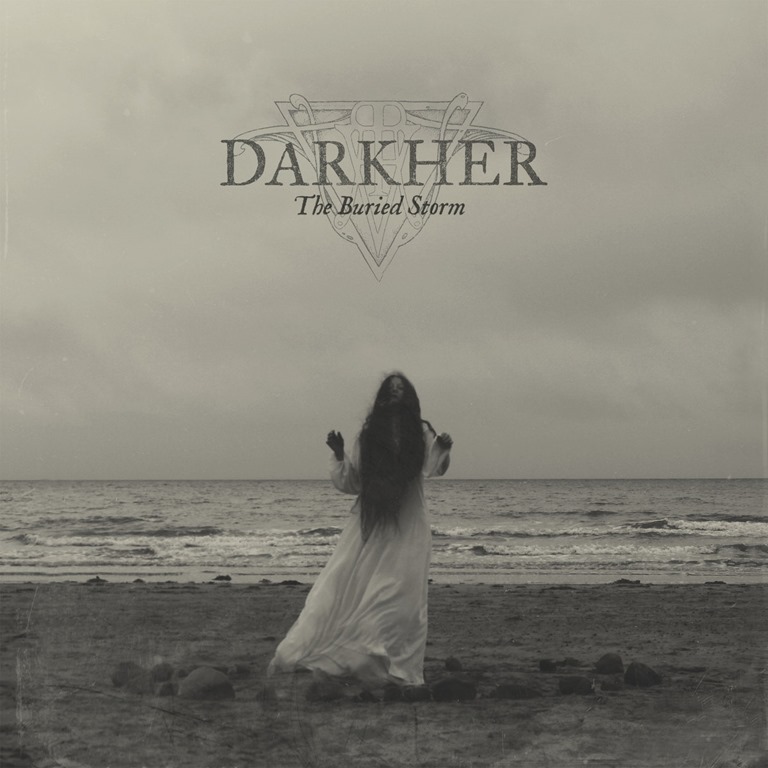
As Darkher, Jayn Maiven lives up to her moniker. Since beginning her career in 2012, progress has been slow but steady, with an eponymous debut EP in 2013 being followed by a second EP, The Kingdom Field in 2014 paving the way for her full-length debit, Realms in 2016. The Buried Storm, then, has been five years in the wait, but it was most definitely worth it.

‘Sirens Nocturne’ sets the bar with a low, slow, brooding drone of strings providing the backdrop to Jayn’s haunting vocal. That backdrop gradually swells with layers of tremulous violins, and her voice heads skyward, a glorious choral sound that’s spiritual beyond verbalisation.

What’s striking is just how deeply steeped in folk this is, the sparse, haunting melodies evoking rugged moorlands and windswept mountainsides. This isn’t a matter of cliché: this is music that touches the naked soul. A tribal drum thumps way off in the distance on the funereal ‘Lowly Weep’; it’s majestic and it’s moving, and over the course of its eight-minute duration, the swelling sound conveys so much more than mere words. Utilising post-rock tropes, it tapers down to quiet chiming guitar around the mid-point before bursting into a monumental thunder of slow, overdriven power chords, a slow-burning crescendo that’s both heavy and mesmerising in its graceful execution.

For its brevity and simplicity, built around a picked acoustic guitar and mournful strings, ‘Unbound’ is intense, but it’s on ‘Where the Devil Waits’ that we really feel a closer connection to Jayn; the vocals are more prominent, and we feel as it we’re riding the waves of a tempest – both literal and emotional – with her.

The true power of The Buried Storm lies in just how much Maiven does with so little. That said, ‘Love’s Sudden Death’ packs a dark density, and brings with it a slow, doomy trudge that invites comparisons to Chelsea Wolfe and Emma Ruth Rundle, and not simply because these are female artists exploring heavy terrain – although I suppose that is a factor, in that we have a crop of artists who balance weight and ethereality, all wrapped in a mist of gothic enigma.

It’s on ‘Immortals’ that everything comes together in a slow-building crescendo – the distant rolling thunder of drums and growing tension that finally breaks into a bold sweep of sound at around the mid-point of its eight-minute expanse.

The piano-led closer, ‘Fear Not, My King’ plods down into the darkest depths. It’s dolorous and dank, and sucks you down toward the depths of reflection, and places you may not want to go.

The Buried Storm is truly beautiful, elegant, with grace and poise and power – and for all its softness, its gentleness, it’s a difficult and at times harrowing album, and a magnificent artistic achievement.

AA

a0770914529_10

Kohlhaas Records – 22nd April 2022

Christopher Nosnibor

Simon Whetham’s notes which accompany (II)ntolerance – the sequel to his 2017 collection, InTolerance – are informative, albeit perhaps more so when reading between the lines: ‘InTolerance consisted of a selection of combined scenes and activities in various global locations. Through the process of constructing the piece, it became clear that it was as much about my ability and fortune to be able to travel and cross borders with relative ease as it was about the situations I was able to document. (II)nTolerance is a sequel and a response to InTolerance. It is a personal reaction to the global pandemic and its wide-reaching effects through suffering, fear, misinformation as much as confinement and curfews. It is a personal response to the (somewhat incorrectly named) United Kingdom leaving the European Union and all the resulting events that are continually unravelling.’ He continues: ‘Travel has been limited when not impossible. Cultural exchange is only possible through mobile, online, remote communication. Tactile contact is feared. Families and friends have been divided physically, mentally, politically.’

The pandemic but a block on everyone’s lives, but everyone was affected differently, and while I struggle to find sympathy for those bemoaning their inability to take their 204 kids on their half-term skiing holidays and the like, touring artists who depends on mobility for their livelihood, it’s a different matter, especially as that transit and a shifting geography is integral to the creative process. Reading Whetham’s notes, it’s clear that his obstacles have not been purely pandemic-related: The ‘United’ Kingdom has degenerated into a cesspit of division where not only ‘tactile contact’ is feared, but so is anything from ‘outside’. Never has this felt like a smaller, more isolated, island, and not just geographically.

Tolerance is something many of us – mostly those of us who wanted to remain – can now only dream of, as we hide our faces behind our hands as we peep at Twitter and Facebook, where it’s bordering on a virtual civil war.

Whetham describes (II)ntolerance as a personal response to all of this, and ultimately, that’s the only real response any artist can make. The idea that we’re all in the same boat has been proven untrue, for while we all endured the pandemic, everyone experienced it so very differently: home schooling while working from home was, for example, in no way comparable to living alone or in a shared house while on furlough. Similarly, the effect of Brexit for a container driver, versus that of, say, a hedge fund manager is simply not comparable. But this in itself is an issue: increasingly, it seems people have become unable to relate to experiences and situations which differ from their own.

As an artist, of course, one can really only represent oneself, and hope that through the personal there is an element of universal therein, and on this level, (II)ntolerance succeeds, containing as it does fourteen abstract compositions that state nothing explicitly, and yet convey so much implicitly.

There are a number of pieces that form sequences, namely the ‘Angry Earth’ pieces and the three ‘Kinetic Readymade’ pieces, which give the album a sense of cohesion and thematic unity (while making a small nod to avant-garde greats like Marcel Duchamp). And (II)ntolerance is an album of movement, of turbulence: the first piece, ‘Angry Earth Seething 1’ sounds like a harsh deluge of rain, and the lashing precipitation sets the tone for a stormy sonic journey, riven with growls and gulps and crashes of static and ominous drones and clicks and stammers.

(II)ntolerance marks a shift from field recordings and a focus on geography to shift the focus inward in a response to a shrinking environment, and the result is claustrophobic and uncomfortable. ‘Moving Sentry 2 – Angry Earth Seething 3’ is a gurgling mess of abrasion, while ‘Reception – Windpipes’ whips and gurgles in a fog of phase. Oftentimes, such as on ‘Angry Earth Seething 4’, Whetham conjures a dark, gravel-shunting grind of uncomfortable noise, while ‘Kinetic Readymade (Turbine)’ embraces all shades of difficult, dominated by churning, scraping noise – and as a whole, (II)ntolerance is not an ‘easy’ album. It’s noisy, with serrated edges and low-end growlings that unsettle the intestines. A difficult album for difficult times.

A

Simon W

15th April 2022

Christopher Nosnibor

It may sound a bit screwy, but then, we’re here on the Internet and I’m sure you’ll have read far screwier things presented in more enticing ways that are far more dangerous than my theory that individuals are somehow psychologically and biologically attuned to certain kinds of music. It’s a complex issue, and one I’m yet to fully unravel, but it feels like something that slots into the nature / nurture debate: are people born predisposed to appreciate darker music, or is it triggered by life events – or a combination of the two?

In 1983, at the age of seven or eight, I saw Killing Joke on Top of the Pops performing ‘Love Like Blood’. I was, in hindsight, enjoying a mundane middle-class upbringing, but this moment – and it was one of several – went a long way to cementing my appreciation of darker music. I’d never suffered any kind of trauma and hardship beyond maybe some kids taking the piss out of my coat or whatever, but still something drew me towards this kind of thing.

Nearly forty years on, and ultimately, nothing’s changed: the turn of the millennium brought a new wave of post-punk influenced acts, with the likes of Interpol and Editors setting the grounds of darker territory. And, in turn, we’re seeing bands emerging now that very much echo the sound and style of post-millennial wave of post-punk, or new millennium new wave if you will (there doesn’t really seem to be a label for it, but if that one ever gets used, I’m claiming it).

This is the long and meandering route to the arrival the new single from London-based alt-rockers The Palpitations who – like so many acts – emerged during lockdown out of a need to so something, and the foursome – Tom Talbot on vocals, Brett Rieser on guitar, Nishant Joshi on bass, Florin Pascu on drums – set out their agenda with the ‘Feed The Poor! Eat The Rich!’ EP.

But there’s a nugget in the Palpitations bio that shows they’re not just another bunch of musicians who were loafing around listlessly and decided to bung some tunes together to fill the time whole on furlough or unable to play live. Talbot and Joshi were, in actual fact, working as frontline doctors, and both were instrumental in protecting NHS staff with upgraded PPE, and also took part in protests that gained international attention. Joshi later took the government to court over their PPE failures, winning a landmark case.

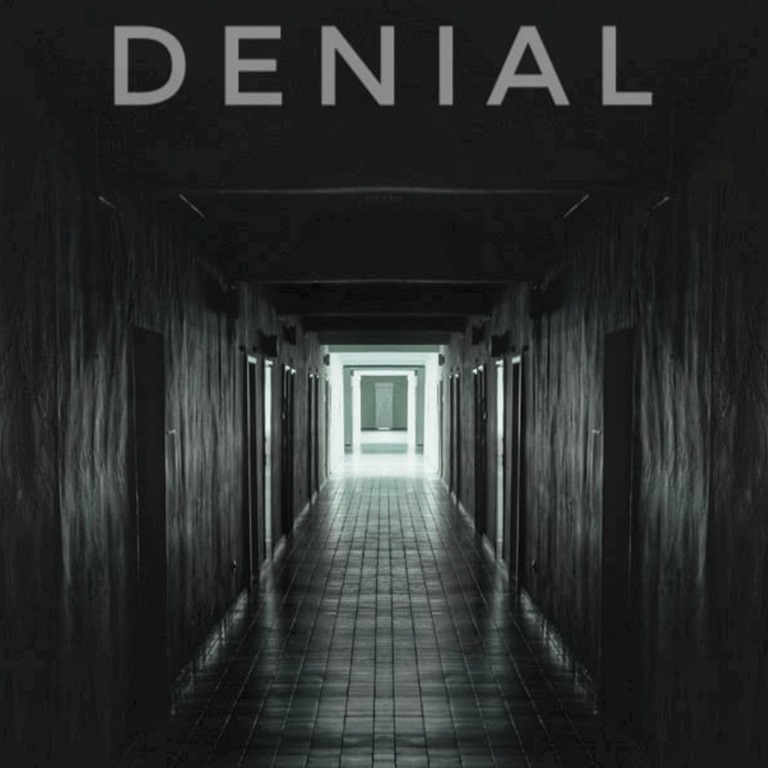
It’s out of this passion and a sense of frustration that the music of The Palpitations comes, and ‘Denial’ is a belter, smashing together a spindly, soaring lead guitar, with cool, meandering synths and a thumping solid rhythm section; if Interpol collided with Bivouac and Eight Storey Window, you’d probably have a handle on their post-punk grunge crossover, although there’s perhaps more than a hint of Placebo in the blend, and ‘Denial’ packs some darkly melodic angst and significant tension into its four-minute duration. It resonates not just on an emotional or sonic level, but on  a cerebral and biological level – and it’s an instant grab.

Christopher Nosnibor

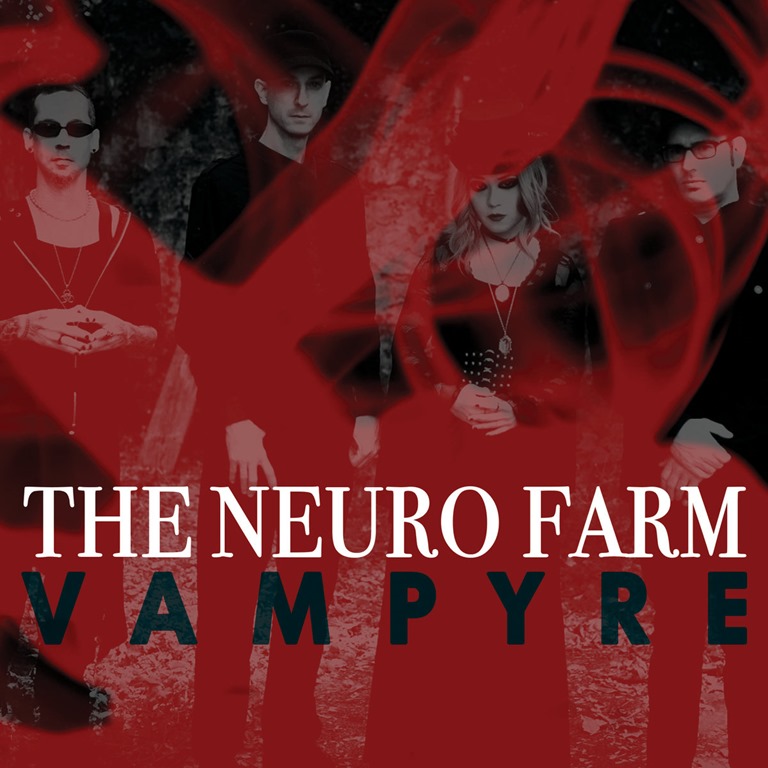
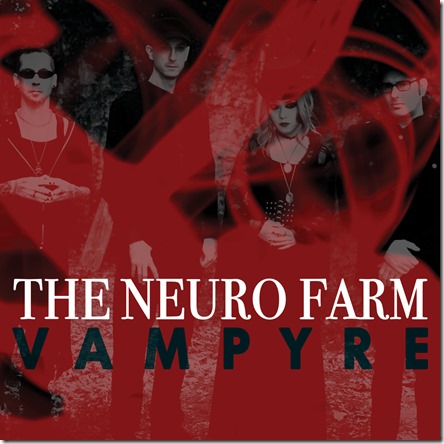
Vampyre is the third album from Washington DC’s The Neuro Farm, following The Descent (2019), and Ghosts (2014). If the album titles suggest dark and haunting, it’s fitting for a band who harvest influence from the field that contains Joy Division, Radiohead, Nine Inch Nails, Siouxsie and the Banshees, Sigur Ros, Chelsea Wolfe, Portishead, and Rammstein.

Comprising Brian Wolff (guitar, vocal), Rebekah Feng (violin, vocal), DreamrD (drums), and Tim Phillips (synth), the violin and synth contrive to bring rather less standard instrumental elements to the format, particularly with the absence of a live bass. That’s certainly no impedance (the only people who bleat about synth bass ironically seem to be fans of The Sisters of Mercy who haven’t move on from 1985 – because drum machine = cool, synth bass = not cool). Meh. They’re wrong.

Vampyre is a concept album, which they explain as follows: ‘Our titular heroine, lured by the promise of immortality, is given this curse by the egomaniacal leader of a vampyric cult. But within the cult there is a growing sense of disillusion, and she builds her own following. Eventually, she spurns her maker, rebelling against him and his decaying institution. She says a final farewell to her mortal husband, turning away from humanity and embracing her new nature. She slays her former master in the “midnight massacre” and declares herself queen.’

Now, as much as I’m an advocate of albums over random collections of songs, I do sometimes struggle with concept albums, in that following a narrative is often quite a strain. Too much narrative can be tedious; too little, and you’re lost, wondering what the fuck is going on. It’s a thorny territory to navigate under any circumstances.

‘Cain’ makes for a bold, theatrical introduction, the brooding drums that roll and roil providing a stoic backdrop to some theatrical, dramatic vocals. Feng isn‘t just operatic in her delivery, but she’s backed by a full choral arrangement, and then the violin sweeps in and the cinematic scale of the composition truly reveals itself in all its grand enormity.

It’s all going on with ‘Purity, a slow-builder that slithers through Rozz-era Christian Death gothness via trudging stoner rock to crescendo-blasting post-rock over the course of its six-and-a-half minutes.

‘Maker’ brings the bombast, to something on a part with Carl Orff’s ‘Carmina Burana’, and transitioning through various passages of grandeur. It’s a lot to take in. The spacey prog-rock of ‘Enthralled’, the gloopy electro industrial of single release ‘Confession’, the brass-laden brooding of the metallic ‘Decay’. The piano-led, echo-heavy title track is something of a gothic masterpiece, dark, shadowy, with soaring vocals and it’s brimming with epic qualities that touch the emotional centres as it blooms in a glorious cascading sunburst finish that’s peak goth and post-rock in perfect concordance. It feels like a finale, but the three remaining songs continue to cast forth rich and resonant atmospheres, with ‘Midnight Massacre’ landing a gloom-tinged glam-stomp unexpectedly near the end. This is proper gothic rock, perfectly realised.

More often than not, anything that proclaims to be ‘goth’ or ‘gothic’ and goes down the ‘vampire’ route’ tends to be awkward, corny, and cliché, but for all of its ‘conceptual’ leanings, Vampyre is none of these; instead, it’s like a darker, more gothic dip into the domain of early iLiKETRAiNS. But above all, it’s varied, imaginative, dramatic, and really quite spectacular.

AA
a2627279756_10

LA-based noise duo GHXST has announced the release of their debut full-length album Admire, out on April 22.

They have now shared ‘Pls, You Must Be A Dream’, the first single taken from the upcoming record. The song adds a surf goth element to the duo’s signature metal-inflected sound and "is an ode to the obsessions that haunt you, like a half-remembered scene from an arthouse film. As Shelley X coldly intones “You’re the only one” over a menacing surf riff, it’s not clear whether it’s for a lost love or a memory of times past. As always, the allure is in the unknown".

The single is accompanied by a video directed and edited by GHXST’s very own Shelley X. Watch it here:

AA

5tqs_EB43F9B68EAE43C59AA9CC792B156F3D750

Photo courtesy of the artist

Dark alternative act GGGOLDDD have revealed the striking new video for the title track from their upcoming album, This Shame Should Not Be Mine. The video is a sharp commentary on continued victimisation by society after someone experiences trauma.

Vocalist Milena Eva comments: "I was raped at the tender age of nineteen by someone I trusted and had fallen in love with. In one instant my life was upside down. It shaped me a lot. Especially the shame that comes with it, because of what society told me. ‘This Shame Should Not Be Mine’ is a fully electronic, dark and creepy song that personifies the fear and anxiety I’ve lived with. When I listen to it now it gives me strength and power like a mantra telling me it is not my fault.

After the trauma happened I went through some very scary years and the weird thing is it took me years to understand that I was scared. I filed my feelings under depression or loneliness. And my pain was downplayed by doctors and myself. It took me a long time to understand I have ptsd, that I’m sick because of what happened. And one of the biggest reasons it came this far was because of how people responded. The blame and shame that comes with taboo and the patriarchy is numbing. And the shame should have never been mine.”

Watch the video for ‘This Shame Should Not Be Mine’ here:

AA

This Shame Should Not Be Mine is out on April 1st via Artoffact Records.

GGG

Cruel Nature Records – 11th March 2022

Christopher Nosnibor

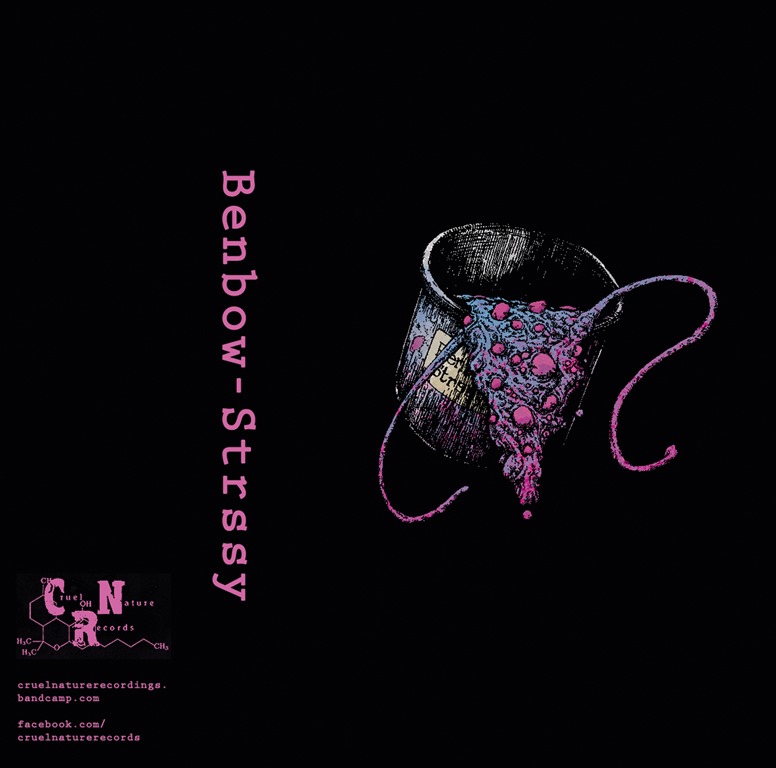
This is something that the CD or digital release simply cannot really do justice to as a full, multi-faceted, multi-sensory experience: the split LP. And while I’m more of a fan of vinyl and cassette, this most certainly does the job: you have to turn the thing over. It is truly an album of two halves. In this case, half Benbow, and half Strssy. And while some split releases simply stick two artists back to back – and there’s nothing wrong with that – Benbow and Strssy have history.

As the biographical notes detail, they first met ‘in a basement café in Lausanne, Switzerland just before the first sliced loaf was presented at the World’s Fair. Benbow had just finished a tour of the Alps with wandering trapeze troupe, NORMAL MAN while Strssy had taken a well-earned sabbatical from conjoined mime act, DIET PILLS. Over the following years they exchanged correspondence and encouragement as they independently began making experimental electronic music’. This split release, then, is pitched as ‘a celebration of this journey’.

Benbow’s eight cuts make for a hell of a journey in their own right. The tone is far from celebratory: it’s dark, claustrophobic, driven by dense beats and even denser atmosphere. Short, fragmentary snippets that straddle the space between sketched ideas and something more fully realised, all bar two are under three minutes in duration, but pack in a lot. Broadly, Benbow explores the tropes of minimalist, dark-hip hop, with thwacking solid beats and phat bass that gnaws at the gut with simple repetitive motifs or only three of four notes. It’s kinda heavy, and the effect is cumulative.

‘Slowly’ grinds, chugs, and churns away, the bass thick and gnarly amidst a swirl of reverberating synth oscillations that emulate the nagging call of a siren toward the end. Benbow’s final track, ‘Two’ marks quite a shift, with strings galore and an altogether lighter mood.

Strssy similarly trades in contrasts and juxtapositions. ‘Off a Watering Can’ starts out gentle, but when the beat kicks in, it’s pretty bloody heavy, and the mood changes significantly. It’s no longer chillout, ambience, but dense and tense, and layers of noise build exponentially to incorporate shrill whistles of modular synth abuse. ‘Deep Interior’ is all the twitch and bleep against dank, rumbling caverns of sound and then, from nowhere, it’s more rapid and relentless wails like a misfiring smoke alarm, only with a squeaky toy embedded in the circuitry. On a bad day, I’d likely find this seriously fucking annoying, but in a balanced and objective mood, it’s possible to give kudos to the way in which Strssy incorporates dance elements into a more freeform approach to electronic music which also incorporates industrial and ambient leanings. ‘Bath Night’ is a thumping industrial melting pot that’s more like drowning slowly than floating serenely, while ‘A Beautiful Brown Catalogue’ is all about the bowels with its booming bass frequencies, plus additional wild trumpet action. It’s got that late 80s wax Trax! vibe, but with a more experimental twist, and it pinches the brain.

Paired, Benbow and Strssy make for a formidable duo, a tag-team of hard-hitting genre-splicing, slow-groove bashing behemoths.

AA

Xcover

Wardruna release an official music video for their song ‘Skugge’ (meaning Shadow). The song is an eerie sonic journey, voicing a dialogue between man and shadow or as Einar Selvik puts it; “it is a song about shadows, echoes and the balance between seeking answers and wisdom internally and externally”. The video was filmed and produced in Norway by Ragnarok Film in January 2022.

To shorten the wait for their upcoming release Kvitravn – First Flight of the White Raven (out on April 22nd 2022), the live version of the song is also released on all digital platforms via Music For Nations/Sony Music/Columbia Germany/ByNorse. Watch the video here:

AA

Wardruna 2

Cruel Nature Recordings – 11th March 2022

Christopher Nosnibor

Following on from their eponymous debut, Pound Land – the duo consisting of vocalist/lyricist Adam Stone (Future Bomb/Holy Ghost People/frequent collaborator with Dead Sea Apes) and multi-instrumentalist Nick Harris (Reverends of Destruction/ ex-Dead Sea Apes) return with what they describe as ‘eight tracks of post-industrial post-hardcore dead-pan misery – a ‘kitchen-sink’ punk for the 21st century’.

The album title isn’t one that’s likely to see Pound Land crashing the charts, and it’s one that runs the risk of drawing easy criticism, if its contents doesn’t hit the mark for some. But then, it’s a double-bluff, because ant critic who criticises the band for sounding like they can’t be arsed clearly can’t be arsed to critique with any effort.

They slap in straight away with the blunt and subtle as a brick ‘Twatted’, and it’s a six-minute barrage of top-endy guitar racket, a simple chord sequence put through the wringer after a succession of pedals with distortion and reverb and maybe a hint of flange. The lead guitar is sinewy, a snaking twang of treble and it’s so, so raw. A primitive drum machine sound thwacks away and Stone mumbles the expletive-laden lyrics in a northern drawl: ‘You know what I’m fucking saying, mate? Everyone’s a fucking twat, mate.’ It’s raw and it’s real. The production values are bargain basement and then some, and around the mid-point they come on full Fall circa 1983 as they bludgeon away at their wonky guitar racket.

‘Brain Driver’ is a dingy mess of seething, writing no-wave and industrial racket by way of a backing to a monotone vocal performance, and this time it’s six-and-a-half minutes of dirge-like scrapings and discomfort, but they’re just warming up for the album’s thirteen-minute centrepiece, ‘Tony Ex-Miner’. It’s a sparse, grating synth effort, like Suicide without the rhythm. It’s an atonal droning expanse of bleakness that saps your very soul. This is a reason to appreciate it, in case you’re wondering. A sampled narrative about Margaret Thatcher is almost, but not fully, audible.

The sneering grunge squall of ‘Tapeworm’ follows more conventional punk/rock structures; drums, bass, guitar come together to grind out a thunderous wall of noise, and it’s early Head of David that comes to mind as they slowly tug your entrails out and squeeze the mess of guts as they spill. There is nothing pretty or pleasant about this, not the dingy murk of the title track or the dislocated electronic dissonance of the disorientating slur of ‘Total Control’, that sounds like Stone retaining control of his bowels and bladder is no small feat. ‘I look after my mind’, he drones, detached, alone on the dark.

The compositions, such as they are, are sketchy, minimal, and there’s little to cling to by way of melody: instead, Pound Land drag you through city back alleys clogged with litter, smeared dog shit and the puddled piss of street drinkers – mate. The subject matter may be kitchen sink, but the atmosphere is abject and apocalyptic. It’s an album for out times. You’re not supposed to like it.

AA

a2595844187_10